

If you’ve spotted large hornets buzzing close to the ground or noticed small holes popping up in your lawn, chances are you’re dealing with ground hornets. These aggressive stingers can quickly turn your yard into a danger zone, especially for kids and pets. While they play a role in controlling other insects, having them nest too close to home isn’t safe. In this guide, we’ll cover seven effective methods to get rid of ground hornets safely and prevent them from returning.
1. Boiling Water Treatment
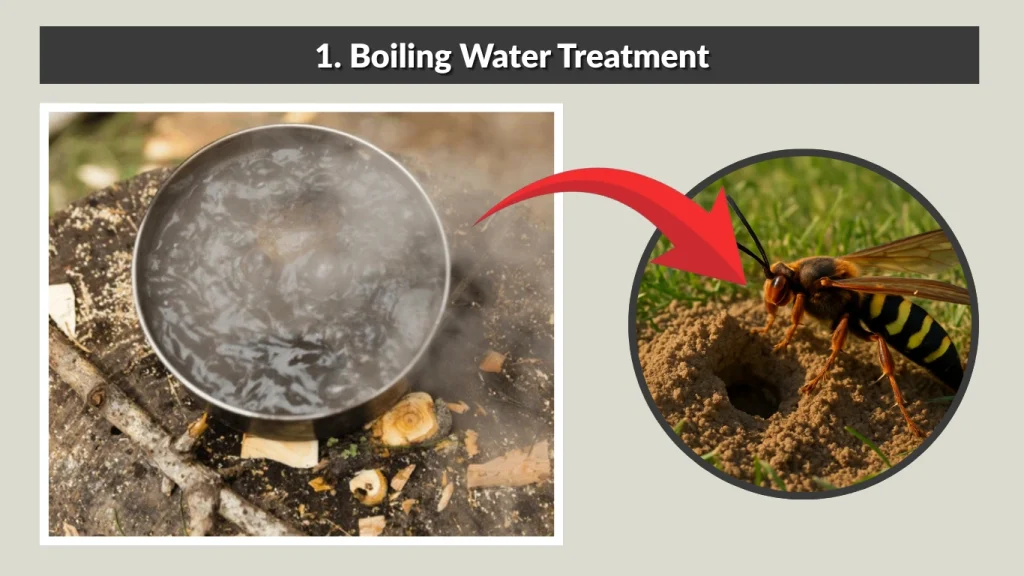
Boiling water is a straightforward, chemical-free way to collapse underground chambers and kill hornets inside the burrow. It’s best for small, single-entrance nests and works well as a first attempt before moving to stronger measures.
Why This Works
The extreme heat destroys hornets on contact and destabilizes the tunnel system. Because ground hornet nests are shallow and connected by narrow galleries, boiling water can penetrate effectively when poured slowly and directly into the entrance.
Best Time to Apply
Apply at night or just before dawn when most hornets have returned to the nest and activity is minimal. Cooler temperatures also slow their movement, reducing the chance of stings and making the treatment safer and more effective.
Safety Gear and Prep
Wear long sleeves, thick gloves, closed shoes, and eye protection. Prepare more water than you think you’ll need (often 4–8 liters for a typical burrow). Keep pets and children indoors and plan a clear retreat path before you begin.
Step-by-Step Application
- Bring a large pot or kettle of water to a rolling boil.
- Locate the active burrow entrance and clear loose debris from the hole without disturbing the nest.
- Approach calmly from downwind to avoid alerting hovering hornets.
- Hold the pot close to the entrance and pour a steady stream directly into the hole for 10–20 seconds.
- Pause briefly, then pour a second round to flood adjacent chambers.
- Step back to a safe distance and observe for a minute to check for escaping hornets.
- After 24 hours, inspect the site; if activity persists, repeat once more.
How Many Times to Repeat
Most small nests respond after one treatment, but a second application within 24–48 hours improves success, especially if the burrow branches or the initial pour didn’t fully flood the chambers.
Effectiveness and Limitations
This method is inexpensive, fast, and avoids chemical residues, making it lawn- and garden-friendly. However, very large or multi-entrance nests may survive partial flooding, and hornets can occasionally relocate nearby. In those cases, combine this approach with dust insecticides or professional removal for a complete solution.
Common Mistakes to Avoid
Don’t pour warm (not boiling) water—it won’t be lethal. Avoid daytime attempts when foragers are active. Never stand directly over the entrance; angle your body and keep your exit route clear in case hornets rush the opening.
2. Soapy Water Solution

Soapy water is another natural and effective way to eliminate ground hornets without relying on harsh chemicals. Soap breaks down the protective waxy layer on hornets’ bodies and suffocates them by blocking their spiracles (breathing pores).
Why This Works
Unlike boiling water, soapy water coats hornets and kills them gradually. It also clings to the walls of the burrow, making it harder for hornets to escape.
Best Time to Apply
The ideal time is at night or early morning when hornets are least active. This ensures most of the colony is inside, maximizing effectiveness.
Safety Gear and Prep
Wear gloves, long sleeves, and eye protection. Mix 1–2 tablespoons of dish soap with 1 gallon of warm water. For larger nests, prepare at least 2–3 gallons.
Step-by-Step Application
- Mix dish soap with water in a large bucket.
- Locate the nest entrance carefully.
- Approach the nest slowly at night with a flashlight covered in red cellophane (hornets are less attracted to red light).
- Pour the soapy water steadily into the hole.
- Retreat to safety and observe from a distance.
- Repeat the process after 24 hours if activity continues.
Effectiveness and Limitations
Soapy water is eco-friendly and safe around plants, but it may not kill hornets deep within the burrow. Larger colonies may require several treatments or additional methods.
3. Dust Insecticides

Dust insecticides are one of the most reliable ways to eliminate ground hornet colonies, especially when natural methods fail. They work by clinging to hornets as they travel in and out of the nest, spreading the poison throughout the colony.
Why This Works
Unlike sprays, which may only reach hornets near the entrance, dust penetrates deeper into the nest tunnels. Each hornet that comes in contact with the dust contaminates others, ensuring a chain reaction.
Best Time to Apply
Night is again the safest and most effective time, when hornet activity is minimal. Choose a dry evening since moisture can reduce the effectiveness of dust insecticides.
Safety Gear and Prep
Wear a bee suit or at least heavy clothing, gloves, and goggles. Use a hand duster or squeeze bottle to apply the powder directly into the nest entrance.
Step-by-Step Application
- Purchase a hornet or wasp-specific dust insecticide from a trusted brand.
- Approach the burrow entrance calmly at night.
- Insert the nozzle of the duster into the hole slightly.
- Puff a small amount of dust directly into the entrance.
- Step back and allow hornets to carry the dust deeper into the nest.
- Monitor the site over the next 2–3 days; reapply if hornet activity continues.
Effectiveness and Limitations
This method is highly effective for large or persistent nests. However, it introduces chemicals into the soil, which may not be suitable for eco-sensitive areas or vegetable gardens. Professional application is recommended for very large infestations.
4. Commercial Wasp Sprays
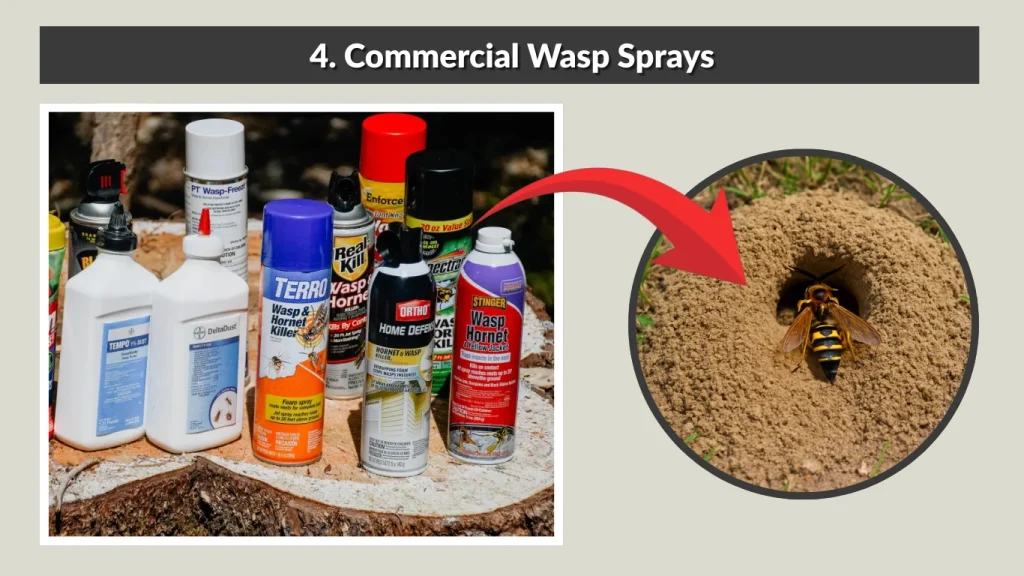
Commercial wasp sprays are designed to knock down hornets instantly and penetrate deep into underground nests. They usually contain pyrethroids, which attack the nervous system of insects and provide quick results.
Why This Works
These sprays are formulated to kill on contact while also leaving behind a residue that continues to affect hornets returning to the nest. Many brands offer sprays with a long-range nozzle, keeping you at a safer distance.
Best Time to Apply
Apply at dusk or night when hornets are inside and less active. Calm weather is important—wind can blow chemicals back toward you or scatter them away from the nest entrance.
Safety Gear and Prep
Wear protective clothing, gloves, and goggles. Keep a flashlight handy, but cover it with red film since hornets aren’t attracted to red light. Read the label instructions carefully before applying.
Step-by-Step Application
- Purchase a wasp/hornet spray with a long-range jet stream (up to 15–20 feet).
- Stand at a safe distance from the nest entrance.
- Aim the nozzle directly at the burrow opening.
- Spray continuously for 10–15 seconds, coating the entrance thoroughly.
- Retreat quickly to avoid agitated hornets.
- Check the nest the next morning. If activity continues, repeat the process.
Effectiveness and Limitations
Wasp sprays are highly effective for small to medium nests and provide quick results. However, they may not always reach deeper chambers in large burrows, and multiple treatments might be necessary.
5. Trapping and Baiting
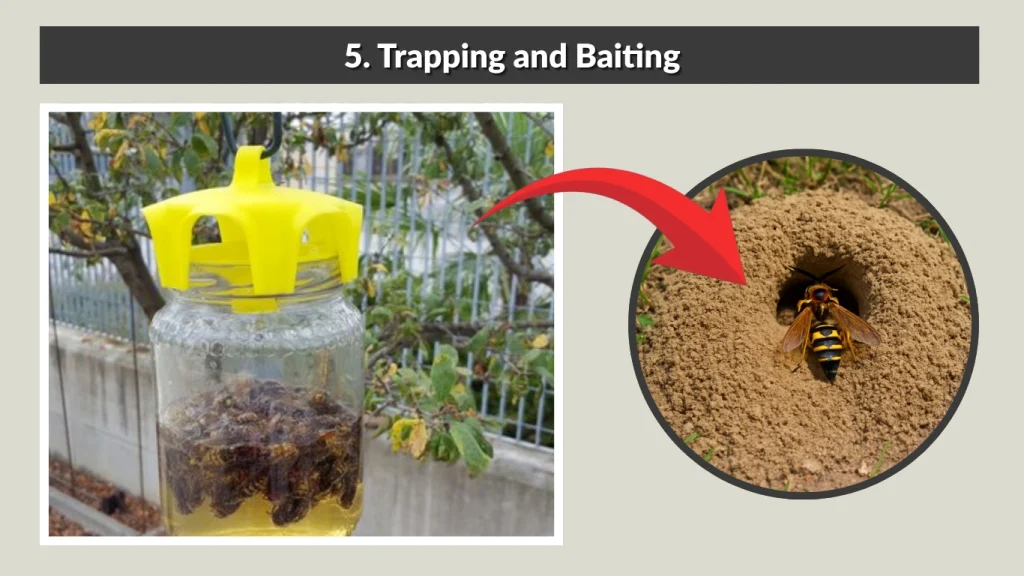
Trapping is a supplemental method to reduce ground hornet populations around your yard. While it doesn’t destroy the nest directly, it weakens the colony by capturing foraging hornets.
Why This Works
Hornets are attracted to sweet and protein-rich foods. By baiting traps with these, you lure hornets away from your lawn or garden and gradually lower their numbers.
Best Time to Use
Set traps during the daytime when hornets are actively foraging. Summer is the most effective period since colonies are at peak activity and food demand is high.
Safety Gear and Prep
Use commercial hornet traps or make DIY traps with plastic bottles. Baits like sugar water, fruit juice, or small pieces of meat work best. Place traps at least 20 feet away from living areas to avoid drawing hornets closer to people.
Step-by-Step Application
- Choose a commercial trap or prepare a DIY bottle trap with bait inside.
- Add sugary liquids or small bits of meat as bait.
- Hang or place the trap near hornet activity but far from entrances and play areas.
- Check traps daily and dispose of dead hornets safely.
- Replace bait regularly to keep traps effective.
Effectiveness and Limitations
Traps reduce the number of hornets but won’t eliminate the colony. They work best as a preventive or supportive measure alongside direct nest treatments like sprays or dust.
6. Covering and Destroying the Nest
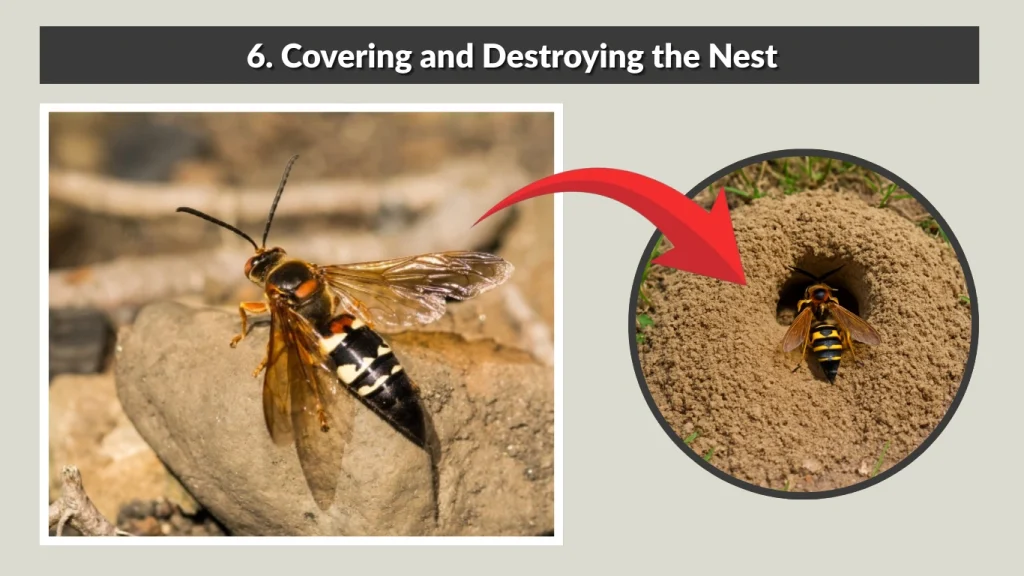
Another effective way to deal with ground hornets is by covering their burrow and cutting off air circulation. This method works best for smaller nests and is often combined with other treatments to ensure success.
Why This Works
When the entrance is sealed tightly with soil, stones, or a tarp, hornets inside become trapped and eventually die due to lack of oxygen and inability to escape.
Best Time to Apply
Nighttime is the safest period since hornets are inside the nest and less active. This ensures that you trap most of the colony underground.
Safety Gear and Prep
Wear protective clothing, including gloves and boots. Prepare soil, sand, or heavy objects like stones to completely seal the entrance.
Step-by-Step Application
- Locate the active nest entrance during the day.
- Return at night with your covering materials.
- Place a tarp, large flat stone, or soil directly over the hole.
- Press down firmly or weigh it with bricks or rocks.
- Leave it in place for several days.
- Inspect after a week; if hornet activity continues, repeat or combine with other methods.
Effectiveness and Limitations
This is a chemical-free method and safe for lawns, but hornets sometimes dig new exits if the nest is large. For bigger colonies, this method may only slow them down rather than completely eliminate them.
7. Calling Professional Exterminators
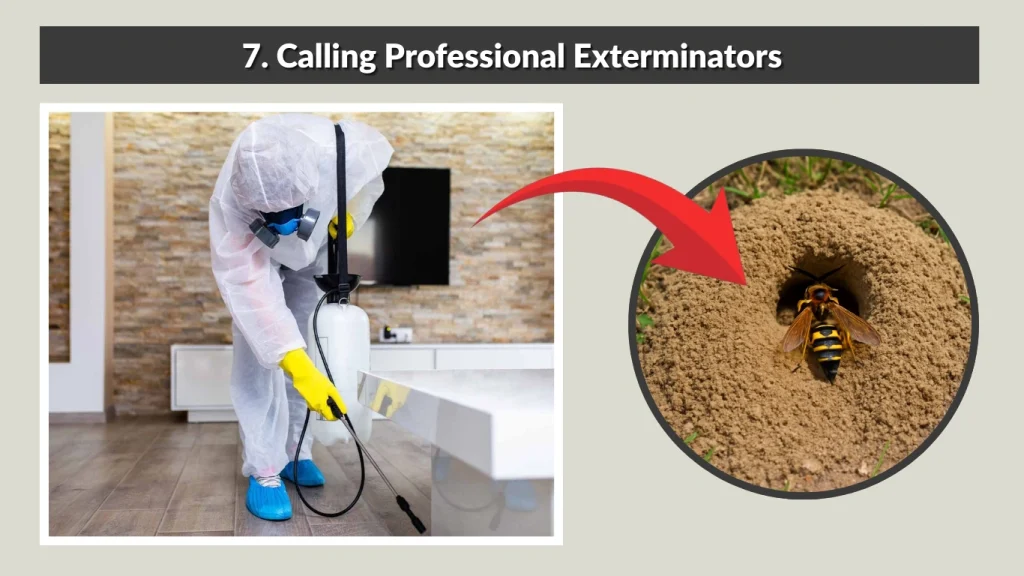
For large or multiple nests, professional help is the safest and most reliable option. Exterminators have the right tools, protective gear, and specialized treatments to eliminate ground hornets efficiently.
Why This Works
Professionals use dust insecticides, sprays, and sometimes non-chemical techniques that reach deep into nests. They can also safely remove or relocate colonies if necessary.
Best Time to Call Experts
If the nest is near your home, children’s play areas, or if hornets are extremely aggressive, contact a pest control service immediately. It’s also the best choice if natural or DIY methods fail.
Safety Gear and Prep
While exterminators provide their own equipment, homeowners should keep pets and family members indoors during the treatment process. Clear the area to give professionals full access to the nest.
Step-by-Step Application
- Identify signs of multiple nests or aggressive hornet behavior.
- Contact a licensed pest control service.
- Schedule the treatment, preferably in the evening or early morning.
- Allow exterminators to apply dusts, sprays, or safe relocation techniques.
- Follow their aftercare advice, such as keeping the area undisturbed for 24–48 hours.
Effectiveness and Limitations
Professional extermination ensures complete removal of the colony and minimizes risks. However, it comes with a cost, and for small nests, DIY methods may be more practical.
Preventing Ground Hornets from Returning
Once you’ve removed a ground hornet nest, taking preventive steps is essential to keep them from nesting again in your yard. These insects are attracted to dry, sandy, and undisturbed soils, so changing those conditions makes your lawn less inviting.
Keep Lawns Well-Watered
Ground hornets prefer dry and loose soil for digging burrows. By keeping your lawn properly watered, the soil becomes compact and less suitable for nesting.
Fill Burrows and Holes
Open holes in the ground can serve as potential nesting spots. Filling them with soil or gravel not only discourages hornets but also prevents other burrowing insects from moving in.
Reduce Food Sources
Ground hornets feed on other insects and are also drawn to sweet substances. By managing insect populations and avoiding leaving sugary food or drinks outdoors, you reduce their attraction to your property.
Maintain the Lawn Regularly
Mowing grass, trimming weeds, and raking leaves disturb the ground, making it less appealing for hornets to build nests. A regularly maintained yard is a strong deterrent.
Safety Tips While Removing Ground Hornets
Eliminating ground hornets requires caution because of their aggressive defense of nests. Following safety guidelines can help reduce the risk of painful stings.
Wear Protective Clothing
Always wear long sleeves, gloves, boots, and even a face covering if possible. Thick clothing provides an extra layer of protection.
Work at Night
Hornets are far less active after sunset. Targeting the nest at night ensures most hornets are inside and reduces the chance of being attacked.
Keep Children and Pets Away
During treatment, keep the area clear of children and pets. Hornets can become aggressive if disturbed, and stings can be more dangerous for small animals and kids.
Keep First Aid Ready
Always have a first-aid kit available. Antihistamines, ice packs, and sting relief creams can help manage reactions until medical attention is available if needed.
FAQs
What time of day is best to kill ground hornets?
The best time is late evening or early night when most hornets are inside their nest. At this time, they are less active, which reduces the risk of being stung and increases the effectiveness of treatments.
Are ground hornets dangerous?
Yes, ground hornets can be aggressive if their nest is threatened. They are capable of stinging multiple times and often attack in groups, which can be dangerous for humans and pets nearby.
Can ground hornets damage my lawn?
While they don’t cause long-term harm to grass, their digging creates unsightly holes and weakens soil structure. Over time, this can affect the overall appearance and health of your lawn.
Are natural remedies effective against ground hornets?
Yes, natural solutions like boiling water or soapy water can eliminate smaller colonies effectively. However, larger infestations may require insecticidal dusts or professional extermination for complete control.
How do I prevent hornets from nesting in my yard?
Keep your lawn moist, fill in open burrows, and reduce bare soil patches to make your property less attractive. Regular yard maintenance also plays a major role in preventing new nests from forming.
