
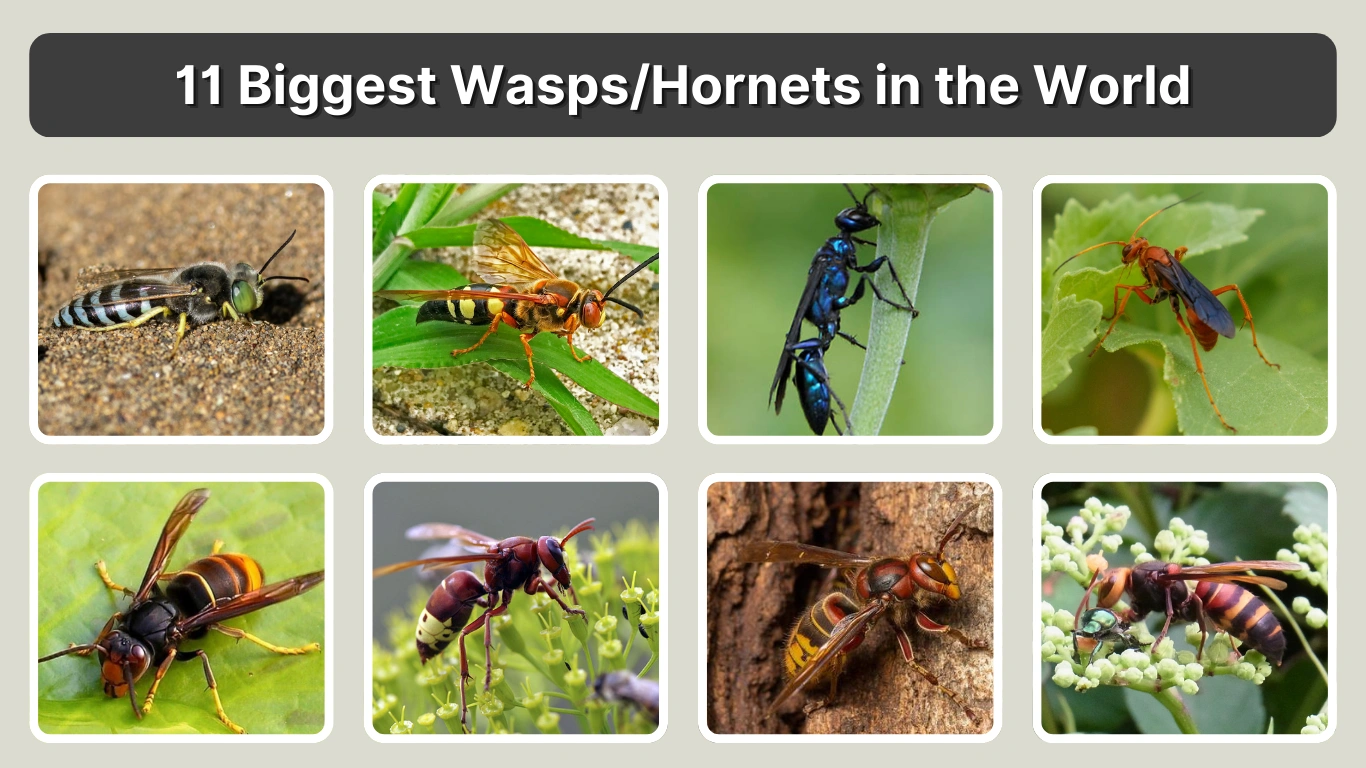
Wasps come in many shapes and sizes, but some species grow to astonishing lengths, making them both fascinating and intimidating. From the massive Asian Giant Hornet to the fierce Tarantula Hawk, these wasps dominate their habitats with powerful stings, strong hunting skills, and striking appearances. In this guide, we’ll explore the 11 biggest wasps in the world, arranged by size, along with details about their identification, habitats, and behavior.
1. Asian Giant Hornet (Vespa mandarinia)
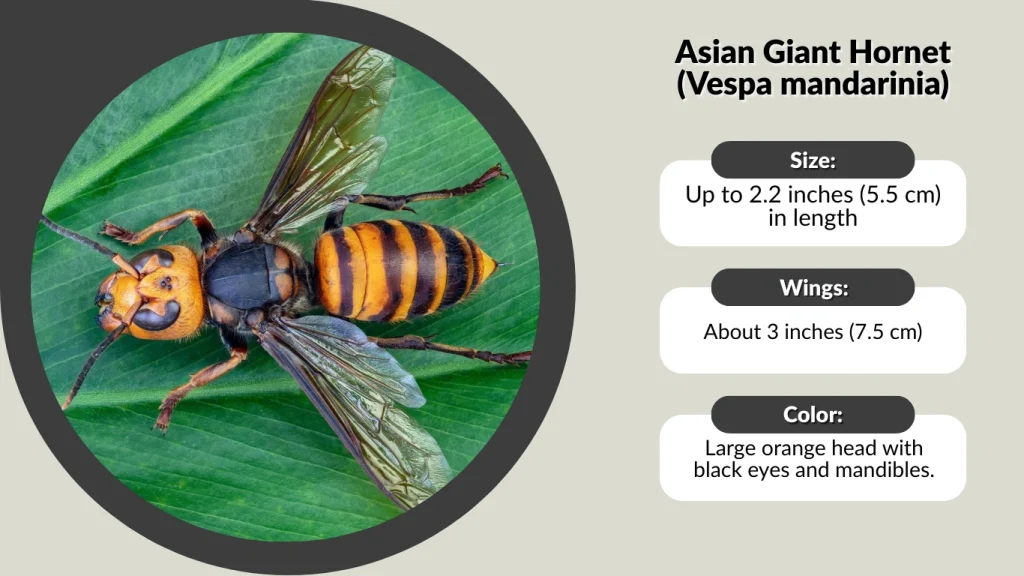
The Asian Giant Hornet, also called the “murder hornet,” is the largest wasp in the world. Native to East and Southeast Asia, it is known for its powerful sting, aggressive behavior when defending its nest, and its ability to wipe out entire honeybee colonies. Its massive size and orange-black body make it one of the most recognizable wasps worldwide.
Identification
- Size: Up to 2.2 inches (5.5 cm) in length
- Wings: About 3 inches (7.5 cm)
- Color: Large orange head with black eyes and mandibles, black thorax, and banded orange-yellow abdomen
Habitat
Asian Giant Hornets are mostly found in forests and rural lowland areas of Japan, China, Korea, Taiwan, and parts of Southeast Asia. They prefer nesting in underground burrows or hollow tree roots.
Behavior
These hornets are predatory and mainly target honeybees, mantises, and other large insects. They are most aggressive during late summer and early autumn when they need to gather food for their developing colonies.
2. Greater Banded Hornet (Vespa tropica)
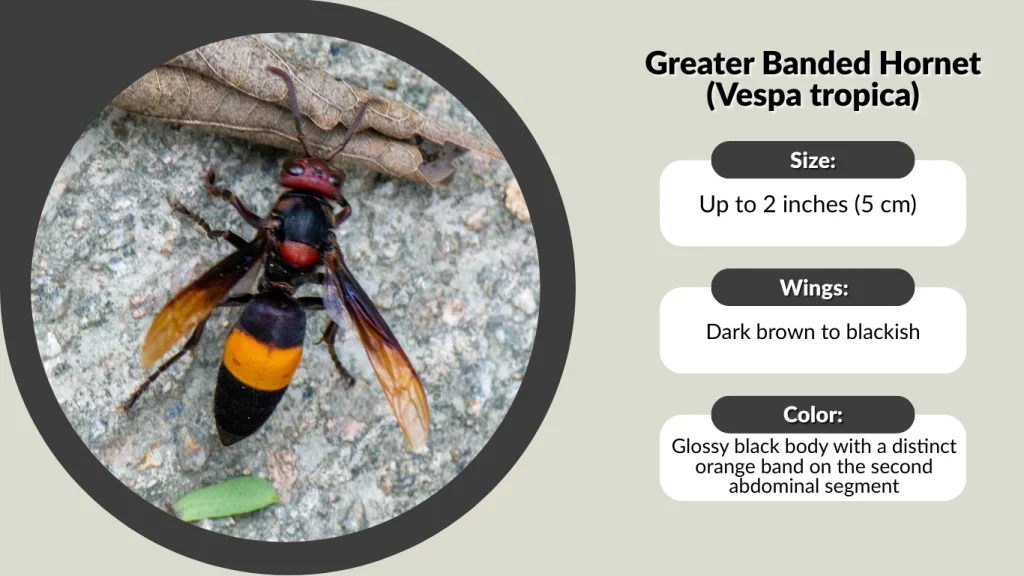
The Greater Banded Hornet is one of the largest hornet species in Asia, recognized for its striking black body with a wide orange band across its abdomen. This wasp is both feared and respected due to its aggressive defense of nests and painful sting.
Identification
- Size: Up to 2 inches (5 cm)
- Color: Glossy black body with a distinct orange band on the second abdominal segment
- Wings: Dark brown to blackish
- Head: Black with noticeable mandibles
Habitat
They are commonly found in tropical and subtropical regions of South and Southeast Asia, including India, Malaysia, Thailand, and Indonesia. Nests are often built in trees, shrubs, and sometimes in urban areas like rooftops or abandoned buildings.
Behavior
Greater Banded Hornets are solitary hunters and often prey on bees, flies, and other insects. They are extremely aggressive when disturbed and can sting repeatedly. Unlike some hornets, they are also active during twilight hours, making them more noticeable in the evening.
3. Black-Tailed Hornet (Vespa ducalis)
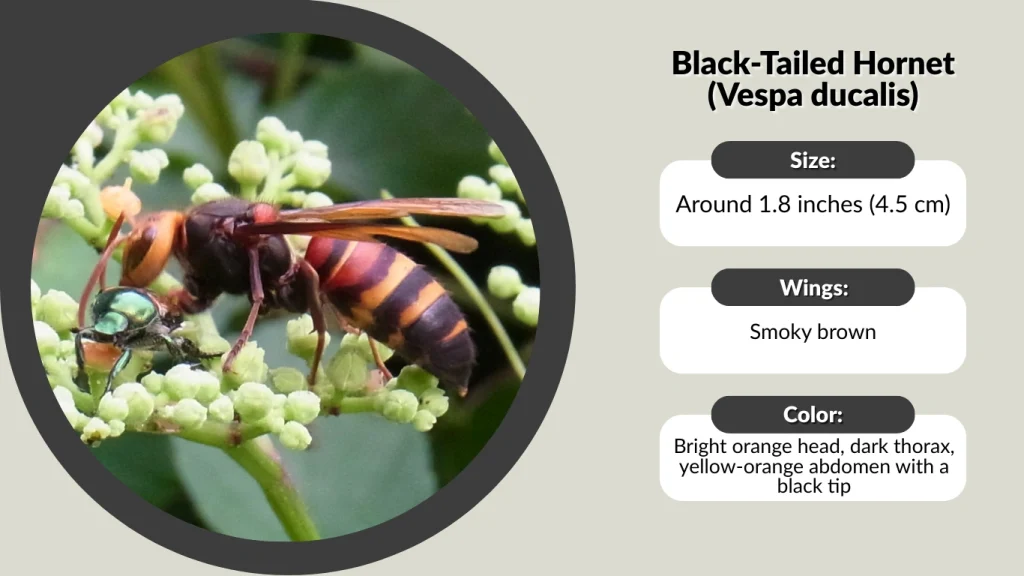
The Black-Tailed Hornet is another large species, distinguished by its orange and black coloration and a noticeably darker tail end. Although less aggressive than some relatives, its sting can still be very painful.
Identification
- Size: Around 1.8 inches (4.5 cm)
- Color: Bright orange head, dark thorax, yellow-orange abdomen with a black tip
- Wings: Smoky brown
- Shape: Sturdy and robust body similar to the Asian Giant Hornet
Habitat
This species is widely distributed in China, Korea, Japan, and parts of Southeast Asia. They typically prefer forest edges, farmlands, and low mountainous areas. Their nests are often found in tree hollows and underground burrows.
Behavior
Black-Tailed Hornets feed on flies, grasshoppers, and honeybees, playing a role as natural pest controllers. They are territorial but not as aggressive as Vespa mandarinia. Colonies grow largest in late summer, after which the hornets become more defensive of their nests.
4. European Hornet (Vespa crabro)
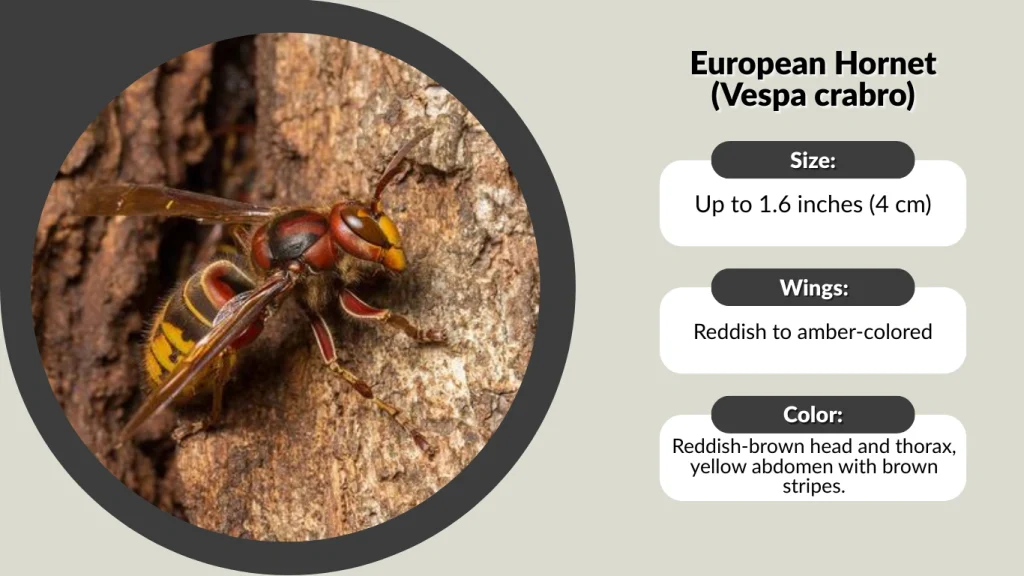
The European Hornet is the largest hornet native to Europe and one of the most studied species. Despite its intimidating size and loud buzzing, it is less aggressive than Asian hornets unless its nest is threatened.
Identification
- Size: Up to 1.6 inches (4 cm)
- Color: Reddish-brown head and thorax, yellow abdomen with brown stripes
- Wings: Reddish to amber-colored
- Eyes: Large and kidney-shaped
Habitat
This hornet is widespread across Europe, parts of Asia, and introduced populations in North America. They usually build paper nests inside hollow trees, barns, attics, or wall cavities.
Behavior
European Hornets are predatory hunters, feeding on grasshoppers, flies, caterpillars, and even other wasps. Unlike some hornets, they are nocturnally active, often hunting at night using lights as a guide. Colonies can reach up to 400–700 workers by late summer.
5. Oriental Hornet (Vespa orientalis)
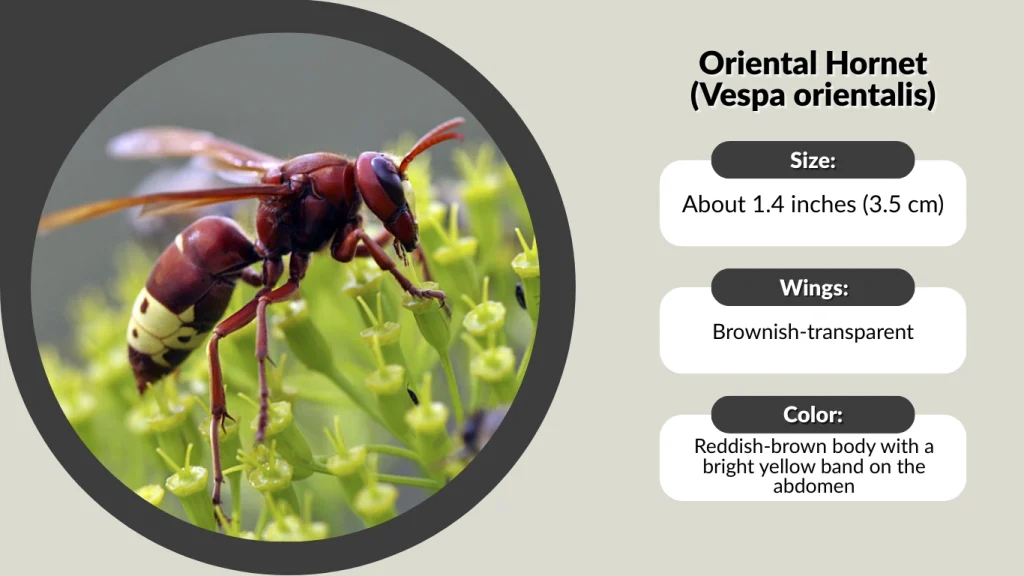
The Oriental Hornet is a large wasp well known for its unique ability to produce electricity from sunlight, thanks to special pigments in its exoskeleton. This adaptation allows it to thrive in hot climates.
Identification
- Size: About 1.4 inches (3.5 cm)
- Color: Reddish-brown body with a bright yellow band on the abdomen
- Head: Brown with yellow markings
- Wings: Brownish-transparent
Habitat
They are commonly found in the Middle East, Southern Europe, North Africa, and parts of South Asia. Their nests are usually underground, often in burrows or cracks in stone walls.
Behavior
Oriental Hornets are highly territorial and social, living in colonies with hundreds of workers. They hunt honeybees, crickets, and locusts. Their unique sunlight-energy conversion helps regulate their activity in extremely hot regions, making them active during midday when most insects avoid the heat.
6. Yellow-Legged Hornet (Vespa velutina)
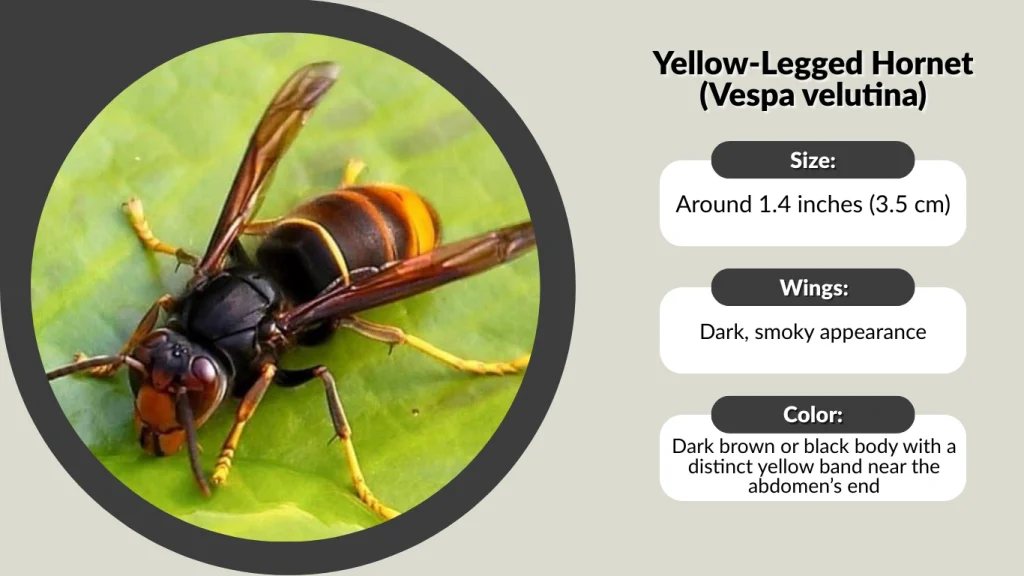
The Yellow-Legged Hornet, sometimes called the Asian Hornet, has become infamous in Europe as an invasive species. It poses a significant threat to honeybee populations due to its predatory behavior.
Identification
- Size: Around 1.4 inches (3.5 cm)
- Color: Dark brown or black body with a distinct yellow band near the abdomen’s end
- Legs: Mostly brown with bright yellow tips
- Wings: Dark, smoky appearance
Habitat
Originally from China and Southeast Asia, the species has spread rapidly across Europe. Nests are often large, round, and papery, built high in trees or under roof eaves.
Behavior
Yellow-Legged Hornets are skilled hunters of bees. They hover near hives, catch bees mid-flight, and feed them to their larvae. They are aggressive defenders of their colonies, and their spread in Europe has caused major ecological and agricultural concerns.
7. Tarantula Hawk Wasp (Pepsis grossa)

The Tarantula Hawk Wasp is not a hornet but is one of the largest wasps in the world, famous for hunting tarantulas and delivering one of the most painful stings known to humans.
Identification
- Size: Up to 2 inches (5 cm)
- Color: Metallic blue-black body with rusty orange wings
- Antennae: Long and curved in females
- Legs: Long and spiny for grappling with spiders
Habitat
Found in deserts and scrublands of the Americas, especially in the Southwestern United States, Central America, and South America. They thrive in dry, open areas with sandy soil where tarantulas are common.
Behavior
Female tarantula hawks paralyze tarantulas with their sting and drag them into burrows, laying an egg on the spider’s body. The larva then consumes the spider alive. Adults mainly feed on nectar and fermented fruits, despite their terrifying hunting methods. They are solitary wasps and rarely sting unless provoked.
8. Rusty Spider Wasp (Tachypompilus ferrugineus)

The Rusty Spider Wasp is a large solitary wasp known for its bright reddish coloration and spider-hunting abilities. Despite its intimidating look, it plays a key role in controlling spider populations.
Identification
- Size: Up to 1.5 inches (4 cm)
- Color: Rusty-red body with darker legs and wings
- Wings: Smoky brown with a reddish tint
- Shape: Slender with long legs suited for running and grappling
Habitat
This species is common in North America, particularly in the United States and Mexico. They are usually seen in gardens, woodlands, and near meadows, where spiders are abundant.
Behavior
Rusty Spider Wasps are specialized hunters, mainly preying on large wandering spiders such as wolf spiders. They paralyze their prey and lay eggs on them. Adults feed on nectar and are often spotted visiting flowers during summer. Despite their size, they are generally not aggressive toward humans.
9. Blue Mud Dauber (Chalybion californicum)
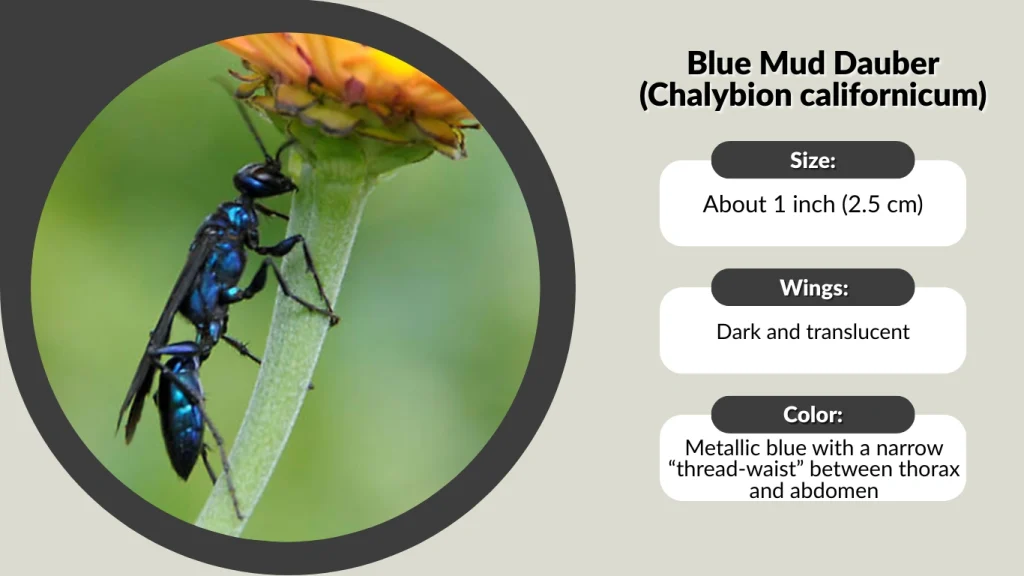
The Blue Mud Dauber is an eye-catching wasp recognized for its shiny metallic-blue body. Unlike hornets, it is a solitary species and is less aggressive, making it one of the more harmless large wasps.
Identification
- Size: About 1 inch (2.5 cm)
- Color: Metallic blue with a narrow “thread-waist” between thorax and abdomen
- Wings: Dark and translucent
- Shape: Slender body with long legs
Habitat
They are widely distributed across North America and thrive near human settlements, barns, bridges, and woodlands. Nests are usually made in mud tubes or abandoned nests of other wasps.
Behavior
Blue Mud Daubers are best known for hunting black widow spiders and other web-builders. They paralyze the spider and store it inside their mud nests as food for their larvae. Adults feed on flower nectar and play an important role in natural spider population control.
10. Cicada Killer Wasp (Sphecius speciosus)
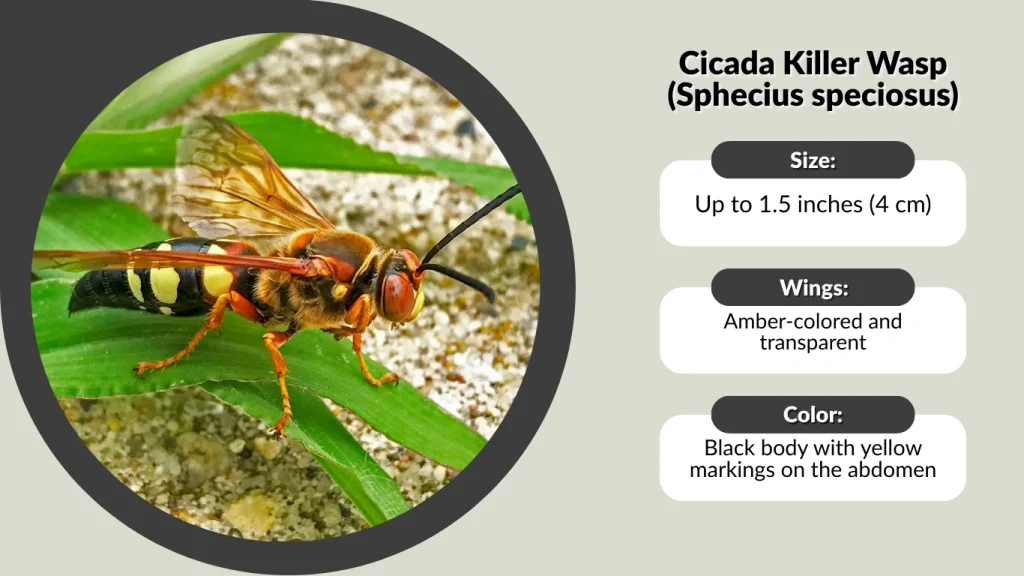
The Cicada Killer Wasp is one of the largest wasps in North America. Despite its fearsome size and name, it is not aggressive toward humans and rarely stings unless handled.
Identification
- Size: Up to 1.5 inches (4 cm)
- Color: Black body with yellow markings on the abdomen
- Head: Reddish-brown with large eyes
- Wings: Amber-colored and transparent
Habitat
These wasps are common across the United States, Mexico, and parts of Central America. They prefer sandy soils, lawns, and open fields, where they dig underground burrows to build nests.
Behavior
Females hunt cicadas, paralyze them with a sting, and carry them into their burrows as food for their larvae. Colonies are solitary but often found in large numbers in the same area, creating what appears to be a wasp “community.” Adults feed on nectar and tree sap rather than cicadas themselves.
11. Sand Wasp (Bembix species)

Sand Wasps are a diverse group of large, solitary wasps known for their speed, bright markings, and sandy nesting habits. They are agile hunters and important in controlling fly populations.
Identification
- Size: About 1 inch (2.5 cm)
- Color: Typically black with bold yellow or white bands
- Wings: Transparent with a slight smoky tint
- Shape: Slender and wasp-like, with strong legs for digging
Habitat
Found worldwide, especially in sandy areas, dunes, riverbanks, and dry fields. They excavate tunnels in the sand, where they build chambers for their developing young.
Behavior
Sand Wasps prey mainly on flies, capturing them mid-air with incredible speed. They paralyze the flies and bury them in their sandy nests for larvae to feed on. Adults are also frequent flower visitors, playing a role in pollination while hunting.
FAQs
What is the largest wasp in the world?
The Asian Giant Hornet (Vespa mandarinia) holds the record as the largest wasp, growing up to 2.2 inches (5.5 cm) long with a wingspan of around 3 inches. Its size, power, and aggressive behavior make it one of the most feared wasps worldwide.
Are giant wasps dangerous to humans?
Yes, many giant wasps can deliver painful stings, and in rare cases, repeated stings may cause severe allergic reactions or even death. However, most species, such as Cicada Killers and Blue Mud Daubers, are not aggressive and usually avoid humans unless provoked.
Which big wasp has the most painful sting?
The Tarantula Hawk Wasp (Pepsis grossa) is considered to have one of the most painful stings of any insect. While extremely painful, it is not usually life-threatening and subsides within a few minutes.
Do all giant wasps build large nests?
Not all. Species like the Asian Giant Hornet and European Hornet build large paper nests with hundreds of workers, while solitary wasps like Rusty Spider Wasps and Cicada Killers make individual burrows or mud nests.
What role do giant wasps play in nature?
Giant wasps are important predators and pollinators. They help control populations of spiders, cicadas, and flies, while also visiting flowers for nectar. Despite their fearsome reputation, they maintain ecological balance in their habitats.
