
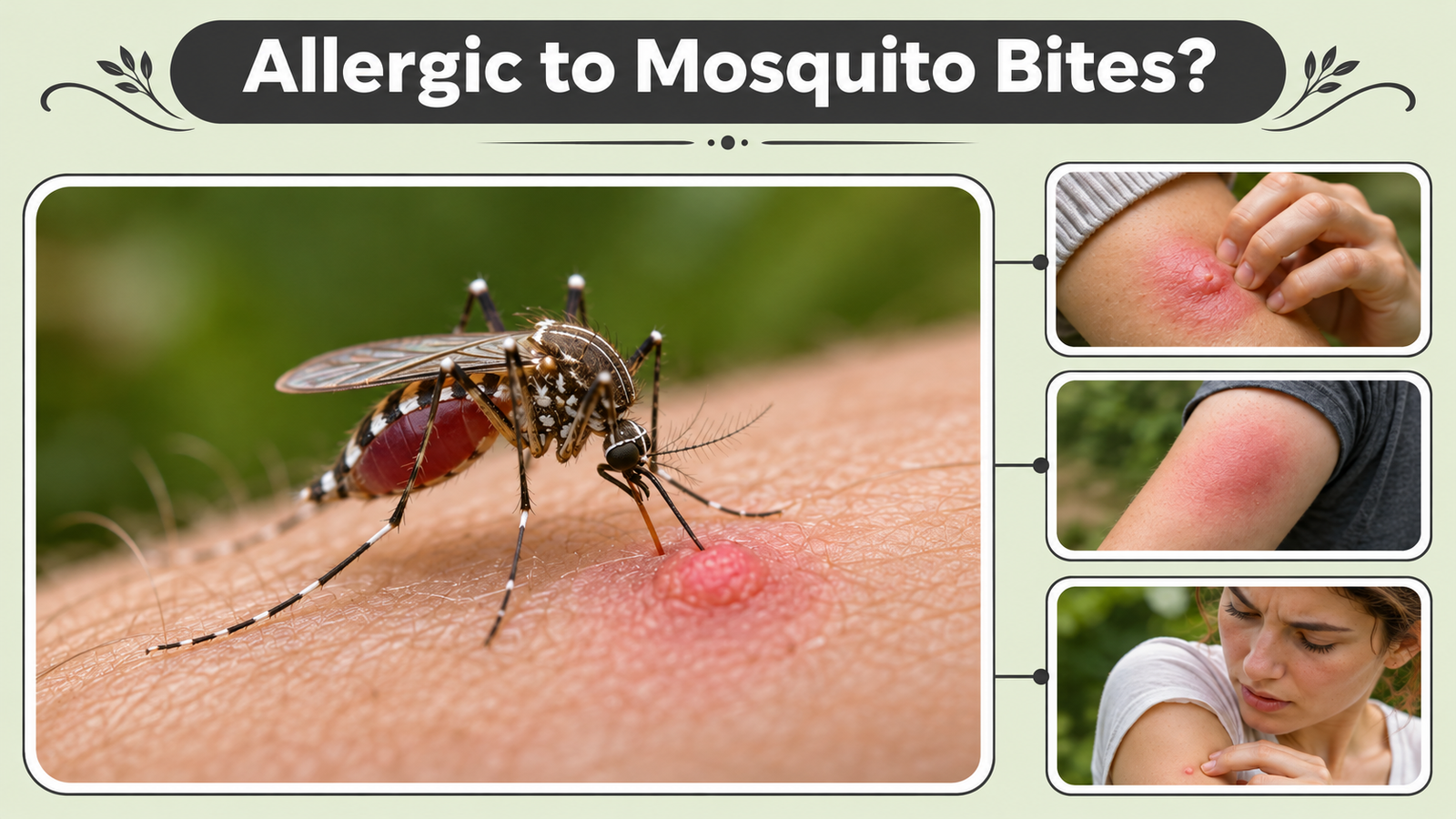
An itchy bump after a mosquito bite is common, but a large or unusually painful reaction can be unsettling. Some people develop extensive swelling, blisters, or fever after a bite, while others notice only a small spot. These differences may reflect how the immune system responds to proteins in mosquito saliva. This guide explains what a mosquito bite allergy can look like, how to ease symptoms, when to contact a health professional, and how to reduce the chance of being bitten again.
Can You Be Allergic to Mosquito Bites?
Most people have some reaction to mosquito bites. When a mosquito feeds, it puts saliva into the skin. The immune system responds to substances in that saliva, causing the familiar itching, redness, and swelling. For many people, the reaction stays small and improves within a few days.
A stronger response can cause a larger area of swelling and itching. This is sometimes called Skeeter syndrome when the reaction is substantial and may include warmth, pain, or fever. It is an allergic response to proteins in mosquito saliva, but it is different from the severe, whole-body allergic reactions people may experience after some insect stings. Mosquito-related anaphylaxis is rare.
People can react differently at different times. Children, people with certain immune system disorders, and adults exposed to mosquito species they have not encountered before may have more noticeable reactions. A large bump by itself does not necessarily mean that a person has a dangerous allergy.
Symptoms of a Mosquito Bite Allergy
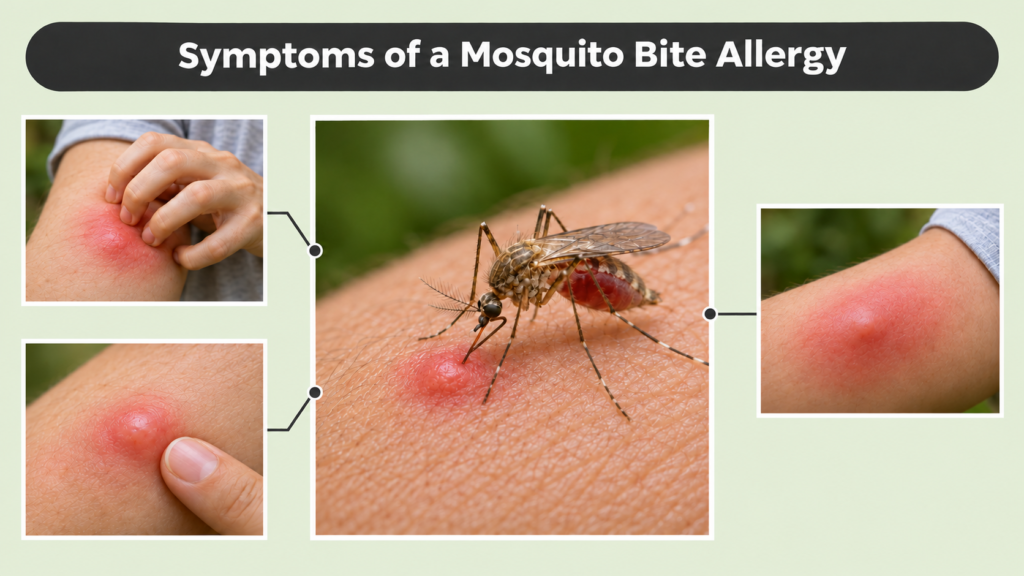
A typical bite may produce a puffy, red bump within minutes. Some bites become firm and itchy later, and small blisters or bruise-like marks can also occur. The size and timing of a reaction vary, so appearance alone cannot always identify its cause.
A stronger local reaction may cause:
- A wide area of swelling and redness around the bite
- Intense itching, tenderness, or warmth
- A blister or several blisters
- Swelling that gets larger over several hours
- A low-grade fever or swollen lymph nodes in some cases
These symptoms can look dramatic, but a large reaction is not automatically an infection. Still, worsening symptoms or feeling unwell are reasons to contact a healthcare professional.
When to Seek Emergency Help
Get emergency medical help if symptoms suggest a severe allergic reaction, such as difficulty breathing, throat or tongue swelling, trouble swallowing, faintness, or rapidly spreading hives away from the bite. These symptoms are not typical of an ordinary local mosquito bite reaction and need urgent attention.
If a clinician has prescribed an epinephrine auto-injector for a previous severe allergic reaction, follow the person’s emergency plan and seek emergency care after using it. Antihistamines should not be used as a substitute for emergency treatment when a person has breathing problems or other signs of anaphylaxis.
How to Treat an Allergic Reaction to Mosquito Bites
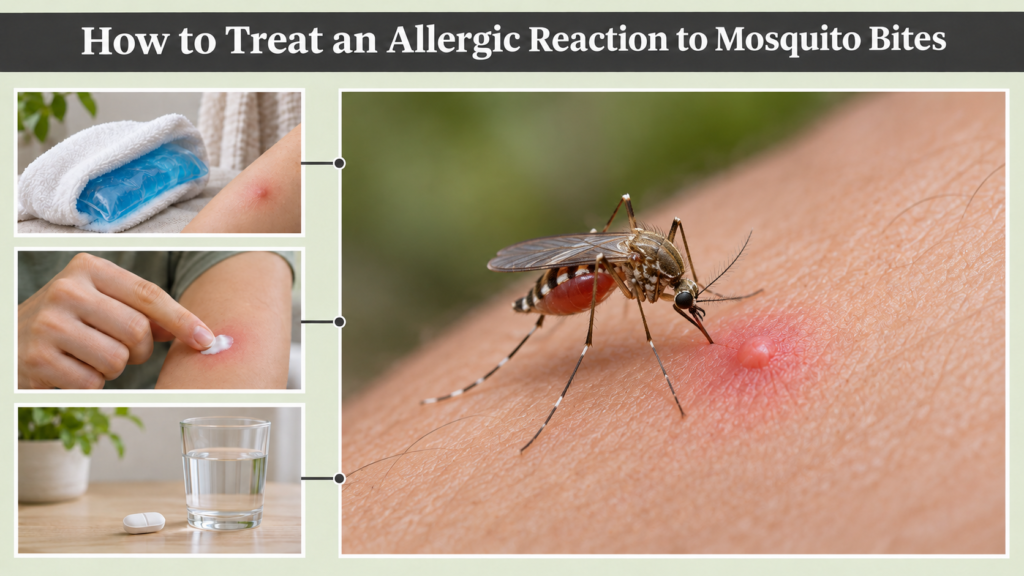
For a mild or moderate local reaction, simple care can reduce itching and discomfort while the skin heals. Wash the area gently with soap and water, then apply a cold, damp cloth or a wrapped ice pack for short periods. If the bite is on an arm or leg, raising the limb may help with swelling. Avoid placing ice directly on the skin.
Calamine lotion or an over-the-counter hydrocortisone cream may help with itching. An oral antihistamine may also relieve symptoms for some people. Follow the product label, and ask a pharmacist or healthcare professional before giving medicine to a child, combining medicines, or using a product if you are pregnant, breastfeeding, have a health condition, or take other medication.
Try not to scratch. Scratching can break the skin and raise the risk of infection. Keep fingernails short, and use a cool compress when itching feels difficult to manage. Avoid home remedies that irritate the skin or have not been recommended by a qualified healthcare professional.
How Long Does a Mosquito Bite Reaction Last?
A common bite usually becomes less itchy and swollen over a few days, although the exact timing varies. A more severe local reaction can take longer to settle. Some reactions associated with Skeeter syndrome may last several days, and sometimes longer, before the swelling and redness fade.
Watch the pattern as well as the size. A bite that gradually improves is generally less concerning than one that keeps getting worse, becomes increasingly painful, or develops new symptoms. If the reaction is severe, lasts longer than expected, or interferes with sleep or daily activities, contact a healthcare professional for advice.
Allergy or Infection: How to Tell the Difference
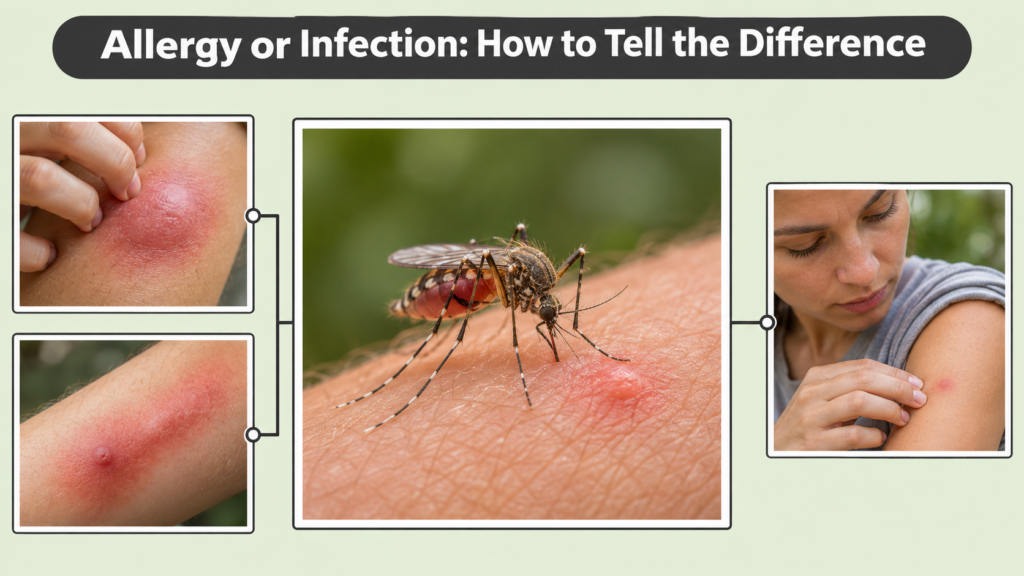
A large allergic reaction and a skin infection can both cause redness, warmth, and swelling, so it can be difficult to distinguish them without an examination. An allergic reaction often begins soon after a bite and causes prominent itching and swelling. An infection may develop after the skin is scratched or broken, and the area may become increasingly painful, warm, or tender.
Look for worsening redness, pus, a red streak spreading from the bite, increasing pain, or fever. These signs need medical evaluation, particularly if symptoms are progressing or the person feels unwell. The CDC advises avoiding scratching and seeking care if symptoms of an infected bite worsen.
Do not try to diagnose an infection only by looking at a photograph or comparing the bite with pictures online. If you are unsure—especially with a young child, a rapidly changing reaction, or fever—ask a healthcare professional.
How Is a Mosquito Bite Allergy Diagnosed?
A clinician will usually ask when the bite occurred, how quickly symptoms appeared, how large the reaction became, how long it lasted, and whether other symptoms developed. They may examine the area and consider other possible causes, including an infection or a different skin condition.
There is no simple blood test that can confirm Skeeter syndrome in every case. Mayo Clinic notes that diagnosis is generally based on the pattern of large areas of swelling and itching after mosquito bites. A medical professional can determine whether additional assessment is needed.
Keep a short record if reactions happen repeatedly: note the date, location on the body, how quickly symptoms began, how long they lasted, and any medicines used. Photos taken over time can help show whether swelling is increasing or improving. This information may help a clinician assess the pattern.
How to Prevent Mosquito Bites
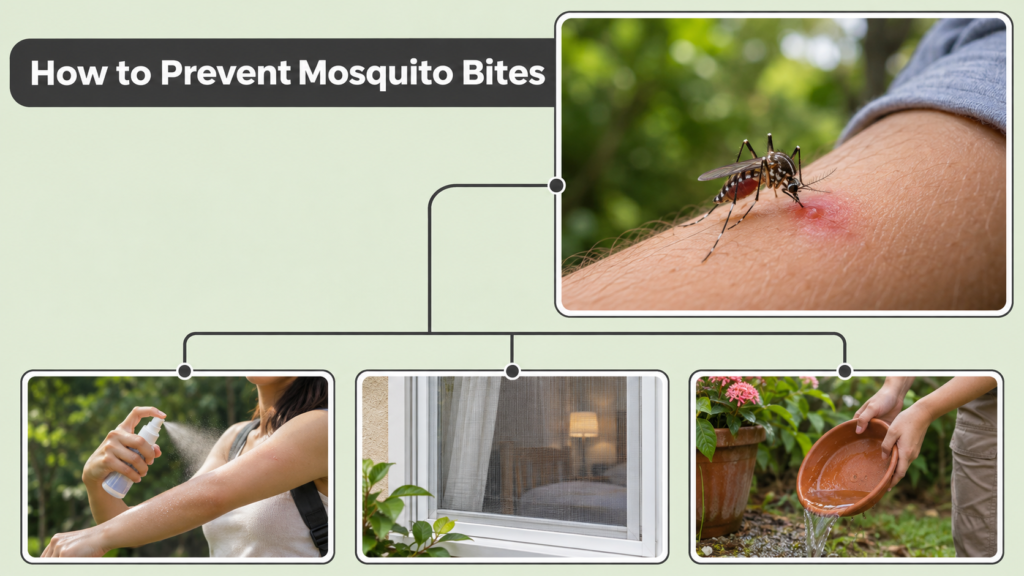
The most reliable way to reduce allergic reactions is to prevent bites. Use an insect repellent with an active ingredient recommended by local public health guidance, and follow the label directions for where and how often to apply it. CDC lists ingredients such as DEET, picaridin, IR3535, and oil of lemon eucalyptus among options used in registered repellents.
Wear loose-fitting clothing that covers the arms and legs when mosquitoes are active. Permethrin-treated clothing and gear can provide added protection, but permethrin products should not be applied directly to the skin. Repair screens on windows and doors, use air conditioning when available, and remove standing water where mosquitoes can lay eggs.
Mosquito activity varies by place and species, and mosquitoes may bite during both daytime and nighttime. Use precautions when spending time outdoors, especially near standing water, gardens, or other areas where mosquitoes gather. If you know you react strongly to bites, keeping repellent and a cold pack available can make it easier to respond promptly.
When to Talk to a Doctor
Arrange medical advice if swelling is extensive, symptoms keep worsening, a blister becomes large or painful, or a reaction lasts longer than expected. Contact a healthcare professional if the bite area becomes increasingly warm or painful, redness spreads, pus appears, or you develop fever or feel unwell.
Seek emergency help for breathing difficulty, swelling of the throat or tongue, faintness, trouble swallowing, or widespread hives. These symptoms require urgent care even though a severe whole-body reaction to mosquito bites is uncommon. When in doubt about a child’s reaction or a rapidly changing symptom, contact a medical professional rather than waiting for it to resolve.
FAQs
Are large mosquito bites always an allergy?
No. The immune system normally reacts to mosquito saliva, and some people naturally develop larger local reactions than others. Extensive swelling can be consistent with an allergic response, including Skeeter syndrome, but size alone does not establish a diagnosis. A clinician can assess the symptoms and rule out infection or another cause.
Can a mosquito bite allergy develop suddenly?
A person’s reactions can change over time. The type of mosquito, previous exposure, age, and immune response may all play a role. A newly large or unusual reaction is not enough to diagnose an allergy, so seek medical advice if it is severe, worsening, or accompanied by other symptoms.
Should I take an antihistamine for mosquito bite swelling?
An oral antihistamine may help relieve itching or swelling for some people. Follow the medicine’s label and check with a pharmacist or healthcare professional if you have questions, take other medicines, or are choosing a product for a child. Do not rely on antihistamines for breathing problems or other emergency symptoms.
Is Skeeter syndrome dangerous?
Skeeter syndrome can cause pronounced swelling, itching, warmth, and sometimes fever, and it may take several days to improve. It can resemble an infection, so seek medical advice if the area keeps worsening or you feel unwell. Difficulty breathing, throat swelling, faintness, or widespread hives call for emergency help.
What is the fastest way to stop mosquito bite itching?
A cold compress can ease itching and swelling. Calamine lotion, over-the-counter hydrocortisone cream, or an oral antihistamine may also help when used according to the product label. Avoid scratching, since broken skin can become infected. If symptoms worsen or do not improve, contact a healthcare professional.
