
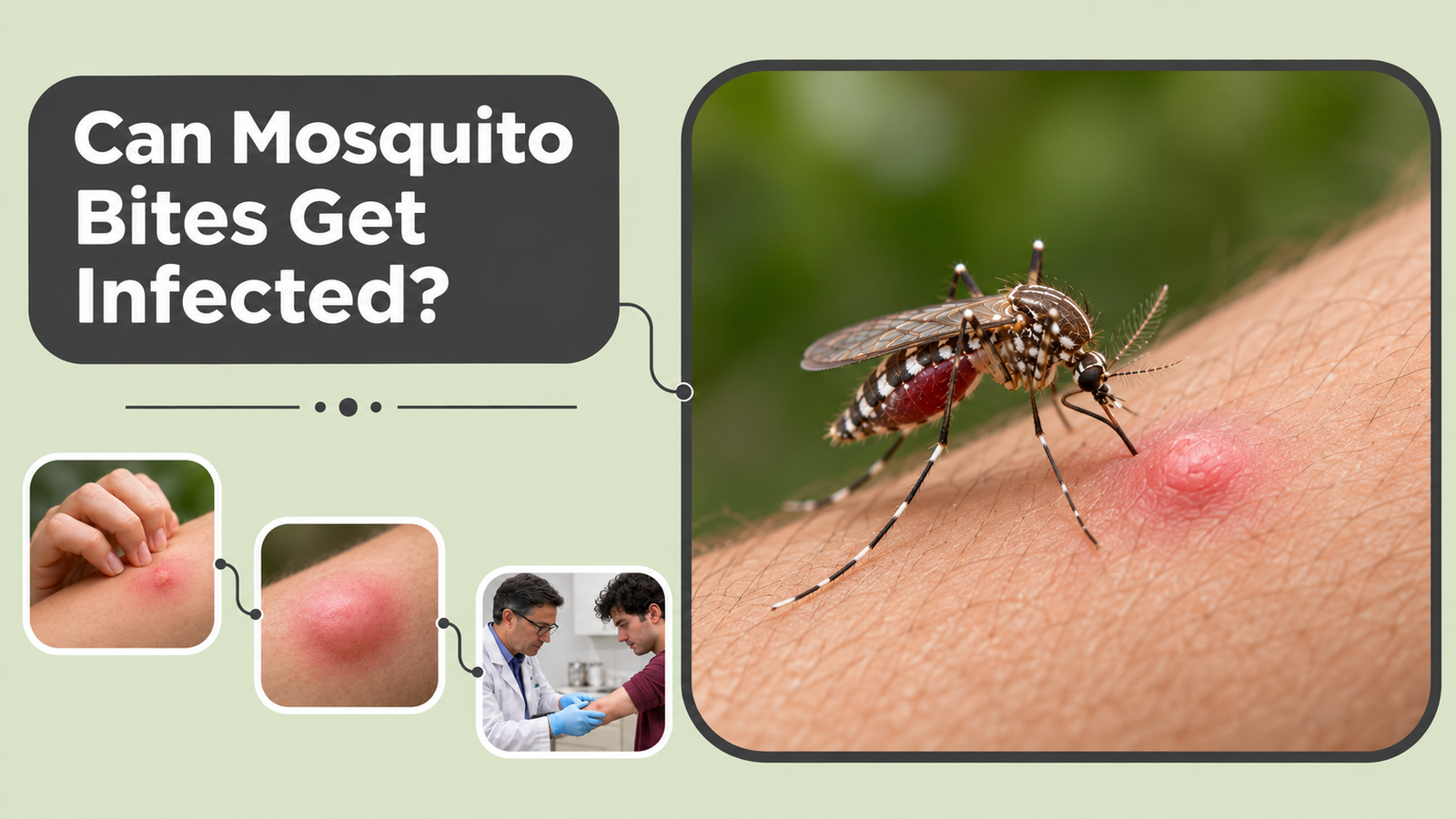
Yes, a mosquito bite can get infected. The bite usually causes an itchy bump because the skin reacts to mosquito saliva. Scratching can break the skin and allow bacteria to enter. Watch for worsening symptoms such as spreading warmth or swelling, increasing pain, or pus. A large, itchy welt can also be a strong reaction to the bite rather than an infection, so consider how the area changes over time and whether other symptoms appear.
How Can a Mosquito Bite Get Infected?
A mosquito bite creates a small opening in the skin. Bacteria on the skin or hands may enter if scratching damages that area. Repeated scratching can also make the skin raw, cause bleeding, or form an open sore. Most mosquito bites do not become infected, but broken skin can increase the risk.
The initial bump, itch, and mild swelling are usually part of the body’s response to mosquito saliva. These symptoms alone do not mean bacteria are present. If you have scratched a bite, gently wash it with soap and water, keep your nails clean, and try not to pick at scabs or blisters.
Does Scratching Always Cause an Infection?
No. Scratching does not automatically lead to infection, although it can damage the skin and raise the risk. If the skin is open, cover it with a clean dressing when clothing or hands may rub against it. Replace the dressing if it becomes wet or dirty, and watch for changes around the bite.
What Are the Symptoms of an Infected Mosquito Bite?
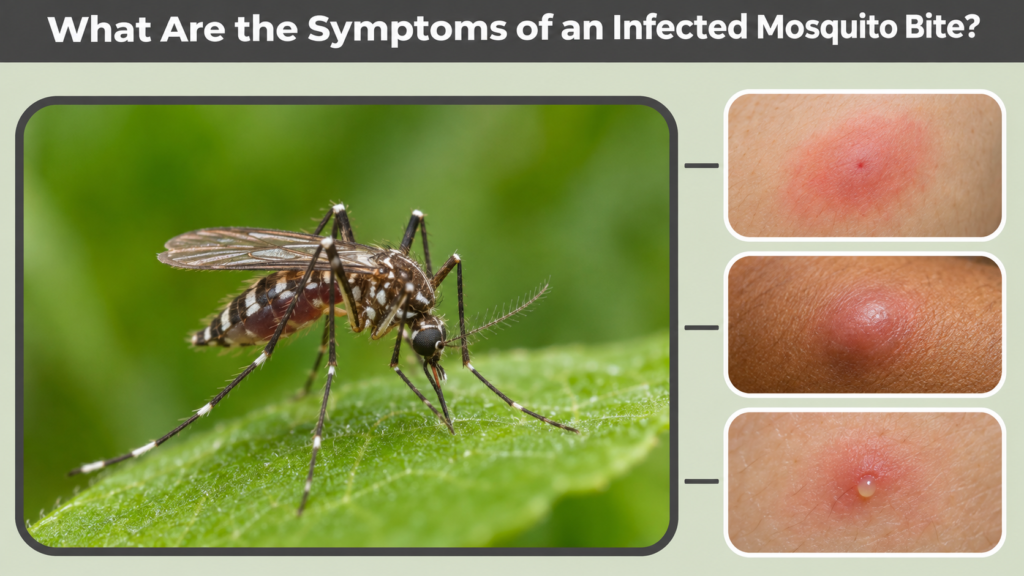
A possible infection often becomes more painful, warm, swollen, or tender instead of gradually settling. Look for changes in the skin around the bite and in how you feel overall. Infection may remain a localized sore or develop into cellulitis, which affects deeper layers of skin.
Signs that deserve attention include:
- Increasing pain or tenderness. The area hurts more over time or becomes painful to touch.
- Spreading warmth or swelling. The affected area grows beyond the original bump or feels much warmer than nearby skin.
- Pus or cloudy drainage. Thick white or yellowish fluid may come from an open spot.
- Worsening skin discoloration. The affected area may expand. Redness can be harder to see on brown or black skin, so also watch for increasing warmth, swelling, or tenderness.
- Red streaks. Lines extending away from the bite may signal that infection is spreading.
- Fever, chills, or feeling unwell. These symptoms alongside a worsening bite call for prompt medical advice.
Is a Large Swollen Bite Infected?
Not always. Some people develop a large local reaction to mosquito saliva. It can be very itchy, red, warm, and swollen, sometimes appearing within hours. A large reaction can resemble an infection, so size alone cannot confirm that a bite is infected.
Pay attention to the overall pattern. A very itchy welt that appears soon after the bite and gradually improves may be a local reaction. Increasing pain, spreading warmth, pus, fever, or symptoms that continue to worsen are more concerning and should be assessed by a healthcare professional.
Infected Bite or Normal Bite Reaction?
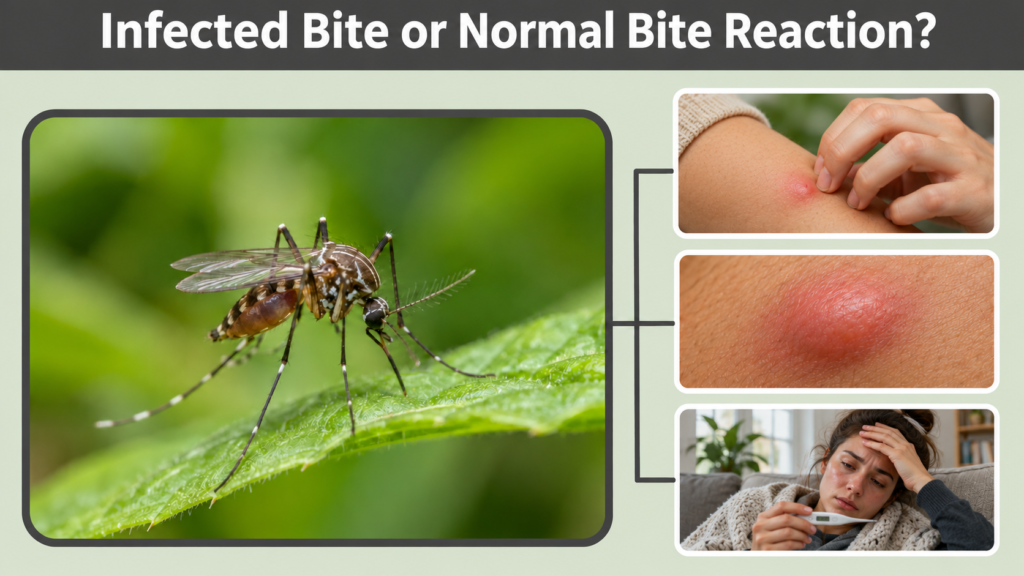
Normal mosquito bites commonly cause itching and swelling because the body reacts to mosquito saliva. In contrast, an infection often becomes increasingly painful or tender, and the affected area may keep spreading. These patterns can overlap, so they cannot replace a medical examination when symptoms are getting worse.
| Feature | Typical bite reaction | Possible infection |
|---|---|---|
| Main feeling | Itching is usually the main complaint | Pain and tenderness may increase |
| Swelling | Often centered around the bite and gradually settles | May spread or continue to worsen |
| Warmth | Mild warmth can occur | More concerning when paired with increasing pain or spreading swelling |
| Drainage | Usually none, though a small blister may form | Pus or cloudy drainage may appear |
| Other symptoms | Usually no fever or feeling unwell | Fever, chills, or feeling unwell may occur |
Can a Mosquito Bite Be Infected Without Pus?
Yes. Pus is one possible sign, but it is not required for an infection. Cellulitis may cause painful, warm, swollen, tender skin without visible drainage. If the affected area is spreading or the pain is increasing, contact a healthcare professional even when you do not see pus.
What Is Cellulitis From a Mosquito Bite?
Cellulitis is a bacterial infection in deeper layers of the skin. Bacteria can enter through a break in the skin, including a scratched bite. The area may become painful, warm, swollen, and tender. Some people also develop fever or chills. Cellulitis can spread and become serious if it is not treated, so suspected symptoms need medical assessment.
Seek prompt care if swelling or discoloration is expanding, the skin is hot and painful, pus appears, or you develop fever or chills. Red streaks extending from the bite also need urgent evaluation. If you have diabetes, poor circulation, or a weakened immune system, contact a clinician early when you suspect infection.
How to Treat a Mosquito Bite at Home

For an uncomplicated bite that is mainly itchy and not getting worse, home care can soothe the skin and help prevent scratching. Gently wash the area with soap and water, then pat it dry. Apply a cool, clean cloth or a wrapped cold pack for short periods to ease itching and swelling.
Avoid putting ice directly on the skin. Try not to scratch, squeeze, or puncture the bite. If it is open, keep it clean and cover it with a fresh dressing if needed. Ask a pharmacist about a suitable treatment for itching, especially before using a product on a child or on sensitive skin.
Home care may ease discomfort, but it cannot treat cellulitis. If the bite is becoming more painful, warm, or swollen, or if you notice pus, spreading skin changes, or fever, seek medical advice instead of relying on creams or home remedies.
How Doctors Treat an Infected Mosquito Bite
A healthcare professional will examine the bite and surrounding skin, ask when the symptoms began, and check whether swelling or discoloration is spreading. If they suspect cellulitis, they may prescribe antibiotics. The treatment depends on what they find and how severe the infection is. Some infections need additional care, such as drainage if a pocket of pus has formed.
Take prescribed medicine as directed. Contact the clinician again if symptoms worsen or do not begin improving within the timeframe they provide. Do not use leftover antibiotics or another person’s prescription, as the wrong medicine may not treat the infection properly.
When Should You Get Medical Help?

Arrange prompt medical care if the bite is increasingly painful, hot, swollen, or spreading; if you see pus or red streaks; or if you have fever or chills. Seek urgent help if you feel very unwell or if symptoms worsen quickly.
Breathing difficulty or swelling of the lips, tongue, or throat can signal a severe allergic reaction rather than a skin infection. Get emergency help if these symptoms occur. Fever or feeling unwell after mosquito bites can also have causes other than a skin infection, especially after travel. Tell the clinician about recent travel and when your symptoms began.
How to Reduce the Risk of Infection
The simplest step is to reduce scratching. Keep nails short, wash your hands before touching the bite, and use a cool cloth when itching starts. Cover an open or repeatedly scratched bite with a clean dressing and replace it if it becomes wet or dirty.
For children, check the bite and remind them not to pick at it. A cool cloth can help calm itching. Ask a pharmacist or pediatric clinician before using an anti-itch medicine on a young child.
Frequently Asked Questions
Can mosquito bites get infected from scratching?
Yes. Scratching can break the skin and create an opening where bacteria may enter. It raises the risk but does not mean an infection will definitely develop.
How quickly can a mosquito bite become infected?
There is no single timeline. Watch for symptoms that worsen after the initial bite, such as increasing pain, spreading warmth or swelling, drainage, or fever. If the skin is getting worse, seek medical advice.
Should I pop a blister from a mosquito bite?
No. Popping it can damage the skin and increase the chance of infection. Keep the area clean and let the blister heal naturally. Seek care if it becomes increasingly painful, warm, or swollen, or starts draining cloudy fluid.
Can an infected mosquito bite heal on its own?
A mild bite reaction often improves without medical treatment, but a bacterial infection such as cellulitis may need antibiotics. If you suspect infection, especially with spreading warmth, swelling, increasing pain, pus, or fever, contact a healthcare professional.
Is every red mosquito bite infected?
No. A small red, itchy bump is a common bite reaction. Even a larger itchy welt can be an inflammatory response to mosquito saliva. Spreading warmth, increasing pain, pus, red streaks, or fever are stronger reasons to seek medical assessment.
