
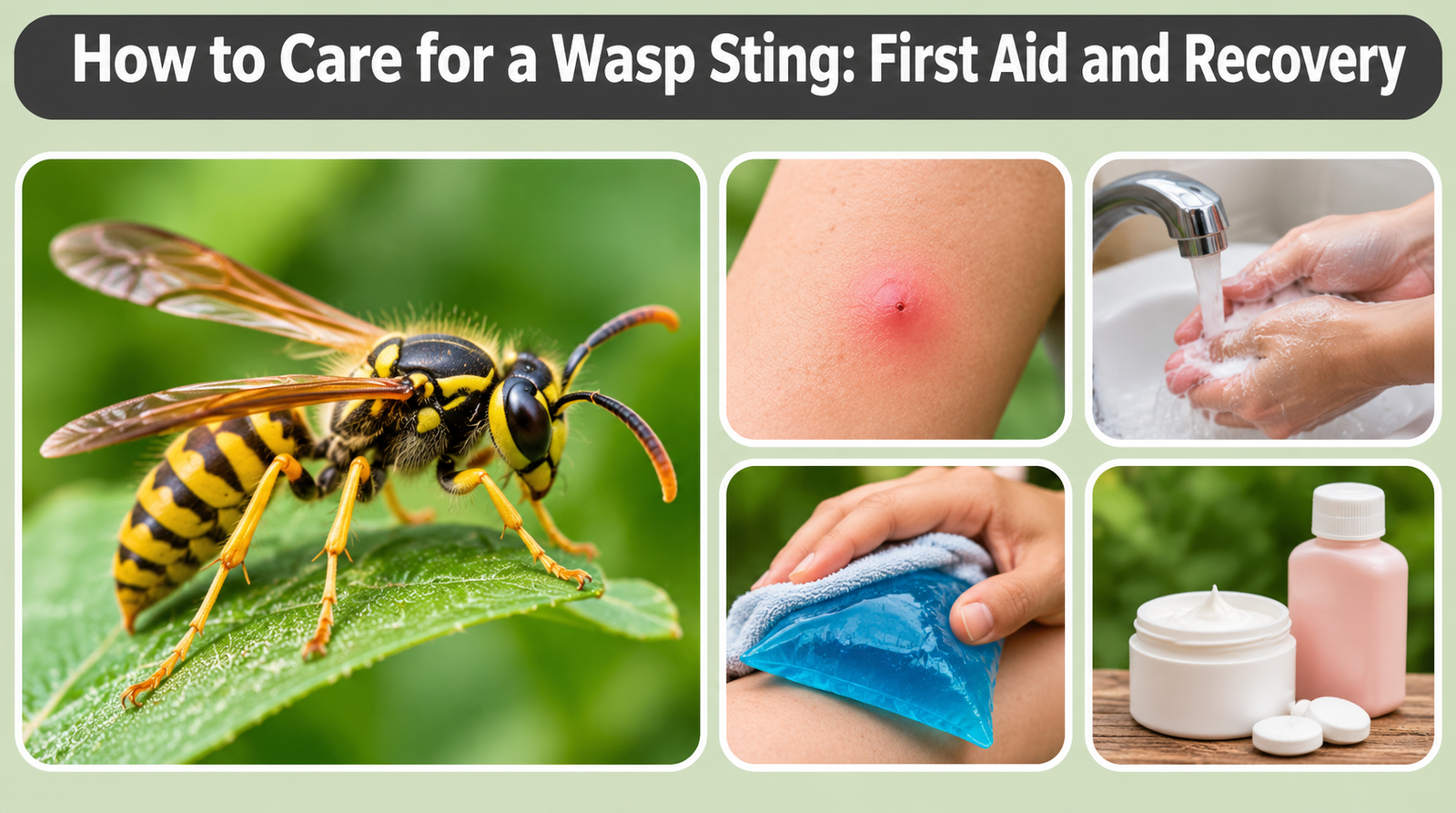
A wasp sting can leave your skin painful, red, itchy, and swollen for several days. Most stings improve with simple care, but proper aftercare helps ease discomfort and lowers the chance of irritation or infection. The first steps are to clean the skin, apply a cold compress, and watch for signs of an allergic reaction. After that, keeping the area clean and avoiding scratching are usually enough. This guide explains how to care for a wasp sting naturally, manage swelling, and recognize symptoms that require medical attention.
How to Care for a Wasp Sting Immediately
Move away from the wasp, which can sting repeatedly while defending a nest. Skin may burn, itch, or swell within minutes. Most reactions stay near the sting, but severe allergies can develop quickly. Begin first aid while observing the person’s condition.
Essential First-Aid Steps
- Leave the area. Walk away from wasps and avoid disturbing their nest.
- Look for a stinger. Wasps usually withdraw theirs, but remove any visible stinger promptly.
- Wash the skin. Clean the puncture gently with soap and water.
- Apply a cold compress. Use an ice pack wrapped in a towel for 10–20 minutes.
- Remove tight items. Take off rings or bracelets before swelling increases.
- Check for serious symptoms. Breathing problems, fainting, or throat swelling need emergency care.
Never squeeze, cut, or attempt to suck venom from the skin.
What Should You Do During the First Hour?
During the first hour, monitor symptoms elsewhere in the body. If discomfort remains local, continue cooling. Breathing trouble, dizziness, widespread hives, or vomiting may signal a severe allergy. Use prescribed epinephrine immediately if anaphylaxis is suspected and call emergency services. Antihistamines cannot replace epinephrine.
How to Care for a Wasp Sting Naturally
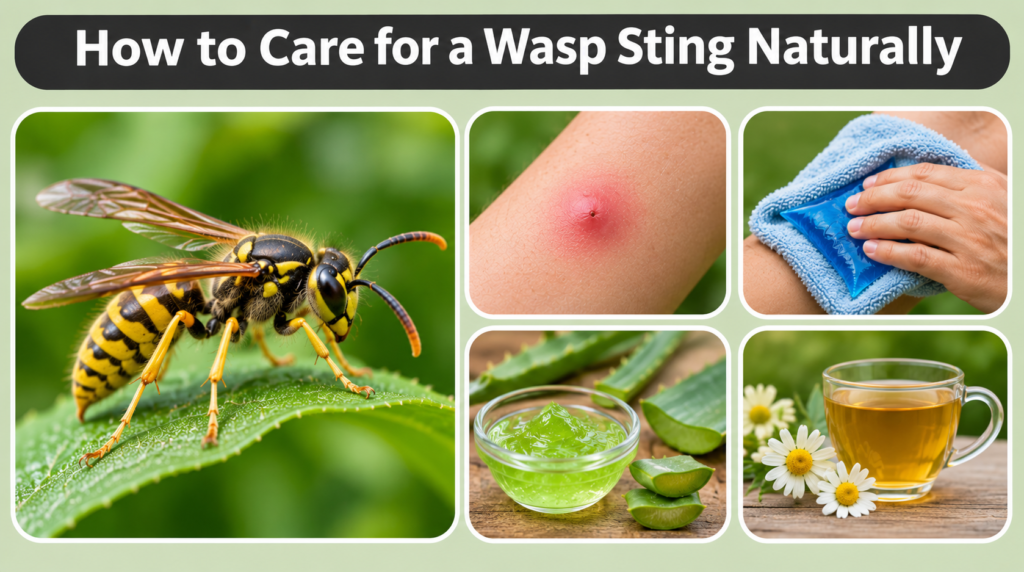
Natural care means gentle methods that support healing. Cooling the skin, reducing friction, and keeping it clean can ease mild symptoms. Homemade mixtures are unnecessary. These measures are appropriate only for minor reactions, never serious allergic symptoms.
Simple Ways to Reduce Pain and Swelling
- Cool the area: Apply a clean cold cloth or wrapped ice pack in short sessions.
- Elevate the limb: Raise a swollen hand, arm, foot, or leg when possible.
- Rest the affected skin: Avoid rubbing it against tight clothing or equipment.
- Keep it clean: Gently wash away sweat, dirt, or other contaminants.
- Avoid scratching: Scratching can break the skin and increase infection risk.
Avoid dirt, toothpaste, concentrated essential oils, or undiluted vinegar. None reliably neutralizes venom, and some irritate skin.
Can You Use Over-the-Counter Remedies?
Yes. Calamine or suitable hydrocortisone may soothe itching. Oral antihistamines can help persistent itching; appropriate pain relievers ease soreness. Follow label directions, age limits, and warnings. Ask a pharmacist or clinician if uncertain, especially for a child.
How to Care for a Red Wasp Sting
Red wasps, often reddish paper wasps, can cause sharp pain and swelling. Care is the same as for other wasps: wash, cool, and avoid scratching. No special antidote or homemade treatment is necessary.
Paper wasps may defend nests, so move away first. Seek advice after multiple stings or symptoms beyond the sting sites. Color alone does not predict severity.
Does a Red Wasp Sting Hurt More?
Pain varies by species, location, and person. Intense burning does not automatically mean an allergy, while anaphylaxis may occur without severe local pain. Watch for breathing difficulty, widespread hives, or faintness.
Wasp Sting Care During the Next Few Days
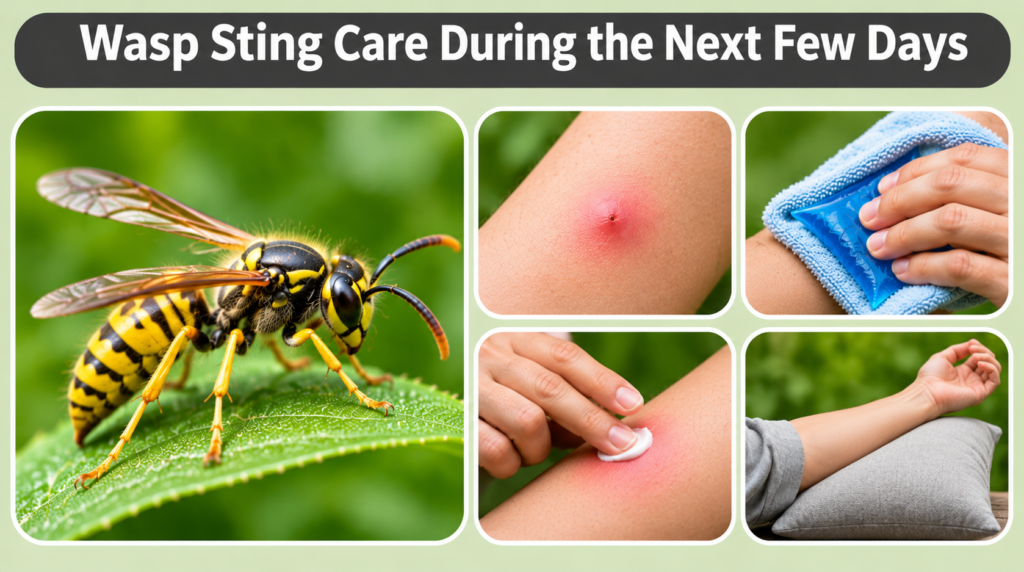
Many people improve within hours, but itching and swelling may continue. A large local reaction can peak during the first 24–48 hours. Monitor symptoms and avoid scratching. Fever, pus, or worsening pain warrants assessment.
A Simple Sting Recovery Timeline
- First 30 minutes: Clean and cool the sting; watch closely for severe allergic symptoms.
- First 24 hours: Mild soreness, redness, and swelling may continue. Use cool compresses as needed.
- Days 2–3: Itching may persist. A large local reaction may reach its greatest size before improving.
- Following days: Swelling should gradually settle. Seek medical advice if symptoms worsen or fail to improve.
Recovery varies with sting location and individual response.
How Can You Avoid Irritating the Sting?
Wear loose clothing, avoid scratching, and skip harsh cleaners. Remove rings from swollen fingers and elevate affected limbs. Avoid tight bandages. Seek advice if swelling interferes with movement.
When Does a Wasp Sting Need Medical Care?
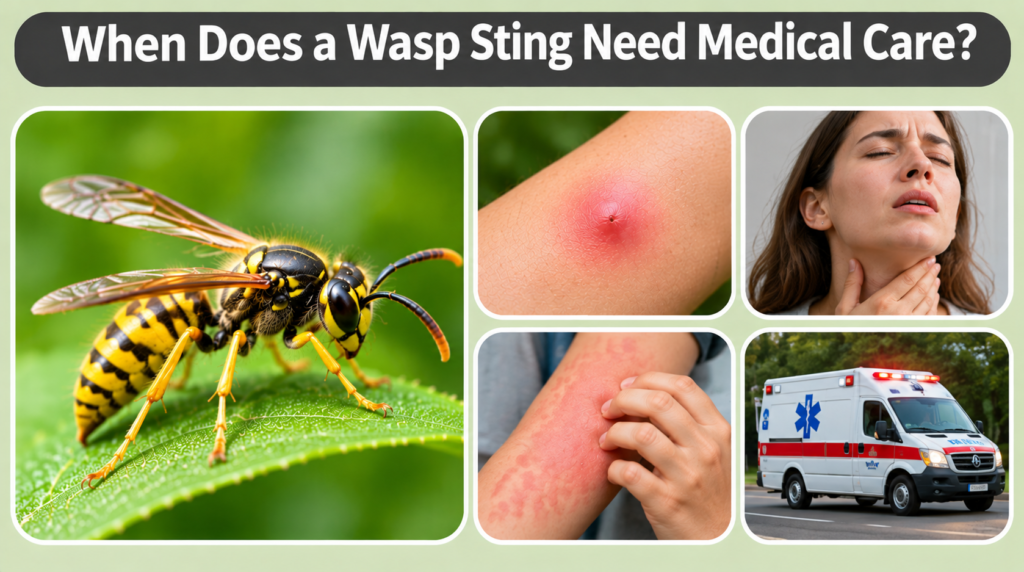
Most stings do not require professional treatment. However, anaphylaxis can affect breathing and circulation within minutes. Mouth or throat stings may also threaten the airway. Severe symptoms need immediate care, even if the sting mark looks small.
Emergency Warning Signs
Call emergency services for any of the following after a sting:
- Difficulty breathing, wheezing, or throat tightness.
- Swelling of the tongue or throat, or trouble swallowing.
- Fainting, confusion, collapse, or severe dizziness.
- Widespread hives alongside breathing or circulation symptoms.
- Repeated vomiting or severe abdominal symptoms suggesting anaphylaxis.
Use prescribed epinephrine according to the emergency plan if anaphylaxis is suspected. Emergency medical evaluation is required even if symptoms improve afterward.
Other Reasons to Seek Medical Advice
Seek assessment for eye or mouth stings, numerous stings, severe pain, or restricted movement. Fever, pus, or increasing warmth may indicate infection. After a previous severe reaction, consult an allergist about testing and prevention.
FAQs
1. What is the best way to care for a wasp sting at home?
Wash the site with soap and water, apply a wrapped cold pack, and avoid scratching. For itching, appropriate calamine or hydrocortisone may help. Monitor the area and seek medical advice if pain or swelling becomes worse instead of improving.
2. Can a wasp sting heal naturally without medicine?
Yes. Many uncomplicated stings heal with cleaning, cooling, rest, and time. Medication is optional when discomfort is mild. However, difficulty breathing, throat swelling, fainting, or other signs of anaphylaxis require immediate emergency treatment rather than natural remedies.
3. How long should you apply ice to a wasp sting?
Use an ice pack wrapped in cloth for about 10–20 minutes at a time. Repeat when needed, allowing the skin to return to a normal temperature between applications. Never apply ice directly or leave it on continuously, because prolonged cold exposure can injure skin.
4. Is swelling the day after a wasp sting normal?
Some swelling the following day is common, and a larger local reaction may peak after 24–48 hours. This alone does not mean infection or anaphylaxis. Seek medical advice if swelling becomes severe, continues to worsen, or comes with fever, pus, or significant pain.
5. Can you care for a red wasp sting the same way?
Yes. Red wasp stings usually need the same care as other uncomplicated wasp stings: gentle washing, cold compresses, and suitable relief for pain or itching. Regardless of the wasp’s color, seek urgent help if breathing difficulties or other serious allergic symptoms appear.
