
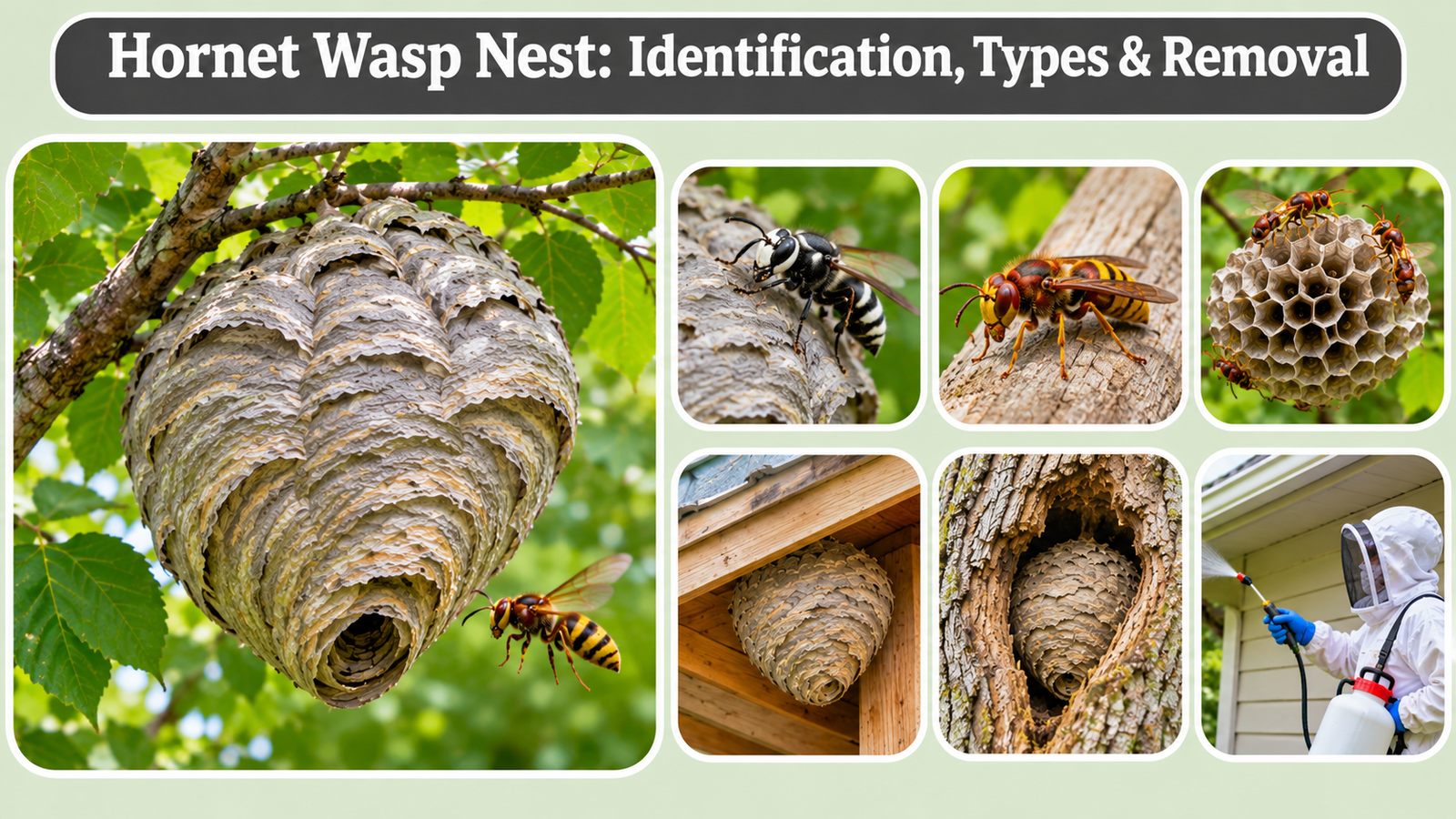
A hornet wasp nest is a papery structure where social hornets live, raise their young, and protect their colony. These nests may hang from tree branches, appear beneath roof eaves, or remain hidden inside walls and hollow trees. Knowing how to identify a hornet wasp nest helps homeowners distinguish it from an ordinary wasp or bee nest. Some hornets aggressively defend their colonies, making removal dangerous without proper precautions. This guide explains hornet nest identification, common types, nesting locations, and safe removal methods.
What Does a Hornet Wasp Nest Look Like?
A hornet wasp nest typically has an enclosed structure made from chewed wood fibers mixed with saliva. Depending on the species, it may be gray, tan, brown, or striped. Most enclosed nests contain multiple layers of hexagonal brood cells protected by an outer papery covering.
Hornet Wasp Nest Identification Features
Look for these characteristics when identifying a hornet nest:
- Shape: Usually round, oval, pear-shaped, or irregular.
- Color: Gray, light brown, tan, or a combination of shades.
- Material: Thin, layered paper made from wood fibers.
- Entrance: One or more openings through which hornets enter and leave.
- Size: Can range from a small spring nest to a structure larger than a basketball.
- Location: Tree branches, roof edges, hollow trees, attics, or walls.
Not all hornet nests are visible. European hornets commonly construct their nests inside protected cavities.
What Is Inside a Hornet Nest?
The interior contains several layers of brood cells where the queen lays eggs.
Worker hornets feed developing larvae, maintain the nest, gather food, and protect the colony.
The protective outer covering helps shield the developing insects from weather and predators.
As the colony grows, workers expand the nest by adding new cells and outer layers.
Common Types of Hornet Wasp Nests
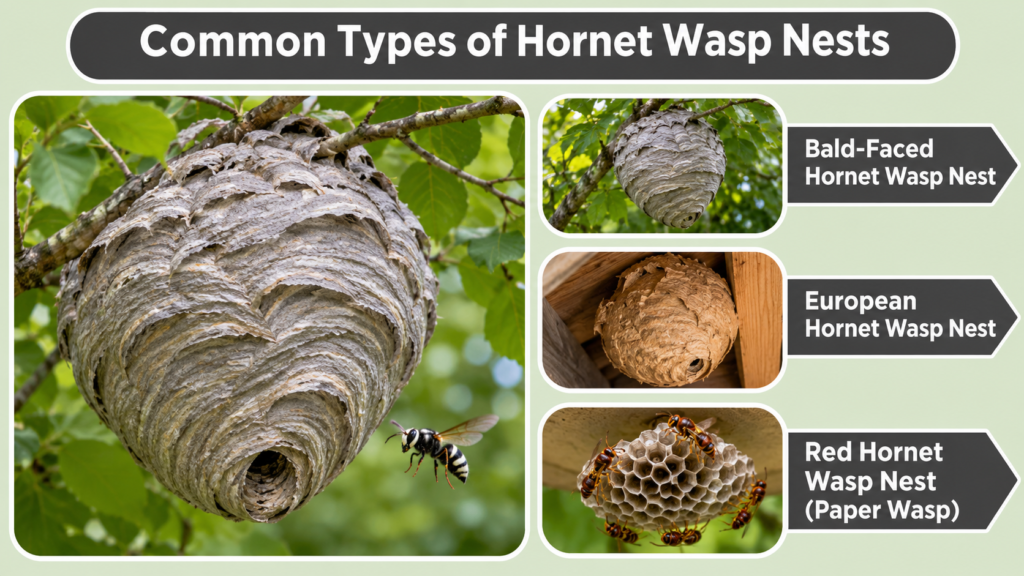
Different hornet species build nests with distinctive shapes, colors, and locations. In North America, bald-faced hornets and European hornets are frequently encountered around homes. Although both produce papery nests, their appearance and nesting behavior differ considerably.
1. Bald-Faced Hornet Wasp Nest
Bald-faced hornets (Dolichovespula maculata) are black-and-white social wasps commonly found throughout North America.
Despite their name, they are actually aerial yellowjackets rather than true hornets.
Identification features:
- Large, enclosed gray paper nest.
- Oval or pear-shaped structure.
- Entrance commonly near the bottom.
- Often suspended from tree branches.
- Black wasps with distinctive white facial markings.
Mature nests may become larger than a basketball and contain hundreds of workers.
Bald-faced hornets defend their nests vigorously, so homeowners should avoid disturbing occupied colonies.
2. European Hornet Wasp Nest
European hornets (Vespa crabro) are true hornets introduced to North America from Europe.
They usually build nests inside enclosed or sheltered spaces rather than hanging them openly from tree branches.
Identification features:
- Tan or brown paper nest.
- Irregular outer covering with a coarse texture.
- Commonly located in hollow trees, barns, or wall cavities.
- Large reddish-brown and yellow hornets.
- Activity may continue after sunset.
European hornets are typically less defensive while foraging than when protecting their nests.
3. Black Hornet Wasp Nest
The phrase “black hornet” often describes bald-faced hornets because their bodies are predominantly black with white markings.
However, the name is not a precise scientific identification.
A large gray nest hanging from a tree, combined with black-and-white insects, strongly suggests bald-faced hornets in North America.
Other dark-colored wasp species may have different nesting habits, so the insects themselves should be identified before deciding on treatment.
4. Red Hornet Wasp Nest
The term “red hornet” is commonly used for several reddish-colored wasps.
In North America, some red paper wasps are mistakenly called hornets.
Many red paper wasps construct open, umbrella-shaped nests with visible hexagonal cells.
Unlike enclosed hornet nests, these structures lack a complete protective envelope.
Identifying the wasp and examining the nest structure helps distinguish these insects.
Where Do Hornets Build Their Nests?
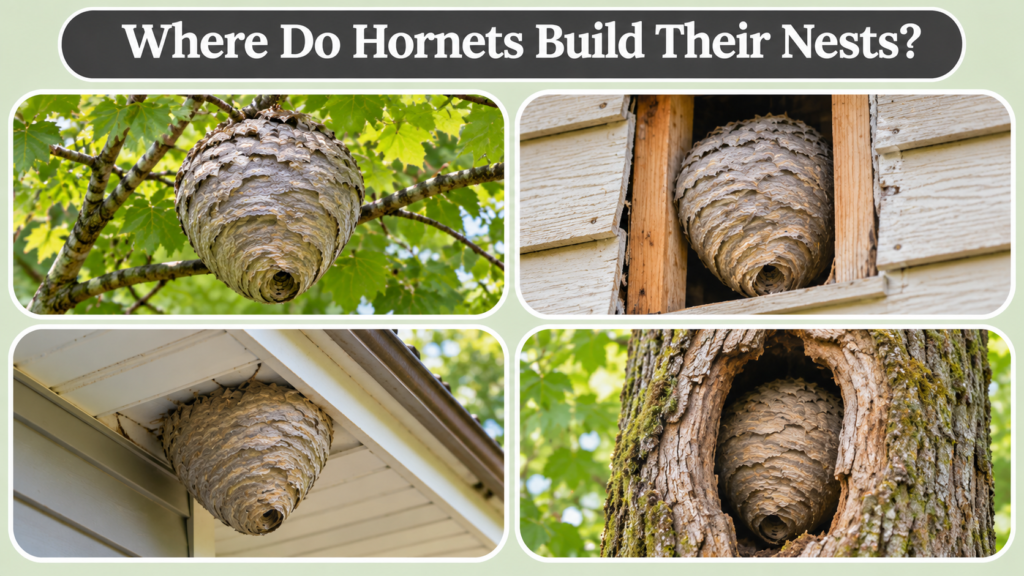
Hornets select nesting locations that provide shelter, access to building materials, and suitable conditions for colony development. The location often depends on the species. Some prefer exposed branches, while others use existing cavities in trees and buildings.
Hornet Wasp Nest in a Tree
Bald-faced hornets frequently build enclosed nests among tree branches.
Their gray, papery nests may hang several feet above the ground or remain concealed high in the canopy.
European hornets usually prefer hollow tree trunks and other protected cavities.
A nest in a tree far from regular human activity may not require removal.
Hornet Wasp Nest in a Wall
European hornets sometimes establish colonies inside wall cavities, particularly where exterior openings provide access.
Signs may include repeated hornet activity around siding gaps, rooflines, or structural openings.
Occasional buzzing may also be noticeable near occupied cavities.
Never block the entrance of an active nest. Doing so may cause hornets to seek another route, potentially into living spaces.
Hornet Wasp Nest Under Roof Eaves
Building overhangs and roof edges provide shelter for various social wasps.
Bald-faced hornets may attach enclosed nests to protected building surfaces, while paper wasps commonly create exposed combs beneath eaves.
Because these locations are often close to entrances and windows, active nests may require professional assessment.
Hornet Nest vs. Wasp Nest: Key Differences
Hornets belong to the wasp family, but not every wasp is a hornet. Nest construction provides helpful identification clues, although some species build similar structures. Comparing nest shape, location, and insect appearance can help determine which type of colony is present.
| Feature | Hornet Nest | Paper Wasp Nest |
| Structure | Usually enclosed | Usually open comb |
| Appearance | Oval, round, or irregular | Umbrella-shaped |
| Outer covering | Protective paper envelope | No complete envelope |
| Cells | Mostly hidden | Visible from below |
| Common location | Trees, cavities, buildings | Eaves, branches, sheltered areas |
| Colony defense | Often strong | Varies by species |
Yellowjacket nests are another important comparison. They also have enclosed paper structures but frequently occur underground or inside concealed spaces.
How to Get Rid of a Hornet Wasp Nest Safely
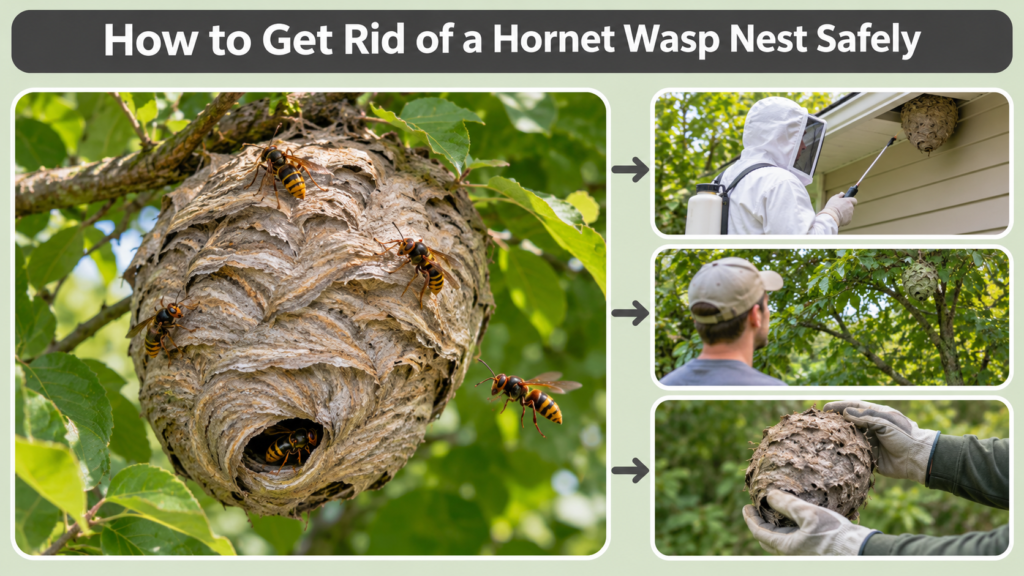
Removing an active hornet nest can be dangerous because many workers may respond defensively when the colony is disturbed. The safest approach depends on the nest’s size, location, and species. Large hanging nests and concealed colonies should generally be handled by trained pest control professionals.
Identify the Nest Before Removal
Observe the insects from a safe distance.
Check whether the nest is active, whether it is near frequently used areas, and whether anyone nearby has a serious sting allergy.
Avoid approaching the nest closely, shaking branches, or testing the colony’s defensive behavior.
A photograph taken from a safe location may help professionals identify the species.
Hire Professional Hornet Nest Removal Services
Professional pest control is recommended for large or difficult-to-access nests.
Technicians can identify the species and determine the appropriate treatment.
Professional assistance is particularly important when nests are located:
- High in trees.
- Inside walls or attics.
- Near doors and windows.
- Above frequently used outdoor spaces.
- Close to children or individuals with sting allergies.
Do not use ladders, fire, gasoline, or water jets to remove active hornet nests.
Remove an Inactive Hornet Nest
In regions with cold winters, many social hornet colonies die naturally toward the end of the year.
Once a nest has been confirmed inactive, an accessible structure may be removed carefully if necessary.
Wear gloves and avoid damaging surrounding structures.
Old outdoor nests may also be left in place to break down naturally.
How to Prevent Hornets From Nesting Around Your House
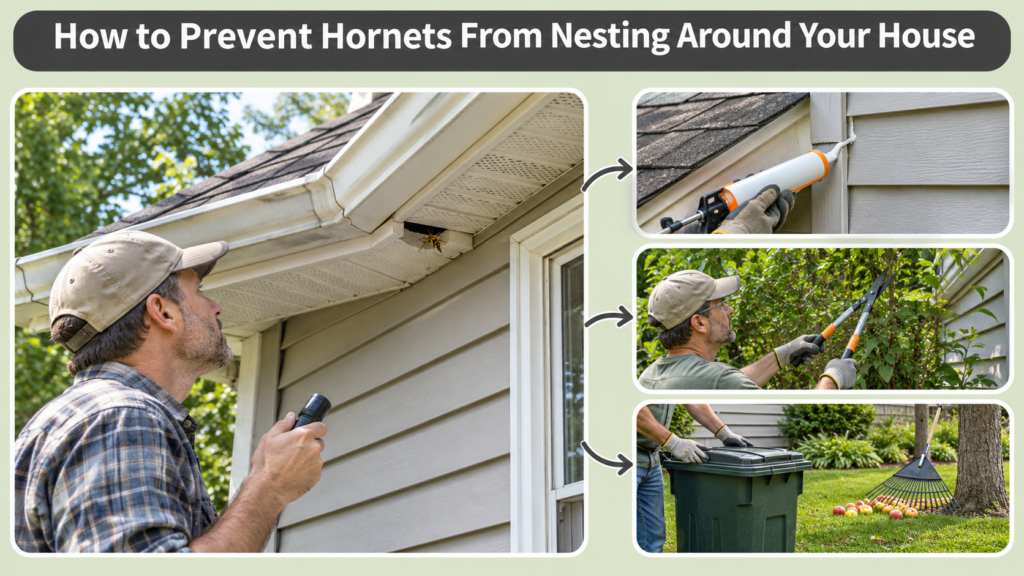
Hornets may establish new nests around buildings when suitable nesting locations remain available. While complete prevention is difficult, regular inspection and maintenance can help homeowners identify potential problems early and reduce opportunities for colonies to become established.
Seal Unoccupied Openings
Inspect exterior walls, siding, roof edges, and attic vents for gaps.
Seal suitable openings only after confirming that no active colony is inside.
Install appropriate screens over ventilation openings without obstructing airflow.
Maintain Outdoor Areas
Trim vegetation where necessary, keep garbage containers closed, and remove fallen fruit.
Inspect sheltered building surfaces during spring and early summer for developing nests.
Commercial decoy hornet nests are sometimes advertised as deterrents, but there is insufficient reliable evidence that they prevent nesting.
FAQs
1. What Does a Hornet Wasp Nest Look Like?
A hornet nest commonly resembles a large, enclosed paper ball or oval structure. Bald-faced hornet nests are typically gray and hang from trees or buildings. European hornet nests are usually brownish and hidden inside hollow trees or structural cavities.
2. Are Black Hornet Wasp Nests Dangerous?
Nests occupied by bald-faced hornets can be dangerous when disturbed because workers may defend their colony aggressively. However, not every dark-colored wasp is a bald-faced hornet. Proper identification is important before deciding whether removal is necessary.
3. How Big Can a Hornet Wasp Nest Get?
Nest size varies by species, location, and colony age. Bald-faced hornet nests may grow larger than a basketball by late summer. European hornet nests can also become substantial, although their size may be difficult to judge inside concealed spaces.
4. Can You Remove a Hornet Nest Yourself?
Small, accessible nests may sometimes be managed using appropriate labeled treatments, but active hornet colonies carry significant sting risks. Large nests, elevated structures, and nests inside walls should generally be managed by professional pest control technicians.
5. Do Hornets Return to the Same Nest Every Year?
In temperate climates, most social hornet colonies last only one season. Old nests are generally not reused. However, surviving queens can establish new colonies nearby the following spring when suitable nesting locations are available.
