

Wasp nests can be a serious nuisance, especially when they are located near high-traffic areas, homes, or gardens. Wasps can become aggressive when they feel their nest is threatened, which can lead to painful stings, allergic reactions, and even life-threatening situations in some cases. Understanding how to identify wasp nests and knowing the safest methods for eliminating them is crucial to ensuring your safety and peace of mind.
This guide will walk you through the process of identifying wasp nests, the different types of nests, and the steps you can take to remove them safely.
What is a Wasp Nest?
A wasp nest is a structure built by social wasps to house their colony, which consists of a queen, worker wasps, and drones. The nests serve as a safe space where the queen lays her eggs, and the workers protect the young and the nest. Wasp nests are made from a paper-like material that is created by chewing wood fibers mixed with saliva. This pulp hardens, forming a strong and durable nest.
Wasp nests come in two main types: ground nests and aerial nests. Ground nests are dug into the soil, while aerial nests are suspended from trees, buildings, or other structures. The nest’s appearance, location, and material used to construct it will vary depending on the species of wasp.
How to Identify a Wasp Nest

Before you take any action to remove a wasp nest, you need to correctly identify it. Spotting a wasp nest is relatively easy once you know what to look for. Here’s how to identify both ground and aerial wasp nests:
Key Features of Wasp Nests
- Size and Shape: Wasp nests vary in size, from small, compact nests to larger, more elaborate colonies. Ground nests often have small entrances, while aerial nests can be quite large and can expand over time.
- Material: Wasp nests are typically made of a paper-like material. Wasps create this pulp by chewing wood fibers and mixing them with their saliva. This gives the nest a rough, papery texture.
- Color: The color of a wasp nest can vary from light gray to dark brown, depending on the species and the materials used.
- Location: The location of the nest is another important clue. Ground nests are usually hidden under dirt, rocks, or in abandoned burrows. Aerial nests are often found in trees, bushes, or on building eaves.
Signs of an Active Wasp Nest
- Wasp Activity: Wasps are often seen flying in and out of the nest, especially during peak activity times, such as the afternoon. This constant movement is a clear indication that the nest is active.
- Buzzing Sounds: If you are near an aerial nest, you might hear a buzzing sound. This noise is caused by the constant activity of the wasps inside the nest.
- Dirt Mounds: If the nest is underground, you may see small dirt mounds or holes around the entrance, indicating that the wasps have dug their nest into the ground.
- Nesting Material: In the case of aerial nests, you may notice the distinct layered structure made from papery material hanging from trees, eaves, or other structures.
Types of Wasp Nests
There are two primary types of wasp nests: ground nests and aerial nests. Each type has distinct characteristics and requires different approaches for safe removal.
Ground Wasp Nests
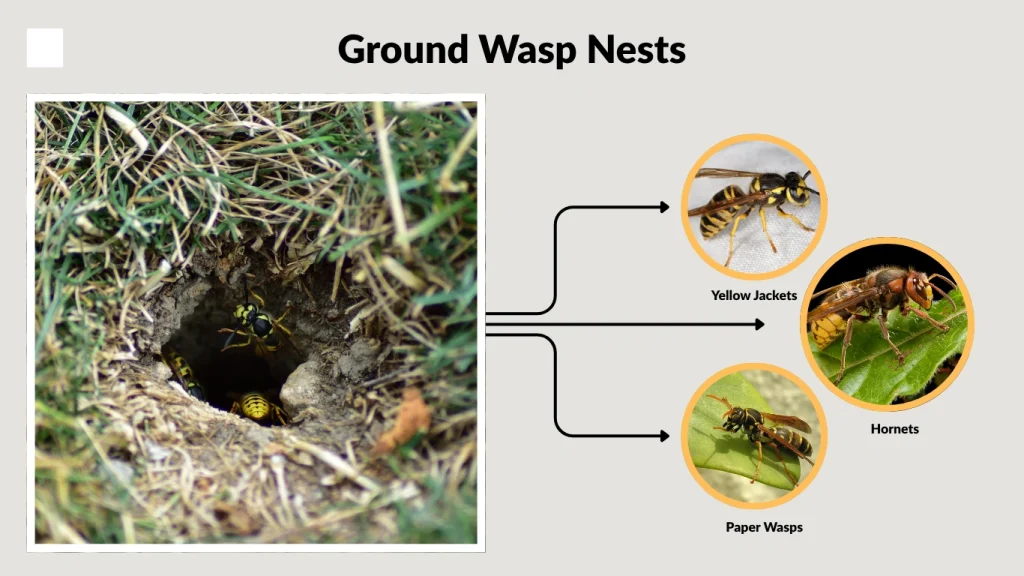
Ground wasp nests are typically created by species like yellow jackets and hornets. These nests are hidden underground and are harder to detect than aerial nests. To identify a ground nest, look for small, round holes in the ground, usually surrounded by a dirt mound. You may notice an increase in wasp activity near these holes, especially when the wasps are entering and exiting the nest.
Common Species That Nest in the Ground:
- Yellow Jackets: These wasps are the most common ground-nesting species. Their nests are often found in abandoned rodent burrows, under rocks, or in any other suitable space in the ground.
- Hornets: Though they are more commonly seen in aerial nests, some hornet species also build nests underground.
- Paper Wasps: Although paper wasps are usually aerial, some species will nest in the ground, especially in abandoned animal burrows.
Aerial Wasp Nests
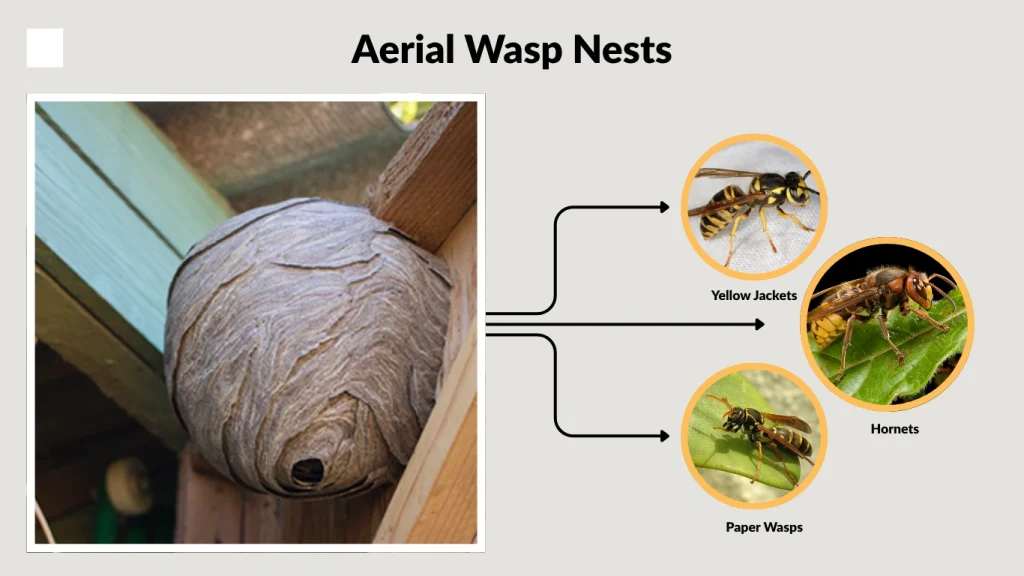
Aerial wasp nests are usually built by species like paper wasps and hornets. These nests are typically visible and suspended from tree branches, building eaves, or other sheltered areas. The nests have a characteristic papery appearance and can grow to be quite large.
Common Species That Build Aerial Nests:
- Paper Wasps: These wasps create umbrella-shaped nests that hang from trees, fences, and other structures. Their nests are made of a thin, papery material, and the cells inside are exposed.
- Hornets: Hornet nests are often larger than those of paper wasps and can be found hanging from trees, shrubs, or building overhangs. They are generally more aggressive and defend their nests aggressively.
- Yellow Jackets: While most yellow jackets nest in the ground, they can also build aerial nests in trees or building eaves.
Safe Ways to Remove a Wasp Nest
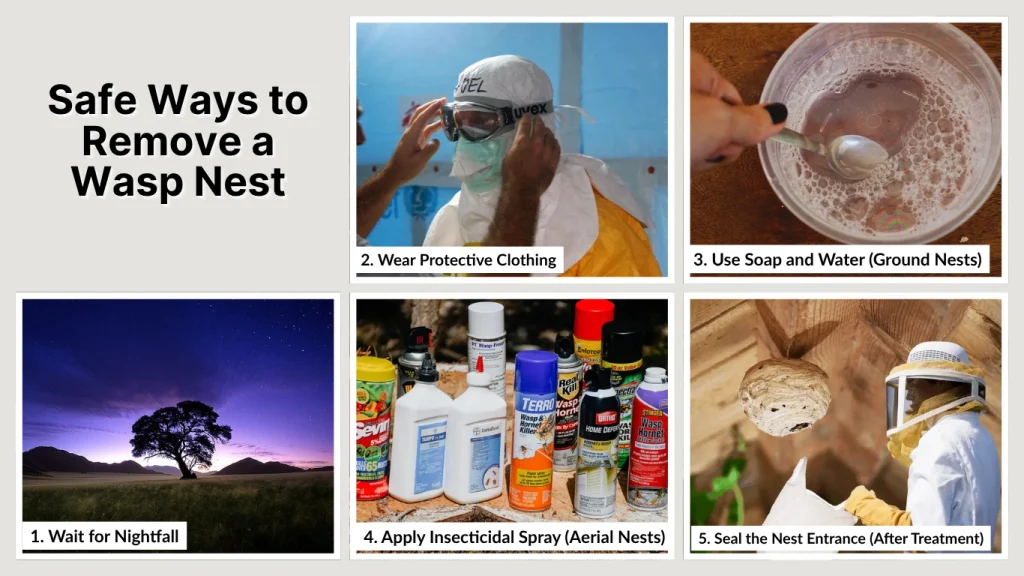
If you have a wasp nest on your property, removing it is necessary to avoid stings and allergic reactions. However, removing a wasp nest can be dangerous, and it’s essential to take precautions. Here are some safe ways to eliminate a wasp nest:
1. Wait for Nightfall
Wasps are less active at night, so it’s safer to remove the nest when they are resting. If the nest is in an aerial location, wait until dusk or early morning when the wasps have returned to the nest for the night.
2. Wear Protective Clothing
Always wear protective clothing when dealing with a wasp nest. This includes long-sleeve shirts, pants, gloves, and a face shield or netting. The more protection you have, the less likely you are to get stung.
3. Use Soap and Water (Ground Nests)
For ground nests, you can try using a simple soap and water mixture. Mix a tablespoon of dish soap with water and pour it into the entrance of the nest. The soap will suffocate the wasps, causing them to die within hours.
4. Apply Insecticidal Spray (Aerial Nests)
If the nest is aerial, you can use an insecticidal wasp spray. These sprays are designed to kill wasps on contact. Make sure to apply the spray from a safe distance (usually 10-15 feet) and target the nest entrance.
5. Seal the Nest Entrance (After Treatment)
Once the wasps are eliminated, you can seal the nest entrance to prevent any survivors from re-entering. Use dirt for ground nests or seal any gaps or cracks for aerial nests.
6. Professional Help
If you feel uncomfortable dealing with the nest or if it’s located in a high-risk area (near a doorway, on a tall structure, etc.), it’s best to call a professional pest control service. They have the necessary tools and experience to safely remove the nest without risk of stings or injury.
What to Do if You’re Stung by a Wasp
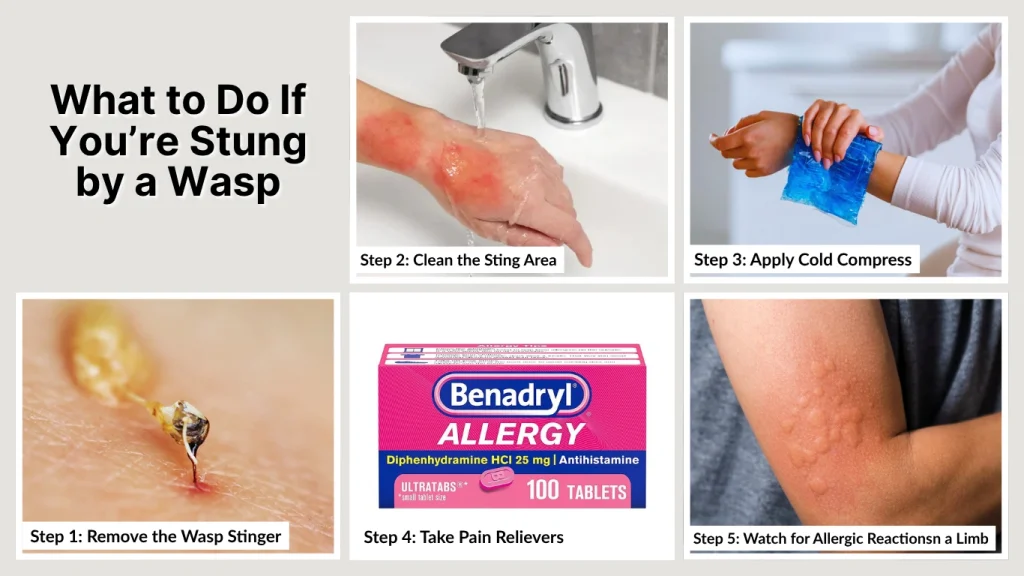
If you or someone else is stung by a wasp, it’s important to know how to manage the sting effectively:
- Remove the Stinger (if applicable): Unlike bees, wasps don’t leave their stinger behind, but if you see one, remove it by scraping it off with a flat surface (e.g., a credit card).
- Clean the Sting Area: Wash the affected area with soap and water to prevent infection.
- Cold Compress: Apply a cold compress or ice pack to reduce swelling and numb the pain.
- Pain Relief: Over-the-counter pain relievers, such as ibuprofen or acetaminophen, can help ease the pain and swelling.
- Watch for Allergic Reactions: Keep an eye out for symptoms like dizziness, difficulty breathing, or swelling of the throat or lips. If these occur, seek immediate medical attention.
Conclusion
Wasp nests, while beneficial to the ecosystem in terms of pest control, can pose a serious risk to people and pets, particularly for those allergic to wasp stings. Identifying and safely eliminating these nests is essential to minimizing the risk of stings and allergic reactions. Whether you are dealing with ground nests or aerial nests, knowing how to spot them, when to act, and how to remove them safely will help you keep your home and yard safe. If in doubt, always call a professional pest control service to ensure the nest is handled properly and safely.
