
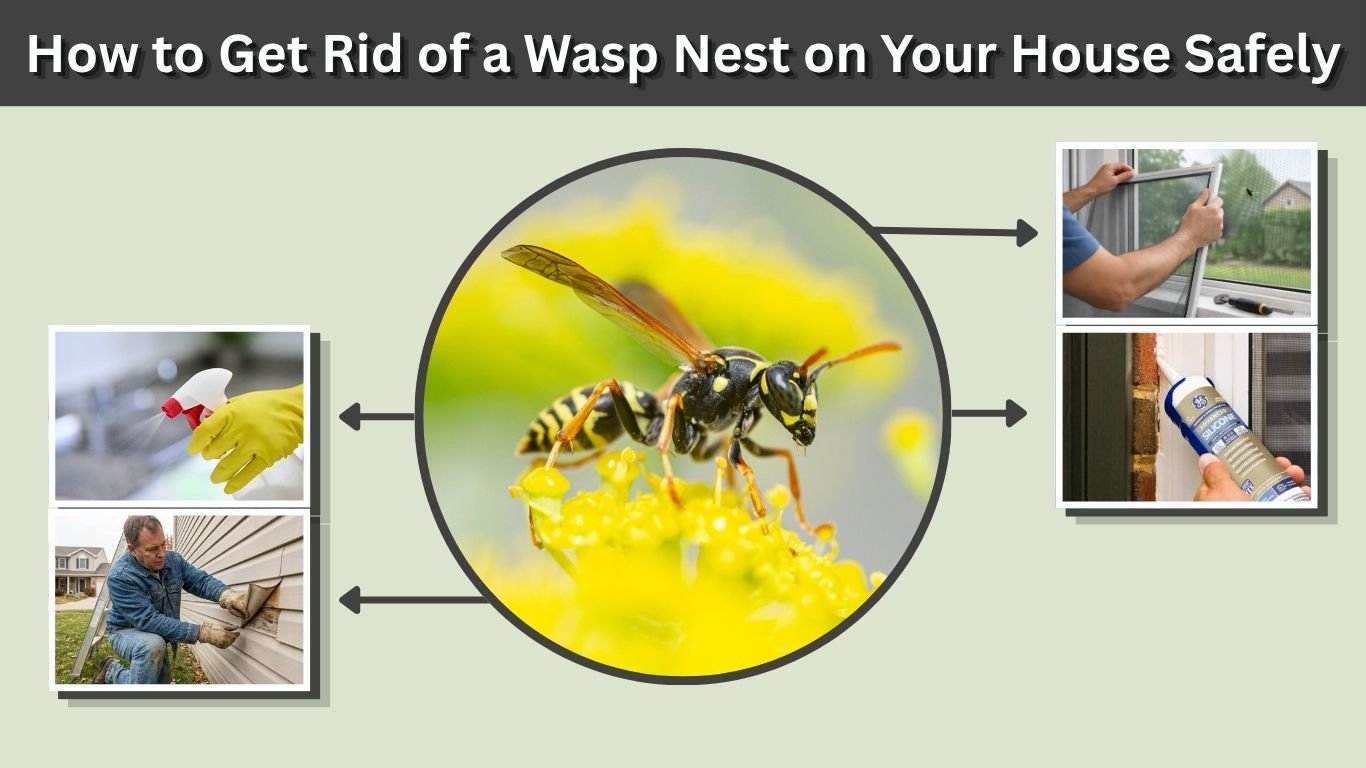
Finding a wasp nest attached to your house can be worrying, particularly when insects gather around doors, windows, roof eaves, or outdoor living areas. Wasps may become defensive when their colonies are disturbed, creating risks for homeowners, children, and pets. Knowing how to get rid of a wasp nest on your house safely starts with identifying the species and locating the nest. Whether the colony is hanging beneath a porch or hidden inside siding, choosing the appropriate removal method can prevent unnecessary stings and property damage.
How to Identify a Wasp Nest on Your House
Wasps often construct nests in sheltered areas that protect their colonies from rain, wind, and predators. Different species build different nest structures, so recognizing the nest type is essential before considering removal. Some nests hang visibly beneath eaves, while others remain concealed inside wall cavities, roof spaces, or damaged siding.
Common Places Wasps Build Nests on Houses
Wasps can establish colonies in several areas around residential buildings.
Common nesting locations include:
- Roof eaves: Paper wasps frequently attach exposed combs beneath overhangs.
- Porch ceilings: Sheltered surfaces provide protection from weather.
- House siding: Yellowjackets sometimes occupy hidden spaces behind loose siding.
- Attics: Hornets and yellowjackets may establish colonies in protected roof cavities.
- Wall openings: Cracks and gaps allow wasps to access structural voids.
- Exterior vents: Openings around vents may provide access to concealed nesting spaces.
Types of Wasps Nesting Around Houses
Paper wasps typically construct small, umbrella-shaped nests with visible hexagonal cells. These colonies are commonly found beneath roof eaves, porch ceilings, and window frames.
Yellowjackets often build enclosed nests in wall cavities, underground openings, and other protected spaces. Bald-faced hornets create large, gray, enclosed paper nests that may hang from trees or structures. Proper identification helps determine whether a nest can be left alone or requires professional treatment.
How to Get Rid of a Wasp Nest on Your House Safely
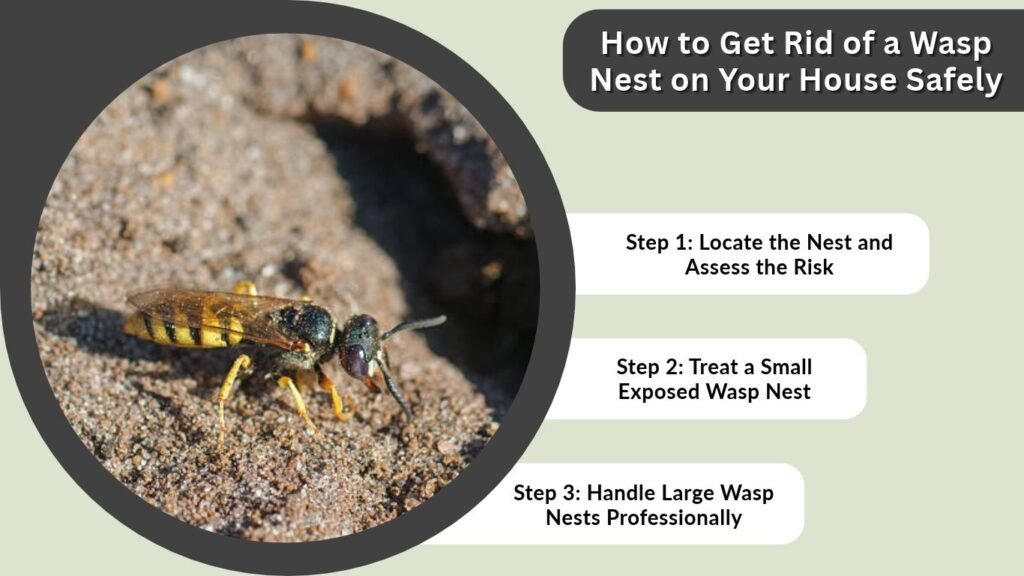
Removing a wasp nest from your house requires caution, especially when the colony is active. Small exposed nests are generally easier to manage than large colonies or concealed nests. The most appropriate approach depends on the species, location, accessibility, and risk of accidental disturbance. Professional removal is safest for difficult situations.
Step 1: Locate the Nest and Assess the Risk
Observe the wasps from a safe distance during daylight to determine where they enter and leave their nest. Avoid touching the structure, approaching the entrance, or using tools nearby.
Before considering removal:
- Identify whether the nest is exposed or concealed.
- Look for nearby doors, windows, and occupied areas.
- Keep children and pets away.
- Avoid ladders, rooftops, and difficult access points.
- Consider whether anyone nearby has a sting allergy.
If the nest is large or difficult to access, contact a pest control professional.
Step 2: Treat a Small Exposed Wasp Nest
Small paper wasp nests that are newly constructed and completely unattended may sometimes be removed without pesticides. However, returning wasps can still sting, and occupied nests should never be knocked down.
For an active exposed colony, appropriately labeled wasp-and-hornet insecticide sprays may be effective when used according to the manufacturer’s directions. Reduced activity during cooler evening or early morning periods does not eliminate sting risks. Avoid standing beneath the nest or applying products near electrical equipment, open windows, or ventilation intakes.
Step 3: Handle Large Wasp Nests Professionally
Large nests may contain numerous defensive insects, making household removal particularly risky. Colonies attached to upper-story eaves, roofs, or high exterior walls should generally be treated by professionals.
Pest control technicians can identify the species, determine whether the nest is accessible, and select an appropriate treatment. Never spray a large colony from a ladder or attempt to knock down an active enclosed nest with a pole.
How to Get Rid of Wasp Nests Inside Your House
Wasps nesting inside walls, siding, or roof cavities create different challenges from insects building exposed nests outside. Their colonies may be difficult to locate and sometimes have multiple openings. Improper treatment can drive insects into living spaces or damage insulation and building materials. Professional assistance is particularly important for concealed nests.
How to Get Rid of a Wasp Nest in House Siding
Yellowjackets may enter gaps behind vinyl, wooden, or damaged siding and establish colonies inside wall cavities. Homeowners often notice repeated wasp movement around a small opening without seeing the actual nest.
Do not seal an active entrance with caulk, expanding foam, or tape. Trapped wasps may find another exit through interior walls. Instead, keep the area undisturbed and arrange professional treatment. Once the colony is confirmed inactive, repair the siding and seal suitable gaps.
How to Remove a Wasp Nest Inside a House Wall
Wasps inside a wall may produce buzzing sounds or appear through openings around windows, ceilings, and interior fixtures. Hidden colonies can be particularly troublesome when workers enter occupied rooms.
Avoid drilling into walls or spraying household insecticides through electrical outlets and wall openings. A qualified technician can locate the colony and treat it appropriately. Afterward, large nest remnants may need removal to prevent odors, secondary insect problems, and damage to insulation.
How to Handle Wasp Nests in House Vents
Wasps may construct nests near exterior vent covers or access protected spaces through damaged screens. Bathroom exhaust vents, attic vents, and other ventilation openings require particular caution.
Never spray insecticides into operating ventilation systems or block an active nest opening. Keep people away from the affected area and contact a qualified professional. Once the nest has been eliminated, suitable vent screening and damaged components can be repaired without obstructing required airflow.
Dangerous Wasp Nest Removal Mistakes to Avoid
Some popular homemade wasp removal methods create greater risks than the original infestation. Aggressive spraying, physical disturbance, and unsuitable chemicals can trigger defensive behavior or cause property damage. Homeowners should avoid improvised treatments, especially when nests are located near electrical systems, building materials, or frequently occupied spaces.
Common Mistakes That Make Wasp Removal Dangerous
Avoid the following practices:
- Knocking down active nests: Disturbing a colony can trigger multiple stings.
- Using gasoline or fire: These methods create serious injury and property hazards.
- Blocking wall entrances: Wasps may find alternative routes into the house.
- Spraying through ventilation systems: Chemicals may contaminate indoor spaces.
- Using ladders near active colonies: Defensive wasps can cause dangerous falls.
- Applying random household chemicals: Unapproved products may be ineffective and unsafe.
Choose professional assistance whenever the nest cannot be approached and treated safely.
How to Prevent Wasps From Building Nests on Your House
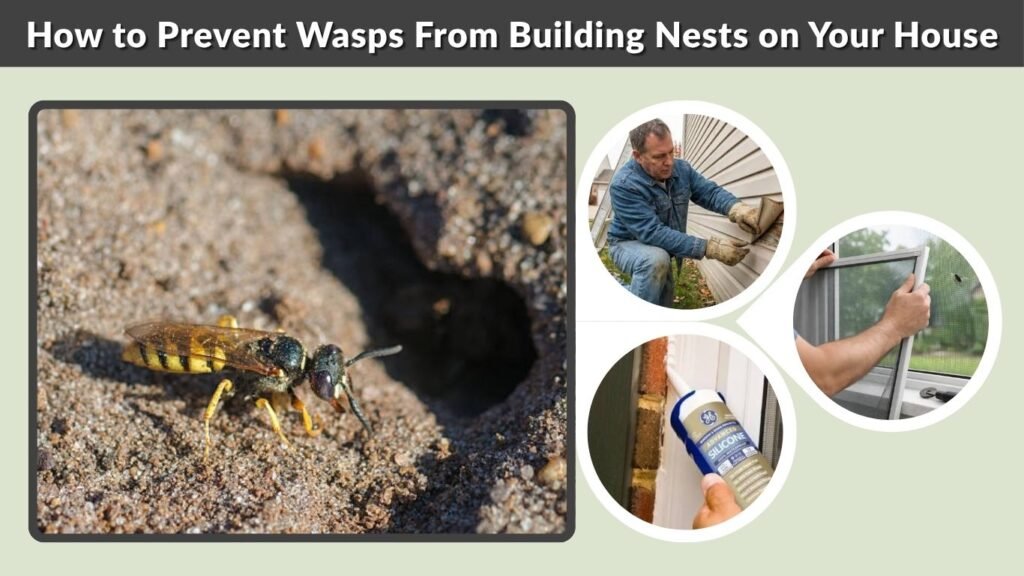
Preventing future colonies requires routine maintenance, early inspections, and reducing potential nesting locations. Paper wasps often favor protected outdoor surfaces, while yellowjackets may exploit small structural openings. Although no prevention technique guarantees complete protection, identifying new activity early can reduce conflicts and make future pest management easier.
Seal Cracks and Exterior Openings
Inspect exterior walls, roof edges, window frames, and damaged siding for openings that could allow insects into structural cavities.
Useful prevention measures include:
- Repair damaged siding and loose trim.
- Caulk suitable gaps around window and door frames.
- Install appropriate insect-resistant vent screens.
- Repair damaged soffits and roofline materials.
- Check sheds, garages, and other sheltered structures.
Only seal suspected nesting entrances after confirming that no active colony remains.
Keep Outdoor Areas Clean and Maintained
Wasps may visit outdoor areas to search for insects, sugary foods, and other available food sources. Keeping patios, gardens, and garbage storage areas maintained can reduce unwanted encounters.
Cover food during outdoor meals, close garbage containers securely, and remove fallen fruit. Inspect roof eaves and porches during spring when new colonies are beginning to form. Early detection makes it easier to address small nests before they become established.
FAQs
1. What is the best way to get rid of a wasp nest on your house?
The best method depends on the nest’s location, species, and size. Small exposed paper wasp nests may be manageable with properly labeled products, while large or concealed colonies generally require professional treatment. Never disturb an active nest without evaluating the potential sting risks.
2. Can I remove a wasp nest from my house naturally?
Small, completely inactive nests can often be physically removed without chemicals. Active colonies are more difficult to eliminate naturally, and homemade remedies are unreliable. If a nest is far from occupied areas, leaving it undisturbed until the colony naturally dies off may be appropriate.
3. How do you get rid of a wasp nest under house siding?
Wasps nesting beneath siding should generally be treated by a qualified pest control technician. Avoid sealing the active entrance because insects may move into interior spaces. After successful treatment, inspect the siding for damaged sections and seal appropriate openings to discourage future nesting.
4. Will wasps return after their nest is removed?
In temperate climates, most social wasp colonies die during winter and generally do not reuse their old nests. However, new queens may establish colonies nearby the following season. Maintaining exterior surfaces, repairing openings, and checking for new nests can help reduce recurring problems.
5. How dangerous is a large wasp nest in a house?
A large wasp nest can contain many defensive workers capable of delivering repeated stings. The risk is greater near doorways, windows, and busy outdoor areas. People with severe sting allergies are particularly vulnerable. Large nests should generally be handled by trained pest control professionals.
