
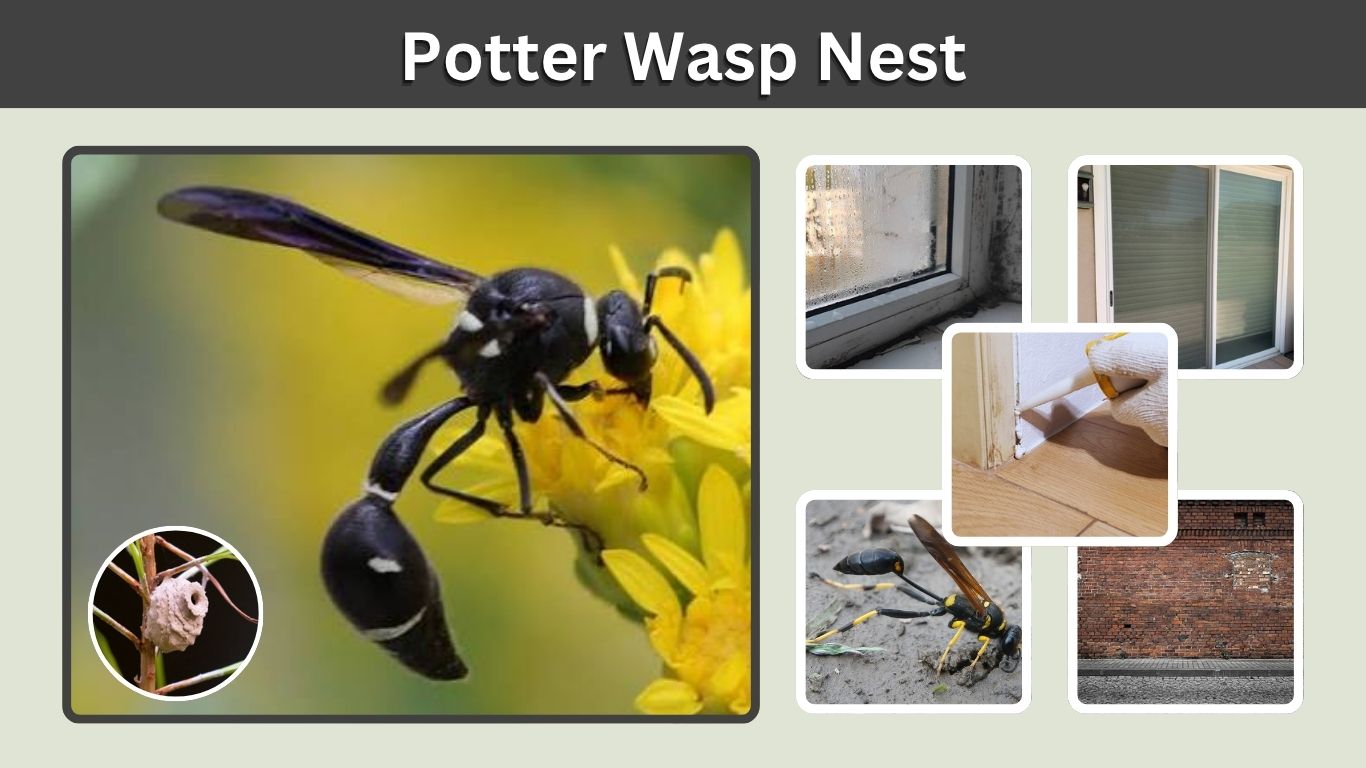
A potter wasp nest is a small, clay-like structure that often resembles a miniature pot or vase. These fascinating nests are built by solitary wasps using mud, water, and natural materials. You may discover one attached to a wall, tree branch, window frame, or garden structure. Although their unusual appearance can raise concerns, potter wasps are generally beneficial insects. This guide explains how to identify a potter wasp nest, what is inside, how it is constructed, and whether removal is necessary.
What Does a Potter Wasp Nest Look Like?
Potter wasp nests are recognizable for their distinctive pottery-like appearance. Many species, particularly those belonging to the genus Eumenes, construct small rounded mud chambers with narrow openings. The nests resemble miniature clay jars and are usually attached to solid surfaces. However, some related potter and mason wasps use existing cavities rather than building exposed mud pots.
Potter Wasp Nest Identification
- Shape: Round, oval, pot-shaped, or urn-shaped.
- Color: Usually gray, tan, reddish-brown, or dark brown.
- Size: Commonly 10–25 mm across for small mud pots, depending on species.
- Material: Mud, clay, and fine soil particles.
- Texture: Hardened, slightly rough, and pottery-like.
- Entrance: A narrow opening, sometimes surrounded by a raised rim.
- Location: Tree branches, walls, window frames, fences, and sheltered structures.
- Structure: Usually one brood chamber per individual pot.
Black and Orange Potter Wasp Nests
Some potter wasps have predominantly black bodies, while others display orange, reddish, or yellow markings.
However, their body coloration does not necessarily determine the appearance of their nests. Both black and orange-marked potter wasps may use brown or gray mud collected from their surroundings.
Nest identification should rely on construction material, shape, and the wasp’s behavior rather than body color alone.
How Do Potter Wasps Build Their Nests?
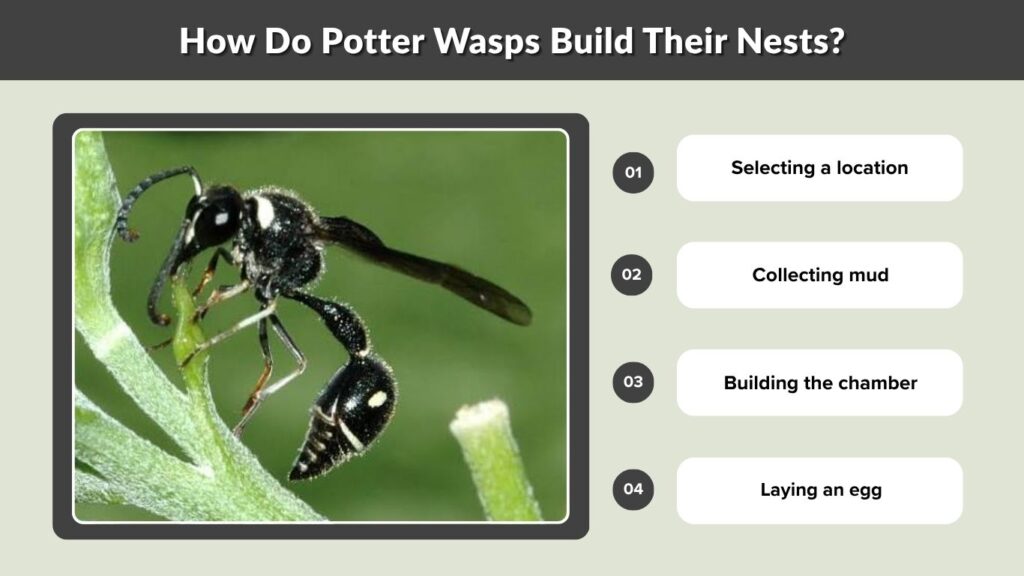
Potter wasps are skilled builders that construct protective chambers without assistance from worker colonies. A female collects moist soil and carefully shapes it into a suitable nesting structure. The process involves transporting materials, forming chamber walls, collecting prey, and sealing the completed nest to protect the developing offspring.
Step-by-Step Nest Construction
1. Selecting a location: The female chooses a secure surface, such as a twig, wall, or sheltered corner.
2. Collecting mud: She gathers moist clay or soil and carries small pellets using her mandibles.
3. Building the chamber: The female gradually shapes the mud into a rounded pot with a narrow entrance.
4. Laying an egg: She attaches an egg inside the chamber, often suspending it from a fine thread.
5. Collecting food: She captures and paralyzes caterpillars or other suitable insect larvae.
6. Sealing the nest: After placing sufficient prey inside, she closes the entrance with additional mud.
University of Florida research describes how some Eumenes wasps make hundreds of material-collection trips during pot construction.
How Long Does It Take to Build a Potter Wasp Nest?
Construction time varies by species, weather, and material availability.
Some observed Eumenes wasps can build a mud pot in approximately one to two hours. However, collecting prey and completing provisioning may take considerably longer.
Once the chamber is sealed, the developing wasp remains protected inside until it reaches adulthood.
What’s Inside a Potter Wasp Nest?
Inside a potter wasp nest is a small nursery designed to support one developing wasp. The chamber may contain an egg, several paralyzed caterpillars, a growing larva, or a developing pupa, depending on its stage. The stored prey provides the nutrition required for the immature wasp to develop without continued parental care.
Eggs and Developing Larvae
Female potter wasps typically deposit one egg inside each brood chamber.
In many Eumenes species, the egg hangs from a slender filament attached to the chamber wall or ceiling.
When the egg hatches, the young larva begins feeding on the prey supplied by its mother.
The larva continues feeding until it has accumulated enough energy to develop into a pupa.
Why Are Caterpillars Found Inside?
Potter wasps capture caterpillars because they provide a concentrated food source for developing larvae.
The female uses her sting to immobilize suitable prey before transporting it into the nest.
Although the captured caterpillars may resemble green worms, they are generally insect larvae stored as food, not young wasps.
Where Do Potter Wasps Build Their Nests?
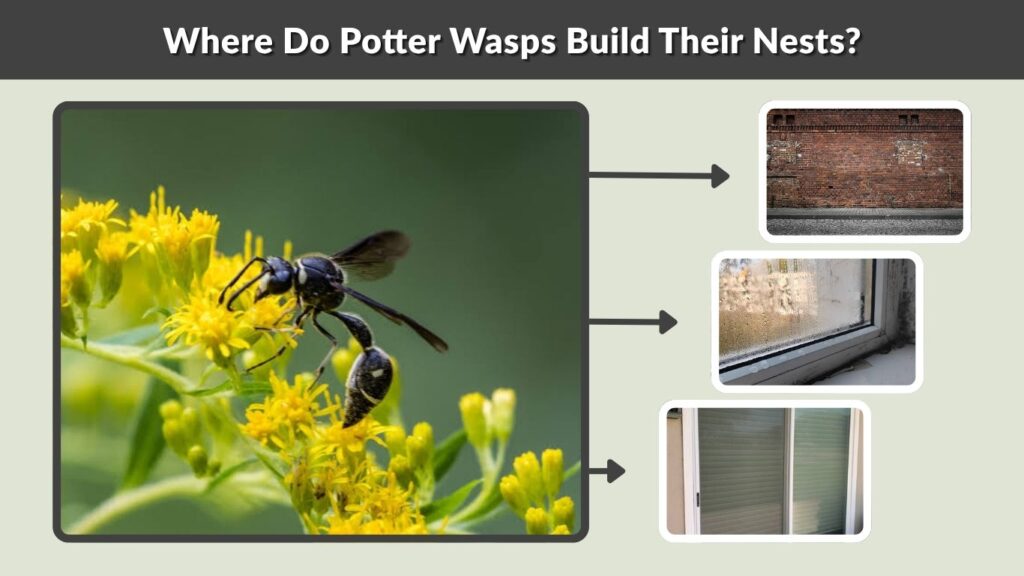
Potter wasps prefer locations that support secure construction and protect their developing offspring. Their nesting sites vary with species and habitat, but many use sheltered surfaces near vegetation and suitable mud sources. Finding a nest on a house or garden structure does not necessarily indicate an infestation.
Potter Wasp Nests on Houses
Potter wasps may build nests on exterior walls, window frames, porch screens, fences, and roof overhangs.
These locations offer firm attachment points and some protection from rain.
Small mud pots on a house are usually the work of individual females rather than large colonies.
Potter Wasp Nests in Gardens
Garden nests may appear on branches, shrubs, plant stems, or rocks.
Some species construct individual mud pots attached directly to vegetation, while others use existing holes in wood.
Potter wasps occur in many regions, including Australia, Singapore, and the United Kingdom, although their species and nesting habits differ. The UK’s heath potter wasp, for example, constructs mud pots on heather or gorse twigs.
Potter Wasp Nest vs. Mud Dauber Nest
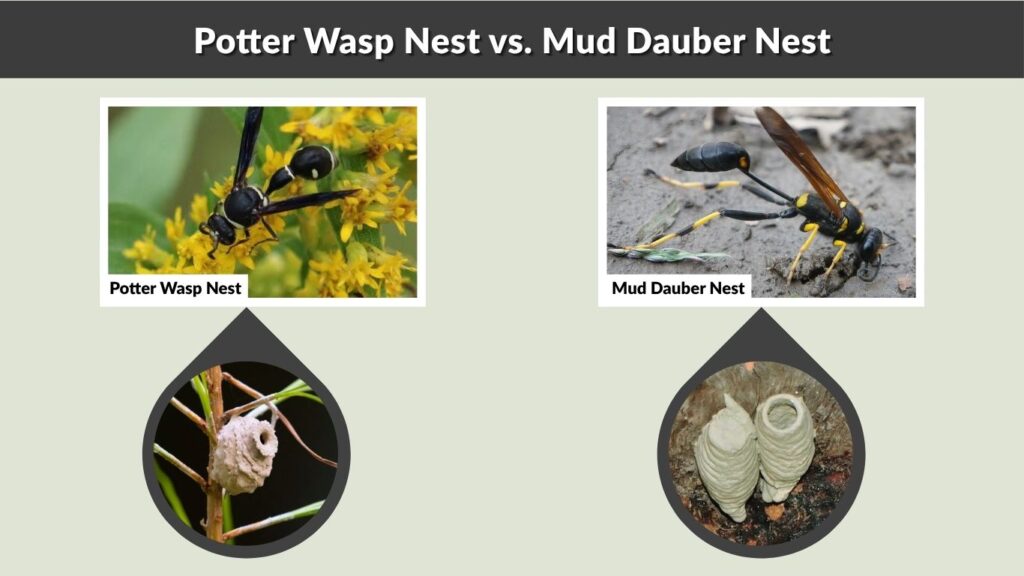
Potter wasp nests and mud dauber nests are sometimes confused because both involve mud construction. However, their shapes, prey choices, and nesting behaviors often differ. Understanding these characteristics can help distinguish their nests without touching or damaging them.
| Feature | Potter Wasp Nest | Mud Dauber Nest |
| Shape | Small pot or urn | Tubes or irregular mud clusters |
| Material | Mud or clay | Mud or clay |
| Structure | Often one chamber per pot | Often several chambers |
| Stored food | Usually caterpillars or insect larvae | Usually spiders |
| Social behavior | Solitary | Solitary |
| Common location | Twigs, walls, shrubs | Walls, eaves, sheds |
These comparisons describe typical examples; nest architecture varies by species. Both types of wasps are generally nonaggressive and beneficial predators.
Should I Leave a Potter Wasp Nest or Remove It?
Most potter wasp nests do not require removal. These solitary insects rarely defend their nests aggressively and help control caterpillars and other plant-feeding insects. Nevertheless, nests attached to frequently handled objects or sensitive equipment may be inconvenient. The best approach depends on location and whether the nest is still occupied.
Benefits of Leaving the Nest Alone
Potter wasps are natural insect predators.
Their larvae feed on captured caterpillars and other insects that might otherwise damage garden plants.
Unlike yellowjackets, potter wasps do not maintain large defensive colonies. Leaving an undisturbed nest in a garden generally presents little risk.
University of Maryland Extension recommends tolerating these beneficial solitary wasps whenever practical.
How to Remove a Potter Wasp Nest Safely
If a nest must be removed, the preferred approach is to wait until the young wasp has emerged and the nest is no longer occupied.
Once inactivity is confirmed, carefully detach the dried mud structure using a suitable scraper and clean the surface with mild soapy water.
Keep children and pets away during removal, and wear gloves. A small exit hole may indicate adult emergence, but the absence of visible wasps alone does not prove the nest is empty.
Avoid spraying unnecessary pesticides, crushing occupied chambers, or handling live wasps. If the nest is difficult to access or identification is uncertain, consult a pest-control professional.
How to Prevent Potter Wasps From Nesting Around Your Home
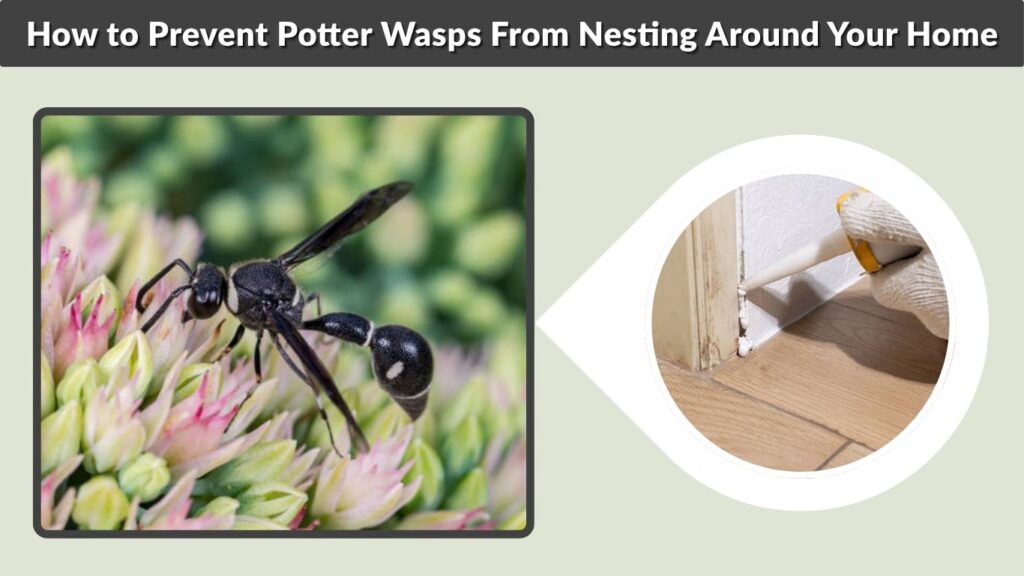
Potter wasps are not usually considered serious household pests. However, homeowners can discourage nesting in inconvenient locations by reducing access to suitable cavities and maintaining exposed surfaces.
Simple Prevention Methods
Regularly inspect window frames, porch screens, outdoor furniture, and other sheltered areas.
Seal unnecessary gaps in building materials after ensuring they are unoccupied. Keep screens in good condition and address openings around stored equipment.
These steps may reduce nesting opportunities around frequently used household areas without harming beneficial wasps elsewhere in the garden.
FAQs
1. Are Potter Wasp Nests Dangerous?
Potter wasp nests are generally not dangerous when left undisturbed. Potter wasps are solitary, rarely aggressive insects, although females can sting when handled or threatened.
2. How Big Is a Potter Wasp Nest?
Many individual mud pots measure approximately 10–25 mm across. Their exact size depends on the species and construction style.
3. Do Potter Wasps Reuse Their Old Nests?
Potter wasps generally construct new brood chambers for their offspring. However, certain related species may use existing cavities or abandoned nests.
4. What Is a Resin Potter Wasp Nest?
Some wasps within the potter and mason wasp subfamily use resinous substances or plant materials instead of constructing traditional clay pots. Nest materials and architecture vary among these species.
5. Can You Remove a Potter Wasp Nest Without Killing the Wasps?
Yes. The simplest approach is to wait until the developing wasp has emerged, then remove the empty mud nest. This avoids unnecessarily harming beneficial insects.
