
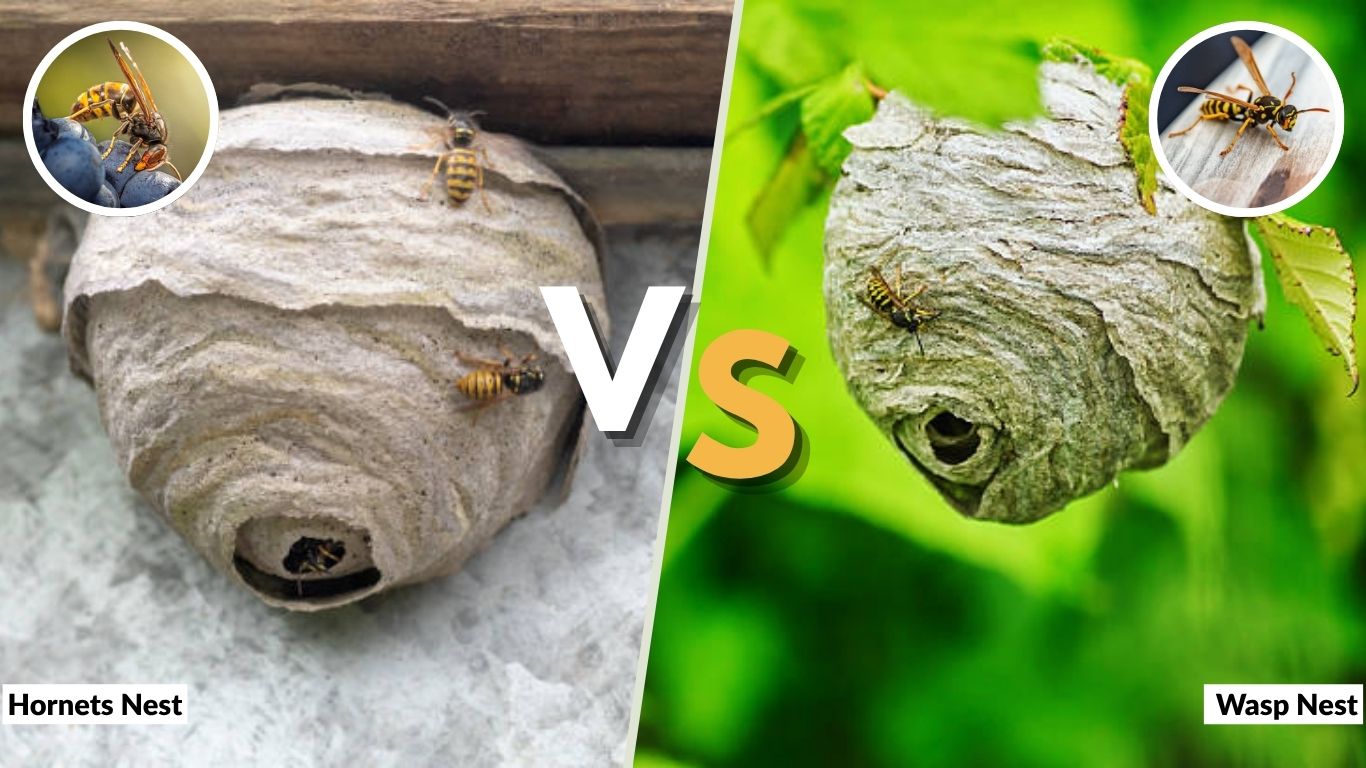
Understanding the differences between a hornet’s nest vs wasp nest can help you identify which insects are living around your home. Although hornets are actually a type of wasp, their nests can look quite different from those built by familiar paper wasps. Some form large, enclosed paper structures, while others build small, exposed honeycomb-like nests. Differences in appearance, size, location, and colony behavior can help with identification. This guide explains seven important distinctions, compares common nest types, and discusses how to handle active colonies safely.
What Is the Difference Between a Hornet’s Nest and a Wasp Nest?
The main difference is the nesting structure associated with each group. True hornets generally build enclosed paper nests containing several layers of brood cells. Paper wasps usually construct exposed, umbrella-shaped combs without an outer covering. However, yellowjackets also build enclosed nests, so appearance alone cannot always identify the species.
1. Nest Shape and Appearance
A hornet nest often has an oval, rounded, or football-like appearance when its outer covering is visible. Layers of grayish or brownish paper surround the internal combs.
Paper wasp nests look different because their hexagonal cells remain exposed. These nests resemble small, upside-down umbrellas attached to surfaces by narrow stalks.
Yellowjacket nests may resemble hornet nests because both groups can construct protective paper envelopes.
2. Nest Size
Hornet nests can become considerably larger than typical paper wasp nests. Some aerial nests grow to approximately the size of a football or basketball, although dimensions vary by species.
Paper wasp colonies generally construct smaller nests measuring only a few inches across.
Nest size also depends on colony age, food availability, climate, and the amount of available nesting space.
3. Nesting Materials
Hornets and paper wasps use similar building materials despite their different nest designs.
Both collect wood fibers from weathered fences, trees, and other wooden surfaces. These fibers are chewed and combined with saliva to create a lightweight paper-like substance.
The main distinction is how the material is arranged. Hornets usually enclose their brood combs, while paper wasps leave the cells uncovered.
Hornets Nest vs Wasp Nest Comparison Table
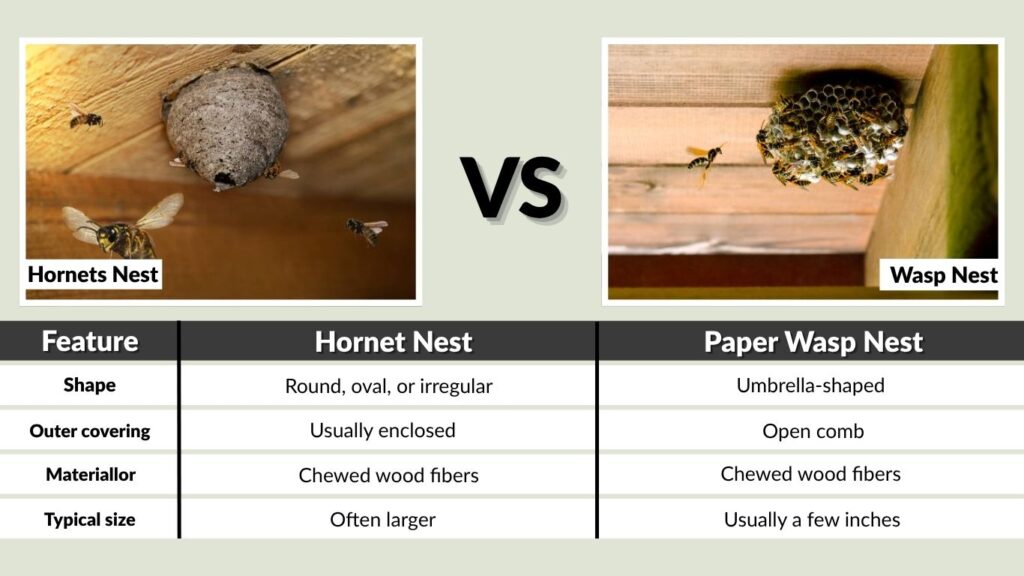
Comparing nest characteristics side by side makes identification easier. The differences are particularly noticeable when comparing a typical paper wasp nest with an exposed aerial hornet-style nest. However, there are exceptions, and several yellowjacket species construct nests that closely resemble those of true hornets.
| Feature | Hornet Nest | Paper Wasp Nest |
| Shape | Round, oval, or irregular | Umbrella-shaped |
| Outer covering | Usually enclosed | Open comb |
| Material | Chewed wood fibers | Chewed wood fibers |
| Typical size | Often larger | Usually a few inches |
| Brood cells | Hidden inside | Visible underneath |
| Common locations | Trees, hollows, cavities | Eaves, porches, branches |
| Colony size | Often hundreds or more | Usually dozens |
| Appearance | Layered paper envelope | Exposed hexagonal cells |
A nest should be examined only from a safe distance. Close inspection can trigger defensive behavior when a colony is active.
Where Do Hornets and Wasps Build Their Nests?
Nest location provides another useful identification clue. Different species prefer locations offering protection from weather, predators, and frequent disturbance. Hornets may occupy trees or structural cavities, while paper wasps often attach nests to sheltered surfaces. Yellowjackets commonly use underground burrows or concealed building spaces.
4. Common Nesting Locations
Some frequently observed nesting locations include:
- Hornets: Hollow trees, branches, wall cavities, sheds, and protected structural openings.
- Paper wasps: Roof eaves, porch ceilings, window frames, and sheltered vegetation.
- Yellowjackets: Underground burrows, wall voids, dense shrubs, and concealed cavities.
- Bald-faced hornets: Tree branches, tall shrubs, and building overhangs.
The bald-faced hornet is actually an aerial yellowjacket rather than a true hornet, despite its common name.
5. Differences in Nest Entrances
Enclosed hornet nests have openings through which workers enter and exit. Some aerial nests have a prominent entrance near the bottom, although the number and position of openings vary.
Paper wasp nests do not require an entrance hole because their brood cells are exposed.
An underground yellowjacket colony may have only a small visible entrance, making its nest difficult to recognize without observing insect movement.
Hornets Nest vs Paper Wasp Nest: Which Is Bigger?
Hornet nests are generally larger and structurally more complex than the exposed combs built by many paper wasps. However, not every hornet species constructs a conspicuous hanging nest. European hornets, for example, often occupy cavities where most of their nest remains hidden.
6. Colony Size and Nest Growth
Paper wasp colonies commonly contain around 20–75 individuals, although numbers vary by species.
Hornet colonies can become substantially larger, sometimes containing hundreds of workers. Large yellowjacket colonies may contain thousands of individuals during their peak season.
A founding queen begins constructing the nest and raising offspring. Once the first workers mature, they take over much of the building, hunting, and brood-care work.
This increase in available labor allows colonies to expand more rapidly.
7. Nest Protection and Defensive Behavior
Both hornets and paper wasps defend their colonies when they perceive threats.
Hornets and yellowjackets may respond strongly to disturbances close to their nests, particularly when many workers are present.
Paper wasps are often less defensive than some hornets and yellowjackets, but they can still sting repeatedly.
The danger depends on the species, colony size, nesting location, and nature of the disturbance rather than the nest’s appearance alone.
Hornets Nest vs Wasp Nest vs Bee Nest
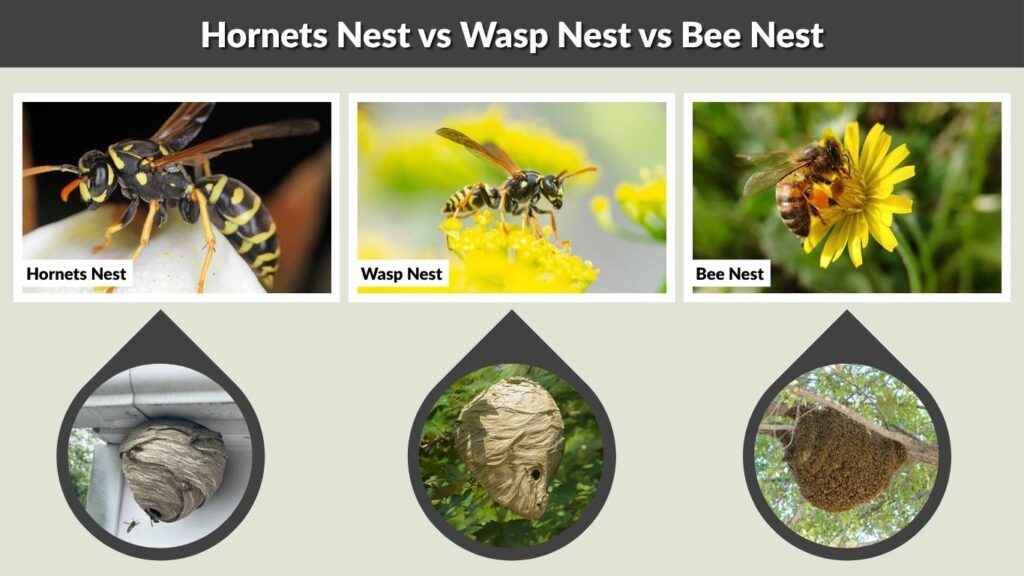
Bee nests can sometimes be confused with wasp or hornet nests, especially when insects enter and exit the same opening. However, honey bees use wax to construct their combs, while social wasps generally use chewed plant fibers. Bumble bees may nest inside existing cavities without building large paper structures.
How to Identify a Bee Nest
Honey bee nests contain wax combs made of closely arranged hexagonal cells. These combs may be exposed or hidden inside tree hollows, walls, or managed hives.
Paper wasp nests also contain hexagonal cells, but the cells are constructed from paper-like fibers rather than wax.
Mud dauber wasps provide another distinctive comparison. They build individual mud chambers instead of communal paper nests.
Identifying the insects and construction material is more reliable than relying entirely on shape.
Which Nest Is More Dangerous?
Both hornet and wasp nests can present sting hazards, particularly when located near frequently occupied spaces. The level of risk depends on species, colony activity, individual sensitivity to venom, and proximity to the nest. Neither group should be considered harmless simply because its nest looks small.
Understanding Hornet and Wasp Sting Risks
Hornets and paper wasps have smooth stingers and can sting more than once.
Nest disturbances such as shaking branches, operating lawn equipment, or striking nearby surfaces can trigger defensive responses.
People with severe insect-venom allergies may experience life-threatening reactions following a sting.
Difficulty breathing, throat swelling, faintness, or widespread allergic symptoms after a sting require immediate emergency medical care.
How to Safely Remove a Hornet or Wasp Nest
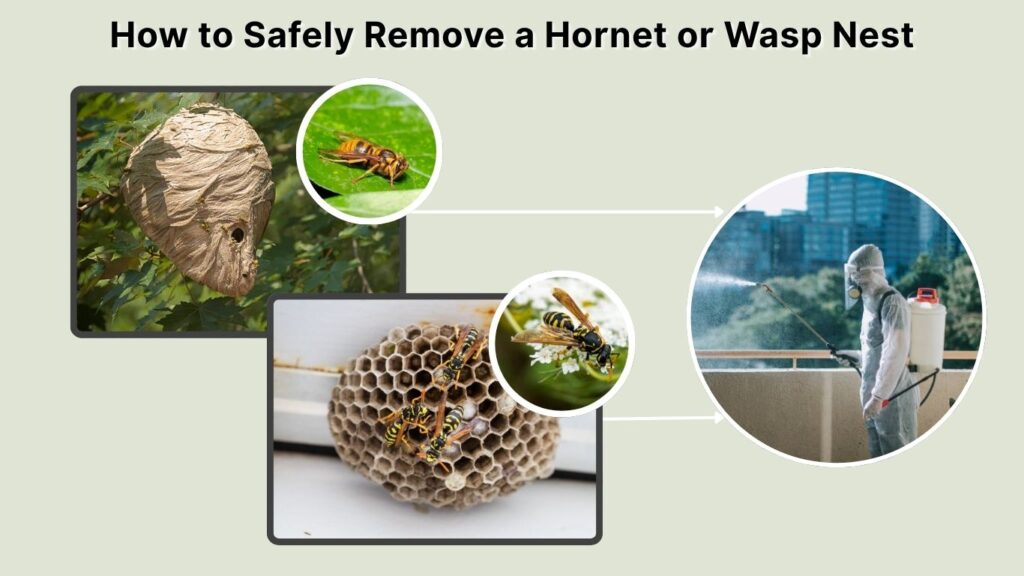
Removing an active nest requires careful risk assessment. Although a small paper wasp nest may appear manageable, approaching it can still result in stings. Large enclosed hornet nests and concealed yellowjacket colonies present additional difficulties because their population and internal structure may not be visible.
Safe Nest Management Tips
- Observe from a distance: Avoid standing directly beneath or beside the nest.
- Keep children and pets away: Restrict access to the surrounding area.
- Avoid physical disturbance: Never strike, shake, burn, or flood an occupied nest.
- Do not block entrances: Sealing active wall nests can drive insects into living spaces.
- Contact pest-control professionals: Seek expert help for large, active, elevated, or concealed colonies.
If a nest is distant from human activity, leaving it undisturbed may be the most practical option.
When Should You Call a Professional?
Professional assistance is especially important when nests occur inside attics, walls, underground cavities, or high tree branches.
A trained technician can identify the species, assess the risk, and determine whether control is necessary.
In many temperate regions, social wasp colonies naturally decline during colder months. However, seasonal patterns can differ in warmer climates.
FAQs
1. What is the easiest way to identify a hornets nest vs wasp nest?
An exposed, umbrella-shaped comb usually indicates paper wasps. A large enclosed paper nest could belong to hornets or yellowjackets. Observing the insects from a safe distance can provide additional identification clues.
2. Are hornet nests bigger than wasp nests?
Hornet nests are often larger than typical paper wasp nests. However, some yellowjacket species also construct large enclosed nests containing hundreds or thousands of individuals.
3. Do hornets and wasps use the same nesting materials?
Yes. Many social hornets and wasps construct nests from chewed wood fibers mixed with saliva, producing a lightweight paper-like material.
4. Can hornets and wasps live in the same nest?
Different social wasp species generally maintain separate colonies rather than sharing a nest. Some species may attack or invade another colony, but that is different from cooperative nesting.
5. Which is more aggressive, hornets or wasps?
There is no universal answer because hornets are themselves wasps, and defensive behavior varies among species. Some hornets and yellowjackets defend nests more vigorously than typical paper wasps, especially when colonies are disturbed.
