
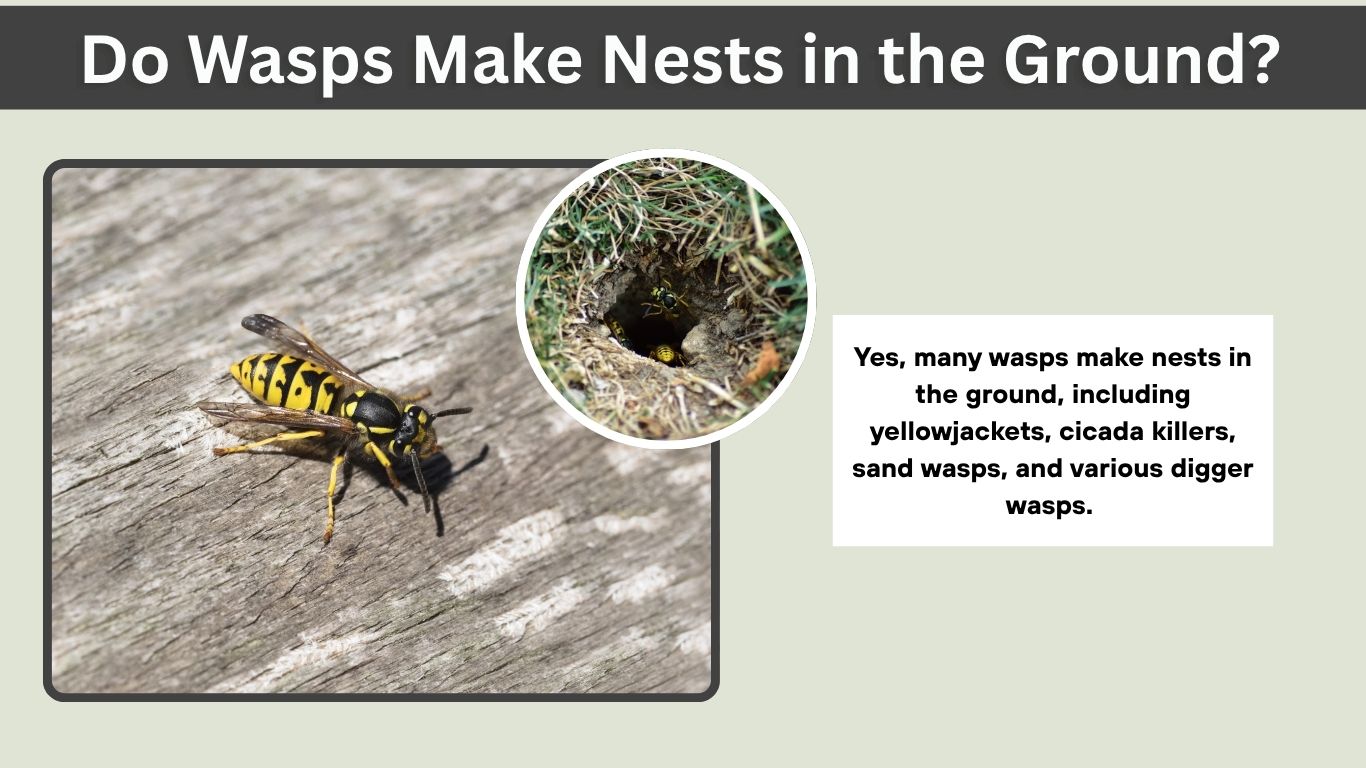
Have you noticed wasps flying into small holes in your lawn or garden? You might wonder, do wasps make nests in the ground? The answer is yes. Several wasp species build underground nests, using soil tunnels or abandoned animal burrows to protect their young. However, not every ground-nesting wasp behaves the same way. Some live in large colonies, while others nest alone. Understanding their nesting habits helps you identify these insects and recognize potential dangers around your property.
Do Wasps Make Nests in the Ground?
Yes, many wasps make nests in the ground, including yellowjackets, cicada killers, sand wasps, and various digger wasps. Some species excavate underground tunnels, while others use existing holes or abandoned rodent burrows. These nesting spaces provide shelter and suitable conditions for developing larvae, although their structure and organization differ considerably between species.
How Common Are Ground-Nesting Wasps?
Ground-nesting wasps are found in many regions, particularly where suitable soil and food sources are available.
Solitary species frequently establish burrows in open lawns, sandy areas, and gardens. Social yellowjackets may occupy hidden cavities beneath grass, shrubs, or tree roots.
Their presence is especially noticeable during warmer months when adults become active and colonies expand.
Do All Wasps Live Underground?
No, wasps display several nesting behaviors depending on their species.
Some yellowjackets establish underground colonies, while paper wasps usually build exposed combs beneath roof edges and other sheltered surfaces.
Mud daubers construct nests from mud above ground, and many solitary species use plant stems or existing cavities.
Therefore, underground nesting is common among particular groups rather than all wasps.
What Types of Wasps Make Nests in the Ground?
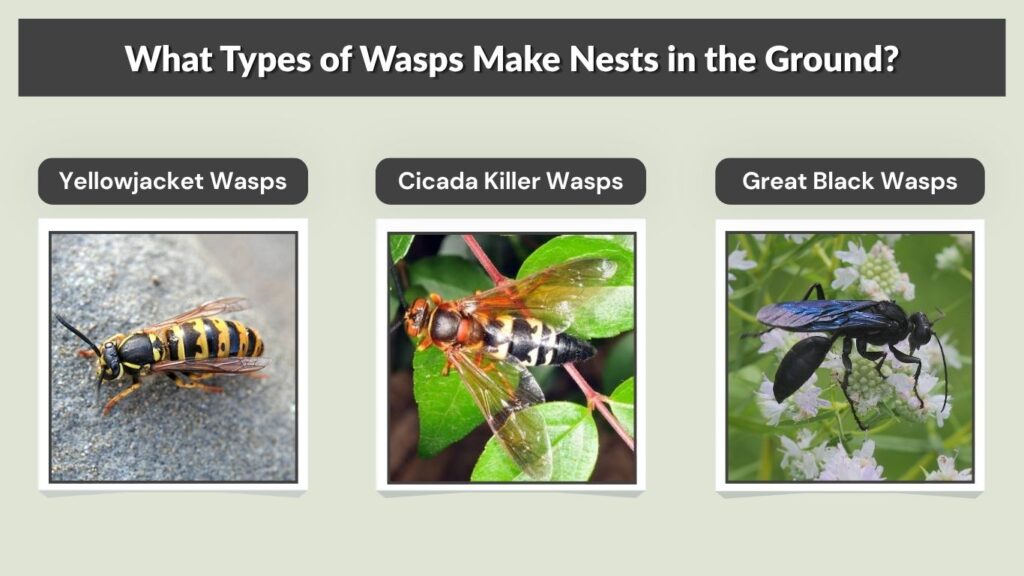
Several ground-nesting wasp species occur throughout North America and other regions. Their appearance, nest construction, and social behavior vary significantly. While some maintain large colonies containing numerous workers, others independently excavate tunnels for their offspring. Recognizing these differences is important because the presence of a large underground colony may pose greater risks than an isolated solitary nest.
1. Yellowjacket Wasps
Yellowjackets are among the best-known ground-nesting social wasps. They commonly use abandoned rodent burrows or existing underground cavities.
Workers construct enclosed paper nests containing layers of brood cells. As the colony grows, increasing numbers of wasps travel through the entrance.
Yellowjackets can become aggressive when their underground colonies are disturbed, particularly during late summer.
2. Cicada Killer Wasps
Cicada killers are large solitary wasps that often nest in sunny areas with well-drained soil.
Females excavate underground tunnels and create chambers for their offspring. They capture cicadas, paralyze them, and carry them into the burrows as food for developing larvae.
Despite their intimidating appearance, cicada killers are generally not aggressive toward people.
3. Great Black Wasps
Great black wasps are solitary insects with dark bodies and smoky, sometimes iridescent wings.
Females construct underground burrows and supply their offspring with paralyzed katydids or related insects.
They prefer suitable open soil and may appear around gardens during summer. These wasps are beneficial predators and usually pose little risk when left undisturbed.
4. Sand Wasps and Digger Wasps
Sand wasps and other digging wasps frequently establish nests in sandy or loose soil.
Individual females excavate tunnels, lay eggs, and provide prey for their developing young.
Several wasps may nest close together where soil conditions are favorable, creating the appearance of a colony. However, most remain solitary and do not collectively defend their nests.
Why Do Wasps Make Nests in the Ground?
Wasps choose underground nesting locations because they offer protection and suitable conditions for reproduction. Soil cavities shelter developing larvae from some predators and environmental disturbances. Different species take advantage of these benefits in different ways, depending on their hunting behavior, nesting structure, and need for suitable places to raise offspring.
Protection From Weather and Predators
Underground nests provide shelter from direct sunlight, heavy wind, and some weather extremes.
Existing soil cavities can also conceal developing larvae from certain predators.
However, underground nesting does not eliminate every threat. Flooding, burrowing animals, and other disturbances may still damage the nest.
Safe Development of Young Wasps
Female wasps use underground chambers to protect their eggs and developing larvae.
Solitary digging wasps typically supply individual brood chambers with captured insects or spiders, depending on the species.
Social yellowjackets behave differently. Workers gather food and care for larvae inside organized paper combs, allowing the colony to expand during warmer months.
How Do Wasps Make Nests in the Ground?
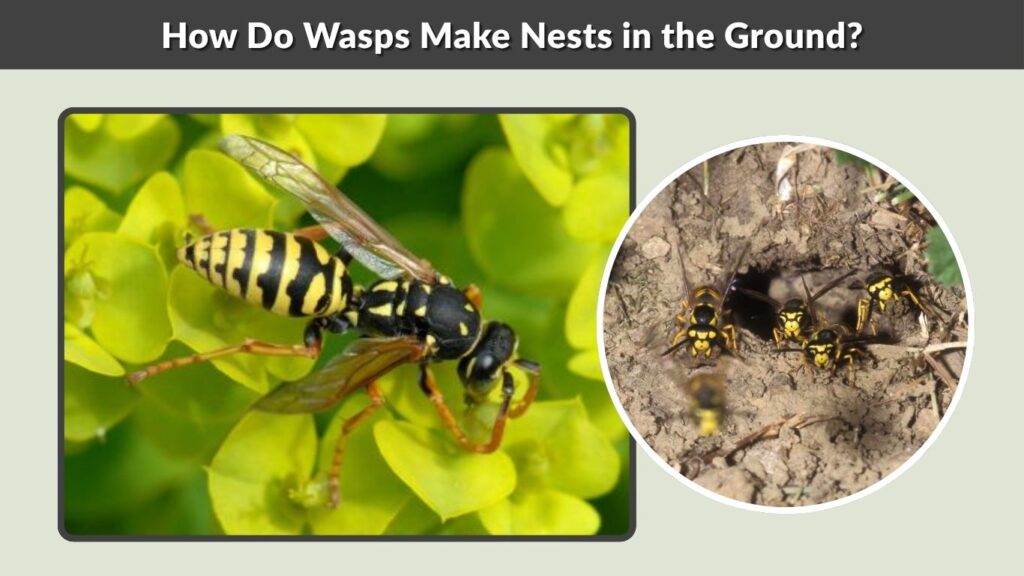
Underground wasps use two principal nesting approaches: excavating soil or occupying existing cavities. The construction process depends on whether the species is solitary or social. Digger wasps create tunnels and individual brood chambers, while ground-nesting yellowjackets build paper structures inside suitable sheltered spaces rather than creating an entirely new soil burrow.
How Yellowjackets Build Underground Nests
A yellowjacket queen typically selects a sheltered cavity during spring.
She begins constructing paper brood cells from chewed plant or wood fibers mixed with saliva, then lays eggs inside them.
After the first workers emerge, they expand the nest, gather food, and defend the colony.
The underground structure may eventually contain multiple layers of paper combs surrounded by a protective envelope.
How Solitary Wasps Dig Their Nests
A solitary digging wasp uses its legs and jaws to excavate a tunnel in suitable soil.
The female creates one or more chambers where she deposits eggs and provides captured prey.
Depending on the species, she may close individual chambers after provisioning them.
Unlike social yellowjackets, these wasps generally do not establish large cooperative colonies.
What Does a Wasp Nest in the Ground Look Like?
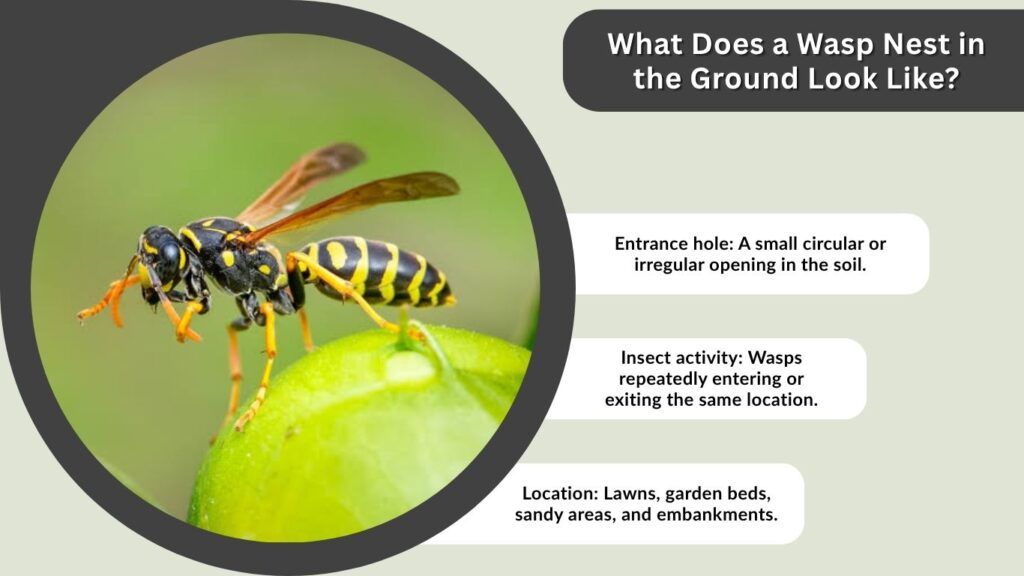
A ground wasp nest often appears as a small hole in grass, loose soil, or a garden bed. Its entrance can resemble an ordinary animal burrow, making identification difficult. While underground paper nests remain hidden, active entrances may reveal repeated wasp traffic. Freshly excavated soil can also indicate a solitary digging wasp.
Ground Wasp Nest Identification
Common signs of ground-nesting wasps include:
- Entrance hole: A small circular or irregular opening in the soil.
- Insect activity: Wasps repeatedly entering or exiting the same location.
- Loose dirt: Fresh soil surrounding some digging-wasp entrances.
- Location: Lawns, garden beds, sandy areas, and embankments.
- Nest structure: Hidden paper combs or individual underground chambers.
- Defensive response: Social wasps may react strongly to nearby disturbances.
Observe these features from a safe distance without digging into the nest.
Do Bees, Hornets, and Paper Wasps Make Nests in the Ground?
Not every flying insect entering a ground opening belongs to the same wasp group. Bees, hornets, and paper wasps have different nesting preferences, although some use underground spaces. Correct identification can prevent unnecessary disturbance of beneficial insects and help homeowners recognize colonies that may become defensive around frequently used outdoor areas.
Do Bees Make Nests in the Ground?
Yes, many native bees construct underground nests, including mining bees and several sweet bees.
Most ground-nesting bees are solitary and establish individual tunnels rather than large cooperative colonies.
They are valuable pollinators and generally present little danger when left alone.
Do Hornets Make Nests in the Ground?
Some hornet species build underground nests, but nesting habits vary considerably.
For example, northern giant hornets typically use underground cavities, while European hornets generally prefer hollow trees and enclosed spaces above ground.
Bald-faced hornets usually construct large enclosed paper nests on trees or buildings.
Do Paper Wasps and Red Wasps Nest Underground?
Most familiar paper wasps, including many reddish species, typically build exposed combs in sheltered aboveground locations.
Their nests commonly hang beneath eaves, decks, and branches.
If reddish wasps are repeatedly entering a ground opening, they may belong to another ground-nesting species. Identification should not rely on body color alone.
Are Wasps That Nest in the Ground Dangerous?
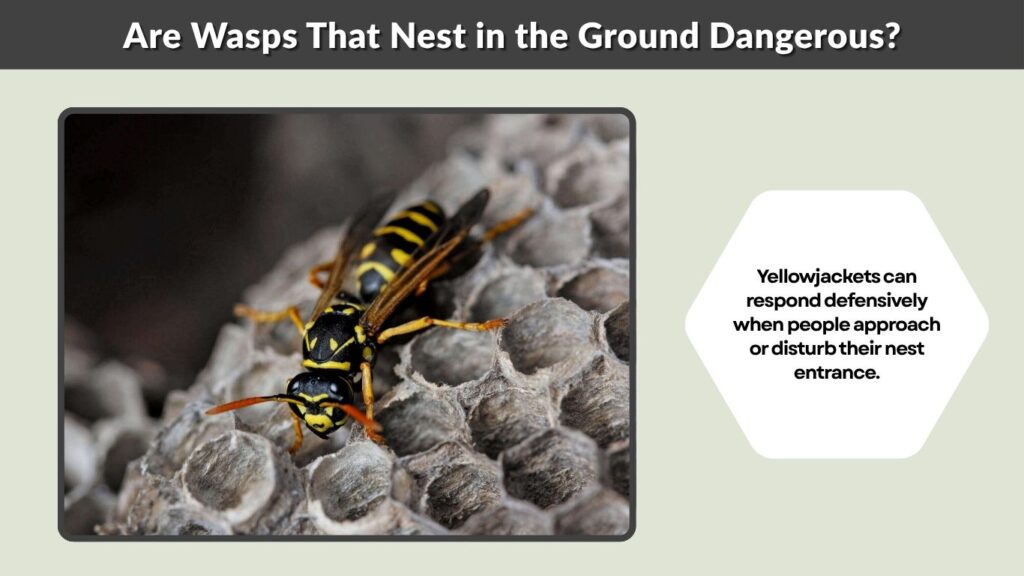
Ground-nesting wasps vary greatly in their defensive behavior. Social yellowjackets can deliver multiple stings when their colonies are threatened, while most solitary digging wasps are considerably less aggressive. Understanding which insects occupy a nest is more useful for evaluating danger than judging the size of the entrance hole.
When Are Ground Wasps Aggressive?
Yellowjackets can respond defensively when people approach or disturb their nest entrance.
Mowing, digging, or stepping close to the colony may provoke an attack.
Solitary cicada killers and many digging wasps generally avoid conflict, although females can sting if handled.
People with known severe insect-sting allergies should avoid active nests.
What Should You Do If Wasps Nest in Your Yard?
Discovering a ground wasp nest does not automatically mean it should be destroyed. Many solitary species help control insect populations and rarely threaten people. However, social colonies near entrances, playgrounds, or regularly maintained lawns may require professional management to reduce the risk of accidental disturbance and multiple stings.
When Should You Leave a Ground Wasp Nest Alone?
A solitary wasp nest in an unused garden area can usually remain undisturbed.
Avoid unnecessary digging and allow the insects to complete their natural nesting cycle.
Many ground-nesting wasps are beneficial predators that contribute to controlling other insect populations.
When Is Ground Wasp Nest Removal Necessary?
Removal may be appropriate when an active yellowjacket colony threatens people or pets.
Keep children away from the entrance and avoid mowing or digging nearby.
A licensed pest-control professional can identify the insects and recommend appropriate treatment.
Never pour gasoline, boiling water, or bleach into an occupied nest.
FAQs
1. Can Wasps Build Their Own Underground Nests?
Yes. Cicada killers and many digging wasps excavate underground tunnels. Yellowjackets commonly use existing soil cavities and construct paper nests inside them.
2. Do Ground Wasps Use the Same Nest Every Year?
Temperate-region yellowjacket colonies generally do not reuse their nests the following year. However, solitary species may establish new burrows in the same suitable area.
3. Do Wasps Make Nests Under Grass?
Yes. Yellowjackets may occupy underground cavities beneath grassy lawns, while some solitary species dig burrows in exposed patches of soil.
4. Do Ground-Nesting Wasps Live in Colonies?
Some do. Yellowjackets form social colonies, while cicada killers, sand wasps, and many other digging wasps nest independently.
5. Do Wasps Make Nests in the Ground During Winter?
Most ground-nesting wasps establish or expand nests during warmer months. Solitary species may overwinter underground as developing young, while social yellowjacket colonies generally die after sustained freezing weather.
