
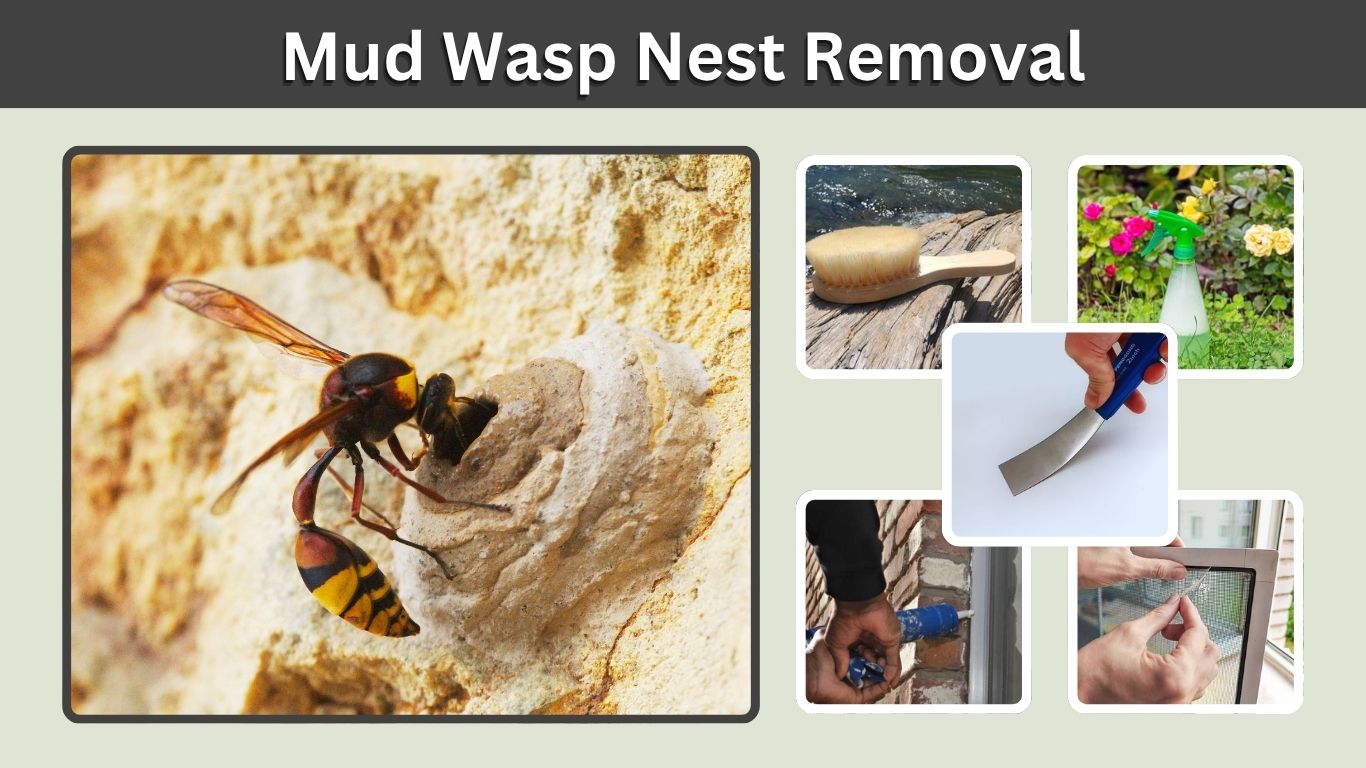
Mud wasp nest removal is usually straightforward when the nest is abandoned, but removing an active nest requires additional care. Mud daubers build hardened clay nests on walls, roof eaves, garages, and other sheltered surfaces. Although these solitary wasps rarely sting, their nests can leave stubborn stains or interfere with household equipment. Learning how to remove a mud wasp nest correctly helps protect both your home and the beneficial insects around it. This guide covers identification, safe removal steps, surface cleaning, and prevention methods.
Identify the Mud Wasp Nest Before Removal
Before removing a mud wasp nest, confirm that the structure belongs to a mud dauber rather than a more defensive social wasp. Mud daubers typically construct individual chambers from moist soil, creating hardened tubes or irregular clay clusters. Their nests usually appear beneath roof overhangs, on exterior walls, or inside sheltered structures where rain cannot easily reach them.
Mud Dauber Nest vs. Paper Wasp Nest
Mud dauber nests consist of hardened mud and have enclosed chambers. Paper wasps create exposed, umbrella-shaped nests with visible hexagonal cells.
Mud daubers are solitary insects that rarely defend their nests. Paper wasps live in colonies and may react defensively when disturbed.
Correct identification is important because different wasp species require different removal precautions.
How to Tell if a Mud Wasp Nest Is Active
Watch the nest from a safe distance during daylight hours. Repeated visits by a slender wasp carrying mud or spiders suggest ongoing activity.
Small, round exit holes may indicate that adult wasps have emerged. However, some chambers may still contain developing insects, and certain mud daubers reuse older nests.
Avoid disturbing any nest whose activity status remains uncertain.
Tools and Safety Precautions for Mud Wasp Removal
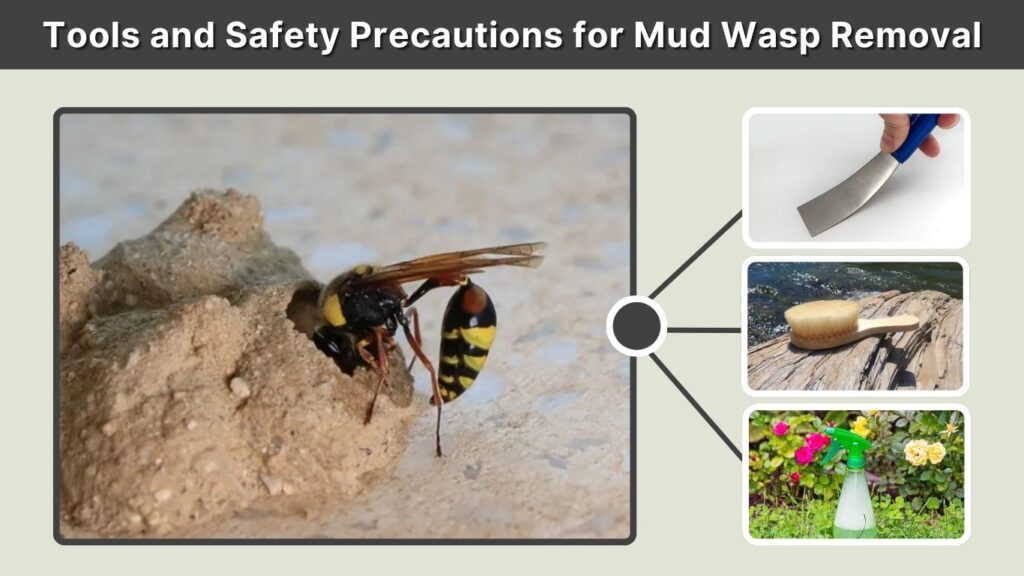
Preparing the correct equipment can make mud dauber wasp nest removal easier while reducing accidental damage to walls and other surfaces. Because dried mud can crumble into small fragments, protective eyewear and a suitable cleaning area are helpful. Only consider removing nests that can be reached comfortably from the ground and have been confirmed inactive.
Tools Needed for Mud Wasp Nest Removal
Gather the following supplies:
- Plastic putty knife: Loosens dried mud without excessive scratching.
- Soft-bristled brush: Removes loose mud from delicate surfaces.
- Protective gloves: Protect hands from sharp debris and rough materials.
- Safety glasses: Prevent falling dirt from reaching the eyes.
- Warm water and mild soap: Clean remaining dirt and stains.
- Trash bag or container: Collects broken nest material.
Safety Precautions Before Starting
Wear long sleeves and closed-toe shoes when working around old nests. Keep children and pets away from the cleaning area.
Never attempt removal from an unstable ladder, inside electrical equipment, or near an unfamiliar active colony.
People with serious insect-sting allergies should arrange professional assistance rather than handle nests themselves.
How to Remove a Mud Wasp Nest Step by Step
The best way to remove a mud wasp nest is generally through careful physical removal rather than unnecessary pesticide applications. University extension guidance recommends scraping away mud dauber nests when they become undesirable. This approach works particularly well with accessible, abandoned nests. Use gentle pressure, protect surrounding materials, and stop immediately if you discover unexpected wasp activity.
Step-by-Step Mud Wasp Nest Removal
- Confirm inactivity: Observe the nest over several days without approaching closely. If activity is uncertain, postpone removal.
- Protect the area: Position a container beneath the nest to catch falling pieces.
- Loosen the dried mud: Use a plastic putty knife at a shallow angle to separate the nest from the surface.
- Remove loose fragments: Carefully collect the broken chambers without crushing them unnecessarily.
- Clean remaining residue: Use a soft brush and a lightly dampened cloth to remove mud deposits.
- Dispose of the debris: Place the removed material in a trash bag and wash your hands after cleaning.
What if the Mud Wasp Nest Is Still Active?
An occupied mud dauber nest generally presents less danger than a yellowjacket colony, but accidental stings remain possible.
If the nest is not creating an immediate problem, consider leaving it undisturbed until the insects complete development.
When an active nest blocks an entrance, affects equipment, or creates another hazard, contact a qualified pest-control professional.
Removing Mud Wasp Nests From Different Surfaces
Mud dauber nests can adhere firmly to brick, concrete, wood, stucco, and painted siding. Each material responds differently to scraping and moisture, so removal techniques should be adjusted accordingly. Delicate finishes can chip or discolor when excessive force is applied. Interior locations also require special attention because nests may be attached to electrical systems or ventilation equipment.
How to Remove a Mud Wasp Nest From Stucco
Stucco has a textured, porous surface that can be damaged by aggressive scraping. Use a plastic scraper to carefully separate the dried nest from the wall.
If small pieces remain attached, lightly soften the residue with water and remove it using a soft brush.
Avoid metal scraping tools, strong acids, and pressure washing, which may damage the finish.
Removing Mud Nests From Brick, Concrete, and Wood
Brick and concrete generally tolerate careful brushing better than painted or delicate finishes. Loosen the dried nest, then wipe away remaining dirt with warm water.
Painted wood requires gentler treatment because scraping can peel paint or damage protective coatings.
Always test cleaning methods on a hidden section before treating a large visible area.
How to Remove a Mud Wasp Nest From an Attic
Attic nests may appear on rafters, exposed framing, or equipment housings. First, confirm that the area is accessible and free from electrical or other hazards.
Small, inactive nests on reachable wooden surfaces can sometimes be gently scraped away.
For nests inside vents, electrical equipment, or inaccessible spaces, use an appropriate professional. Obstructed ventilation should be inspected before equipment is operated.
How to Remove Mud Wasp Nest Stains
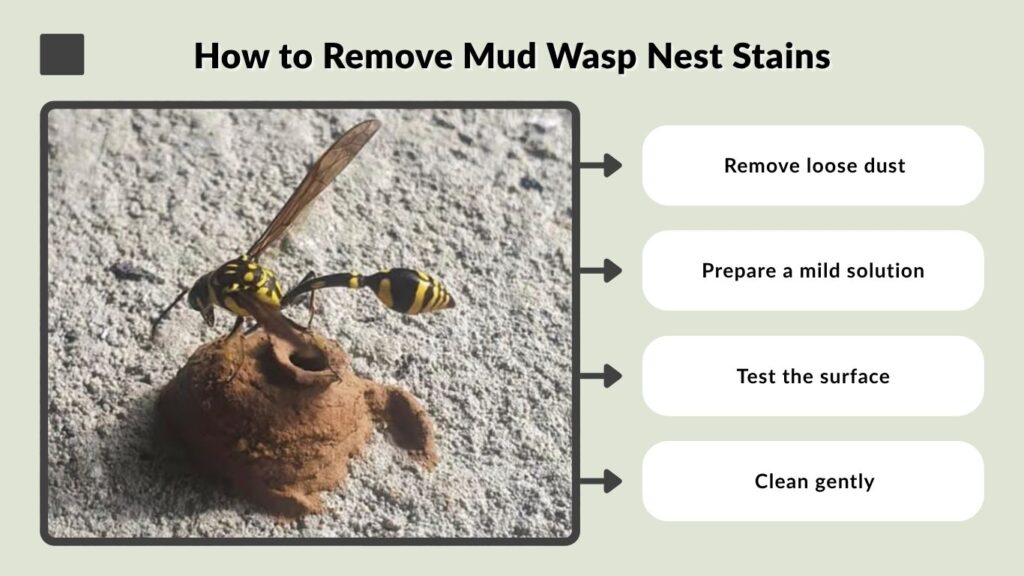
After the main nest is removed, a faint brown or gray stain may remain on the original surface. These marks usually come from fine soil particles left behind by the mud structure. Cleaning them carefully restores the appearance of walls without causing unnecessary damage. The appropriate method depends on the surface material, coating, and age of the stain.
Steps to Clean Mud Wasp Nest Stains
- Remove loose dust: Brush away dry mud fragments before introducing water.
- Prepare a mild solution: Mix a small amount of dish soap with warm water.
- Test the surface: Apply the solution to a hidden spot and check for discoloration.
- Clean gently: Use a soft cloth or brush to loosen remaining dirt.
- Rinse carefully: Wipe with clean water without oversaturating the surface.
- Allow drying: Inspect the area after it dries to determine whether additional cleaning is needed.
How to Handle Stubborn Mud Stains
Persistent stains on porous stucco or brick may require a surface-specific cleaner.
Avoid wire brushes, harsh bleach mixtures, or high-pressure spraying on delicate finishes. Acidic household cleaners can also damage certain masonry materials.
If cleaning cannot remove the discoloration, minor paint or surface restoration may be necessary.
How to Prevent Mud Wasps From Building New Nests
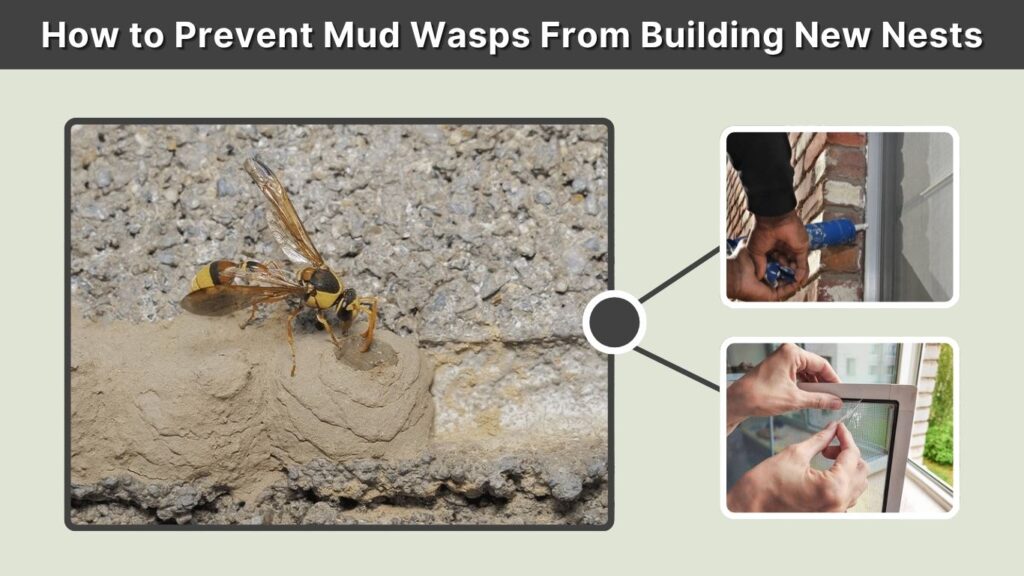
Preventing future mud wasp nests is often easier than repeatedly removing hardened clay structures. Mud daubers prefer sheltered, undisturbed areas near suitable nesting materials and spider prey. Although complete prevention is difficult, sealing unnecessary openings and inspecting vulnerable locations can reduce unwanted nesting activity. These methods are particularly useful around garages, sheds, attics, and outdoor equipment.
Mud Wasp Nest Prevention Tips
- Inspect sheltered areas: Check eaves, garage corners, and covered porches regularly.
- Seal entry gaps: Repair openings around windows, siding, and rooflines after confirming they are unoccupied.
- Repair damaged screens: Protect vents and windows with suitable screening that maintains airflow.
- Maintain equipment: Inspect unused outdoor machinery and appropriate access openings.
- Monitor recurring locations: Watch areas where previous nests caused inconvenience.
Do You Need Insecticides for Mud Dauber Removal?
Insecticides are usually unnecessary when removing an abandoned mud dauber nest.
These wasps help control spider populations and seldom behave aggressively toward people. Leaving harmless nests alone can be beneficial.
If active nesting creates a significant problem, seek professional guidance about targeted treatment rather than spraying indiscriminately.
FAQs
Mud wasp nest removal often raises questions about safety, cleaning, and whether the insects will return. Because mud daubers behave differently from social wasps, the precautions needed for their nests are not always the same. Understanding the conditions under which removal is appropriate can help you avoid unnecessary risks and protect your home’s surfaces.
1. What Is the Best Way to Remove a Mud Wasp Nest?
For a reachable, inactive nest, gently remove the dried mud with a plastic putty knife. Clean remaining residue using a soft brush and mild soapy water.
2. Can I Remove a Mud Wasp Nest Without Getting Stung?
The risk is generally low because mud daubers rarely defend their nests. However, no removal method guarantees protection against stings, especially if the nest is occupied.
3. Will Mud Wasps Return After Nest Removal?
Mud daubers may return to suitable nesting locations. Some species also reuse existing mud chambers, so regular inspections and exclusion measures can help reduce recurring problems.
4. Can Vinegar Remove Mud Wasp Nest Stains?
Vinegar may damage certain masonry, stucco, and decorative finishes. Mild soap and water are safer starting options. Always follow the surface manufacturer’s cleaning recommendations.
5. Should I Hire a Professional for Mud Wasp Nest Removal?
Professional assistance is advisable for inaccessible nests, uncertain identification, serious sting-allergy concerns, or nests affecting electrical equipment and ventilation systems.
