
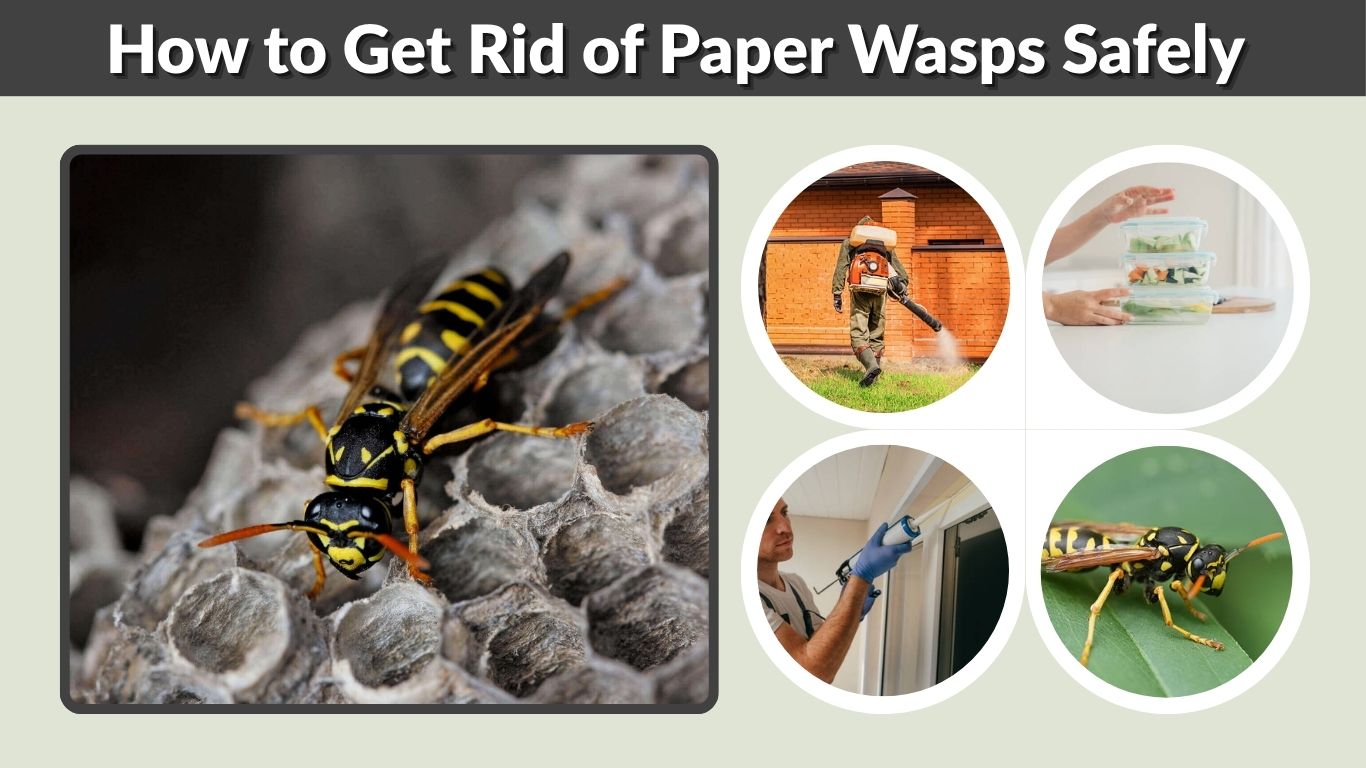
Paper wasps can become a serious nuisance when they build nests around homes, gardens, patios, and outdoor structures. Although these insects help control garden pests, their painful stings make them unwelcome near frequently used spaces. Learning how to get rid of paper wasps safely involves identifying their nests, understanding their behavior, and choosing suitable control methods. Whether you are dealing with red paper wasps, European paper wasps, or a growing colony beneath your roof, several practical approaches can reduce unwanted activity and help prevent future nesting.
How to Identify Paper Wasps and Their Nests
Before attempting to get rid of paper wasps, identifying the insects correctly is important. Paper wasps belong primarily to the genus Polistes and are often mistaken for yellowjackets or hornets. Their slender bodies, long legs, and distinctive open-comb nests make them recognizable. Understanding these characteristics helps homeowners locate colonies and determine whether immediate intervention is necessary.
What Do Paper Wasps Look Like?
Paper wasps have several distinctive physical features:
- Body shape: Slender bodies with narrow waists and relatively long legs.
- Colors: Brown, reddish-brown, yellow, black, or combinations of these colors.
- Size: Most common species measure approximately 5/8 to 1 inch long.
- Wings: Two pairs of wings that fold lengthwise when resting.
- Flight pattern: Long legs frequently dangle beneath their bodies during flight.
Where Do Paper Wasps Build Nests?
Paper wasps construct umbrella-shaped nests using chewed wood fibers mixed with saliva. Their nests contain exposed hexagonal cells where developing larvae are raised.
Common nesting locations include roof eaves, porch ceilings, tree branches, window frames, sheds, and outdoor fixtures. Some species also occupy sheltered cavities inside buildings.
How to Get Rid of Paper Wasps Safely
Getting rid of paper wasps requires evaluating the colony’s size, location, and potential danger. Although these insects are generally less defensive than many yellowjackets, they may sting repeatedly when their nests are disturbed. Small, newly established colonies are usually easier to manage than mature nests. Choosing an appropriate approach minimizes unnecessary risks and protects people, pets, and beneficial insects.
1. Locate the Paper Wasp Nest
Observe wasp activity from a safe distance to identify where individuals repeatedly enter or leave.
Paper wasps often return directly to their nests after searching for food. Watching their movements can reveal hidden nesting locations.
Avoid touching the structure, blocking entrances, or approaching closely during identification.
2. Choose an Appropriate Control Method
Not every colony needs treatment. A nest located away from people can often remain undisturbed.
For an active exposed nest creating a genuine safety problem, a pesticide specifically labeled for paper wasps and the application location may be appropriate.
Follow every label instruction. If the nest is large, difficult to access, or near electrical equipment, use professional pest-control services instead.
3. Handle Small Paper Wasp Nests
New nests containing only a founding queen are generally easier to address before workers emerge.
An inactive or abandoned small nest can be detached after confirming that no live wasps remain.
Never grab, crush, or knock down an occupied nest. Even a small colony can defend itself when disturbed.
4. Follow Essential Safety Precautions
Important safety measures include:
- Keep children and pets away from occupied nests.
- Avoid swatting wasps or shaking their nesting surfaces.
- Never use fire, gasoline, boiling water, or pressure washers.
- Do not climb ladders to treat active colonies.
- Follow pesticide labels and use suitable protective equipment.
- Hire professionals for inaccessible nests or severe sting-allergy concerns.
How to Get Rid of Paper Wasps Around Your House
Paper wasps frequently establish colonies around residential buildings because sheltered structures protect their nests from wind and rain. Rooflines, porches, walls, and attics provide suitable nesting opportunities. However, wasps occasionally entering a home may be overwintering queens rather than members of an active indoor colony. Recognizing these differences helps homeowners choose effective methods without disturbing unnecessary areas.
How to Get Rid of Paper Wasps in Your House
A single paper wasp indoors may have entered through an open window, doorway, or damaged screen.
If it can be handled safely, isolate the room and allow the wasp to leave through an open exterior window. Avoid swatting or grabbing it.
Repeated indoor sightings may indicate an accessible nesting location or overwintering wasps inside structural spaces.
How to Get Rid of Paper Wasps in Walls and Attics
Paper wasps sometimes enter wall cavities, attics, and protected roof spaces.
Never seal an exterior opening while wasps are actively using it. Trapped insects may find alternative routes into living areas.
Professional inspection is advisable when activity suggests an occupied nest inside a structure. Once the insects are gone, access points can be repaired.
How to Get Rid of Paper Wasps in Your Yard
Paper wasps often visit gardens to hunt caterpillars and collect nectar. Their presence does not necessarily indicate a nest nearby.
Inspect frequently used seating areas, sheds, and outdoor fixtures for developing colonies.
When nests occur in isolated trees or garden areas, leaving them undisturbed may be preferable to removal.
How to Get Rid of Paper Wasps Naturally
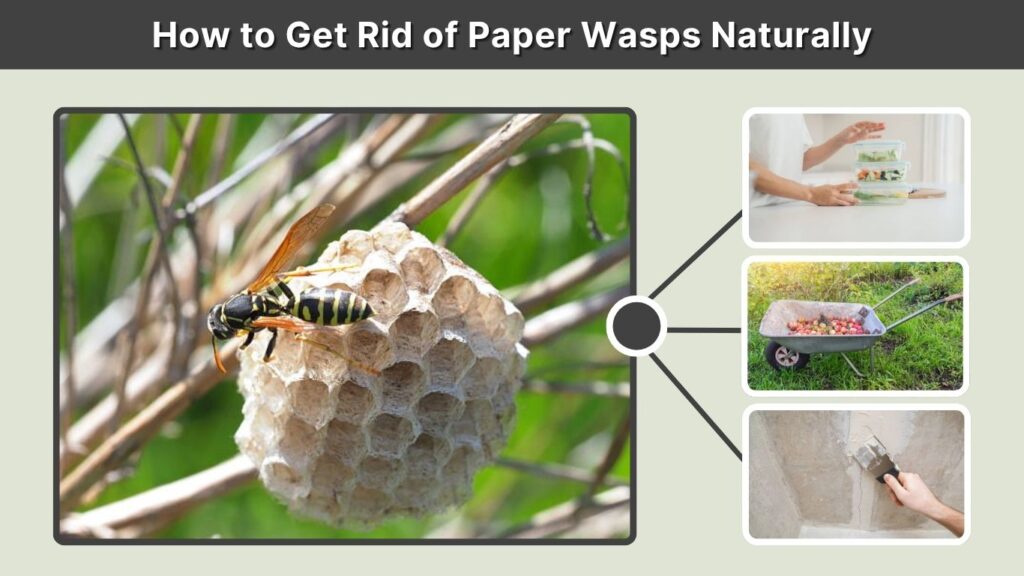
Natural paper wasp control focuses mainly on reducing attractants, preventing unwanted nesting, and avoiding unnecessary chemical treatments. Although homemade remedies are widely promoted, many lack reliable scientific evidence. Nonchemical approaches work best as preventive measures rather than treatments for established colonies. Homeowners should distinguish methods that discourage visits from methods that actually eliminate an occupied nest.
Natural Ways to Keep Paper Wasps Away
Several simple practices can make outdoor living areas less attractive:
- Cover food: Keep outdoor meals and sugary drinks protected.
- Remove fallen fruit: Collect overripe fruit that may attract foraging wasps.
- Secure garbage: Use tightly fitting lids on outdoor trash containers.
- Repair openings: Seal unused structural gaps after confirming they are unoccupied.
- Inspect regularly: Look for developing nests around frequently used spaces.
Do Peppermint Oil, Vinegar, and Fake Nests Work?
Peppermint oil, vinegar, and artificial nests are commonly suggested as paper wasp repellents. However, there is insufficient reliable evidence that these methods consistently prevent nesting or remove established colonies.
Brown paper bags shaped like wasp nests are also not dependable deterrents.
Avoid spraying homemade mixtures onto occupied colonies, as this can provoke defensive behavior.
How to Get Rid of Paper Wasps Without Killing Them
The most reliable nonlethal approach is to avoid disturbing nests located away from people.
Where relocation is necessary, consult an experienced professional about whether it is feasible.
In regions with cold winters, allowing an established colony to complete its seasonal lifecycle may eliminate the need for active treatment.
How to Get Rid of Different Paper Wasp Species
Several species of paper wasps commonly appear around residential properties, and their nesting preferences can vary. Red, European, northern, and other paper wasps generally create exposed paper combs, but their colors and preferred nesting sites differ. Identifying the species can help homeowners understand its behavior, although colony location and accessibility remain the most important considerations when selecting control methods.
How to Get Rid of Red Paper Wasps
Red paper wasps commonly build nests beneath roof overhangs, porches, and other sheltered structures.
They may defend their colonies when disturbed. Nests close to busy entrances warrant particular attention.
Avoid approaching occupied combs directly, and arrange professional removal when an active colony creates a safety concern.
How to Get Rid of European Paper Wasps
European paper wasps (Polistes dominula) have black-and-yellow bodies and distinctive orange antennae.
They may establish nests inside narrow cavities, outdoor fixtures, and protected structural openings.
Because these sites can be difficult to access, proper identification and professional treatment are advisable when the nest cannot be reached safely.
How to Get Rid of Northern Paper Wasps
Northern paper wasps (Polistes fuscatus) often display brown or reddish coloration with variable markings.
They commonly construct exposed nests around buildings and vegetation.
Management is similar to that of other paper wasps: avoid unnecessary disturbance, address threatening colonies, and remove abandoned nests when appropriate.
How to Prevent Paper Wasps From Coming Back
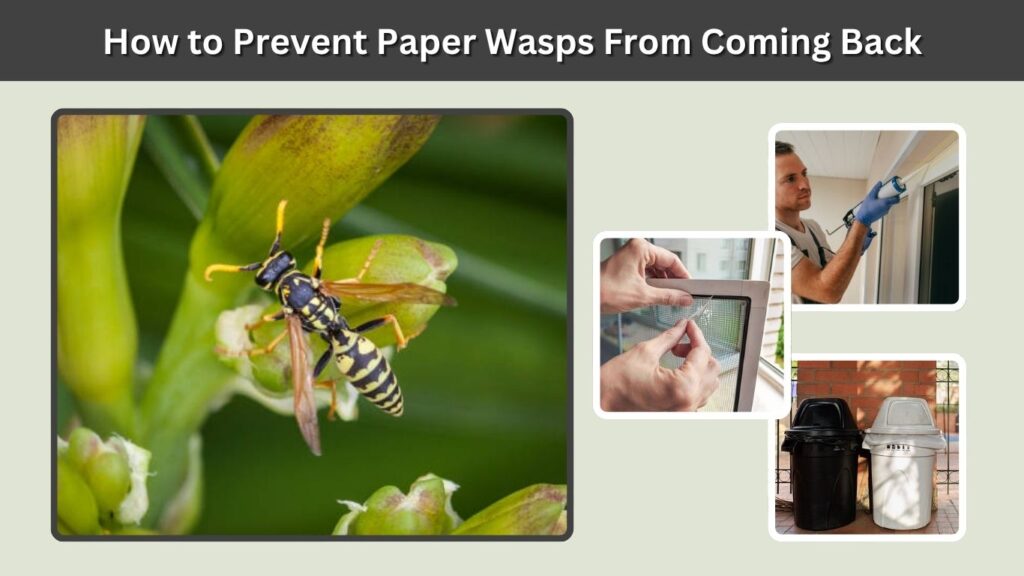
Preventing recurring paper wasp problems requires regular property maintenance and early identification of new colonies. Although established nests are generally not reused in climates with annual colony cycles, new queens may build nearby when suitable nesting sites remain available. A combination of structural repairs, routine inspection, and attractant management can reduce unwanted activity without attempting to eliminate every wasp in the environment.
Effective Paper Wasp Prevention Tips
Useful long-term measures include:
- Inspect roof eaves and porch ceilings during spring.
- Repair torn window screens and damaged weatherstripping.
- Seal unused cracks after verifying they contain no active colony.
- Maintain outdoor furniture, sheds, and storage structures.
- Keep outdoor food, beverages, and trash covered.
- Monitor locations where paper wasps previously nested.
Can You Get Rid of Paper Wasps Permanently?
Completely eliminating paper wasps from an outdoor property is unrealistic because new individuals can arrive from surrounding areas.
However, regular inspection and maintenance can substantially reduce nesting conflicts.
Focus on keeping colonies away from doorways, seating areas, and other heavily used spaces while allowing beneficial wasps to remain in safer locations.
FAQs
Paper wasp control often raises questions about natural repellents, nest removal, seasonal behavior, and recurring infestations. The safest response depends on whether the insects are simply foraging or actively defending a colony. Understanding these differences helps avoid ineffective treatments and unnecessary stings. The following answers address common concerns homeowners face when managing paper wasps around their properties.
1. What Is the Best Way to Get Rid of Paper Wasps?
The best approach is to locate the nest, evaluate its risk, and avoid disturbing it unnecessarily. Professional removal is recommended for large, active, or difficult-to-access colonies.
2. How Do You Get Rid of a Paper Wasp Nest?
An abandoned nest can usually be removed after confirming it is inactive. Occupied nests may require labeled insecticide treatment or professional pest-control assistance.
3. What Naturally Keeps Paper Wasps Away?
Covering outdoor food, removing fallen fruit, maintaining screens, and repairing unused openings can reduce unwanted encounters. Essential oils and artificial nest decoys are not proven reliable solutions.
4. Will Paper Wasps Return After Their Nest Is Removed?
Paper wasps generally do not reuse old annual nests. However, new queens may establish colonies nearby if suitable nesting locations remain available.
5. How Do You Get Rid of a Large Paper Wasp Nest?
Contact a qualified pest-control professional. Large colonies contain multiple defensive workers, and attempting to knock down or disturb an occupied nest can result in repeated stings.
