
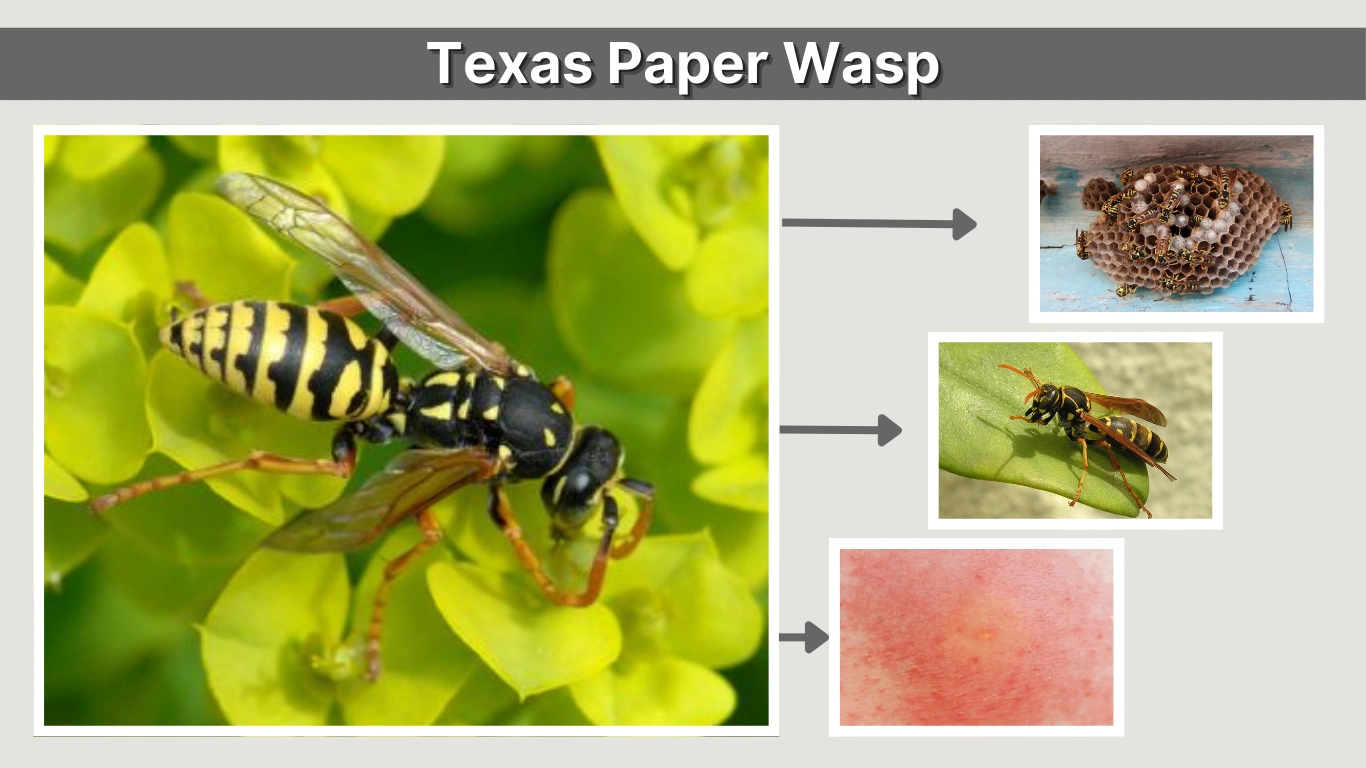
The Texas Paper Wasp (Polistes exclamans) is a species of social wasp that is commonly found throughout Texas and the surrounding regions. Known for its ability to build distinctive, papery nests, this species plays an essential role in ecosystems by controlling insect populations and contributing to pollination. Despite its benefits, the Texas Paper Wasp can also pose risks to humans due to its painful sting. In this article, we will explore the key characteristics, behavior, nesting habits, and human interactions of the Texas Paper Wasp, helping you to better understand and safely coexist with this fascinating insect.
Identification of the Texas Paper Wasp

Physical Appearance
The Texas Paper Wasp is a medium-sized insect that can grow to be around 15 to 20 millimeters in length. It has a slender body, characterized by a narrow waist, and is covered in striking black and yellow markings. Key features include:
- Coloration: The Texas Paper Wasp typically has a yellow and black color pattern, with black markings on its thorax and abdomen. The yellow areas are often bright, with the abdomen featuring distinct yellow bands.
- Body Shape: The body is elongated with a characteristic narrow waist, which separates the thorax and abdomen. The wasp’s wings are slightly translucent and slightly iridescent when viewed under sunlight.
- Antennae: Its antennae are long and segmented, allowing the wasp to sense its environment effectively.
Nesting Characteristics
Texas Paper Wasps are well-known for their unique nests, which are made from wood fibers chewed by the wasps and mixed with saliva. These nests are papery and typically have the following features:
- Shape: The nests are usually umbrella-shaped and are constructed in a horizontal orientation. They are often attached to sheltered areas, such as under roof eaves, tree branches, and fences.
- Size: The nests can range in size from small, single-layer structures to larger, more complex nests with multiple layers of hexagonal cells. The size of the nest can vary depending on the number of individuals in the colony.
- Location: These wasps often build their nests in areas that are not easily disturbed. They are frequently found in outdoor areas around homes, including under overhangs, in attics, and near outdoor furniture.
Behavior of the Texas Paper Wasp
Social Structure
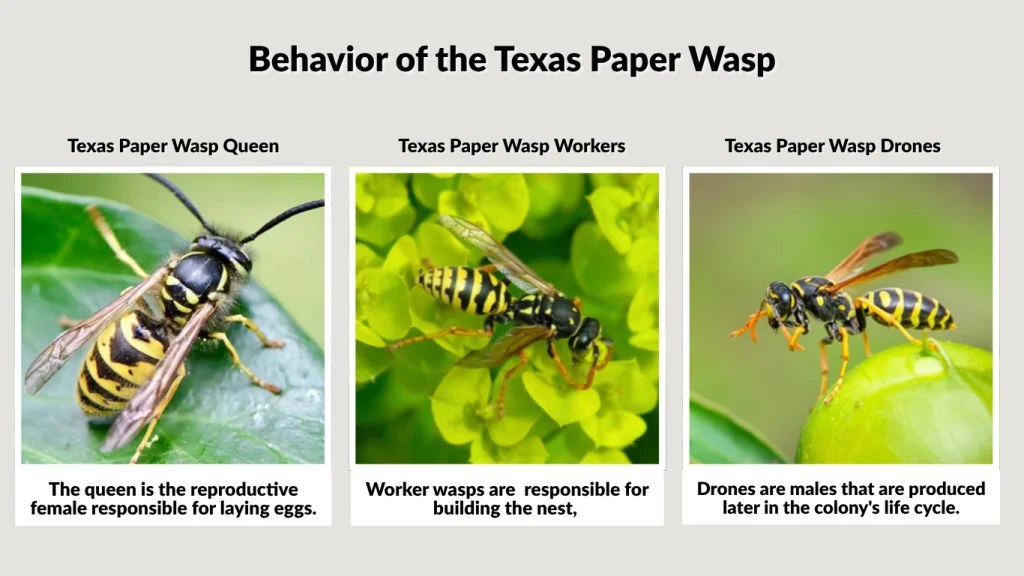
Texas Paper Wasps, like other species in the Polistes genus, live in colonies with a clearly defined social structure. Each colony is made up of three primary types of wasps:
- Queen: The queen is the sole fertile female in the colony and is responsible for laying eggs. She establishes the colony at the beginning of the season and continues to lay eggs throughout the colony’s life cycle.
- Workers: Worker wasps are sterile females that perform the majority of tasks within the colony. These tasks include foraging for food, protecting the nest, maintaining the nest, and caring for the larvae.
- Drones: Male wasps, known as drones, are produced later in the colony’s life cycle. Their main purpose is to mate with the queen, after which they typically die.
Feeding Habits
Texas Paper Wasps have a mixed diet that consists of both plant and animal matter:
- Nectar: The wasps feed on nectar from flowers, which provides the necessary sugars for energy.
- Insects: As predators, Texas Paper Wasps hunt and consume a variety of insects, including caterpillars, spiders, aphids, and other small arthropods. These insects are captured by the worker wasps, paralyzed, and brought back to the nest to be fed to the larvae.
- Scavenging: In addition to their natural food sources, these wasps may also scavenge food from human sources, particularly sugary liquids like fruit juice, soda, and other sweet substances.
Aggression and Defense
Texas Paper Wasps can be aggressive, particularly when their nest is threatened. They are more likely to sting if:
- Their Nest Is Disturbed: The wasps defend their nest vigorously if they feel it is under threat. Nest disturbances, such as approaching too closely or swatting at them, can trigger aggressive behavior.
- Self-Defense: If a wasp feels personally threatened, it may sting in self-defense. However, Texas Paper Wasps are generally not aggressive and will avoid human contact if left undisturbed.
Nesting and Reproduction
Nest Construction
The process of nest building is a collaborative effort within the colony. The queen starts the colony by laying the first eggs, and as the worker wasps develop, they take over the task of nest construction. The nest is made from chewed wood fibers, which the wasps gather from trees, fences, and other wooden surfaces. The workers mix these fibers with their saliva to create the papery material used to build the nest’s hexagonal cells.
Life Cycle
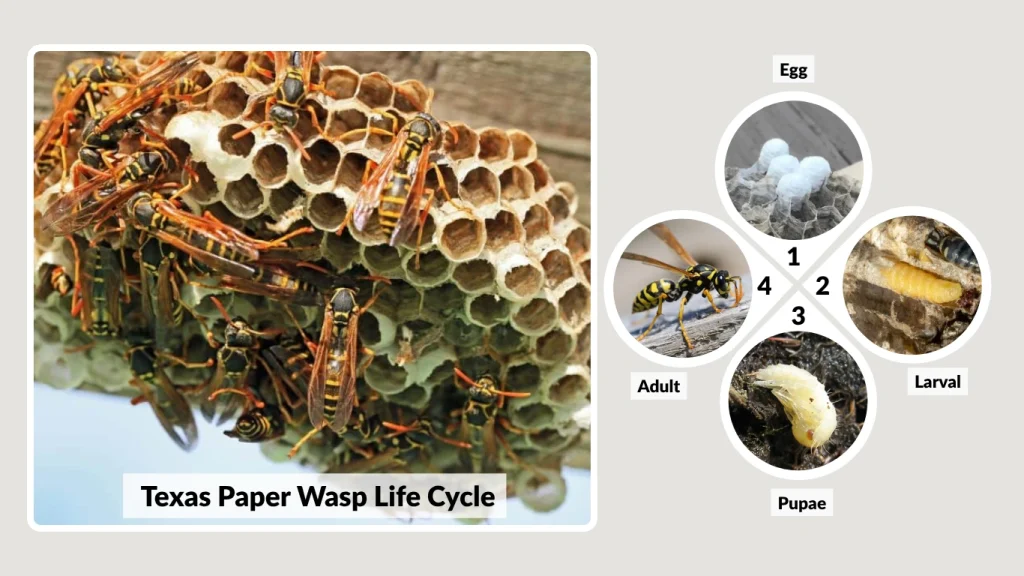
The life cycle of the Texas Paper Wasp is divided into several stages:
- Egg: The queen lays fertilized eggs that hatch into larvae within the nest.
- Larvae: The larvae feed on the food provided by the worker wasps. As they grow, they undergo several molts before entering the pupal stage.
- Pupae: After several molts, the larvae pupate and eventually emerge as adult wasps.
- Adult: The new adult wasps take on roles within the colony as workers, drones, or queens, continuing the cycle.
As the year progresses and the weather cools, the queen stops laying eggs, and the colony begins to slow down. During the winter, the colony disbands, with only newly mated queens surviving. These queens hibernate until spring, when they start new colonies.
Texas Paper Wasp and Human Interactions
Stings and Risks
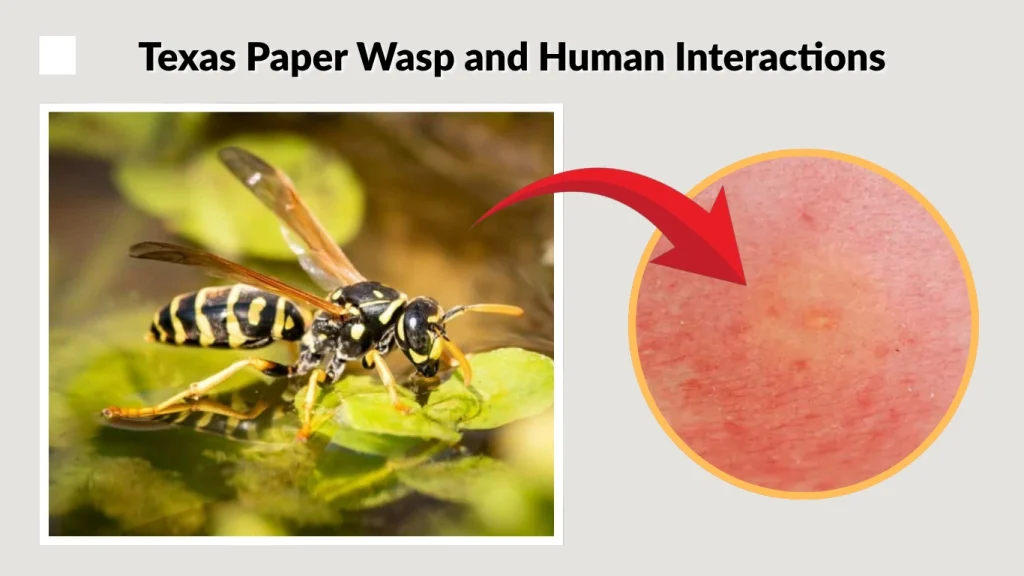
The sting of the Texas Paper Wasp can be painful and results in swelling, redness, and irritation at the sting site. In some cases, an allergic reaction can occur, leading to more severe symptoms such as difficulty breathing or dizziness. Individuals with known allergies to insect stings should exercise caution when near a Texas Paper Wasp nest.
Are They Dangerous to Humans?
While the Texas Paper Wasp can sting if provoked, it is not naturally aggressive. They are generally docile and will avoid human interaction if left undisturbed. However, if their nest is threatened or disturbed, they will defend it aggressively, leading to a higher risk of stings. If stung, it is essential to treat the sting site promptly and seek medical attention if an allergic reaction occurs.
How to Safely Handle Texas Paper Wasp Nests
If you encounter a nest of Texas Paper Wasps, it is essential to proceed with caution:
- Stay Calm: Do not swat at the wasps or make sudden movements, as this may provoke them.
- Maintain a Safe Distance: If you spot a nest, avoid getting too close to the wasps to minimize the risk of a defensive response.
- Professional Nest Removal: If the nest is in a location that poses a threat to people or pets, it is best to contact a professional pest control service. If you attempt to remove the nest yourself, do so at night when the wasps are less active and wear protective clothing, including gloves and a veil.
Conclusion
The Texas Paper Wasp is an important species in the ecosystem, providing natural pest control and contributing to pollination. While their sting can be painful, they are generally not aggressive toward humans and will only defend their nest when threatened. By understanding their behavior, nesting habits, and role in the environment, we can better appreciate these wasps and manage our interactions with them safely. Whether you’re an observer or need to deal with a nest, understanding the Texas Paper Wasp can help ensure peaceful coexistence with this beneficial insect.
