
The best ant farm kits make it easy to observe ant tunnels, colony behavior, feeding patterns, and daily activity up close. Whether you are choosing a kit for kids, students, classrooms, or beginner ant keepers, a good setup should offer clear viewing panels, secure construction, simple maintenance, and enough space for ants to build visible tunnels. In this guide, we review 11 ant farm kits with different designs, hydration systems, educational features, and habitat styles to help you compare the most useful options.
1. Ants Footsteps Ant Farm Terrarium & Observation Kit
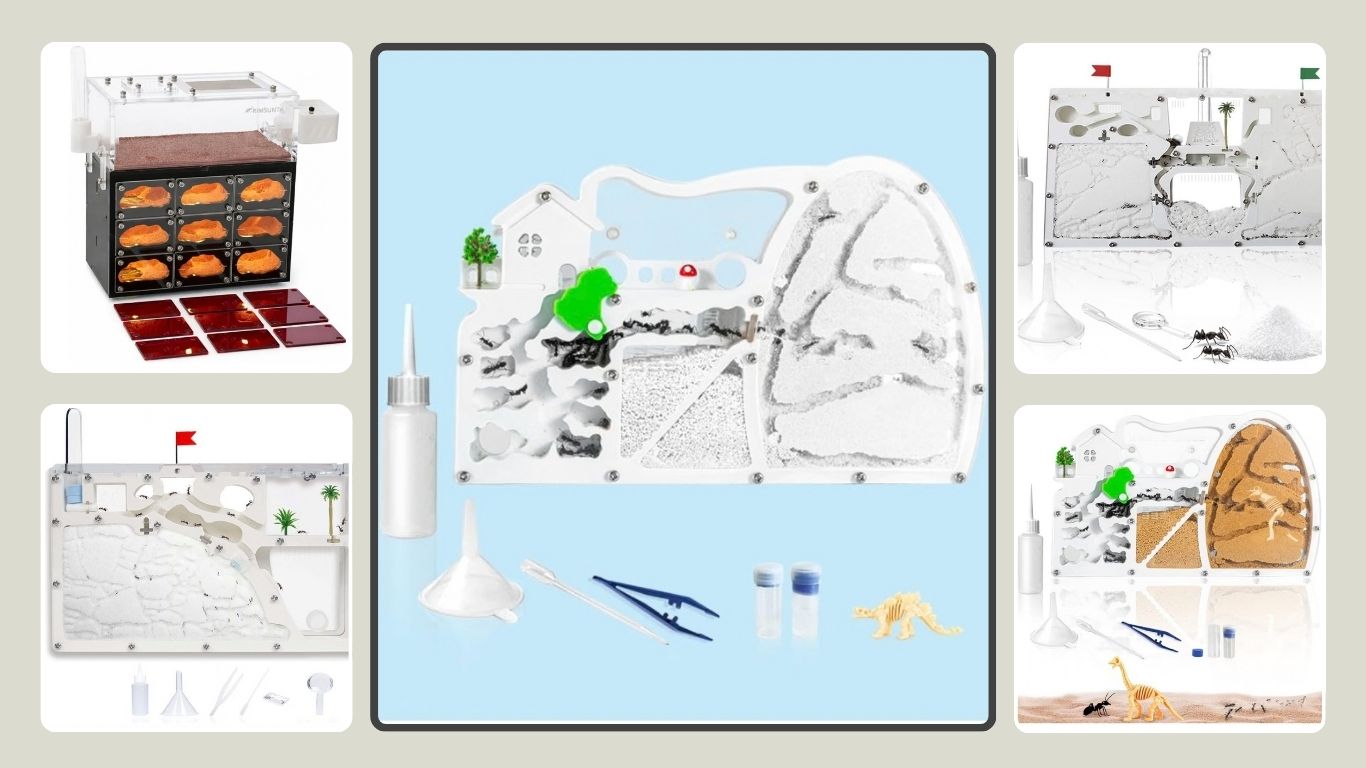
The Ants Footsteps Ant Farm Terrarium & Observation Kit is designed for people who want a clear and educational way to watch ants build tunnels and move through a small colony environment. Its transparent habitat makes daily activity easy to observe, while the structured setup helps beginners understand feeding, nesting, and colony behavior. For kids, classrooms, or first-time ant keepers, this kit offers a practical balance of visibility, simplicity, and hands-on learning.
Key Features
- Transparent viewing design for easy observation
- Suitable for beginners, kids, and classroom learning
- Designed for watching tunnels and colony activity
- Includes a structured ant habitat setup
- Compact size for desks, shelves, or study areas
- Useful for science projects and nature-based learning
Why It’s Best for First-Time Ant Keepers
This kit is especially suitable for beginners because it keeps the setup process relatively straightforward. Instead of needing to build a custom formicarium, users get a contained habitat designed specifically for observation.
The clear walls make it easier to follow changes in tunnel development over time, which adds educational value. Children and students can observe how ants move food, create pathways, and organize activity within their environment. That makes the kit useful not only as a hobby item but also as a simple science-learning tool.
Observation Quality and Ease of Use
Visibility is one of the strongest reasons to consider this model. A good ant farm should make the colony easy to watch without disturbing it, and the transparent design supports that purpose well.
Its compact footprint also makes placement easier in bedrooms, classrooms, or home study areas. Regular care is still important, including proper feeding, hydration, and keeping the habitat away from excessive heat or direct sunlight. Following the included setup instructions can help maintain a more stable environment for the ants.
Pros, Cons & Overall Verdict
Pros: Clear viewing area, beginner-friendly design, educational value, compact footprint, and good suitability for children and students.
Cons: Space may be limited for larger colonies, and proper hydration and temperature management are still necessary.
Overall, the Ants Footsteps Ant Farm Terrarium is a strong starter option for anyone who wants an easy, visually engaging way to study ant behavior. Its combination of simple setup and clear observation makes it particularly attractive for educational use and beginner ant keeping.
2. Ant Terrarium Nurturing & Comprehensive Observation Set
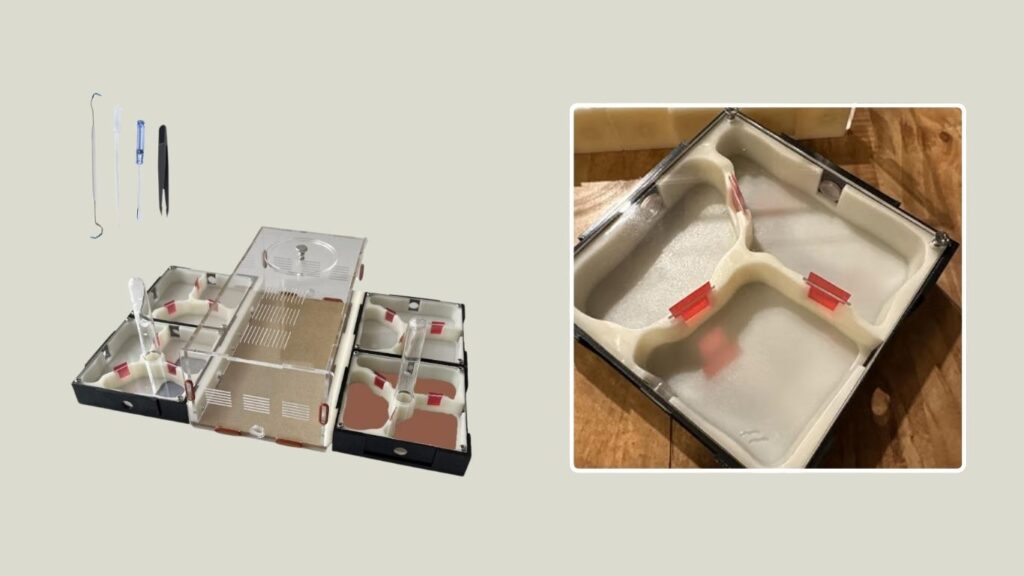
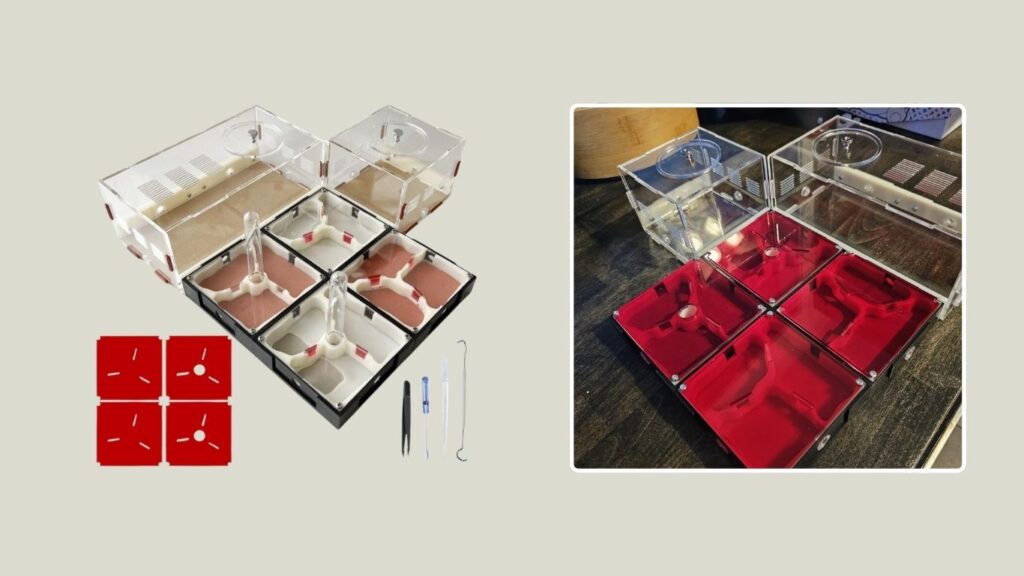
The Ant Terrarium Nurturing & Comprehensive Observation Set is built for users who want a hands-on way to study ant movement, tunneling, and colony routines. Its transparent structure makes observation simple, while the compact habitat format suits desks, classrooms, and home learning spaces. This kit is particularly appealing for beginners who want a ready-made enclosure without needing to assemble a more advanced formicarium from separate parts.
Key Features
- Clear viewing panels for observing ant activity
- Compact habitat suitable for home or classroom use
- Designed for beginner-friendly setup
- Useful for studying tunneling and colony movement
- Educational format for children and students
- Structured enclosure for routine ant care
Why It’s Best for Educational Observation
This ant farm works especially well for science-based learning because it gives users a close view of how ants organize their environment. Watching ants create tunnels, transport food, and interact within a confined habitat can turn a simple enclosure into an ongoing biology lesson.
The design is also straightforward enough for younger users to understand with adult supervision, making it a practical choice for school projects or home experiments.
Viewing Experience and Maintenance
The transparent construction allows users to observe changes over time without frequently opening the habitat. That can reduce unnecessary disturbance while still making the colony easy to monitor.
As with any ant habitat, consistent hydration, proper feeding, and stable room temperatures are important. Avoiding direct sunlight also helps reduce overheating inside the enclosure.
Pros, Cons & Overall Verdict
Pros: Good visibility, educational value, compact design, and suitable for beginners.
Cons: Limited room for very large colonies and regular maintenance is still required.
Overall, this terrarium is a dependable option for users who want an easy-to-manage ant observation kit with strong classroom and beginner appeal.
3. National Geographic Ant Farm Kit by Blue Marble

The National Geographic Ant Farm Kit by Blue Marble combines educational branding with a visually engaging ant habitat designed for young learners and families. It focuses on making ant behavior easy to observe through clear viewing areas while adding an educational angle that suits science projects and home learning. The kit is especially attractive for users who want a recognizable educational brand and a structured introduction to ant keeping.
Key Features
- Clear habitat for observing tunnels and activity
- Designed with an educational focus
- Suitable for children and family learning
- Compact display-friendly construction
- Encourages hands-on science exploration
- Beginner-oriented ant observation setup
Why It’s Best for Kids and Science Projects
The National Geographic branding gives this kit a strong educational identity, making it especially suitable for school-age children. Rather than serving only as a novelty, it can help introduce concepts such as colony structure, tunnel formation, communication, and insect behavior.
Parents and teachers may also appreciate how easily the habitat can become part of a simple science project or classroom discussion.
Observation Quality and Learning Value
A transparent enclosure makes it possible to watch changes in the colony over several days or weeks. That ongoing visibility can make the learning experience more interesting than a one-time experiment.
The compact format is also convenient for a desk or shelf, although the habitat should still be placed away from direct sunlight and excessive heat. Regular feeding and moisture checks remain important for keeping ants active.
Pros, Cons & Overall Verdict
Pros: Strong educational focus, clear viewing, beginner-friendly setup, and good appeal for children.
Cons: Better suited to small colonies and may not offer the customization experienced ant keepers want.
Overall, the National Geographic Ant Farm Kit is a strong educational option for children, families, and classrooms that want a simple introduction to ant behavior.
4. Rimsunta Ant Farm Behavior Terrarium & Educational Formicarium
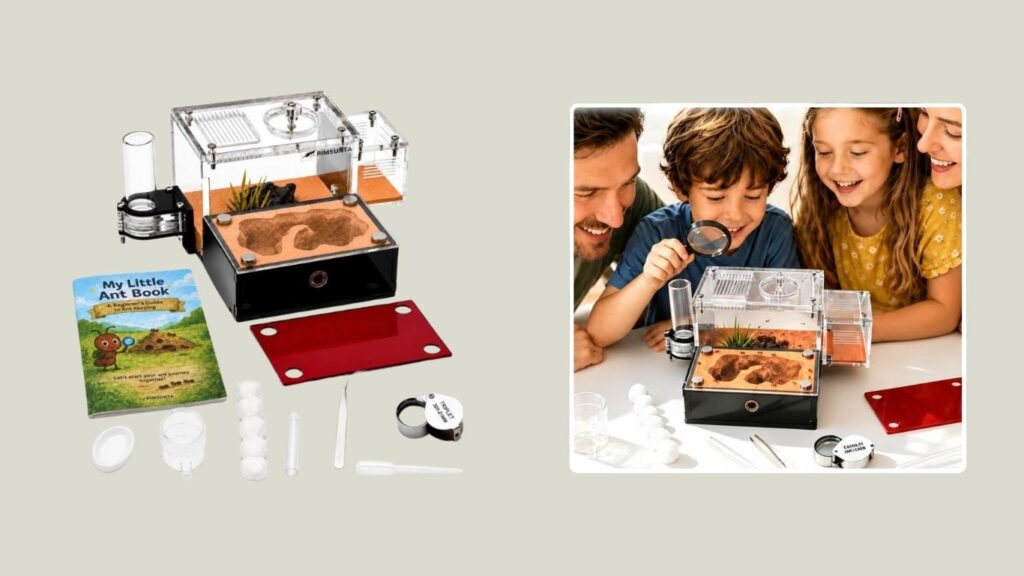
The Rimsunta Ant Farm Behavior Terrarium is designed for users who want a more formicarium-style experience while still keeping the setup accessible for beginners. Its transparent enclosure supports close observation of colony activity, tunneling, and movement. The structured habitat also makes it useful for educational purposes, especially for users who want something that feels more like a dedicated ant-keeping setup than a basic novelty farm.
Key Features
- Formicarium-style ant habitat
- Clear observation areas
- Suitable for behavioral study and learning
- Compact design for indoor placement
- Beginner-friendly structure
- Useful for small colonies and science projects
Why It’s Best for More Serious Observation
This model is a good step up for users who want to focus more closely on ant behavior. The formicarium-style layout offers a more intentional environment for watching how ants move through chambers and pathways.
That makes it suitable for hobbyists who are still beginners but want something that feels more structured than a simple toy-style ant farm.
Design, Visibility, and Daily Care
The enclosure provides a practical balance between visibility and containment. Clear surfaces help users follow ant activity while minimizing the need to open the habitat frequently.
Daily care still matters. Hydration levels, food availability, and temperature should be monitored carefully. Keeping the enclosure stable and avoiding unnecessary movement can also reduce stress on the colony.
Pros, Cons & Overall Verdict
Pros: Structured formicarium design, good visibility, educational value, and useful for beginner hobbyists.
Cons: May require more attentive care than a basic children’s ant farm and has limited capacity for colony expansion.
Overall, the Rimsunta Behavior Terrarium is a solid choice for users who want a more dedicated ant-observation experience without moving into a complex professional setup.
5. Ant Farm Castle Observation & Educational Kit
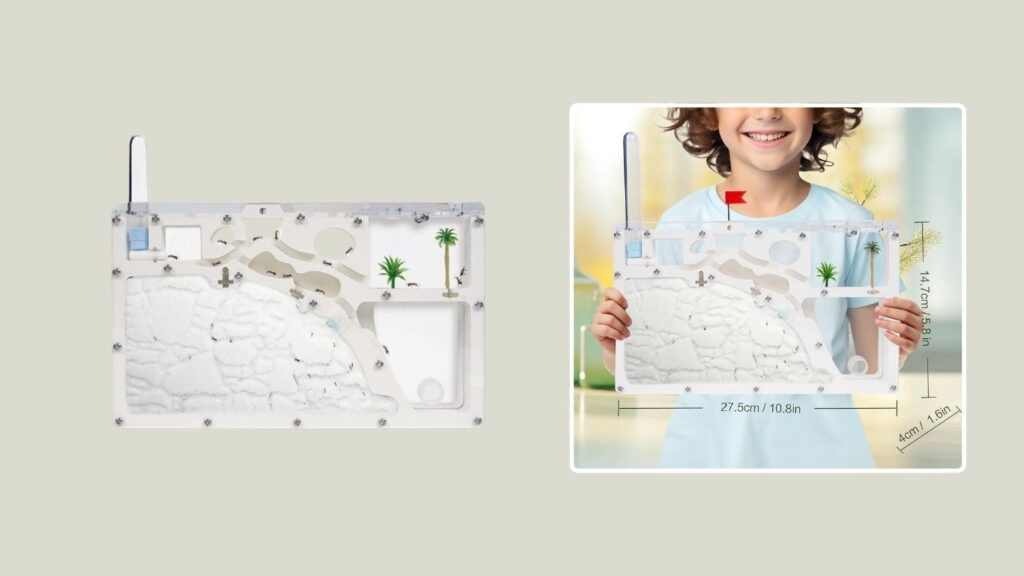
The Ant Farm Castle Observation & Educational Kit stands out mainly because of its distinctive castle-style design. It combines decorative appeal with a clear habitat that allows users to observe ants as they move, tunnel, and interact. This makes the kit especially suitable for children who may be more engaged by a playful enclosure while still gaining educational value from watching real colony behavior.
Key Features
- Castle-inspired ant habitat design
- Transparent observation areas
- Educational and decorative format
- Suitable for children and beginners
- Compact enough for desks and shelves
- Encourages hands-on insect learning
Why It’s Best for Fun Learning
The castle-style appearance gives this model more visual personality than many standard rectangular ant farms. That can help keep younger users interested, especially when the goal is to combine entertainment with science learning.
The playful design does not remove the educational benefit. Users can still observe tunnel building, movement patterns, and feeding behavior over time.
Practical Use and Observation Experience
The transparent walls make daily colony activity easy to follow. Because the habitat is compact, it can also fit comfortably into a child’s room, classroom, or study area.
Users should still follow normal ant-care practices, including suitable feeding, hydration, ventilation, and temperature control. Direct sunlight should be avoided because small clear enclosures can heat up quickly.
Pros, Cons & Overall Verdict
Pros: Eye-catching design, good visibility, strong appeal for children, and educational use.
Cons: Decorative shape may offer less expansion flexibility than modular ant habitats.
Overall, the Ant Farm Castle is a good option for families who want an ant farm that feels both educational and visually entertaining.
6. RIMSUNTA Ant Farm Kit with Built-In Hydration System
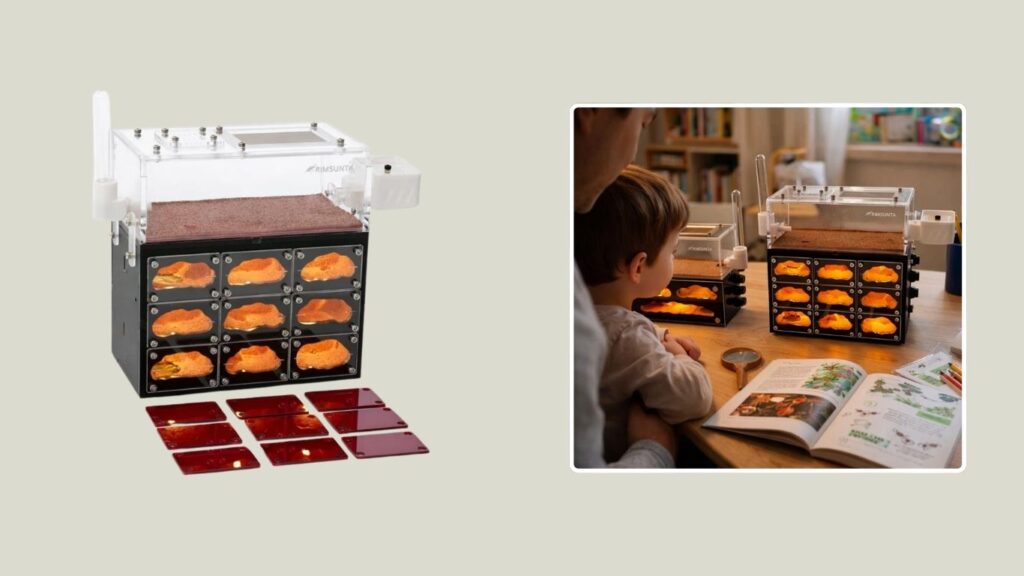
The RIMSUNTA Ant Farm Kit with Built-In Hydration System is designed to simplify one of the most important aspects of ant keeping: moisture management. A built-in hydration feature can make routine care easier for beginners while helping maintain a more stable environment inside the habitat. Combined with transparent observation areas, this kit is particularly useful for users who want an ant farm that balances visibility with practical maintenance features.
Key Features
- Built-in hydration system
- Transparent observation design
- Suitable for starter colonies
- Beginner-friendly setup
- Designed for routine ant maintenance
- Useful for educational and hobby purposes
Why It’s Best for Easier Hydration Management
Hydration is one of the most common challenges in small ant habitats. Too little moisture can stress the colony, while excessive moisture can create other problems. A built-in hydration design can make this part of care more manageable.
That makes the kit especially appealing to beginners who want to reduce guesswork and focus more on observing the ants.
Performance and Daily Maintenance
The hydration feature adds practical value, but users should still monitor conditions regularly rather than assuming the habitat can be left unattended. Moisture needs can vary depending on species, room temperature, and colony size.
The clear enclosure makes it easier to observe both ant behavior and general habitat conditions. Its compact structure also supports convenient placement in classrooms or home study areas.
Pros, Cons & Overall Verdict
Pros: Built-in hydration support, good observation visibility, beginner-friendly design, and useful for starter colonies.
Cons: Hydration still needs monitoring, and the enclosure may not suit rapidly expanding colonies.
Overall, the RIMSUNTA Ant Farm Kit is a practical choice for first-time keepers who want an easier approach to moisture management without giving up clear colony observation.
7. ELNMLHT Ant Farm Observation & Educational Learning Kit
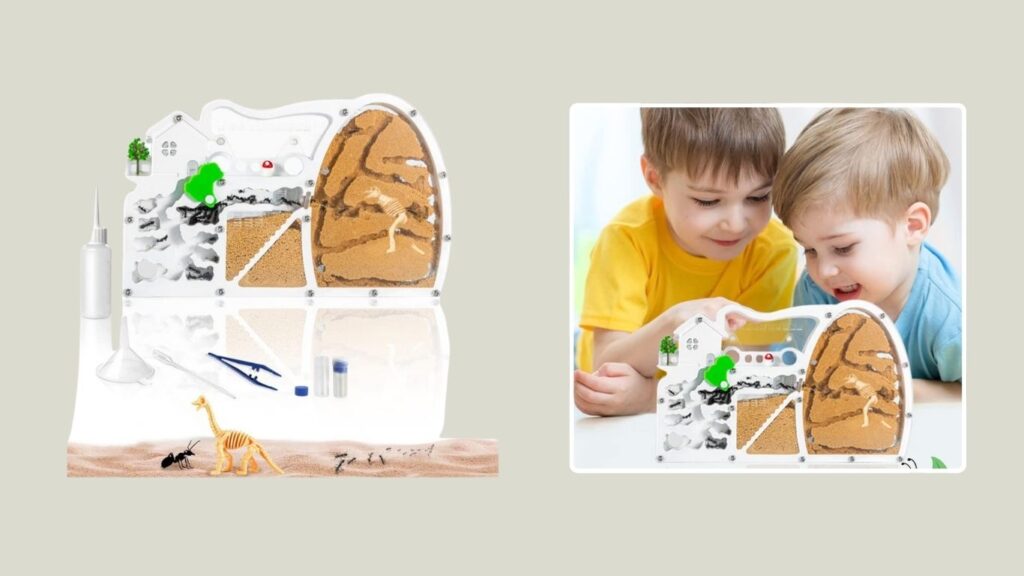
The ELNMLHT Ant Farm Observation & Educational Learning Kit is designed for children, students, and beginners who want a simple way to explore ant behavior at home or in a classroom. Its transparent construction helps make tunnels and colony movement easy to observe, while the compact form keeps the setup manageable. For users who value educational interaction more than advanced ant-keeping features, this kit provides an approachable introduction to watching ants work.
Key Features
- Transparent viewing areas for easy observation
- Designed for educational learning
- Suitable for children and beginner ant keepers
- Compact structure for desks and shelves
- Useful for watching tunnels and colony movement
- Suitable for science activities and classroom projects
Why It’s Best for Hands-On Learning
This kit works especially well for students who learn by observing real biological processes. Instead of simply reading about colonies, children can watch ants excavate tunnels, transport food, and interact with one another over time.
Its simple format also makes it easier for parents and teachers to introduce basic topics such as insect behavior, colony organization, and environmental needs without requiring an advanced setup.
Observation Quality and Daily Care
The clear habitat makes ant movement visible from outside, helping users monitor activity without frequently disturbing the enclosure. Its compact footprint also means it can fit comfortably into many learning environments.
Routine care remains important. Food, moisture, and temperature should be checked regularly, and the habitat should be kept away from strong sunlight or excessive heat.
Pros, Cons & Overall Verdict
Pros: Clear observation, educational focus, compact size, and beginner-friendly setup.
Cons: Better suited to smaller colonies and may lack advanced features for experienced ant keepers.
Overall, the ELNMLHT Observation Kit is a practical educational choice for children and students who want an accessible introduction to ant colony behavior.
8. EXBEPE Ant Farm Habitat Ecosystem & Educational Kit

The EXBEPE Ant Farm Habitat Ecosystem Kit focuses on giving users a close-up look at ant behavior within a contained miniature habitat. Its educational design makes it suitable for home learning, science demonstrations, and beginner ant keeping. The enclosure allows users to follow tunnel development and colony movement while providing a more interactive alternative to books or videos about insects.
Key Features
- Transparent ant observation habitat
- Educational ecosystem-style design
- Suitable for children, students, and beginners
- Encourages hands-on biological learning
- Compact and display-friendly construction
- Useful for observing tunneling and movement
Why It’s Best for Ecosystem-Based Learning
The ecosystem approach makes this kit especially appealing for users who want to understand more than just tunnel formation. Watching how ants use space, communicate, and move resources can help demonstrate how organized colonies function.
That makes the habitat useful for school projects, homeschool activities, or family science experiments where repeated observation adds value.
Habitat Design and Viewing Experience
Clear panels provide good visibility into daily colony activity while reducing the need to open the enclosure. This allows users to watch gradual changes in tunnels and movement patterns over time.
For the best experience, the habitat should be kept stable and away from direct sunlight. Regular checks of food and moisture are also important because environmental conditions strongly affect ant activity.
Pros, Cons & Overall Verdict
Pros: Good educational value, clear viewing, compact design, and suitable for repeated observation.
Cons: Limited room for colony expansion and may require careful moisture management.
Overall, the EXBEPE Ant Farm Habitat is a useful choice for students and families interested in observing ant behavior as part of a small ecosystem-style learning experience.
9. ELNMLHT Ant Farm Observation & Viewing Learning Kit
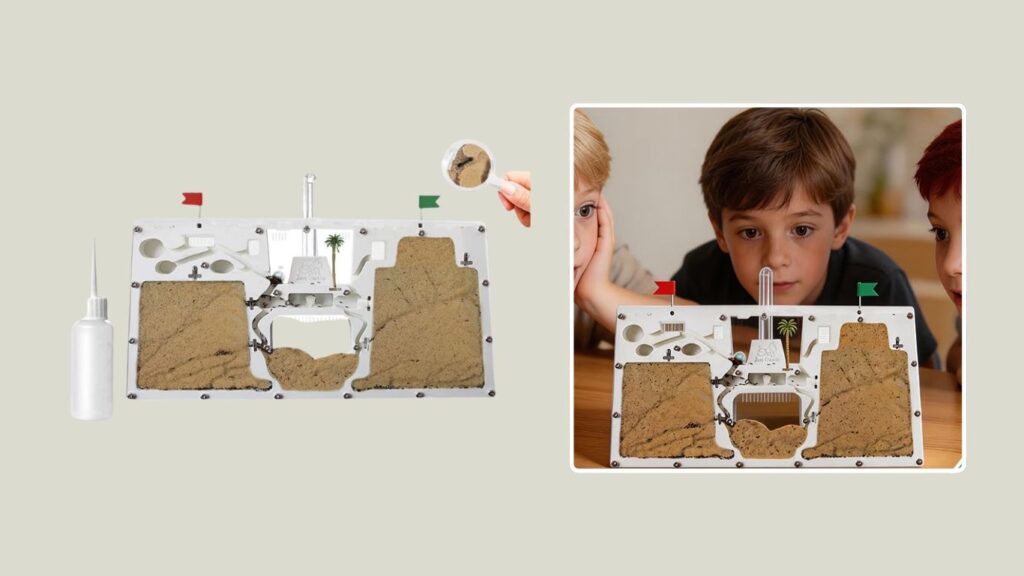
The ELNMLHT Ant Farm Observation & Viewing Learning Kit offers another beginner-friendly option for watching ants create tunnels and organize their colony environment. Its transparent viewing design supports close observation, while the compact format works well in classrooms, bedrooms, or study areas. This model is particularly suitable for users who want a straightforward educational ant habitat without complicated assembly or advanced maintenance features.
Key Features
- Clear viewing panels
- Educational observation-focused design
- Suitable for beginners and young learners
- Compact footprint for indoor placement
- Useful for observing ant tunnels and behavior
- Appropriate for classroom and home science use
Why It’s Best for Simple Observation
This model keeps the focus on visibility. Users can easily follow how ants move through the habitat and gradually create passageways without needing specialized ant-keeping knowledge.
That simplicity makes it particularly attractive for families or teachers who want a learning activity that can remain interesting for more than just one day.
Performance and Maintenance
The enclosure should provide a useful viewing experience when maintained correctly. Keeping food and moisture at appropriate levels helps support consistent colony activity and makes observations more rewarding.
Like other compact ant farms, it should be kept away from direct sunlight, sudden temperature changes, and frequent movement. Gentle placement helps avoid disturbing tunnels.
Pros, Cons & Overall Verdict
Pros: Easy viewing, simple design, educational usefulness, and suitable for beginners.
Cons: Not intended for very large colonies and offers fewer advanced management features than modular formicariums.
Overall, this ELNMLHT Ant Farm Kit is a reliable choice for anyone who wants a straightforward observation habitat focused on education and ease of use.
10. ELNMLHT Educational Ant Farm Observation Kit
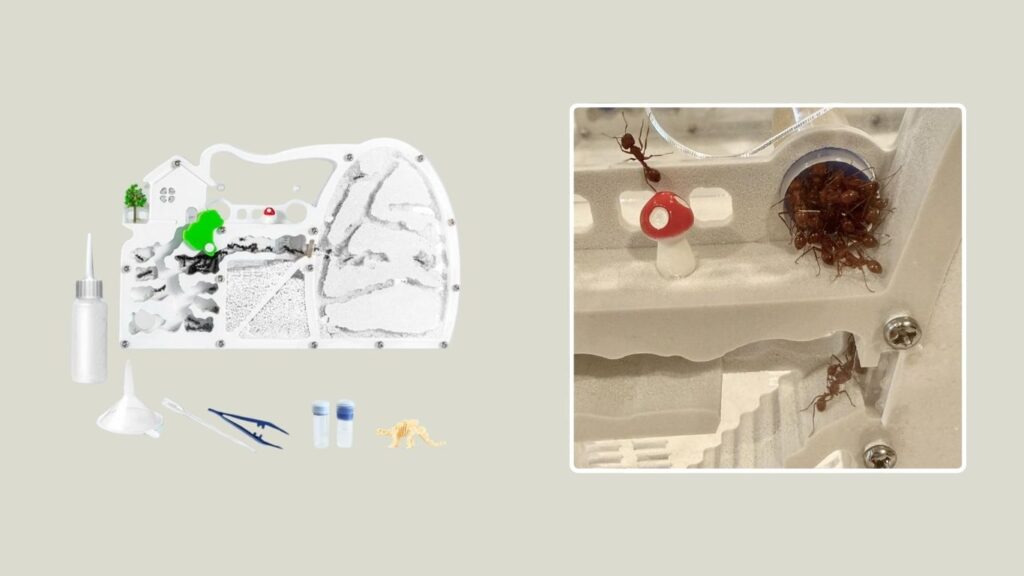
The ELNMLHT Educational Ant Farm Observation Kit is aimed at students, children, and first-time users who want to explore ant behavior through direct observation. Its clear habitat makes everyday colony activity visible, allowing users to study tunneling, movement, and interaction over time. The simple structure makes it well suited to classrooms or home learning settings where ease of use and visibility are more important than advanced customization.
Key Features
- Transparent educational ant habitat
- Suitable for children and students
- Beginner-friendly design
- Useful for science demonstrations
- Compact structure for desks and learning spaces
- Allows repeated observation of colony activity
Why It’s Best for Classroom Activities
This model can work particularly well in classroom settings because it creates an ongoing science activity rather than a single demonstration. Students can observe changes each day and record tunnel development or ant behavior as part of a simple project.
Its compact size also makes it easier to place in a learning area without requiring a large dedicated setup.
Learning Value and Everyday Use
The clear walls support easy monitoring of activity while helping reduce unnecessary handling. Students can watch how ants respond to food, move through tunnels, and organize their surroundings.
Routine care still matters. Proper moisture, food, temperature, and ventilation should be maintained according to the needs of the ants being kept.
Pros, Cons & Overall Verdict
Pros: Strong classroom value, clear viewing, compact design, and easy introduction to ant behavior.
Cons: Limited expansion potential and may be too basic for experienced hobbyists.
Overall, the ELNMLHT Educational Ant Farm Observation Kit is a sensible option for teachers, parents, and students who want a simple habitat for repeated ant observation.
11. ELNMLHT Ant Farm Observation & Learning Kit for Students and Children
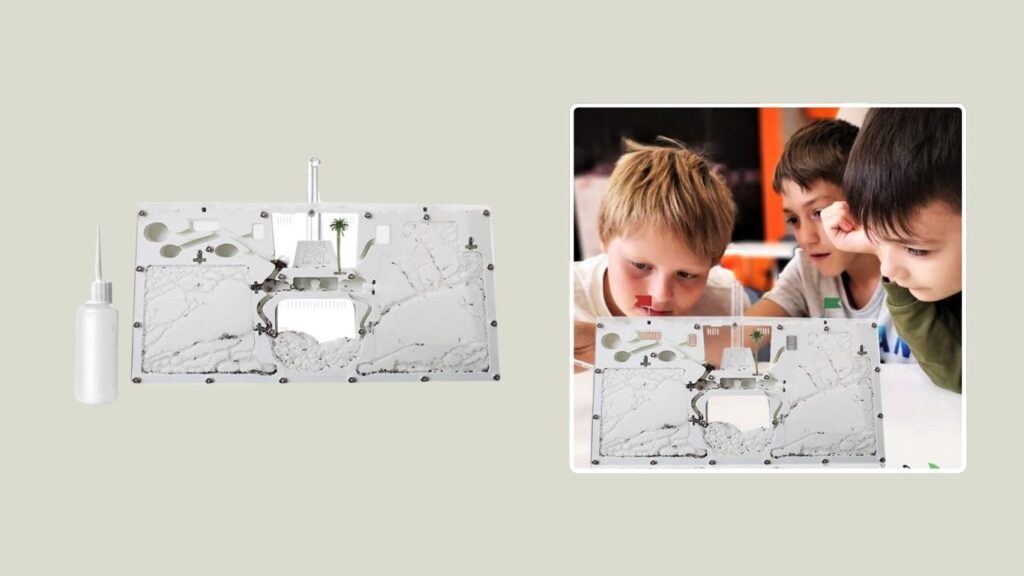
The ELNMLHT Ant Farm Observation & Learning Kit is designed specifically with younger users and students in mind. Its transparent enclosure allows children to observe ant tunnels, colony movement, and daily behavior while gaining practical exposure to insect biology. The simple design helps keep the learning process accessible, making it useful for classrooms, home science projects, or families introducing children to ant keeping for the first time.
Key Features
- Designed for students and children
- Clear observation panels
- Supports educational science activities
- Suitable for beginners
- Compact and easy to display
- Useful for watching tunnel construction and movement
Why It’s Best for Young Learners
The main advantage of this kit is accessibility. Children can see the ants clearly without needing to understand complicated habitat systems or advanced ant-keeping techniques.
It can also encourage curiosity about biology, teamwork in social insects, colony structure, and animal behavior. For school assignments, users can track changes in tunnels or activity patterns and turn observations into a simple science journal.
Observation, Care, and Practical Use
Because the enclosure is transparent, adults and children can check colony activity without opening the habitat repeatedly. This reduces unnecessary disruption and makes everyday observation more convenient.
The ant farm should still be managed carefully. Stable temperatures, appropriate moisture, regular feeding, and protection from direct sunlight are essential for maintaining suitable conditions.
Pros, Cons & Overall Verdict
Pros: Child-friendly design, strong educational value, good visibility, compact size, and simple operation.
Cons: Primarily suited to beginner use and smaller colonies rather than long-term advanced ant keeping.
Overall, the ELNMLHT Ant Farm Observation & Learning Kit is a strong educational option for younger users who want a simple, engaging way to study ants and their fascinating colony behavior.
FAQs
Choosing the right ant farm kit often depends on the age of the user, the ant species, the habitat design, and how much maintenance you want to handle. Beginners usually benefit from simple observation-focused kits, while more serious ant keepers may prefer formicariums with better hydration and expansion features. These frequently asked questions cover the basics of setup, care, safety, and long-term use.
1. What is the best ant farm kit for beginners?
A beginner-friendly ant farm should have clear viewing panels, simple access for feeding, manageable hydration, and a secure enclosure. Kits with built-in hydration systems or straightforward terrarium designs are especially useful for first-time ant keepers because they reduce setup complexity while still providing good visibility.
2. Do ant farm kits come with ants?
Not always. Many ant farm kits include only the habitat and accessories, while live ants must be obtained separately. Availability can also depend on shipping restrictions and local regulations. Always check the product description carefully to see whether ants are included.
3. How long can ants live in an ant farm?
The lifespan depends on the species and whether the colony includes a queen. Worker ants may live from several weeks to many months, while queens of some species can live for years. Small educational ant farms without a queen usually function as temporary observation habitats rather than permanent colonies.
4. What do ants eat in an ant farm?
Many ants need a combination of carbohydrates and protein. Small amounts of sugar water, honey water, insects, or species-appropriate foods may be used depending on the ants being kept. Food should be provided in small portions and removed if it begins to spoil.
5. Are ant farm kits safe for kids?
Yes, most educational ant farm kits are suitable for children when used with adult supervision. The enclosure should remain securely closed, and children should avoid handling ants directly. It is also important to choose non-aggressive ant species and follow the manufacturer’s setup and care instructions.
