
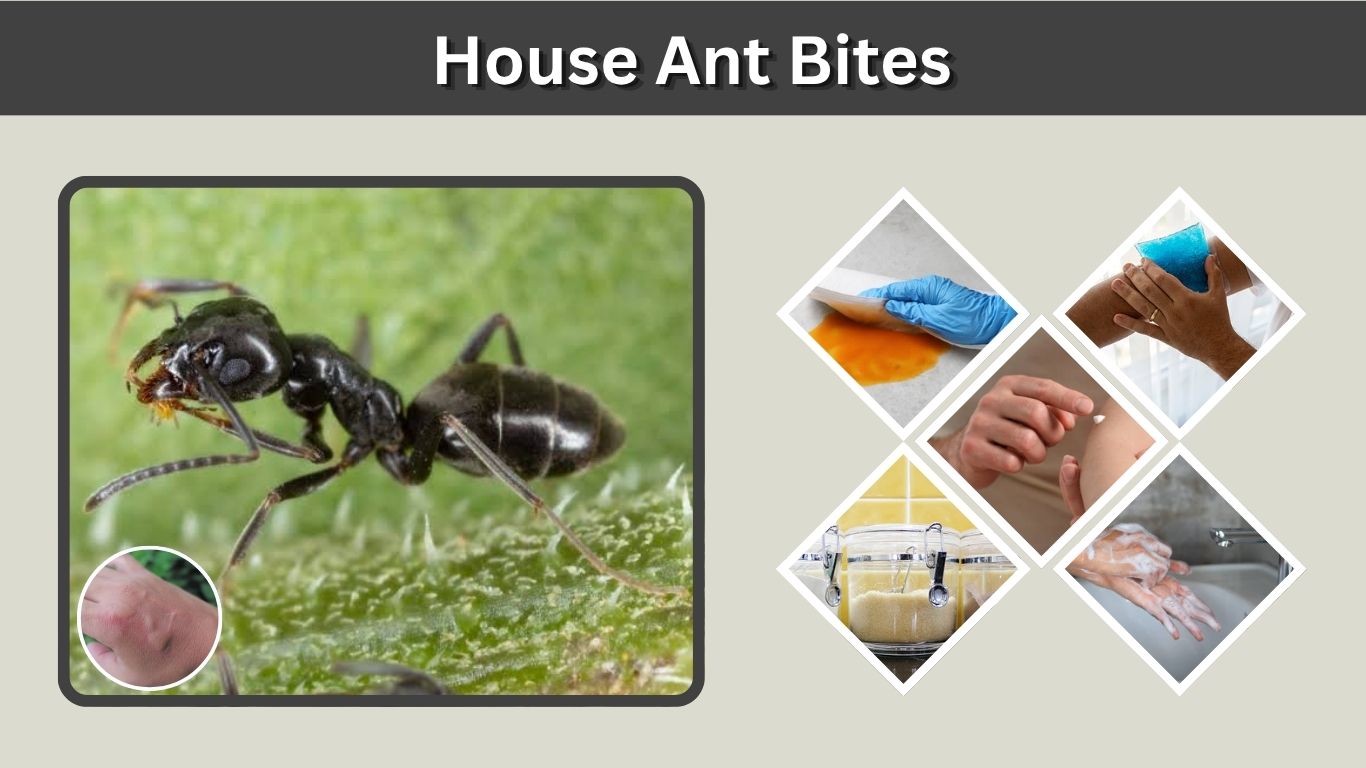
House ant bites are usually mild, but they can still cause redness, itching, swelling, or a small raised bump on the skin. Whether a house ant can bite depends largely on the species. Some common indoor ants rarely bite people, while carpenter ants, fire ants, and several other species can defend themselves by biting or stinging. Knowing what house ant bites look like, why they happen, and how to treat them can help you manage discomfort and determine when medical attention may be necessary.
Do House Ants Bite Humans?
Many ants found inside homes are capable of using their mandibles for defense, but that does not mean every household ant commonly bites people. Most encounters with small indoor ants cause no injury. Bites are more likely when ants become trapped against the skin, their colony is disturbed, or the species naturally has stronger defensive behavior.
Can House Ants Bite You?
Yes, some house ants can bite humans. An ant typically bites by gripping the skin with its mandibles. Depending on the species, the bite may be barely noticeable or cause a sharp pinching sensation.
Common possibilities include:
- Carpenter ants: Can deliver noticeable bites with powerful mandibles.
- Fire ants: Bite to grip the skin and then sting, producing a more painful reaction.
- Odorous house ants: Generally considered a nuisance rather than an important biting species.
- Little black ants: Bites are uncommon and usually insignificant.
- Other small household ants: Most pose little direct threat to people.
Ant bites generally occur defensively rather than because ants are attempting to feed on humans.
Why Do House Ants Bite?
House ants usually bite when they feel threatened. Crushing an ant against your skin, reaching into an infested area, disturbing a nest, or handling ants can trigger defensive behavior.
Unlike mosquitoes or bed bugs, household ants generally do not seek humans as a blood meal. Therefore, repeated unexplained bites during sleep should not automatically be blamed on ants.
What Do House Ant Bites Look Like?
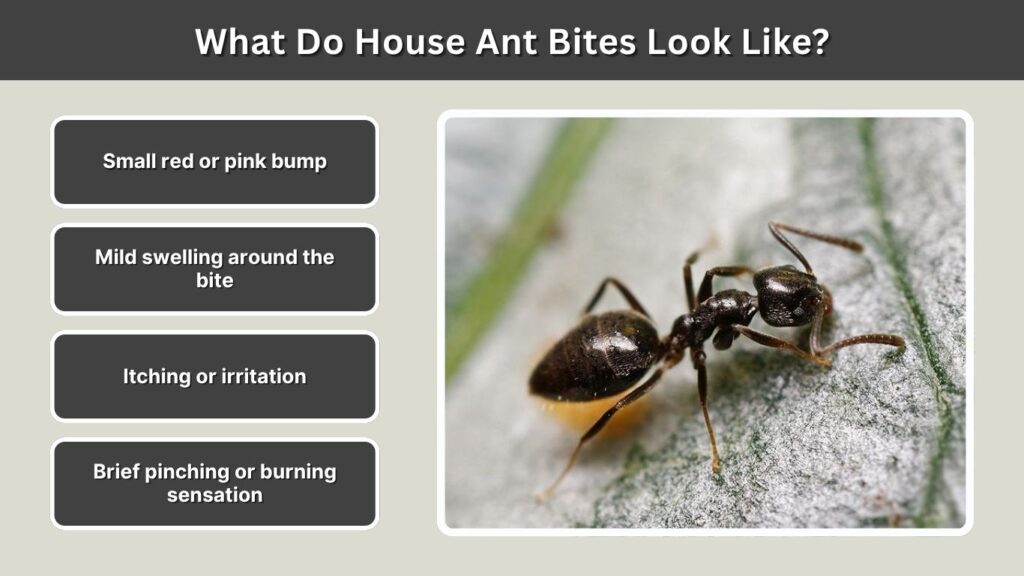
The appearance of an ant bite can vary depending on the ant species and a person’s skin reaction. A typical mild bite may resemble a small insect bite with localized redness or swelling. More noticeable reactions are especially associated with ants that sting in addition to biting.
Common Symptoms of House Ant Bites
Possible symptoms include:
- Small red or pink bump
- Mild swelling around the bite
- Itching or irritation
- Brief pinching or burning sensation
- Tenderness around the affected area
- Several bumps if multiple ants were involved
Ant bites can produce a pimple-like raised mark, while fire ant stings can develop into itchy, pus-filled blisters.
Are House Ant Bites Itchy?
They can be. Mild itching occurs because the skin reacts to the injury and substances associated with the bite or sting. Some people experience little irritation, while others develop stronger localized itching and swelling.
Scratching should be avoided because breaking the skin increases the possibility of a secondary infection.
Do Odorous House Ants Bite?
Odorous house ants are extremely common indoor pests and are recognized by the unusual odor produced when they are crushed. Although ants possess mandibles, odorous house ants are primarily regarded as nuisance ants rather than medically important biting ants.
Odorous House Ant Bites on Humans
A person handling or pressing an ant against the skin could potentially experience defensive contact, but significant odorous house ant bites on humans are not typical.
If itchy bumps repeatedly appear while odorous house ants are present, avoid assuming the ants are responsible without additional evidence. Mosquitoes, fleas, bed bugs, mites, and other arthropods can produce similar skin reactions.
Do Black House Ants Bite?
“Black house ant” is a broad description rather than a reliable species identification. Several ants entering homes can appear black.
Tiny black ants commonly seen around sinks and food are generally more of a contamination or nuisance problem. Larger black ants may be carpenter ants, which are physically capable of biting when handled or threatened.
Correct identification is therefore important when determining what kind of house ants bite.
How to Treat House Ant Bites
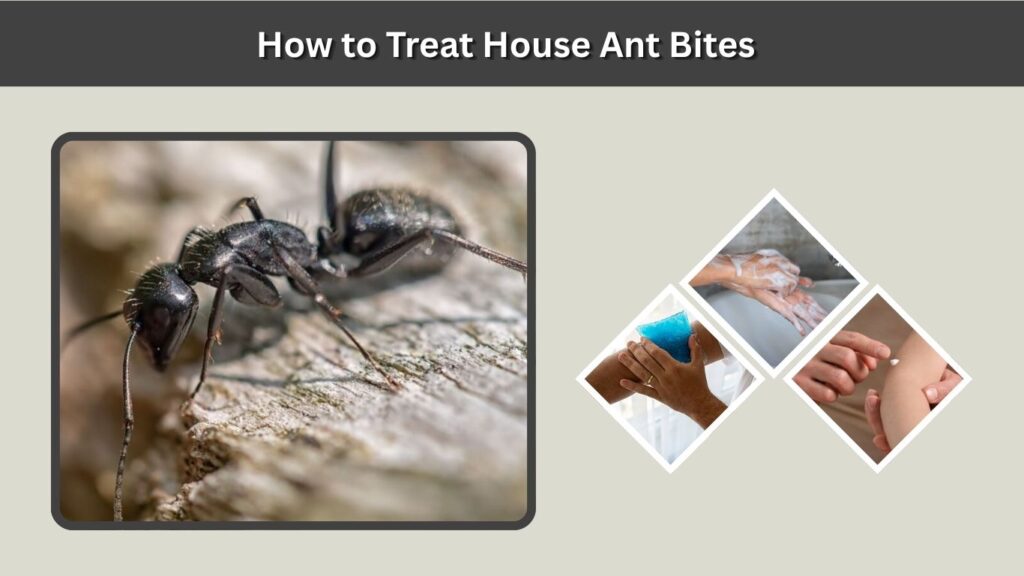
Most uncomplicated ant bites improve with basic home care. The goal is to clean the area, control swelling and itching, and avoid damaging the skin while it heals. More significant reactions, especially those caused by stinging ants, may require medical evaluation.
House Ant Bite Treatment at Home
For a mild reaction:
- Wash the affected skin with soap and water.
- Apply a wrapped cold pack or cool compress.
- Avoid scratching or squeezing the area.
- Consider an appropriate over-the-counter anti-itch treatment.
- Keep broken skin clean and protected.
- Monitor the area for increasing redness, swelling, pain, or drainage.
Cold compresses can reduce mild pain and swelling, while topical hydrocortisone or antihistamine products may help relieve itching when appropriate.
How Long Do House Ant Bites Last?
Minor ant bites commonly improve within several days. Cleveland Clinic notes that many ant bites resolve within a few days, while some ant stings can take approximately three to seven days to improve.
Healing time depends on the ant species, number of bites or stings, skin sensitivity, and whether the affected area has been scratched.
Are House Ant Bites Dangerous?
For most people, an ordinary house ant bite causes only temporary local irritation. However, certain ant species can produce stronger reactions, and any insect bite or sting can occasionally cause an allergic response.
When to Seek Medical Help
Get medical attention promptly if you notice:
- Difficulty breathing or swallowing
- Swelling of the tongue or throat
- Widespread hives
- Dizziness or fainting
- Severe or rapidly spreading swelling
- Vomiting or other widespread symptoms
- Increasing warmth, pain, pus, or other signs of infection
Severe allergic reactions such as anaphylaxis require emergency treatment.
How to Prevent House Ant Bites
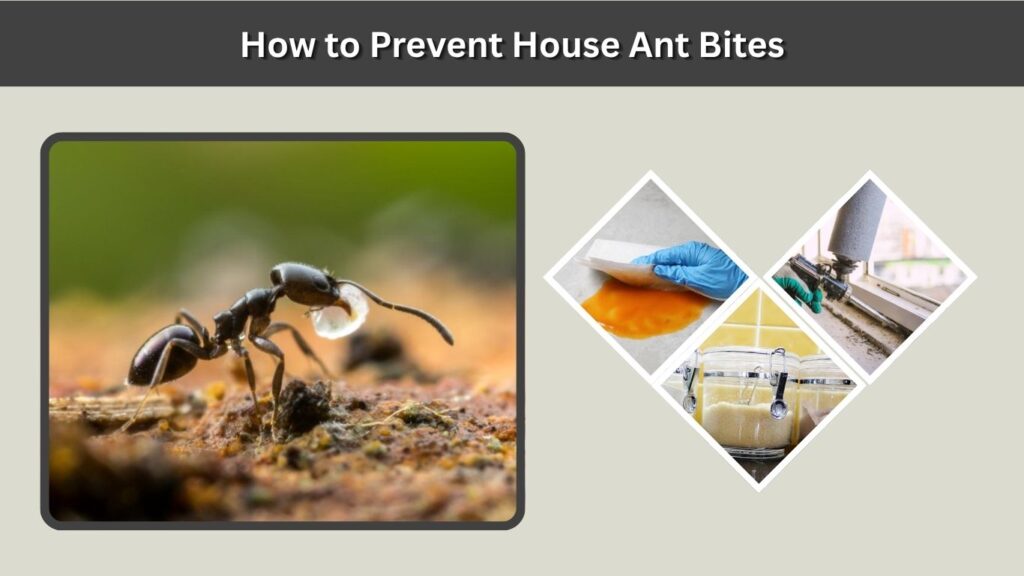
Preventing bites begins with reducing direct contact with ants and controlling the indoor infestation. Ants commonly enter buildings while searching for food, moisture, or suitable nesting locations.
Reduce Ant Activity Indoors
Helpful prevention measures include:
- Clean crumbs and food spills quickly.
- Keep sugary foods in sealed containers.
- Avoid leaving pet food exposed for long periods.
- Repair dripping faucets and moisture problems.
- Seal cracks around windows, doors, pipes, and walls.
- Avoid handling ants with bare hands.
- Locate and address established nests when possible.
- Use an appropriate ant-control method for the species involved.
Eliminating the colony is generally more effective for a persistent infestation than repeatedly killing individual worker ants.
House Ant Bites vs. Other Bug Bites
Seeing ants indoors does not necessarily mean that unexplained skin bumps are ant bites. Ants normally bite defensively after direct contact, while other household pests actively seek humans or animals for food.
How to Tell the Difference
A house ant bite may appear shortly after noticeable contact with ants and commonly produces a small localized bump. Bed bug bites often occur after resting or sleeping and may appear as multiple itchy bumps. Flea bites commonly affect the ankles and lower legs.
Skin reactions alone are not always enough to identify the responsible pest. Inspecting your bed, furniture, floors, walls, pets, and other possible pest habitats can provide better evidence than the appearance of the bite alone.
FAQs
1. Do common house ants bite?
Some species can bite, but many of the tiny ants commonly found around kitchens and bathrooms rarely cause meaningful bites. Biting usually happens when ants feel threatened or become trapped against the skin.
2. What do house ant bites look like?
They may look like small red or pink raised bumps accompanied by mild itching, tenderness, or swelling. Appearance varies depending on the ant species and individual reaction.
3. Do tiny black ants in the house bite?
Many tiny black household ants rarely bite humans. However, color alone cannot reliably identify an ant species, so larger or unusually aggressive ants should be identified more carefully.
4. Can house ant bites itch and swell?
Yes. A mild bite can cause localized itching and swelling. More pronounced symptoms may occur with certain species or in people who are particularly sensitive to insect bites and stings.
5. Why are ants in my house biting me?
Ants usually bite defensively rather than seeking humans as food. Bites may happen if ants crawl beneath clothing, become pressed against the skin, or if you disturb their nesting area. Repeated nighttime bites without observed ant contact may indicate another pest and should be investigated.
