
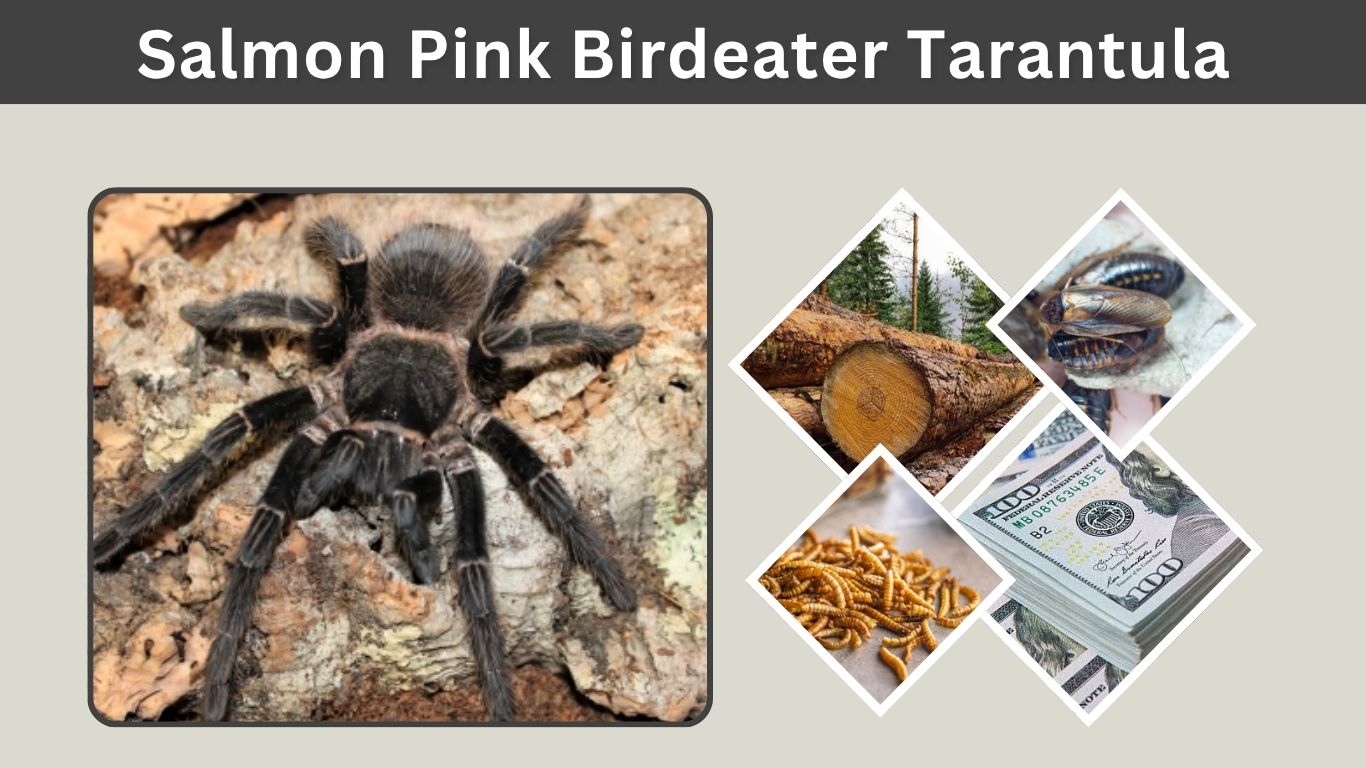
The salmon pink birdeater tarantula (Lasiodora parahybana) is one of the world’s largest and fastest-growing tarantulas. Native to northeastern Brazil, this impressive terrestrial spider has a dark body covered with distinctive salmon-pink hairs. Its hardiness, strong feeding response, and rapid growth make it popular among keepers. However, its enormous adult size, irritating defensive hairs, and surprising speed demand careful management. This guide explains its appearance, natural habitat, size, lifespan, enclosure, diet, molting behavior, temperament, bite risks, and suitability as a pet.
Salmon Pink Birdeater Facts and Appearance
Also called the Brazilian salmon pink bird-eating tarantula, this species belongs to the New World tarantula group. Its scientific name is Lasiodora parahybana, and experienced keepers frequently shorten it to “LP.” Although juveniles may appear relatively plain, their characteristic salmon-colored hairs become increasingly noticeable as they grow and molt.
Quick Facts
- Scientific name: Lasiodora parahybana
- Common name: Salmon pink birdeater tarantula
- Origin: Paraíba, northeastern Brazil
- Type: Terrestrial and opportunistically fossorial
- Adult leg span: Approximately 8–10 inches
- Growth rate: Fast
- Temperament: Alert, defensive, and food-responsive
- Experience level: Intermediate
- Activity: Primarily nocturnal
Color and Identification
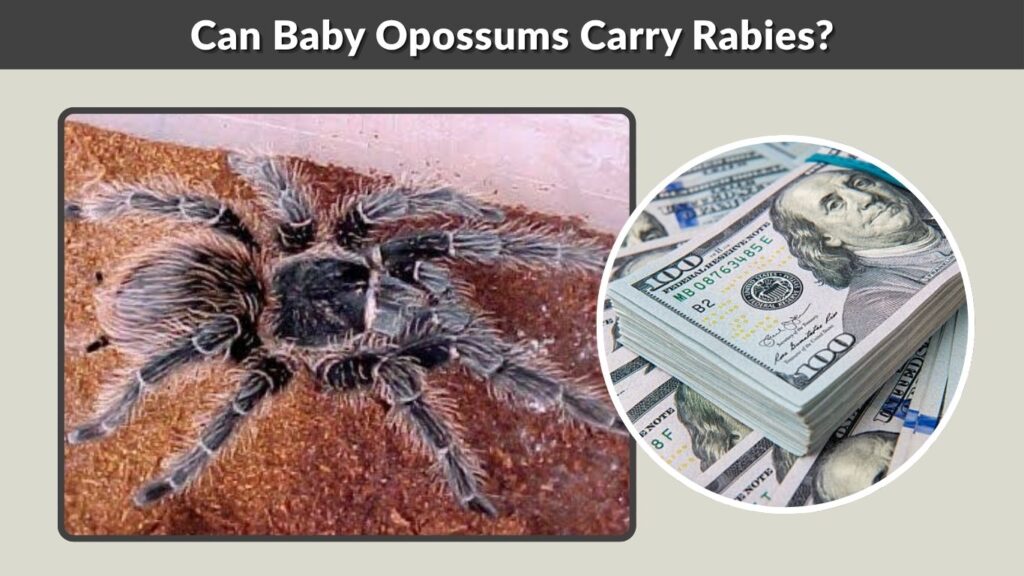
The spider’s basic coloration ranges from dark brown to black, with long salmon-pink hairs covering its legs, abdomen, and body. Newly molted adults display the richest colors, while a specimen approaching its next molt may look dull or faded.
It should not be confused with a pink toe tarantula. Pink toes are arboreal spiders with colored leg tips, while the salmon pink is a large, heavy-bodied ground dweller.
Salmon Pink Birdeater Tarantula Natural Habitat and Behavior
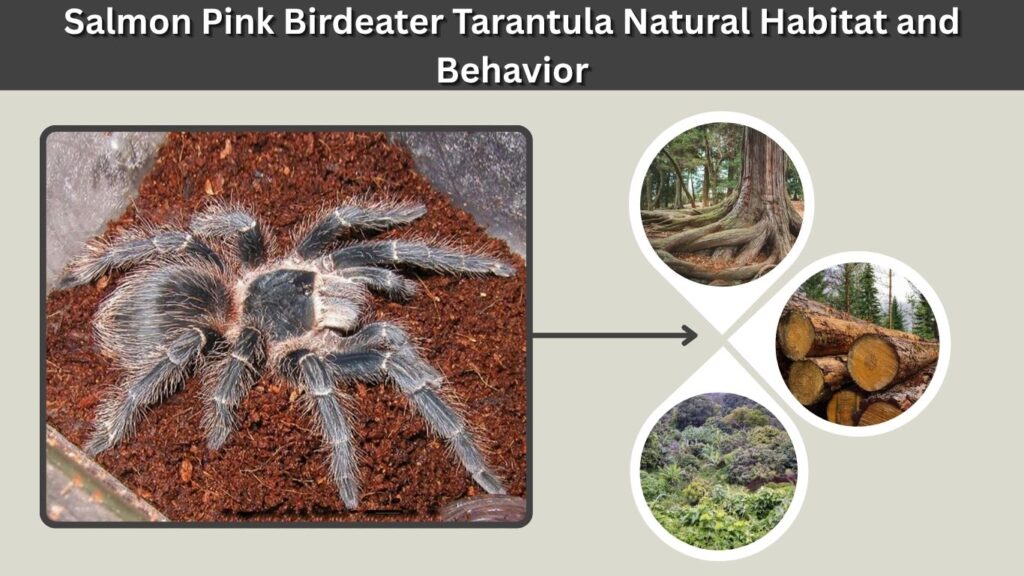
The salmon pink birdeater is native to the state of Paraíba in northeastern Brazil. It lives primarily at ground level, using burrows, leaf litter, roots, and natural crevices for protection. Although its habitat can experience humid conditions, captive enclosures should never be permanently wet or poorly ventilated. Stagnant moisture encourages mold and harmful microbial growth.
Where Does the Salmon Pink Birdeater Live?
In nature, this tarantula occupies the Atlantic Forest region and neighboring habitats. It may dig its own shelter or modify an existing cavity beneath roots, logs, and other debris. The Toronto Zoo describes it as a primarily terrestrial and fossorial species native to Paraíba.
The spider uses silk to reinforce its retreat and detect nearby movement. It does not construct an aerial web for capturing prey.
Does It Really Eat Birds?
Despite its dramatic name, birds are not a normal or important part of its diet. The term “birdeater” is used broadly for several enormous South American tarantulas. In the wild, the salmon pink primarily captures insects and other invertebrates. A large individual might opportunistically overpower a small vertebrate, but such events are uncommon.
Salmon Pink Birdeater Tarantula Size, Growth Rate, and Lifespan
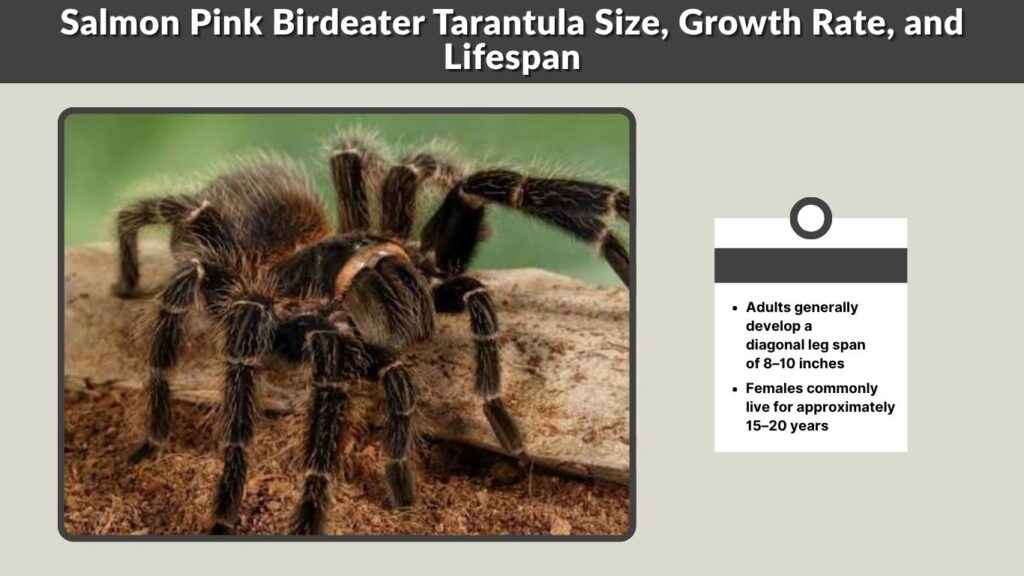
A full-grown salmon pink is substantially larger than many commonly kept tarantulas. Its rapid growth allows a well-fed spiderling to become an impressive juvenile relatively quickly. However, final size and development time vary according to sex, temperature, feeding, genetics, and overall husbandry. Overfeeding should not be used to force unnaturally fast growth.
Salmon Pink Tarantula Size
Adults generally develop a diagonal leg span of 8–10 inches, although exceptionally large specimens may exceed that measurement. The Cincinnati Zoo reports that the species can reach a leg span of 10 inches or more.
Females have heavier bodies and larger abdomens. Mature males are usually slimmer and leggier, with emboli on their pedipalps and tibial hooks on the front legs.
How Long Do Salmon Pink Tarantulas Live?
Females commonly live for approximately 15–20 years and may survive longer under excellent captive care. Males have significantly shorter lives and commonly survive only a few years after reaching maturity.
Sex cannot be determined reliably from general body shape in a young spider. Examining the inside of a well-preserved molt is the preferred method of identifying a female before maturity.
Salmon Pink Birdeater Tarantula Care and Enclosure
Because this is a heavy-bodied terrestrial species, its enclosure must emphasize floor space, deep substrate, and limited climbing height. A fall of only a short distance can rupture the abdomen. The enclosure must also have a secure lid because juveniles can be fast and may squeeze through unexpectedly small openings.
Enclosure Setup
- Choose an enclosure approximately three times the spider’s leg span in length.
- Provide about 5–8 inches of packed, diggable substrate.
- Leave minimal empty space between the substrate and lid.
- Add a cork-bark hide or partially buried curved shelter.
- Supply a wide, shallow water dish.
- Provide adequate cross-ventilation.
- Avoid sharp stones, tall decorations, and mesh lids.
- Keep every tarantula in a separate enclosure.
An adult generally needs an enclosure approximately 18–24 inches long, depending on its size. Coconut fiber mixed with pesticide-free topsoil can create a stable substrate that supports burrows.
Temperature and Moisture
Maintain an ambient temperature of approximately 70–78°F (21–26°C). Normal indoor temperatures are usually adequate. Avoid heat lamps and under-tank heaters, which may dangerously dry or overheat the enclosure.
Keep the lower substrate slightly moist while allowing the surface to become mostly dry. A consistently full water dish and occasional watering along one side usually provide sufficient moisture. Good airflow is more important than chasing a precise humidity percentage.
Salmon Pink Birdeater Tarantula Diet, Feeding, and Molting
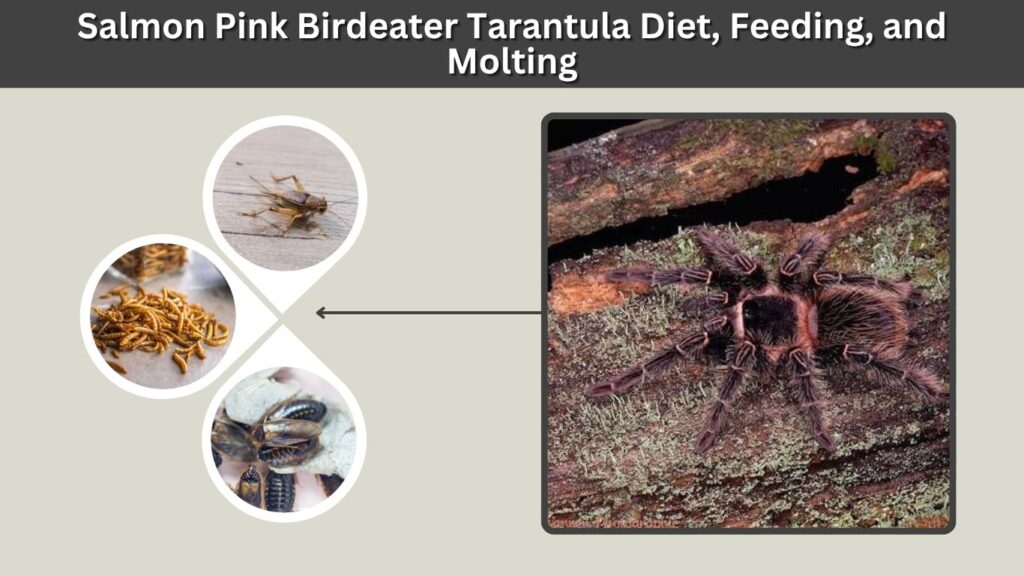
The salmon pink birdeater has a powerful feeding response and may rush toward movement when the enclosure opens. Always use long feeding tongs, and never place fingers near the spider. Appropriate portions support healthy development, whereas constant heavy feeding can produce an oversized abdomen that is more vulnerable to injuries.
What Does a Salmon Pink Tarantula Eat?
- Crickets
- Dubia roaches
- Red runner roaches
- Locusts
- Mealworms
- Superworms
- Black soldier fly larvae
Use captive-raised feeders that are no larger than the spider’s abdomen. Wild insects may expose the tarantula to pesticides, parasites, or other contaminants. Vertebrate prey is unnecessary and can create injuries, odors, and sanitation problems.
Feeding Schedule
Feed small spiderlings one or two appropriately sized meals weekly. Juveniles can usually eat once a week, while adults may be fed every 7–14 days. Adjust the schedule according to the abdomen’s condition rather than encouraging the spider to eat continually.
Fresh live prey is preferable to canned crickets because movement stimulates the tarantula’s hunting response. Very small slings may accept pre-killed insects.
Molting Care
A tarantula preparing to molt may stop eating, become less active, develop a dark abdomen, or seal its burrow. Remove all live feeders and avoid disturbing the enclosure. Most tarantulas molt on their backs, which is normal and should not be mistaken for death.
Wait approximately one week after a juvenile molts—and potentially 10–14 days for a large adult—before feeding. Its new fangs must harden first.
Salmon Pink Birdeater Tarantul Temperament, Handling, and Bite Risks
Salmon pink birdeaters can be hardy and relatively predictable, but they are not consistently docile. They may move rapidly, respond aggressively to food, or flick abdominal hairs when disturbed. These behaviors become more challenging when dealing with a spider whose leg span approaches ten inches. Individual temperament can also change around feeding and molting periods.
Is It a Good Beginner Tarantula?
It can be suitable for a well-prepared beginner who has researched tarantula behavior and is comfortable using catch cups and long tools. However, a smaller and slower species may be a better first tarantula.
The salmon pink is best viewed as a display animal. It often remains visible outside its hide, making physical handling unnecessary.
Bite and Urticating Hairs
This tarantula is venomous rather than poisonous. Its venom is not generally considered medically significant to healthy adults, but its large fangs can cause painful puncture wounds, bleeding, swelling, and infection. Individual reactions can differ.
The urticating hairs may be the greater everyday concern. They can cause persistent itching and become dangerous if inhaled or lodged in an eye. Avoid handling, keep the spider away from your face, and wash your hands after enclosure maintenance. Seek medical assistance for eye exposure, breathing problems, severe swelling, or other significant symptoms.
Buying a Salmon Pink Birdeater Tarantula
Salmon pink spiderlings are often reasonably available because females can produce large egg sacs. Nevertheless, availability, prices, and ownership laws differ by location. Buyers should consider the spider’s eventual size and long lifespan instead of choosing a small sling without planning for its adult enclosure.
Selecting a Healthy Specimen
Purchase a captive-bred spider from an established tarantula breeder. Confirm the scientific name, approximate size, feeding history, last molt, and sex when advertised. A healthy tarantula should have coordinated movement and a reasonably proportioned abdomen.
Avoid sellers who cannot explain the animal’s origin. Shipping should occur only during safe weather using insulated packaging and a service that accepts live invertebrates.
FAQs
The salmon pink birdeater’s name, enormous size, and powerful feeding response generate many questions from prospective keepers. Understanding its behavior before purchasing one helps prevent unsafe handling and unsuitable housing. These concise answers address its growth, care difficulty, enclosure requirements, defensive behaviors, and feeding habits.
How Fast Does a Salmon Pink Tarantula Grow?
It is one of the faster-growing large tarantulas. A well-cared-for spiderling may reach several inches within its first few years, although temperature, feeding, sex, and genetics affect development.
Is a Salmon Pink Tarantula Aggressive?
It is better described as defensive and highly food-responsive. Some individuals remain calm, while others readily flick hairs, slap the ground, or display a threat posture.
Can You Handle a Salmon Pink Birdeater?
Handling is strongly discouraged. Its speed, large fangs, irritating hairs, and fragile abdomen create risks for both the keeper and the spider.
How Large Should Its Enclosure Be?
An adult enclosure should offer roughly three times the spider’s leg span in length, adequate width for turning, deep substrate, and very little dangerous climbing height.
How Often Does a Salmon Pink Tarantula Molt?
Spiderlings may molt several times annually. Molting becomes less frequent as the spider ages, and mature females may go a year or longer between molts.
