
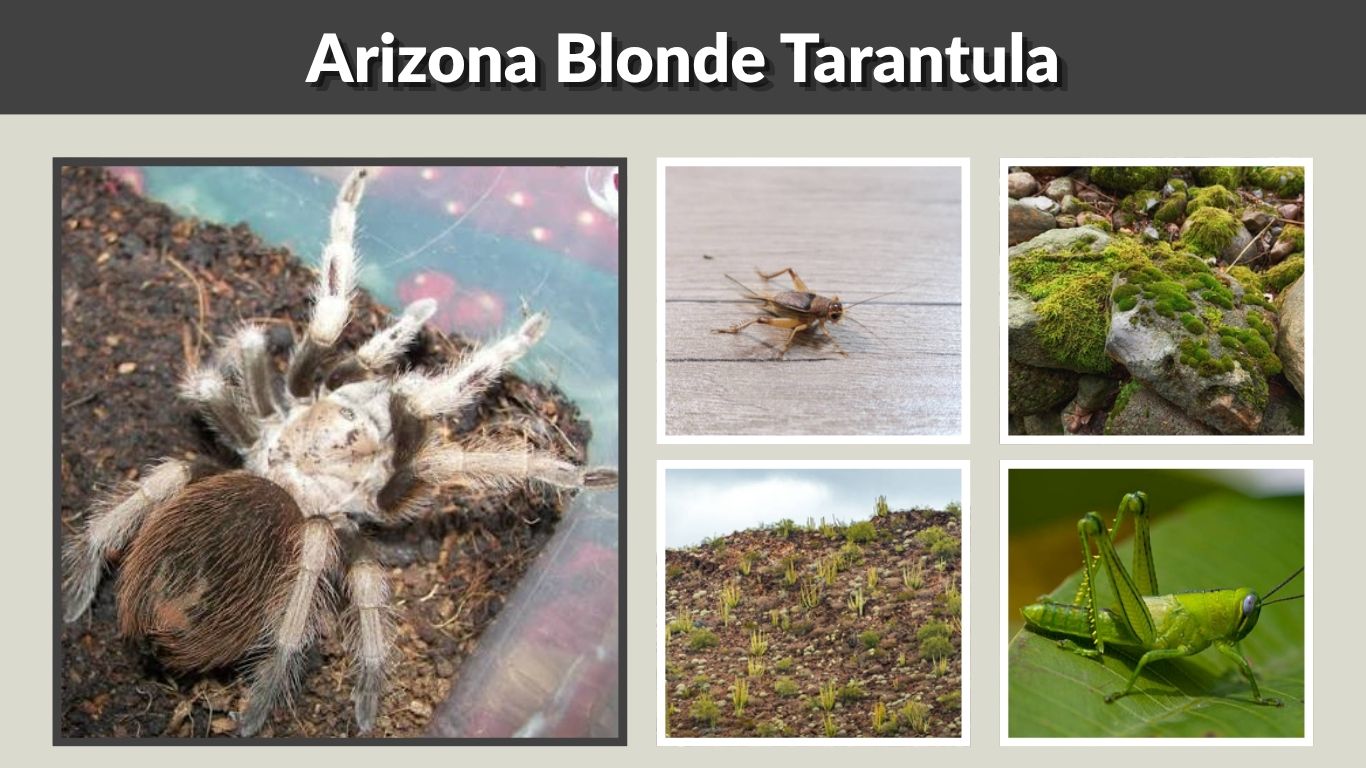
The Arizona blonde tarantula is a slow-growing desert spider admired for its sandy coloring, calm temperament, and impressive lifespan. Also called the Arizona blond or desert blonde tarantula, it spends much of its life inside a silk-lined burrow. Although often recommended to new keepers, this species still needs a secure terrestrial enclosure, deep substrate, careful feeding, and minimal handling. This complete guide explains its identification, natural habitat, size, behavior, diet, lifespan, sex differences, molting process, venom, and essential captive-care requirements.
Identification, Size, and Sex Differences
The Arizona blonde tarantula’s scientific name is Aphonopelma chalcodes. It is a heavy-bodied, terrestrial species with coloring that helps it blend into sandy desert environments. Appearance changes as the spider matures, and adult males can look noticeably different from females. Similar tarantulas also live in the American Southwest, making exact identification from color alone difficult.
Key Identification Features
- Adult leg span of approximately 4½ to 5 inches
- Pale tan, blonde, or light-brown carapace
- Thick legs covered with fine hairs
- Dark-brown abdomen with lighter hairs
- Eight small eyes grouped on a raised area
- Two leg-like pedipalps positioned near the fangs
- Stocky build in adult females
Size and Growth Rate
Most adults reach approximately five inches across when their legs are extended. Females generally become heavier and more robust than males.
This is an exceptionally slow-growing tarantula. Depending on temperature, feeding, and sex, it may require eight to ten years to mature. Slings are tiny and initially lack the strong blonde coloring displayed by adult females. Excessive feeding will not safely transform a sling into an adult quickly.
Male vs. Female Arizona Blonde Tarantula
Adult females are usually stocky, with a blonde carapace, tan legs, and a rounded abdomen. Mature males develop longer, darker legs and a slimmer body. They may also have mating hooks on their front legs and enlarged structures at the ends of their pedipalps.
Body shape and color provide clues, but examining the inside of a suitable shed skin is the most reliable way to determine sex.
Arizona Blonde Tarantula Natural Habitat and Behavior
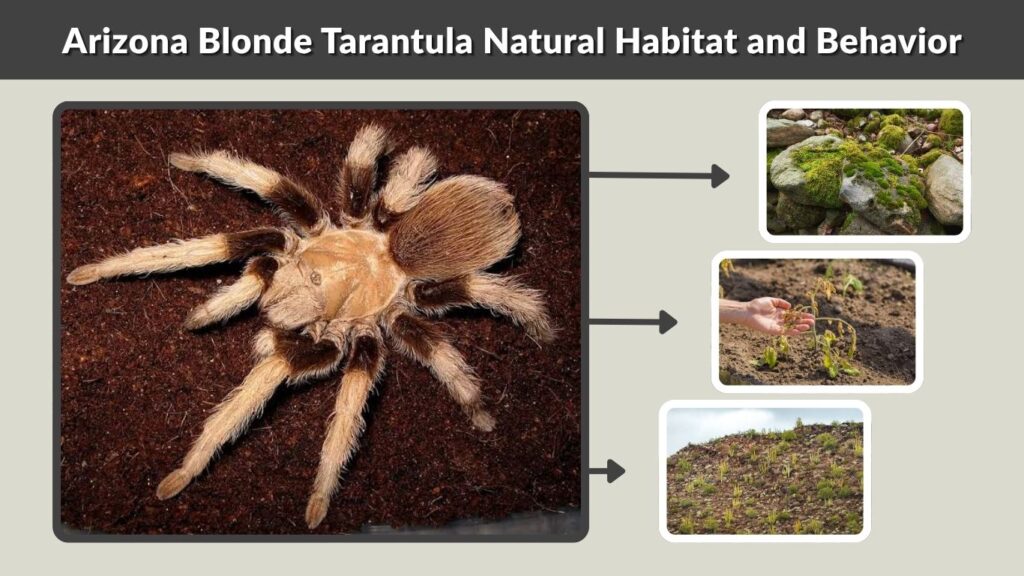
Arizona blonde tarantulas are adapted to dry environments with dramatic changes in temperature and moisture. They avoid the most extreme conditions by remaining underground during the day. Their natural behavior is generally secretive and sedentary. Most individuals stay close to an established retreat unless searching for food, escaping danger, or seeking a mate.
Habitat and Distribution
The species inhabits deserts, dry grasslands, and scrublands in Arizona and neighboring areas of the southwestern United States and northern Mexico. It is particularly associated with the Sonoran Desert.
Its sandy coloring provides camouflage among soil, rocks, dry vegetation, and cactus-dominated landscapes. The spider becomes most active at night, when temperatures are lower and potential prey is moving across the ground.
Do Arizona Blonde Tarantulas Burrow?
Yes. An Arizona blonde normally constructs or occupies a deep, silk-lined burrow. Silk around the entrance transmits vibrations produced by prey and approaching predators.
The burrow also protects the spider from heat, cold, and dehydration. An individual may remain underground for long periods or close its entrance with substrate and silk, especially before molting or during seasonal inactivity.
Temperament and Defensive Behavior
- Usually calm, slow-moving, and reluctant to bite
- Retreats into its burrow when given an escape route
- Flicks irritating abdominal hairs toward threats
- May raise its front legs in a defensive stance
- Can strike or bite when repeatedly provoked
- Becomes more sensitive when preparing to molt
Arizona Blonde Tarantula Care
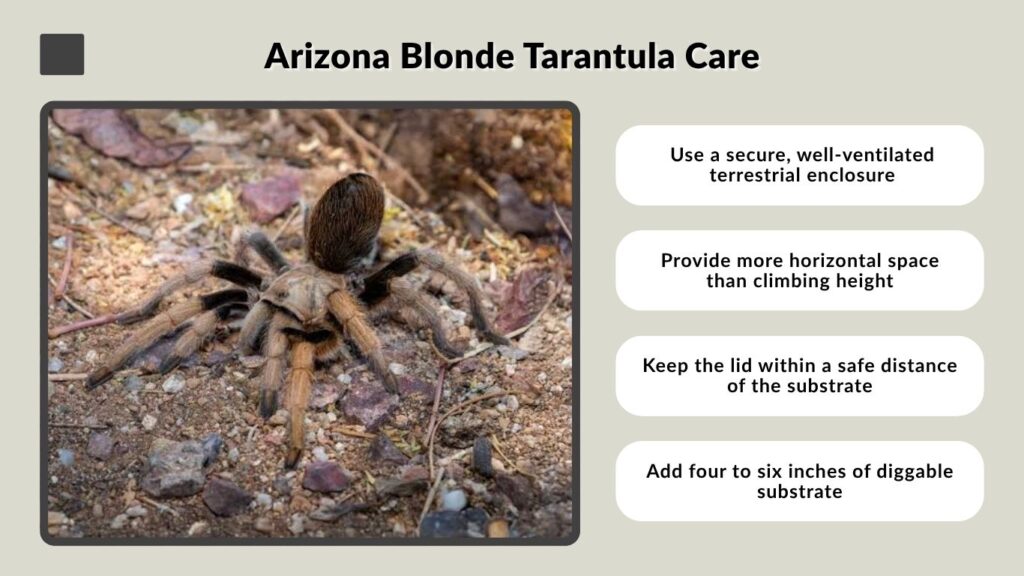
The Arizona blonde is often considered a manageable pet tarantula, but it should be kept primarily for observation. A suitable setup recreates the security of a ground-level burrow without making the enclosure excessively wet. Fall prevention, ventilation, and access to clean water are more important than complicated decorations or an exact humidity reading.
Enclosure Setup Checklist
- Use a secure, well-ventilated terrestrial enclosure
- Provide more horizontal space than climbing height
- Keep the lid within a safe distance of the substrate
- Add four to six inches of diggable substrate
- Include a cork-bark hide or starter burrow
- Supply a shallow dish of fresh water
- Secure every opening to prevent escape
- Avoid sharp decorations and heavy unstable rocks
An enclosure roughly three to four times the spider’s leg span in length offers sufficient room. Avoid tall cages because a fall can rupture the tarantula’s heavy abdomen.
Substrate and Shelter
Suitable substrate options include pesticide-free topsoil, coconut fiber, or a compactable mixture of both. It should be firm enough to support a burrow without collapsing.
Place a piece of cork bark partially against or beneath the substrate to create a sheltered starting point. Avoid gravel, scented soil, fertilizer-containing mixtures, sharp wood chips, and loose materials that cannot hold a tunnel.
Temperature and Humidity
Normal indoor temperatures of approximately 68–78°F are generally appropriate. Avoid direct sunlight, heat lamps, and unregulated heating pads because they can rapidly overheat the enclosure.
This desert species does not need constantly damp substrate or tropical humidity. Keep most of the enclosure dry, provide good ventilation, and maintain a full water dish. Slings may need slightly more moisture than adults, but their substrate should never become swampy.
Arizona Blonde Tarantula Diet, Feeding, and Molting
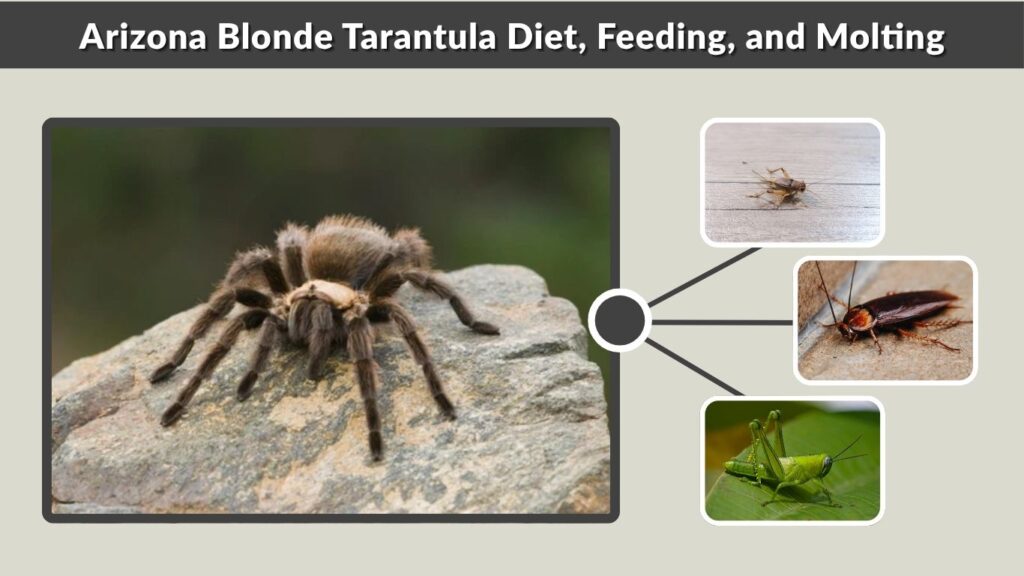
Arizona blonde tarantulas are ambush predators that detect movement through ground and silk vibrations. They do not need daily meals and may naturally fast for extended periods. Feeding frequency should reflect the spider’s size, age, and abdominal condition. Live prey should never remain with a vulnerable tarantula during a molt.
Food and Feeding Guide
- Offer crickets, cockroaches, grasshoppers, or mealworms
- Choose prey no larger than the tarantula’s abdomen
- Feed slings every five to seven days
- Feed adults approximately every one to two weeks
- Remove uneaten insects within 24 hours
- Provide fresh water continuously
- Reduce feeding if the abdomen becomes excessively large
Wild Arizona blondes eat insects and other small invertebrates. They do not require vertebrate prey such as mice or lizards in captivity.
Why Is My Tarantula Not Eating?
Food refusal is common before molting, during cooler periods, after a large meal, or when an adult has sufficient energy reserves. Some healthy adults fast for weeks or months.
Continue providing water and observe the abdomen’s condition. Avoid repeatedly dropping prey into the enclosure. Sudden severe weight loss, injury, persistent abnormal posture, or inability to move normally may require advice from an experienced exotic-animal veterinarian.
Molting Process
Before molting, a tarantula may stop eating, become inactive, develop a darker bald patch, close its burrow, or create a silk mat. It commonly lies on its back while shedding its old exoskeleton. Never turn it over or attempt to assist.
Remove live prey and avoid disturbing the enclosure. Wait until the new fangs are completely dark and hardened before feeding again—often at least a week for juveniles and 10–14 days for adults.
Arizona Blonde Tarantula Lifespan, Handling, and Purchasing
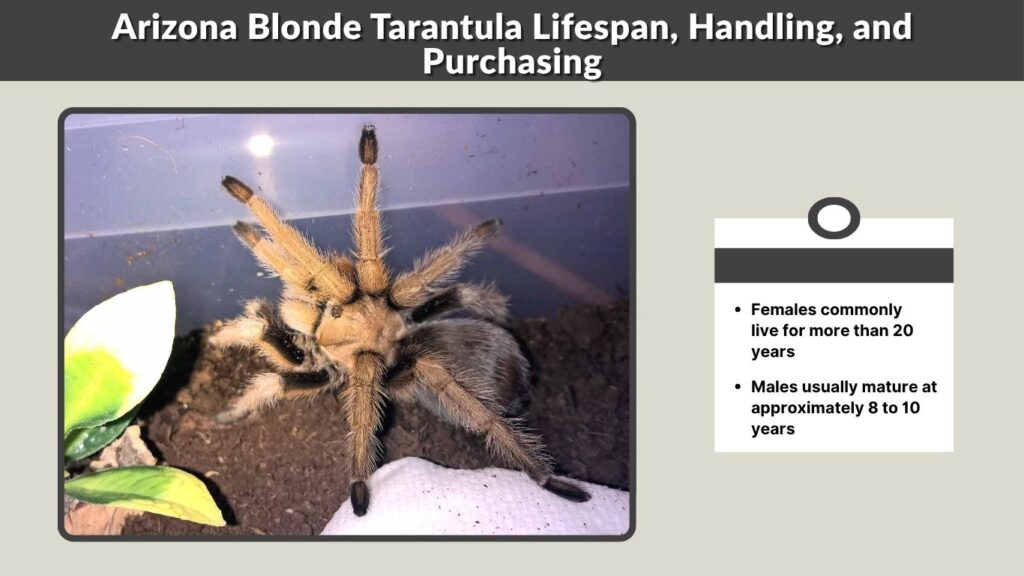
Keeping an Arizona blonde is a long-term commitment, particularly when the spider is female. Despite its reputation for being docile, unnecessary handling creates risks for both the tarantula and its keeper. Prospective owners should understand its lifespan, defensive hairs, venom, housing needs, and legal status before buying a sling or adult.
Arizona Blonde Tarantula Lifespan
Females commonly live for more than 20 years, with some surviving beyond 25 years under appropriate care. Males usually mature at approximately eight to ten years and may live only another two or three years.
The considerable difference in lifespan makes sex an important factor when purchasing. An unsexed sling requires less initial investment, but its eventual sex cannot be guaranteed.
Handling, Venom, and Bites
Handling is not recommended. Tarantulas receive no benefit from being held, and a sudden movement can cause a dangerous fall. Use a catch cup when transferring the spider.
The Arizona blonde is venomous rather than poisonous. Its bite can cause pain, swelling, and irritation, although it is not generally considered medically dangerous to healthy adults. Seek medical attention for breathing difficulty, severe swelling, intense pain, or urticating hairs in the eyes.
Buying an Arizona Blonde Tarantula
Purchase a captive-bred specimen from a reputable breeder who can provide its approximate age, feeding history, and sex when known. Prices vary according to size, sex, location, and availability, with confirmed adult females usually costing more.
Confirm the scientific name because labels such as “desert blonde” or “palomino” may be used for similar species. Check local ownership and import regulations before buying.
FAQs
Arizona blonde tarantulas are often misunderstood because their behavior, feeding schedule, and appearance change with age and sex. These answers address common questions about their suitability as pets, adult size, burrowing habits, aggression, and care. Individual spiders can behave differently, so owners should observe their animal and avoid forcing interaction.
Are Arizona Blonde Tarantulas Good Pets?
They can be good display pets for responsible beginners. They are generally hardy and calm but require secure housing, limited disturbance, and a long-term commitment.
Are Arizona Blonde Tarantulas Aggressive?
They are not usually aggressive, but they can become defensive. A frightened individual may flick irritating hairs, display its fangs, or bite when cornered.
How Big Do Arizona Blonde Tarantulas Get?
Adults generally reach a leg span of approximately 4½ to 5 inches. Females typically have heavier bodies, while mature males are slimmer and longer-legged.
How Long Can an Arizona Blonde Go Without Food?
A healthy adult may refuse food for weeks or months, especially before molting or during seasonal inactivity. Fresh water must remain available throughout the fast.
Does an Arizona Blonde Need High Humidity?
No. It is a desert-adapted species that needs mostly dry substrate, good ventilation, and constant access to clean water rather than a wet, tropical enclosure.
