
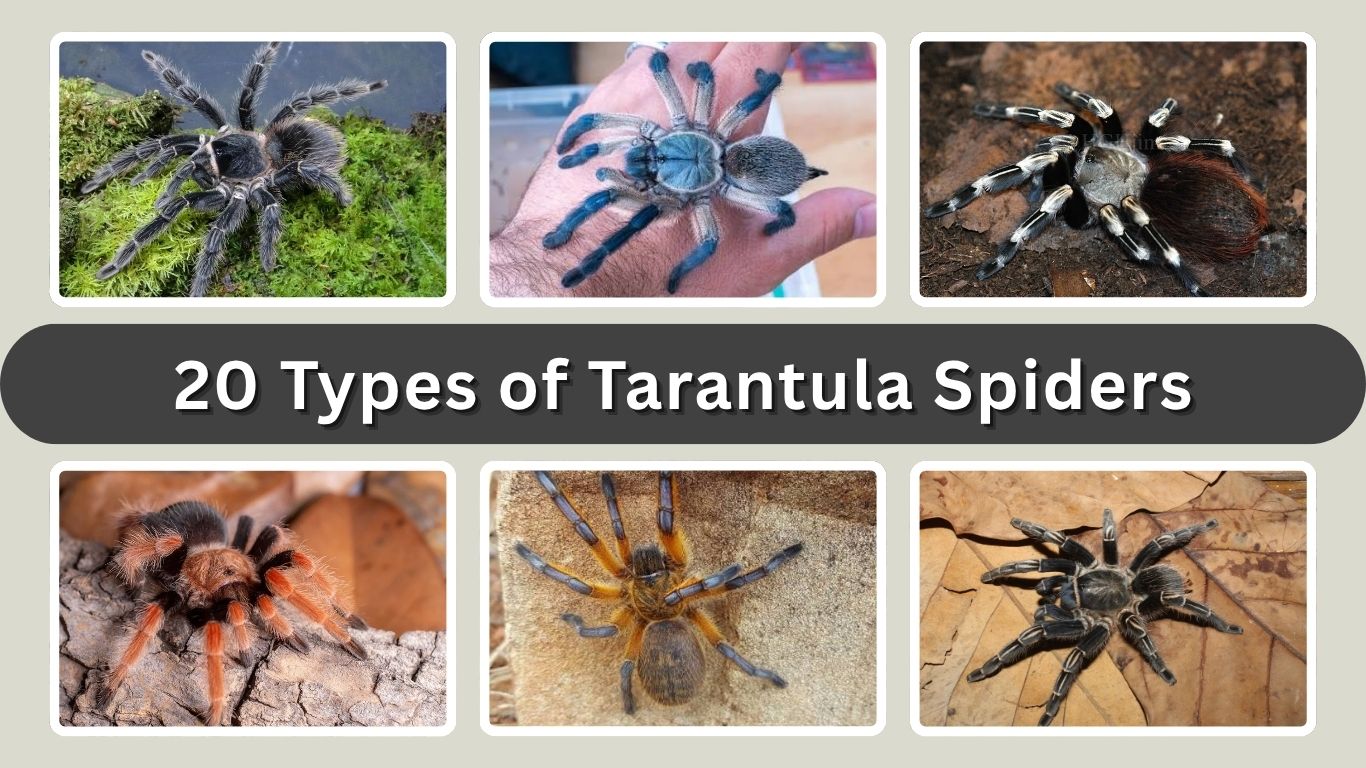
Tarantulas are large, hairy spiders found across tropical forests, deserts, grasslands, and scrublands worldwide. More than 1,000 species are known, displaying remarkable differences in size, color, habitat, and behavior. Some live in deep underground burrows, while others construct silken retreats inside trees. This guide explores 20 types of tarantula spiders, from the calm Chilean rose and colorful Mexican red-knee to the enormous Goliath birdeater and defensive orange baboon. Learn how to identify each one and understand its habitat, diet, behavior, and life cycle.
1. Chilean Rose Tarantula
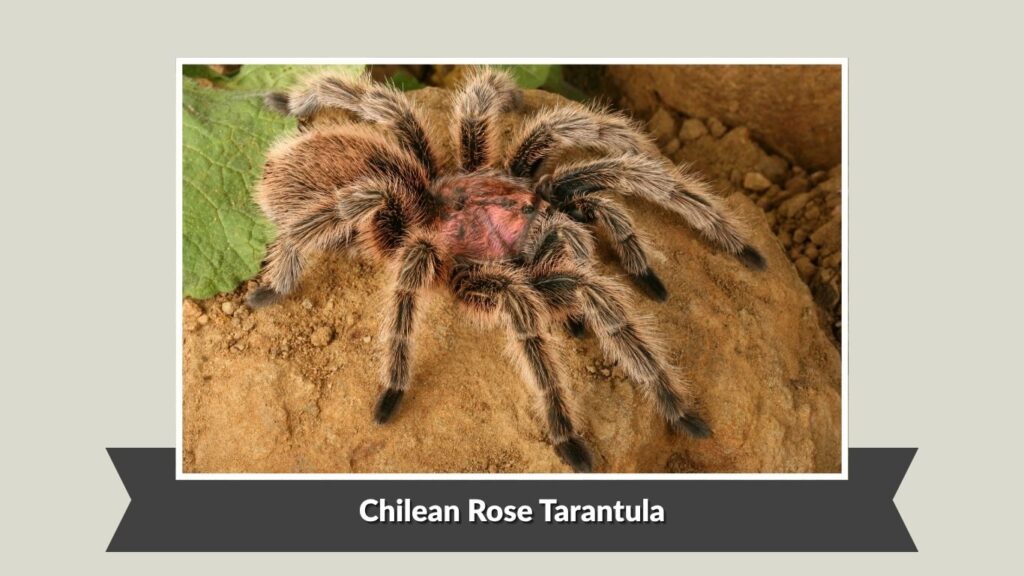
The Chilean rose tarantula is a calm, slow-moving spider native to dry regions of Chile. Its manageable size, attractive coloring, and generally docile temperament have made it one of the best-known pet tarantulas. However, every individual has a different personality and should be handled carefully.
Identification
- Medium-to-large tarantula with a leg span of approximately 4½ to 5½ inches
- Dark brown or black body covered with dense hairs
- Pink, rose, or copper-colored hairs across the upper body and legs
- Thick legs and a broad, rounded abdomen
- Females are usually heavier-bodied and live much longer than males
- Sometimes confused with other closely related Chilean tarantulas
Habitat and Distribution
Chilean rose tarantulas inhabit dry scrublands, deserts, and rocky areas of Chile. They spend much of their time inside burrows or sheltered spaces beneath rocks and vegetation. A burrow protects the spider from temperature extremes, predators, and excessive moisture.
This species prefers a relatively dry environment rather than the humid conditions required by many tropical tarantulas. It may remain hidden during the hottest parts of the day and become more active at night when temperatures are cooler.
Behavior and Defense
The Chilean rose tarantula is usually calm and reluctant to bite. When disturbed, it may retreat into its shelter or use its back legs to flick irritating abdominal hairs toward a potential threat. These hairs can cause itching and should be kept away from the eyes and face.
Although it is often described as suitable for beginners, frequent handling is not recommended. A fall from even a modest height can seriously injure its fragile abdomen. Some individuals may also become defensive without warning.
Diet and Life Cycle
Chilean rose tarantulas mainly eat insects, including crickets, cockroaches, beetles, and grasshoppers. They ambush prey, inject venom through their fangs, and consume the liquefied tissues.
Young tarantulas molt regularly as they grow, while adults molt less frequently. Females can live for 15 to 20 years or longer under suitable conditions, whereas males usually survive only a few years after reaching maturity. A tarantula may stop eating before molting, which is normally part of its natural growth cycle.
2. Mexican Red-Knee Tarantula
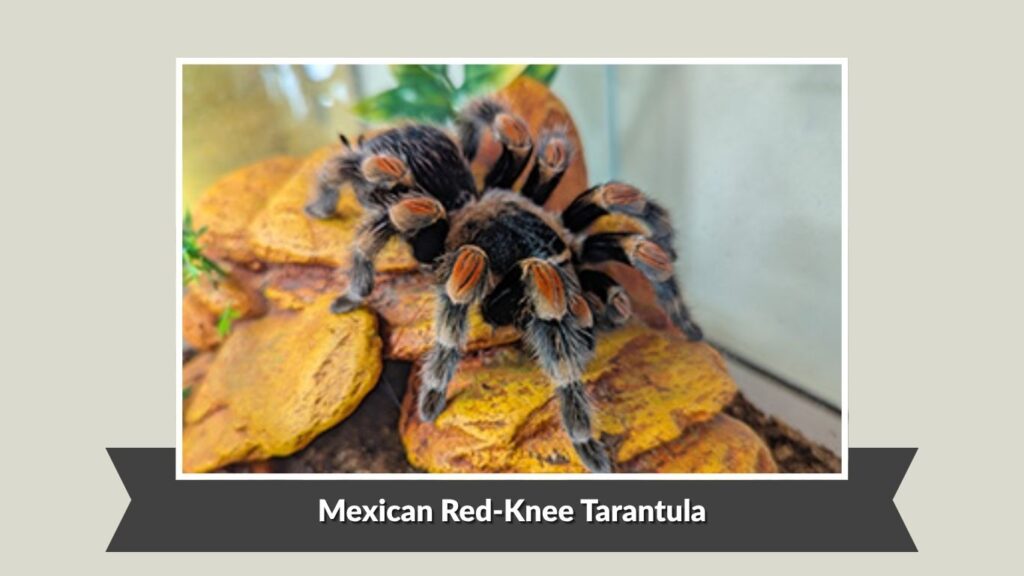
The Mexican red-knee tarantula is one of the most recognizable tarantulas because of its striking orange-red knee markings. Native to Mexico, this ground-dwelling spider is generally calm and slow-moving. Its attractive appearance and relatively manageable temperament have made it popular among tarantula keepers.
Identification
- Black or dark-brown body with bright orange-red bands on the leg joints
- Adult leg span of approximately 5 to 6 inches
- Thick legs covered with dark and pale hairs
- Rounded abdomen with reddish hairs
- Females are typically larger and heavier than males
- Mature males have longer, slimmer legs and a smaller abdomen
Habitat and Distribution
Mexican red-knee tarantulas occur along Mexico’s Pacific coast, particularly in dry scrublands, thorn forests, and semi-desert environments. They construct or occupy deep burrows beneath rocks, roots, and fallen vegetation. The burrow provides protection from predators and seasonal temperature changes.
They usually remain near the burrow entrance at night while waiting for passing prey. During extremely dry or hot conditions, they may stay underground for extended periods.
Behavior and Defense
This tarantula is usually calm but may become defensive when threatened. Its primary defense is kicking irritating hairs from its abdomen. If the threat continues, it may raise its front legs, display its fangs, or bite.
Handling should be limited because falls can rupture the spider’s abdomen. Its defensive hairs may also irritate human skin and eyes.
Diet and Life Cycle
Mexican red-knee tarantulas eat crickets, cockroaches, beetles, and other small animals. Females can live for 20 years or longer, while males have much shorter adult lives. Growth is relatively slow, and the spider must molt repeatedly before reaching maturity.
3. Brazilian Black Tarantula
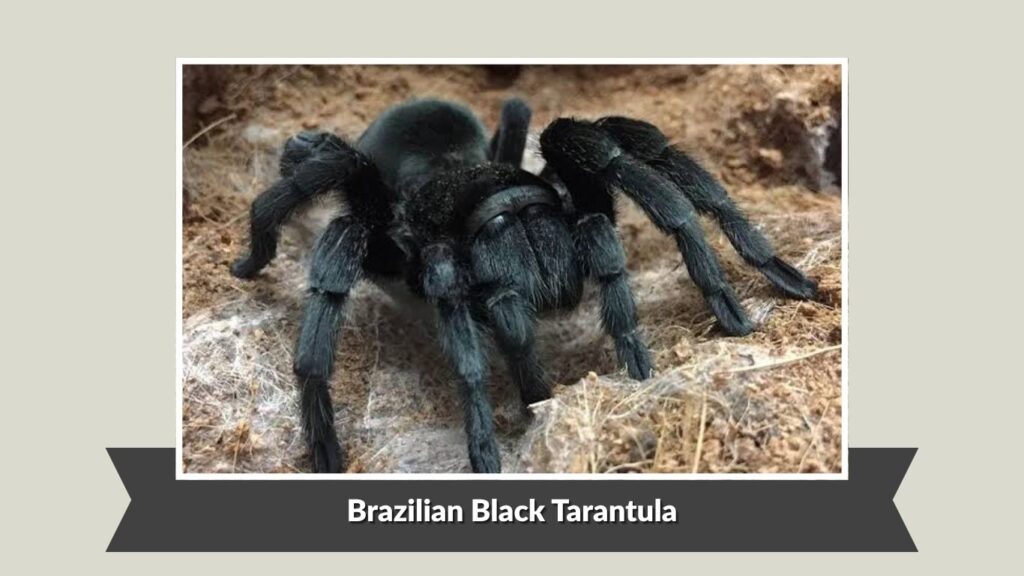
The Brazilian black tarantula is admired for its deep, velvety-black appearance and generally calm disposition. This terrestrial species is native to grasslands in South America. It grows slowly but can eventually become a large, heavy-bodied tarantula.
Identification
- Uniform black coloration across the body, abdomen, and legs
- Velvety covering of short, dense hairs
- Adult leg span of approximately 6 to 7 inches
- Heavy body with thick, powerful legs
- Young spiders may appear grayish before becoming darker
- Mature males are usually slimmer and longer-legged than females
Habitat and Distribution
Brazilian black tarantulas are found mainly in Brazil and Uruguay, where they inhabit grasslands, open woodlands, and other relatively dry environments. They usually live in burrows or sheltered spaces beneath rocks, logs, and vegetation.
Their underground retreats help maintain stable temperature and humidity. They often remain close to the entrance and emerge after dark to locate food.
Behavior and Defense
This species is known for being slow-moving and relatively tolerant of minor disturbances. However, individual temperaments vary, and any tarantula may react defensively. When frightened, it will commonly retreat or flick irritating abdominal hairs.
Biting is usually a last resort. Handling remains risky because the tarantula’s substantial body can be seriously injured by a short fall.
Diet and Life Cycle
Brazilian black tarantulas feed on insects such as crickets, roaches, beetles, and grasshoppers. Large individuals may occasionally overpower small vertebrates in nature.
Females may live for 20 years or more with suitable care. Males mature sooner and generally survive for a shorter period. This is a slow-growing species, and young spiders require several years and repeated molts to reach adult size.
4. Pink-Toe Tarantula
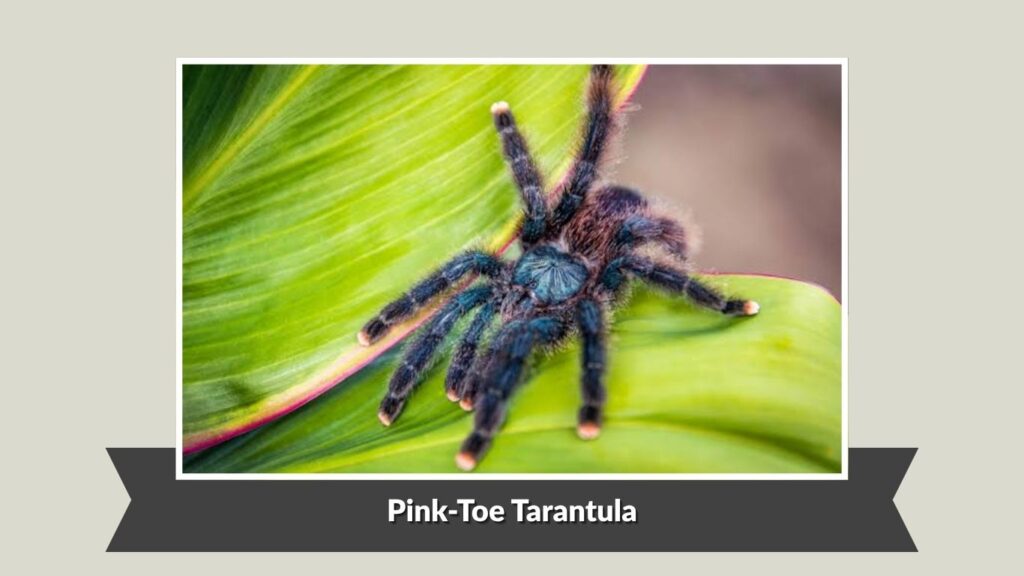
The pink-toe tarantula is an agile, tree-dwelling species recognized by the pink or orange tips on its feet. Native to northern South America, it spends much of its life above the ground. Unlike heavy terrestrial tarantulas, it has a slimmer body adapted for climbing.
Identification
- Dark body with pink, peach, or orange tips on the feet
- Adult leg span of approximately 4½ to 5 inches
- Long, relatively slender legs
- Dense hairs that may appear black, gray, greenish, or purple
- Young spiderlings often have different coloration from adults
- Broad foot pads that help the spider climb smooth surfaces
Habitat and Distribution
Pink-toe tarantulas inhabit humid tropical forests in countries such as Venezuela, Guyana, Suriname, French Guiana, and Brazil. They live in trees, hollow branches, large plants, and crevices above the forest floor.
They construct silken retreats among leaves, bark, and branches. These shelters provide security during daylight hours, while the tarantula becomes more active after dark.
Behavior and Defense
The pink-toe tarantula can move and jump quickly when alarmed. It usually attempts to escape instead of confronting a threat. It may also flick defensive hairs or release a small stream of waste when severely disturbed.
Because it is fast and arboreal, handling can result in escape or injury. Proper ventilation is especially important for captive individuals living in humid surroundings.
Diet and Life Cycle
Pink-toe tarantulas prey on crickets, cockroaches, moths, and other climbing or flying insects. They detect vibrations and seize prey with sudden bursts of speed.
Females commonly live for 10 years or longer, whereas males have considerably shorter lifespans. Spiderlings molt frequently and gradually develop their characteristic dark bodies and colorful toes.
5. Curly-Hair Tarantula
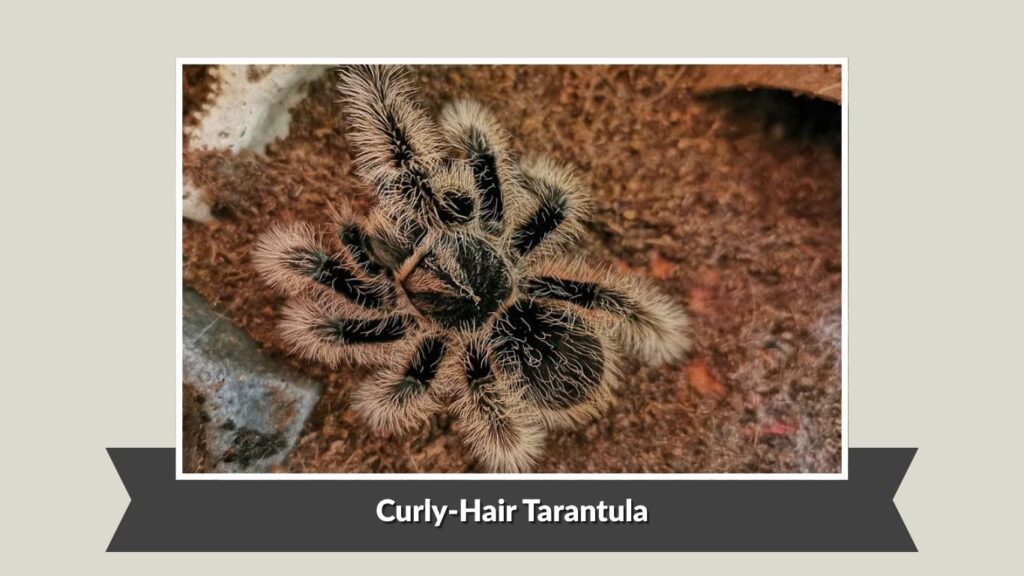
The curly-hair tarantula gets its name from the long, curled bristles covering its body and legs. Native to Central America, it is a sturdy terrestrial species with a generally calm nature. Its distinctive shaggy appearance makes it easy to recognize.
Identification
- Dark-brown body covered with gold or bronze curly hairs
- Adult leg span of approximately 5 to 6 inches
- Thick legs and a robust, rounded abdomen
- Curled hairs create a fluffy or shaggy appearance
- Females generally have heavier bodies than males
- Mature males become slimmer and may have hooks on the front legs
Habitat and Distribution
Curly-hair tarantulas occur in tropical and semi-tropical regions of Central America, particularly Nicaragua and Costa Rica. They inhabit grasslands, scrublands, and forest edges where suitable ground allows them to burrow.
They may dig their own retreats or use abandoned holes beneath roots, logs, and rocks. Although their environment can experience seasonal humidity, they require well-drained ground rather than constantly wet soil.
Behavior and Defense
This species is usually slow and calm, but it should not be considered harmless. When threatened, it may retreat, kick irritating hairs, or assume a defensive posture. A severely provoked individual can bite.
Curly-hair tarantulas often rearrange soil and expand their burrows. They may also block the entrance with silk or substrate before molting.
Diet and Life Cycle
Their diet includes crickets, cockroaches, beetles, and other ground-dwelling invertebrates. They ambush prey rather than actively chasing it over long distances.
Females can live for 15 to 20 years or longer, while males usually live for only a few years after maturity. Growth is moderate, with younger spiders molting more frequently than adults.
6. Greenbottle Blue Tarantula
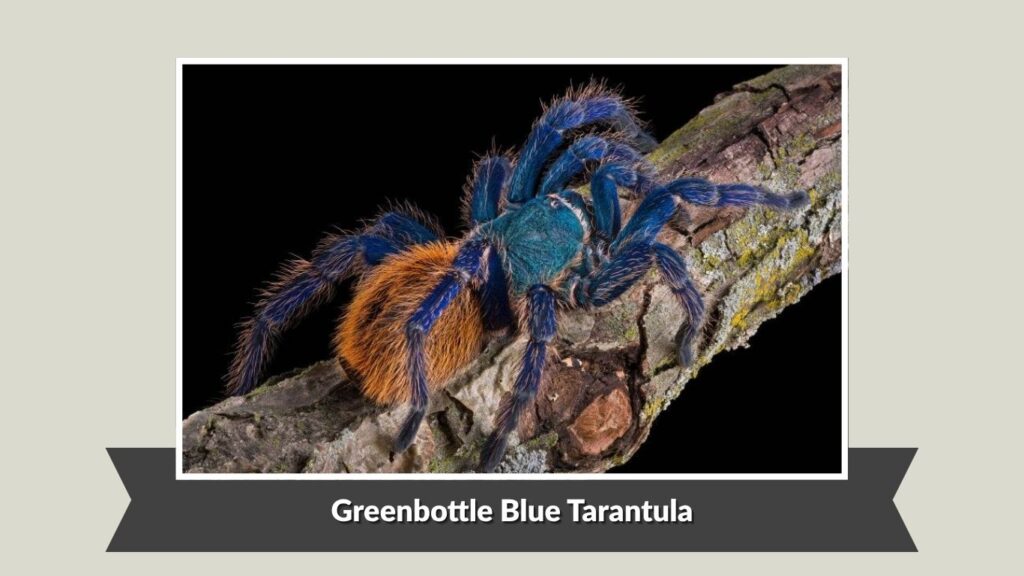
The greenbottle blue tarantula is a brilliantly colored species with blue legs, an orange abdomen, and a metallic green carapace. Native to Venezuela, it is also known for producing extensive webbing. Although beautiful, it is quick and can be easily startled.
Identification
- Metallic blue legs with dense hairs
- Bright orange abdomen with darker markings
- Green or blue-green carapace
- Adult leg span of approximately 5 to 6 inches
- Spiderlings display colorful patterns that change as they grow
- Females are generally heavier-bodied than mature males
Habitat and Distribution
This tarantula comes from the dry scrublands of Venezuela’s Paraguaná Peninsula. The region is hot, relatively arid, and covered with low vegetation. The spider shelters in burrows, beneath roots, or among rocky crevices.
It surrounds its retreat with thick layers of silk. The webbing helps the spider detect approaching prey and threats while also strengthening its shelter.
Behavior and Defense
Greenbottle blue tarantulas are fast, active, and often visible outside their retreats. They generally prefer escaping to biting but may kick irritating abdominal hairs when disturbed.
They can respond rapidly to vibrations, making unnecessary handling particularly risky. Their speed increases the chance of escape, while a fall can cause a fatal abdominal injury.
Diet and Life Cycle
This species readily feeds on crickets, cockroaches, grasshoppers, and other suitable invertebrates. It waits on its webbed surface and reacts quickly when prey creates vibrations.
Females may live for approximately 12 to 15 years, while males have shorter lives. Juveniles grow at a moderate rate and gradually develop the vivid colors seen in adults.
7. Cobalt Blue Tarantula
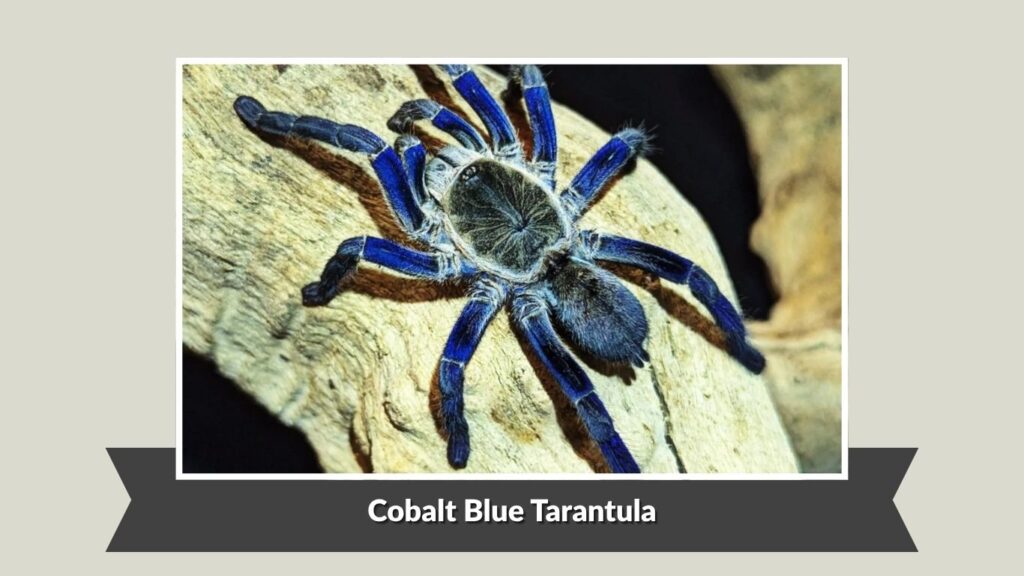
The cobalt blue tarantula is a striking burrowing spider famous for its iridescent blue legs. Native to Southeast Asia, it spends most of its time underground. It is fast, defensive, and possesses medically significant venom, making it unsuitable for frequent handling.
Identification
- Metallic cobalt-blue legs, especially noticeable under bright light
- Dark gray or brown abdomen and carapace
- Adult leg span of approximately 5 inches
- Long legs suited to rapid movement
- Females usually display stronger blue coloration
- Mature males may become lighter, slimmer, and less vividly colored
Habitat and Distribution
Cobalt blue tarantulas inhabit tropical forests in Thailand and nearby parts of Southeast Asia. They construct deep burrows in warm, humid soil, often beneath roots, logs, and dense vegetation.
The burrow is lined with silk and may extend well below the surface. The tarantula usually remains hidden during the day and waits near the entrance after dark.
Behavior and Defense
This species is highly defensive and may stand its ground when escape is difficult. It can raise its front legs, expose its fangs, strike rapidly, and deliver a painful bite. Unlike many tarantulas from the Americas, it does not possess defensive abdominal hairs.
Cobalt blue tarantulas are extremely fast and should never be handled. Their secretive nature also means that keepers may see them only occasionally.
Diet and Life Cycle
Cobalt blue tarantulas feed on cockroaches, crickets, beetles, and other animals encountered near their burrows. They detect vibrations through silk surrounding the entrance and quickly seize passing prey.
Females may live for more than 15 years, while mature males have much shorter lifespans. Young spiders grow through repeated molts and begin burrowing at an early age.
8. Goliath Birdeater Tarantula
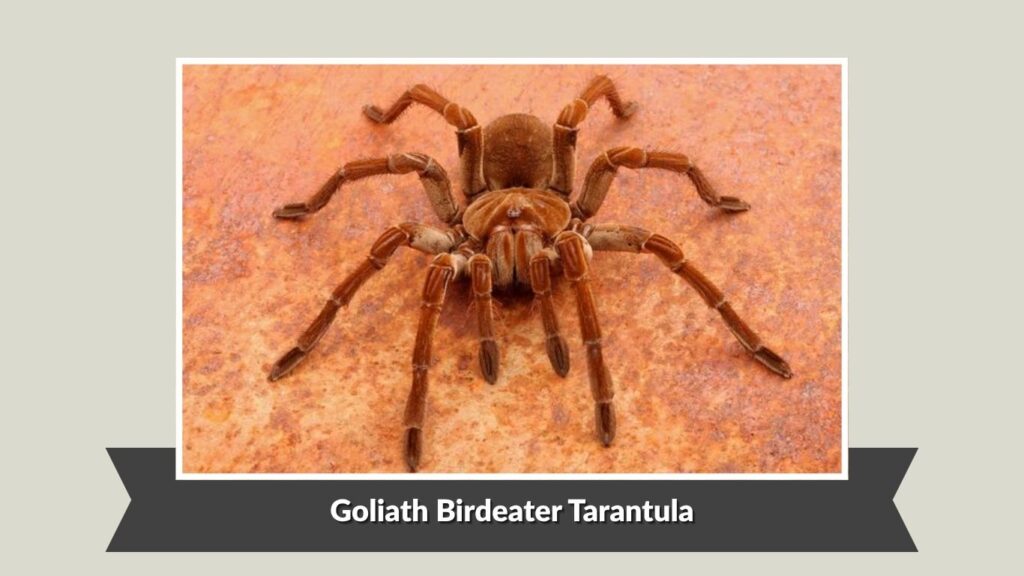
The Goliath birdeater is one of the world’s largest spiders by body mass and overall size. Despite its dramatic name, it primarily eats invertebrates rather than birds. This massive ground-dwelling tarantula inhabits the humid rainforests of northern South America.
Identification
- Adult leg span that may approach 11 inches
- Heavy body that can weigh more than 150 grams
- Dark to reddish-brown coloration
- Thick legs covered with dense hairs
- Large fangs capable of delivering a painful bite
- Makes a hissing sound by rubbing specialized hairs together
Habitat and Distribution
Goliath birdeaters occur in the rainforests of Venezuela, Guyana, Suriname, French Guiana, and northern Brazil. They live in deep burrows, often taking over shelters previously made by rodents or other animals.
Their habitat is warm and humid, with dense vegetation and moist soil. They usually remain concealed during the day and emerge at night to search for food.
Behavior and Defense
When threatened, a Goliath birdeater may rub its legs together to produce a warning sound. It can also flick particularly irritating hairs, display its large fangs, or bite if the threat continues.
Although its venom is not considered deadly to a healthy human, a bite can cause significant pain. Its defensive hairs may produce severe skin and eye irritation.
Diet and Life Cycle
This powerful tarantula eats cockroaches, beetles, earthworms, frogs, lizards, and small rodents. It may occasionally take a young bird, but birds are not its usual prey.
Females can live for 15 to 25 years, while males generally die within a few years after maturity. Females guard their egg sacs inside their burrows until the spiderlings emerge.
9. Salmon Pink Birdeater Tarantula
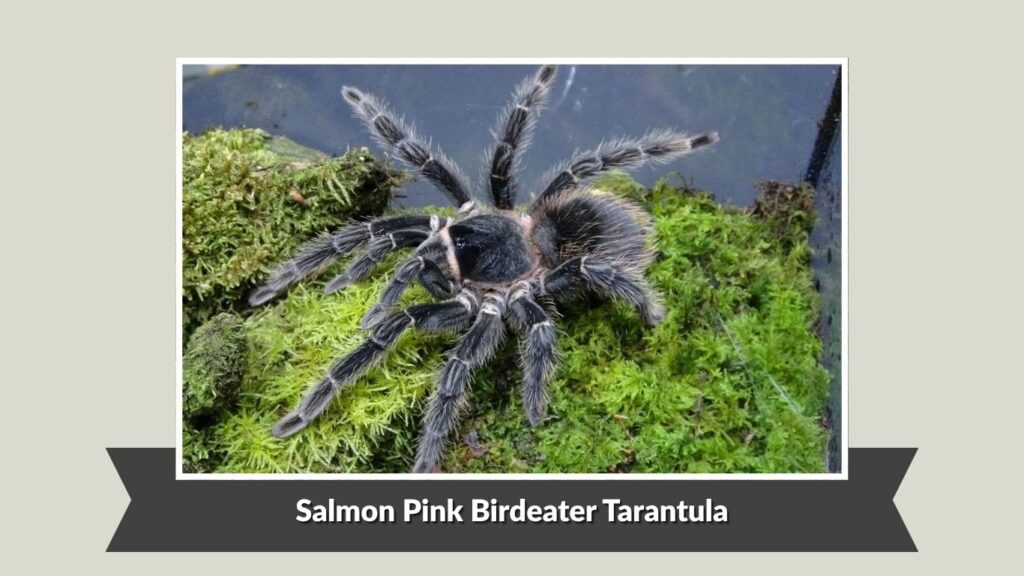
The salmon pink birdeater is a large, fast-growing terrestrial tarantula native to northeastern Brazil. Its name comes from the pinkish hairs covering its dark body. Despite the word “birdeater,” this spider primarily preys on insects and other small animals found on the ground.
Identification
- Adult leg span of approximately 8 to 10 inches
- Dark-brown or black body covered with salmon-pink hairs
- Thick, powerful legs and a broad abdomen
- Large fangs suited to overpowering substantial prey
- Young spiders are less colorful than mature individuals
- Females are generally larger and heavier than males
Habitat and Distribution
This tarantula is native to the Atlantic forest region of northeastern Brazil. It occupies warm, humid environments where it shelters in burrows, beneath logs, or among tree roots.
Although it can dig, it may also use existing cavities as retreats. It usually remains close to its shelter during the day and becomes more active after dark.
Behavior and Defense
Salmon pink birdeaters are usually active feeders but can be nervous and surprisingly fast. When threatened, they may kick irritating abdominal hairs toward the source of danger. These hairs can produce persistent itching and eye irritation.
A severely provoked individual may display its fangs or bite. Handling is unsafe because of the spider’s speed, large size, and vulnerability to falls.
Diet and Life Cycle
This species eats crickets, cockroaches, beetles, grasshoppers, and other invertebrates. Large adults may also capture small frogs, lizards, or rodents when opportunities arise.
Females can live for 15 years or longer, whereas mature males usually have much shorter lives. Spiderlings grow relatively quickly when food and environmental conditions are suitable.
10. Indian Ornamental Tarantula
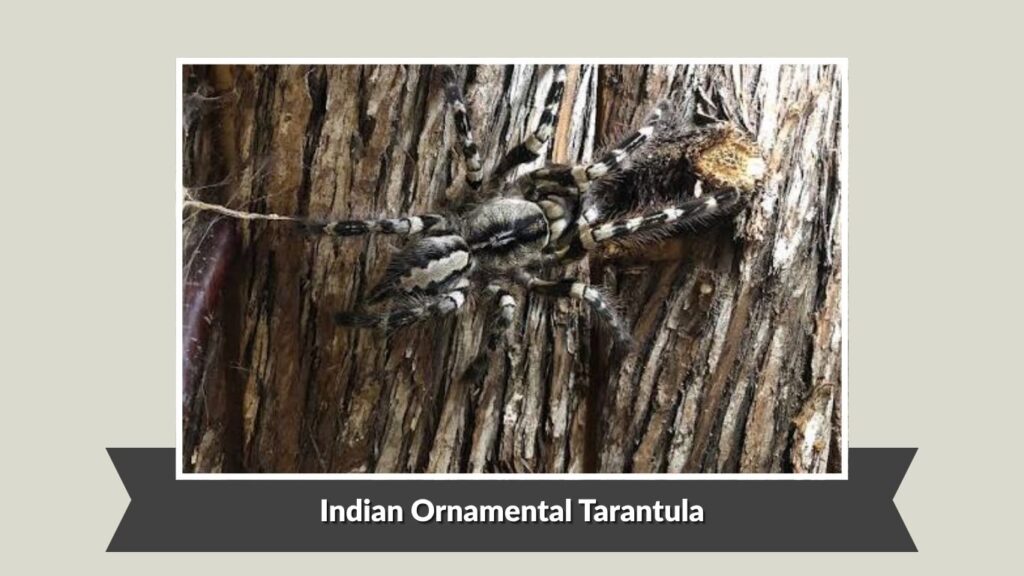
The Indian ornamental tarantula is a beautiful arboreal spider with contrasting black, white, gray, and yellow markings. Native to India, it lives primarily in trees and is capable of moving extremely quickly. Its defensive behavior and medically significant venom make it unsuitable for handling.
Identification
- Adult leg span of approximately 6 to 7 inches
- Gray or silver upper body with bold black markings
- White bands and decorative patterns on the legs
- Yellow warning coloration underneath the front legs
- Flattened body adapted for hiding beneath bark
- Females are heavier and often more strongly patterned than males
Habitat and Distribution
Indian ornamental tarantulas occur in forested regions of southern and southeastern India. They inhabit tree holes, cracks in bark, and spaces within old trunks. Their flattened bodies allow them to squeeze into narrow shelters.
The spider lines its retreat with silk and generally remains hidden during daylight. At night, it emerges to detect insects moving across nearby bark and branches.
Behavior and Defense
This species is extremely fast and usually attempts to flee when disturbed. If trapped, however, it may raise its front legs, reveal the yellow markings underneath, and strike repeatedly.
Its bite can cause intense pain, muscle cramping, and other symptoms requiring medical attention. It lacks the defensive abdominal hairs found on many American tarantulas.
Diet and Life Cycle
Indian ornamental tarantulas hunt moths, cockroaches, crickets, beetles, and other tree-dwelling invertebrates. They use speed and strong fangs to capture prey.
Females may live for 12 to 15 years or longer, while males usually survive only a short time after maturity. Young spiders grow relatively quickly and become increasingly arboreal as they develop.
11. Venezuelan Sun Tiger Tarantula
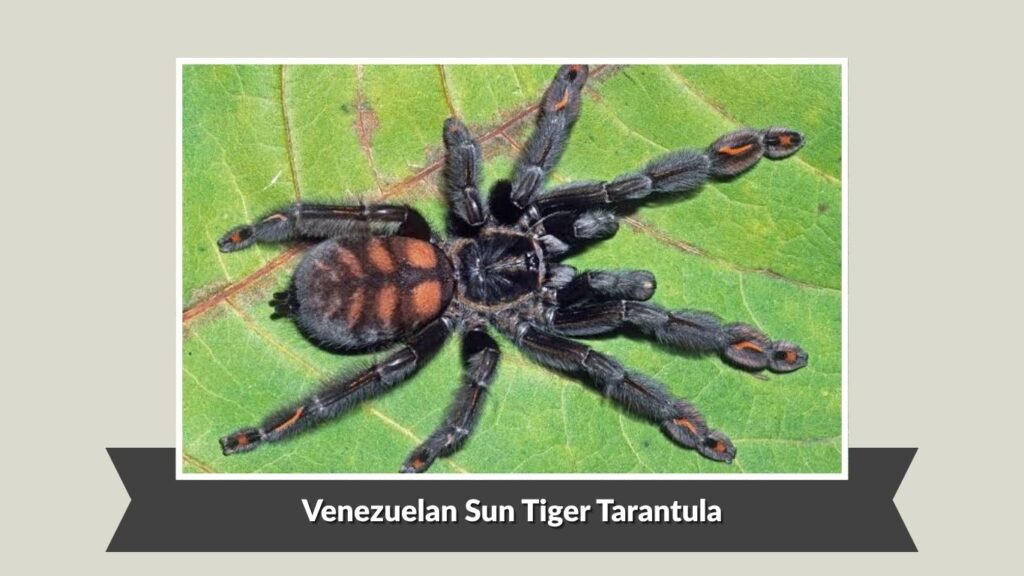
The Venezuelan sun tiger is a colorful, tree-dwelling tarantula known for its black body and vivid orange abdominal markings. It is fast, secretive, and highly responsive to disturbances. This species is usually observed near its silken retreat rather than moving openly for extended periods.
Identification
- Adult leg span of approximately 5 to 6 inches
- Mostly black body and legs
- Bright orange or red tiger-like pattern on the abdomen
- Orange markings on the feet and lower legs
- Long legs and a streamlined arboreal body
- Mature males are slimmer and often have duller coloration
Habitat and Distribution
Venezuelan sun tigers inhabit humid forests in Venezuela and nearby areas of Guyana. They construct webbed retreats inside hollow trees, behind loose bark, and among dense vegetation.
Juveniles may live closer to the ground, using burrows and sheltered crevices. Adults generally prefer elevated retreats that provide access to climbing and flying prey.
Behavior and Defense
This tarantula relies heavily on speed and will usually retreat when disturbed. However, it can become defensive when escape is blocked. It may flick irritating hairs, assume a threat posture, or bite if severely provoked.
Its rapid movements make handling particularly dangerous for both the spider and the handler. It can quickly climb vertical surfaces and may jump short distances.
Diet and Life Cycle
The Venezuelan sun tiger eats crickets, cockroaches, moths, and other insects. It waits inside or near its silken retreat and rushes outward when it detects prey vibrations.
Females may live for approximately 10 to 12 years, while males generally have shorter lives. Spiderlings grow quickly and develop their distinctive orange markings as they mature.
12. Costa Rican Zebra Tarantula
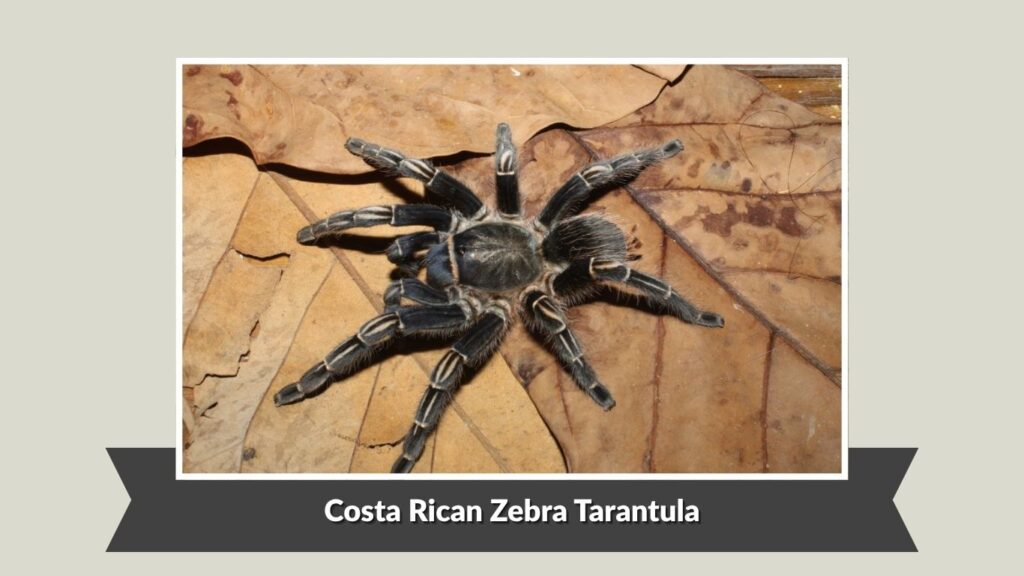
The Costa Rican zebra tarantula is a terrestrial species recognized by the pale stripes running down its dark legs. It is a deep burrower native to Central America. Although often described as manageable, it can be nervous, quick, and easily startled.
Identification
- Dark-brown or black body with cream or tan leg stripes
- Adult leg span of approximately 4½ to 5½ inches
- Pale lines radiating along the upper surfaces of the legs
- Rounded abdomen covered with reddish or brown hairs
- Thick legs adapted for digging
- Females generally have larger, heavier bodies than males
Habitat and Distribution
Costa Rican zebra tarantulas occur in Costa Rica and neighboring parts of Central America. They inhabit dry forests, grasslands, and scrubby areas with soil suitable for constructing deep burrows.
They may remain underground for much of the day, especially during hot or dry conditions. At night, they often wait near the burrow entrance for passing insects.
Behavior and Defense
This tarantula is usually shy and prefers to flee into its burrow. However, it can move quickly when frightened and may unexpectedly run from an exposed position. It can also kick irritating abdominal hairs at a perceived threat.
Handling is not advisable because sudden movement may cause the spider to fall. Its secretive habits mean it may remain out of sight for extended periods.
Diet and Life Cycle
Costa Rican zebra tarantulas mainly eat crickets, cockroaches, beetles, and other ground-dwelling invertebrates. They locate prey by detecting vibrations around their burrow entrances.
Females may live for 15 to 20 years, while males have significantly shorter lifespans. Young spiders molt frequently, but the time required to reach maturity depends on food, temperature, and sex.
13. Mexican Fireleg Tarantula
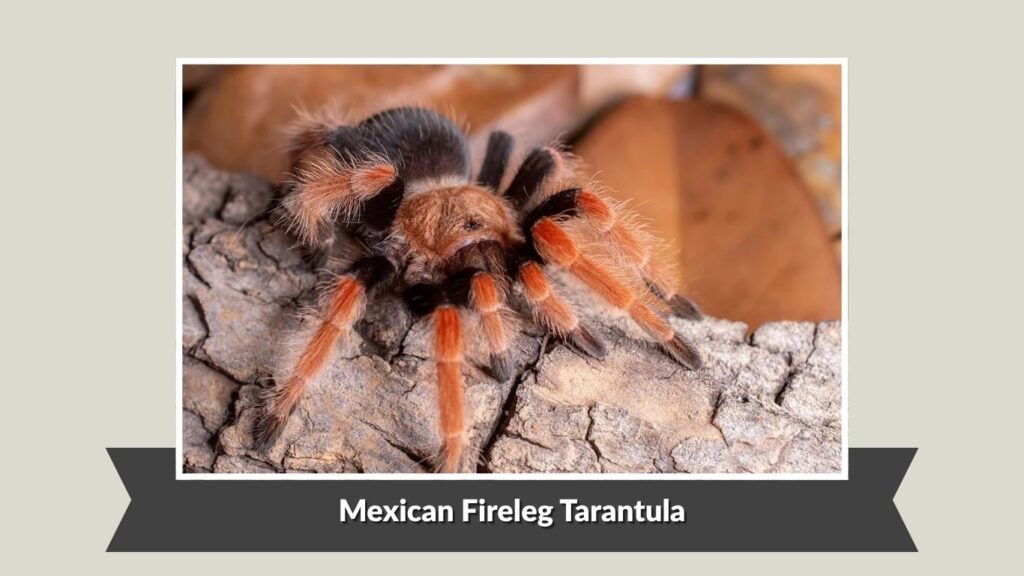
The Mexican fireleg tarantula is a striking ground-dwelling spider with intense red-orange coloring on its legs. Native to Mexico’s Pacific coast, it is closely associated with dry scrubland habitats. It is generally slower than many arboreal species but may readily defend itself with irritating hairs.
Identification
- Adult leg span of approximately 5 to 6 inches
- Black body with bright red or orange legs
- Dark feet that contrast with the fiery leg coloration
- Dense red hairs across the abdomen
- Robust body and thick terrestrial legs
- Mature males are slimmer and longer-legged than females
Habitat and Distribution
Mexican fireleg tarantulas are found in dry areas of southwestern Mexico, particularly in Guerrero and nearby regions. They inhabit scrublands, dry forests, and rocky slopes with distinct wet and dry seasons.
They shelter in burrows beneath rocks, roots, and vegetation. These retreats protect them from daytime heat, predators, and rapid environmental changes.
Behavior and Defense
The Mexican fireleg is usually slow-moving but may be more defensive than the Mexican red-knee tarantula. Its most common response to danger is kicking clouds of irritating hairs from its abdomen.
If repeatedly disturbed, it may raise its front legs, expose its fangs, or bite. Handling should be avoided because its hairs are irritating and its heavy abdomen is easily damaged by falls.
Diet and Life Cycle
This species feeds on crickets, cockroaches, beetles, grasshoppers, and other small animals. It is an ambush predator that typically waits near its retreat for prey.
Females can live for 20 years or longer, whereas males have much shorter adult lives. Growth is relatively slow, and several years may be required for a young tarantula to reach maturity.
14. Orange Baboon Tarantula
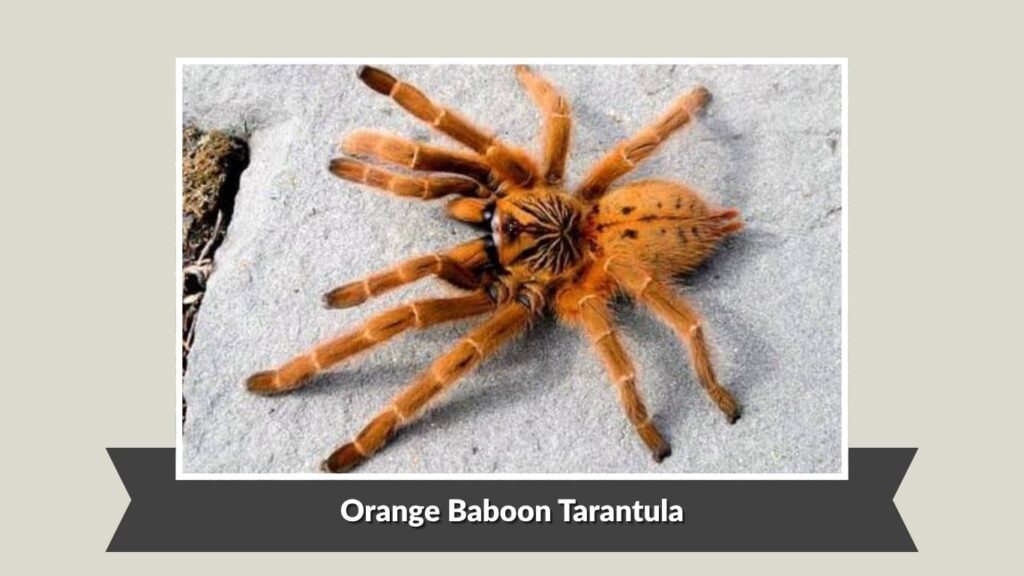
The orange baboon tarantula is a vividly colored African species famous for its speed, defensive temperament, and extensive webbing. Its bright orange appearance makes it highly distinctive, but it is not suitable for handling. When disturbed, it may respond quickly instead of simply retreating.
Identification
- Bright orange or rust-colored body and legs
- Adult leg span of approximately 4 to 6 inches
- Star-shaped pattern on the carapace
- Dark markings on the abdomen
- Thick legs covered with short orange hairs
- Some regional forms appear darker, golden, or grayish
Habitat and Distribution
Orange baboon tarantulas are distributed across parts of central, eastern, and southern Africa. They occupy savannas, scrublands, and relatively dry woodland environments.
They construct burrows beneath logs, rocks, roots, and other protected locations. Thick sheets and tunnels of silk often surround the retreat, allowing the spider to detect nearby prey and danger.
Behavior and Defense
This species is highly defensive and extremely fast. When threatened, it may raise its front legs, expose its fangs, slap the ground, or strike repeatedly. It does not possess the defensive abdominal hairs used by American tarantulas.
Its venom can produce significant pain and other symptoms, so a bite should receive medical attention. Handling is strongly discouraged under all circumstances.
Diet and Life Cycle
Orange baboon tarantulas feed on cockroaches, crickets, beetles, and other invertebrates. They often remain hidden within their webbed retreats and rapidly seize prey that touches the surrounding silk.
Females may live for more than 10 years, while males have shorter lifespans. Spiderlings grow relatively quickly and begin producing extensive silk from an early age.
15. Trinidad Chevron Tarantula
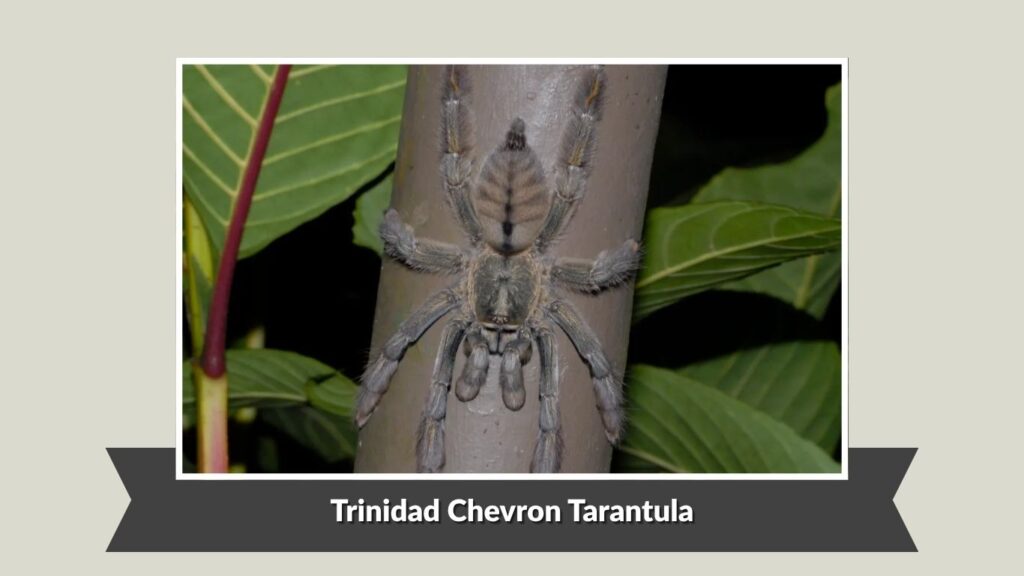
The Trinidad chevron tarantula is a large, fast-moving arboreal species native to Trinidad. It has a brown or olive appearance with a dark chevron pattern on its abdomen. This tarantula produces substantial webbing and spends much of its time inside elevated retreats.
Identification
- Adult leg span of approximately 6 to 7 inches
- Brown, gray, or olive-colored body
- Dark chevron-shaped markings on the abdomen
- Long legs with orange or reddish hairs
- Streamlined body adapted for climbing
- Mature males are slimmer and may appear grayer than females
Habitat and Distribution
Trinidad chevron tarantulas are native to the tropical forests of Trinidad. They commonly occupy hollow trees, gaps beneath bark, and crevices among branches. Younger individuals may establish retreats closer to the ground.
The spider lines its shelter with thick silk. It generally remains concealed during the day and waits near the entrance after sunset for prey.
Behavior and Defense
This tarantula is extremely fast and usually attempts to escape into its retreat. When cornered, it may flick irritating abdominal hairs or bite. Its speed and climbing ability make it difficult to manage in an open space.
Handling is unsafe because the spider may suddenly bolt or jump. Falls can still cause serious injuries, even though its arboreal body is less heavy than that of many terrestrial tarantulas.
Diet and Life Cycle
Trinidad chevrons eat crickets, cockroaches, moths, and other insects found around trees. They react rapidly to vibrations on their webs and capture prey with a sudden rush.
Females may live for 10 to 12 years or longer, while males usually survive for a much shorter period. Young spiders grow rapidly and gradually shift toward more elevated shelters.
16. Golden Blue-Leg Baboon Tarantula
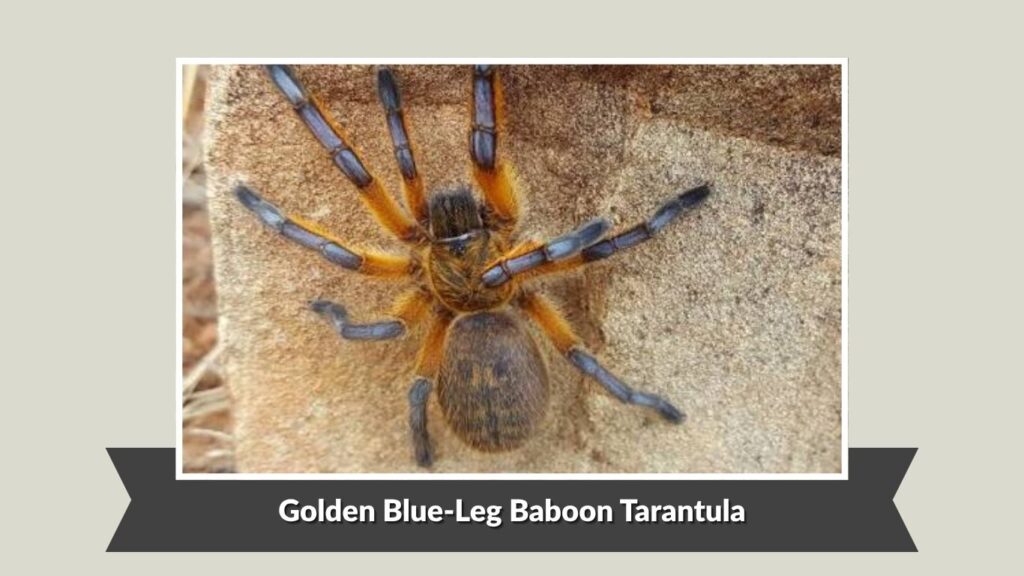
The golden blue-leg baboon tarantula is a visually striking African species with metallic blue legs and a golden-brown body. Native to South Africa, it is a terrestrial burrower that often remains hidden below the ground. Its attractive coloration contrasts with its fast and potentially defensive behavior.
Identification
- Metallic blue coloring on the lower sections of the legs
- Golden, bronze, or sandy-brown carapace
- Golden abdomen with dark spots or markings
- Adult leg span of approximately 5 to 6 inches
- Dense hairs covering the body and legs
- Females are usually heavier and more vividly colored than males
Habitat and Distribution
Golden blue-leg baboon tarantulas are native to dry grasslands and scrublands of South Africa. They construct silk-lined burrows beneath rocks, roots, and low vegetation. The burrow provides protection from intense heat and dry surface conditions.
Although the surrounding habitat can be arid, the soil inside a deep retreat may retain some moisture. The spider often waits near the burrow entrance after dark to detect approaching prey.
Behavior and Defense
This species usually retreats when given the opportunity, but it can become defensive when cornered. It may raise its front legs, expose its fangs, and strike if the disturbance continues. Like other African tarantulas, it lacks defensive abdominal hairs.
Its speed and potentially painful bite make handling inappropriate. It is generally more visible after becoming established, especially when waiting for food near its retreat.
Diet and Life Cycle
The golden blue-leg baboon tarantula eats crickets, cockroaches, beetles, and other ground-dwelling invertebrates. It detects vibrations through the silk surrounding its burrow and quickly captures nearby prey.
Females may live for 12 years or longer, whereas males have much shorter lives after maturity. Spiderlings grow at a moderate rate and begin digging and constructing silken shelters when young.
17. Socotra Island Blue Baboon Tarantula
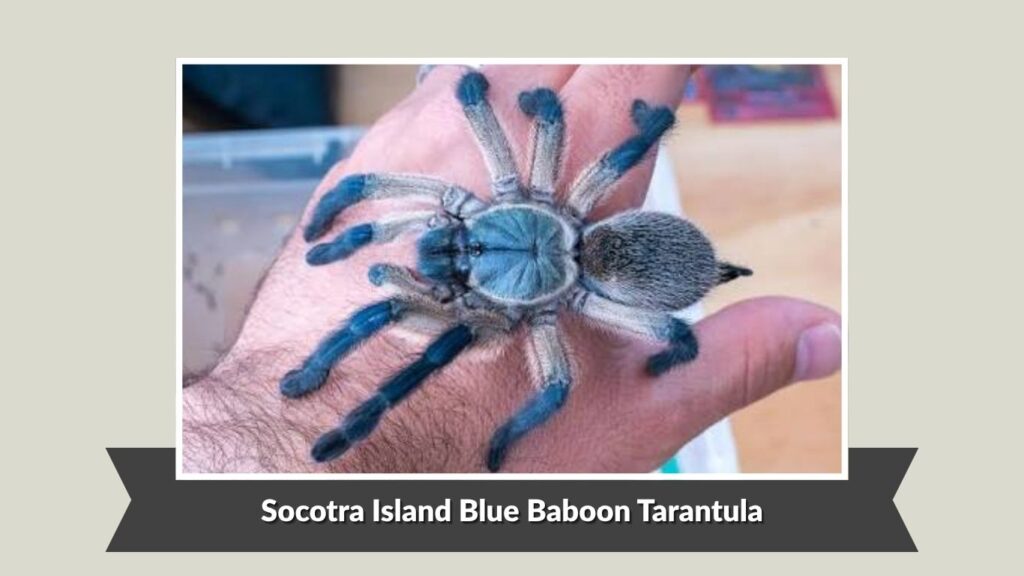
The Socotra Island blue baboon tarantula is an unusual species known for its pale blue legs, heavy webbing, and comparatively tolerant social behavior. It comes from the isolated island of Socotra. However, it remains a defensive tarantula that should never be handled.
Identification
- Pale blue, silver-blue, or gray legs
- Sandy-brown or blue-gray body
- Adult leg span of approximately 4½ to 5½ inches
- Darker abdomen with subtle patterning
- Thick legs covered with fine hairs
- Mature males are generally slimmer and longer-legged than females
Habitat and Distribution
This tarantula is native to Socotra, an island belonging to Yemen in the Arabian Sea. It inhabits dry, rocky landscapes where it shelters under stones, around roots, and inside natural crevices.
The spider creates extensive sheets and tunnels of silk around its retreat. This webbing helps stabilize the shelter and transmits vibrations produced by prey or possible threats.
Behavior and Defense
Socotra Island blue baboons are often noted for their ability to tolerate members of the same species under certain conditions. Females may also provide food and protection to young spiderlings for a period after they emerge.
Despite this behavior, adults can be territorial, defensive, and fast. When threatened, they may adopt a warning posture or bite. Their venom may cause significant symptoms, so handling is strongly discouraged.
Diet and Life Cycle
This species feeds on crickets, cockroaches, beetles, and other invertebrates. It waits within its webbed retreat and responds quickly when prey touches the surrounding silk.
Females can live for more than 10 years, while males have shorter lifespans. Young spiderlings may remain near their mother and siblings before eventually establishing their own retreats.
18. Brazilian Red and White Tarantula
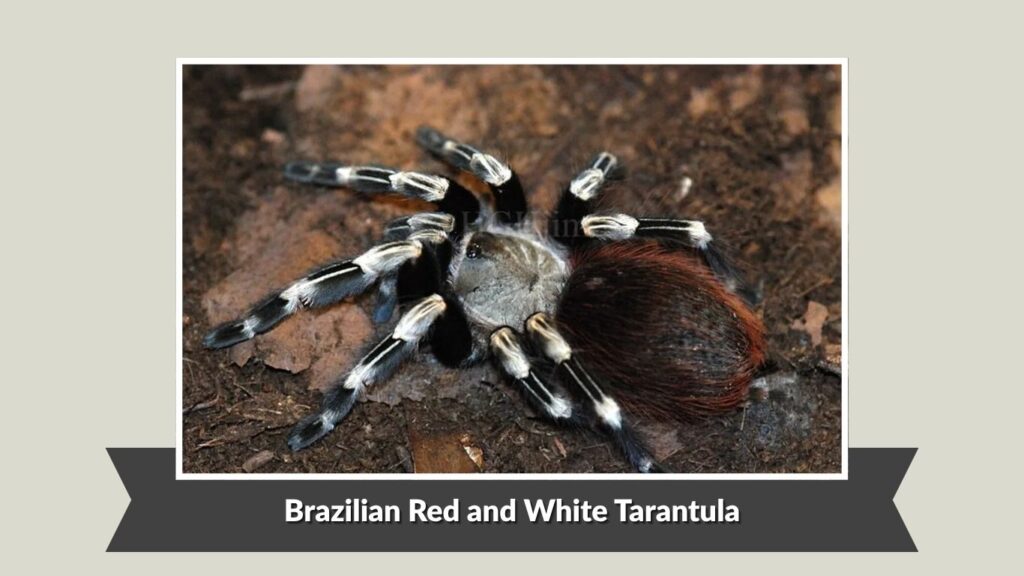
The Brazilian red and white tarantula is a large terrestrial species distinguished by its contrasting leg bands and reddish abdominal hairs. Native to Brazil, it is an active feeder with a strong defensive response. Its size, speed, and irritating hairs make it unsuitable for routine handling.
Identification
- Adult leg span of approximately 6 to 7 inches
- Dark legs with broad white bands at the joints
- Reddish or orange hairs covering the abdomen
- Pale markings radiating across the carapace
- Robust body with thick terrestrial legs
- Females are typically heavier-bodied than mature males
Habitat and Distribution
Brazilian red and white tarantulas inhabit grasslands, forest edges, and scrubby areas of Brazil. They usually occupy burrows or sheltered spaces beneath logs, rocks, roots, and dense vegetation.
The spider may dig its own retreat or enlarge a naturally occurring cavity. It commonly remains close to this shelter and emerges at night to wait for passing prey.
Behavior and Defense
This species can be nervous and defensive. When disturbed, it often kicks clouds of irritating hairs from its abdomen. These hairs can cause intense itching and are particularly dangerous if they enter the eyes or respiratory system.
If cornered, the tarantula may raise its front legs or bite. Its quick feeding response can also be mistaken for aggression, so direct contact should be avoided.
Diet and Life Cycle
The Brazilian red and white tarantula eats crickets, cockroaches, beetles, grasshoppers, and other invertebrates. Large individuals may occasionally capture small vertebrates.
Females may live for 15 years or longer, while males generally have much shorter adult lives. Young tarantulas grow relatively quickly when suitable food and environmental conditions are available.
19. Arizona Blonde Tarantula
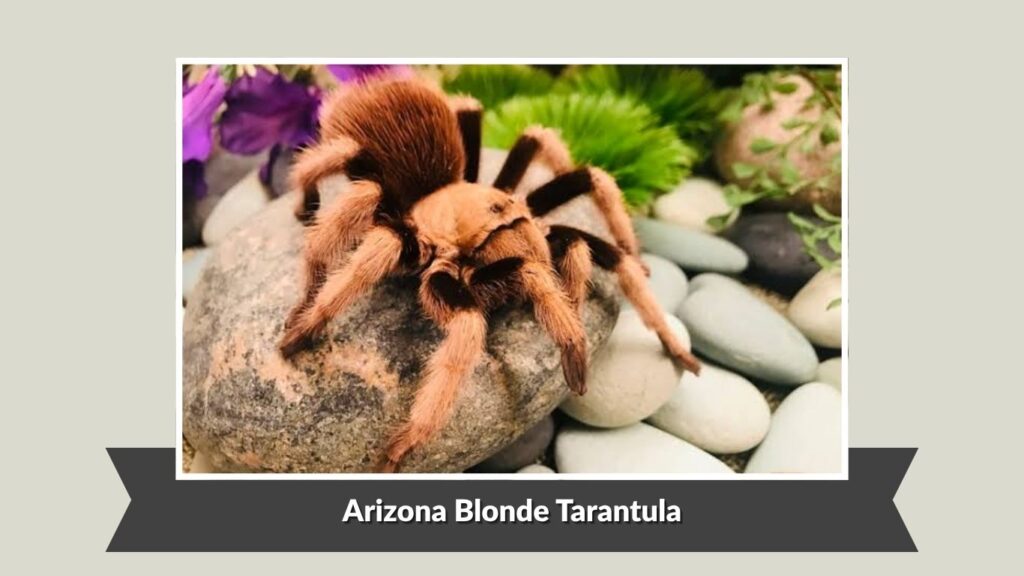
The Arizona blonde tarantula is a slow-growing desert species known for its pale carapace and generally calm behavior. It is commonly encountered in the southwestern United States, particularly after summer rains. Females spend most of their lives close to their burrows, while mature males wander in search of mates.
Identification
- Adult leg span of approximately 4½ to 5½ inches
- Pale tan, sandy, or blonde carapace
- Dark-brown legs and abdomen
- Thick body covered with fine hairs
- Females usually appear stockier and more contrastingly colored
- Mature males are darker, slimmer, and longer-legged
Habitat and Distribution
Arizona blonde tarantulas inhabit the Sonoran Desert and surrounding dry regions of Arizona, New Mexico, California, and northern Mexico. They construct deep burrows in open desert, scrubland, and grassland environments.
The burrow protects them from daytime heat, cold nights, and low humidity. Its entrance may be surrounded by silk, which allows the spider to detect approaching prey.
Behavior and Defense
This species is often calm and slow-moving, but individual behavior varies. When threatened, it typically retreats or kicks irritating abdominal hairs. It may display its fangs or bite if continuously provoked.
During the summer mating season, mature males may cross roads, yards, and trails after rain. These wandering spiders are searching for females and usually pose little threat when left undisturbed.
Diet and Life Cycle
Arizona blonde tarantulas feed on crickets, beetles, grasshoppers, cockroaches, and other desert invertebrates. They ambush prey near the entrances of their burrows.
Females can live for 20 to 30 years, while males usually survive for only a short time after reaching maturity. Their growth is slow, and several years may be required to become adults.
20. Singapore Blue Tarantula
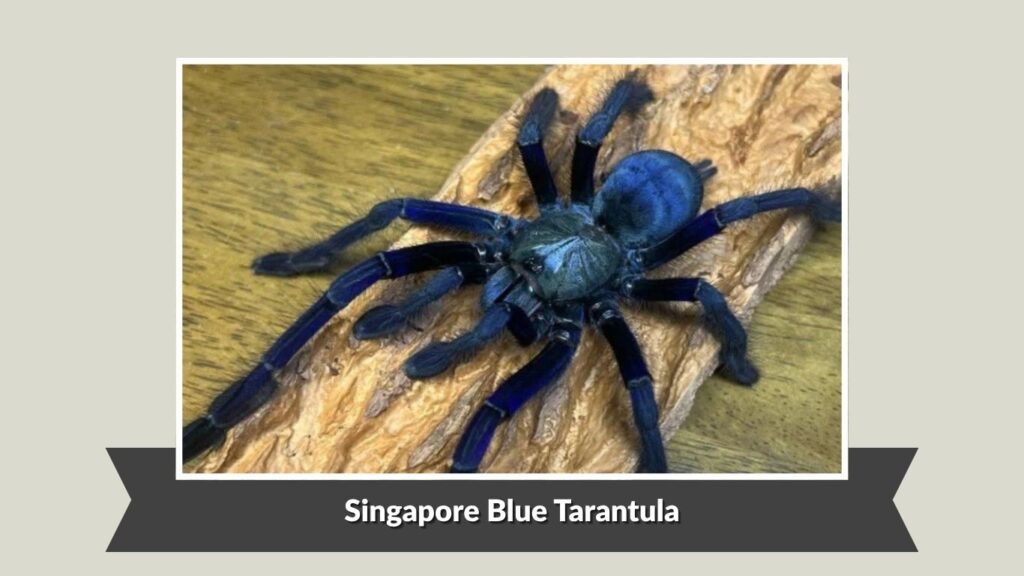
The Singapore blue tarantula is a large arboreal species recognized for its intense blue coloration and impressive size. It inhabits tropical forests in Singapore and Peninsular Malaysia. This spider is fast, defensive, and equipped with potent venom, making it suitable only for observation by experienced keepers.
Identification
- Adult leg span of approximately 7 to 9 inches
- Deep blue or violet-blue legs
- Dark abdomen with lighter chevron markings
- Long, powerful legs adapted for climbing
- Females display stronger blue coloration than mature males
- Mature males may appear brown, greenish, or less vividly colored
Habitat and Distribution
Singapore blue tarantulas occur in the humid rainforests of Singapore and Peninsular Malaysia. They occupy hollow trees, holes in trunks, and protected spaces beneath loose bark. Younger spiders may construct retreats closer to the forest floor.
They line their shelters with silk and become active after dark. Warm temperatures, high humidity, and abundant vegetation support the insects on which they depend.
Behavior and Defense
This species is extremely fast and usually retreats when an escape route is available. When cornered, it may raise its front legs, expose its fangs, and strike. It does not possess defensive abdominal hairs.
Its bite may cause intense pain, muscle cramping, and other medically significant symptoms. Handling should never be attempted because it creates serious risks for both the spider and the person.
Diet and Life Cycle
Singapore blue tarantulas prey on cockroaches, crickets, moths, beetles, and other forest invertebrates. They wait near their silken retreats and rush forward when they detect prey vibrations.
Females may live for 12 to 15 years or longer, whereas males have much shorter lifespans. Spiderlings grow relatively quickly and become increasingly arboreal as they mature.
FAQs
What is the largest type of tarantula?
The Goliath birdeater is considered one of the world’s largest tarantulas by body mass. Its leg span can approach 11 inches, although exact adult size varies.
Are tarantula spiders dangerous to humans?
Most tarantulas are not life-threatening to healthy humans, but they can bite and cause pain or allergic reactions. Some African and Asian species have stronger venom that may produce severe symptoms requiring medical attention.
Which tarantula is best for beginners?
Calmer terrestrial species such as the Chilean rose, Brazilian black, curly-hair, and Arizona blonde tarantulas are commonly considered more manageable. However, they should still be treated carefully and not handled unnecessarily.
Do all tarantulas kick irritating hairs?
No. Tarantulas from the Americas commonly have defensive abdominal hairs, while most African and Asian species lack them. Those without irritating hairs may rely more heavily on speed, threat displays, and biting.
How long do tarantulas live?
Female tarantulas may live for 10 to 30 years, depending on the species. Males generally have much shorter lifespans and often survive for only a few years after reaching maturity.
