
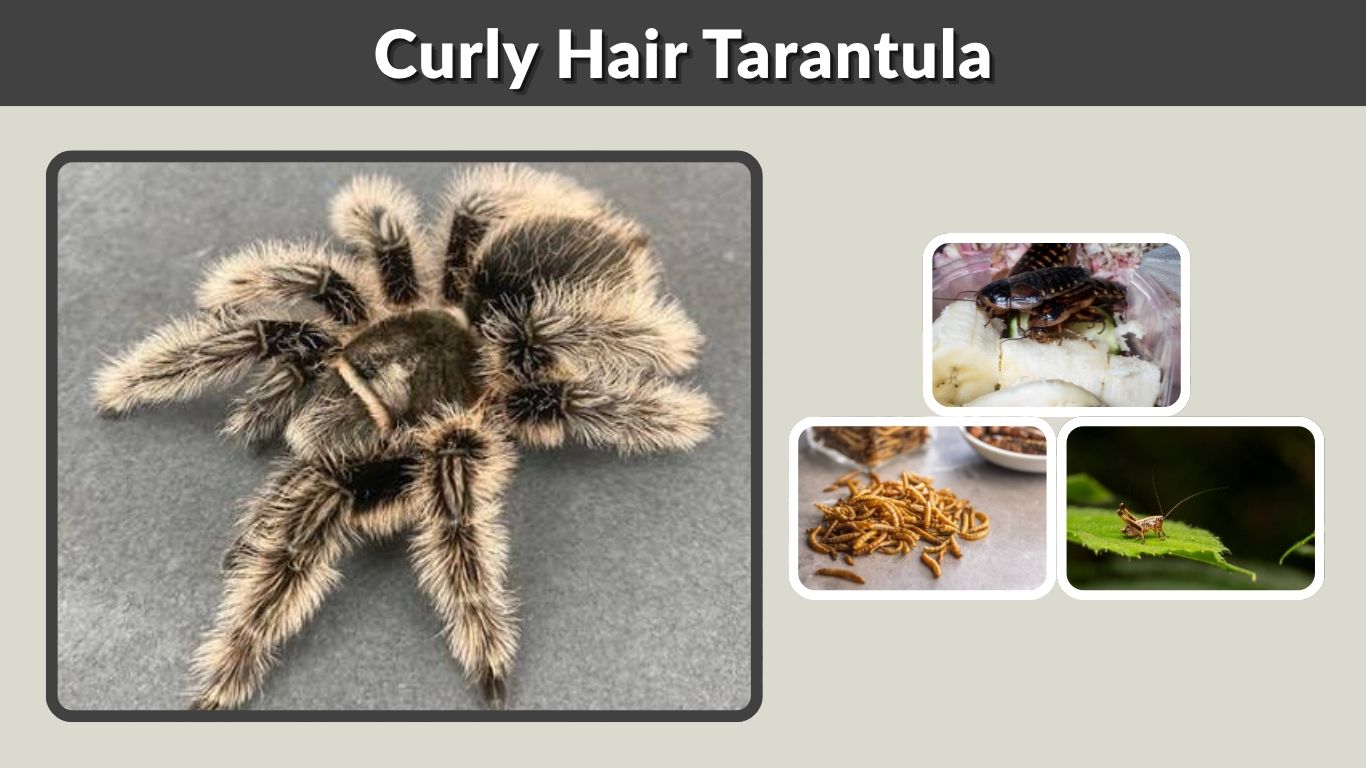
The curly hair tarantula is a popular terrestrial tarantula known for its fuzzy, curled hairs, calm temperament, and relatively simple care requirements. Scientifically called Tliltocatl albopilosus, this Central American spider is often recommended to beginner tarantula keepers. Adults are sturdy, slow-moving, and generally less defensive than many other species. Understanding its enclosure, temperature, humidity, diet, lifespan, molting behavior, and handling risks can help you provide a safe environment for this fascinating arachnid.
What Is a Curly Hair Tarantula?
The curly hair tarantula is a ground-dwelling tarantula native to Central America. It gets its common name from the long, slightly curled hairs covering its body and legs. The species was formerly classified as Brachypelma albopilosum but is now recognized scientifically as Tliltocatl albopilosus. It spends much of its life close to the ground or inside shallow burrows.
Identification
A curly hair tarantula can usually be recognized by several distinctive characteristics:
- Scientific name: Tliltocatl albopilosus
- Brown to dark brown body
- Thick, woolly-looking curled hairs
- Large, powerful legs
- Terrestrial rather than arboreal lifestyle
- Adult leg span commonly around 5–6 inches
- Heavy-bodied appearance
- Eight small eyes grouped near the front of the carapace
The combination of its shaggy coat and stocky build gives this species a particularly recognizable appearance.
Honduran and Nicaraguan Curly Hair Tarantulas
You may encounter names such as Honduran curly hair tarantula and Nicaraguan curly hair tarantula in the pet trade. Many animals sold under these regional names are closely associated with Tliltocatl albopilosus, although captive breeding and historical trade names have sometimes caused confusion.
Regardless of the label, buyers should obtain tarantulas from reputable captive breeders whenever possible.
Natural Habitat and Origin
Curly hair tarantulas originate from Central America, particularly areas with warm climates and seasonal moisture. They are terrestrial spiders that use burrows, natural cavities, roots, and other sheltered locations.
They usually remain hidden during much of the day and become more active when conditions are quiet, especially during evening or nighttime hours.
Curly Hair Tarantula Size and Growth
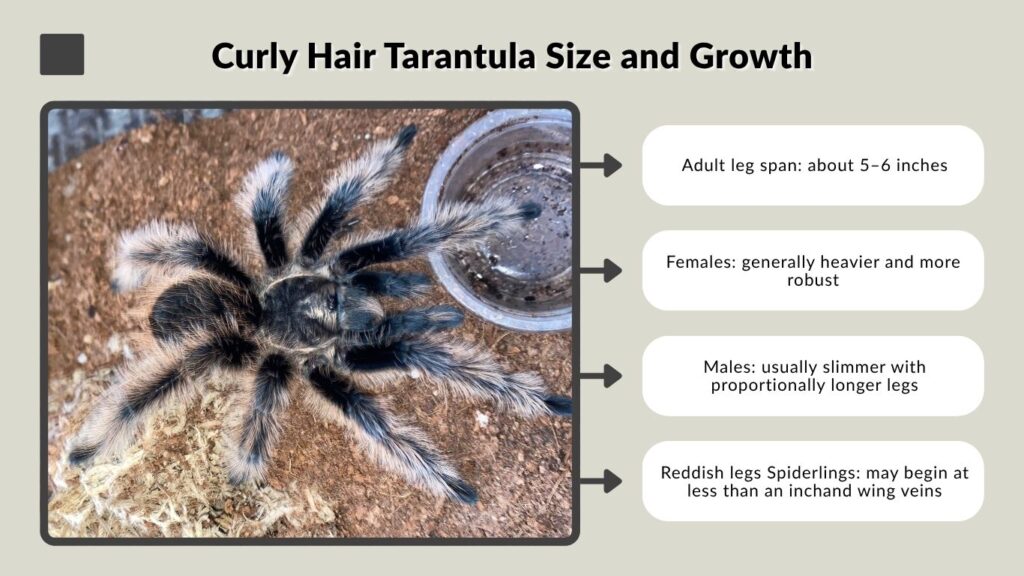
Curly hair tarantulas grow gradually through repeated molts. Spiderlings begin extremely small, while mature adults become substantial, heavy-bodied spiders. Growth speed depends on temperature, food availability, sex, genetics, and individual conditions. Females usually grow larger-bodied and live considerably longer than males, making sex an important factor when discussing adult size and lifespan.
How Big Does a Curly Hair Tarantula Get?
A full-grown curly hair tarantula commonly reaches approximately:
- Adult leg span: about 5–6 inches
- Females: generally heavier and more robust
- Males: usually slimmer with proportionally longer legs
- Spiderlings: may begin at less than an inch
- Juveniles: gradually increase in size after each molt
Individual measurements vary, so these figures should be treated as general guidelines rather than exact limits.
Curly Hair Tarantula Growth Rate
Curly hair tarantulas are not among the fastest-growing tarantulas. Young spiders may molt more frequently because they are growing rapidly, while adults molt much less often.
Adequate feeding and appropriate temperatures support normal development, but deliberately overfeeding or maintaining unusually high temperatures simply to accelerate growth is unnecessary.
Juvenile and Full-Grown Appearance
Juvenile curly hairs may look less impressive than adults because their characteristic shaggy hairs become more noticeable as they mature. Full-grown specimens develop thick legs, a broad body, and long golden-brown or bronze-tinted hairs.
Color and hair density may also appear especially vivid following a successful molt.
Curly Hair Tarantula Enclosure and Tank Setup
A secure terrestrial enclosure is one of the most important parts of curly hair tarantula care. These spiders need more floor space than climbing height because falls can seriously injure their abdomen. The enclosure should provide adequate ventilation, deep substrate, drinking water, and a secure hiding place while avoiding excessive moisture or unnecessary decorations.
Enclosure Essentials
A practical curly hair tarantula setup should include:
- Secure, escape-resistant enclosure
- More horizontal space than vertical height
- Several inches of suitable substrate
- Cork bark or another secure hide
- Shallow water dish
- Good cross-ventilation
- No sharp decorations
- Limited climbing height for adults
An enclosure roughly two to three times the spider’s leg span in horizontal dimensions usually gives an adult sufficient room without creating an excessively large environment.
Best Substrate
Coconut fiber, pesticide-free topsoil, peat-based mixtures, or specially prepared tarantula substrates can work well.
Curly hair tarantulas often dig, so the substrate should be deep enough for burrowing and compact enough to hold its shape. Avoid gravel, wood chips, scented products, fertilizers, and chemically treated soil.
Temperature and Humidity
Normal comfortable indoor temperatures are generally suitable for this species. Many keepers maintain them around 70–80°F (21–27°C).
Moderate humidity is preferable to constantly wet conditions. Provide fresh water and keep the lower layers of substrate from becoming excessively dry, but avoid soaking the enclosure. Good ventilation is especially important because stagnant, overly damp conditions can encourage mold and other problems.
Curly Hair Tarantula Diet and Feeding
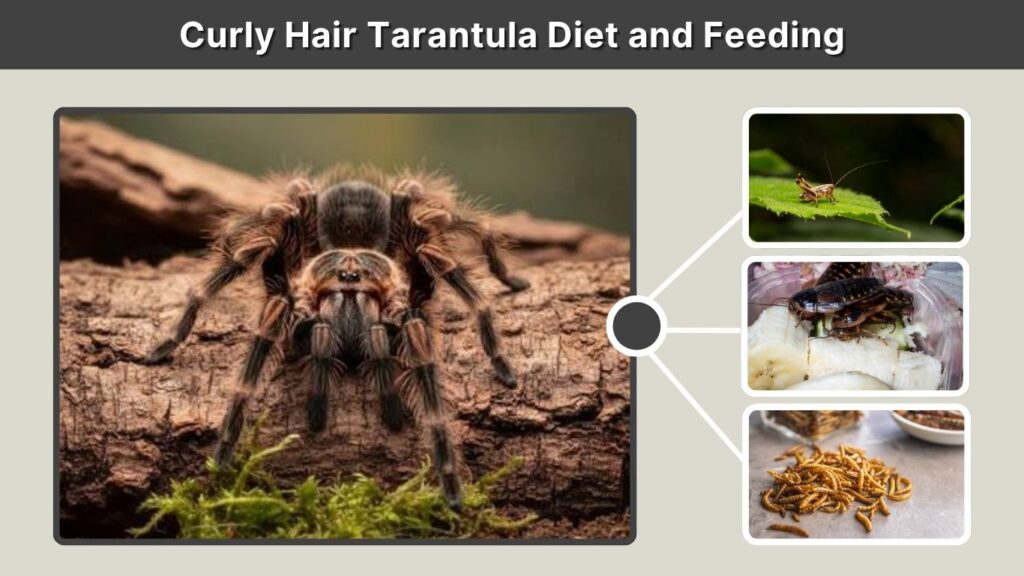
Curly hair tarantulas are opportunistic predators that mainly consume insects and other small invertebrates. Captive feeding is relatively straightforward because healthy individuals usually accept common feeder insects. Feeding frequency varies with the spider’s age, body condition, temperature, and molt cycle, so owners should observe the tarantula rather than following an excessively rigid schedule.
What Do Curly Hair Tarantulas Eat?
Common foods include:
- Crickets
- Dubia roaches
- Mealworms
- Superworms
- Appropriate-sized insect larvae
- Other captive-bred feeder insects
Prey should be appropriately sized for the tarantula. Spiderlings require much smaller food than adults.
Feeding Frequency
Young tarantulas can generally be offered food more frequently because they are actively growing. Adult spiders often need fewer meals.
A healthy adult may eat approximately once every week or two, although appetite can vary significantly. Remove uneaten prey, particularly when the tarantula appears to be entering premolt.
Why Is My Curly Hair Tarantula Not Eating?
Refusing food does not automatically mean a tarantula is sick. Curly hairs may stop eating for days or even weeks before molting, and mature individuals can occasionally fast much longer.
A darkening abdomen, reduced activity, webbing around a resting area, and food refusal may indicate premolt. Continue providing clean water and avoid disturbing the spider.
Molting and Common Behaviors
Molting allows a tarantula to replace its old exoskeleton and grow. Curly hair tarantulas may become inactive, refuse food, or spend more time inside their burrow before a molt. They sometimes lie on their backs during the process, which is completely normal and should not be mistaken for death.
Signs of Premolt
Common premolt signs include:
- Refusing food
- Darkening or blackening abdomen
- Reduced activity
- Increased hiding
- Creating a webbed molting mat
- Enlarged abdomen
- Spending longer periods inside a burrow
Never attempt to turn over a tarantula that is lying on its back during a molt.
Bald Spot on the Abdomen
A curly hair tarantula may develop a bald patch on its abdomen after kicking off urticating hairs. These irritating hairs are one of its primary defense mechanisms.
A bald spot is not necessarily dangerous. During premolt, the exposed area often darkens as the new exoskeleton develops underneath.
Burrowing and Webbing
Curly hairs frequently dig or modify their enclosure. Some individuals create substantial burrows, while others simply excavate beneath their hide.
They may also place webbing over portions of the substrate. These behaviors are normal and should generally be allowed rather than constantly rearranging the enclosure.
Curly Hair Tarantula Lifespan
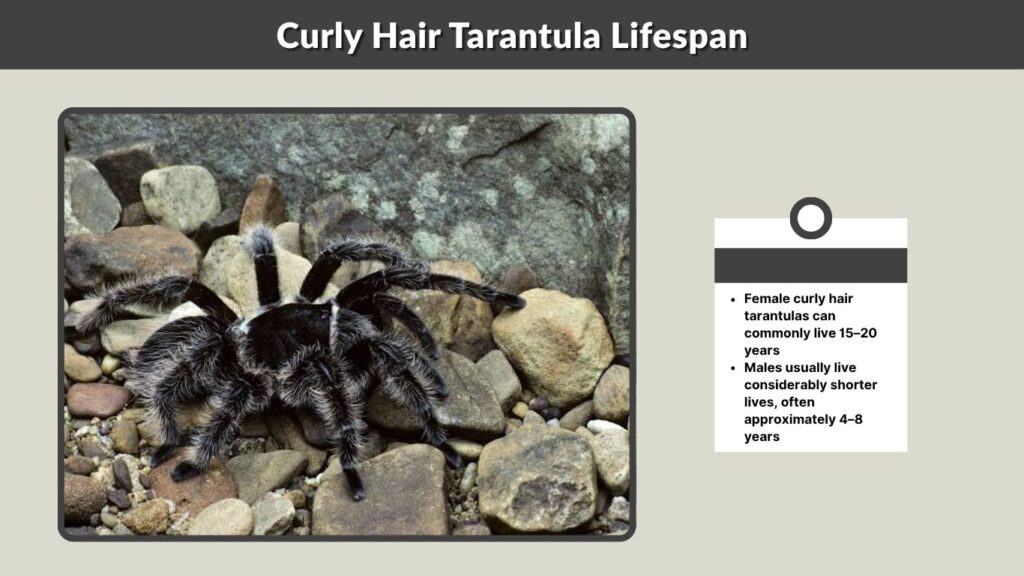
One reason curly hair tarantulas are considered a major commitment is their potentially long lifespan. Females can live for many years under appropriate captive conditions, while males have much shorter adult lives. Sex therefore makes a significant difference when estimating how long an individual tarantula might remain in your care.
Female Lifespan
Female curly hair tarantulas can commonly live 15–20 years or potentially longer under favorable conditions.
Their slow metabolism and relatively slow development contribute to this impressive lifespan. Anyone purchasing a young female should therefore consider the animal a long-term pet rather than a short-term commitment.
Male Lifespan
Males usually live considerably shorter lives, often approximately 4–8 years, depending on growth rate and environmental conditions.
Once mature, males commonly become more active and may wander around their enclosure searching instinctively for females. Mature males generally survive only a limited period after reaching adulthood.
Male vs Female Curly Hair Tarantula
Adult females tend to have heavier bodies, while mature males are usually slimmer and longer-legged. Mature males can develop specialized reproductive structures, including emboli on their pedipalps and tibial hooks in species where these are present.
Accurate sexing is often easiest by examining a successfully shed molt rather than relying only on external appearance.
Are Curly Hair Tarantulas Dangerous?
Curly hair tarantulas are generally considered relatively calm, but they are still wild animals equipped with fangs, venom, and defensive hairs. They should be treated respectfully rather than as pets designed for frequent physical interaction. Most defensive encounters can be avoided by providing an appropriate enclosure and minimizing unnecessary disturbance.
Curly Hair Tarantula Bite
A curly hair tarantula can bite if threatened. Its venom is generally considered relatively mild for humans, but the mechanical injury caused by its large fangs can still be painful.
Individual reactions vary, and any bite causing significant swelling, breathing problems, severe pain, or other concerning symptoms warrants medical evaluation.
Urticating Hairs
Curly hairs can defend themselves by kicking tiny irritating hairs from their abdomen. These hairs may irritate the skin, nose, and especially the eyes.
Wash exposed skin and avoid rubbing your face after working inside the enclosure. Eye exposure requires particular attention because embedded hairs can cause persistent irritation.
Can You Hold a Curly Hair Tarantula?
Although curly hair tarantulas have a reputation for being docile, routine handling is not recommended. The greatest danger is often to the tarantula rather than the keeper.
A startled spider can fall from your hands, and even a relatively short fall can rupture its delicate abdomen. Using a catch cup for transfers is generally safer.
FAQs
1. Are curly hair tarantulas good for beginners?
Yes. Their generally calm temperament, hardy nature, manageable size, and relatively uncomplicated enclosure requirements make them a popular beginner species. However, owners still need to understand proper feeding, molting, ventilation, and safe transfer techniques.
2. How big does a curly hair tarantula get?
Most adults reach approximately 5–6 inches in leg span. Females usually have heavier bodies, while mature males commonly appear slimmer with relatively long legs.
3. How long does a curly hair tarantula live?
Females may live around 15–20 years or more under good conditions. Males have substantially shorter lifespans and often live approximately 4–8 years.
4. Is a curly hair tarantula poisonous?
Curly hair tarantulas are venomous rather than poisonous because they inject venom through their fangs. Their venom is generally considered relatively mild to humans, although bites should still be avoided.
5. What humidity does a curly hair tarantula need?
Curly hair tarantulas generally do well with moderate humidity rather than constantly wet conditions. A water dish, appropriate substrate moisture, and good ventilation are more important than trying to maintain an artificially high humidity level.
