
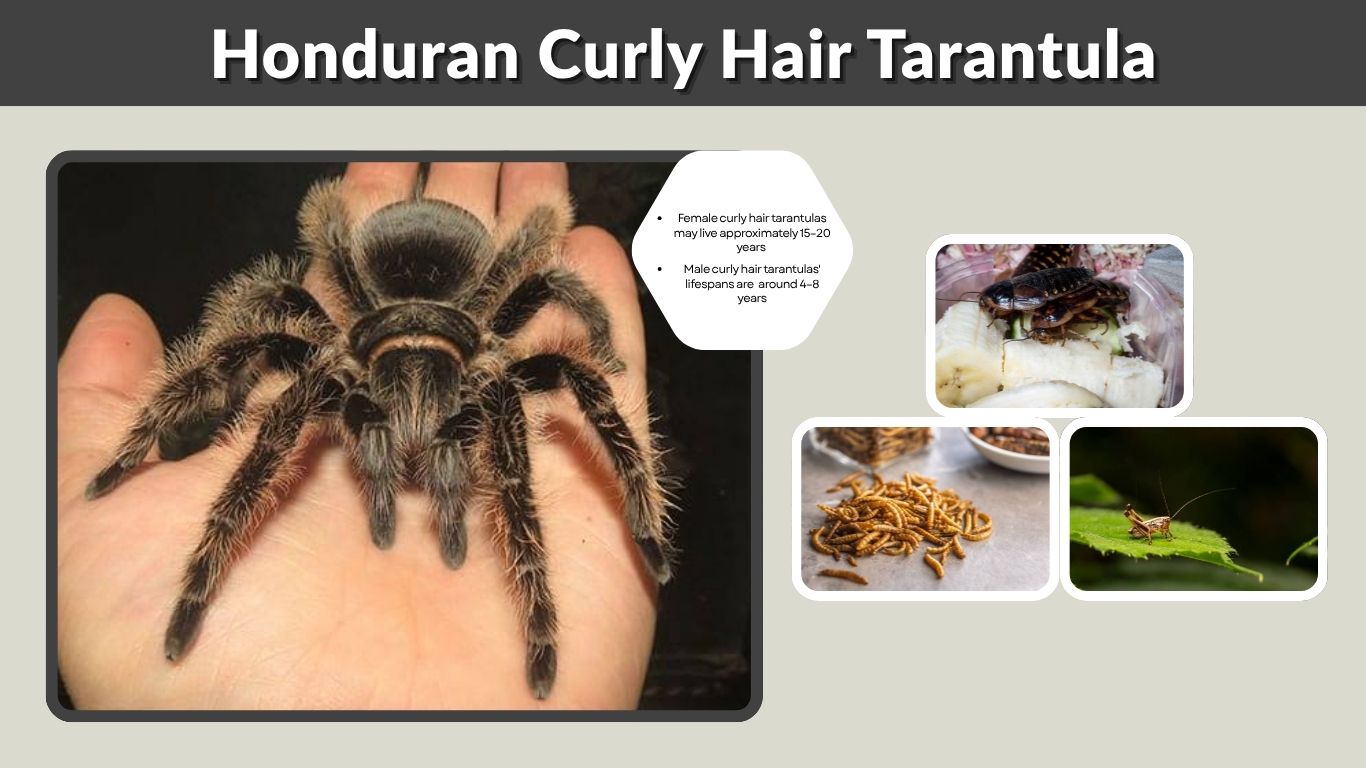
The Honduran curly hair tarantula is a popular terrestrial tarantula known for its thick, curly hairs, slow movements, and generally calm temperament. Often associated with Tliltocatl albopilosus, this Central American species is commonly kept by both beginner and experienced tarantula enthusiasts. With a secure enclosure, suitable substrate, moderate humidity, proper temperatures, and appropriately sized feeder insects, it can be relatively easy to maintain. Females may also live for many years, making this tarantula a long-term exotic pet.
What Is a Honduran Curly Hair Tarantula?
The Honduran curly hair tarantula is a heavy-bodied, ground-dwelling tarantula from Central America. It is appreciated for its woolly appearance and relatively relaxed behavior. The name “Honduran curly hair tarantula” is frequently used in the pet trade, although curly hair tarantulas have historically been sold under several regional names.
Scientific Name and Appearance
The curly hair tarantula is currently classified as Tliltocatl albopilosus. Older sources may refer to it as Brachypelma albopilosum.
Typical features include:
- Dark brown to nearly black body
- Long golden-brown or bronze curly hairs
- Thick, powerful legs
- Heavy abdomen
- Terrestrial body shape
- Dense hairs covering most of the body
- Adult leg span commonly around 5–6 inches
Its distinctive curled hairs make it one of the easiest pet tarantulas to recognize.
Honduran vs Nicaraguan Curly Hair Tarantulas
“Honduran” and “Nicaraguan” curly hair tarantulas have both appeared in the exotic pet trade. Historical breeding and labeling have sometimes made regional distinctions confusing.
For most keepers, the important consideration is obtaining a healthy, captive-bred animal from a knowledgeable breeder rather than choosing solely according to a geographic trade name.
Honduran Curly Hair Tarantula Care
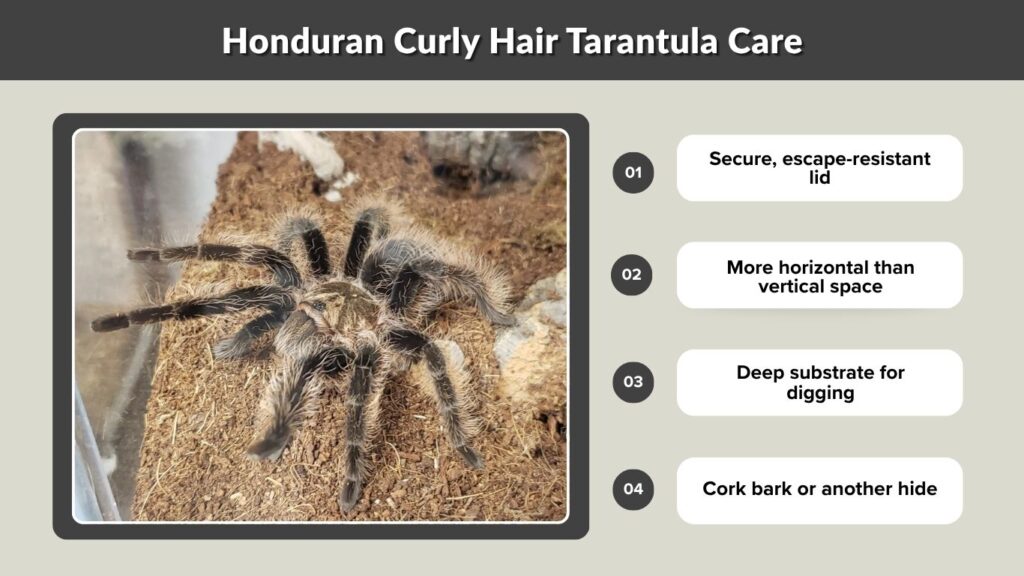
Honduran curly hair tarantula care is relatively straightforward compared with many more demanding exotic species. These tarantulas do best in a terrestrial enclosure with adequate floor space, deep substrate, a secure hiding place, fresh water, and good ventilation. Excessive moisture, unnecessary handling, and tall enclosures should be avoided.
Enclosure Setup
A suitable enclosure should include:
- Secure, escape-resistant lid
- More horizontal than vertical space
- Deep substrate for digging
- Cork bark or another hide
- Shallow water dish
- Adequate cross-ventilation
- No sharp decorations
- Limited climbing height
Adult tarantulas do not need enormous tanks. An enclosure approximately two to three times the spider’s leg span in horizontal dimensions generally provides adequate room.
Best Substrate
Curly hair tarantulas often dig, so several inches of substrate should be provided.
Suitable options include coconut fiber, pesticide-free topsoil, peat-based mixes, or commercial tarantula substrate. A slightly compacted mixture can make burrows more stable.
Avoid gravel, cedar chips, scented bedding, fertilizers, and chemically treated soil.
Temperature and Humidity
A temperature of roughly 70–80°F (21–27°C) is suitable for most Honduran curly hair tarantulas.
They do not need tropical rainforest conditions. Moderate humidity, good ventilation, and access to clean drinking water are more important than constantly wet substrate.
Keeping the enclosure excessively damp can encourage mold and other problems. Allow part of the substrate surface to remain relatively dry.
Honduran Curly Hair Tarantula Size and Growth
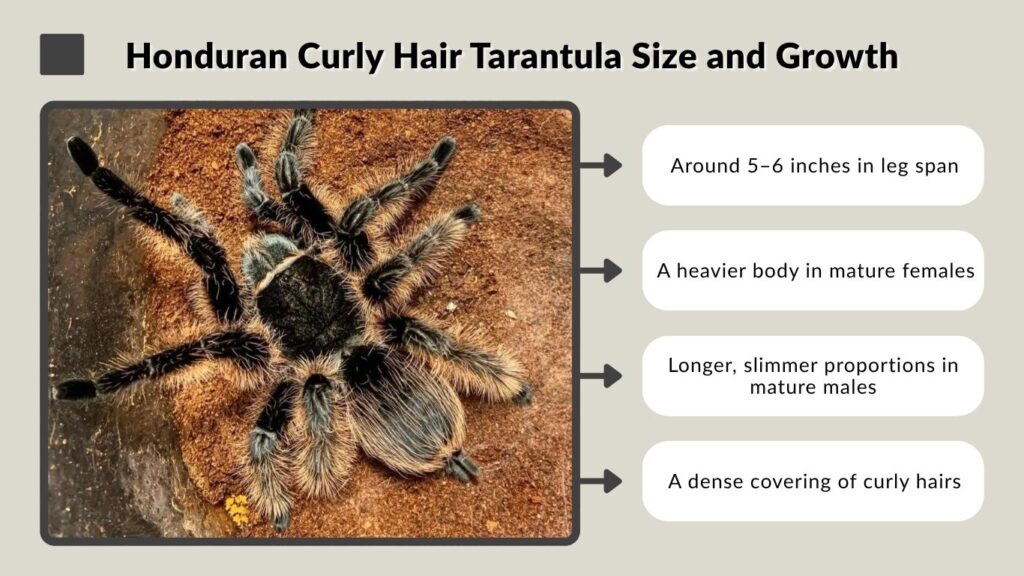
Curly hair tarantulas grow gradually through repeated molts. Spiderlings may begin extremely small and become progressively larger over several years. Growth speed varies according to feeding, temperature, genetics, sex, and general husbandry. Females usually become heavier-bodied and have much longer lifespans than mature males.
Full-Grown Honduran Curly Hair Tarantula Size
A mature Honduran curly hair tarantula typically reaches:
- Around 5–6 inches in leg span
- A heavier body in mature females
- Longer, slimmer proportions in mature males
- A dense covering of curly hairs
- A noticeably robust terrestrial build
Individual specimens can be somewhat smaller or larger.
Growth Rate
The species has a moderate to relatively slow growth rate. Spiderlings and juveniles molt more frequently because they are actively growing.
Adults may go considerably longer between molts. Increasing food excessively to speed growth is unnecessary and may result in an overly large abdomen.
Baby and Spiderling Care
Baby Honduran curly hair tarantulas require smaller enclosures and appropriately sized food.
Spiderling care should include:
- Small ventilated container
- Moisture-retentive but not soaked substrate
- Tiny water source when practical
- Small feeder insects or pre-killed prey
- Secure hiding area
- Careful monitoring during molts
As the spider grows, it can gradually be moved into larger enclosures.
Honduran Curly Hair Tarantula Diet
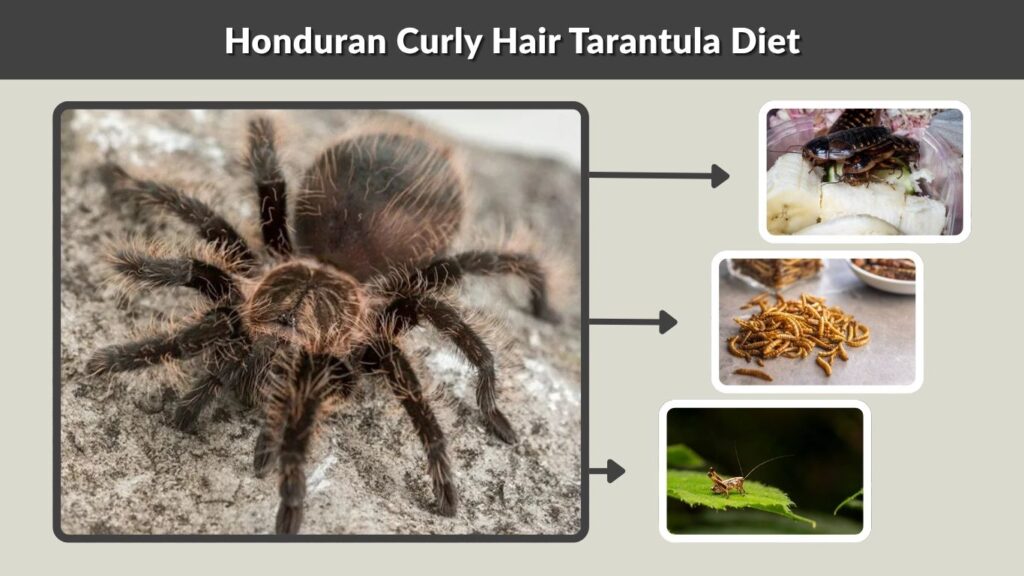
Honduran curly hair tarantulas are carnivorous predators that primarily feed on insects and other small invertebrates. Captive individuals generally have good feeding responses when they are not approaching a molt. The size and frequency of meals should depend on the tarantula’s age, body condition, and activity.
What Do They Eat?
Suitable foods include:
- Crickets
- Dubia roaches
- Mealworms
- Superworms
- Other captive-bred feeder insects
The prey should be appropriately sized for the spider. Large insects that could injure a small spider should be avoided.
How Often Should You Feed One?
Spiderlings can usually be offered food several times per week depending on prey size and body condition.
Juveniles may eat once or twice weekly, while adults frequently do well with feeding approximately every 7–14 days.
Feeding schedules do not have to be exact. A tarantula with an adequately sized abdomen may safely refuse meals for extended periods.
Why Is My Tarantula Not Eating?
Food refusal is common before molting and does not necessarily indicate illness.
Possible reasons include premolt, recent feeding, low activity, environmental changes, or maturity. Remove uneaten prey if the tarantula refuses it, particularly if signs of an approaching molt are visible.
Molting and Premolt Signs
Molting is a normal process in which a tarantula sheds its old exoskeleton. During premolt, the spider may become inactive, stop eating, remain inside its hide, or create additional webbing. A tarantula lying on its back may simply be molting and should never be disturbed.
Signs a Honduran Curly Hair Tarantula Is Near Molt
Common signs include:
- Refusal of food
- Darkened abdomen
- Enlarged abdomen
- Reduced movement
- Increased hiding
- Webbing around a resting area
- Darkening of a bald spot
- Lying on its back during the molt
Never feed live prey during an active molt.
After Molting
A freshly molted tarantula is soft and vulnerable. Its new exoskeleton and fangs need time to harden.
Avoid feeding immediately after the molt. Juveniles may recover more quickly, whereas large adults can require a week or longer before feeding safely.
Fresh water should always remain available.
Honduran Curly Hair Tarantula Lifespan
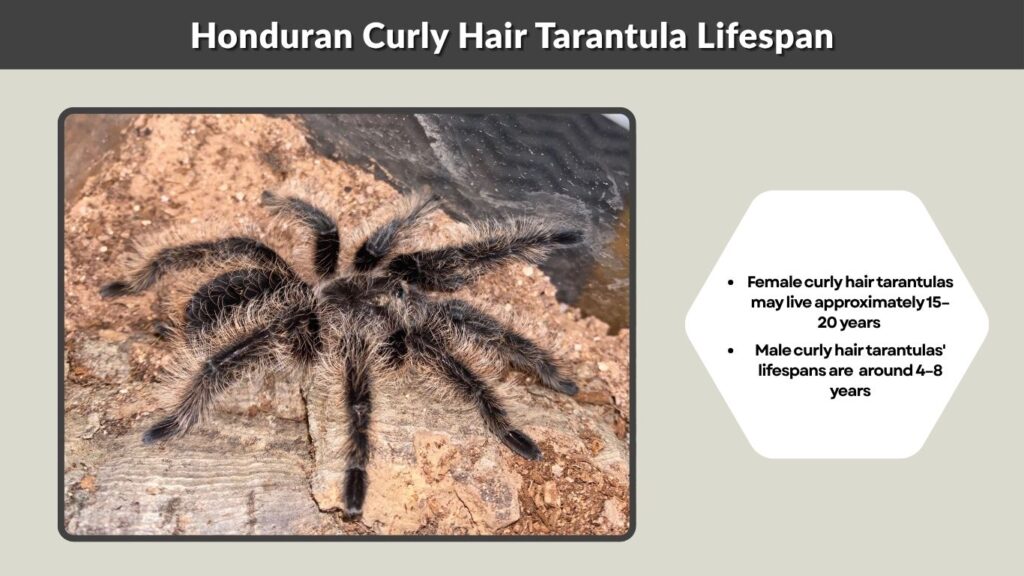
The Honduran curly hair tarantula can be a surprisingly long-term pet, especially when female. Lifespan varies dramatically between sexes because males usually mature earlier and survive for a much shorter period after reaching sexual maturity.
Female Lifespan
Female curly hair tarantulas may live approximately 15–20 years or longer when kept under favorable conditions.
Because of this longevity, buying a young female represents a significant long-term commitment.
Male Lifespan
Male curly hair tarantulas generally have much shorter lifespans, commonly around 4–8 years, although individual variation occurs.
Once sexually mature, males often begin wandering around their enclosure more frequently as they instinctively search for a mate.
Male or Female?
Mature females typically look heavier and stockier. Mature males usually become slimmer with proportionally longer legs.
The most reliable method of determining sex is often examining the inside of a properly preserved molt. Mature males may also develop recognizable reproductive structures.
Temperament, Handling, and Bite Risk
The Honduran curly hair tarantula is frequently described as calm and beginner-friendly. However, individual behavior varies, and even a docile tarantula can defend itself when frightened. These spiders should therefore be observed rather than treated as animals requiring regular physical handling.
Temperament
Curly hair tarantulas are usually slow-moving and relatively tolerant of normal enclosure maintenance.
When threatened, they may retreat, display a defensive posture, kick urticating hairs, or occasionally bite.
Can You Handle a Honduran Curly Hair Tarantula?
Handling is generally unnecessary and carries risks.
The spider can fall from your hand and suffer a potentially fatal abdominal injury. A catch cup is safer for relocating the tarantula during enclosure maintenance.
Handling can also expose people to irritating hair.
Are Honduran Curly Hair Tarantulas Poisonous?
They are venomous rather than poisonous. Their venom is delivered through their fangs.
A bite may cause pain, redness, swelling, or other localized symptoms. Serious reactions are uncommon but possible, particularly in sensitive individuals.
Their urticating hairs may also irritate the skin and eyes, making gentle and cautious enclosure maintenance important.
FAQs
1. How big does a Honduran curly hair tarantula get?
A full-grown Honduran curly hair tarantula commonly reaches around 5–6 inches across the legs. Females generally develop heavier bodies than males.
2. How long does a Honduran curly hair tarantula live?
Females can potentially live around 15–20 years or more. Males generally live considerably shorter lives, often approximately 4–8 years.
3. What humidity does a Honduran curly hair tarantula need?
Moderate humidity is generally sufficient. Provide clean drinking water, slightly moisture-retentive substrate, and strong ventilation rather than keeping the entire enclosure constantly wet.
4. Is a Honduran curly hair tarantula good for beginners?
Yes. Its generally calm temperament, manageable size, hardy nature, and relatively straightforward care make it one of the more commonly recommended beginner tarantulas.
5. How often should you feed a Honduran curly hair tarantula?
Adults can usually be offered appropriately sized prey about once every 7–14 days. Younger tarantulas may eat more frequently, while animals approaching a molt may refuse food entirely.
