
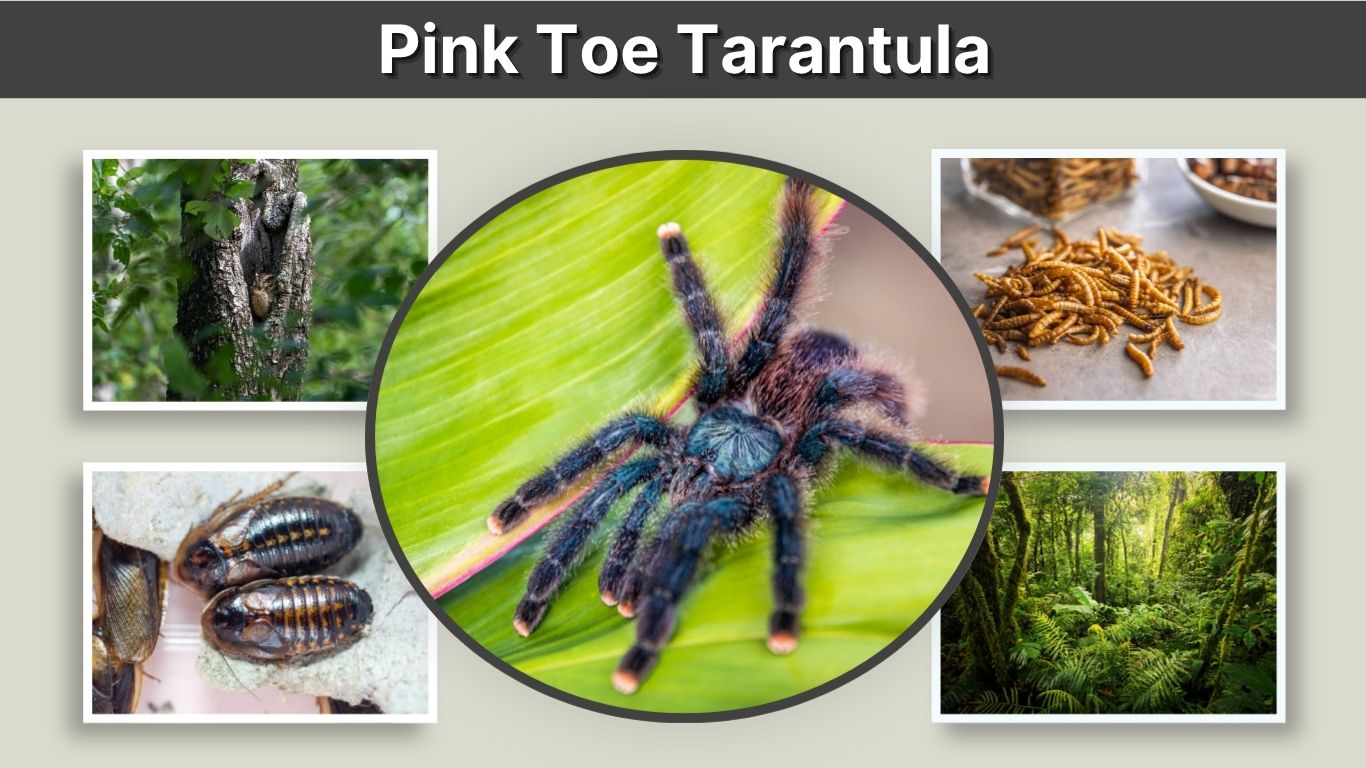
The pink toe tarantula is a popular arboreal tarantula known for its dark body, distinctive pinkish feet, and impressive climbing ability. The common pink toe, Avicularia avicularia, comes from tropical regions of South America and is often kept as an exotic pet. Unlike ground-dwelling tarantulas, pink toes spend much of their time above the ground in trees and elevated retreats. They are generally fast, agile spiders that need good ventilation, climbing space, suitable humidity, and a secure enclosure to remain healthy in captivity.
What Is a Pink Toe Tarantula?
The name pink toe tarantula is commonly associated with Avicularia avicularia, although several related arboreal tarantulas are sometimes sold under similar common names.
These New World tarantulas belong to the family Theraphosidae and are adapted to living above the ground.
Identification
A typical pink toe tarantula has:
- Dark brown to black body coloration
- Pink, orange, or reddish tips on the feet
- Long legs suited for climbing
- Dense hairs covering the body
- Relatively streamlined arboreal build
- Large downward-pointing fangs
- Noticeable spinnerets at the rear of the abdomen
Juveniles may look somewhat different from fully grown adults, with coloration becoming more distinctive as they mature.
Is Avicularia avicularia a Pink Toe Tarantula?
Yes. Avicularia avicularia is commonly called the common pink toe tarantula or South American pink toe.
It is one of the best-known arboreal tarantulas in the pet trade.
Pink Toe Tarantula Size
Pink toe tarantulas are medium-sized compared with giant species such as Goliath birdeaters.
A full-grown pink toe tarantula commonly reaches a leg span of approximately 4 to 5 inches, although individual size can vary.
Male vs. Female Pink Toe Tarantula
Females typically develop heavier bodies and tend to live considerably longer than males.
Adult males usually become slimmer and more long-legged after reaching sexual maturity. Mature males may also develop reproductive structures that help experienced keepers distinguish them from females.
The most reliable sexing method generally involves examining a properly preserved molt rather than judging appearance alone.
Pink Toe Tarantula Habitat
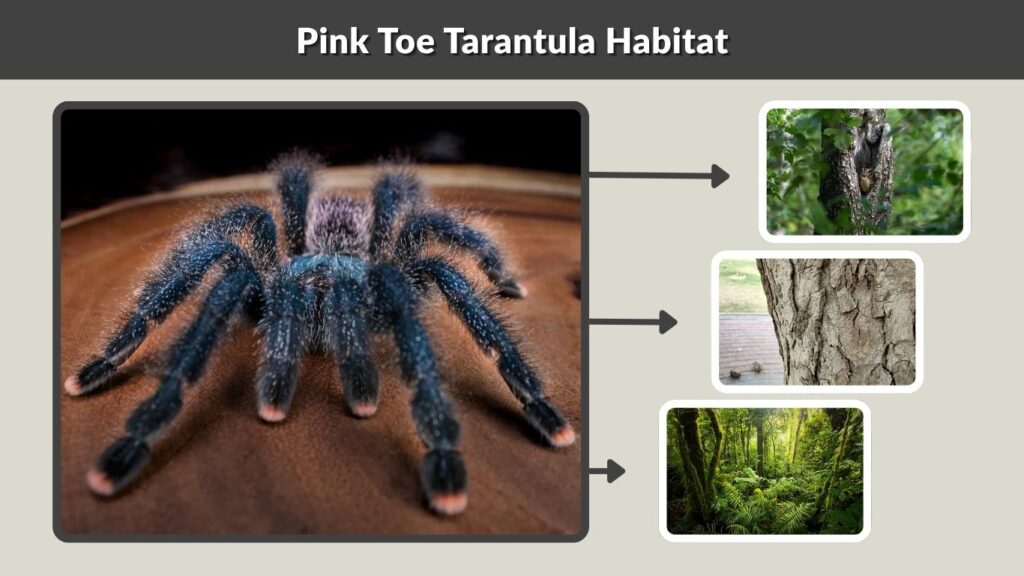
Wild pink toe tarantulas are associated with warm, humid tropical environments in northern South America.
Unlike many terrestrial tarantulas that remain inside burrows, pink toes commonly inhabit trees, vegetation, and elevated cavities.
Natural Habitat
In the wild, they may shelter inside:
- Tree hollows
- Bark crevices
- Dense vegetation
- Rolled leaves
- Elevated silk retreats
- Spaces between branches
They frequently create thick silk around their hiding areas.
Pink Toe Tarantula Enclosure
A proper enclosure is one of the most important parts of pink toe tarantula care.
Because this species is arboreal, vertical height is more important than excessive floor space.
Enclosure Size
An adult needs enough height to climb while still having sufficient width to move comfortably.
The enclosure should allow room for cork bark, branches, foliage, and webbing without creating an excessively tall fall distance.
A front-opening enclosure can be particularly convenient because pink toes often build web retreats near the upper portion of their habitat.
Ventilation
Good ventilation is extremely important.
Pink toes are often associated with humid habitats, but constantly wet, stagnant enclosures can be unhealthy.
Cross-ventilation helps prevent excessive moisture buildup while maintaining a suitable environment.
Substrate
Suitable substrates can include mixtures based on:
- Coconut fiber
- Organic soil
- Peat-style substrates
- Tarantula-safe soil mixtures
The substrate should hold some moisture without remaining saturated.
Because pink toes spend much of their time above ground, several inches of deep burrowing substrate are usually less important than they are for terrestrial species.
Pink Toe Tarantula Temperature and Humidity
Pink toe tarantulas do best in stable, moderate conditions rather than extreme heat.
Many keepers maintain them comfortably at normal warm indoor temperatures.
Temperature
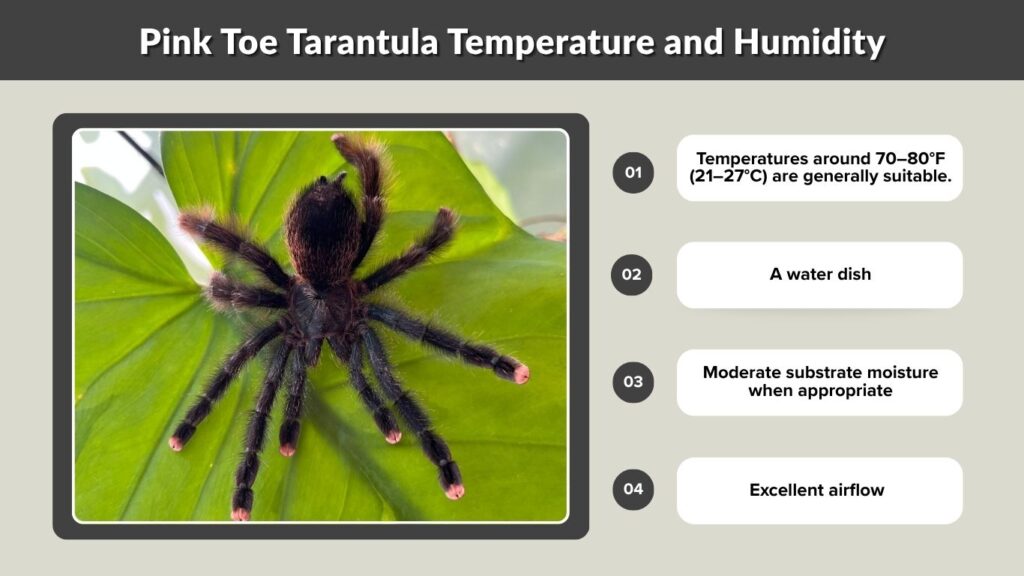
Temperatures around 70–80°F (21–27°C) are generally suitable.
Avoid placing the enclosure directly against powerful heaters or in direct sunlight, as enclosed habitats can overheat quickly.
Humidity
Instead of attempting to maintain an extremely high humidity reading constantly, focus on providing:
- A water dish
- Moderate substrate moisture when appropriate
- Excellent airflow
- No standing water
- No constantly soaked enclosure
Ventilation and access to drinking water are essential for arboreal tarantula husbandry.
What Do Pink Toe Tarantulas Eat?
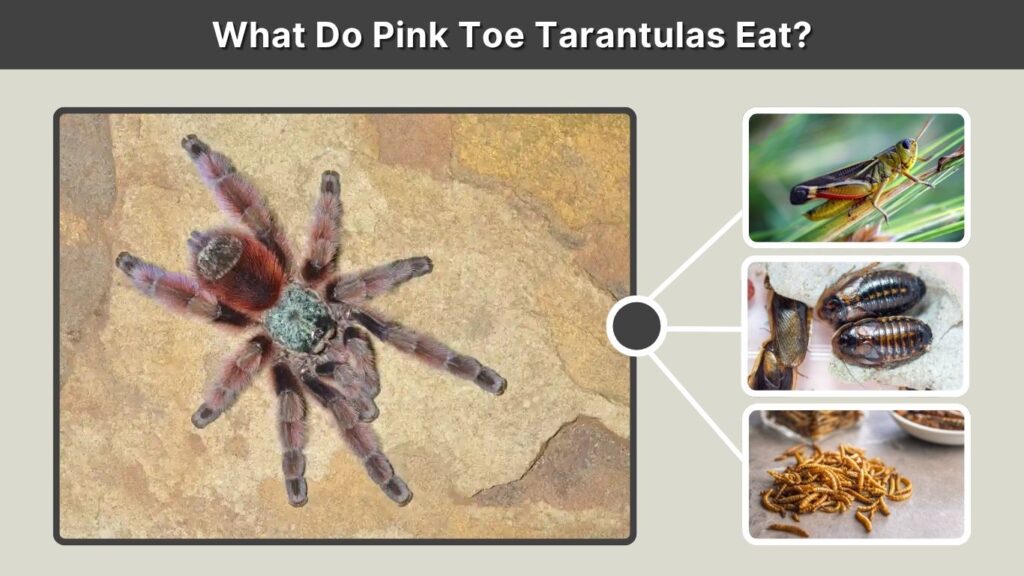
Pink toe tarantulas are carnivorous predators that primarily eat insects and other small invertebrates.
They generally ambush prey from their webbed retreats or surrounding branches.
Common Foods
Captive pink toes may eat:
- Crickets
- Dubia roaches
- Mealworms
- Superworms
- Other appropriately sized feeder insects
Prey should generally be smaller than the spider’s body.
How Often Should You Feed a Pink Toe Tarantula?
Juveniles may be fed more frequently because they are growing rapidly.
Adults usually require less frequent feeding. Depending on prey size and the individual spider’s condition, feeding approximately once every several days to a week may be sufficient.
Remove uneaten prey, particularly if the tarantula is approaching a molt.
Pink Toe Tarantula Lifespan
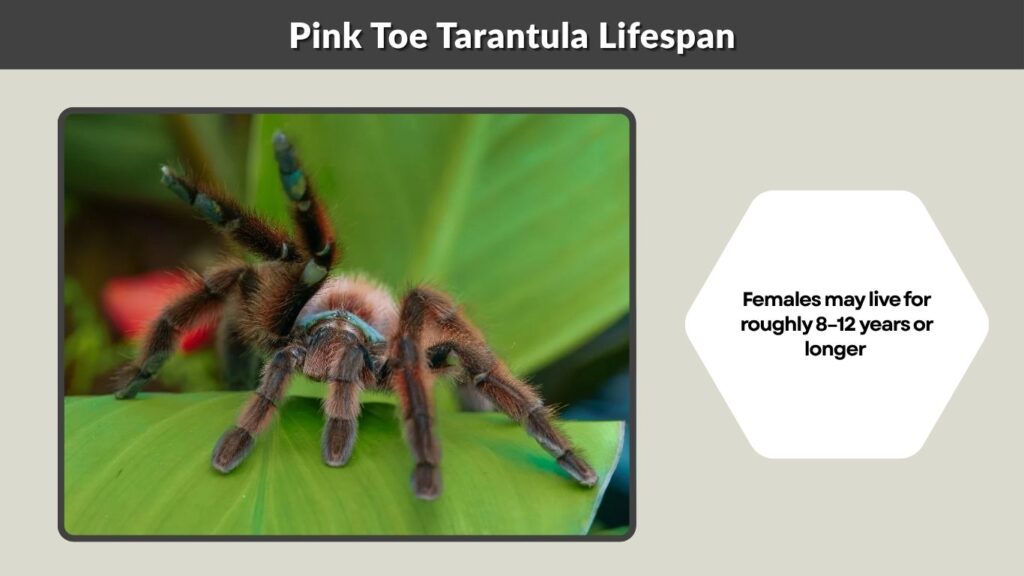
The lifespan differs considerably between males and females.
Females commonly live much longer because males often have relatively short lives after reaching maturity.
How Long Do Pink Toe Tarantulas Live?
Females may live for roughly 8–12 years or longer under favorable conditions.
Males generally live for fewer years and may survive only a relatively short period after reaching sexual maturity.
Genetics, feeding, environment, temperature, and husbandry can all influence longevity.
Pink Toe Tarantula Molting
Pink toe tarantulas periodically shed their old exoskeleton so they can grow.
Molting is normal but leaves the spider temporarily vulnerable.
Signs of an Upcoming Molt
A pink toe may:
- Stop eating
- Become less active
- Spend more time inside its web
- Darken in appearance
- Refuse prey for days or weeks
Never disturb or feed a tarantula while it is actively molting.
After the molt, allow the new fangs and exoskeleton to harden before offering food.
Do Pink Toe Tarantulas Bite?
Yes, pink toe tarantulas are capable of biting, but they generally prefer escaping from danger.
Because they are fast arboreal spiders, their first response may be to run or jump rather than attack.
Is a Pink Toe Tarantula Venomous?
Yes. Like other tarantulas, pink toes possess venom used to immobilize prey.
Their venom is generally not regarded as highly dangerous to healthy humans, but a bite can still cause pain, swelling, redness, and irritation.
Anyone experiencing severe or unusual symptoms following a bite should seek medical attention.
Can You Handle a Pink Toe Tarantula?
Although some individuals appear calm, routine handling is generally unnecessary.
Pink toes are extremely quick and can move suddenly. They may also jump when startled.
Handling creates risks for both the owner and the tarantula.
A fall from even a moderate height can seriously injure a spider, particularly if the abdomen ruptures.
Observation inside a secure enclosure is therefore safer than frequent handling.
Purple, Blue and Metallic Pink Toe Tarantulas
Several visually striking arboreal species are marketed using names containing “pink toe,” even though they may belong to different species or even different genera.
Purple Pink Toe Tarantula
The name purple pink toe may refer to tarantulas displaying purple, violet, or iridescent coloration.
Exact identification is important because husbandry and temperament can vary among similarly named spiders.
Metallic Pink Toe Tarantula
“Metallic pink toe” is another common trade-style name used for brightly colored arboreal tarantulas.
Some may display metallic blue, green, purple, or reddish tones depending on age, lighting, and species.
Antilles Pink Toe Tarantula
The species often called the Antilles pink toe is now generally known as Caribena versicolor.
Juveniles are famous for their bright blue coloration, while adults develop more complex green, red, purple, and pink tones.
Are Pink Toe Tarantulas Good Pets?
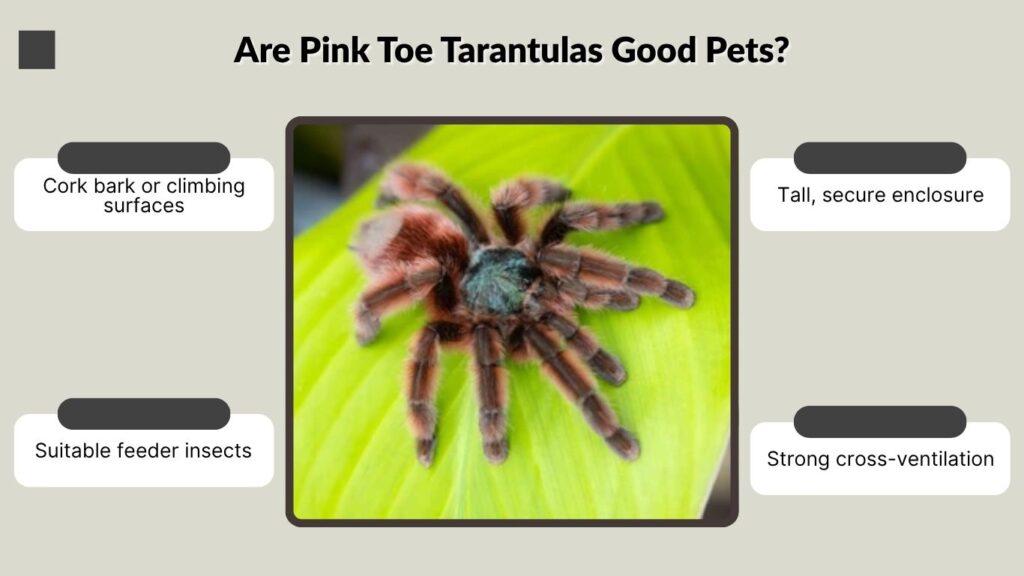
Pink toe tarantulas can make fascinating display animals for keepers who understand arboreal tarantula care.
They are attractive, active, and frequently construct impressive silk retreats.
However, their speed makes them more challenging to manage than some slow-moving terrestrial species.
Basic Care Requirements
Successful care includes:
- Tall, secure enclosure
- Strong cross-ventilation
- Cork bark or climbing surfaces
- Constant access to clean water
- Suitable feeder insects
- Stable temperatures
- Moderate moisture
- Minimal unnecessary handling
Good ventilation is particularly important because overly wet, stagnant conditions can create husbandry problems.
FAQs
1. How big does a pink toe tarantula get?
Most adult pink toe tarantulas reach approximately 4–5 inches in leg span, although size varies between individuals and species.
2. How long does a pink toe tarantula live?
Females can often live around 8–12 years or longer, while males generally have much shorter lifespans.
3. Are pink toe tarantulas venomous?
Yes. They possess venom for capturing prey, although their bites are generally not considered life-threatening to healthy humans.
4. What should a pink toe tarantula enclosure look like?
The enclosure should emphasize vertical climbing space, excellent ventilation, cork bark or branches, a secure lid, suitable substrate, and access to fresh water.
5. Can you hold a pink toe tarantula?
Handling is possible in some circumstances but is generally discouraged. Pink toes are fast and may suddenly jump or run, creating a risk of escape, bites, or serious injury to the spider if it falls.
