
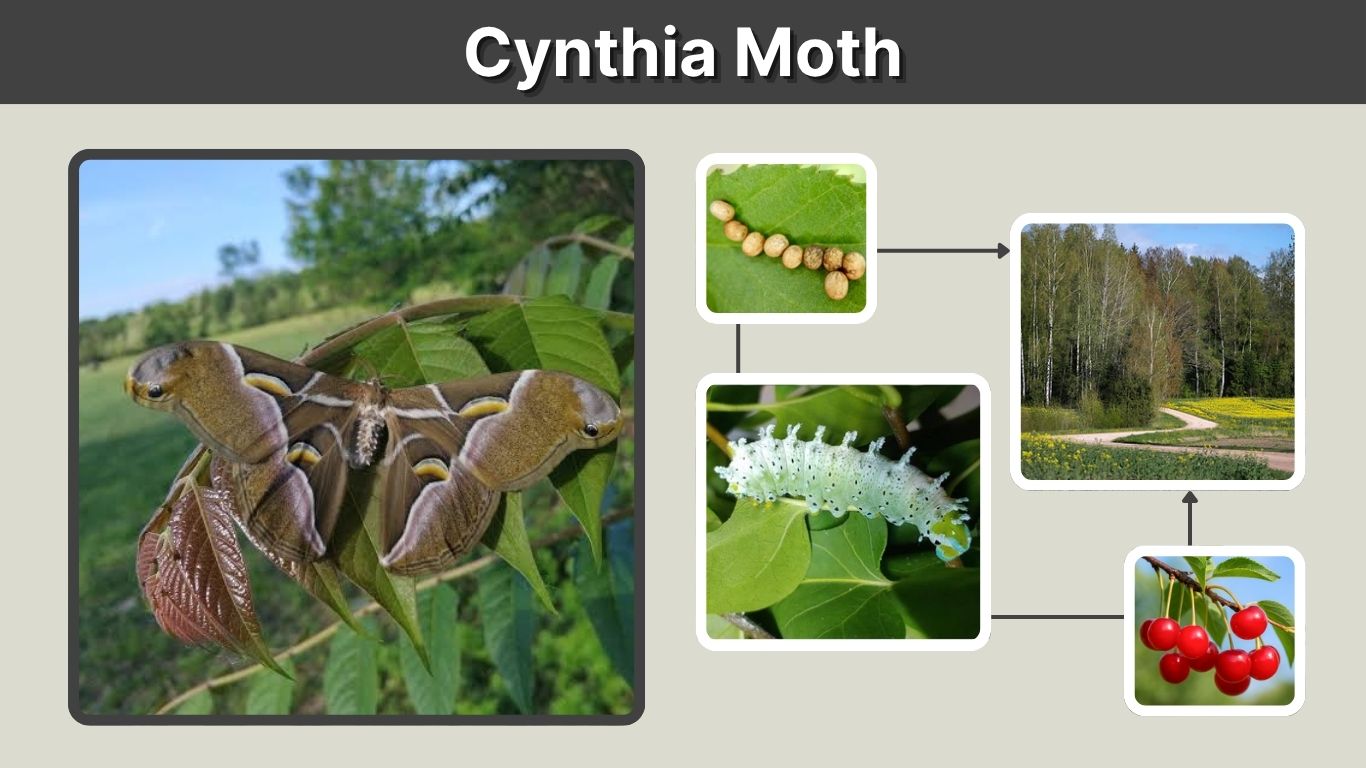
The Cynthia moth (Samia cynthia), also called the ailanthus silkmoth, is a large and attractive member of the giant silk moth family. Originally native to parts of Asia, it has been introduced to several regions outside its natural range. Its broad brown wings, crescent-shaped markings, and large greenish-blue caterpillar make it easy to recognize. This guide covers Cynthia moth identification, caterpillar appearance, diet, habitat, life cycle, behavior, and other interesting facts about this distinctive silk moth.
What Is a Cynthia Moth?
The Cynthia moth belongs to the Saturniidae family, a group that includes some of the world’s largest and most colorful moths. Its scientific name is Samia cynthia. It is closely associated with the tree of heaven because its caterpillars commonly feed on the leaves of this plant, although they can use several other host plants.
Cynthia Moth Identification
A Cynthia moth can be recognized by several features:
- Scientific name: Samia cynthia
- Family: Saturniidae
- Common name: Cynthia moth or ailanthus silkmoth
- Wing color: Brown, olive-brown, gray, and cream
- Markings: Pale crescent-shaped or translucent patches on the wings
- Body: Thick and hairy
- Antennae: Broad and feathered, especially in males
- Activity: Mostly nocturnal
- Size: Considerably larger than many common household moths
The combination of broad wings and pale curved markings gives the adult a distinctive appearance.
Cynthia Moth Size and Wingspan
Adult Cynthia moths are large silk moths. Their wingspan is commonly around 9–13 cm, although size varies among individuals.
Females generally have heavier abdomens because they carry eggs. Males often appear somewhat slimmer and have more strongly feathered antennae, which help them locate females by detecting pheromones.
Cynthia Moth Caterpillar
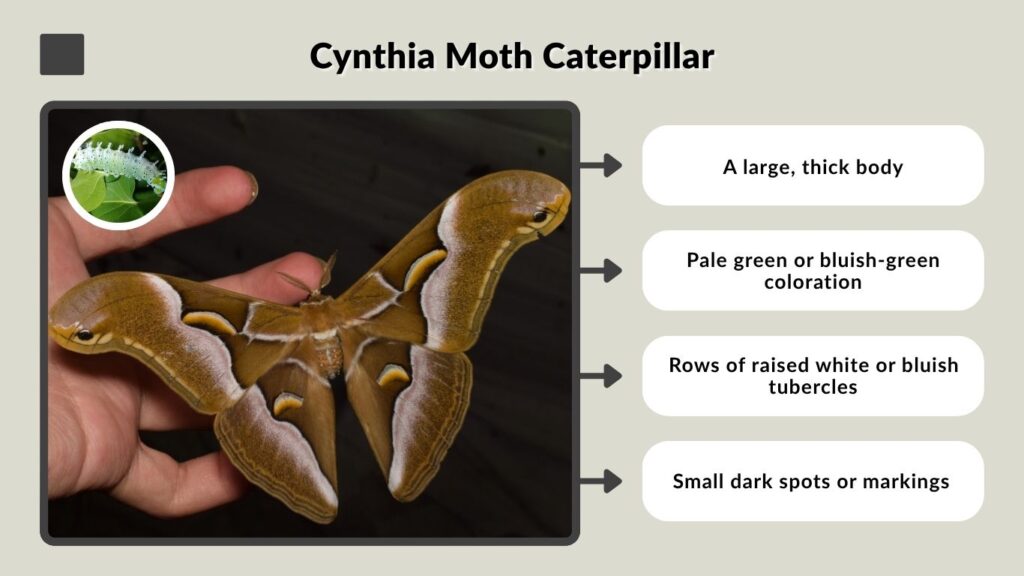
The Cynthia moth caterpillar is very different from the brown adult. Mature larvae are large, pale green to bluish-green caterpillars covered with distinctive raised tubercles. They spend most of their larval lives eating leaves and accumulating the energy required for pupation and adult reproduction.
The caterpillars can become particularly noticeable when feeding on tree of heaven.
How to Identify a Cynthia Moth Caterpillar
A mature caterpillar typically has:
- A large, thick body
- Pale green or bluish-green coloration
- Rows of raised white or bluish tubercles
- Small dark spots or markings
- Short hairs extending from some tubercles
- Strong abdominal prolegs
- A waxy or powdery appearance in later stages
Young caterpillars may look darker and change considerably as they grow through several molts.
Is the Cynthia Moth Caterpillar Poisonous?
Cynthia moth caterpillars are not generally considered dangerously poisonous or venomous to humans. Their tubercles and hairs can make them look intimidating, but they are not known for delivering the powerful stings associated with certain other caterpillar species.
It is still sensible to avoid unnecessary handling. Caterpillar hairs or body structures may cause minor irritation in particularly sensitive people.
Observing the insect on its host plant is usually better than repeatedly picking it up.
What Do Cynthia Moths Eat?
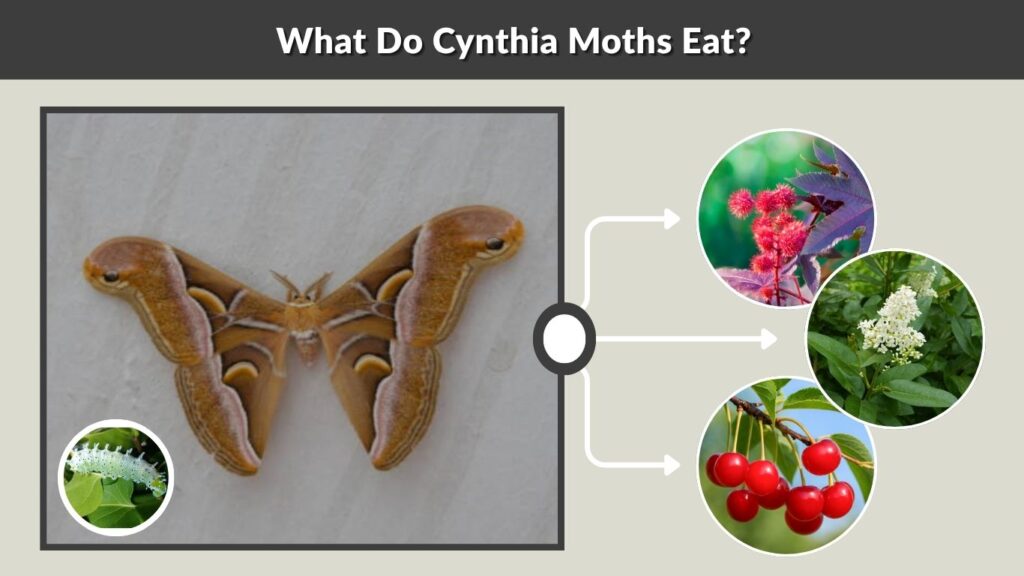
The Cynthia moth diet changes dramatically between its larval and adult stages. Caterpillars are active feeders and consume substantial amounts of foliage. Adults, like many giant silk moths, have reduced mouthparts and depend primarily on energy accumulated while they were caterpillars.
Cynthia Moth Caterpillar Food
Caterpillars may feed on several plants, including:
- Tree of heaven
- Castor bean
- Privet
- Lilac
- Cherry
- Other suitable deciduous trees and shrubs
Tree of heaven is especially important and is the reason Samia cynthia is widely called the ailanthus silkmoth.
Do Adult Cynthia Moths Eat?
Adult Cynthia moths generally do not feed significantly. Their mouthparts are reduced, so they survive mostly on stored energy accumulated during larval development.
This strategy means the adult stage is relatively short. Adult moths spend most of their limited time searching for mates and producing the next generation rather than feeding.
Cynthia Moth Life Cycle
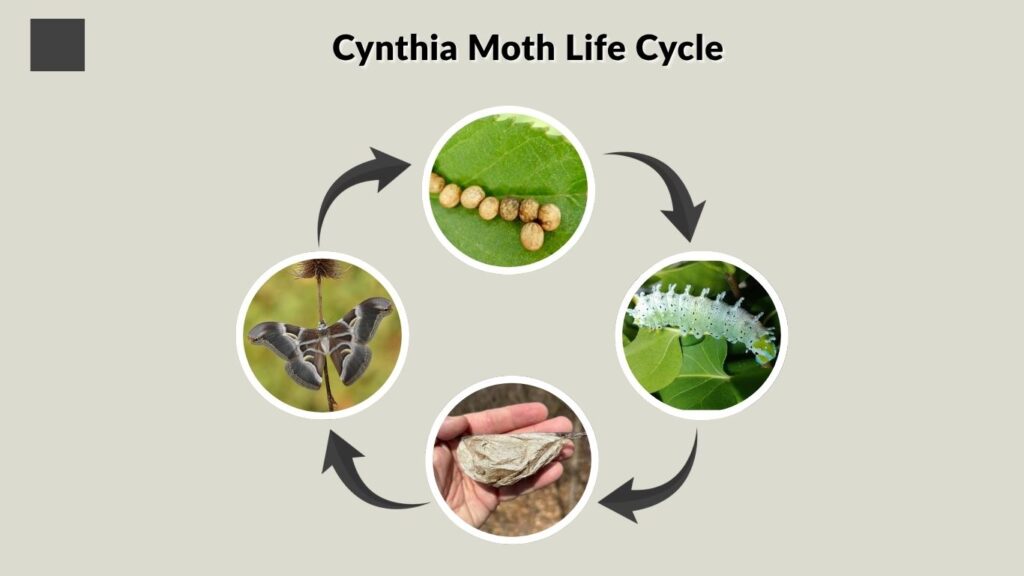
The Cynthia moth undergoes complete metamorphosis, developing through egg, larva, pupa, and adult stages. The larval stage is devoted to eating and growth, while the pupal stage allows the insect to undergo its dramatic transformation. Adults then emerge primarily to mate and reproduce.
Egg Stage
After mating, a female lays eggs on or near suitable host plants. Eggs are often deposited where newly hatched caterpillars can quickly reach fresh leaves.
Young larvae emerge after embryonic development and begin feeding almost immediately.
Larval Stage
During the caterpillar stage, the larvae:
- Feed heavily on host leaves
- Grow through several developmental stages
- Molt repeatedly
- Become larger and lighter in color
- Accumulate energy for pupation
- Search for a protected location when mature
Most of the insect’s physical growth occurs during this period.
Cocoon and Pupal Stage
A mature Cynthia moth caterpillar spins a durable silk cocoon, often incorporating a leaf into the structure. Inside the cocoon, it becomes a pupa and begins metamorphosis.
The cocoon protects the developing moth from weather and some predators. Depending on climate and season, the pupal stage may also allow the insect to survive unfavorable conditions.
Adult Stage
Once development is complete, the adult moth emerges from the cocoon. Its wings are initially soft and folded.
The moth pumps fluid into the wings, allowing them to expand before they harden. Adults become mainly active during the evening and night, when males search for receptive females.
Cynthia Moth Habitat and Distribution
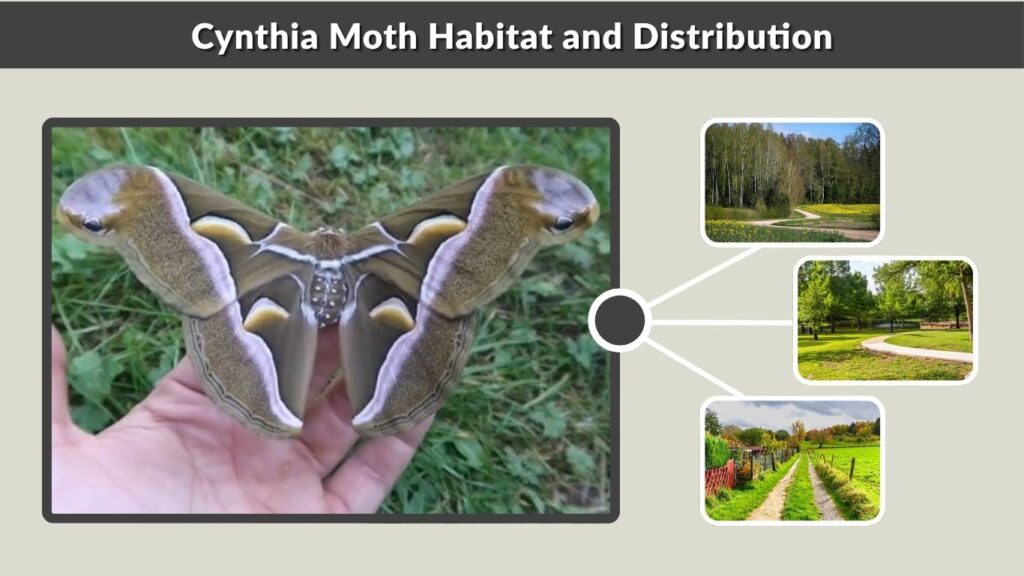
The Cynthia moth originated in Asia but has been introduced to other regions through human activity. Its association with the tree of heaven has helped it establish in places where this host plant became widespread.
Populations can occur in urban, suburban, agricultural, and semi-natural environments.
Where Are Cynthia Moths Found?
Suitable habitats include:
- Woodland edges
- Parks
- Urban areas
- Suburban gardens
- Roadsides
- Areas containing tree of heaven
- Locations with other suitable host plants
Because the tree of heaven frequently grows in disturbed environments, Cynthia moths can sometimes survive surprisingly close to cities.
Can Cynthia Moths Live in the Southwest USA?
Whether Cynthia moths can persist in the Southwest USA depends heavily on local climate, host plants, and moisture availability. The species is generally better associated with regions where its host plants grow successfully and where environmental conditions permit development.
Very hot or dry areas may be less suitable, although irrigated urban environments containing appropriate host trees could potentially provide localized habitat.
Male vs. Female Cynthia Moth
Male and female Cynthia moths look similar overall, but several characteristics can help distinguish them. These differences are especially noticeable when adults of both sexes are seen together.
Key Differences
Typical differences include:
- Male antennae: Larger and more strongly feathered
- Female antennae: Usually narrower
- Male body: Often slimmer
- Female body: Heavier and fuller
- Female abdomen: Enlarged to accommodate eggs
- Male behavior: More active when searching for females
A male’s broad antennae are particularly important because they contain sensory structures capable of detecting female pheromones.
Cynthia Moth Behavior and Predators
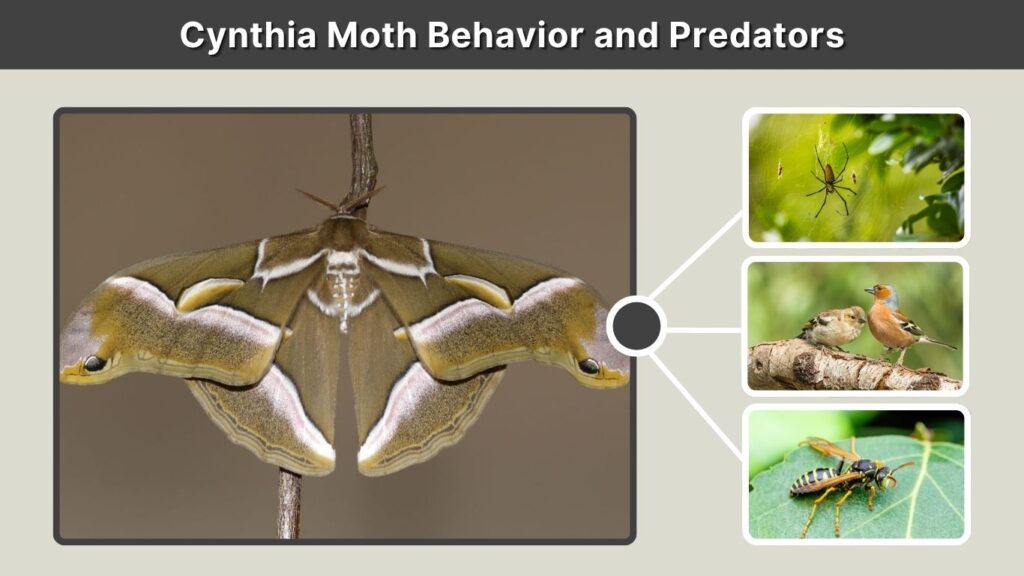
Adult Cynthia moths are largely nocturnal. During daylight hours, they may rest quietly on tree trunks, walls, vegetation, or other sheltered surfaces. Their muted brown coloration helps them blend with bark and dried plant material.
Both caterpillars and adults face numerous natural enemies throughout their lives.
Common Predators
Potential predators include:
- Birds
- Bats
- Spiders
- Predatory insects
- Small mammals
- Parasitoid wasps
- Parasitoid flies
Their large size does not make Cynthia moths immune to predation. Camouflage, nighttime activity, body markings, and protected cocoons all help improve their chances of survival.
Interesting Cynthia Moth Facts
The Cynthia moth has an interesting history because humans helped spread it far beyond parts of its original Asian distribution. It was associated with attempts to produce silk and later became established in some regions containing abundant tree of heaven.
Quick Facts About the Cynthia Moth
- The scientific name is Samia Cynthia.
- It belongs to the giant silk moth family Saturniidae.
- It is also called the ailanthus silkmoth.
- Adults can have wingspans exceeding 10 cm.
- Caterpillars commonly feed on trees of heaven.
- Mature larvae are usually greenish or bluish-green.
- Adults have reduced mouthparts and feed little or not at all.
- Males have strongly feathered antennae.
- Caterpillars produce tough silk cocoons.
- The species has been introduced outside its native Asian range.
FAQs
1. What is a Cynthia moth?
The Cynthia moth, Samia cynthia, is a large silk moth belonging to the Saturniidae family. It is also commonly known as the ailanthus silkmoth.
2. What does a Cynthia moth caterpillar look like?
Mature caterpillars are large and usually pale green or bluish-green. They have rows of raised tubercles and a somewhat waxy appearance.
3. Is a Cynthia moth caterpillar poisonous?
No. Cynthia moth caterpillars are not generally considered dangerously poisonous or venomous, although sensitive skin may occasionally become irritated after direct contact.
4. What do Cynthia moth caterpillars eat?
They commonly feed on trees of heaven but can also use several other deciduous trees and shrubs, including privet, lilac, and some fruit trees.
5. How long do adult Cynthia moths live?
Adult Cynthia moths live for a relatively short period because they rely largely on energy stored during the caterpillar stage. Their adult lives are mainly devoted to mating and reproduction.
