
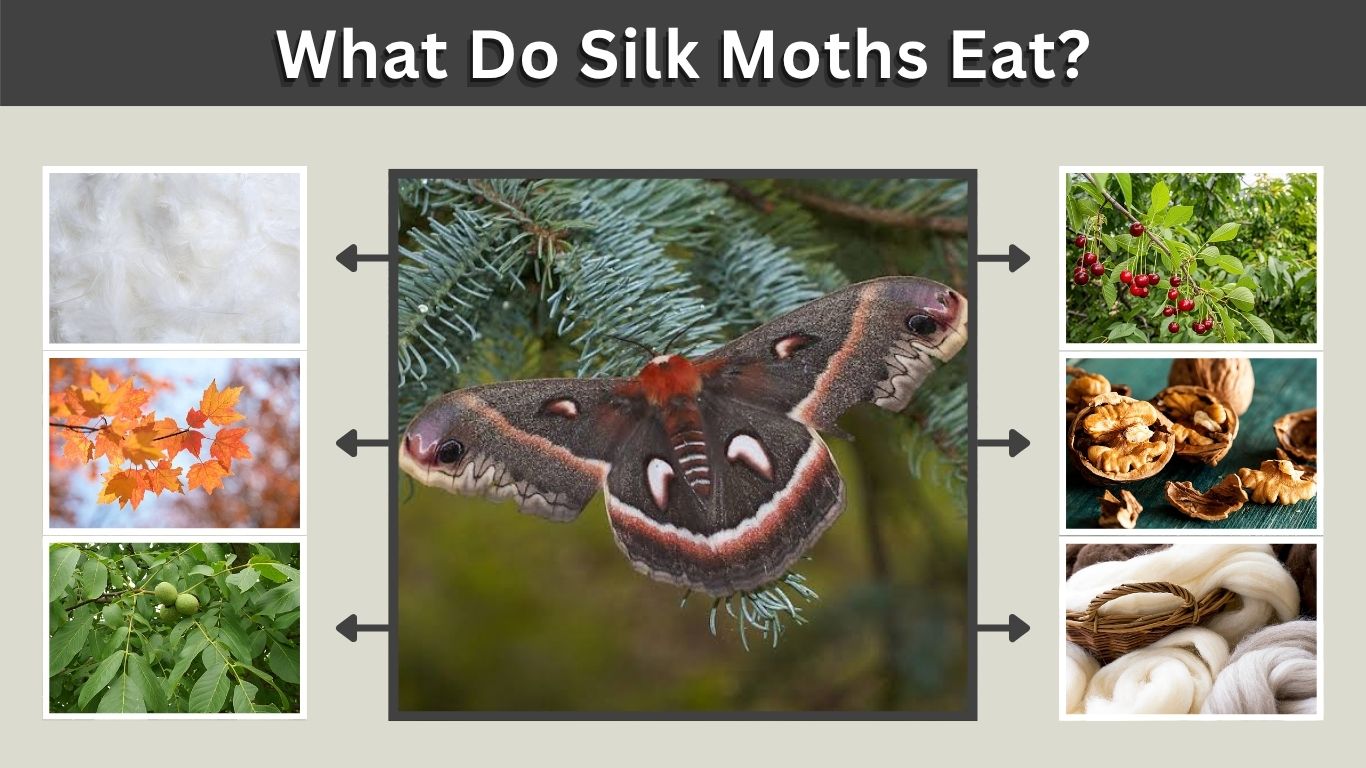
What do silk moths eat? The answer depends heavily on whether you mean the caterpillar or adult moth. Silk moth caterpillars are active feeders that consume leaves from specific host plants, while many adult silk moths eat nothing at all. Domestic silkworms mainly depend on mulberry leaves, whereas giant silk moth caterpillars may eat oak, willow, maple, cherry, and other trees. Silk moths should also not be confused with clothes moths, whose larvae can damage silk fabrics and other animal-based materials.
What Do Silk Moths Eat?
Silk moths have completely different diets at different life stages. Nearly all feeding happens while they are caterpillars. During this stage, they consume large quantities of leaves to obtain enough nutrients for growth, cocoon production, metamorphosis, and adulthood. After becoming adults, many domestic and giant silk moth species have reduced or nonfunctional mouthparts and therefore cannot eat.
10 Foods Silk Moth Caterpillars May Eat
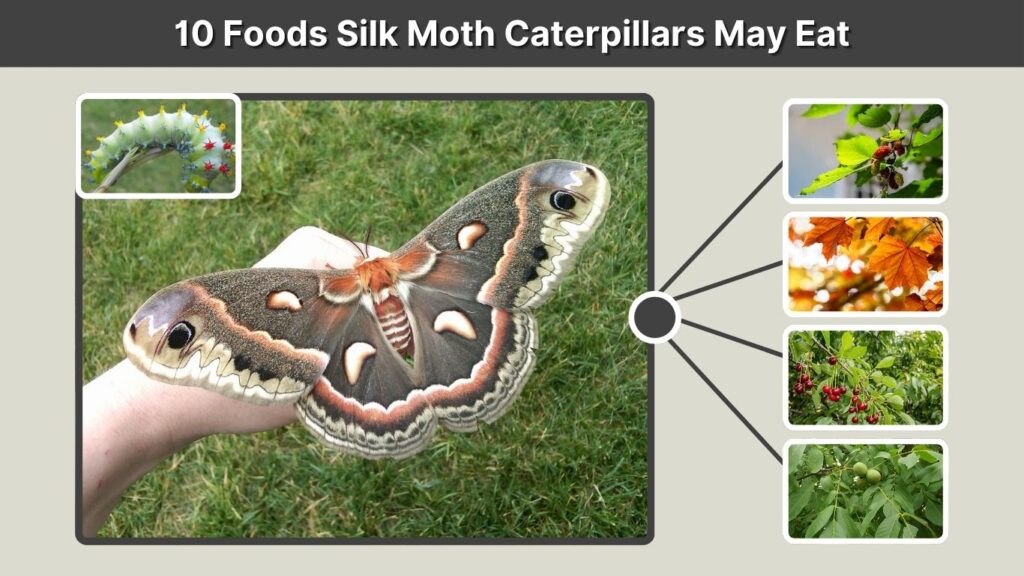
Silk moth caterpillars depend on fresh leaves for nearly all of their nutrition during the larval stage. However, the exact food they eat varies by species. Domestic silkworms strongly prefer mulberry leaves, while many wild giant silk moth caterpillars feed on trees such as oak, willow, maple, cherry, and walnut. Providing the correct host plant is important because some caterpillars will refuse unfamiliar leaves or may not develop properly on unsuitable food.
- Mulberry leaves
- Oak leaves
- Willow leaves
- Maple leaves
- Cherry leaves
- Birch leaves
- Walnut leaves
- Sassafras leaves
- Sweetgum leaves
- Poplar leaves
Not every silk moth can eat all ten plants. Caterpillars are often highly particular about their host plants, so the correct food depends on the moth species.
What Do Domestic Silk Moths Eat?
The domestic silk moth, Bombyx mori, has been bred for silk production for thousands of years. Its caterpillar, commonly called the silkworm, is strongly associated with mulberry trees.
Mulberry leaves provide the moisture, protein, carbohydrates, vitamins, and other nutrients silkworms require for rapid development.
What Do Domestic Silkworm Caterpillars Eat?
Fresh mulberry leaves are their traditional and preferred food.
Young silkworms usually need tender leaves because their mouthparts are small. As they grow larger, they can consume more mature leaves and increasingly large amounts of vegetation.
Commercial silkworm operations may also use specially prepared artificial diets containing mulberry-derived ingredients and appropriate nutrients.
When Do Silk Moth Caterpillars Begin to Eat?
Silkworm caterpillars begin feeding shortly after hatching.
They are extremely small at first but grow rapidly. Throughout the larval period, they repeatedly feed and molt before eventually reaching their final caterpillar stage.
Once ready to make a cocoon, the silkworm stops eating and begins producing silk.
What Do Giant Silk Moth Caterpillars Eat?
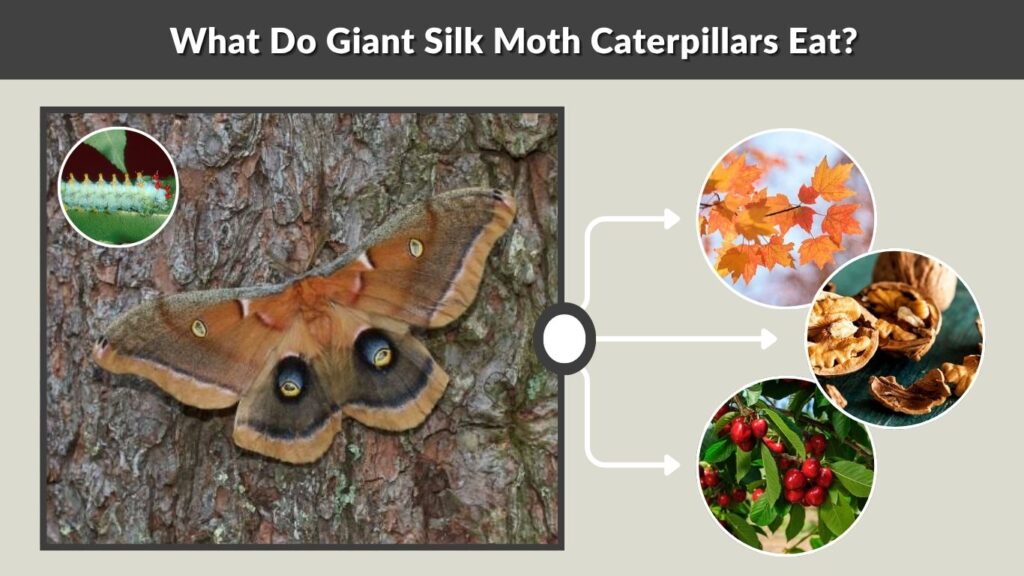
Giant silk moths generally belong to the family Saturniidae. Unlike domesticated silkworms, they include numerous wild species with different preferred host plants.
Examples include Cecropia, Polyphemus, Luna, Columbia, and Ceanothus silk moths.
Common Giant Silk Moth Foods
Giant silk moth caterpillars may eat foliage from trees such as oak, maple, willow, birch, cherry, walnut, poplar, sweetgum, and sassafras.
However, diet differs substantially between species.
A Cecropia caterpillar, for example, may use several deciduous trees and shrubs, while another silk moth species may accept a much narrower selection of plants.
Caterpillars raised in captivity should generally continue receiving the host plant on which they were already feeding rather than being switched repeatedly between unfamiliar plants.
What Do Adult Silk Moths Eat?
One surprising fact about silk moths is that many adults do not eat at all.
This is particularly true for the domestic silk moth and many giant silk moths. Their adult mouthparts are reduced or nonfunctional.
As a result, feeding essentially ends when the caterpillar prepares to pupate.
Why Don’t Silk Moths Eat as Adults?
Adult silk moths survive on energy stored during the caterpillar stage.
The caterpillar spends weeks consuming leaves and accumulating nutritional reserves. After metamorphosis, the adult uses these stored reserves for:
- Flying or moving around
- Finding a mate
- Producing eggs
- Mating
- Laying eggs
Because the adult cannot continually replace its energy, its life is relatively short.
What Do Silk Moths Eat and Drink?
Silk moth caterpillars generally receive both food and water from plant leaves.
They normally do not need a separate water dish. In fact, standing water can be dangerous for small caterpillars because they may fall into it.
Healthy fresh leaves contain enough moisture to support their development under appropriate conditions.
Do Adult Silk Moths Drink Water?
Adult domestic silkworm moths and many giant silk moth species generally do not drink water because their feeding structures are not functional.
Other moth families may drink nectar, tree sap, fruit juices, or other liquids, but this should not be applied to all silk moths.
How Do Silk Moth Caterpillars Eat?
Silk moth caterpillars possess strong chewing mouthparts called mandibles.
They bite pieces from the edges or surfaces of leaves and gradually consume large portions of foliage.
As caterpillars become larger, their appetite can increase dramatically. This heavy feeding is necessary because adulthood provides little or no opportunity to obtain additional nutrition.
Why Do Caterpillars Eat So Much?
The caterpillar must collect enough energy for several major biological processes.
It needs resources to grow, molt repeatedly, produce silk, construct a cocoon, complete metamorphosis, and support the adult moth after emergence.
This makes the caterpillar stage the nutritional foundation of the entire silk moth life cycle.
Do Moths Eat Silk?
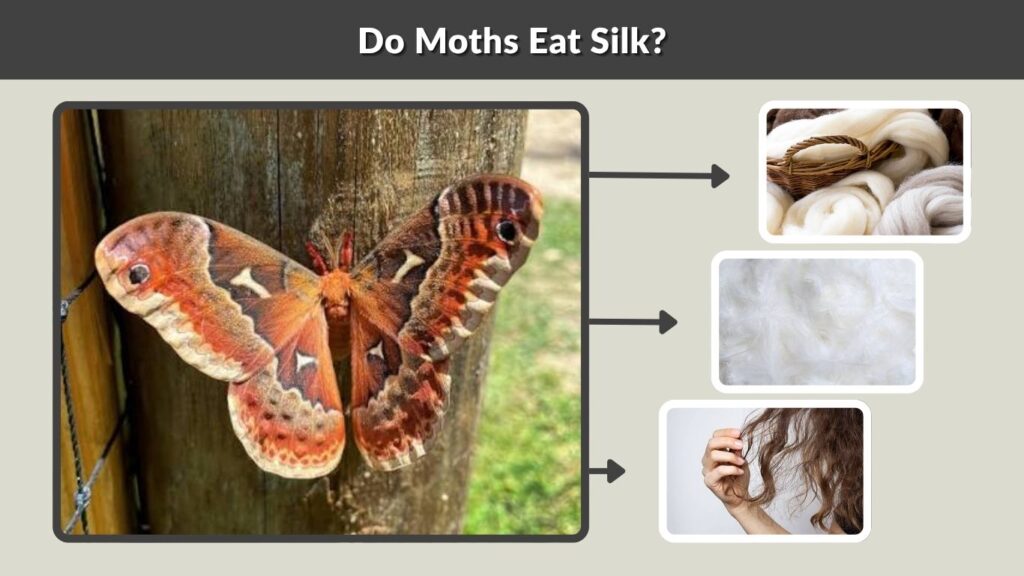
This question causes considerable confusion because silk moths and moths that damage silk clothing are not the same thing.
Silk moths produce silk as caterpillars. They do not normally eat finished silk clothing, curtains, ties, rugs, or other household fabrics.
However, certain clothes moth larvae can damage silk textiles.
Do Clothes Moths Eat Silk?
Yes, clothes moth larvae can sometimes damage silk, particularly when the material contains animal-derived proteins, body oils, sweat, food residues, or other organic matter.
Adult clothes moths themselves are not responsible for most fabric damage. Their larvae do the feeding.
Materials that may be attacked include:
- Wool
- Fur
- Feathers
- Hair
- Felt
- Silk
- Natural-fiber blends
This is different from silkworms and giant silk moth caterpillars, which naturally feed on plants.
Do Moths Eat Silk Clothes and Fabric?
Clothes moth larvae can damage certain silk garments, although wool and other keratin-rich materials are often more attractive.
Silk clothing placed in dark, undisturbed storage areas can be particularly vulnerable when contaminated with sweat or organic residues.
Do Moths Eat Silk Rugs and Carpets?
Silk rugs and carpets may also experience moth damage, especially when they contain wool or other animal fibers.
Damage often occurs in protected locations such as underneath furniture, along carpet edges, or in areas that are rarely disturbed.
Do Silk Moths Eat Clothes?
No. Domestic silk moths and giant silk moths are not clothes-eating pests.
Their caterpillars consume plant foliage, while adults usually eat nothing.
Finding a moth around clothing therefore does not automatically mean it is a silk moth.
Do Giant Silk Moths Eat?
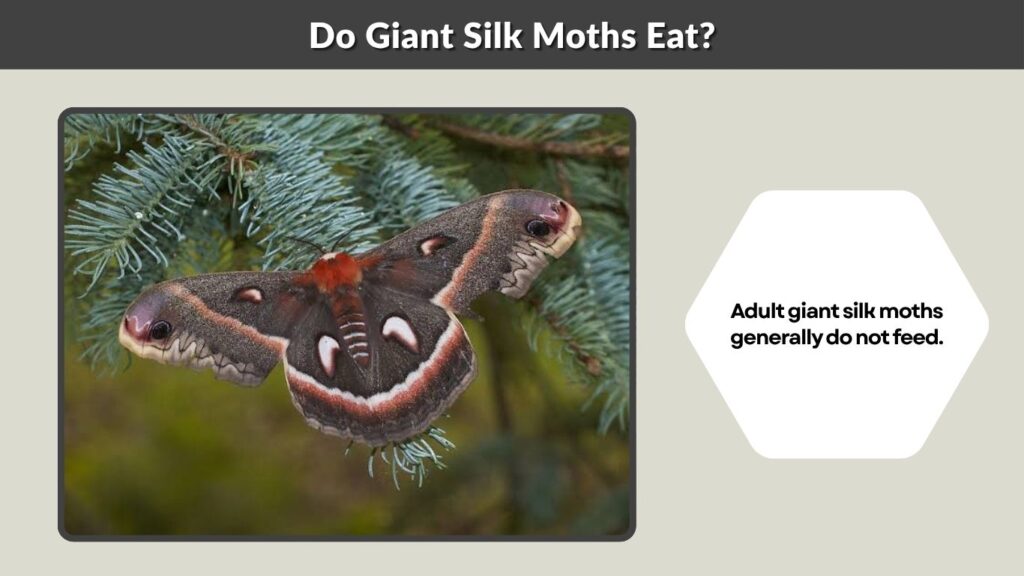
Adult giant silk moths generally do not feed.
Species such as Cecropia and Polyphemus moths emerge with reduced mouthparts and depend entirely on stored energy.
What Do Cecropia Silk Moths Eat?
Adult Cecropia moths do not normally eat.
Their caterpillars, however, feed on the leaves of various woody plants and trees. They spend the larval stage building energy reserves before producing their large silk cocoons.
After adulthood begins, their attention shifts almost entirely to reproduction.
Silk Moth Caterpillar vs. Adult Diet
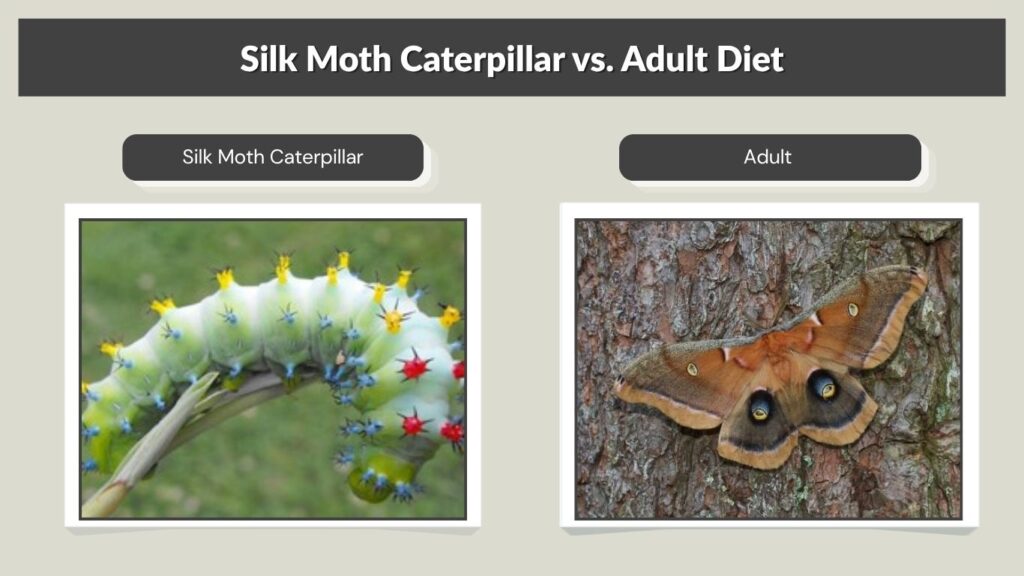
The dramatic diet difference between caterpillars and adults can be summarized simply.
| Life Stage | Main Food |
| Egg | Does not eat |
| Caterpillar | Leaves from suitable host plants |
| Pupa | Does not eat |
| Adult domestic silk moth | Does not eat |
| Adult giant silk moth | Usually does not eat |
Therefore, when someone asks, “What does a silk moth eat?”, it is important to identify its life stage first.
FAQs
Can Silk Moths Eat?
Silk moth caterpillars certainly can eat and are often voracious feeders. However, many adult silk moths, including domestic and giant silk moth species, have reduced mouthparts and cannot feed. They survive during adulthood using energy accumulated while they were caterpillars.
Why Can’t Giant Silk Moths Eat?
Many giant silk moths emerge as adults with nonfunctional mouthparts. Their caterpillar stage provides all the energy required for adult survival and reproduction. Adults therefore live relatively briefly and concentrate on locating mates, mating, and laying eggs rather than feeding.
Do Silkworm Moths Eat Silk?
No. Silkworm moths do not eat silk. Their caterpillars produce silk to construct cocoons and primarily eat leaves, especially mulberry. Adult domesticated silk moths generally do not eat at all because they have greatly reduced feeding structures.
Do Clothes Moths Eat Silk Fabric?
Clothes moth larvae can damage silk fabrics, particularly when garments contain organic residues or are mixed with other animal-based fibers. The adult moth usually causes no direct damage. Clothes moths are different insects from the silk-producing moths commonly called silk moths.
What Should I Feed a Silk Moth Caterpillar?
Feed the caterpillar the correct fresh host plant for its particular species. Domestic silkworms normally need mulberry leaves, while giant silk moth caterpillars may use oak, willow, maple, cherry, or other trees. Avoid changing host plants unnecessarily once a caterpillar is feeding successfully.
