
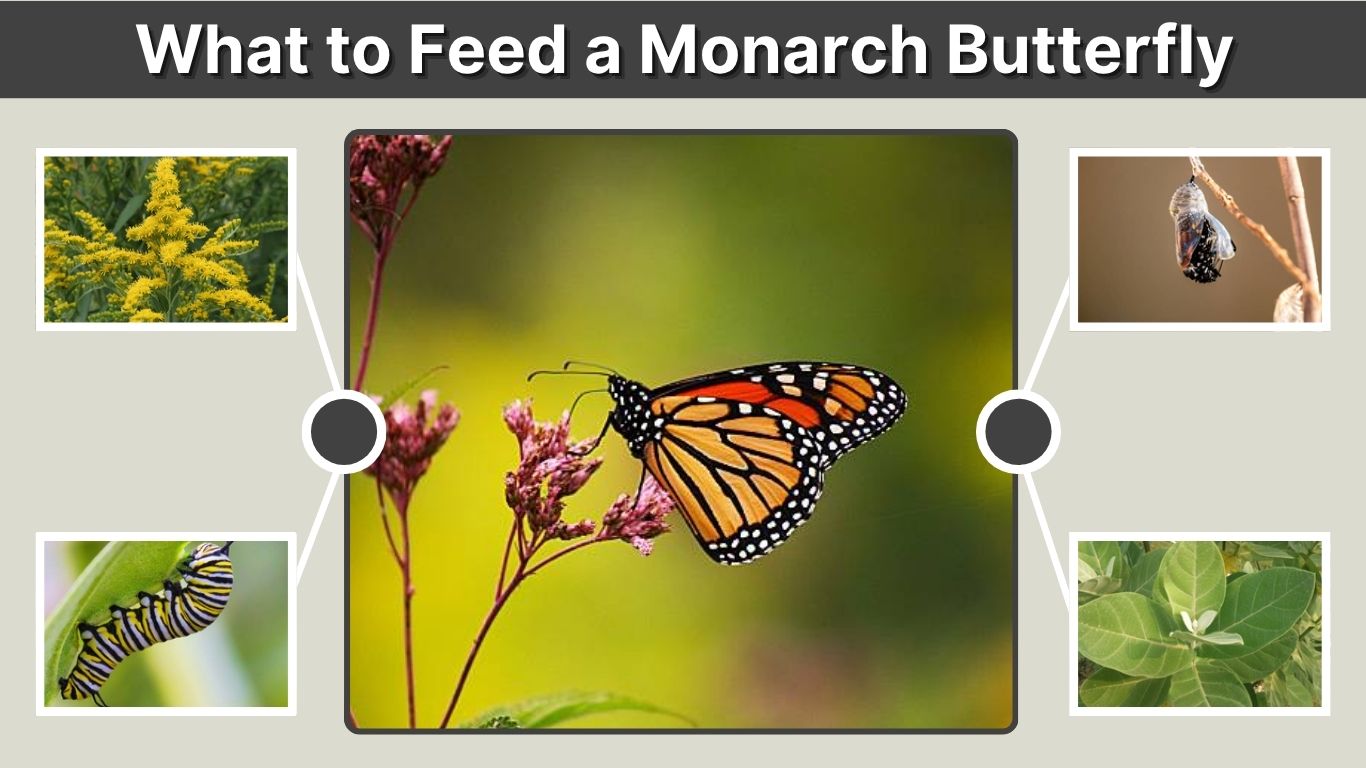
Adult monarch butterflies feed primarily on flower nectar, while monarch caterpillars eat only milkweed. Healthy wild monarchs normally find their own food and should not be captured for routine feeding. However, temporary feeding may help a newly emerged butterfly held for release, an injured monarch, or one sheltered during unsuitable weather. The correct food depends entirely on whether you are caring for an adult butterfly or a caterpillar.
What Do Monarch Butterflies Eat?
Adult monarchs use a long, tube-shaped mouthpart called a proboscis to drink liquids. Their natural diet consists mainly of nectar from many flowering plants, including milkweed, goldenrod, asters, blazing star, coneflowers, and other seasonal blooms.
Milkweed is not the adult monarch’s only food. Adult butterflies can drink nectar from numerous flower species, while milkweed has a separate and especially important role as the only natural food for monarch caterpillars.
| Monarch life stage | Appropriate food |
| Newly hatched caterpillar | Fresh milkweed leaves |
| Growing caterpillar | Increasing amounts of milkweed |
| Newly emerged adult | Usually no food needed on the first day |
| Healthy adult | Nectar from flowering plants |
| Temporarily captive adult | Flowers or properly prepared sugar solution |
| Injured adult | Easily accessible nectar or sugar solution |
Best Flowers for Feeding Adult Monarchs
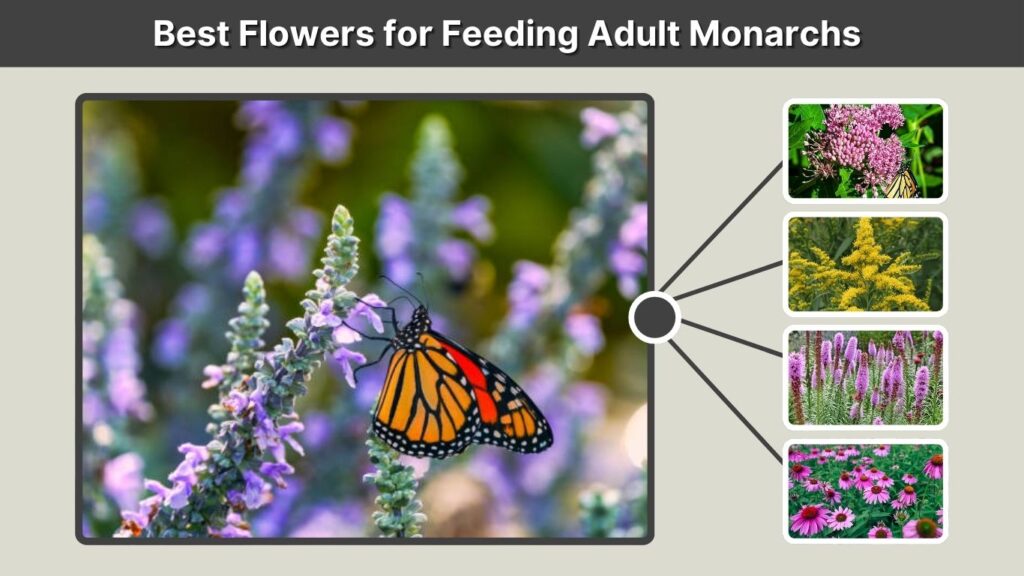
The healthiest way to feed monarchs is to provide living, pesticide-free flowers. A garden containing plants that bloom at different times gives butterflies a dependable nectar supply throughout breeding and migration.
Nectar-Rich Flowering Plants
Useful nectar plants include:
- Milkweed flowers
- Goldenrod
- Asters
- Blazing star
- Coneflowers
- Sunflowers
- Zinnias
- Verbena
- Lantana
- Joe-Pye weed
- Mistflower
- Native salvia
Choose species native to your region whenever possible. A combination of milkweed and nectar-producing flowers provides food for both caterpillars and adults. Fall-blooming flowers are especially valuable because migrating monarchs must build energy reserves for their long journey.
Plants should be free from insecticides. Even products marketed as pollinator-friendly may contain systemic pesticides capable of remaining inside leaves, stems, or flowers.
Can You Feed Monarch Butterflies Sugar Water?
Sugar water can be used as a temporary supplemental food for a monarch kept overnight, sheltered during bad weather, or unable to reach flowers. It should not replace natural nectar habitat for healthy wild butterflies.
Sugar-Water Recipe
Monarch Watch recommends mixing:
- 1 part plain white sugar
- 9 parts clean water
Stir until the sugar dissolves. Pour a small amount onto a clean sponge placed in a shallow lid or dish. The sponge gives the butterfly somewhere to stand and prevents it from falling into an open pool of liquid. Replace the mixture every day because sweet solutions can ferment or grow microorganisms.
Do not add food coloring, artificial sweeteners, soft drinks, or flavoring. Avoid creating a deep container in which the butterfly could become trapped or wet its wings.
How to Encourage a Monarch to Drink
Place the feeder in a bright, calm area. Allow the butterfly to step onto the damp sponge so its front feet touch the solution. Butterflies have taste receptors on their feet, and contact with sweetness may encourage them to extend their proboscis.
Do not pull forcefully on the proboscis or repeatedly handle a frightened butterfly. Give it time to settle and try again later if it does not feed immediately.
What to Feed a Newly Emerged Monarch Butterfly
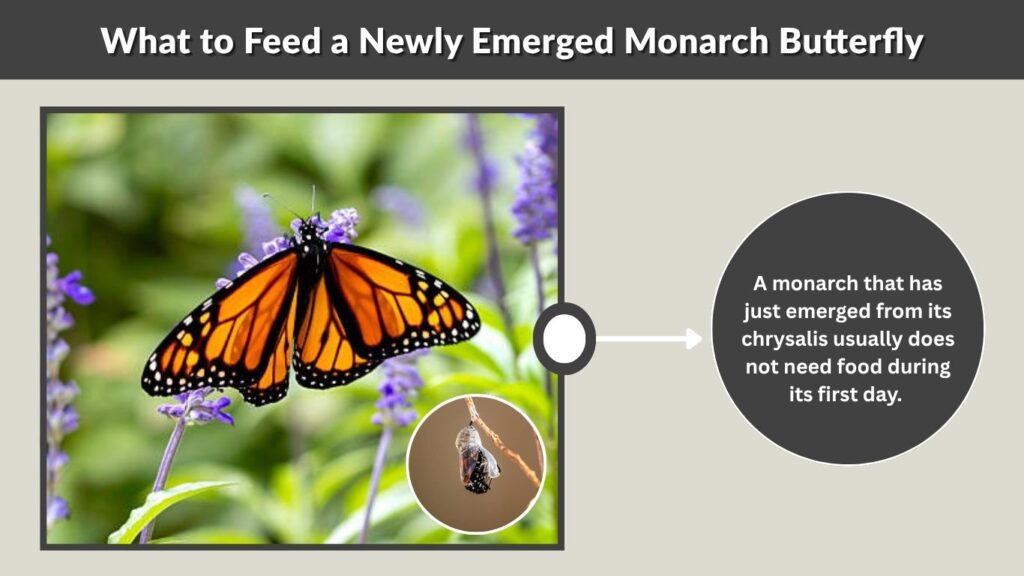
A monarch that has just emerged from its chrysalis usually does not need food during its first day. It must first hang vertically, pump fluid into its wings, and allow them to harden.
Monarch Watch advises allowing approximately three to four hours before handling a newly emerged adult. Although it may make a short flight after about two hours, waiting around 24 hours before release gives its wings and sensory systems more time to mature.
During this period:
- Provide a rough vertical surface for hanging.
- Keep the enclosure ventilated.
- Protect it from ants, pets, and direct midday heat.
- Do not place food against its soft wings.
- Release it near flowers on a warm, calm day.
When a butterfly must remain beyond its first day, provide fresh flowers or a sugar-water sponge. A healthy monarch should generally be released rather than kept in captivity.
What to Feed Monarch Butterfly Caterpillars
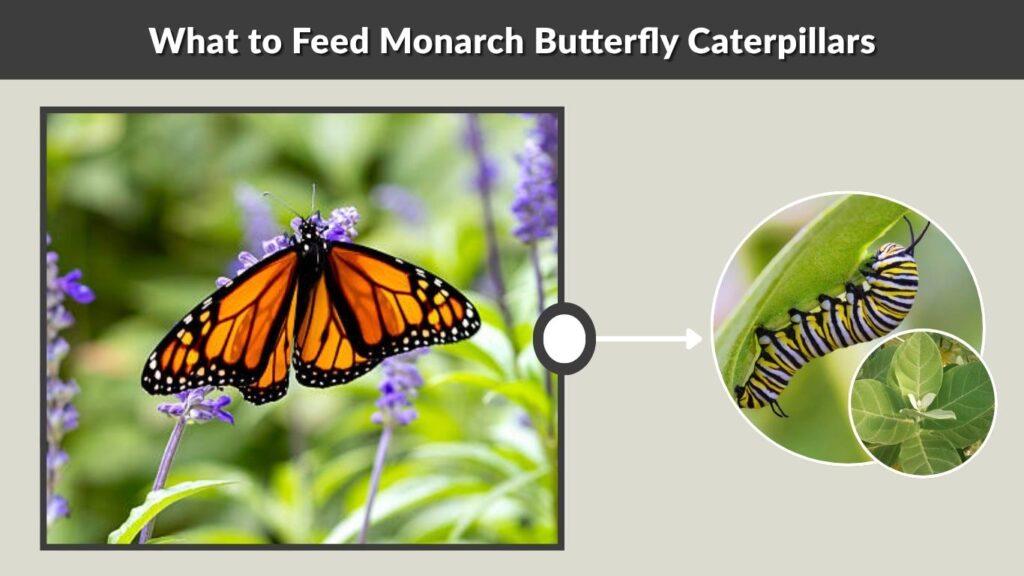
Monarch caterpillars eat milkweed and no ordinary substitute. They cannot complete normal development on lettuce, spinach, cabbage, fruit, sugar water, or common garden leaves. Female monarchs lay their eggs on milkweed because the hatching larvae depend on it.
Choosing Safe Milkweed
Provide fresh leaves from a correctly identified milkweed plant in the genus Asclepias or another recognized monarch host. Good choices vary by region and may include common milkweed, swamp milkweed, butterfly weed, showy milkweed, and narrowleaf milkweed.
The plant must not have been treated with pesticides. Rinse the leaves, dry them, and discard any that are yellow, wilted, moldy, or contaminated. Washing may reduce surface residues, but it cannot reliably remove systemic pesticides already absorbed by a plant.
How Often Should Caterpillars Be Fed?
Small caterpillars eat relatively little, but their appetite increases dramatically as they grow. Late-stage caterpillars can strip a milkweed stem quickly and may require fresh food twice a day.
Replace wilted leaves, remove droppings, and keep the enclosure dry and ventilated. Overcrowding, condensation, old food, and accumulated waste encourage disease.
A caterpillar that stops eating and wanders away from the plant may be preparing to molt or form a chrysalis. Do not force-feed it.
Can Monarch Butterflies Eat Fruit?
Adult monarchs are primarily nectar feeders, but temporarily captive adults may sometimes drink moisture and sugars from cut fruit. Monarch Watch lists watermelon, honeydew, and cantaloupe as possible captive foods. The fruit should be replaced daily before it ferments or develops mold.
Bananas are commonly placed in general butterfly feeders, but they are not the most natural or dependable food for monarchs. Fresh nectar flowers or a properly prepared sugar solution are better choices.
Fruit must never be given to monarch caterpillars. They require milkweed.
How to Make a Monarch Butterfly Feeder
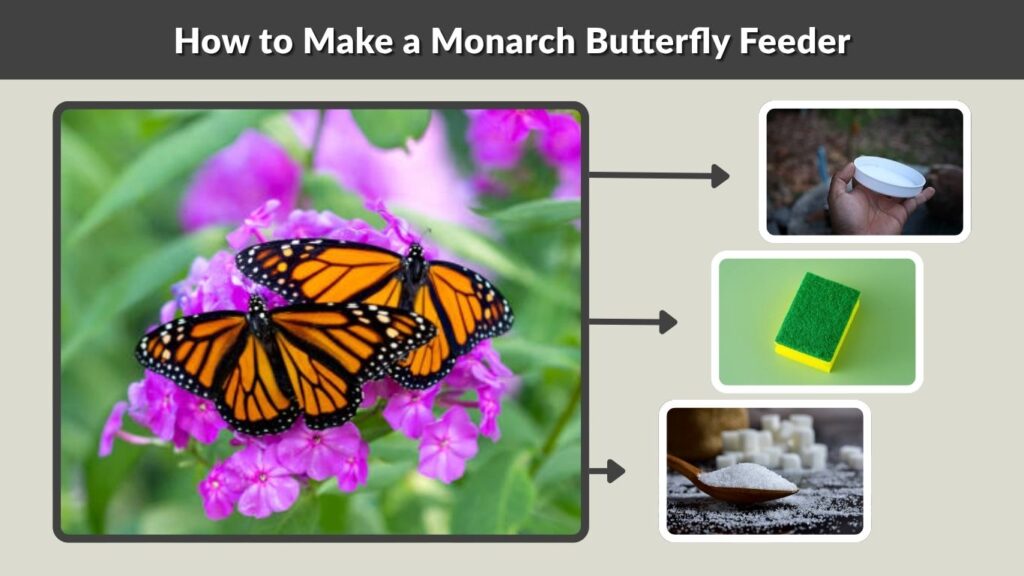
A simple feeding station can provide short-term support when flowers are temporarily unavailable.
Materials
- A shallow jar lid or small dish
- A clean sponge
- One part white sugar
- Nine parts water
- A sheltered outdoor location
Soak the sponge without leaving a deep pool of liquid. Place the feeder near flowering plants but away from ants, heavy rain, and intense afternoon sun. Clean the dish and replace the solution daily.
A feeder should supplement—not replace—a butterfly garden. Planting pesticide-free native milkweed and nectar flowers offers more complete and reliable support.
Feeding an Injured Monarch Butterfly
Place an injured monarch in a ventilated container with enough space to stand without scraping its wings. Keep it in a quiet location protected from direct heat and predators.
Offer a sugar-water sponge or fresh nectar flowers within easy reach. A butterfly with minor scale loss or a small wing tear may still fly, but food cannot repair a severely deformed wing or other major injury. Avoid gluing, cutting, or taping its wings without expert guidance.
When the butterfly can grip, open its wings normally, and fly steadily, release it near nectar flowers during warm, dry weather.
FAQs
What is the best food for a monarch butterfly?
Natural flower nectar is the best food for an adult monarch. Provide pesticide-free native flowers with overlapping bloom periods. Sugar water is more appropriate as temporary supplemental food when a butterfly must remain sheltered or flowers are unavailable.
Can I feed a monarch butterfly honey water?
Monarch Watch lists a diluted honey solution as one captive-feeding option. Mix one part honey with nine parts water, offer it through a sponge, and replace it daily. Plain white sugar water is generally easier to prepare and clean.
Do monarch butterflies eat milkweed leaves?
Adult monarchs drink nectar from milkweed flowers but do not chew the leaves. Monarch caterpillars eat milkweed leaves because their mouthparts and digestive systems are adapted to solid plant material.
What should I feed a monarch immediately after it hatches?
A newly hatched caterpillar should have fresh milkweed. A newly emerged adult butterfly usually requires no food during its first day because it is occupied with expanding its wings and completing physical development.
How often should I feed a captive monarch butterfly?
After its first day as an adult, offer fresh food daily. Replace sugar solution, cut flowers, or fruit every day to prevent fermentation and contamination. Release a healthy monarch as soon as weather conditions allow.
