
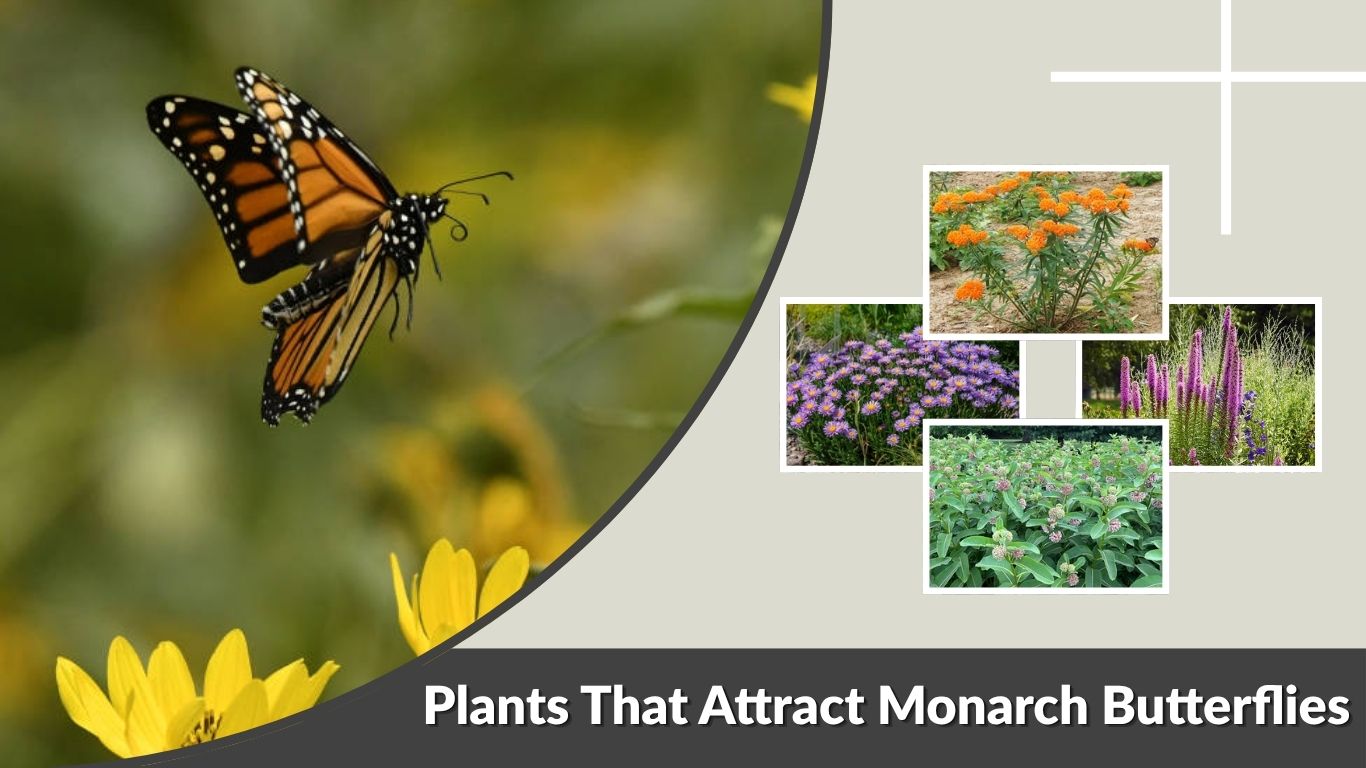
Monarch butterflies visit gardens for two essential resources: milkweed for reproduction and nectar-rich flowers for energy. Female monarchs lay their eggs on milkweed, and their caterpillars depend entirely on milkweed leaves. Adult monarchs, however, drink nectar from many flowering plants throughout breeding and migration. A successful monarch garden should therefore combine native milkweed with flowers that bloom from spring through fall.
What Plants Attract Monarch Butterflies?
The best plants fall into two groups:
- Host plants: Milkweed supports eggs and caterpillars.
- Nectar plants: Flowering plants feed adult monarchs.
Milkweed alone may attract egg-laying females, but it does not always provide flowers throughout the entire season. Adding diverse nectar plants ensures that adult monarchs have food before milkweed blooms, after its flowers fade, and during fall migration.
| Plant type | Purpose | Examples |
| Milkweed | Egg-laying and caterpillar food | Common, swamp, butterfly, showy milkweed |
| Spring flowers | Feed early-season adults | Willow, phlox, verbena, native salvia |
| Summer flowers | Support breeding monarchs | Coneflower, bee balm, blazing star |
| Fall flowers | Fuel migration | Goldenrod, asters, Joe-Pye weed |
| Annual flowers | Add long-lasting nectar | Zinnia, sunflower, cosmos |
Milkweed: The Most Important Monarch Plant
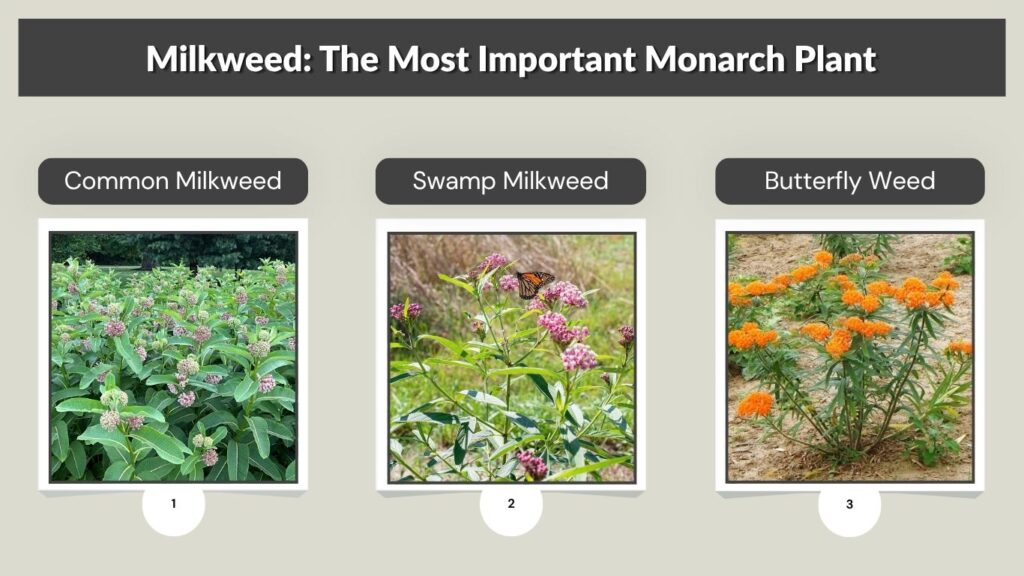
Milkweed plants belong mainly to the genus Asclepias. Female monarchs identify suitable milkweed before placing their eggs, often individually on the underside of leaves. After hatching, the caterpillars consume milkweed foliage and cannot complete normal development on ordinary garden plants.
Milkweed flowers also produce nectar used by adult monarchs, bees, and other pollinators. However, monarchs can lay eggs on milkweed even when the plant is young, not blooming, or finished flowering.
Best Milkweed Plants for Monarchs
The correct choice depends on climate, soil, moisture, and geographic location.
Common Milkweed
Common milkweed, Asclepias syriaca, produces broad leaves and rounded clusters of fragrant pink flowers. It is an important host plant across much of eastern and central North America.
It spreads through underground roots and may form colonies, making it best for large gardens, meadow-style plantings, or areas where spreading is acceptable.
Swamp Milkweed
Swamp milkweed, Asclepias incarnata, produces pink or rose-colored flower clusters and performs well in moist soil. It is suitable for rain gardens, pond edges, drainage areas, and ordinary gardens that receive consistent moisture.
Unlike common milkweed, it usually grows in clumps rather than spreading aggressively through underground runners.
Butterfly Weed
Butterfly weed, Asclepias tuberosa, has brilliant orange or yellow-orange flowers. It prefers sunny locations and well-drained soil and is one of the most ornamental native milkweeds.
Its leaves support monarch caterpillars, while its flowers attract monarchs and many other pollinating insects.
Showy Milkweed
Showy milkweed, Asclepias speciosa, is a western North American species with large gray-green leaves and rounded clusters of pink flowers. It is suitable for open gardens, naturalized areas, and sunny landscapes within its native range.
Whorled Milkweed
Whorled milkweed, Asclepias verticillata, has narrow leaves arranged around slender stems. Its delicate appearance makes it easier to combine with grasses and wildflowers in naturalistic gardens.
Choose Native Milkweed
Gardeners should select milkweed native to their region and suited to their site. Locally native plants are better adapted to regional rainfall, soil, temperature, and ecological relationships. The Monarch Joint Venture and U.S. Fish and Wildlife Service recommend including locally sourced native milkweed alongside native nectar flowers.
Tropical milkweed, Asclepias curassavica, remains green throughout winter in some warm regions. Its continuous growth may encourage monarchs to remain and breed when they would normally migrate, while contaminated foliage can contribute to transmission of the parasite Ophryocystis elektroscirrha. Federal guidance recommends replacing it with appropriate native milkweed.
Best Flowers That Attract Monarch Butterflies
Adult monarchs need nectar for daily activity, reproduction, and migration. They tend to visit flowers that are open during daylight, brightly colored, grouped together, and easy to land on.
Goldenrod
Goldenrod is one of the most valuable late-season nectar plants. Its clusters of small yellow flowers provide abundant nectar when migrating monarchs need to build fat reserves for winter.
Several goldenrod species are available, so gardeners can select one that matches their region, soil moisture, and available space.
Native Asters
Asters bloom in late summer and fall, making them important companions for goldenrod. Their purple, blue, pink, or white flowers provide nectar during the monarch’s southward migration.
Planting asters and goldenrods together can create an especially useful fall feeding area.
Blazing Star
Blazing star, or liatris, produces tall spikes covered with purple flowers. Monarchs can move between many individual blooms without leaving the plant, making it a productive nectar source.
It grows best in sunny locations, although moisture requirements vary among species.
Joe-Pye Weed
Joe-Pye weed produces large pink or mauve flower clusters that can attract numerous monarchs and other butterflies simultaneously. It performs especially well in moist soil and can become tall, so it is usually placed toward the back of a garden bed.
Purple Coneflower
Purple coneflower offers wide landing surfaces and a long summer blooming period. Its daisy-like flowers are easy for monarchs to access, and the plant tolerates sunny, relatively dry garden conditions once established.
Bee Balm
Bee balm produces red, pink, purple, or white flower clusters rich in nectar. It works well in sunny pollinator gardens and may spread to form a large flowering patch.
Zinnias
Zinnias are colorful annuals that bloom for months when faded flowers are removed. Monarchs frequently visit single-flowered or open-centered varieties because their nectar structures are easier to reach.
Although zinnias are not milkweed and cannot support monarch caterpillars, they can provide useful adult food.
Verbena
Verbena produces clusters of many small flowers, allowing monarchs to feed efficiently. Native perennial verbenas are especially useful, while annual varieties can add nectar to containers and small gardens.
Sunflowers
Sunflowers provide broad flower heads and plentiful nectar. Native perennial sunflowers and annual garden varieties can both attract adult monarchs, bees, and other butterflies. Monarchs are also known to drink nectar from daisies, thistles, clovers, and related flowers.
Purple Flowers That Attract Monarchs
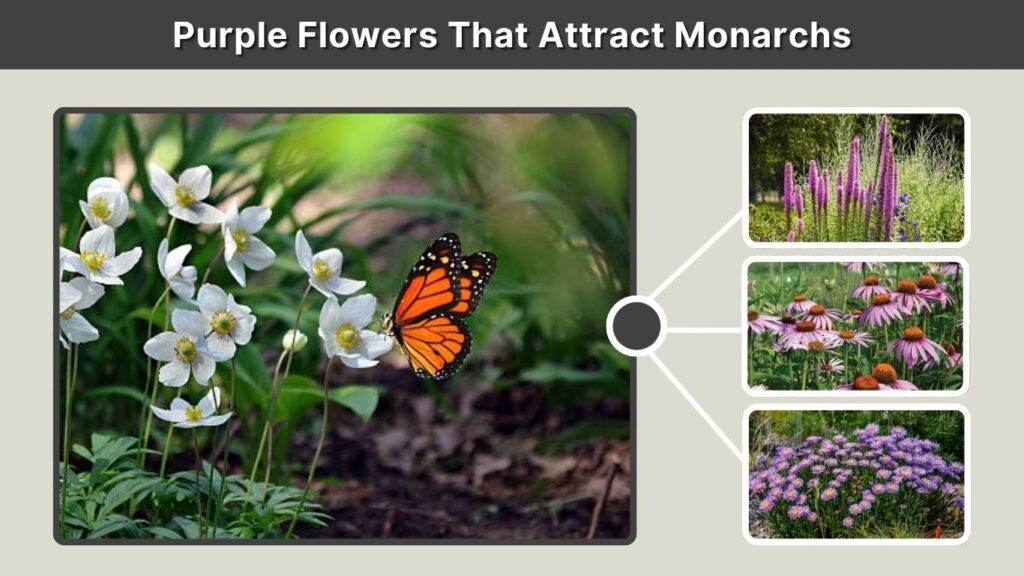
Monarchs frequently visit purple flowers, but color is not the only factor influencing their choices. Flower shape, nectar production, scent, accessibility, and bloom timing are equally important.
Good purple-flowering options include:
- Blazing star
- Purple coneflower
- Asters
- Verbena
- Native salvia
- Bee balm
- Ironweed
- New York ironweed
Plant several individuals of the same species together rather than scattering single plants throughout the yard. Large flower groups are easier for flying butterflies to notice and allow them to gather more nectar with less energy.
How to Attract Monarch Butterflies to Your Garden
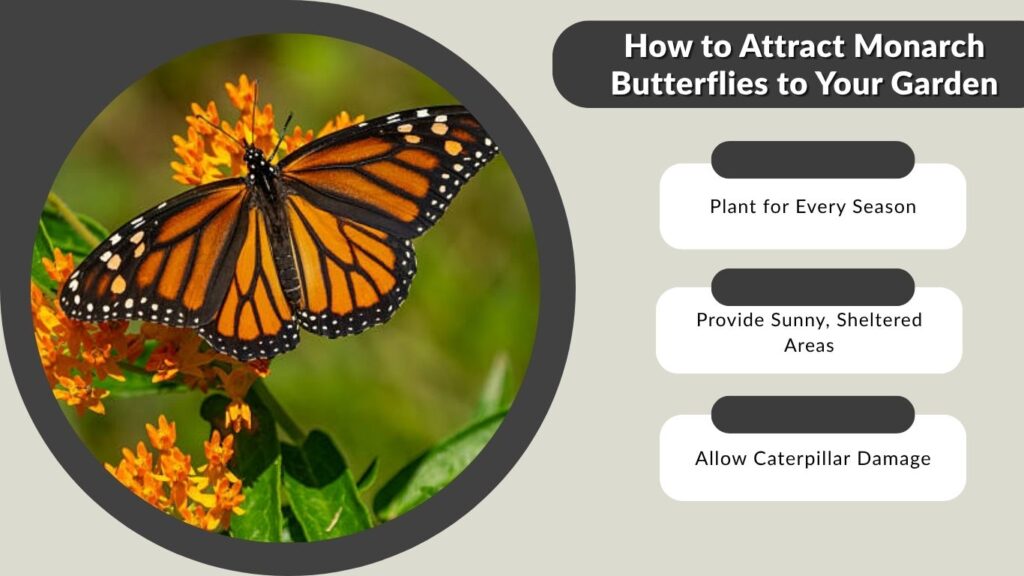
A monarch-friendly garden does not need to be large. Balconies, containers, flower beds, community gardens, and naturalized landscapes can all provide useful resources.
Plant for Every Season
Choose overlapping bloom periods so nectar is continuously available:
- Spring: Phlox, native salvia, verbena and early wildflowers
- Summer: Milkweed, coneflower, bee balm, blazing star and zinnias
- Fall: Goldenrod, asters, ironweed and Joe-Pye weed
Fall flowers are particularly important because migrating adults need large amounts of nectar to store energy for winter.
Provide Sunny, Sheltered Areas
Monarchs depend on external warmth to become active. Place flowering areas where they receive several hours of sunlight, preferably with protection from strong wind.
Flat stones, open soil, fences, and plant stems may provide resting or basking locations.
Avoid Pesticides
Do not treat milkweed or nectar flowers with insecticides. Products intended to kill aphids, caterpillars, beetles, or mosquitoes may also injure monarchs and other pollinators.
Ask nurseries whether plants have been treated with systemic insecticides before purchasing them for a butterfly garden.
Allow Caterpillar Damage
Milkweed with holes, missing leaves, or stripped stems may indicate that the garden is successfully supporting caterpillars. Avoid spraying or removing caterpillars simply because the plant looks damaged.
Established milkweed can often regrow after feeding, particularly when plants are distributed throughout the garden.
FAQs
What plant attracts monarch butterflies the most?
Native milkweed is the most important plant because it attracts egg-laying females and provides the only food monarch caterpillars can eat. Adult monarchs also visit milkweed flowers for nectar, but they need additional flowering plants throughout the season.
Does butterfly weed attract monarchs?
Yes. Butterfly weed is a native milkweed species that supports monarch eggs and caterpillars. Its bright orange flowers also provide nectar for adult butterflies and other pollinators.
Does lavender attract monarch butterflies?
Monarchs may drink nectar from lavender when it is available, but regionally native flowers usually provide stronger ecological value. Lavender should be used alongside native milkweed, asters, goldenrod, coneflower, or other appropriate local plants.
Are monarch butterflies attracted to zinnias?
Yes. Monarchs commonly visit open-centered zinnias for nectar. Single-flowered varieties are often easier to feed from than heavily doubled flowers, but zinnias cannot replace milkweed as a host plant.
What is the best monarch garden combination?
Combine several native milkweed plants with clusters of nectar flowers that bloom from spring through fall. A practical mixture includes milkweed, coneflower, blazing star, bee balm, zinnia, goldenrod, and native asters.
