
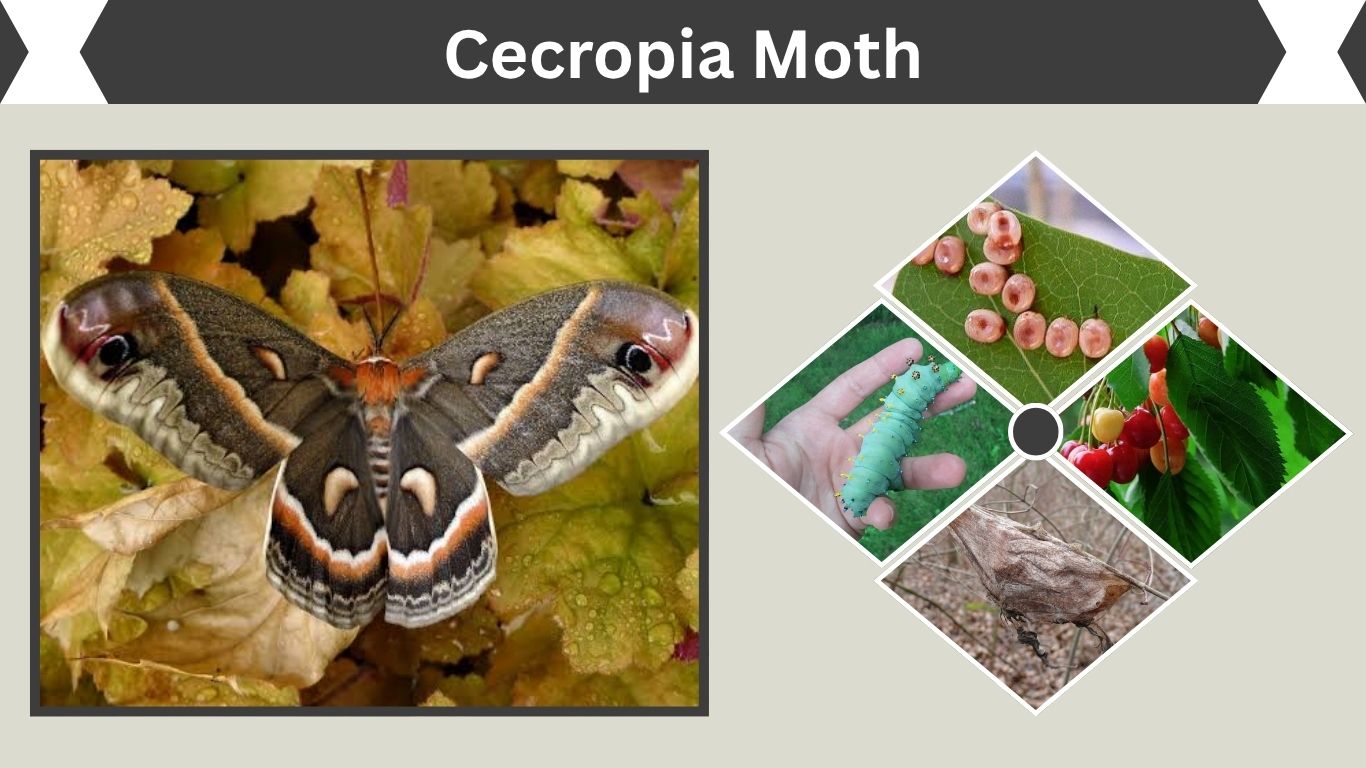
The cecropia moth is one of the most beautiful giant moths in North America. It has large brown, red, white, and tan wings with crescent-shaped markings and a thick, fuzzy body. Its caterpillar is also famous because it grows large, green, and colorful, with blue, yellow, orange, and red bumps along the body. People often find a cecropia moth on a wall, a cocoon on a twig, or a bright green caterpillar on a host plant and wonder if it is rare, poisonous, or safe to touch.
What Is a Cecropia Moth?
The cecropia moth, scientifically known as Hyalophora cecropia, is a giant silk moth. NC State Extension describes it as the largest moth in its region and part of the giant silkworm moth group, whose caterpillars spin tough brown silk cocoons.
| Feature | Cecropia Moth |
| Scientific name | Hyalophora cecropia |
| Common group | Giant silk moth |
| Adult wingspan | Up to about 6 inches |
| Caterpillar size | Up to about 4–5 inches |
| Adult diet | Does not eat |
| Caterpillar diet | Leaves of many trees and shrubs |
| Cocoon | Tough brown silk cocoon |
| Main activity | Adult flies mostly at night |
The National Park Service calls the cecropia moth the largest native moth of North America and notes that it is found in and around hardwood forests east of the Rocky Mountains.
Cecropia Moth Identification
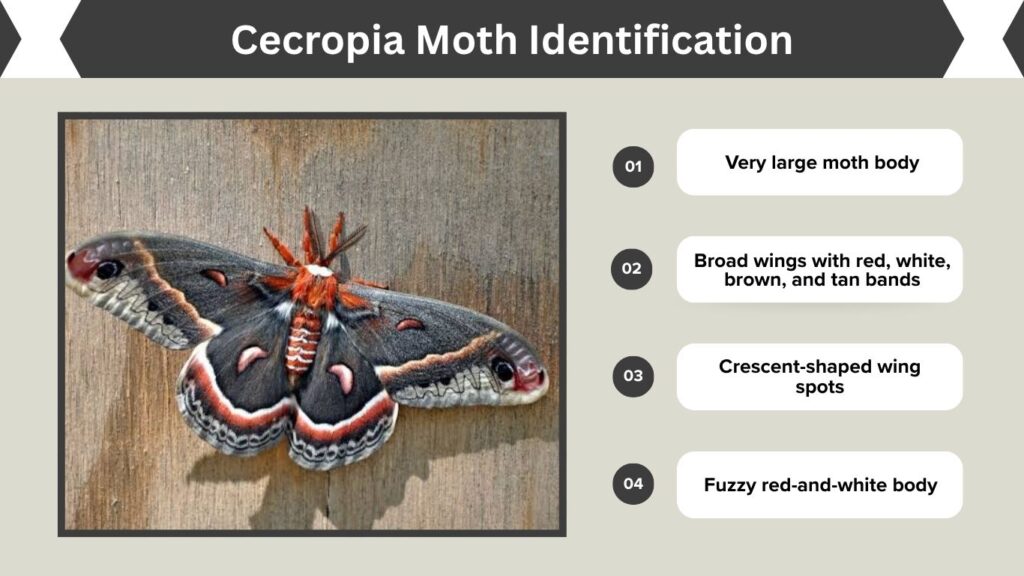
A cecropia moth is large, furry, and boldly patterned. The wings are mostly brown or gray-brown with red, white, tan, and black markings. Each wing has a pale crescent-shaped mark, and the body is thick and reddish with white bands.
Adult Cecropia Moth ID Features
Look for these signs:
- Very large moth body
- Broad wings with red, white, brown, and tan bands
- Crescent-shaped wing spots
- Fuzzy red-and-white body
- Feather-like antennae, especially on males
- Mostly nocturnal behavior
- Often seen near lights, walls, trees, or porches
NC State Extension says cecropia moths can have wingspans up to 6 inches wide, making them one of the easiest giant moths to recognize when found on a wall or screen.
Cecropia Moth Caterpillar
The cecropia moth caterpillar is large, colorful, and very different from the adult moth. Young larvae start dark, then become yellowish-green, and later turn bluish-green or bright green with colorful raised bumps. The National Park Service says cecropia caterpillars change from black to yellow to green as they grow, and by late August they can reach about 5 inches long.
Caterpillar Identification Features
A mature cecropia moth caterpillar may have:
- Large green or bluish-green body
- Red or orange bumps near the front
- Yellow bumps along the back
- Blue bumps along the sides
- Small black spikes on the bumps
- Thick, soft-looking body
- Length of about 4–5 inches when mature
The caterpillar may look strange or even dangerous, but its bright colors and spiny-looking bumps are mostly defensive warning signals.
Is the Cecropia Moth Caterpillar Poisonous?
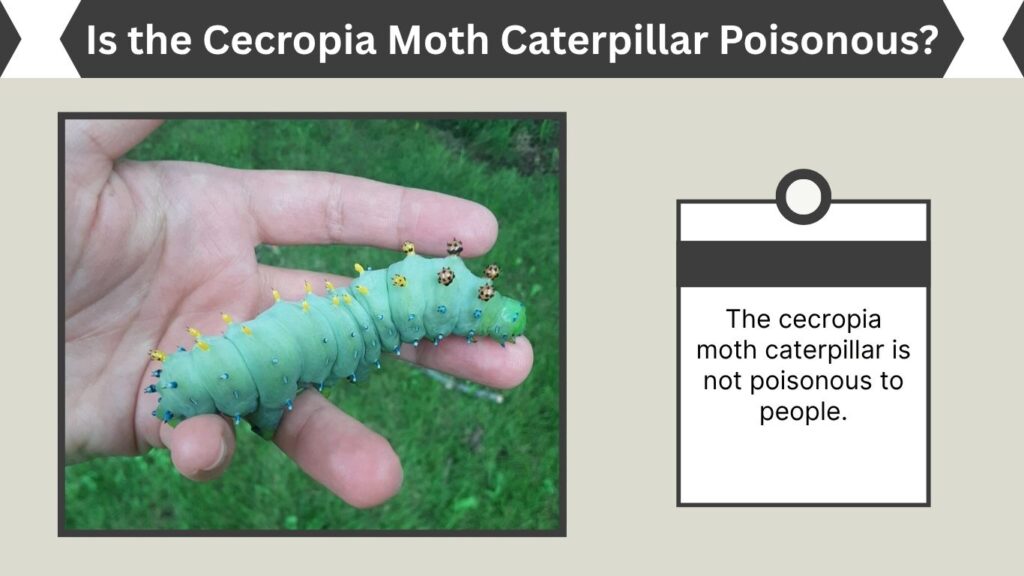
The cecropia moth caterpillar is not poisonous to people. The National Park Service states that the caterpillar is not poisonous, even though its unusual appearance may help discourage predators. Iowa State University Extension also says cecropia caterpillars and moths are harmless to people and pets.
This does not mean you should handle it roughly. Large caterpillars are delicate, and their skin can be injured if squeezed. If you need to move one from a road, driveway, or sidewalk, use a leaf, stick, or gentle hand and place it near shrubs or trees.
Cecropia Moth Size and Wingspan
The cecropia moth is famous for its size. Adults can reach a wingspan of up to about 6 inches, while the caterpillar can grow around 4 to 5 inches long before pupating. NC State Extension reports adult wingspans up to 6 inches, and the National Park Service reports mature caterpillars can be about 5 inches long.
| Stage | Approximate Size |
| Egg | Small, laid in groups |
| Young caterpillar | Tiny and dark after hatching |
| Mature caterpillar | About 4–5 inches long |
| Cocoon | Large brown silk case on twig or branch |
| Adult moth | Up to about 6 inches wingspan |
Because adults are so large, many people mistake them for rare exotic insects. In reality, they are native giant silk moths.
Cecropia Moth Life Cycle
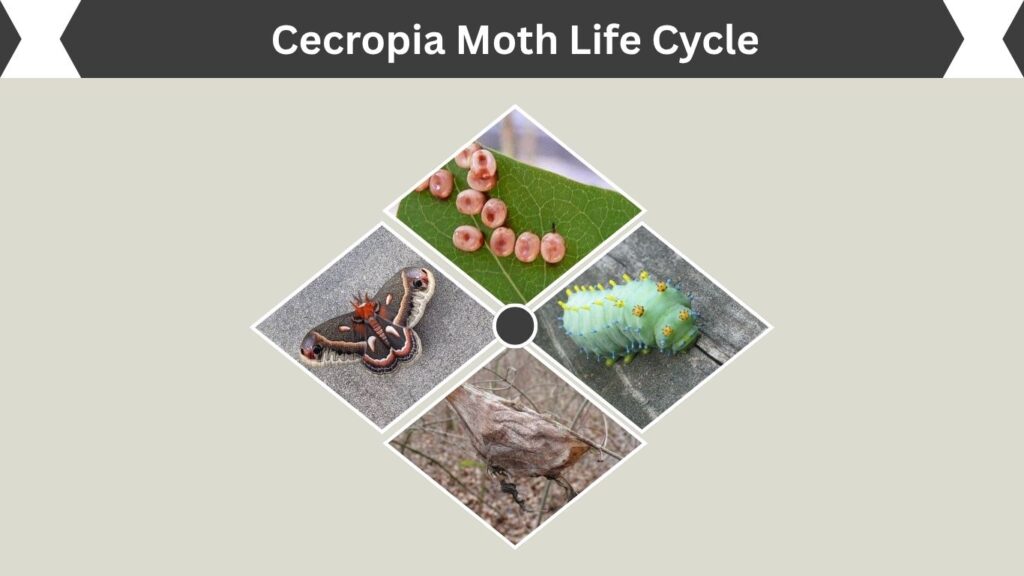
The cecropia moth life cycle has four main stages: egg, larva, pupa, and adult. Females lay eggs on host plant leaves. The eggs hatch into caterpillars, the caterpillars feed and grow, and mature larvae spin cocoons where they pupate and overwinter. NC State Extension says cecropia moths overwinter as pupae in cocoons attached to twigs of the trees on which they feed.
Main Life Stages
- Egg: Female lays eggs on host leaves.
- Larva: Caterpillar hatches and feeds heavily.
- Instars: Caterpillar molts and changes color as it grows.
- Cocoon: Mature caterpillar spins a tough silk cocoon.
- Pupa: Insect transforms inside the cocoon.
- Adult: Large moth emerges, mates, and lays eggs.
The National Park Service says females may lay around 100 eggs, usually in small groups on both sides of host plant leaves, and eggs hatch in about two weeks.
Cecropia Moth Cocoon and Pupa
A cecropia moth cocoon is usually large, brown, tough, and attached lengthwise to a twig, branch, or woody stem. The caterpillar spins the cocoon before winter, then remains protected as a pupa until the adult moth emerges in warm weather.
NC State Extension describes cecropia cocoons as tough brown silk structures, and Iowa State University Extension says cocoons found outside should be kept in winter conditions until late April rather than kept warm inside the house.
If you bring a cocoon indoors too early, the moth may emerge before outdoor conditions are suitable. It is better to leave the cocoon outside, in a protected but natural place.
What Do Cecropia Moths Eat?
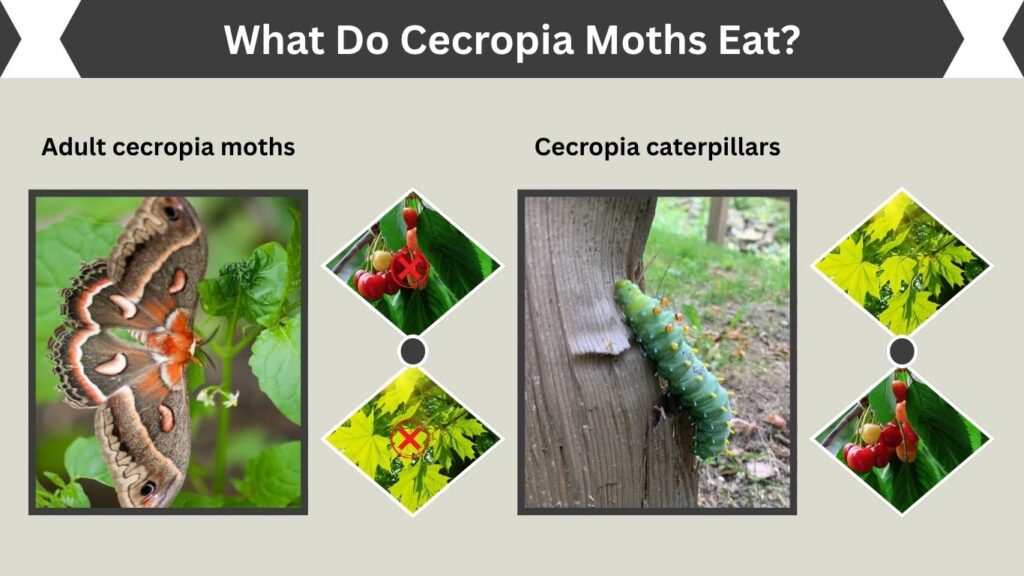
Adult cecropia moths do not eat. They lack functioning mouthparts and cannot feed, so their short adult life is focused on mating and reproduction. The National Park Service says adult cecropia moths have no working mouthparts or gut and cannot eat; they usually live only about a week or two.
Cecropia caterpillars are the feeding stage. Iowa State University Extension lists many host plants, including wild cherry, plum, maple, willow, boxelder, apple, crabapple, lilac, walnut, elm, birch, and poplar.
Common Cecropia Moth Host Plants
Caterpillars may feed on:
- Maple
- Wild cherry
- Plum
- Willow
- Apple
- Crabapple
- Lilac
- Walnut
- Elm
- Birch
- Poplar
- Boxelder
- Oak
- Beech
- Buttonbush
Even though caterpillars eat leaves, they usually occur in scattered, low numbers and are not considered serious pests. Iowa State Extension says significant defoliation is unlikely except on very small, newly transplanted plants.
Cecropia Moth Lifespan
The adult cecropia moth has a very short lifespan. Animal Diversity Web reports that adults typically live about 10 days, with a range of about 5 to 12 days. NC State Extension gives a similar simple estimate, saying adults live for about two weeks because they lack functioning mouthparts.
The full life cycle is much longer than the adult stage. The insect spends far more time as an egg, caterpillar, cocoon, and pupa than it does as a flying moth.
Male vs Female Cecropia Moth
Male and female cecropia moths can look similar at first, but there are useful differences. Females usually have larger, heavier abdomens because they carry eggs. Males usually have larger, more feathery antennae that help them detect female pheromones.
Male and Female Differences
| Feature | Male Cecropia Moth | Female Cecropia Moth |
| Antennae | Larger and more feathery | Smaller and less feathery |
| Abdomen | Usually slimmer | Usually larger and heavier |
| Behavior | Flies to find females | Releases pheromones to attract males |
| Main role | Finds mate | Lays eggs |
The National Park Service notes that females have larger abdomens while males have larger antennae, and the Brandywine Conservancy explains that male cecropia moths use plume-like antennae to detect wind-borne female pheromones.
Cecropia Moth vs Luna Moth
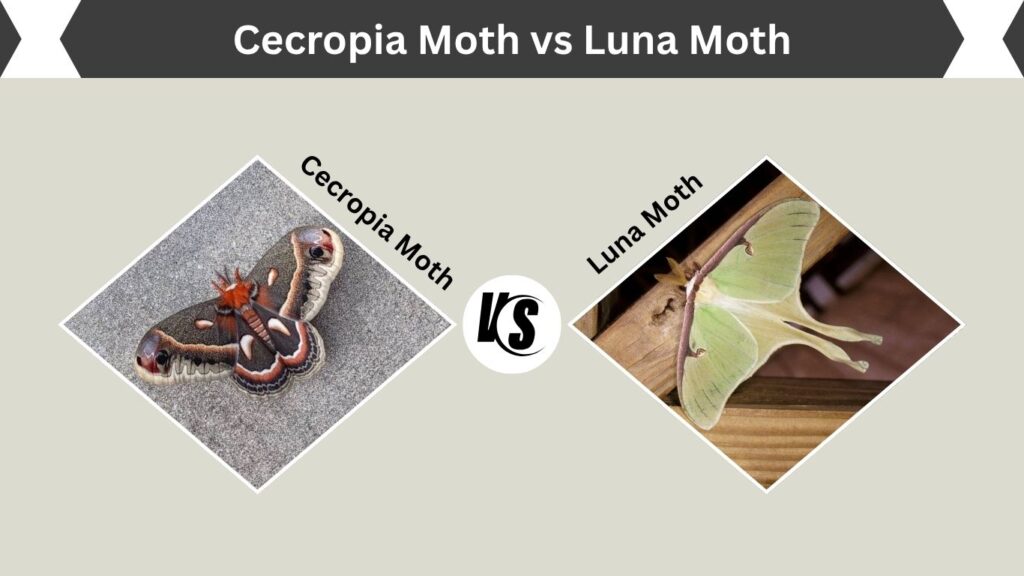
Cecropia moths and luna moths are both large silk moths, so people often compare them. The easiest difference is color. A luna moth is pale green with long tail-like hindwings, while a cecropia moth is brown, red, white, and tan with crescent markings.
| Feature | Cecropia Moth | Luna Moth |
| Main color | Brown, red, white, tan | Pale green |
| Wing shape | Broad, rounded | Long tails on hindwings |
| Body | Thick and fuzzy | Green-white, fuzzy |
| Caterpillar | Green with colorful bumps | Green, smoother-looking |
| Family group | Giant silk moth | Giant silk moth |
Both adults do not feed as mature moths, and both are admired for their short-lived adult beauty.
Cecropia Moth Range and Habitat
Cecropia moths are associated with hardwood forests, forest edges, orchards, parks, yards, and places with suitable host trees. The National Park Service describes them as occurring in and around hardwood forests east of the Rocky Mountains.
Searches for cecropia moths in Minnesota, Michigan, Wisconsin, and Ohio are common because this species is well known in the eastern and central parts of North America. In suitable areas, people may find adults near lights in late spring or early summer and caterpillars on trees or shrubs later in the season.
Cecropia Moth Meaning, Symbolism, and Tattoo Ideas
Many people search for cecropia moth meaning, symbolism, art, and tattoo ideas because the moth has a dramatic life cycle. Common symbolic themes include transformation, short-lived beauty, patience, renewal, and hidden growth.
For tattoo designs, the adult moth’s crescent wing marks, feathery antennae, and red-white body bands are the most recognizable features. A caterpillar-to-cocoon-to-moth design can also represent change and personal growth.
Cecropia Moth for Sale and Care
Some people search for cecropia moth eggs, cocoons, pupae, or caterpillars for sale. Before buying or raising them, check local rules and avoid releasing insects outside their natural range. Moving moths or cocoons between regions can create disease, parasite, or ecological problems.
If you are observing a local caterpillar, give it fresh leaves from the host plant where you found it, keep the container ventilated, and provide a twig or stick for cocoon formation. Iowa State University Extension recommends fresh foliage and a diagonal stick in the rearing container to help cocoon formation.
FAQs
Are cecropia moths dangerous?
No, cecropia moths are not dangerous to people. Iowa State University Extension says both the caterpillars and moths are harmless to people and pets.
Is the cecropia moth caterpillar poisonous?
No, the cecropia moth caterpillar is not poisonous. The National Park Service says it is not poisonous, although its strange colors and bumps may help scare predators.
What do cecropia moths eat?
Adult cecropia moths do not eat because they lack working mouthparts. Cecropia caterpillars eat leaves from host plants such as maple, cherry, willow, apple, lilac, walnut, elm, birch, and poplar.
How long do cecropia moths live?
The adult moth usually lives only about 1–2 weeks. Animal Diversity Web reports a typical adult lifespan of about 10 days, while NC State Extension says adults live about two weeks.
Are cecropia moths rare?
Cecropia moths are not usually considered extremely rare, but many people do not see them often because adults are nocturnal and short-lived. Habitat, light pollution, parasites, and local conditions can affect how often they are noticed. UF/IFAS notes that some populations may be declining because of factors such as nontarget effects from introduced biological control agents.
