
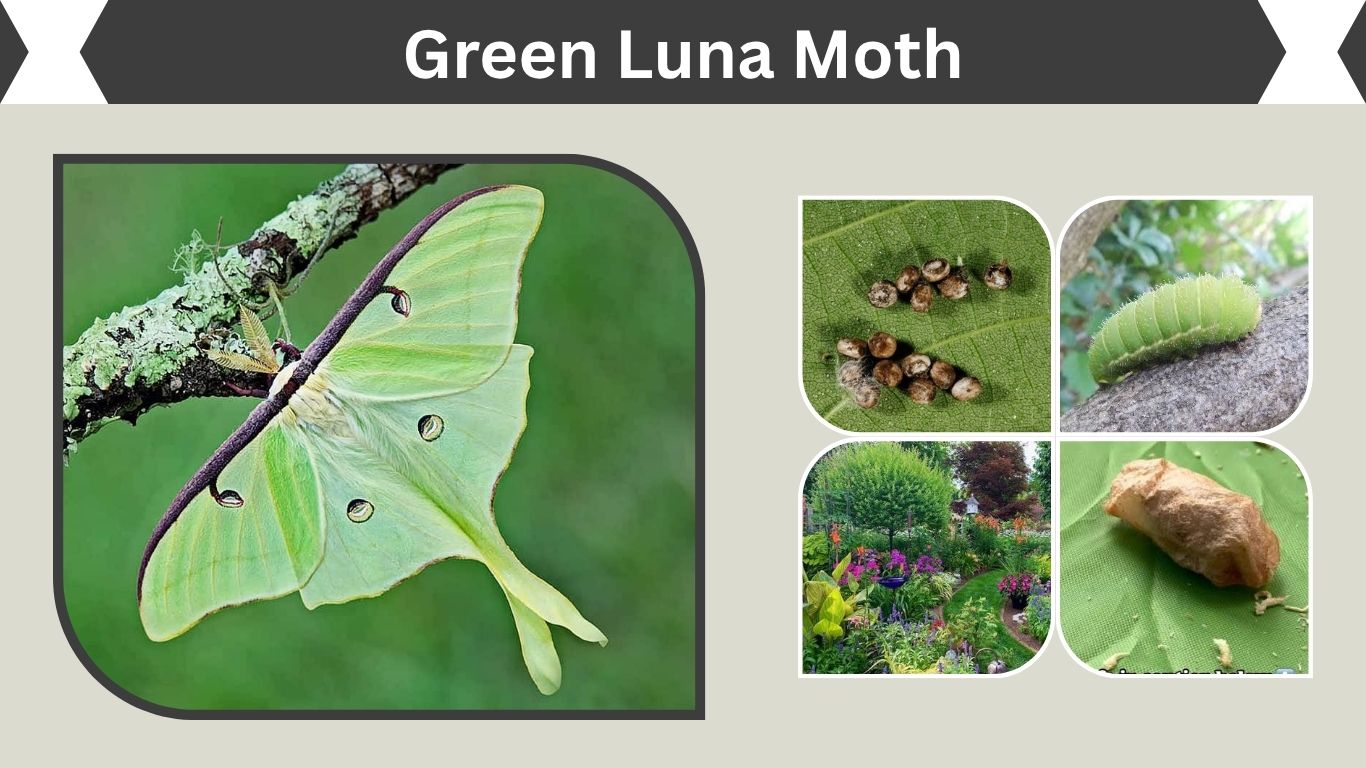
A green luna moth is one of the most eye-catching moths in North America. With pale green wings, long curved tails, and delicate eyespots, it often looks more like a magical butterfly than a common moth. Many people notice one resting on a wall, tree, porch, or shrub and wonder what it means. This guide explains how to identify a luna moth, what its caterpillar looks like, where it lives, and whether it is harmful.
What Is a Green Luna Moth?
A green luna moth is the adult form of Actias luna, a large North American silk moth in the family Saturniidae. Smithsonian lists its scientific name as Actias luna, and Clemson Extension describes its life cycle as egg, caterpillar, pupa inside a cocoon, and adult moth.
The word “luna” refers to the moon, which fits the moth’s pale, ghostly green color and night-flying behavior. People also search for it as “green lunar moth,” “lunar green moth,” or “luna moth green,” but the common name is usually luna moth.
Adult luna moths are famous for their large green wings, white fuzzy body, long hindwing tails, and round eyespots. They are often seen near porch lights because they are nocturnal and may be attracted to artificial lighting at night.
How to Identify a Green Luna Moth
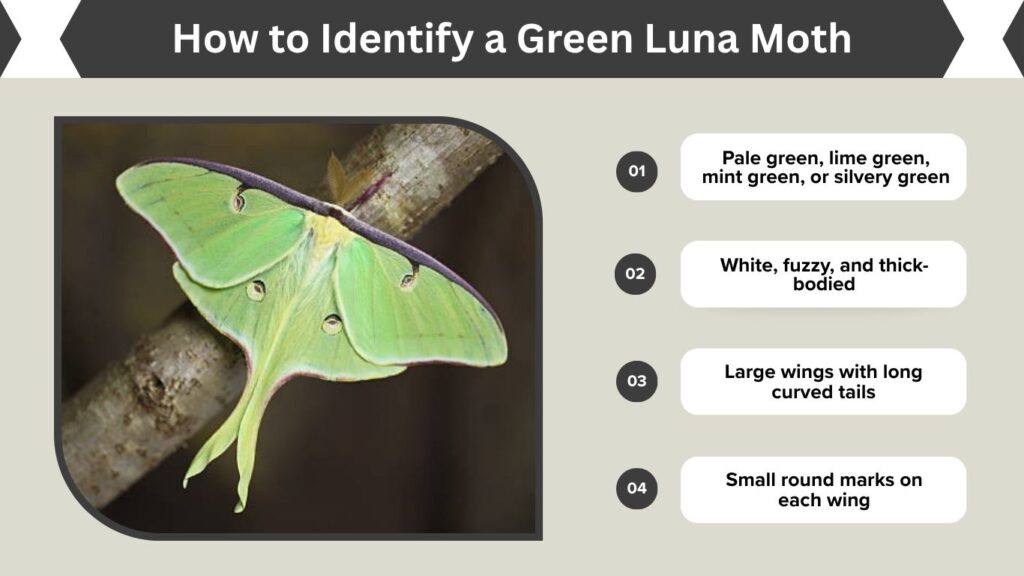
A real green luna moth has several features that make it easier to recognize. The adult is usually pale green or lime green, with long tails trailing from the hindwings. It also has eyespots on the wings and a soft white body.
| Feature | Green Luna Moth Appearance |
| Wing color | Pale green, lime green, mint green, or silvery green |
| Body | White, fuzzy, and thick-bodied |
| Wing shape | Large wings with long curved tails |
| Eyespots | Small round marks on each wing |
| Activity | Mostly active at night |
| Common resting places | Tree trunks, shrubs, walls, windows, and porch areas |
Key Adult Features
The easiest way to identify a green luna moth is by looking for the long tails on the back wings. Many green moths exist, but few have the same large wings, elegant tails, and moon-like eyespots.
Male luna moths often have larger, more feathery antennae than females. These antennae help them detect female pheromones at night. University of Florida IFAS notes that males are strong fliers, while females release sex-attractant pheromones and begin laying eggs after mating.
Why Some Look Pink, Mint, or Silvery Green
Searches like “pink and green luna moth,” “mint green luna moth,” and “silvery-green luna moth” usually refer to normal color variation. Some luna moths look pale mint, bluish green, yellow-green, or almost white depending on lighting, age, and wing condition.
The outer wing edges can also appear pinkish, purplish, or brownish. A freshly emerged luna moth may look soft and bright, while an older moth may look faded, torn, or dusty.
Green Luna Moth Caterpillar and Life Cycle
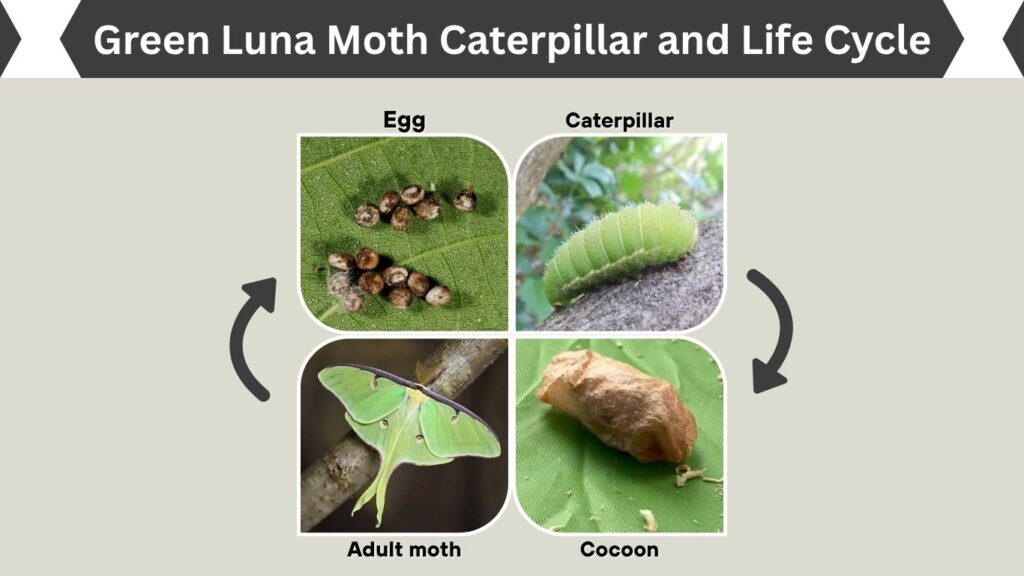
Before it becomes a large green moth, the luna moth starts as an egg and then grows into a chunky green caterpillar. This is why many people search for “luna moth giant green caterpillar” or “green luna moth caterpillar.”
| Life Stage | What It Looks Like | What It Does |
| Egg | Small eggs on host plant leaves | Hatches into a caterpillar |
| Caterpillar | Bright green, thick body, small spots | Eats leaves and grows |
| Cocoon | Silk cocoon often mixed with leaves | Protects the pupa |
| Adult moth | Large pale green moth with tails | Mates and lays eggs |
Eggs and Caterpillars
The green luna moth caterpillar is usually bright green with a thick, segmented body. It may have small reddish, orange, or yellowish spots along its sides. It feeds on leaves from suitable host trees and grows through several stages before pupating.
Common host plants include trees such as hickory, walnut, sweetgum, persimmon, birch, and sumac, although host use can vary by region. University of Florida IFAS explains that luna moth caterpillars are not usually common enough to cause serious damage to their host trees.
Cocoon and Adult Stage
When the caterpillar is fully grown, it forms a cocoon. Texas A&M Forest Service explains that the caterpillar crawls to the ground, weaves silk around itself, and often incorporates a dry leaf into the cocoon, helping it blend into leaf litter.
The adult moth that emerges from the cocoon does not live long. Adult luna moths have vestigial mouthparts and do not feed, which is one reason their adult stage is short. Their main purpose as adults is reproduction.
Where Green Luna Moths Live
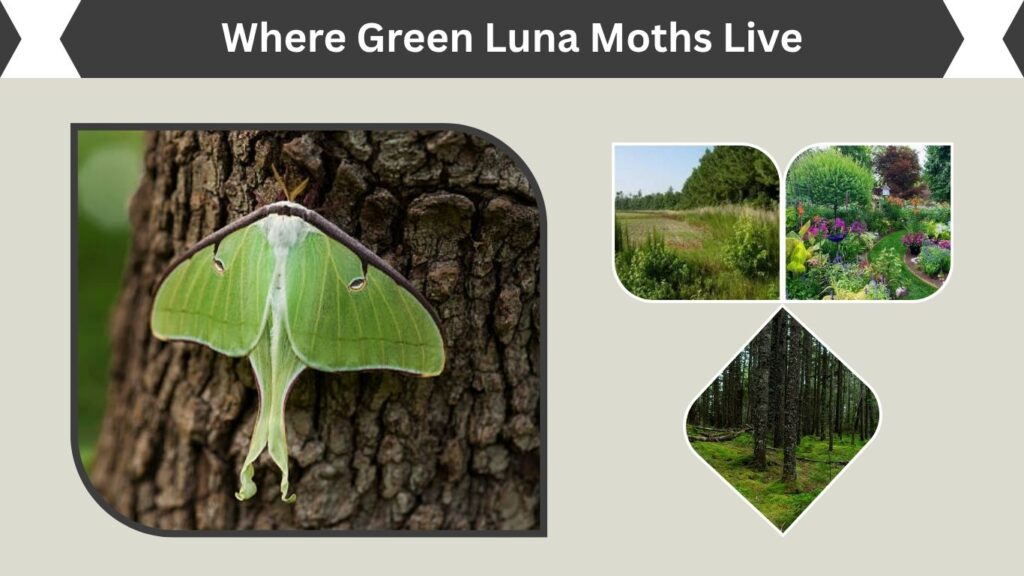
Green luna moths are native to North America and are most often associated with wooded areas, forest edges, gardens, and yards with suitable host trees. They may appear in places where caterpillars have enough leaves to eat and adults have safe places to rest.
Seeing a green luna moth in shrubs, on a screen door, near a porch light, or on the side of a house is usually normal. The moth may simply be resting during the day after flying at night. Because adults do not feed, they are not visiting flowers for nectar like butterflies do.
If you want to make your yard more luna-moth-friendly, focus on reducing pesticide use and supporting native trees. Host plants are more important than flowers because the caterpillars need leaves to survive.
Green Luna Moth Meaning and Symbolism
Many people search for “green luna moth meaning” or “green luna moth symbolism” after seeing one. Biologically, a luna moth is simply a native moth completing its life cycle. Symbolically, however, people often connect it with transformation, renewal, intuition, and short-lived beauty.
Because luna moths spend much of their lives as caterpillars and pupae before emerging as delicate adults, they are often seen as symbols of change. Their night activity and moon-related name also make them popular in spiritual, dream, and tattoo meanings.
A green luna moth tattoo may represent personal growth, mystery, rebirth, or a reminder that beautiful moments can be brief. These meanings are cultural and personal, not scientific facts, but they explain why the luna moth is so popular in art and tattoo designs.
Is a Green Luna Moth Dangerous or a Pest?
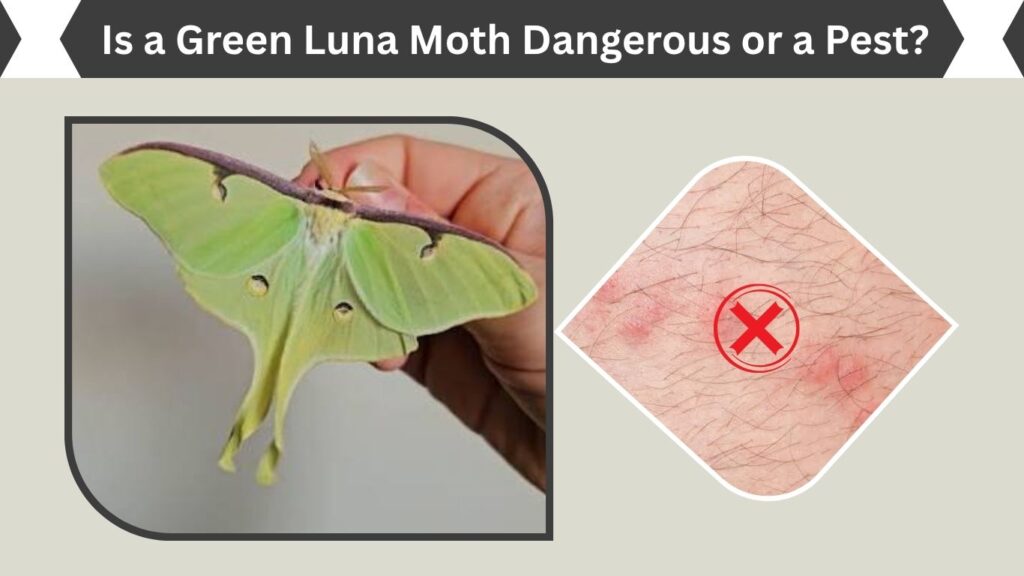
A green luna moth is not dangerous to people or pets. The adult moth does not bite, sting, or feed. If one lands near you, it is not trying to attack; it is likely resting or confused by light.
The caterpillar stage feeds on leaves, but luna moth caterpillars are not considered a major pest. University of Florida IFAS notes that they are not common enough to significantly damage host trees.
If you find a luna moth, the best thing to do is leave it alone. Avoid touching its wings because moth wings are delicate. If it is in a risky place, such as a doorway or walkway, you can gently encourage it onto a leaf or piece of paper and move it to a sheltered shrub or tree.
Green Moth Not Luna Moth: Lookalikes
Not every big green moth is a luna moth. Some people search for “green moth not luna moth” because they find a green insect that looks similar but lacks the classic long tails.
A luna moth is most likely if the moth is large, pale green, and has long hindwing tails. If the insect is smaller, has no tails, has a different wing shape, or looks more like a butterfly, it may be another moth or butterfly species.
The phrase “butterfly that looks like a green luna moth” is also common, but luna moths are moths, not butterflies. Their thick fuzzy bodies, night activity, and feathery antennae help separate them from most butterflies.
FAQs
What is a green luna moth?
A green luna moth is the adult form of Actias luna, a large North American silk moth known for pale green wings, long tails, and eyespots. It is nocturnal and is often seen near lights, trees, shrubs, or porch areas.
Are all luna moths green?
Most luna moths are green, but the shade can vary. Some look lime green, mint green, pale green, blue-green, or silvery green. Older moths may appear faded, and some individuals have pinkish or purplish wing edges.
What does a green luna moth caterpillar look like?
A green luna moth caterpillar is thick, bright green, and segmented. It may have small colored spots along its sides. It feeds on leaves from host trees such as hickory, walnut, sweetgum, persimmon, birch, and sumac.
Does a green luna moth bite?
No, an adult green luna moth does not bite or sting. Adult luna moths have vestigial mouthparts and do not feed, so they are harmless to people, pets, clothing, and food.
What does seeing a green luna moth mean?
Scientifically, it means a luna moth is active in your area and may have suitable habitat nearby. Symbolically, many people connect the green luna moth with transformation, renewal, mystery, intuition, and short-lived beauty.
