
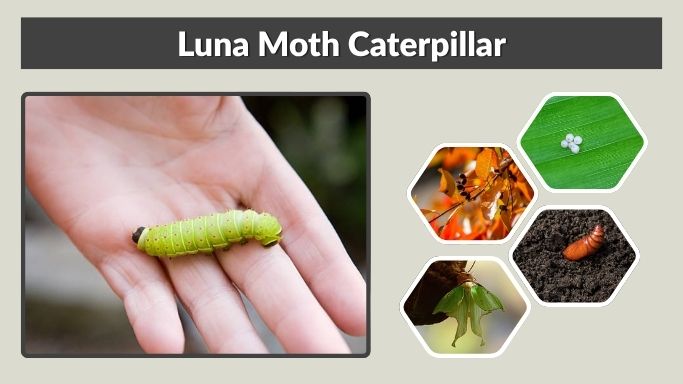
The luna moth caterpillar is the larval stage of the beautiful green luna moth, one of the most recognizable moths in North America. It is usually a large green caterpillar with a smooth body, pale side markings, and small reddish or orange spots. It feeds on the leaves of several hardwood trees, including hickory, walnut, sweetgum, birch, persimmon, oak, and willow. Although it may look unusual, it is not considered dangerous to people. Understanding its appearance, food plants, stages, cocoon, and care needs makes identification much easier.
What Is a Luna Moth Caterpillar?
A luna moth caterpillar is the growing stage of the luna moth, scientifically known as Actias luna. The adult moth is famous for its pale green wings, long tails, and moon-like eyespots. Before becoming that adult moth, it spends several weeks as a leaf-eating caterpillar.
Basic Overview
The caterpillar hatches from a small egg laid on or near a host plant. Once it emerges, it begins feeding on leaves. As it grows, it molts several times and passes through stages called instars. Each stage allows the caterpillar to become larger before it finally prepares to pupate.
A mature luna moth caterpillar is usually bright green and plump. It blends well with leaves, which helps protect it from birds and other predators. When fully grown, it stops feeding and looks for a safe place to make a cocoon.
The luna moth caterpillar is not a garden pest in most cases. It may eat leaves, but it usually occurs in low numbers and does not cause serious damage to healthy trees.
Identification
- Large green caterpillar with a smooth, plump body.
- Usually bright green or yellow-green when mature.
- Has small orange, red, or pinkish spots along the sides.
- Thin pale lines may run along each side of the body.
- The head is usually green or brownish-green.
- Young caterpillars may look darker or less colorful.
- Mature caterpillars may reach about 2.5 to 3 inches long.
- Body is not covered with long stinging hairs.
- Often found on hardwood host tree leaves.
- Turns darker or reddish-brown when preparing to pupate.
What Does a Luna Moth Caterpillar Look Like?
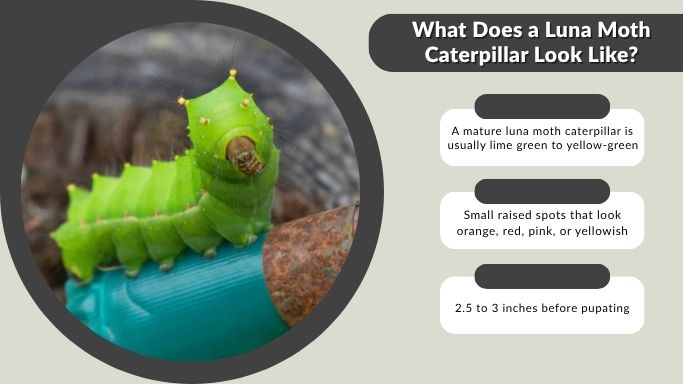
A luna moth caterpillar changes as it grows. Young larvae are smaller and may look less bright than mature ones. Later stages are easier to recognize because the caterpillar becomes larger, greener, and more rounded.
Color and Body Shape
A mature luna moth caterpillar is usually lime green to yellow-green. Its body is thick, soft, and segmented. Along the sides, it may have small raised spots that look orange, red, pink, or yellowish. These spots can vary slightly from one caterpillar to another.
The caterpillar’s green color works as camouflage. When it rests on a leaf, it can be difficult to see unless you look closely. This camouflage helps protect it from birds, wasps, and other predators.
Some people notice a “pink luna moth caterpillar” or “orange luna moth caterpillar.” In many cases, this refers to color changes before pupation, side markings, or lighting differences in photos. A prepupal caterpillar may become duller, reddish, brownish, or orange-tinted before making its cocoon.
Size and Growth
A newly hatched caterpillar is tiny, but it grows quickly by feeding on leaves. Mature luna moth caterpillars can become quite large compared with many garden caterpillars. They may reach around 2.5 to 3 inches before pupating.
Because they grow through several molts, their appearance can shift through the stages. The final stage is the easiest to identify because it is large, plump, and bright green.
Luna Moth Caterpillar Food and Host Plants
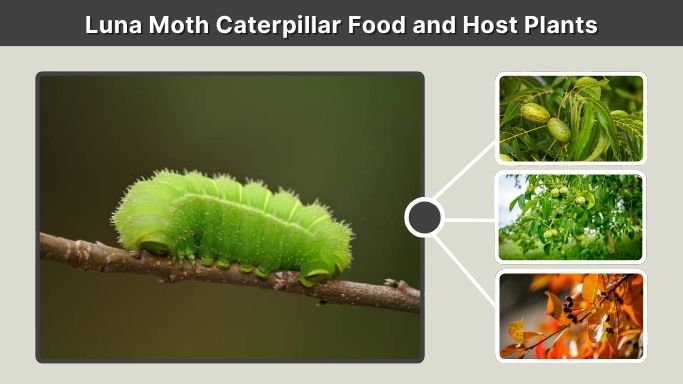
Luna moth caterpillars feed on the leaves of specific trees and shrubs. They do not eat every plant in the garden. The female moth chooses host plants carefully because the caterpillar usually stays on the plant where it hatches.
Common Food Plants
Luna moth caterpillars may feed on several hardwood trees. Common host plants include:
- Hickory
- Walnut
- Sweetgum
- Birch
- Persimmon
- Oak
- Willow
- Black gum
- Sumac
- Beech
Host plants may vary by region. A caterpillar in one area may commonly use hickory or walnut, while another region may have more records from sweetgum, birch, or persimmon. If you find a luna moth caterpillar, the plant it is feeding on is often one of the best clues.
They feed on leaves, not flowers, fruit, fabric, or stored food. Although they can chew noticeable leaf edges, they are not usually present in numbers large enough to harm mature trees.
What to Feed a Luna Moth Caterpillar
If you are caring for a luna moth caterpillar briefly, feed it leaves from the exact tree where you found it. This is usually safer than switching to another host plant. Many caterpillars do not adjust well when their food plant changes suddenly.
Use fresh, pesticide-free leaves. Replace wilted leaves often. Avoid leaves from roadsides or sprayed gardens because pesticides and pollution can harm caterpillars.
Luna Moth Caterpillar Stages
The luna moth caterpillar passes through several growth stages called instars. Each instar ends with a molt, where the caterpillar sheds its old skin and grows larger.
Egg to Young Caterpillar
The life cycle begins when a female luna moth lays eggs on host plant leaves. After the eggs hatch, tiny caterpillars begin feeding. At first, they are small and easy to miss. They may stay on the underside of leaves or along leaf edges.
During the early stages, the caterpillar’s main job is to eat and grow. It may rest between feeding periods and become more active when conditions are suitable. Because it is small, it is vulnerable to predators, weather, and parasites.
Mature Caterpillar Stage
As the caterpillar grows, it becomes larger and greener. The body becomes plumper, and the side spots become easier to notice. This is the stage most people recognize as the luna moth caterpillar.
The caterpillar continues feeding until it has stored enough energy for pupation and adult life. Adult luna moths do not feed, so the energy gathered during the caterpillar stage is very important.
Luna Moth Caterpillar Cocoon and Pupation
When a luna moth caterpillar is fully grown, it stops feeding and begins preparing for pupation. This stage can confuse people because the caterpillar may change color, wander away from the host plant, or look less healthy.
Making the Cocoon
A mature caterpillar often crawls down from the host plant and looks for a protected place. It may use leaf litter on the ground or fold leaves together. Then it spins silk around itself to form a cocoon.
The cocoon is usually hidden among leaves and debris. This helps protect the pupa from predators and weather. Inside the cocoon, the caterpillar transforms into a pupa and later develops into an adult moth.
Cocoon vs Chrysalis
A luna moth does not form a butterfly-style chrysalis. It is a moth, so the pupal stage is usually protected inside a silk cocoon. Some people use “chrysalis” casually, but “cocoon” is the better term for luna moths.
The time spent in the cocoon depends on temperature, season, and region. In colder areas, the pupa may overwinter and emerge the next warm season.
Luna Moth Caterpillar Life Cycle
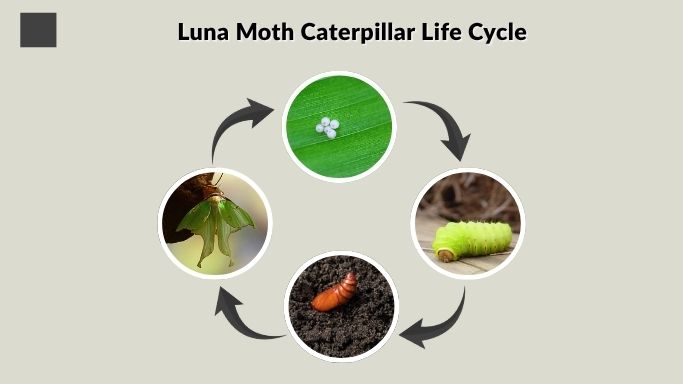
The luna moth life cycle has four main stages: egg, caterpillar, pupa, and adult moth. This is called complete metamorphosis.
Life Cycle Table
| Stage | What Happens | Key Detail |
| Egg | Female lays eggs on host plant leaves | Eggs hatch into small larvae |
| Caterpillar | Larva feeds and molts several times | Main feeding and growth stage |
| Pupa | Caterpillar spins a cocoon | Transformation happens inside |
| Adult moth | Adult emerges with green wings | Adult focuses on mating and egg-laying |
Adult Luna Moth Stage
The adult luna moth is pale green with long tails and eyespots. It is active at night and is often attracted to lights. Adults usually live only a short time because they do not feed like many other insects.
Their main purpose as adults is reproduction. After mating, females lay eggs on suitable host plants, and the cycle begins again.
Is a Luna Moth Caterpillar Poisonous?
Luna moth caterpillars are not considered poisonous to people. They do not have the long stinging hairs seen in some other caterpillars. They are also not known as a dangerous household or garden pest.
Can You Touch a Luna Moth Caterpillar?
It is better not to handle caterpillars unless necessary. Even harmless caterpillars can be injured by rough handling, oils from human skin, or being dropped. If you must move one, use a leaf or small stick and place it gently back on a safe host plant.
Some people may have sensitive skin, so direct contact with any caterpillar should be avoided if you are unsure. Children should be taught to observe rather than squeeze or pick up caterpillars.
Safety Around Pets and Children
Luna moth caterpillars are not a major danger to pets or children, but they should not be eaten or played with. If a child or pet puts one in the mouth, rinse the mouth and watch for irritation. Contact a medical or veterinary professional if unusual symptoms appear.
The best approach is to leave the caterpillar where it is, especially if it is feeding on a host plant.
Luna Moth Caterpillar Care
Some people find a luna moth caterpillar and want to raise it. This can be educational, but it should be done carefully. The caterpillar needs the right food, clean conditions, and a safe place to pupate.
Basic Care Tips
If you decide to keep one temporarily, use a well-ventilated container. Add fresh leaves from the plant where it was found. Keep the leaves from drying out, but avoid making the container too wet. Remove old leaves and droppings daily to prevent mold.
When the caterpillar becomes restless or changes color, it may be ready to pupate. Add dry leaf litter or paper towel pieces so it can spin a cocoon. Do not disturb it while it is pupating.
After the adult moth emerges, release it outdoors at dusk near trees and shrubs. Luna moths are wild insects and should not be kept as pets long-term.
What Not to Do
Do not feed lettuce, random garden leaves, or fruit. Do not keep the container in direct sun. Do not spray water heavily inside the enclosure. Do not handle the caterpillar repeatedly. Do not use leaves from plants treated with insecticides.
If you are unsure of the host plant, it is usually best to return the caterpillar to the plant where you found it.
Luna Moth Caterpillar Look-Alikes
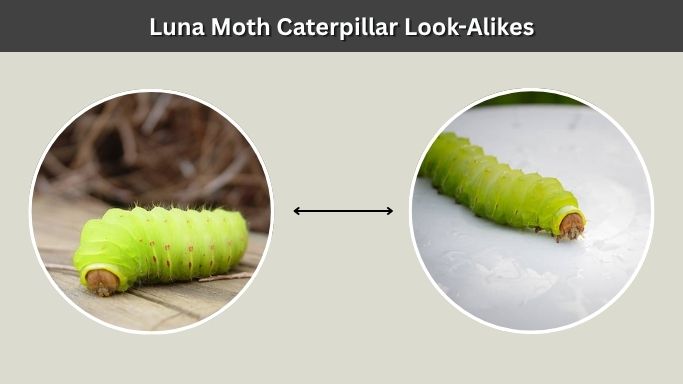
Several large green caterpillars can look similar to a luna moth caterpillar. These include polyphemus moth caterpillars, cecropia moth caterpillars, imperial moth caterpillars, hornworms, and other large silk moth larvae.
Luna Moth vs Polyphemus Moth Caterpillar
A polyphemus moth caterpillar is also large and green, so it can be confusing. Both are giant silk moth caterpillars and feed on tree leaves. The details of side markings, body texture, head shape, and host plant can help separate them.
Luna moth caterpillars often have a smoother green body with small colored side spots. Polyphemus caterpillars may look chunkier and can have different side striping or markings. Identification is easier when you know the host plant and region.
Luna Moth Caterpillar vs Hornworm
Hornworms are also large green caterpillars, but many have a noticeable horn at the rear. Tomato hornworms and tobacco hornworms often feed on tomato, pepper, eggplant, or tobacco plants. Luna moth caterpillars feed on tree leaves and do not have the same large rear horn.
If the caterpillar is on a tomato plant and has a tail horn, it is probably not a luna moth caterpillar.
What to Do If You Find a Luna Moth Caterpillar
Finding a luna moth caterpillar is a special moment because these moths are beautiful and not always commonly seen. In most cases, the best action is to leave it alone.
Best Steps
First, look at the plant where it is feeding. If it is on a known host plant and looks healthy, let it continue its life cycle naturally. Avoid spraying insecticides nearby. Keep children and pets from disturbing it.
If the caterpillar is on a walkway, driveway, or unsafe area, gently move it using a leaf or stick. Place it on a suitable tree or shrub nearby, preferably the same type of plant where it was found.
If it is wandering and not feeding, it may be searching for a place to pupate. In that case, place it near leaf litter or a sheltered natural area.
Why You Should Protect It
Luna moth caterpillars become one of North America’s most beautiful moths. They also play a role in the food web. Birds, insects, and other wildlife may feed on caterpillars, while adult moths contribute to biodiversity.
Because they rarely damage trees seriously, there is usually no need to control or remove them.
FAQs
What does a luna moth caterpillar look like?
A luna moth caterpillar is usually large, smooth, and green. Mature caterpillars have a plump body with small orange, red, pinkish, or yellow side spots. They may also have a pale side line. Before pupation, they may turn duller, reddish, brownish, or orange-tinted.
What does a luna moth caterpillar eat?
A luna moth caterpillar eats leaves from hardwood host plants. Common food plants include hickory, walnut, sweetgum, birch, persimmon, oak, willow, black gum, sumac, and beech. If raising one, feed it fresh leaves from the same plant where it was found.
Is a luna moth caterpillar poisonous?
No, a luna moth caterpillar is not considered poisonous to people. It does not have long stinging hairs like some dangerous caterpillars. Still, it is best to avoid handling it because caterpillars are delicate and some people may have sensitive skin.
How long is a luna moth a caterpillar?
The caterpillar stage usually lasts several weeks, depending on temperature, food quality, and region. During this time, it molts through several growth stages called instars. After it becomes fully grown, it stops feeding and spins a cocoon for pupation.
What should I do if I find a luna moth caterpillar?
If you find a luna moth caterpillar on a safe host plant, leave it alone. If it is on a walkway or unsafe area, gently move it with a leaf or stick to a nearby host plant or leaf litter. Avoid touching it roughly or using pesticides nearby.
