
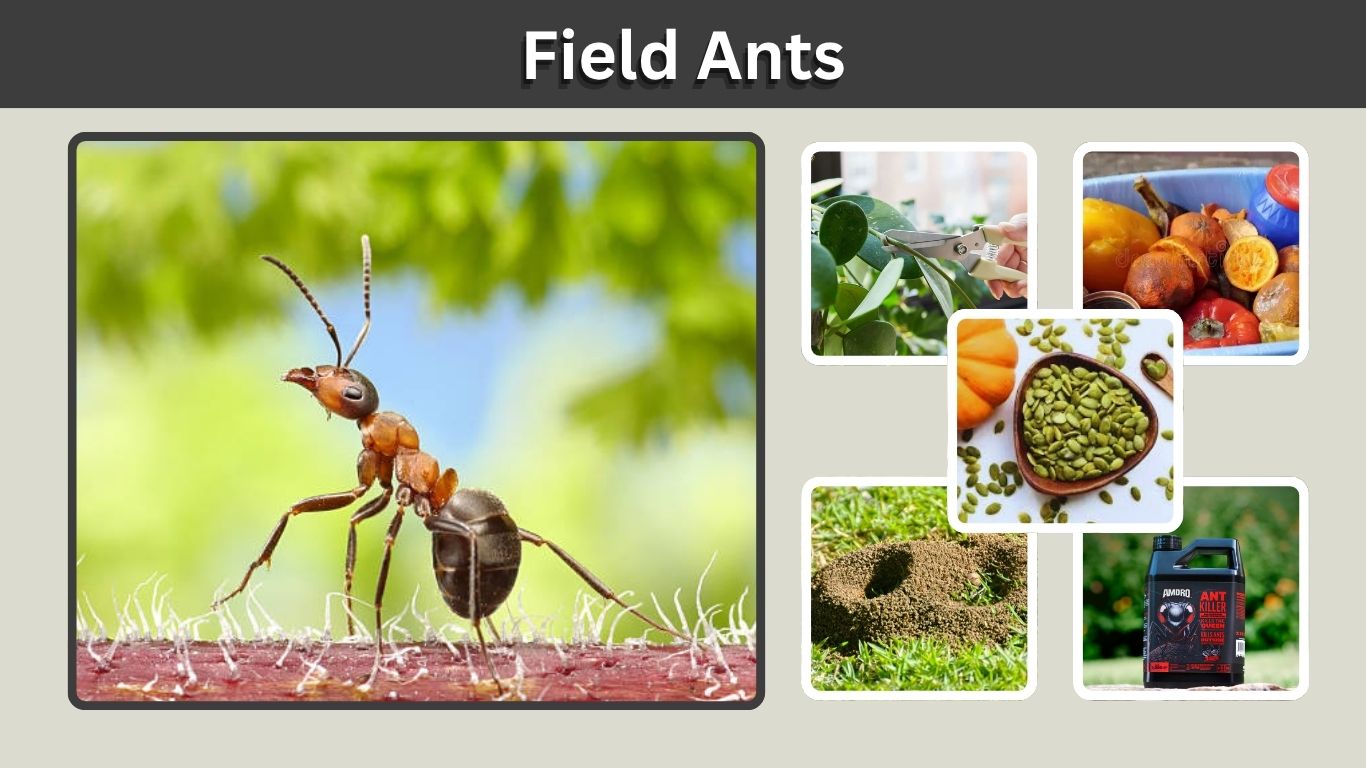
Field ants are common outdoor ants often found in lawns, gardens, fields, parks, and open sunny areas. They are usually noticed because of their soil mounds, active trails, or large workers moving across the ground. Most field ants are not serious indoor pests, but they can become a problem when they build mounds in yards, bite when disturbed, or enter homes while searching for food.
What Are Field Ants?
Field ants are a group of ants commonly found outdoors in open soil, grass, fields, and landscaped areas. Many belong to the genus Formica, though people may use the name “field ant” for different outdoor ants with similar behavior. They are known for building mounds, foraging in sunny areas, and feeding on insects, honeydew, and plant-related materials.
Unlike carpenter ants, field ants usually do not nest inside wood or damage house structures. They prefer soil nests outdoors. However, they may enter homes occasionally through cracks, doors, windows, or foundation gaps while searching for sweets, protein, or moisture. When this happens, the main colony is usually still outside.
Field ants are also important in the environment. They help recycle dead insects, aerate soil, and feed on some pests. The problem begins when their mounds damage lawns, their trails become annoying, or their bites cause discomfort.
Field Ant Identification
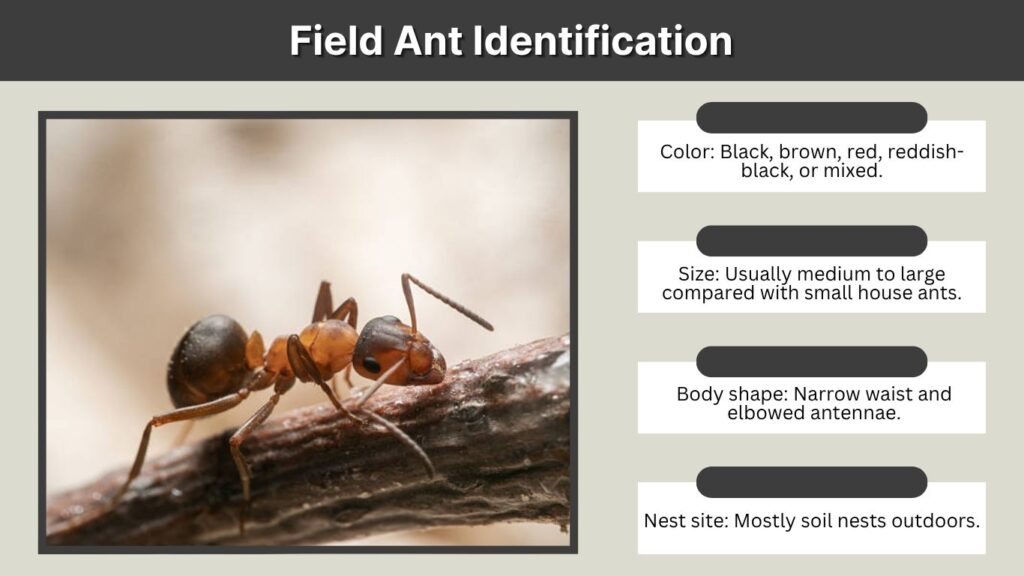
Field ants vary in color and size depending on the species. Some are black, while others are reddish, brown, red-and-black, or partly yellowish. They are often medium to large ants compared with tiny household ants. Their bodies have a narrow waist, elbowed antennae, and strong legs for fast movement across the ground.
The easiest way to identify field ants is by their outdoor mound-building habit. Their mounds may appear in lawns, pastures, gardens, along sidewalks, or near foundations. Some mounds are small and flat, while others can become large piles of soil and plant debris.
Key Characteristics
- Color: Black, brown, red, reddish-black, or mixed.
- Size: Usually medium to large compared with small house ants.
- Body shape: Narrow waist and elbowed antennae.
- Nest site: Mostly soil nests outdoors.
- Mound: Loose soil, grass, or plant material around nest openings.
- Behavior: Fast-moving workers, often active in sunny areas.
- Food: Honeydew, dead insects, live insects, sweets, and protein.
- Defense: Some species bite and may spray formic acid.
Field ants are sometimes confused with carpenter ants because both can be large and dark. The nest location is the biggest clue. Field ants usually nest in soil, while carpenter ants often nest in damp or damaged wood.
What Do Field Ants Look Like?
Field ants do not all look exactly the same. Black field ants may look like large black ants moving across lawns or patios. Red field ants may have reddish heads or thoraxes with darker abdomens. Some species have a shiny body, while others appear duller.
Workers in a colony may be similar in size, although some variation can occur. They have six legs, bent antennae, and a segmented body. When disturbed, they may move quickly and defensively around the mound.
Common Types People Notice
- Black field ants: Dark workers often seen in lawns, gardens, and open soil.
- Red field ants: Reddish or red-and-black ants that may look aggressive.
- Silky field ants: Some have a slightly silky or shiny appearance.
- Variable field ants: Color can vary from colony to colony.
- Winged field ants: Reproductive males and queens may appear during mating flights.
Winged field ants may alarm homeowners, but they do not always mean there is an indoor infestation. Many outdoor ant colonies produce winged ants seasonally.
Field Ant Mounds
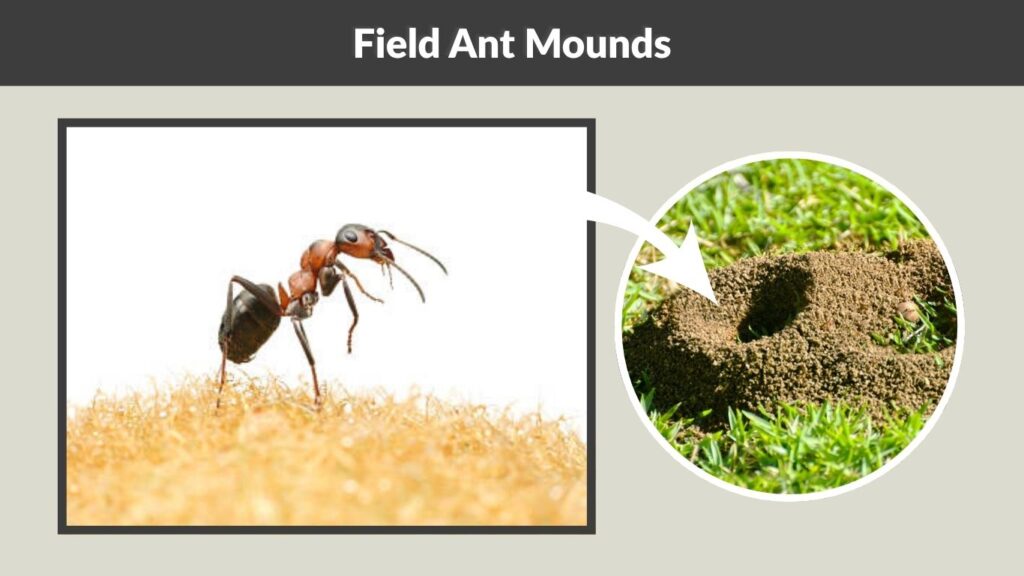
Field ant mounds are one of the main reasons people notice these ants. The mound is part of the nest system and may be made of soil, grass pieces, small stones, and plant debris. Mounds are often built in sunny areas where warmth helps the colony develop.
Some mounds are low and spread out, while others become more raised. In lawns, they can interfere with mowing, create uneven ground, and make the yard look messy. Large colonies may have more than one opening or nearby satellite activity.
| Feature | Field Ants | Carpenter Ants | Fire Ants |
|---|---|---|---|
| Main nest site | Soil outdoors | Damp or damaged wood | Soil mounds outdoors |
| Common location | Lawns, fields, gardens | Trees, walls, wood structures | Lawns, pastures, open soil |
| House damage | Usually no wood damage | Can damage wood by nesting | Usually no wood damage |
| Aggression | May bite if disturbed | May bite if handled | Very aggressive, sting repeatedly |
| Mound style | Soil/debris mound | Usually no soil mound indoors | Loose mound, often no central hole |
Field ant mounds should not be confused with fire ant mounds in areas where fire ants are present. Fire ants are generally more aggressive and sting repeatedly, while field ants usually bite or defend the nest when directly disturbed.
Field Ant Nest and Colony
A field ant nest is usually underground. The visible mound is only part of the colony structure. Tunnels and chambers extend below the surface, where workers care for eggs, larvae, pupae, and the queen. The queen lays eggs, while workers forage, defend the colony, and maintain the nest.
Field ant colonies can become large over time. A mature colony may have many workers and active trails leading to food sources. They may also tend aphids or other honeydew-producing insects because honeydew is a sweet liquid food source.
Where Field Ants Build Nests
- Lawns and grassy yards
- Open fields and pastures
- Garden beds
- Around sidewalks and patios
- Near foundations
- Under stones, logs, or landscape materials
- Along fence lines
- Near shrubs, trees, and aphid colonies
Nests near a home foundation may lead to ants entering the house, especially during hot, dry, wet, or food-scarce periods.
What Do Field Ants Eat?
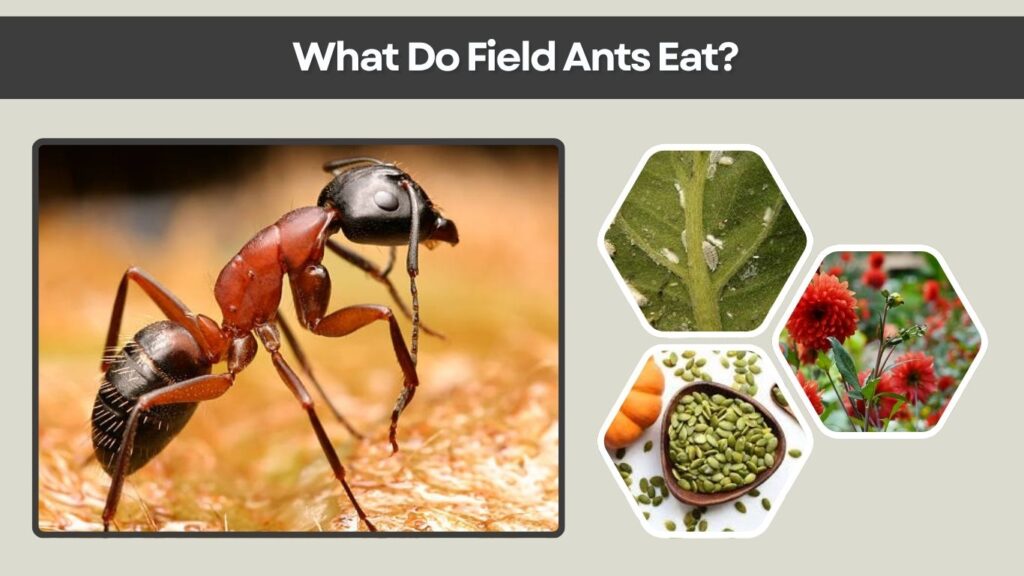
Field ants have a broad diet. They feed on honeydew from aphids and scale insects, dead insects, small live insects, nectar, seeds, sweets, and protein-based foods. Outdoors, they may help control some insect populations by scavenging or hunting.
In yards and gardens, their relationship with aphids can be a problem. Field ants may protect aphids from predators because aphids produce honeydew. This can indirectly increase plant pest issues on some trees, shrubs, and garden plants.
If field ants enter the house, they may be attracted to sugar, crumbs, fruit, pet food, grease, or moisture. However, indoor foraging does not always mean the nest is inside.
Field Ant Bite
Field ants can bite when disturbed, especially near the mound. Some species may also spray formic acid into the bite area, which can cause a burning or stinging sensation. The reaction is usually mild compared with a fire ant sting, but it can still be uncomfortable.
A field ant bite may cause redness, itching, slight swelling, or a small irritated spot. People with sensitive skin may react more strongly. Pets may also be bitten if they dig into mounds or lie on active nests.
Field Ant Bite Treatment
- Wash the area with soap and water.
- Apply a cold compress to reduce swelling.
- Avoid scratching the bite.
- Use an anti-itch cream if needed.
- Watch for signs of infection, such as pus, warmth, or spreading redness.
- Seek medical help for severe swelling, breathing trouble, dizziness, or allergic symptoms.
Most field ant bites heal without serious problems. The best prevention is to avoid disturbing mounds and keep children and pets away from active nests.
Field Ants vs Carpenter Ants
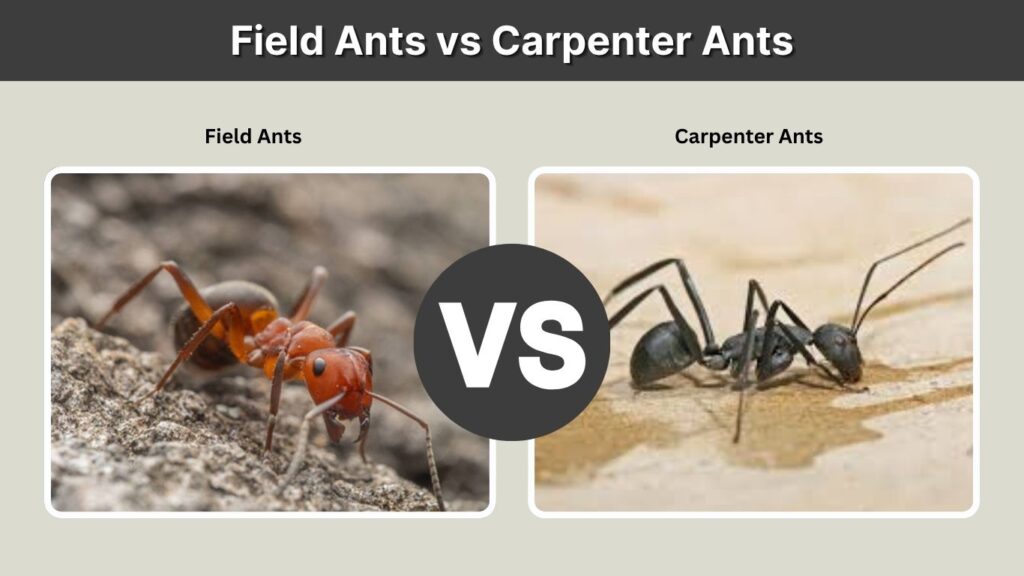
Field ants and carpenter ants are often confused because both can be large and dark. However, they have different nesting habits and different levels of concern around homes.
Carpenter ants are more concerning indoors because they nest in wood, especially damp or damaged wood. They do not eat wood like termites, but they excavate galleries for nesting. Field ants usually nest in soil outdoors and are more likely to be a lawn or garden nuisance than a structural pest.
Main Differences
- Nest location: Field ants nest in soil; carpenter ants often nest in wood.
- Mounds: Field ants make outdoor mounds; carpenter ants usually do not make soil mounds inside homes.
- Damage: Field ants rarely damage structures; carpenter ants can damage wood by tunneling.
- Indoor activity: Field ants may enter for food; carpenter ants may indicate a hidden wood nest.
- Body clue: Carpenter ants often have a smoothly rounded thorax; field ants vary more by species.
If you see large black ants inside your house repeatedly, inspect for moisture-damaged wood, sawdust-like frass, and activity near walls or windows. If you see mounds in the yard with ants entering occasionally, field ants are more likely.
Field Ants in the House
Field ants usually live outside, but they may come indoors for food or water. This often happens when outdoor conditions change or when a nest is close to the foundation. They may enter through small cracks around doors, windows, utility lines, baseboards, and foundation gaps.
Seeing a few field ants indoors is usually not a serious problem. Repeated trails, however, suggest a nearby nest or a strong food source. Kitchens, bathrooms, laundry areas, and pet feeding areas are common places to find them.
What to Do Indoors
- Clean crumbs, sugar, grease, and pet food.
- Store food in sealed containers.
- Fix leaks and reduce moisture.
- Seal cracks around doors, windows, and pipes.
- Follow trails to find possible entry points.
- Avoid spraying randomly inside if the main nest is outdoors.
- Treat the outdoor nest if ants keep returning.
Indoor sprays may kill visible workers but often do not solve the outdoor colony. Finding and managing the nest is more effective.
How to Get Rid of Field Ants in Yard
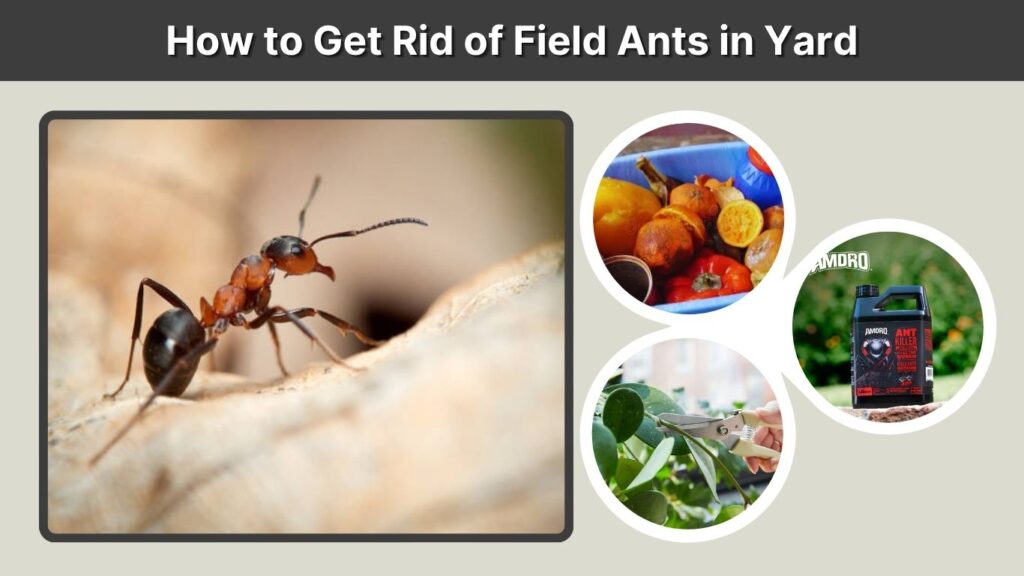
Field ant control depends on the level of problem. If mounds are in an unused part of the yard, they may not need treatment. Field ants can be beneficial outdoors. However, control may be needed if mounds damage the lawn, ants bite people or pets, or trails enter the house.
The best approach is to locate the mound, reduce attractants, and use targeted control rather than treating the entire yard unnecessarily.
Yard Control Steps
- Identify the mound and confirm it is field ants.
- Keep children and pets away from active mounds.
- Remove food waste, fallen fruit, and outdoor pet food.
- Manage aphids on nearby plants to reduce honeydew.
- Use ant bait labeled for outdoor ants if workers accept it.
- Apply mound treatment according to product directions if needed.
- Avoid flooding nests with unsafe chemicals.
- Reseed or repair damaged lawn after activity stops.
Never pour gasoline, bleach, or harsh chemicals into ant mounds. These methods can harm soil, grass, pets, wildlife, and groundwater, and they may not fully kill the colony.
How to Get Rid of Field Ants Naturally
Natural control focuses on reducing food, moisture, and shelter. It may not eliminate a large colony quickly, but it can reduce activity and prevent mounds from becoming a bigger issue.
Remove fallen fruit, clean outdoor eating areas, and avoid leaving pet food outside. Trim plants touching the house and reduce aphids on shrubs or trees. Seal foundation cracks and keep mulch from piling directly against siding. For small mounds in low-risk areas, simply improving yard maintenance may be enough.
Boiling water is sometimes suggested, but it can kill grass, damage roots, and cause burns. Use caution and avoid methods that create safety risks.
Field Ant Prevention
Long-term prevention is easier than removing a large colony after it becomes established. Since field ants are outdoor insects, the goal is not to eliminate every ant from the yard. The goal is to keep mounds away from high-use areas and stop ants from entering the home.
Prevention Tips
- Seal cracks around the foundation.
- Keep doors and windows fitted tightly.
- Store outdoor trash in closed bins.
- Remove fallen fruit and food scraps.
- Keep pet food indoors when possible.
- Control aphids on landscape plants.
- Move logs, stones, and debris away from the foundation.
- Maintain healthy grass in high-use lawn areas.
- Watch for new mounds after rain or warm weather.
FAQs
What are field ants?
Field ants are outdoor ants commonly found in lawns, gardens, fields, parks, and open soil. Many are medium to large ants that build soil mounds and forage for insects, honeydew, sweets, and protein. They are usually more of a yard nuisance than a serious indoor pest.
Do field ants bite?
Yes, some field ants can bite when disturbed, especially near their mound. A bite may cause mild pain, redness, itching, or swelling. Some species may spray formic acid, which can create a burning feeling. Most bites are minor, but allergic symptoms need medical attention.
Are field ants the same as carpenter ants?
No, field ants and carpenter ants are different. Field ants usually nest in soil outdoors and make mounds. Carpenter ants often nest in damp or damaged wood and may become a structural concern inside homes. Large black ants indoors should be inspected carefully.
How do I get rid of field ants in my yard?
To get rid of field ants, identify the mound, reduce food sources, manage aphids, and use outdoor ant bait or a labeled mound treatment if needed. Treat only problem areas, especially mounds near walkways, play areas, patios, or foundations. Always follow product label directions.
Why are field ants coming into my house?
Field ants may enter homes while searching for food, water, or shelter. A nearby outdoor nest may be close to the foundation. Clean food sources, fix leaks, seal cracks, and follow trails to entry points. If ants continue returning, locate and treat the outdoor nest.
