

If you’ve been stung by a wasp, your first instinct might be to panic—but staying calm is key. While most wasps don’t leave their stingers behind like bees do, there are exceptions. Some stings may feel worse than others, and occasionally a stinger or venom sac can become embedded in the skin. Knowing what to do next can prevent further irritation, infection, or allergic reaction. In this step-by-step guide, you’ll learn how to check for a wasp stinger, remove it safely (if present), and treat the area effectively to promote quick healing.
Step-by-Step Guide to Remove a Wasp Stinger Safely

Getting stung by a wasp can be painful and alarming, especially if you’re unsure whether the stinger is still lodged in your skin. While most wasps don’t leave their stingers, it’s important to examine the site and take proper action. Below are the complete steps to safely handle the situation and minimize pain, swelling, and potential infection.
Step 1 – Stay Calm and Move to Safety
After a wasp sting, calmly move away from the area to avoid additional stings. Sudden movements can agitate nearby wasps, so it’s important to stay composed. Find a safe, quiet spot where you can sit down and assess the situation without distraction.
Step 2 – Examine the Sting Site
Take a close look at the sting area. Wasp stingers are usually smooth and rarely stay behind, but in some cases, especially if the sting was forceful or from a specific wasp species, a small stinger might be embedded. Use good lighting and a magnifying glass if needed to examine the skin carefully.
Step 3 – Avoid Squeezing or Pinching
If something is embedded in the skin, resist the urge to use tweezers or your fingers right away. Squeezing the area may inject more venom into your skin if a venom sac is still attached. Handling it improperly can also increase irritation and the risk of infection.
Step 4 – Scrape the Stinger Gently
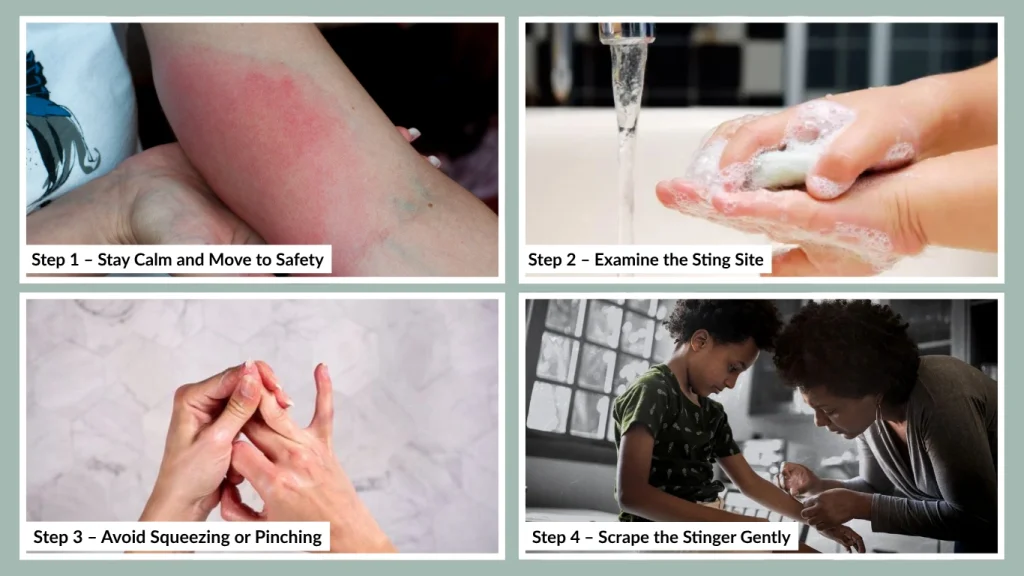
If you spot a stinger, the safest way to remove it is by gently scraping it sideways using the edge of a credit card, a dull knife, or your fingernail. Do not try to pull it out vertically. Scraping helps dislodge the stinger without pressing it deeper into the skin or releasing more venom.
Step 5 – Wash the Area Thoroughly
Once the stinger is removed, clean the sting site with soap and warm water. This step helps reduce the risk of infection and removes any venom residue on the skin’s surface. After washing, gently pat the area dry using a clean towel or tissue.
Step 6 – Apply a Cold Compress
To manage swelling and pain, apply a cold compress to the affected area. Wrap some ice or a cold pack in a cloth and hold it on the sting site for 10 to 15 minutes. This helps reduce inflammation and numbs the area, easing discomfort.
Step 7 – Use a Soothing Topical Treatment
After reducing the swelling, you can apply a soothing remedy to relieve itching or irritation. Options like hydrocortisone cream, calamine lotion, or a paste made of baking soda and water can help calm the skin. Aloe vera gel is also a gentle, natural alternative that cools and moisturizes the area.
Step 8 – Take an Oral Antihistamine if Needed
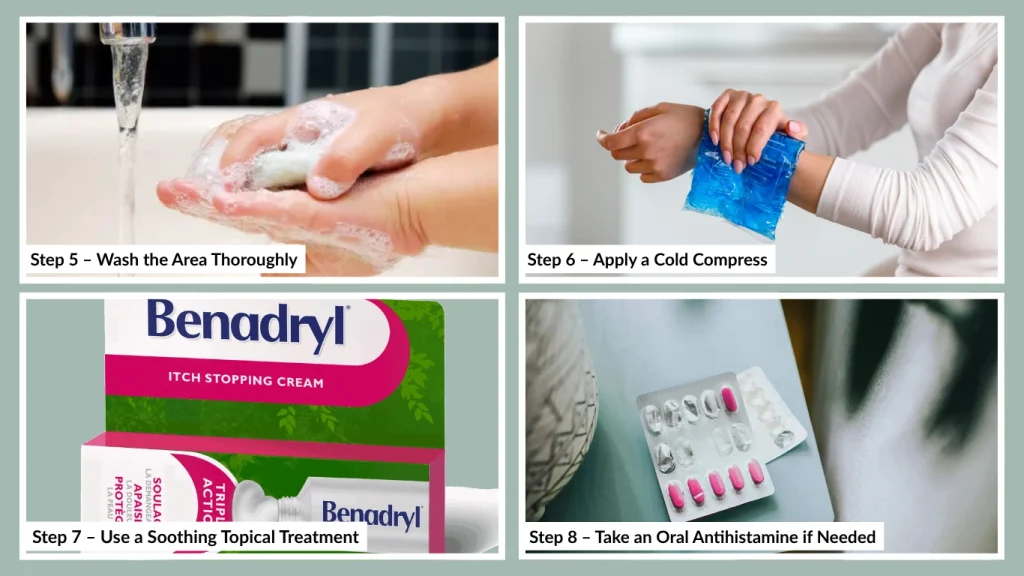
If you’re experiencing itching, redness, or mild swelling beyond the sting site, an over-the-counter antihistamine such as diphenhydramine (Benadryl) or cetirizine (Zyrtec) may be helpful. These medications help counteract your body’s reaction to the venom and provide quick relief from discomfort.
Step 9 – Monitor for Signs of Allergic Reaction
Keep an eye on your symptoms in the hours following the sting. If you notice hives, trouble breathing, dizziness, or swelling of the face or throat, you may be having a serious allergic reaction and should seek emergency medical care immediately. Even delayed symptoms should not be ignored.
Step 10 – Keep the Sting Site Clean and Dry
Over the next 24 to 48 hours, make sure the sting area stays clean and dry. Avoid scratching, which can introduce bacteria and lead to infection. You can cover the area loosely with a sterile bandage if there’s a risk of contact with dirt or clothing.
Step 11 – Avoid Irritating the Skin Further
Don’t apply scented lotions, essential oils, or alcohol-based products to the sting site, as they may cause further irritation. Reapply soothing creams as needed, but avoid overusing any product. Let the skin heal naturally and limit movement if the sting is on a joint or sensitive area.
Step 12 – Document the Reaction if Necessary
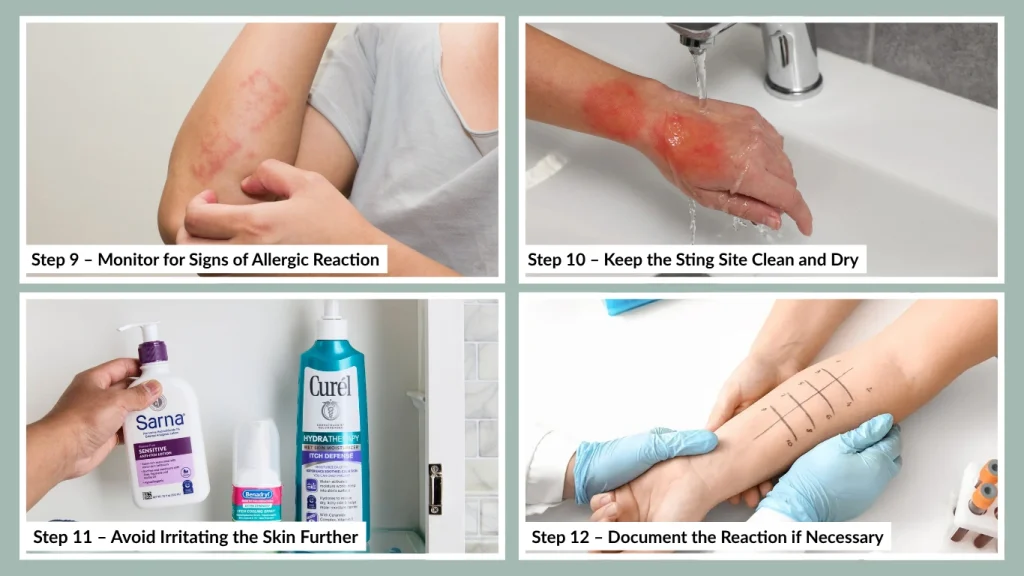
If you’ve had a strong reaction or needed medication, make a note of it for future reference. This is especially important if you suspect an allergy to wasp venom. You may want to consult your doctor about allergy testing or carrying an epinephrine auto-injector in case of future stings.
What If You Don’t See a Stinger?
While bee stings almost always leave a stinger, wasp stings typically do not. However, it’s possible to feel lingering pain and swelling, which may give the impression that something is still embedded.
Wasp vs Bee Stingers
- Wasp stingers are smooth and designed for multiple stings. They usually retract after stinging.
- Bee stingers are barbed and often tear away from the bee’s body, remaining lodged in the skin.
- If you’re unsure, treat the site as if a stinger might be present and follow the steps above for cleaning and soothing the area.
When to Assume No Stinger is Present
- If you feel intense pain but see no black dot or object in the skin, it’s likely a wasp sting with no retained stinger.
- Continue to manage swelling and pain using compresses, creams, and antihistamines.
When to See a Doctor
Some wasp stings require medical attention, especially if symptoms go beyond local pain and swelling.
Seek professional help if you notice:
- Allergic reactions: Hives, facial swelling, throat tightness, wheezing, or difficulty breathing. These are signs of anaphylaxis, a life-threatening emergency.
- Signs of infection:
- Redness that spreads or gets worse after 48 hours
- Warmth and pus at the site
- Fever or chills
- Redness that spreads or gets worse after 48 hours
- Stings in sensitive areas: Eyes, mouth, throat, genitals, or inside the nose
- Multiple stings: Especially if you were stung more than 5–10 times, as venom buildup can affect organs and cause systemic reactions
Final Tips for Preventing Future Wasp Stings
Avoiding future wasp encounters helps protect you from repeating the painful experience. Here are some ways to stay safe:
Outdoor Protection
- Wear light-colored, smooth-textured clothing (wasps are attracted to dark, rough fabrics)
- Avoid walking barefoot in grassy or garden areas
- Do not swat at wasps; sudden movements provoke them
Food and Scent Awareness
- Keep food and sugary drinks covered when outdoors
- Clean up spills immediately during picnics or barbecues
- Avoid strong perfumes, scented lotions, or hair sprays in wasp-prone environments
Around the Home
- Seal trash bins tightly
- Check for wasp nests around eaves, sheds, or under decks
- Use wasp repellents or natural deterrents (like clove, lemongrass, or peppermint oil sprays)
FAQs
Do wasp stings hurt more than bee stings?
Yes, many people report that wasp stings are more painful due to the venom’s chemical makeup. Wasp venom contains a mix of toxins that can cause intense pain and inflammation.
Can you use vinegar or baking soda on a wasp sting?
Yes. Baking soda is an alkaline substance that may neutralize the venom and reduce itching. Vinegar is more effective for bee stings (which are alkaline), but some people still use it on wasp stings for cooling relief.
How long does a wasp sting last?
Mild sting symptoms usually last 1–3 days. Swelling and redness may persist up to a week, depending on the person’s sensitivity.
Is it possible for a wasp to leave its stinger?
It’s uncommon but possible in rare cases, especially if the stinger breaks during the sting or if the wasp dies while stinging. Always inspect the site just in case.
