
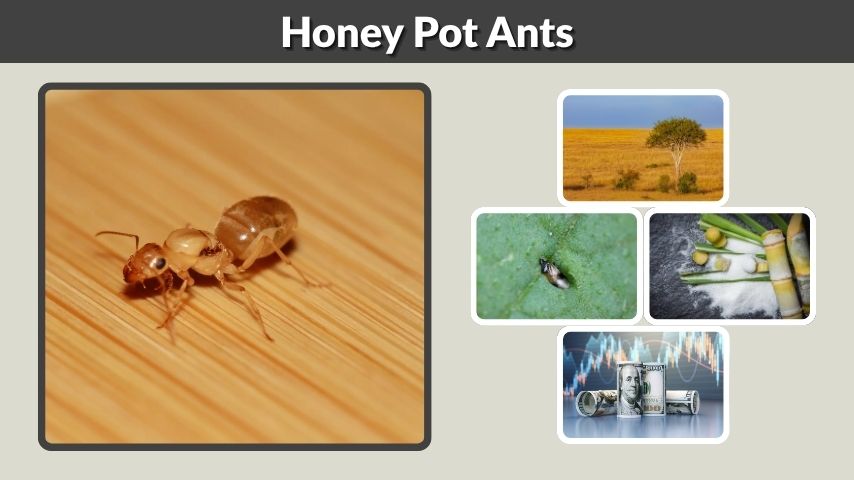
Honey pot ants are among the most unusual ants in the world. Instead of storing food only in chambers, some workers become living storage jars. These swollen workers, called repletes, hang inside the nest with abdomens full of sweet liquid. This strange adaptation helps the colony survive dry seasons, food shortages, and harsh desert conditions.
What Are Honey Pot Ants?
Honey pot ants, also called honeypot ants or honey ants, are not one single species. The name refers to several ant groups that share a remarkable behavior: certain workers store liquid food inside their bodies. These storage workers become so enlarged that they can barely move. Other ants in the colony feed from them when outside food becomes scarce.
This makes honey pot ants different from ordinary ants that store food mostly as seeds, prey, or fragments inside the nest. In a honey pot ant colony, part of the food supply is alive.
The most famous honey pot ants belong to the genus Myrmecocystus, which is found in parts of North America. Honey ants are also well known from Australia, where some species have cultural and food significance for Indigenous communities.
Honey pot ants are popular because they are:
- Visually striking
- Unusual in colony behavior
- Linked with desert survival
- Sometimes edible
- Sought after by ant keepers
- Commonly shown in documentaries and nature videos
Their swollen repletes often look like tiny golden grapes hanging from the nest ceiling.
Honey Pot Ant Scientific Name and Species
There is no single scientific name for all honey pot ants because the term describes a lifestyle rather than one species. In North America, many honey pot ants belong to the genus Myrmecocystus. In Australia, honey ants may belong to other genera, including species associated with arid inland regions.
This is why searches for “honey pot ant scientific name” can lead to different answers. The correct name depends on the specific ant being discussed. A North American honey pot ant may be a Myrmecocystus species, while an Australian honey ant may be from another group.
Common names can also vary:
- Honey pot ants
- Honeypot ants
- Honey ants
- False honey pot ants
- Golden honey pot ants
- Cherry head honey pot ants
Some names are used by ant keepers and sellers rather than formal taxonomy, so they should be checked carefully before buying or identifying a colony.
Honey Pot Ant Repletes
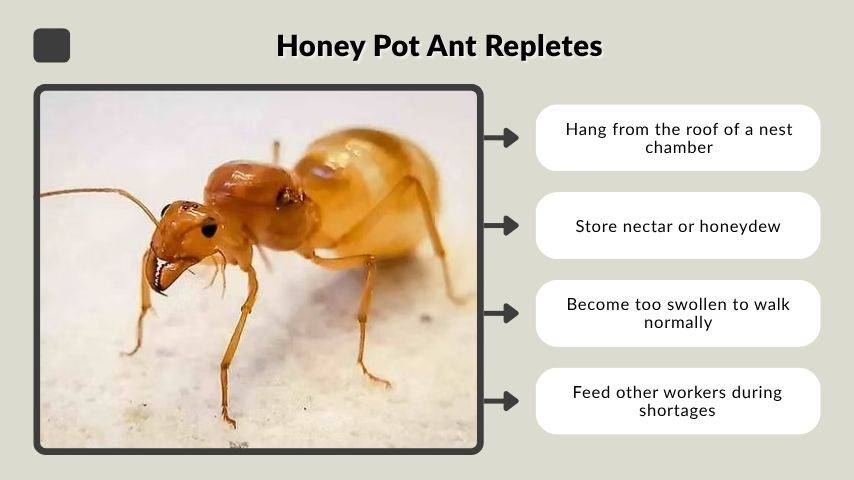
The replete is the most famous part of a honey pot ant colony. A replete is a specialized worker that stores liquid food in its abdomen. As it fills, the abdomen stretches and becomes round, shiny, and translucent. Depending on what the ants eat, repletes may appear amber, golden, yellow, reddish, brown, or even differently colored.
Repletes act as living food reserves. When foragers bring back nectar, honeydew, or other liquid foods, they pass it to repletes. Later, when food is scarce, workers tap the repletes for stored liquid through mouth-to-mouth feeding.
A honey pot ant replete may:
- Hang from the roof of a nest chamber
- Store nectar or honeydew
- Become too swollen to walk normally
- Feed other workers during shortages
- Change color depending on food source
- Remain deep inside the colony for protection
The replete system is one of the best examples of how social insects solve survival problems through cooperation.
Honey Pot Ant Queen and Colony
A honey pot ant colony has a queen, workers, brood, and repletes. The queen is the main egg-layer. Workers care for the queen, raise larvae, forage for food, defend the nest, and maintain the colony. Repletes are workers too, but they serve a special storage role.
A young queen usually starts a colony after a mating flight. After mating, she finds a suitable nesting location, sheds her wings, and begins laying eggs. The first workers are often small because the founding queen has limited resources. As the colony grows, it can produce more workers and eventually develop repletes.
A mature colony may include:
- One or more queens, depending on species
- Foraging workers
- Nest workers
- Larvae and pupae
- Replete workers
- Seasonal winged males and queens
Search terms such as “honey pot ant queen,” “queen honey pot ant,” and “honey pot queen ant” usually come from ant-keeping interest. A queen is needed for a long-term colony, but purchasing queens may be restricted depending on location and species.
Where Do Honey Pot Ants Live?
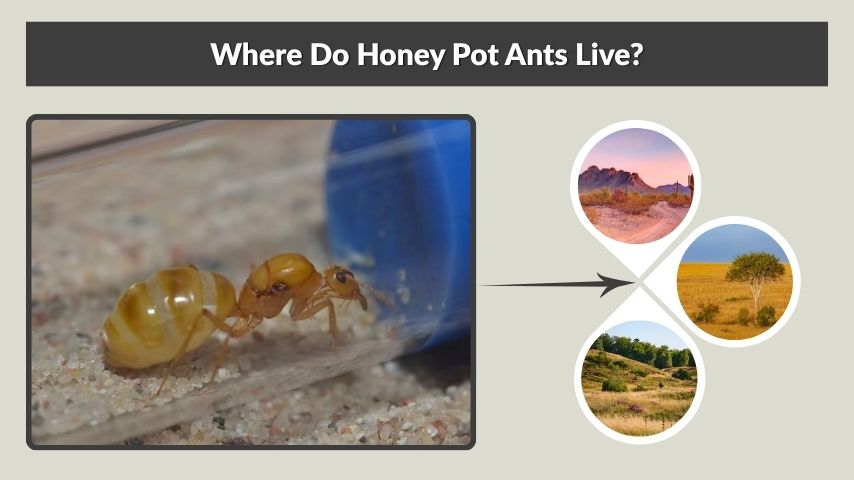
Honey pot ants are strongly associated with dry environments. Many species live in deserts, semi-deserts, dry grasslands, scrublands, and arid woodland edges. Their food-storage system is especially useful in places where nectar, insects, and plant resources appear in short bursts after rain and then disappear.
Honey pot ants may be found in:
- Southwestern United States
- Northern Mexico
- Parts of Australia
- Dry grasslands
- Desert scrub
- Arid woodlands
- Sandy or well-drained soils
In North America, honey pot ants are often associated with states such as Arizona, New Mexico, Texas, Nevada, California, Colorado, and nearby dry regions. In Australia, honey ants are famously linked with desert country and are known in Indigenous food traditions.
They do not usually live like common kitchen ants. Most colonies are underground and may be difficult to spot unless you know where to look.
Honey Pot Ant Habitat and Nest
A honey pot ant nest is usually underground. The repletes are often hidden deep inside, hanging from chamber ceilings where they are protected from heat, predators, and raiding insects. The surface entrance may look simple compared with the remarkable storage system below.
Their habitat must provide three important things: suitable soil, seasonal food sources, and protection from extreme conditions. Many honey pot ants forage during cooler times of day or night, especially in hot desert areas.
The nest may include:
- Entrance tunnels
- Brood chambers
- Queen chambers
- Replete chambers
- Worker resting areas
- Food exchange zones
Some people search for “honey pot ant nest cast” because ant nests can have complex underground architecture. However, pouring metal or plaster into wild nests destroys colonies and should not be done casually.
What Do Honey Pot Ants Eat?
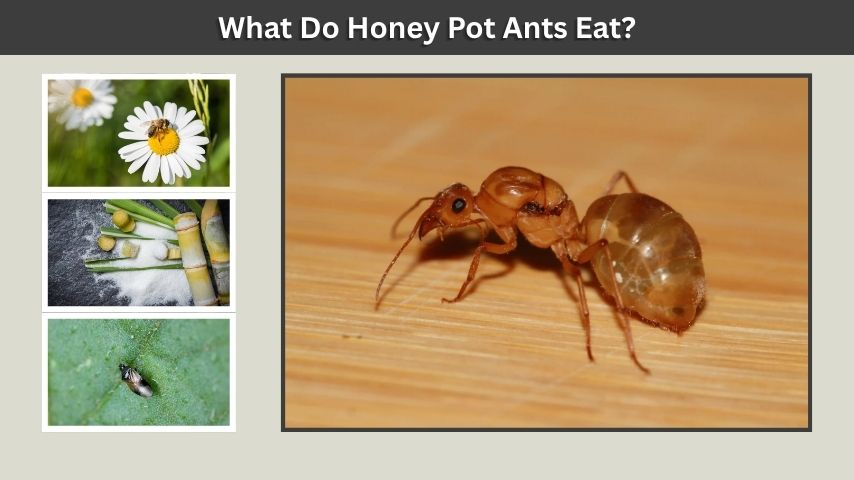
Honey pot ants do not eat honey in the same way humans eat jarred honey. They mainly collect sweet liquids such as nectar and honeydew. Honeydew is a sugary liquid produced by sap-feeding insects such as aphids and scale insects. Workers may also collect small insects or other protein sources for larvae.
Their diet can include:
- Flower nectar
- Honeydew from sap-feeding insects
- Plant sugars
- Small insects
- Dead arthropods
- Occasional protein foods
In captivity, ant keepers may offer sugar water, nectar substitutes, small insects, and other carefully chosen foods. However, different species have different needs. Overfeeding or feeding sticky liquids carelessly can cause drowning, mold, mites, or unhealthy nest conditions.
Different Colored Honey Pot Ants
Honey pot ant repletes can appear in different colors because their swollen abdomens may show the stored liquid inside. Golden honey pot ants are especially famous because the repletes can look like tiny amber beads. Some ant keepers also mention cherry-colored or darker repletes.
Color may depend on:
- Species
- Food source
- Stored liquid type
- Age of the replete
- Lighting
- Degree of fullness
Searches such as “colored honey pot ants,” “different colored honey pot ants,” and “golden honey pot ants” usually refer to these repletes. The color is part of what makes them popular for photography, documentaries, and ant displays.
Are Honey Pot Ants Edible?
Yes, honey pot ants have been eaten in some cultures, especially in Australia, where honey ants are part of Indigenous food knowledge. The swollen repletes contain sweet liquid and are often described as tasting like honey, nectar, syrup, or floral sweetness.
That said, eating wild ants is not something to do casually. Identification matters, and local laws, cultural respect, land access, pesticide exposure, and conservation concerns all matter. Some areas may protect local wildlife or restrict collection. Ants from unknown places may also carry contaminants.
If discussing honey pot ants as food, it is important to be respectful. For Indigenous Australians, honey ants are not simply a novelty snack; they are connected to traditional ecological knowledge, land, and culture.
What Do Honey Pot Ants Taste Like?
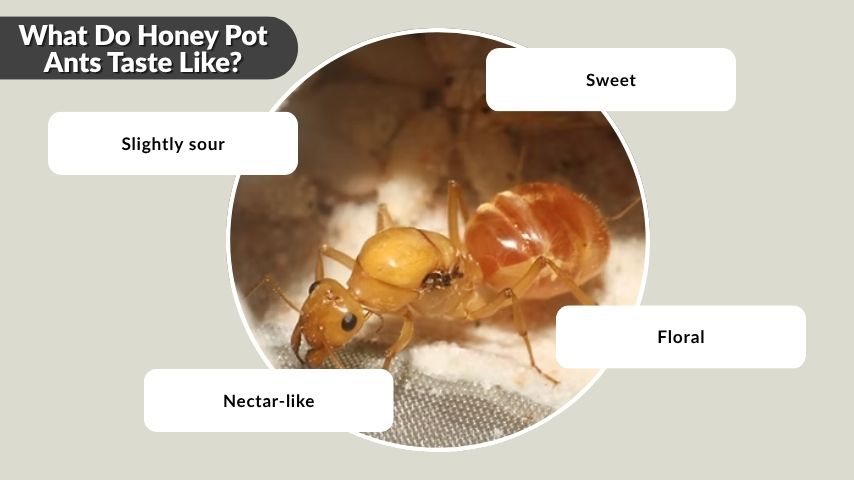
People often describe the taste of honey pot ant repletes as sweet, floral, tangy, or nectar-like. Some compare them to honey, light syrup, or sweet grapes. The exact flavor depends on what the ants have been feeding on and which species is involved.
Possible taste notes include:
- Sweet
- Floral
- Slightly sour
- Nectar-like
- Syrupy
- Mildly fruity
The replete’s swollen abdomen is the part associated with the sweet taste. The rest of the ant may not have the same flavor and may be less appealing.
Honey Pot Ants as Pets and Ant Farms
Honey pot ants are fascinating, but they are not always easy to keep. Many species need warm, dry conditions, careful hydration, proper food, and enough vertical nest space for repletes to hang. They may also be sensitive to stress, mold, and poor nest design.
A honey pot ant farm should be escape-proof and designed for the species. A simple toy ant farm may not be suitable for a queen-right honey pot ant colony. Repletes need stable chambers where they can hang safely.
Basic care considerations include:
- Correct temperature range
- Controlled humidity
- Sugar or nectar source
- Protein for larvae
- Secure nest design
- Space for repletes
- Mold prevention
- No irresponsible release
Searches such as “are honey pot ants easy to keep” and “honey pot ant difficulty” are important because beginners may underestimate their care needs. Honey pot ants are usually better for experienced ant keepers than casual owners.
Honey Pot Ants for Sale
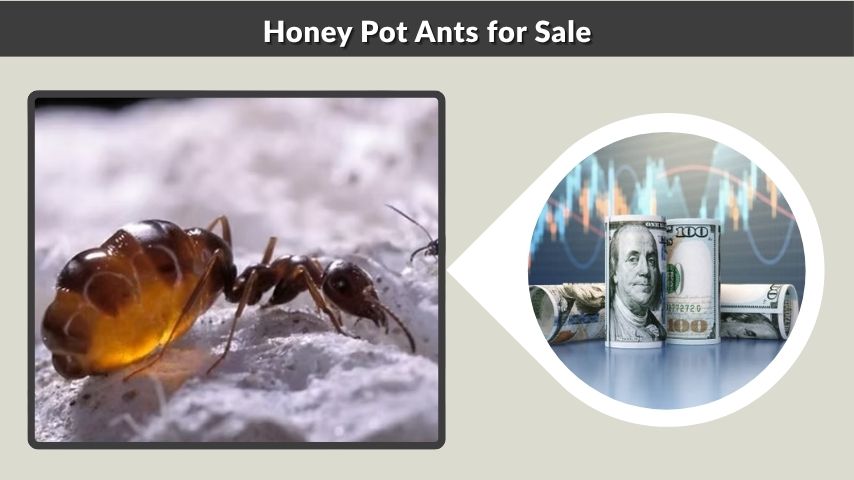
People search for “honey pot ants for sale,” “honey pot ant queen for sale,” and “honey pot ant colony for sale” because these ants are visually impressive. Before buying, check whether the species is legal to own, ship, or transport in your area. Ant movement can be regulated because escaped colonies may harm local ecosystems.
Before purchasing, consider:
- Is the seller reputable?
- Is the species legal in your region?
- Is the queen included?
- Is the colony captive-bred or wild-collected?
- Can you provide proper heat and housing?
- What happens if you can no longer keep them?
- Will you commit to not releasing them?
Never release purchased honey pot ants outdoors. Even if they seem harmless, nonlocal ants can disrupt native insects or spread disease.
Honey Pot Ant Pictures and Displays
Honey pot ant pictures are popular because repletes look unlike normal ants. The best images usually show swollen workers hanging from nest ceilings, glowing amber or gold under light. These pictures help people understand why the ants are called “honey pots.”
However, photos can also be misleading. Not every honey pot ant in a colony is swollen. Most workers look like ordinary ants. Only certain workers become repletes, and colonies may need the right food supply and maturity before producing impressive storage workers.
In ant displays, the challenge is creating a nest where repletes are visible without stressing the colony. A good display balances visibility with darkness, security, and proper conditions.
Honey Pot Ant Facts
Honey pot ants are a remarkable example of adaptation in social insects. They show how a colony can use the bodies of specialized workers as a survival tool.
Interesting honey pot ant facts include:
- Honey pot ants are not one single species.
- Repletes are living food-storage workers.
- Their swollen abdomens may look golden or amber.
- Many live in deserts or dry habitats.
- Some are found in Australia and North America.
- They store nectar, honeydew, and other liquid foods.
- Repletes feed nestmates when food is scarce.
- They can be difficult to keep in captivity.
- Some honey ants are traditionally eaten in Australia.
- Their colonies are mostly hidden underground.
The honey pot ant is a small insect with one of nature’s most unusual food-storage systems. Whether you are interested in biology, ant keeping, desert life, or edible insects, honey pot ants offer a fascinating look at how social animals survive in harsh environments.
FAQs
What is a honey pot ant?
A honey pot ant is an ant that has specialized workers called repletes. These workers store sweet liquid food in their swollen abdomens and feed other colony members when food is scarce. The name can refer to several ant species, not just one specific ant.
Where do honey pot ants live?
Honey pot ants usually live in dry habitats such as deserts, semi-deserts, grasslands, and arid woodlands. They are known from parts of North America, Mexico, Australia, and other dry regions. Their underground nests protect queens, brood, workers, and repletes from harsh surface conditions.
Can you eat honey pot ants?
Some honey pot ants are edible and have been eaten traditionally, especially in Australia. The swollen repletes contain sweet liquid that may taste like honey or nectar. However, people should not collect or eat wild ants without proper identification, legal permission, and respect for local culture and ecology.
Are honey pot ants easy to keep?
Honey pot ants are not always easy to keep. They need the right nest design, temperature, humidity, sugar source, protein, and space for repletes to hang. They are usually better suited for experienced ant keepers than beginners using simple toy ant farms.
Do honey pot ants actually make honey?
Honey pot ants do not make honey like bees. Instead, workers collect sweet liquids such as nectar and honeydew. Replete workers store those liquids inside their swollen abdomens. Other ants later draw food from them when the colony needs energy.
