
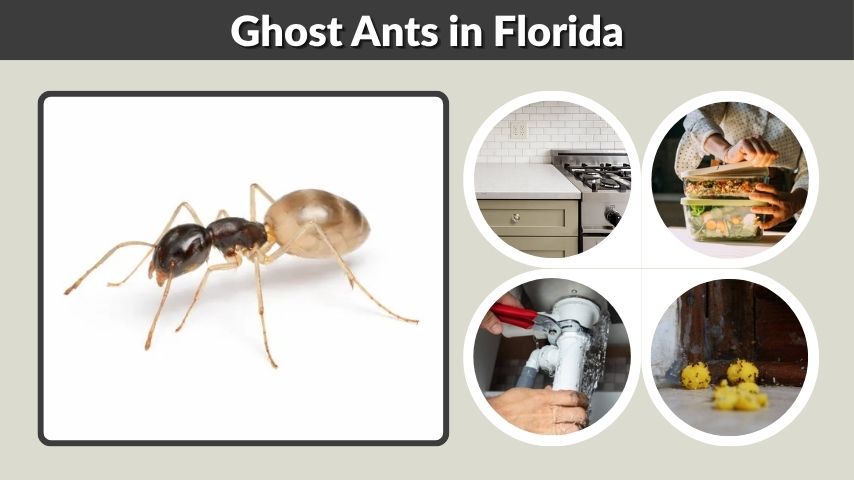
Ghost ants are one of the most common tiny ants found in Florida homes. They often appear in kitchens, bathrooms, sinks, pantries, windowsills, and around potted plants. Their dark head and pale, almost transparent body make them difficult to see, which is why they are called ghost ants. They are not usually dangerous, but they can be frustrating because they spread quickly and return after simple spraying.
What Are Ghost Ants in Florida?
Ghost ants are small nuisance ants known scientifically as Tapinoma melanocephalum. In Florida, they are important household pests, especially in warm and humid areas. UF/IFAS notes that ghost ants are mostly found from Sarasota to Orlando and south, although they have also been recorded farther north, including Gainesville and Duval County.
These ants are often called “sugar ants” by homeowners because they are strongly attracted to sweet foods. However, “sugar ant” is a general nickname, while ghost ant is the specific pest with a dark front body and pale back end.
Ghost ants are especially common in Florida because the climate supports outdoor nesting year-round. They may nest outside in mulch, soil, leaf litter, plant pots, or under objects, then move indoors for food, water, and shelter.
What Do Florida Ghost Ants Look Like?
Ghost ants are very small, usually around 1.3 to 1.5 mm long. Their head and thorax are dark brown to black, while their legs and abdomen are pale yellowish or nearly translucent. This two-tone coloring makes them look like tiny moving dots, especially on light counters or bathroom tiles.
They are easy to miss until many workers begin trailing across a surface. Their pale abdomen may almost disappear against light backgrounds, leaving only the dark head visible.
| Feature | Florida Ghost Ant Description |
|---|---|
| Scientific name | Tapinoma melanocephalum |
| Size | About 1.3–1.5 mm |
| Color | Dark head and thorax, pale legs and abdomen |
| Common nickname | Sugar ant |
| Common locations | Kitchens, bathrooms, sinks, walls, potted plants |
| Main attraction | Sweets, grease, crumbs, and moisture |
| Best control method | Baiting, cleaning, sealing, and moisture control |
Where Ghost Ants Live in Florida Homes
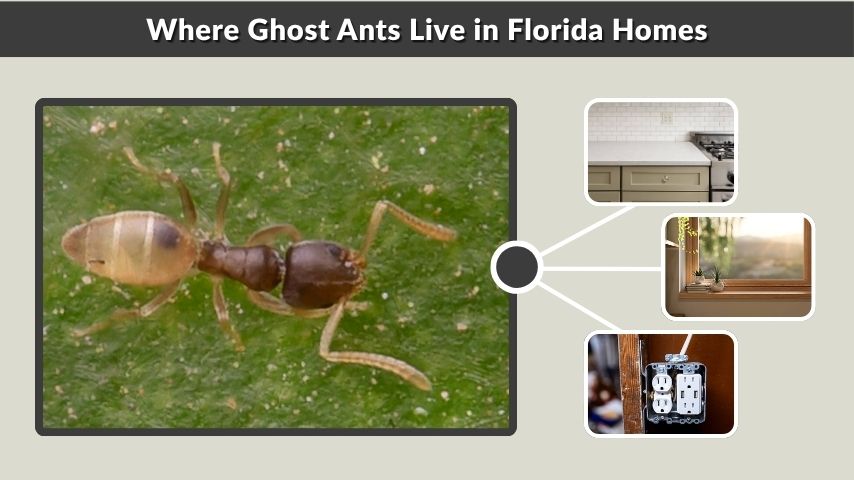
Ghost ants can nest indoors or outdoors. Outdoors, they may use mulch, leaf litter, soil, rotting wood, palm debris, plant pots, stones, and landscaping near foundations. Indoors, they may nest in wall voids, cabinets, baseboards, behind tiles, under sinks, or near plumbing.
Florida homes often have both indoor and outdoor ghost ant pressure. This means treating only the kitchen counter may not solve the full problem if ants are nesting outside and entering through cracks.
Common Indoor Locations
Ghost ants in Florida often show up in:
- Kitchen counters and cabinets
- Pantry shelves
- Bathroom sinks
- Shower and tub areas
- Windowsills
- Baseboards
- Wall cracks
- Electrical outlets
- Potted plants
- Around pet food bowls
Bathrooms are especially common because ghost ants need moisture. If ants keep appearing near a sink or tub, check for leaks, condensation, or damp wood.
Why Ghost Ants Are So Common in Florida
Florida’s warm, humid climate gives ghost ants the conditions they need to survive. In colder places, they may struggle outdoors, but in Florida they can maintain colonies around homes, gardens, and landscaped areas for much of the year.
UF/IFAS lists ghost ants among common pest ants in Florida homes, along with pharaoh ants, carpenter ants, fire ants, crazy ants, thief ants, acrobat ants, and big-headed ants. Their ability to live both indoors and outdoors makes them especially persistent.
Why They Enter Houses
Ghost ants enter Florida homes for:
- Sugar and sweet foods
- Grease and protein
- Crumbs
- Pet food
- Water
- Shelter
- Air-conditioned refuge during heat
- Dry shelter during heavy rain
- Nesting spaces inside walls
They are tiny enough to enter through very small cracks around windows, doors, pipes, cables, and baseboards.
Are Ghost Ants Dangerous?
Ghost ants are not usually dangerous to people. They do not sting like fire ants and are not known for causing structural damage like termites. Their main problem is nuisance activity and food contamination.
They may crawl over trash, drains, floors, and outdoor surfaces before entering kitchens or pantries. Because of this, food should be sealed and contaminated items should be discarded.
Do Florida Ghost Ants Bite?
Ghost ants can technically bite, but their bites are usually not noticeable or medically important. Most people do not feel anything. If a person has minor irritation, it is usually mild and short-lived.
The bigger issue is infestation size. Once ghost ants spread through a home, they can become difficult to remove without a proper control plan.
Ghost Ants vs Sugar Ants in Florida
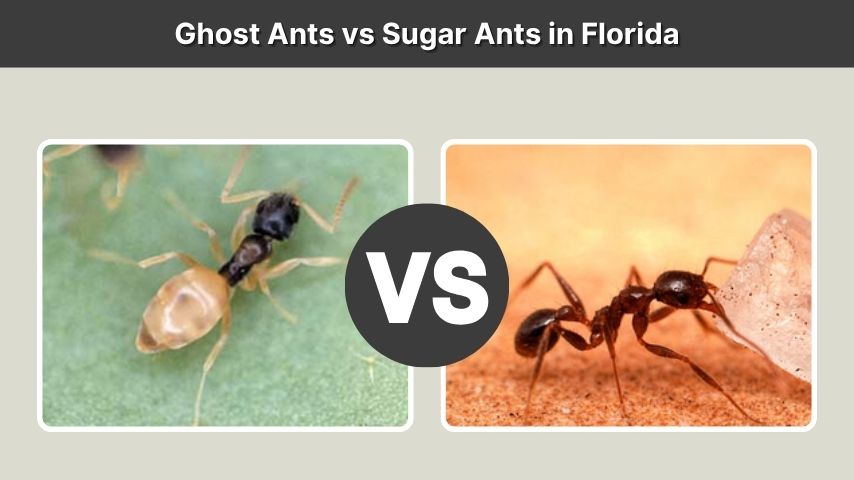
Many Florida homeowners call ghost ants sugar ants because they show up around sweet foods. If tiny ants are trailing to syrup, honey, juice, fruit, cereal, or sugar, ghost ants may be the cause.
However, several ant species are attracted to sweets. Pharaoh ants, rover ants, Argentine ants, and other small ants may also visit sugary foods. Identification matters because different ants respond differently to control methods.
How to Tell Ghost Ants Apart
Ghost ants are especially tiny and have a pale abdomen. If the ant looks dark in front and almost clear in the back, it may be a ghost ant. Pharaoh ants are also small but usually look more yellow or reddish overall. Big-headed ants have noticeably larger heads in major workers. Fire ants are larger and sting.
When control fails repeatedly, collect a sample and ask a pest professional or Extension office for identification.
How to Get Rid of Ghost Ants in Florida
Getting rid of ghost ants in Florida requires more than killing visible ants. These ants can form multiple nests and may move when disturbed. The best method combines sanitation, moisture control, baiting, exclusion, and outdoor habitat reduction.
Step 1: Clean Food Sources
Start by removing anything that attracts ants. Wipe counters, clean sticky spills, sweep crumbs, and store food in sealed containers. Pay attention to hidden food sources under appliances, inside pantry corners, behind trash cans, and around pet bowls.
Ghost ants are tiny, so a few crumbs or a sticky bottle rim may be enough to keep them active.
Step 2: Fix Moisture Problems
Moisture is a major factor in Florida ghost ant problems. Fix leaking pipes, dripping faucets, damp cabinet bottoms, and wet plant saucers. Dry sinks and counters at night, especially if ants are active in bathrooms or kitchens.
If ants are coming from a bathroom wall, sink cabinet, or shower tile, moisture may be supporting an indoor nest.
Step 3: Use Ghost Ant Bait
Baits are usually better than sprays because worker ants can carry bait back to hidden nests. Ghost ants often feed on sweet materials, but they may also accept greasy or protein-based baits depending on colony needs.
UF/IFAS explains that ghost ants may nest outdoors and indoors and that effective control can require locating nests and using baits or non-repellent treatments rather than relying only on sprays.
Place small bait stations or gel bait near trails, but away from food-preparation surfaces. Do not spray near bait because sprays can repel ants or contaminate the bait.
Step 4: Reduce Outdoor Nesting Sites
In Florida, outdoor nesting sites often keep feeding the indoor problem. Reduce mulch against the foundation, remove leaf litter, clean under pots, trim vegetation touching the house, and keep landscaping from staying too wet.
Check potted plants before bringing them inside. Ghost ants may nest in moist soil or under pots.
Step 5: Seal Entry Points
Once activity drops, seal cracks around windows, doors, pipes, baseboards, and utility lines. Use caulk where appropriate and repair damaged screens or door sweeps.
Sealing too early can sometimes trap ants indoors, so it works best as part of a broader plan that includes baiting.
What Kills Ghost Ants in Florida?
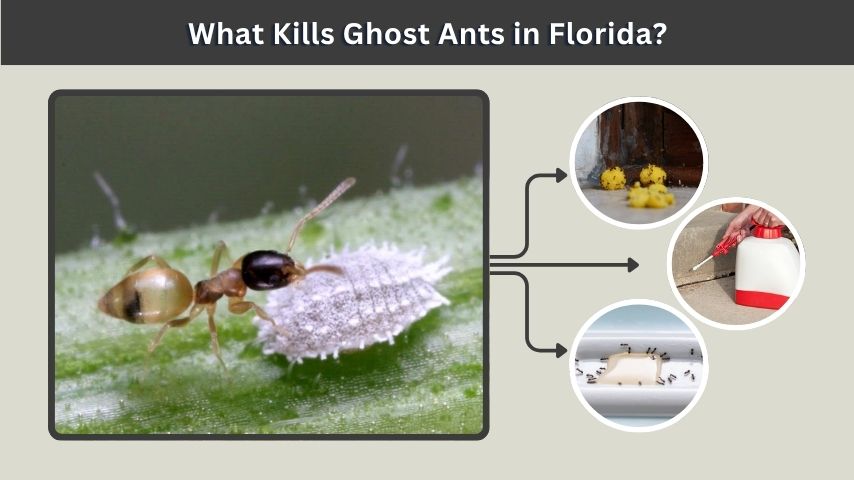
The most effective control usually comes from slow-acting bait that ants carry back to the colony. Contact sprays may kill visible workers, but they often do not reach hidden nests. Repellent sprays may also scatter ants and make the problem harder.
For homeowners, labeled ant baits are usually safer and more practical than homemade mixes. Borax or boric acid can work in some bait formulas, but homemade bait is easy to mix incorrectly. If it is too strong, workers die before returning to the colony. If it is too weak, it may not control the nest.
Baiting Tips
For better results:
- Place bait close to active trails.
- Use several small placements.
- Keep bait fresh.
- Do not wipe away feeding ants too soon.
- Avoid spraying near bait.
- Try a different bait type if ants ignore one.
- Keep bait away from children and pets.
- Follow the product label exactly.
You may see more ants for a short time after baiting. This can be normal because the bait attracts foragers.
Ghost Ants in Florida Kitchens
Kitchens are one of the most common places for ghost ants. They may trail along counters, sinks, backsplashes, cabinet seams, pantries, dishwashers, and trash bins.
To control kitchen infestations, clean thoroughly, seal food, dry the sink, and place bait near trails. Do not place bait directly on counters where food is prepared. Use bait stations or apply gel bait according to label directions in cracks or hidden areas.
Kitchen Prevention Tips
Keep ghost ants out of the kitchen by:
- Sealing sugar, cereal, and snacks
- Cleaning syrup and honey bottle rims
- Emptying trash daily
- Rinsing dishes before bedtime
- Cleaning under appliances
- Drying the sink overnight
- Washing pet bowls
- Removing overripe fruit
Ghost Ants in Cars in Florida
Ghost ants may enter cars in Florida if food crumbs, spilled drinks, or parking locations attract them. Cars parked near trees, mulch, grass, or infested landscaping may become temporary foraging sites.
Clean the car thoroughly, vacuum crumbs, remove trash, wipe cup holders, and avoid storing snacks inside. If ants continue appearing, inspect where the car is parked. The nest may be outside, not inside the vehicle.
Avoid spraying insecticide inside a car unless the product label specifically allows that use. If the problem continues, a pest professional can advise a safer approach.
When to Call a Florida Pest Professional
Call a pest professional if ghost ants return repeatedly, appear in several rooms, come from wall voids, or ignore bait. Apartments, condos, and connected townhomes can be especially difficult because ants may move between units.
A professional can identify the ant correctly, inspect indoor and outdoor nesting areas, choose suitable bait or non-repellent products, and develop a treatment plan for Florida conditions.
How to Prevent Ghost Ants in Florida
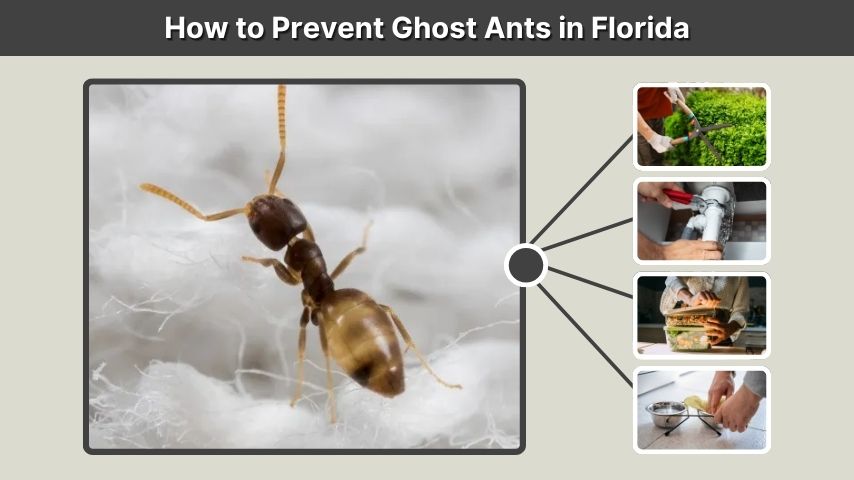
Prevention is ongoing because Florida’s climate supports ants year-round. Even after treatment, ants may return if food, moisture, and nesting sites remain.
Prevention Checklist
To reduce future problems:
- Seal cracks around windows and doors.
- Keep mulch away from the foundation.
- Trim shrubs and branches touching the home.
- Fix leaks quickly.
- Store food in sealed containers.
- Clean pet feeding areas.
- Dry sinks and counters at night.
- Inspect potted plants.
- Reduce leaf litter.
- Keep trash sealed.
- Schedule pest inspections if infestations repeat.
FAQs
Are ghost ants common in Florida?
Yes, ghost ants are common in Florida, especially in warm and humid areas of Central and South Florida. They often live outdoors in mulch, soil, leaf litter, and potted plants, then enter homes for food and water. Kitchens, bathrooms, windowsills, and sink areas are common indoor locations.
What do ghost ants in Florida look like?
Florida ghost ants are very tiny, about 1.3 to 1.5 mm long. They have a dark head and thorax with pale legs and a nearly translucent abdomen. Their back half can be hard to see on light surfaces, which makes them look like tiny moving dark specks.
Do ghost ants bite in Florida?
Ghost ants can bite, but their bites are usually too mild to notice and are not considered medically important. They do not sting like fire ants. The main problem is nuisance activity, food contamination, and repeated indoor infestations rather than painful bites.
What is the best bait for ghost ants in Florida?
The best bait depends on what the ants are feeding on at the time. Many ghost ants respond to sweet liquid or gel baits, but some may prefer protein or grease-based bait. Place bait near trails, avoid spraying nearby, and replace bait if it dries out or is ignored.
How do you get rid of ghost ants in Florida?
Use a combined plan: clean food sources, fix leaks, dry sinks, place ant bait near trails, reduce mulch and leaf litter outside, seal entry points, and inspect potted plants. Avoid relying only on sprays because they usually kill visible ants without reaching hidden nests.
