
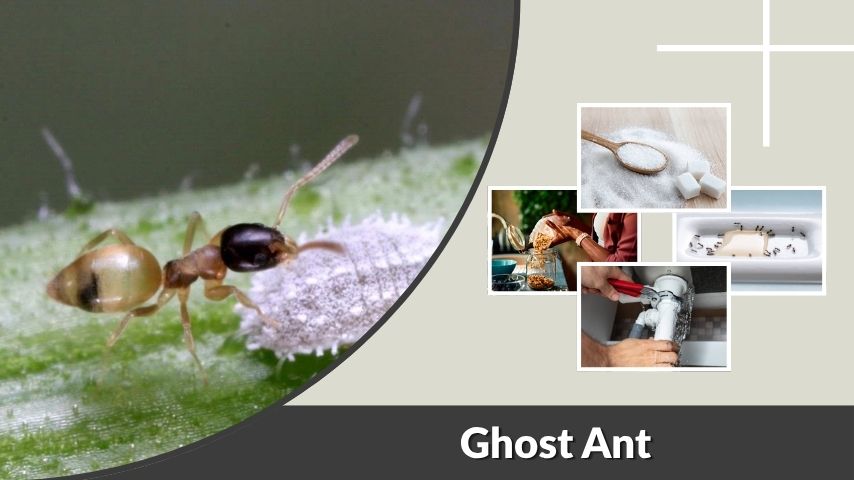
Ghost ants are tiny household pests that often appear in kitchens, bathrooms, sinks, windows, and wall cracks. Their pale legs and almost transparent abdomen make them difficult to see, which is how they get their name. Although ghost ants are not usually dangerous to people, they can become frustrating because they spread quickly, form multiple nesting sites, and return after simple spraying.
What Is a Ghost Ant?
A ghost ant is a very small ant species commonly found in warm, humid regions. It is often seen indoors searching for sweets, moisture, grease, and food crumbs. Ghost ants are especially common in tropical and subtropical climates, but they may also survive indoors in heated buildings.
These ants are known for their two-tone body color. The head and thorax are usually dark brown or black, while the legs and abdomen are pale, yellowish, or almost translucent. This makes the back half of the ant look like it disappears against light surfaces.
Ghost ants are nuisance pests rather than structural pests. They do not eat wood like termites, and they do not usually cause serious damage. However, they can contaminate food, invade pantries, and become difficult to remove if colonies spread through walls or outdoor nesting areas.
What Do Ghost Ants Look Like?
Ghost ants are very small, usually around 1.3 to 1.5 mm long. Because of their tiny size, many people first notice movement rather than clear body details. They may look like tiny dark specks moving quickly across counters, sinks, tiles, windowsills, or baseboards.
Their pale abdomen and legs are the most important identification features. On a white counter or tile floor, the ant may look like a tiny dark head moving by itself.
| Feature | Ghost Ant Description |
|---|---|
| Size | Very small, about 1.3–1.5 mm |
| Head and thorax | Dark brown to black |
| Legs and abdomen | Pale, yellowish, or translucent |
| Movement | Fast and trailing |
| Common indoor areas | Kitchens, bathrooms, sinks, windows |
| Main attraction | Sweets, moisture, grease, crumbs |
| Nesting habit | Multiple nests indoors and outdoors |
Ghost Ant vs Sugar Ant
Many people call ghost ants “sugar ants” because they are strongly attracted to sweet foods. However, “sugar ant” is a general nickname, not always a specific species. If tiny pale ants are trailing to honey, syrup, juice, fruit, or crumbs, ghost ants are possible.
The easiest clue is the pale abdomen. Many other small household ants are darker all over, while ghost ants have a dark front and pale back.
Where Do Ghost Ants Live?
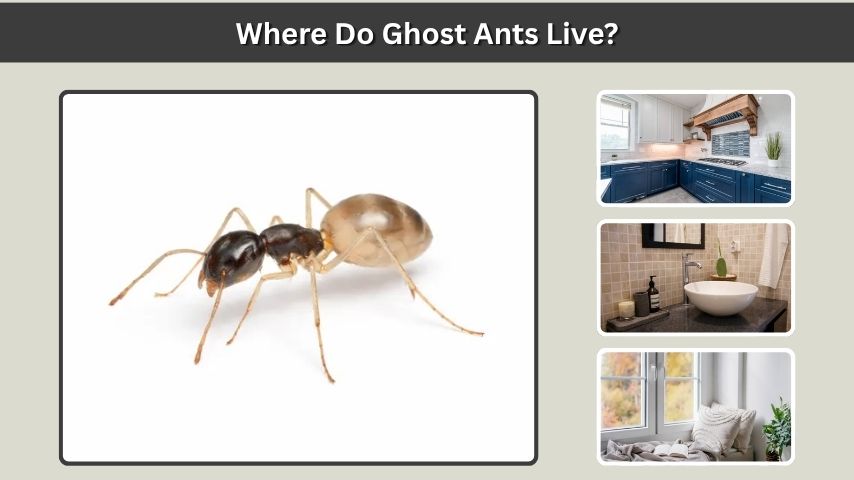
Ghost ants prefer warm, moist environments. Outdoors, they may nest in soil, mulch, leaf litter, under stones, inside plant pots, beneath bark, or around foundations. Indoors, they may nest in wall voids, cabinets, baseboards, behind tiles, under sinks, or near plumbing.
They are especially likely to appear in areas with moisture. Kitchens and bathrooms are common because these spaces provide water and food.
Common Indoor Hiding Places
Ghost ants may nest or trail through:
- Wall cracks
- Baseboards
- Kitchen cabinets
- Bathroom vanities
- Sink areas
- Window frames
- Electrical outlets
- Potted plants
- Behind tiles
- Under appliances
Because they can form multiple nests, killing ants in one visible area may not remove the full problem.
Why Ghost Ants Enter Homes
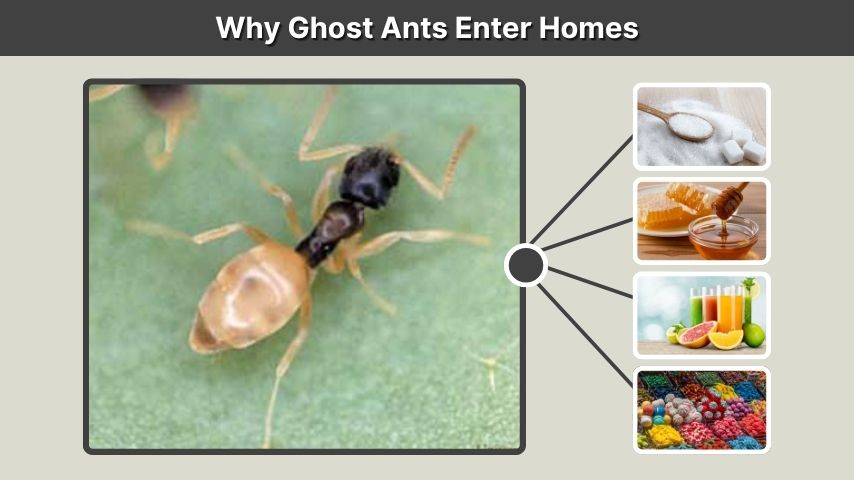
Ghost ants enter homes mainly for food, water, and shelter. A small spill, dirty dish, pet food bowl, leaky pipe, or damp corner may be enough to attract them. Once they find food, they create trails that guide other ants to the same source.
They can enter through tiny openings because of their small size. Even very narrow cracks around windows, doors, pipes, and wires can become entry points.
Main Attractants
Ghost ants are commonly attracted to:
- Sugar
- Honey
- Syrup
- Juice
- Fruit
- Candy
- Grease
- Crumbs
- Pet food
- Dirty dishes
- Water leaks
- Damp sinks
- Potted plants
Even a clean-looking kitchen can attract ghost ants if there is moisture or a hidden food source.
Are Ghost Ants Dangerous?
Ghost ants are not considered highly dangerous to humans. They do not have a painful sting like fire ants, and they are not known for serious bites. Their main problem is nuisance activity and possible food contamination.
They may crawl over trash, drains, floors, or outdoor surfaces before entering food areas. For this reason, food should be sealed, and surfaces should be cleaned when ants are present.
Do Ghost Ants Bite?
Ghost ants can bite, but their bites are usually not noticeable or medically important. Most people do not feel them. If irritation occurs, it is usually mild and temporary.
The bigger concern is the infestation itself. Ghost ants can spread quickly and may be difficult to control if they establish nests inside walls or around the home.
Ghost Ant Colonies and Nesting Behavior
Ghost ant colonies can be difficult to eliminate because they may have multiple queens and multiple nesting sites. This allows the colony to split and spread. If one nest is disturbed, ants may move to another area and continue the infestation.
This behavior is one reason surface sprays often fail. Spraying visible ants may kill some workers but can also scatter the colony. In some cases, ants may create new satellite nests, making the problem worse.
Why They Come Back After Spraying
Ghost ants often return because:
- The main nest was not reached.
- There are multiple nests.
- Sprays killed only visible workers.
- Food and moisture sources remain.
- Entry points were not sealed.
- Outdoor nests keep sending ants indoors.
- The colony relocated after disturbance.
Successful control usually requires sanitation, exclusion, moisture control, and proper baiting.
How to Get Rid of Ghost Ants
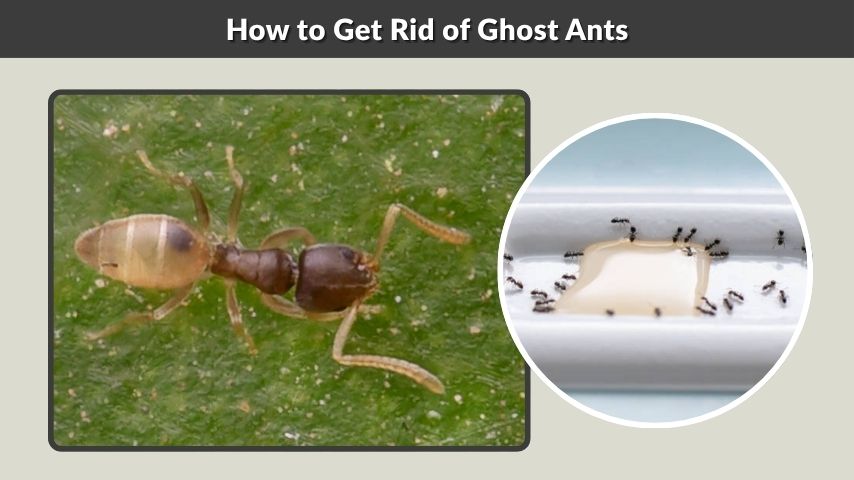
Getting rid of ghost ants takes patience. The goal is not just to kill the ants you can see. You need to reduce what attracts them, block entry points, and use control methods that reach the colony.
Step 1: Clean Food Sources
Start by removing food that attracts ants. Wipe counters, clean spills, sweep crumbs, and store food in sealed containers. Pay attention to sticky foods and sweet liquids.
Clean under appliances, around trash cans, inside pantry corners, and near pet feeding areas. Ghost ants are tiny, so even small crumbs can support activity.
Step 2: Remove Moisture
Moisture is a major reason ghost ants stay indoors. Fix leaky faucets, pipes, and sink traps. Dry wet counters and bathroom areas. Avoid leaving damp sponges, towels, or cloths near sinks.
If ants are appearing in a bathroom, moisture may be more important than food. Check under sinks and around tubs for hidden leaks.
Step 3: Use Ant Baits
Baits are often better than sprays because worker ants carry bait back to the colony. However, ghost ants can be picky. They may prefer sweets at one time and greasy or protein-based foods at another.
Use small bait placements near trails, but do not place bait directly on food surfaces. Follow label directions carefully. Keep baits away from children and pets.
Do not spray near bait. Sprays can repel ants or contaminate the bait, stopping workers from carrying it back.
Step 4: Seal Entry Points
After reducing activity, seal cracks and gaps where ants enter. Use caulk around windows, doors, pipes, cables, baseboards, and small wall openings. Replace worn door sweeps and repair torn screens.
Sealing is especially important in apartments, condos, and connected buildings where ants may move between units.
Natural Ways to Reduce Ghost Ants
Natural methods may help reduce ghost ant activity, especially when infestations are small. However, they may not eliminate established colonies. Use them as support steps, not as the only treatment for a serious infestation.
Helpful Non-Chemical Methods
You can reduce ghost ants by:
- Wiping trails with soapy water
- Cleaning sticky spills quickly
- Removing trash daily
- Keeping pet food sealed
- Drying sinks at night
- Storing fruit in sealed containers
- Moving potted plants away from walls
- Trimming vegetation near the house
- Reducing mulch touching foundations
Some people use vinegar to wipe trails. This may remove scent trails temporarily, but it does not kill the colony. Ants may return if the food or moisture source remains.
Best Bait for Ghost Ants
The best bait depends on what the colony wants at the time. Ghost ants often like sweet baits, but they may also feed on grease or protein. If one bait does not work after several days, try a different type.
Liquid sweet baits may work well when ants are strongly feeding on sugar. Gel baits can be useful in cracks and small indoor areas. Protein or grease-based baits may work when ants ignore sweet bait.
Baiting Tips
For better baiting results:
- Place bait close to trails.
- Use several small placements.
- Do not disturb feeding ants.
- Keep bait fresh.
- Avoid spraying nearby.
- Replace dried or dirty bait.
- Be patient for several days.
- Follow all label instructions.
You may see more ants at first because the bait attracts foragers. This can be normal. The goal is for ants to carry the bait back to the colony.
Ghost Ants in the Kitchen
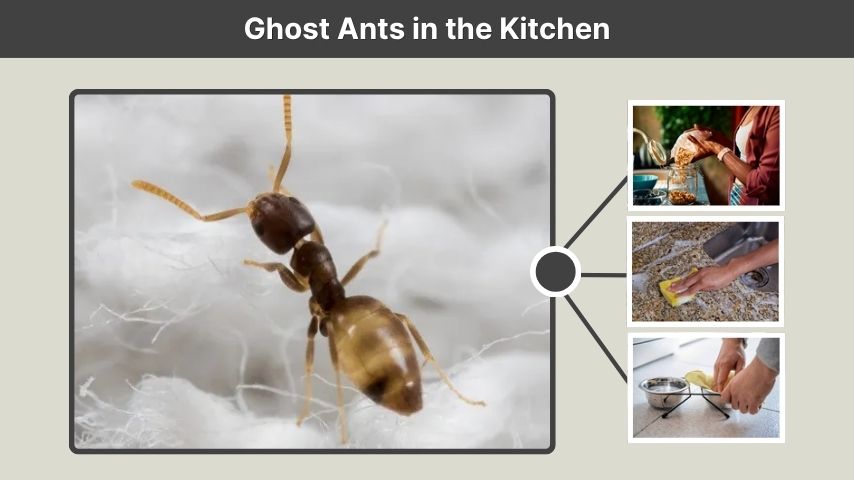
The kitchen is one of the most common places to find ghost ants. They may trail along countertops, cabinets, sinks, dishwashers, pantry shelves, and trash cans. Sweet foods and moisture are the biggest attractants.
Kitchen Control Checklist
To reduce kitchen infestations:
- Store sugar, cereal, and snacks in sealed containers.
- Clean syrup, honey, and juice spills immediately.
- Rinse dishes before leaving them overnight.
- Empty trash often.
- Wipe counters with soapy water.
- Clean under toaster, fridge, and stove.
- Keep pet bowls clean.
- Dry the sink before bedtime.
If ants keep returning to the same cabinet, check for a hidden spill, leaking pipe, or food package with a tiny opening.
Ghost Ants in the Bathroom
Bathrooms attract ghost ants because of moisture. Even if no food is present, ants may visit sinks, tubs, drains, and damp towels. They may also nest in wall voids near plumbing.
Bathroom ants are often a sign of moisture problems. A slow leak under a sink can support ants for a long time.
Bathroom Control Tips
Fix leaks, dry wet areas, and clean soap residue. Store toiletries properly and avoid leaving damp cloths on the floor. If ants appear near a bathtub or wall tile, inspect for water damage or gaps where ants may enter.
Ghost Ants in Potted Plants
Potted plants can attract ghost ants, especially if the soil stays moist or contains honeydew-producing insects like aphids, scales, or mealybugs. Ants may nest in the soil or forage around the plant.
Check indoor plants if ants seem to come from windows, patios, or plant stands. Treat plant pests if present, and avoid overwatering.
What to Do
Move infested plants away from walls and counters. Inspect the pot, saucer, and soil. Wash the outside of the pot and remove dead leaves. If ants are nesting in the soil, repotting may be needed.
When to Call Pest Control
A small ghost ant problem may improve with cleaning, baiting, and sealing. However, heavy or repeated infestations often need professional help. This is especially true if ants are nesting in walls, spreading through multiple rooms, or returning after several treatment attempts.
A pest control professional can identify the ant species, locate nesting areas, choose proper baits, and treat outdoor zones. Correct identification matters because ghost ants require a different approach than fire ants, carpenter ants, or termites.
How to Prevent Ghost Ants
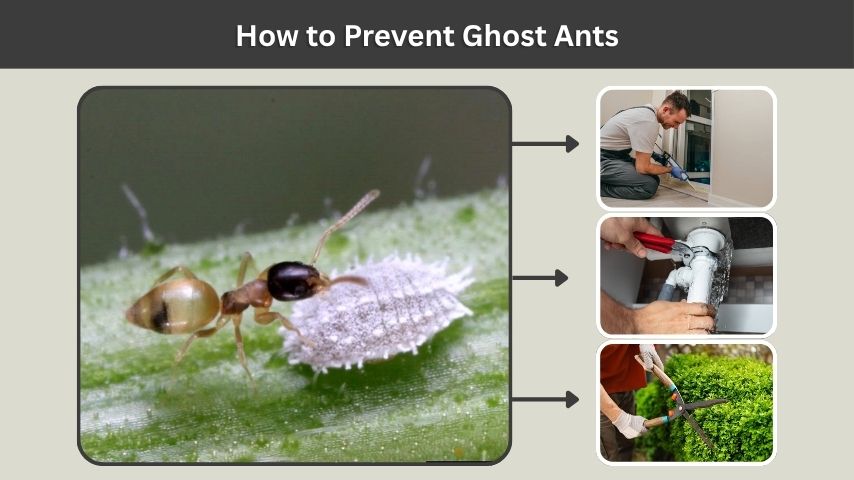
Prevention is easier than control. Since ghost ants are tiny, they can enter through small spaces, so a clean and dry home is important.
Prevention Tips
To keep ghost ants away:
- Seal cracks and gaps.
- Store food tightly.
- Clean counters daily.
- Fix leaks quickly.
- Dry sinks overnight.
- Keep trash covered.
- Trim plants away from walls.
- Reduce mulch near the foundation.
- Inspect potted plants.
- Use baits early if trails appear.
Regular prevention can stop a small trail from becoming a larger infestation.
FAQs
Why are ghost ants in my house?
Ghost ants usually enter homes for food, water, or shelter. They are attracted to sweets, crumbs, grease, pet food, and moisture around sinks or bathrooms. Their tiny size allows them to enter through small cracks. Cleaning, drying wet areas, and sealing gaps can reduce activity.
Are ghost ants harmful?
Ghost ants are not usually harmful to people. They do not sting and their bites are rarely noticeable. However, they can contaminate food and become a major nuisance when colonies spread. Their ability to form multiple nests makes them harder to control than many common household ants.
What is the fastest way to get rid of ghost ants?
The fastest useful approach is to clean food sources, remove moisture, and place ant bait near trails. Do not spray near bait, because sprays can repel ants and stop them from carrying bait to the colony. Heavy infestations may require professional pest control.
Why do ghost ants keep coming back?
Ghost ants keep coming back because colonies can have multiple nests and queens. Spraying visible ants often kills only workers and may cause the colony to move. If food, water, entry points, or outdoor nests remain, ants can return again and again.
Do ghost ants live in walls?
Yes, ghost ants can nest in wall voids, baseboards, cabinets, and spaces near plumbing. They may also nest outdoors and enter through cracks. If ants appear from outlets, trim, cabinets, or tile gaps, a hidden indoor nest may be present.
