
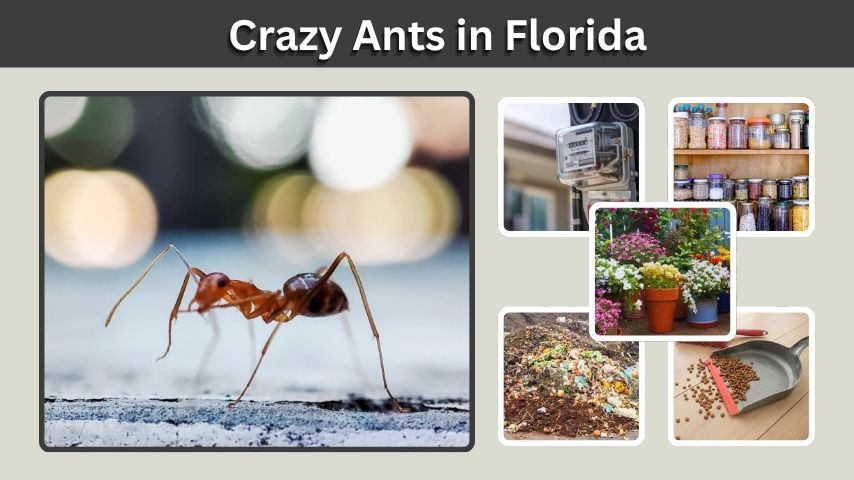
Crazy ants in Florida are a growing concern for homeowners, gardeners, and pest control professionals. These ants are known for their fast, erratic movement, large colonies, and ability to invade homes, yards, electrical equipment, and outdoor structures. Unlike ants that march in neat lines, crazy ants move in scattered, unpredictable patterns. That unusual behavior is one reason they are called “crazy ants.”
What Are Crazy Ants?
Crazy ants are not just one species. The name is used for ants that move quickly and irregularly instead of following straight trails. In Florida, the two most discussed types are the black crazy ant and the tawny crazy ant. The tawny crazy ant was previously confused with or called the Caribbean crazy ant in some Florida references. UF/IFAS notes that large populations of this ant were found in Florida in the 1990s and later spread across much of Florida and other Gulf Coast states.
Crazy ants are difficult pests because their colonies can be large, nests may be hard to locate, and foragers can travel long distances. UF/IFAS describes the crazy ant, Paratrechina longicornis, as occurring in large numbers indoors and outdoors, often foraging far from nests, which makes nest control difficult.
Why Are They Called Crazy Ants?
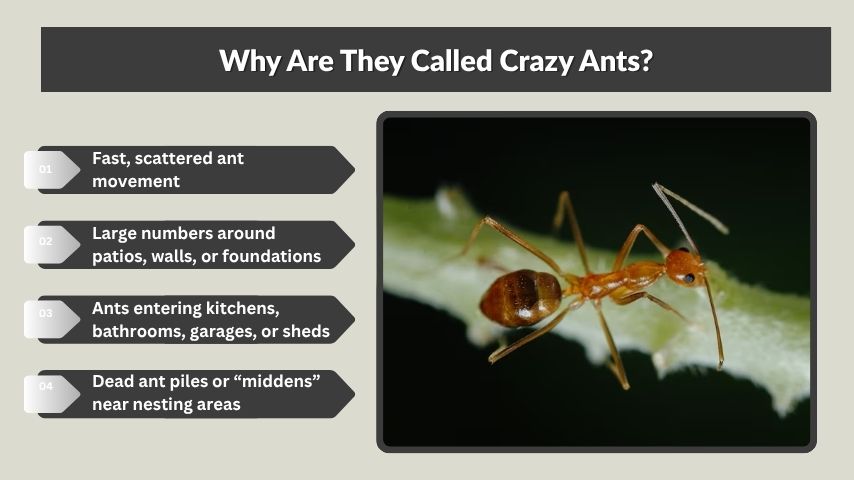
Crazy ants get their name from the way they move. Instead of forming tidy trails like many household ants, they run quickly in irregular directions. This movement can look chaotic when large numbers are disturbed.
Their movement is one of the easiest ways to notice them, but it is not enough for exact identification. Several small ants can look similar, and Florida has many ant species. A pest professional or local Extension office can help confirm the species if control efforts are failing.
Common Signs of Crazy Ants
You may notice:
- Fast, scattered ant movement
- Large numbers around patios, walls, or foundations
- Ants entering kitchens, bathrooms, garages, or sheds
- Dead ant piles or “middens” near nesting areas
- Ant activity around electrical equipment
- Ants nesting in mulch, leaf litter, potted plants, or wall voids
- Outdoor trails that do not look as organized as other ants
When populations are high, crazy ants can become overwhelming because they appear in many places at once.
Types of Crazy Ants in Florida
Florida has more than one ant that may be called a crazy ant. Knowing the difference helps with control because behavior and nesting habits can vary.
Black Crazy Ant
The black crazy ant, also known as the longhorn crazy ant, is Paratrechina longicornis. It is a dark, slender ant with very long legs and antennae. UF/IFAS explains that its common name comes from its erratic, rapid movement and its habit of not following trails as consistently as other ants.
Black crazy ants may nest indoors or outdoors. They can forage into homes in search of sweets, grease, protein, and moisture. Because nests may be hidden or located away from feeding sites, simply spraying visible ants rarely solves the problem.
Tawny Crazy Ant
The tawny crazy ant, Nylanderia fulva, is another important Florida species. It is an invasive ant with large populations that can be very difficult to manage. UF/IFAS notes that integrated pest management gives better results for this ant, but does not promise complete control because of its invasive nature.
Tawny crazy ants are often associated with outdoor infestations, huge foraging numbers, and problems around structures. They can displace other ants and create serious nuisance problems for homeowners.
Caribbean Crazy Ant Confusion
The name Caribbean crazy ant has been used in Florida history, but the situation is confusing. UF/IFAS explains that early infestations were identified as Caribbean crazy ants because of earlier reports in South Florida, but later work connected major infestations with tawny crazy ants.
For a homeowner, the important point is simple: if you have massive crazy ant activity, exact identification matters. The wrong treatment plan can waste time and money.
What Do Crazy Ants in Florida Look Like?
Crazy ants are usually small, fast-moving ants. Black crazy ants are dark brown to black with long legs and antennae. Tawny crazy ants are generally reddish-brown to tawny. Both may appear as fast-moving swarms when disturbed.
Basic Identification Features
Crazy ants may have:
- Small body size
- Long legs
- Long antennae
- Fast, erratic movement
- Large outdoor populations
- Activity around homes and landscaping
- No neat single-file trail in many situations
Because many ants are small and similar, visual identification can be difficult without magnification. If the infestation is severe, collect a sample in a sealed container and ask a pest control professional or Extension specialist for help.
Where Crazy Ants Live in Florida
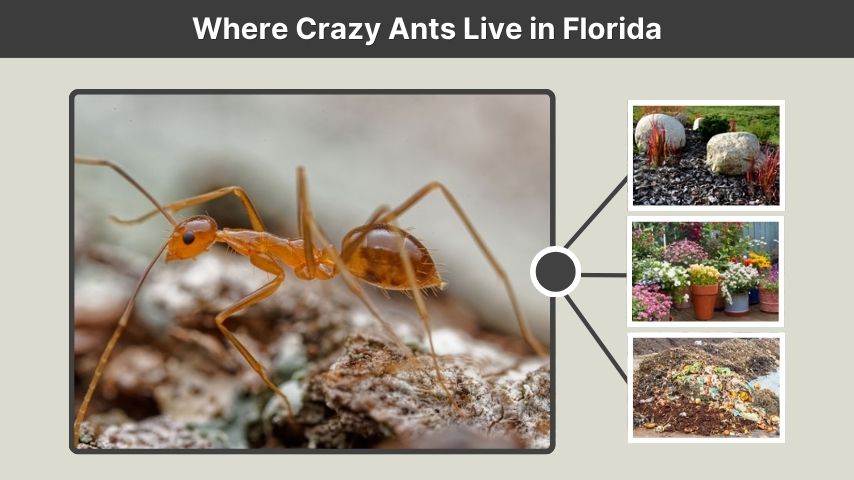
Crazy ants can live in many parts of Florida, especially warm, humid areas with food, moisture, and nesting shelter. They may nest in soil, mulch, leaf litter, rotting wood, wall voids, potted plants, under stones, and around landscaping.
Tawny crazy ants have been reported across much of Florida. UF/IFAS states that the species spread rapidly over most of Florida and several Gulf Coast states after large populations were found in the 1990s.
Common Nesting Areas
Around homes, crazy ants may nest in:
- Mulch beds
- Leaf litter
- Potted plants
- Compost areas
- Tree bases
- Wall voids
- Under landscape timbers
- Under stones or bricks
- Around irrigation systems
- Garages and sheds
- Outdoor electrical boxes
They often thrive where there is moisture and clutter. Reducing these conditions can help lower pressure around the home.
Why Crazy Ants Are a Problem
Crazy ants are more than a minor nuisance when populations become large. They can invade homes, contaminate food, disturb outdoor living spaces, and overwhelm landscapes. Some species are also known for moving into electrical equipment.
Problems in Homes and Yards
Crazy ants may cause problems by:
- Entering kitchens and pantries
- Invading bathrooms for moisture
- Nesting in wall voids
- Covering patios, driveways, and garden beds
- Protecting honeydew-producing insects such as aphids and scales
- Making outdoor spaces unpleasant
- Displacing other ant species
- Becoming difficult to control with simple sprays
They do not usually sting like fire ants, but their huge numbers can make them more frustrating.
Crazy Ants and Electronics
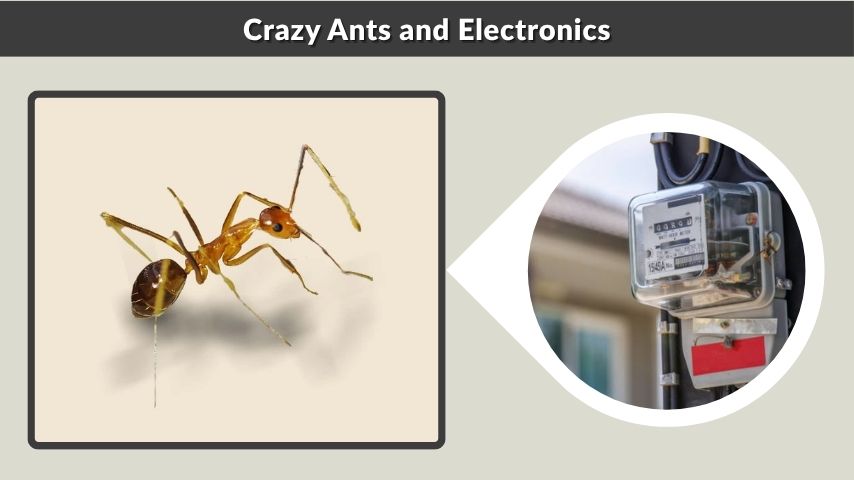
One of the most concerning issues with tawny crazy ants is their tendency to invade electrical equipment. They may enter outlets, breaker boxes, AC units, pumps, and other devices. When ants die inside equipment, they can attract more ants and increase the risk of short circuits or malfunction.
This is one reason homeowners should take large infestations seriously. If ants are entering electrical equipment, avoid opening panels yourself unless you are qualified. Contact a licensed electrician or pest professional.
Electronics at Risk
Crazy ants may appear around:
- Outdoor electrical boxes
- Air-conditioning units
- Pool pumps
- Irrigation controls
- Gate motors
- Outlets
- Breaker panels
- Appliances
- Security systems
Keeping vegetation trimmed, reducing moisture, and sealing entry points may reduce risk, but heavy infestations often need professional treatment.
How to Get Rid of Crazy Ants in Florida
Crazy ants are hard to control because colonies may be large, nests may be scattered, and visible workers may be far from the main nesting sites. UF/IFAS recommends an integrated pest management approach for tawny crazy ants because commonly used products may cause low or slow mortality, and full control is not guaranteed.
The goal is not just to kill visible ants. The goal is to reduce nesting sites, remove food sources, block entry, and use the right products in the right way.
Step 1: Identify the Ant
Start by confirming whether you have black crazy ants, tawny crazy ants, ghost ants, Argentine ants, fire ants, or another species. Treatment can vary depending on the ant.
If ants are fast-moving, appear in huge numbers, and are difficult to control, crazy ants are possible. Still, accurate identification is best.
Step 2: Reduce Food and Moisture
Crazy ants need food and water. Removing easy resources can reduce indoor activity.
Helpful steps include:
- Clean up crumbs and spills.
- Store food in sealed containers.
- Rinse pet bowls and remove leftovers.
- Fix leaking pipes and faucets.
- Reduce standing water near the home.
- Empty trash regularly.
- Clean greasy surfaces.
- Keep outdoor eating areas clean.
These steps will not eliminate a major infestation alone, but they make other treatments more effective.
Step 3: Remove Outdoor Nesting Shelter
Outdoor habitat is a major issue. Crazy ants often thrive in cluttered, moist landscaping.
Reduce nesting sites by:
- Pulling mulch away from foundations
- Removing leaf litter
- Cleaning under flowerpots
- Stacking firewood away from the house
- Trimming plants off walls
- Removing rotting wood
- Reducing dense ground cover
- Keeping compost areas managed
- Sealing cracks and gaps
A clean, dry perimeter makes it harder for ants to nest directly beside the home.
Step 4: Use Baits Carefully
Baits can help with some ant problems, but crazy ants may be inconsistent in what they accept. They may feed on sweets, proteins, or grease depending on colony needs. This means one bait may work one week and perform poorly another week.
Avoid spraying directly around bait placements because sprays can repel ants or contaminate bait. If using store-bought bait, follow the label exactly and keep it away from children, pets, and wildlife.
Step 5: Call a Professional for Heavy Infestations
Large crazy ant infestations often need professional help. Pest control professionals can identify the species, inspect nesting areas, choose appropriate products, and create a treatment plan. This is especially important if ants are invading electrical equipment or spreading across a whole property.
Why Spraying Alone Often Fails
Many homeowners spray visible ants and feel relieved for a day, only to see more ants return. This happens because the visible ants are only a small part of the colony. Sprays may kill workers but fail to reach queens, brood, or hidden nests.
Spraying can also scatter ants or push them into new areas. For crazy ants, a wider management plan is usually better than repeated surface spraying.
Are Crazy Ants Dangerous to People?
Crazy ants are not usually dangerous in the same way as fire ants. They do not have the same painful sting. However, they can still be a serious nuisance and may cause stress, food contamination, electrical problems, and landscape issues.
Some people may experience minor irritation if ants crawl on the skin or bite, but the main concern is infestation size and property impact rather than direct human injury.
How to Prevent Crazy Ants From Returning
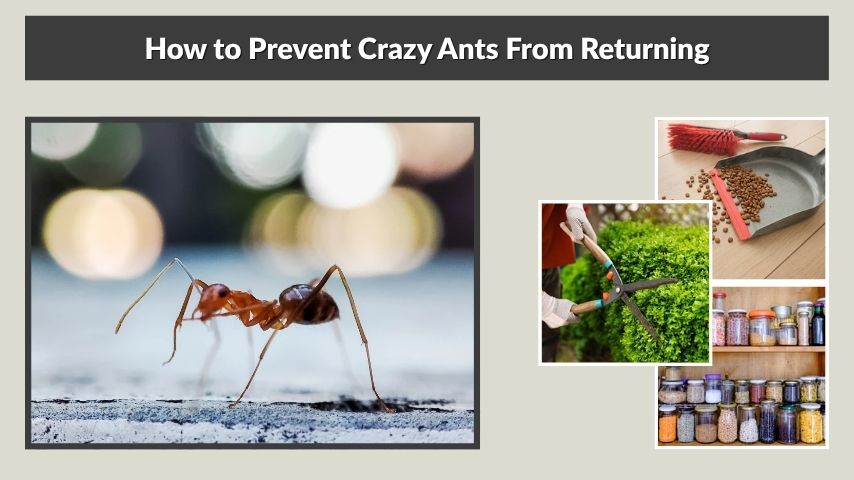
Prevention is ongoing in Florida’s warm climate. Even after treatment, ants can return if nesting shelter, moisture, and food remain available.
Prevention Checklist
To reduce future infestations:
- Keep mulch thin and away from the foundation.
- Seal cracks around doors and windows.
- Repair screens and weather stripping.
- Reduce indoor moisture.
- Store food tightly.
- Clean pet feeding areas.
- Trim vegetation away from the house.
- Keep outdoor electrical areas clear.
- Inspect potted plants before bringing them indoors.
- Schedule regular pest inspections if infestations recur.
The earlier you act, the easier control usually is.
FAQs
What are crazy ants in Florida?
Crazy ants in Florida are small, fast-moving ants known for erratic movement and large infestations. The main types include black crazy ants and tawny crazy ants. Tawny crazy ants were once confused with Caribbean crazy ants in some Florida reports and can form heavy infestations around homes.
Are crazy ants dangerous?
Crazy ants are usually not dangerous to people like fire ants, but they can become serious nuisance pests. They may invade homes, contaminate food, overwhelm yards, protect honeydew insects, and enter electrical equipment. Large infestations can be very difficult to control without professional help.
How do I know if I have crazy ants?
You may have crazy ants if you see small ants running quickly in scattered, irregular patterns instead of neat trails. They may appear in large numbers around mulch, walls, foundations, patios, kitchens, bathrooms, or electrical equipment. Exact identification may require a pest professional.
How do you get rid of crazy ants in Florida?
The best approach is integrated pest management. Identify the species, remove food and moisture, reduce mulch and leaf litter, seal entry points, use labeled baits or treatments carefully, and call a professional for heavy infestations. Spraying visible ants alone usually does not solve the problem.
Do crazy ants damage electronics?
Tawny crazy ants can invade electrical equipment such as AC units, outlets, breaker boxes, pool pumps, and irrigation controls. Dead ants inside equipment may attract more ants and contribute to malfunctions. If ants are in electrical devices, contact a qualified professional rather than handling wiring yourself.
