
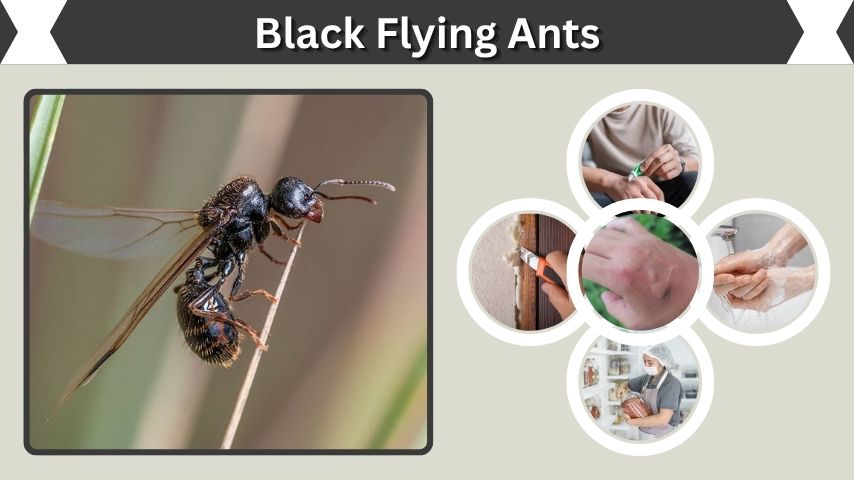
Black flying ants can appear suddenly around windows, lights, pools, patios, and indoor rooms. Many people worry they are termites, wasps, or dangerous stinging insects. In most cases, black flying ants are reproductive ants leaving a colony to mate and start new nests. They are usually not dangerous, but large numbers indoors can signal an ant nest nearby or, in some cases, a carpenter ant problem.
What Are Black Flying Ants?
Black flying ants are winged reproductive ants. They are also called alates or swarmers. These ants develop wings so they can leave their original colony, mate, and start new colonies elsewhere.
Not every ant in a colony can fly. Most ants are wingless workers. Flying ants are usually males and young queens. They appear during certain weather conditions, often after rain or during warm, humid days.
A black flying ant may belong to different ant species. Some are small black ants, while others may be larger carpenter ants. This is why size, body shape, location, and behavior matter when identifying them.
Why Do Black Ants Fly?
Black ants fly because it is part of their reproductive cycle. A mature ant colony produces winged males and queens. When conditions are right, they leave the nest in a swarm.
This event is often called a nuptial flight. During this flight, males and queens mate. After mating, males usually die, while fertilized queens look for a place to start a new colony.
Black flying ants are most likely to appear when:
- The weather is warm
- Humidity is high
- Rain has recently fallen
- A colony is mature
- Outdoor lights attract them
- Nesting sites are nearby
- Windows, doors, or cracks allow entry
Seeing a few outside is normal. Seeing many inside may mean ants are nesting in or near the house.
What Do Black Flying Ants Look Like?
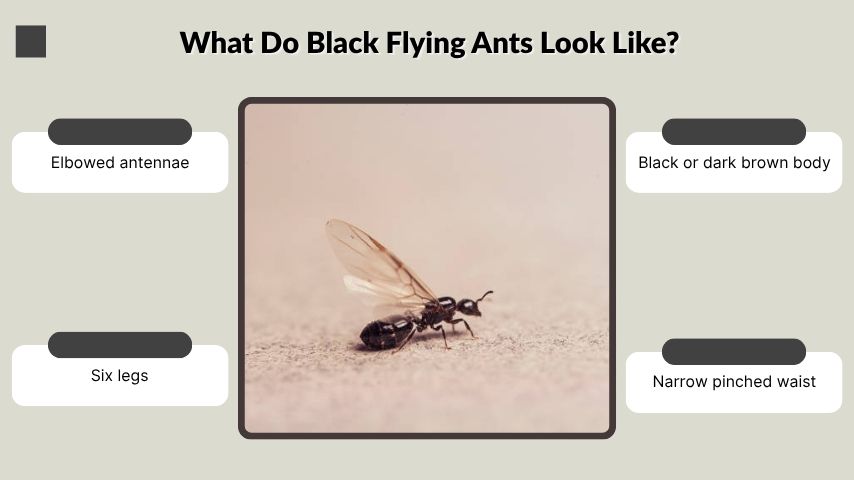
Black flying ants have the same basic body shape as other ants, but with wings. They usually have a narrow waist, bent antennae, and two pairs of wings. The front wings are typically longer than the back wings.
Common features include:
- Black or dark brown body
- Narrow pinched waist
- Elbowed antennae
- Six legs
- Two pairs of wings
- Front wings longer than back wings
- Body divided into head, thorax, and abdomen
Some are tiny black flying ants, while others may look like big black flying ants. Large black flying ants in a house may be carpenter ants, especially if they are found near wood, window frames, bathrooms, kitchens, or damp areas.
Black Flying Ants vs Termites
Many people confuse black flying ants with flying termites. This is an important difference because termites can cause serious structural damage, while most flying ants are less destructive.
| Feature | Black Flying Ants | Flying Termites |
|---|---|---|
| Waist | Narrow and pinched | Broad and straight |
| Antennae | Bent or elbowed | Straight |
| Wings | Front wings longer than back wings | Four wings about equal size |
| Body shape | Segmented ant-like body | More uniform body |
| Risk level | Usually lower, except carpenter ants | Higher risk to wood structures |
If the insect has a pinched waist and bent antennae, it is more likely a flying ant. If it has straight antennae, equal wings, and a thick waist, it may be a termite.
Why Are Black Flying Ants in the House?
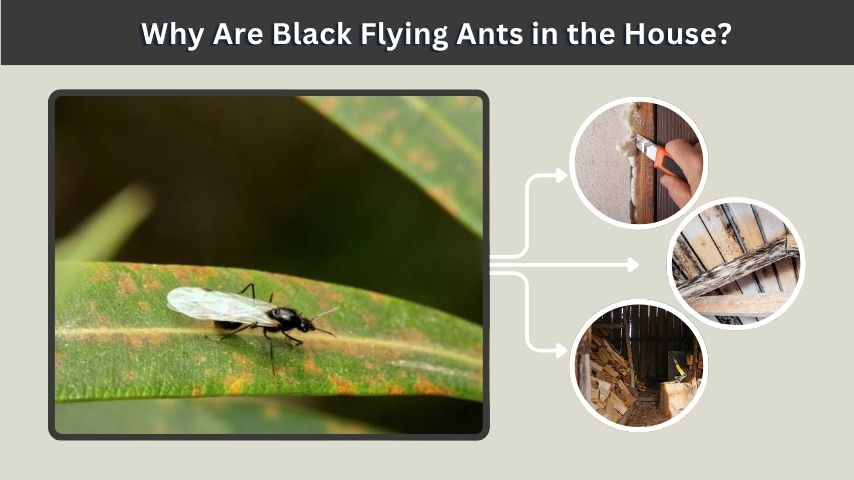
Black flying ants may enter a house by accident, or they may come from a nest inside the structure. The cause depends on where and how many you see.
A few flying ants near a window may have flown in from outside. A large swarm indoors may suggest a colony inside a wall, attic, crawl space, basement, or wooden structure.
Common indoor causes include:
- Gaps around windows and doors
- Cracks in the foundation
- Outdoor lights attracting swarmers
- Ant nests near the house
- Damp wood
- Carpenter ant activity
- Poorly sealed vents
- Firewood stored indoors
If you see flying ants indoors once, it may not be serious. If you see them repeatedly, especially large black flying ants, inspect for a nest.
Are Black Flying Ants Dangerous?
Black flying ants are usually not dangerous to people. They do not spread disease like some pests, and most do not attack humans. However, some species can bite if handled or trapped against the skin.
The bigger concern is not personal danger but nesting. If the ants are carpenter ants, they may tunnel through damp or damaged wood to build nesting galleries. Carpenter ants do not eat wood like termites, but they can still weaken wood over time if the colony grows.
You should pay closer attention if you see:
- Large black flying ants indoors
- Sawdust-like debris near wood
- Rustling sounds in walls
- Repeated swarms indoors
- Ants near wet or damaged wood
- Ant trails in kitchens or bathrooms
Do Black Flying Ants Bite?
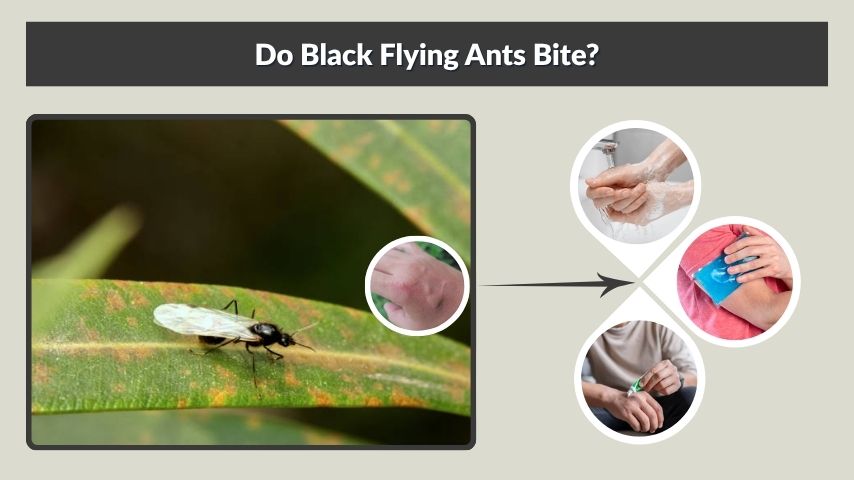
Some black flying ants can bite, but most bites are mild. A black flying ant bite may feel like a small pinch. It can cause slight redness, itching, or irritation, depending on the person and the ant species.
Flying ants do not usually bite unless they are handled, squeezed, or trapped in clothing. If you leave them alone, they typically try to escape rather than attack.
Basic bite care includes:
- Wash the area with soap and water
- Apply a cold compress
- Avoid scratching
- Use an anti-itch cream if needed
- Watch for unusual swelling or allergic reaction
Most bites improve quickly. Seek medical advice if there is severe swelling, trouble breathing, or signs of infection.
Do Black Flying Ants Sting?
Most black flying ants do not sting people. Some ant species can sting, but many common black flying ants rely more on biting or chemical defenses. People often mistake the pointed abdomen of a flying ant for a stinger.
Searches like “black flying ant with stinger” are common because winged ants can look wasp-like. However, if the insect has a narrow waist, elbowed antennae, and ant-like body, it is probably an ant, not a wasp.
If the insect is black and yellow, very wasp-shaped, or repeatedly stinging, it may not be an ant.
Big Black Flying Ants
Big black flying ants are often carpenter ants, although other large ant species may also develop wings. Carpenter ant swarmers are usually larger than many household ants and may appear near windows, lights, or damp wood.
Large flying black ants are worth checking more carefully because carpenter ants can nest in wood. They prefer damp, decaying, or water-damaged wood, but mature colonies may expand into sound wood.
Possible carpenter ant signs include:
- Large black ants indoors
- Winged ants near windows
- Small piles of wood shavings
- Ants coming from wall voids
- Activity near leaks or moisture
- Hollow-sounding damaged wood
If you suspect carpenter ants, find and fix moisture problems first. Removing only the visible swarmers will not solve the colony.
Small Black Flying Ants
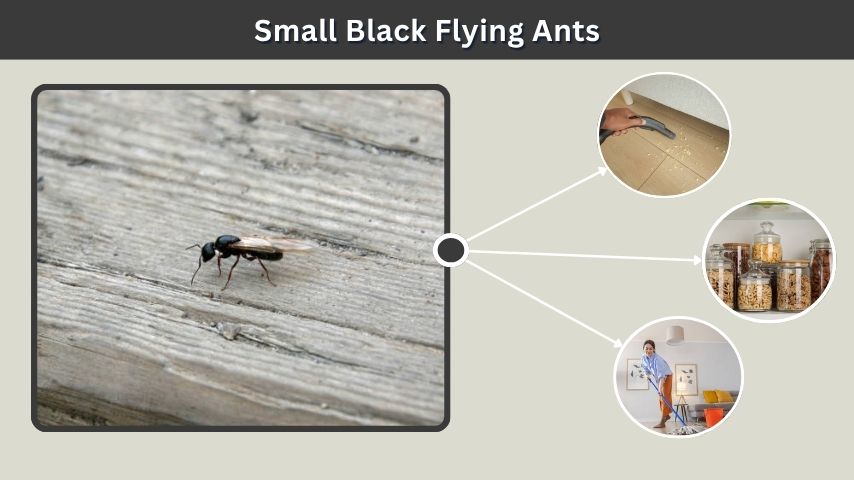
Small black flying ants may come from little black ants, pavement ants, or other small ant species. These are often more of a nuisance than a structural threat.
They may enter homes through tiny cracks and appear near food, sinks, lights, or windows. If they are coming from outside, sealing entry points and reducing attractants may help.
To reduce small flying ants indoors:
- Clean up food crumbs
- Store sweets and pantry items in sealed containers
- Wipe counters and floors
- Seal gaps around windows
- Repair torn screens
- Reduce outdoor lighting near doors
- Remove standing water
Small flying ants may disappear after the swarming period, but worker ants may remain if a nearby colony is active.
Black Flying Ants in Pool
Black flying ants may end up in pools because they are attracted to water, light, or reflective surfaces. During swarming season, they may land in pools accidentally and become trapped.
A few ants in a pool are usually not a sign of an infestation. Large numbers may mean a colony is swarming nearby.
To reduce flying ants in a pool:
- Use a pool cover when possible
- Skim insects regularly
- Reduce bright lights near the pool
- Trim vegetation touching the pool area
- Check nearby cracks, soil, and wood for nests
- Keep food and drinks covered outdoors
How to Get Rid of Black Flying Ants
Getting rid of black flying ants depends on whether they are coming from outside or nesting indoors. If they are accidental visitors, simple exclusion may work. If they come from an indoor colony, you need to locate the nest.
Helpful steps include:
- Vacuum visible flying ants.
- Empty the vacuum outdoors or into a sealed bag.
- Seal cracks around windows, doors, and siding.
- Repair damaged screens.
- Reduce moisture around the home.
- Store food in sealed containers.
- Remove rotting wood and old stumps near the house.
- Use ant baits for worker ants when appropriate.
- Avoid spraying randomly without finding the source.
For carpenter ants, professional inspection may be needed if you cannot locate the nest or if swarms keep appearing indoors.
How to Prevent Black Flying Ants
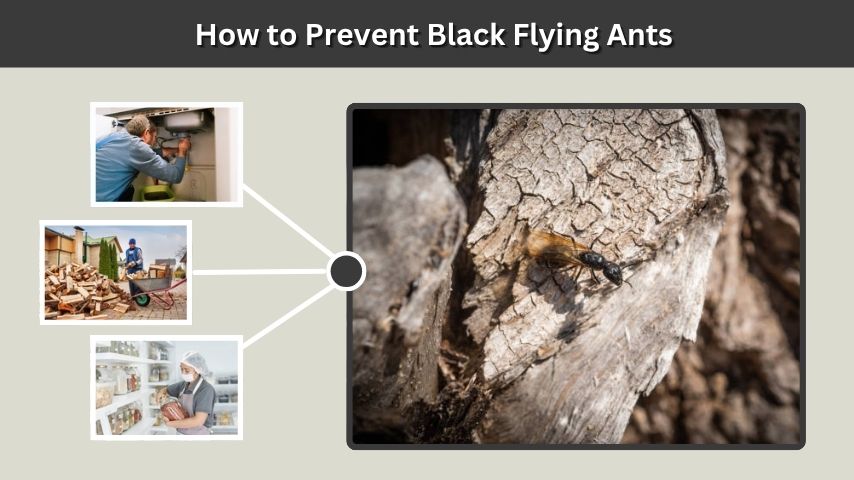
Prevention focuses on sealing entry points, reducing moisture, and making your home less attractive to ants.
Good prevention tips include:
- Fix plumbing leaks
- Keep gutters clear
- Move firewood away from the house
- Replace damaged wood
- Seal wall cracks and utility gaps
- Keep tree branches off the roof
- Store food properly
- Clean sticky spills quickly
- Maintain window and door screens
Outdoor nests are normal, but you do not want ants nesting inside walls, attics, or damp wood around your home.
FAQs
What are black flying ants?
Black flying ants are winged reproductive ants. They are usually males and young queens that leave a mature colony to mate and start new colonies. They may appear suddenly during warm, humid weather, especially after rain or near lights.
Are black flying ants termites?
No, black flying ants are not termites, but they are often confused with them. Flying ants have bent antennae, a pinched waist, and front wings that are longer than the back wings. Termites have straight antennae, a broad waist, and equal-length wings.
Do black flying ants bite?
Some black flying ants can bite if handled or trapped against the skin. The bite is usually mild and may feel like a small pinch. Most flying ants do not seek out people and are more interested in mating or escaping.
Why are black flying ants in my house?
Black flying ants may enter from outside through cracks, doors, or windows. A large indoor swarm may mean a nest is inside a wall, attic, basement, or damp wood. Repeated swarms should be inspected, especially if the ants are large.
How do I get rid of black flying ants?
Vacuum visible ants, seal entry points, reduce moisture, repair screens, and remove food sources. If they are carpenter ants or keep appearing indoors, locate the nest. Professional pest control may be needed for repeated indoor swarms or wood-damaging ants.
