
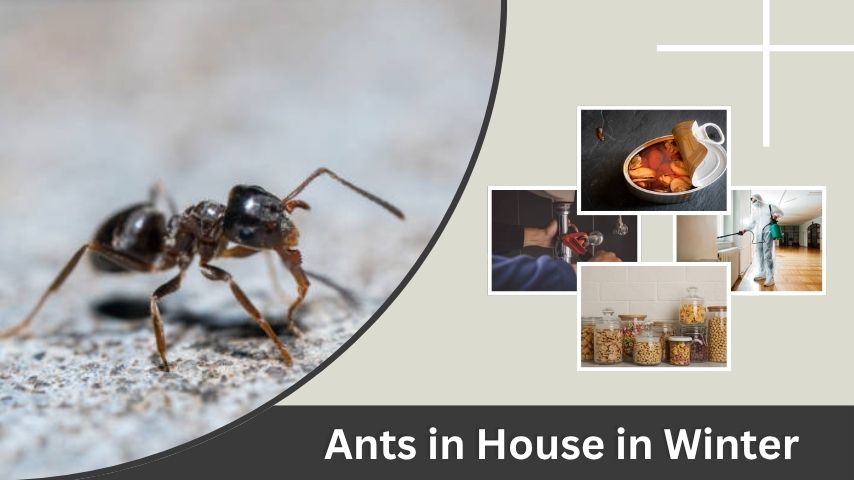
Finding ants in your house in winter can feel strange because most people expect ants to disappear when the weather turns cold. While outdoor ant activity usually slows down, ants can still appear indoors if they have warmth, moisture, food, or a nest inside the structure. Winter ants are often a sign that you should look beyond surface cleaning and check for hidden entry points or indoor nesting sites.
Why Are There Ants in My House in Winter?
Ants do not usually stay active outdoors during freezing weather. Many species slow down, move deeper into nests, or become inactive until temperatures rise. When you see ants inside during winter, it often means they have found a warm indoor area or are nesting somewhere protected.
This does not always mean you have a severe infestation. A few ants may enter during a warm spell or come from a nearby wall void. However, regular ant activity in the middle of winter deserves attention because it can indicate an established colony indoors.
Common Reasons Ants Come Inside During Winter
Winter ants usually appear because your home offers something they need. Heated rooms, damp wood, plumbing leaks, and food crumbs can keep ants active even when it is cold outside.
Common causes include:
- Warm wall voids, basements, or crawl spaces
- Food crumbs in kitchens or pantries
- Pet food left out overnight
- Leaky pipes, condensation, or damp wood
- Gaps around windows, doors, and utility lines
- Firewood or outdoor debris brought inside
- Indoor nests in insulation, walls, or structural wood
- Mild winter days that trigger temporary activity
If ants keep appearing in the same room, follow their trail. The location often points to the source.
Are Ants in the House in Winter Normal?
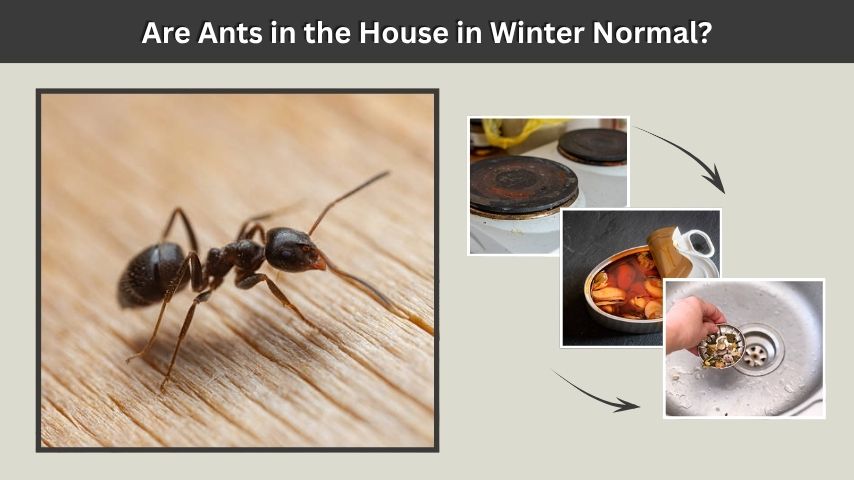
A few ants during winter can happen, but it is not something to ignore. In warm indoor spaces, ants can remain active all year. This is especially true in kitchens, bathrooms, laundry rooms, basements, and areas near heating systems.
When It May Be a Minor Problem
If you only see a few tiny ants near a window, door, or countertop, they may be foragers from a small indoor or nearby outdoor colony. Cleaning, sealing, and baiting may solve the issue.
Small ant problems are often linked to:
- Sticky spills
- Open food containers
- Indoor plants
- Damp sinks
- Trash or recycling
- Cracks around windows
These ants are annoying, but they do not always mean structural damage.
When It May Be a Bigger Concern
Winter ant activity becomes more serious when you see large ants, winged ants, or repeated trails coming from walls, ceilings, or woodwork. Large black ants in winter may be carpenter ants, which can nest in damp or damaged wood.
Warning signs include ants coming from baseboards, window frames, ceiling gaps, or hollow-sounding wood. You may also notice sawdust-like debris, rustling sounds inside walls, or swarmers with wings.
Types of Ants Found in Houses in Winter
The size, color, and behavior of the ants can help you understand the problem. Tiny ants usually point to food or moisture, while large ants may require a closer inspection.
| Type of Winter Ant | What They Look Like | Why They Appear Indoors | Main Concern |
|---|---|---|---|
| Tiny black ants | Very small, dark ants in trails | Food, sugar, moisture | Nuisance infestation |
| Odorous house ants | Small dark ants, odor when crushed | Indoor nesting, sweets, moisture | Persistent colonies |
| Pavement ants | Small brown-black ants near floors | Cracks, slabs, food | Kitchen or basement trails |
| Carpenter ants | Large black or dark ants | Damp wood, wall voids | Possible wood damage |
| Flying ants | Winged reproductive ants | Colony swarming indoors | Possible indoor nest |
Black Ants in House in Winter
Black ants in winter may be small nuisance ants or large carpenter ants. The difference matters because treatment and risk are not the same.
Small Black Ants in House in Winter
Small or tiny black ants are usually searching for food or water. They may appear near sinks, dishwashers, counters, pet bowls, or pantry shelves. These ants often follow narrow trails and may gather around sweet liquids, grease, crumbs, or damp areas.
To control them, focus on sanitation and baiting. Sprays may kill visible ants, but they rarely solve the colony problem. Bait works better because worker ants carry it back to the nest.
Big Black Ants in House in Winter
Big black ants in the house during winter are more concerning. They may be carpenter ants, especially if they are large, active at night, and seen near wood, walls, windows, or damp areas.
Carpenter ants do not eat wood like termites. Instead, they tunnel through softened or moisture-damaged wood to make nesting galleries. If you see large black ants indoors in cold weather, inspect for leaks, roof problems, wet insulation, damaged trim, or damp wall voids.
Carpenter Ants in House in Winter
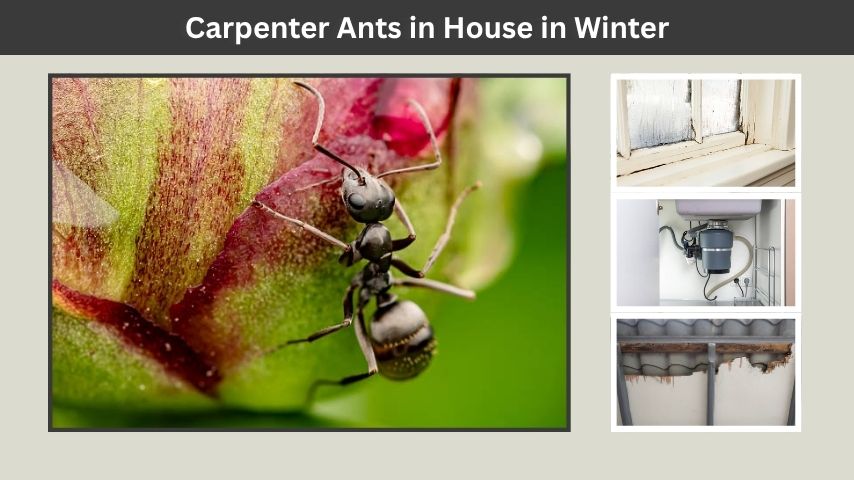
Carpenter ants are one of the most important winter ant problems because they may indicate an indoor satellite nest. Outdoor carpenter ants are usually inactive in cold conditions, so winter sightings inside often suggest the colony is protected by indoor warmth.
Why Carpenter Ants Appear in Winter
Carpenter ants may become active indoors because heat from the home keeps part of the colony warm. They may nest in wall voids, attic spaces, crawl spaces, insulation, window frames, or damp structural wood.
Common places to inspect include:
- Around leaking windows
- Under sinks
- Near dishwashers
- Around bathtubs and showers
- Behind baseboards
- In damp basements
- Near roof leaks
- Around poorly sealed exterior walls
Finding the moisture source is just as important as killing the ants.
Signs of Carpenter Ant Activity
Carpenter ants can be hard to locate because they often travel through hidden spaces. Still, several signs can help.
Look for large black ants appearing repeatedly in the same room, especially at night. Check for piles of fine wood shavings, dead insects, or debris near baseboards and windows. Listen for faint rustling sounds inside walls when the house is quiet.
If you see winged carpenter ants indoors during winter, call a pest professional. Indoor swarmers strongly suggest a colony is nesting inside or very close to the structure.
Flying Ants in House in Winter
Flying ants in winter are reproductive ants. They usually appear when a colony is mature enough to produce swarmers. If winged ants emerge indoors during cold weather, it may mean the nest is inside a heated part of the home.
Flying Ants vs Termites
Winged ants are often confused with termites. This distinction is important because termites require different treatment.
Winged ants usually have bent antennae, narrow waists, and front wings that are longer than the back wings. Termite swarmers usually have straight antennae, thicker waists, and four wings of equal length.
If you are unsure, save a few insects in a small bag or container and get them identified before treating.
How to Get Rid of Ants in House in Winter
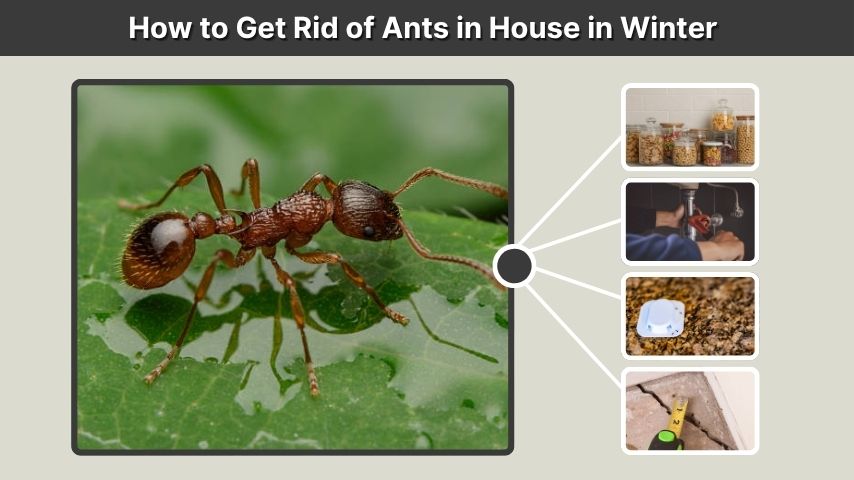
Winter ant control works best when you target the colony, not just the ants you see. Cleaning is important, but it may not solve the issue if ants are nesting inside walls or damp wood.
Step 1: Follow the Trail
Watch where ants are coming from and where they go. Do not wipe the trail immediately if you are trying to locate the source. Ants may lead you to a crack, window frame, pipe gap, baseboard, or wall void.
Focus on high-activity areas such as kitchens, bathrooms, basements, laundry rooms, and rooms with plumbing or moisture issues.
Step 2: Remove Food and Moisture
Ants stay active indoors when resources are easy to find. Removing food and water makes your home less attractive.
Helpful actions include:
- Wipe counters and floors daily
- Store sugar, cereal, and snacks in sealed containers
- Clean under appliances
- Empty trash and rinse recycling
- Remove pet food after meals
- Fix dripping faucets and leaking pipes
- Dry sinks and counters at night
- Check indoor plants for ant activity
Moisture control is especially important for carpenter ants.
Step 3: Use Ant Bait Instead of Sprays
Bait is usually more effective than spray because ants carry it back to the colony. Choose a bait based on what the ants seem to prefer. Some ants want sweets, while others may prefer protein or grease.
Place bait near trails but away from children, pets, and food-prep surfaces. Do not spray near bait. Sprays can repel ants and prevent them from feeding.
Be patient. You may see more ants for a few days as they feed on the bait. That can be part of the process.
Step 4: Seal Entry Points
After ant activity decreases, seal cracks and gaps. If you seal too early, you may trap ants inside and cause them to spread to new areas.
Seal around:
- Windows and doors
- Utility lines
- Plumbing openings
- Baseboard gaps
- Foundation cracks
- Exterior siding gaps
- Cable and vent openings
For carpenter ants, also repair wet or damaged wood so the area does not attract future colonies.
Do Ants Die or Leave Your House in Winter?
Outdoor ants often become inactive during winter, but ants inside a warm home may not die or leave on their own. If they have food, moisture, and shelter, they can continue foraging and maintaining a nest.
Some ant trails may disappear temporarily when conditions change, but that does not always mean the colony is gone. If the source remains, ants can return in spring or during warm indoor periods.
Home Remedies for Winter Ants
Home remedies can help reduce visible trails, but they rarely solve a hidden colony by themselves. Use them as support, not as the only strategy.
Helpful Home Remedies
Simple cleaning methods can remove scent trails and reduce attraction.
You can try:
- Soap and water for wiping trails
- Vinegar-water cleaning on hard surfaces
- Sealed food storage
- Trash can cleaning
- Drying damp areas
- Removing clutter near walls
- Keeping firewood outside until needed
Avoid spreading powders or strong oils around pets, children, and food areas. Some remedies may repel ants temporarily but push them into another room.
When to Call a Professional
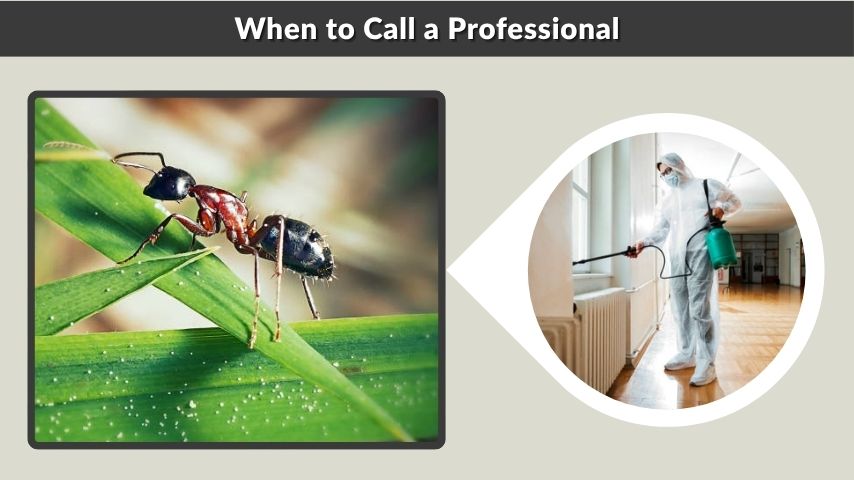
You can often manage small nuisance ants yourself, but winter activity sometimes points to a hidden nest. Professional help is wise when the problem is persistent or involves large ants.
Call a pest professional if:
- You see large black ants in winter
- Winged ants appear indoors
- Ants come from walls or ceilings
- Baiting does not work
- You find sawdust-like debris
- You hear rustling in walls
- You suspect carpenter ants
- Ants return every winter
A professional can identify the ant species, locate nests, find moisture sources, and treat areas that are difficult to reach.
FAQs
Why do I have ants in my house in winter?
Ants appear indoors in winter because your home may provide warmth, food, water, or nesting space. Outdoor ants are usually less active in cold weather, so steady indoor activity can mean ants are nesting inside walls, floors, insulation, or damp wood.
Are ants in the house in winter bad?
A few tiny ants may be a nuisance, but repeated winter activity can signal a hidden colony. Large black ants or winged ants are more concerning because they may be carpenter ants or swarmers from an indoor nest. Persistent winter ants should be inspected.
How do I get rid of ants in winter?
Follow the trail, remove food and moisture, use ant bait near activity, and seal entry points after the ants slow down. Avoid spraying near bait because sprays can repel ants. If ants are large, winged, or coming from walls, consider professional inspection.
Why are big black ants in my house in winter?
Big black ants in winter may be carpenter ants. Since outdoor ants are usually inactive in cold weather, indoor sightings can suggest a nest in a warm protected area. Check for damp wood, leaks, sawdust-like debris, and ants near windows, walls, or ceilings.
Will ants leave my house when winter ends?
Not always. If ants are nesting indoors and have access to food and moisture, they may remain active or return in spring. Temporary disappearance does not always mean the colony is gone. Fixing moisture, sealing gaps, and using bait are better long-term solutions.
