
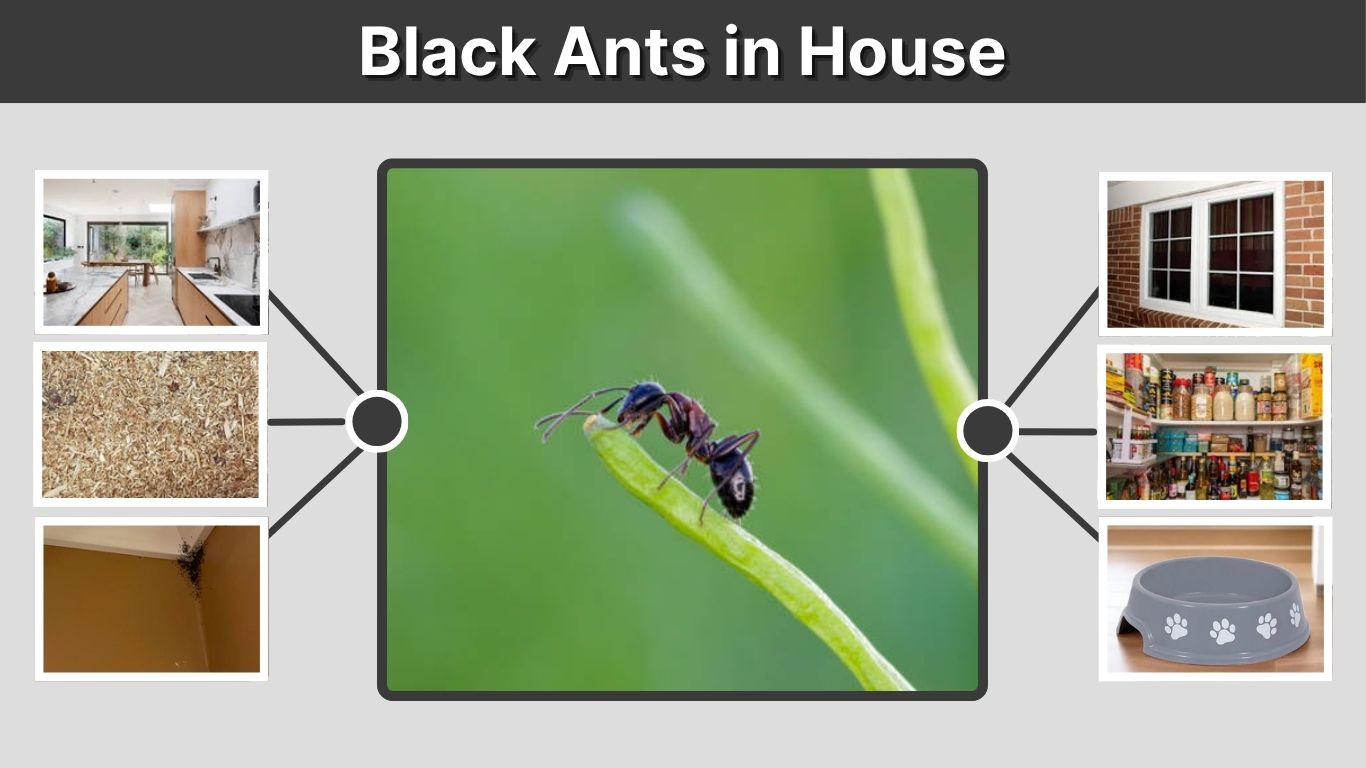
Seeing black ants in your house can be frustrating, especially when they appear in kitchens, bathrooms, walls, or near windows. Some are tiny nuisance ants searching for food and moisture, while big black ants may point to carpenter ant activity. The key is identifying what attracts them, where they are entering, and whether the colony is inside or outside your home.
Why Are There Black Ants in My House?
Black ants usually enter homes for food, water, shelter, or warmth. A few ants may not mean you have a major infestation, but steady trails, winged ants, or large black ants indoors can signal a bigger problem.
Most ants live outside and come indoors when conditions are favorable. They may find crumbs, pet food, sticky spills, leaky pipes, damp wood, or easy entry points around doors and windows. Once one ant finds food, it can leave a scent trail for others to follow.
Common Reasons Black Ants Come Inside
Black ants are not entering randomly. They are usually following a need. Understanding that need helps you remove them more effectively.
Common causes include:
- Crumbs or food residue on counters and floors
- Open sugar, cereal, honey, or snack containers
- Pet food left out overnight
- Dirty trash cans or recycling bins
- Leaky pipes, damp sinks, or condensation
- Gaps around doors, windows, pipes, and foundations
- Warm indoor spaces during cold weather
- Nesting sites in walls, insulation, or damaged wood
If you only kill the ants you see but ignore the reason they are coming in, they often return.
Types of Black Ants Found in Houses
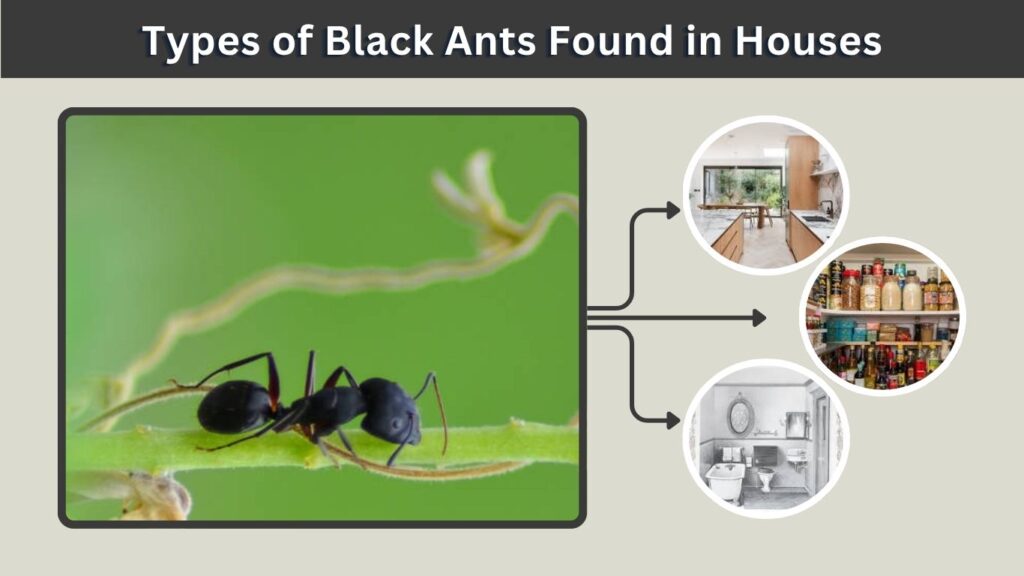
Not all black ants are the same. Size is one of the first clues. Tiny black ants in a kitchen usually suggest a different issue than big black ants walking near baseboards or windows.
| Ant Type | Common Appearance | Why They Enter Homes | Main Concern |
|---|---|---|---|
| Little black ants | Very small, dark brown to black | Food, sweets, grease, crumbs | Nuisance trails |
| Odorous house ants | Small, dark ants; smell when crushed | Sugar, moisture, indoor nesting | Persistent indoor colonies |
| Pavement ants | Small dark ants near cracks and slabs | Food, foundation gaps | Kitchen and floor trails |
| Carpenter ants | Large black or dark ants | Damp or damaged wood, nesting sites | Possible wood damage |
| Winged black ants | Ant swarmers with wings | Reproduction or indoor nesting | May signal nearby colony |
Tiny Black Ants in House
Tiny black ants in the house are often nuisance ants searching for food. They commonly show up in kitchens, pantries, bathrooms, and around sinks. They may travel in thin trails along walls, counters, windowsills, or baseboards.
These ants are often attracted to sweet foods, grease, fruit, syrup, crumbs, and pet food. Even a small spill behind an appliance can keep them coming back.
Tiny black ants are annoying, but they are usually not a structural threat. The main goal is to remove food sources, block entry points, and use bait so workers carry treatment back to the colony.
Big Black Ants in House
Big black ants in the house deserve closer attention. Large black ants are often carpenter ants, although not every large black ant is automatically a carpenter ant. Carpenter ants do not eat wood like termites, but they tunnel through damp or softened wood to create nesting galleries.
A few large black ants may be foragers from an outdoor nest. However, repeated sightings indoors, especially in winter, may mean a nest is inside the structure.
Warning signs include:
- Large black ants seen regularly indoors
- Ants near windows, walls, or ceilings
- Rustling sounds inside walls
- Small piles of sawdust-like material
- Winged ants indoors
- Moisture problems or damaged wood nearby
If you see big black ants often, inspect for leaks, damp wood, roof issues, and wall void activity.
Are Black Ants in the House Good or Bad?
Black ants are not always dangerous, but they are not something to ignore. Outdoors, ants help break down organic material, aerate soil, and feed other wildlife. Indoors, they become pests because they contaminate food surfaces, spread through kitchens, and may indicate moisture or structural issues.
When Black Ants Are Mostly a Nuisance
Small black ants are usually a nuisance when they are only foraging for food. They may appear suddenly after finding crumbs, sugar, or moisture. In these cases, better cleaning, storage, sealing, and baiting often solve the problem.
When Black Ants May Be a Warning Sign
Large black ants, winged black ants, or ants appearing in winter can be more concerning. These signs may suggest a colony is nesting indoors or very close to the home. Carpenter ants are especially important because they can worsen existing wood damage over time.
Black ants are not a sign of “bad luck” in a practical pest-control sense. They usually mean there is food, water, shelter, or an entry point available.
Black Ants in House by Season
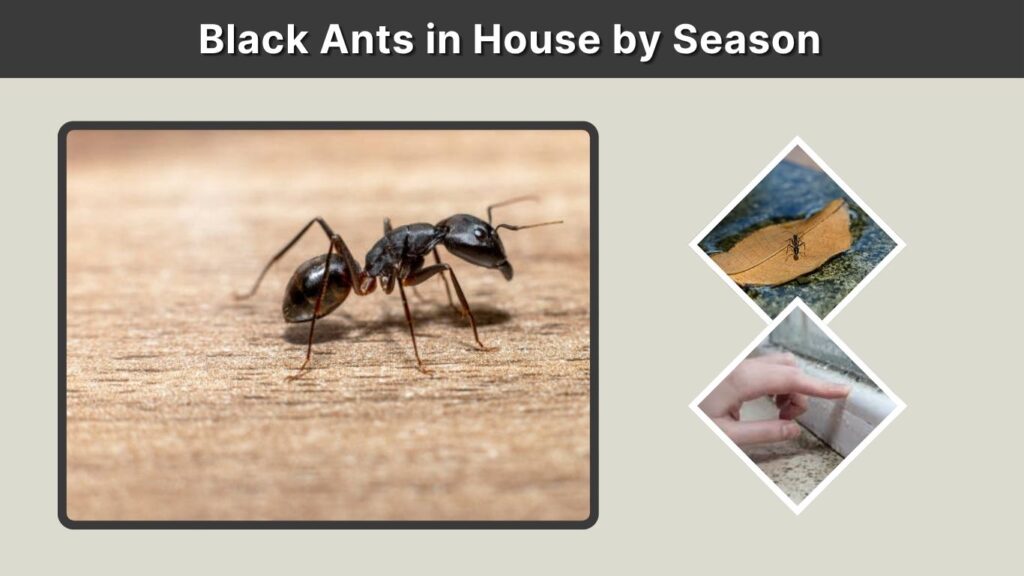
The season can help explain why ants are appearing indoors. Spring and summer activity is often linked to foraging and colony growth, while winter activity may suggest a nest inside a warm part of the home.
Black Ants in House in Spring
Spring is one of the most common times to see black ants. Colonies become more active as temperatures rise. Workers begin searching for food, and some colonies produce winged reproductive ants.
In spring, ants may enter because:
- Outdoor colonies are waking up
- Rain pushes ants toward dry shelter
- Food demand increases
- Gaps around the home are easy entry points
- Winged ants are leaving nests
Spring ant problems are often easier to control if you act early before trails become well established.
Black Ants in House in Winter
Black ants in the house in winter can mean something different. In cold climates, outdoor ants are usually less active. If you see ants moving indoors during winter, the colony may be nesting inside a warm wall, ceiling void, crawl space, or damp wood area.
This does not always mean severe damage, but it is worth investigating. Winter sightings of large black ants are especially important because carpenter ants may nest indoors where heat and moisture are available.
Black Ants With Wings in House
Black ants with wings are reproductive ants, also called swarmers or alates. Their job is to leave the colony, mate, and start new colonies. Seeing a few winged ants near an open door or window may not be serious, but many winged ants indoors can indicate a nest inside or near the structure.
Winged Ants vs Termites
Winged ants are sometimes confused with termites. This matters because termite problems require a different response.
Winged ants usually have narrow waists, bent antennae, and front wings longer than the back wings. Termite swarmers usually have straight antennae, thicker waists, and wings of equal length.
If you are unsure, save a specimen in a small container or take clear photos. Correct identification prevents wasted treatment and missed structural risks.
What to Do If You See Winged Black Ants
Do not just vacuum them and forget the issue. Vacuuming removes visible swarmers, but the colony source may remain.
Helpful steps include:
- Note where the winged ants appeared
- Check nearby windows, walls, and baseboards
- Look for moisture or damaged wood
- Save a sample for identification
- Seal obvious entry points
- Contact a pest professional if swarmers keep appearing indoors
Many winged ants inside the house should be treated as a sign that needs inspection.
How to Get Rid of Black Ants in the House
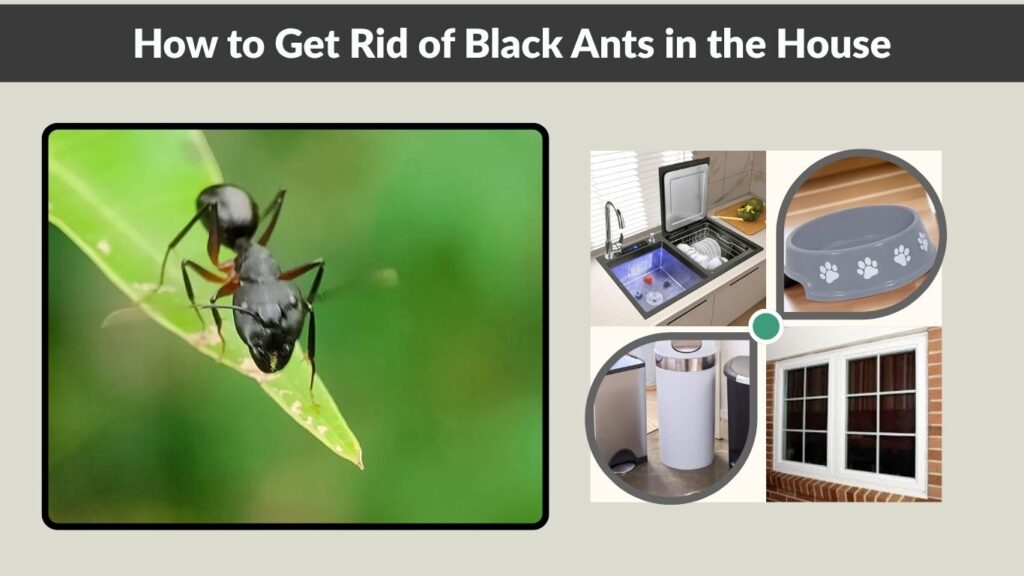
Getting rid of black ants works best when you combine cleaning, sealing, moisture control, and baiting. Sprays may kill visible ants, but they often fail to reach the colony. In some cases, sprays can scatter ants and make the problem harder to control.
Step 1: Find the Trail
Watch where ants are traveling. Follow the trail to see if they are coming from a window, crack, pipe gap, door frame, or wall void. Ants often use the same paths repeatedly.
Look near:
- Kitchen counters
- Sinks and dishwashers
- Pantry shelves
- Pet bowls
- Trash cans
- Window frames
- Baseboards
- Bathroom plumbing
- Exterior foundation cracks
Finding the trail helps you place bait where ants will actually find it.
Step 2: Remove Food and Water
Ants stay where resources are easy. Cleaning removes the reward and makes bait more effective.
Focus on:
- Wiping counters every night
- Sweeping under appliances
- Storing sugar and cereal in sealed containers
- Rinsing recycling
- Emptying trash regularly
- Fixing dripping faucets
- Drying wet sinks and counters
- Removing pet food after feeding
Even tiny food particles can support ant trails.
Step 3: Use Ant Bait
Bait is often better than contact spray because worker ants carry it back to the colony. Choose a bait that matches what the ants are eating. Some ants prefer sugar-based bait, while others prefer protein or grease-based bait.
Place bait near trails, but not directly on food-prep surfaces. Do not spray near bait because sprays can repel ants and stop them from feeding.
Be patient. Baiting can take several days or longer. At first, you may see more ants because they are feeding on the bait. That can be normal.
Step 4: Seal Entry Points
After ant activity slows, seal gaps to prevent new trails. Use caulk, weatherstripping, door sweeps, and exterior repairs where needed.
Common entry points include:
- Cracks around windows
- Gaps under doors
- Utility pipe openings
- Foundation cracks
- Siding gaps
- Vents and weep holes
- Spaces around cables
Do not seal active ants inside a wall without treating the colony first, especially if you suspect carpenter ants.
Home Remedies for Black Ants in House
Home remedies may help with light ant activity, but they usually work best as part of a bigger plan. Cleaning and exclusion matter more than strong smells.
Helpful Natural Steps
Some simple steps can reduce ant trails and make your home less attractive.
Useful options include:
- Vinegar-water cleaning for scent trails
- Soap and water to wipe active trails
- Sealed food containers
- Regular trash cleaning
- Drying moisture-prone areas
- Removing outdoor debris near the foundation
These steps are safe and practical, but they may not eliminate a colony by themselves.
Remedies to Use Carefully
Some online remedies can be messy, unsafe, or ineffective. Essential oils, powders, and harsh chemicals should be used carefully, especially around children and pets. Borax bait can work, but too much borax kills workers before they carry it back to the colony.
If you make homemade bait, keep it away from pets, children, and food surfaces.
How to Prevent Black Ants From Coming Back
Prevention is easier than repeated treatment. Once the ants are gone, focus on making your home harder to enter and less rewarding to explore.
Indoor Prevention
Keep kitchens, bathrooms, and storage areas clean and dry. Store sweet and greasy foods in sealed containers. Clean behind appliances when possible, because crumbs and sticky residue often collect there.
Outdoor Prevention
The outside of the home matters too. Trim plants away from siding, remove wood debris, store firewood away from the house, and repair water-damaged trim or siding. For carpenter ants, moisture control is especially important.
Good prevention habits include:
- Fix leaks quickly
- Improve drainage near the foundation
- Keep mulch away from siding
- Trim tree branches touching the roof
- Store firewood off the ground
- Seal cracks and gaps
- Replace damaged wood
These steps reduce both small nuisance ants and large carpenter ant risks.
When to Call a Pest Professional
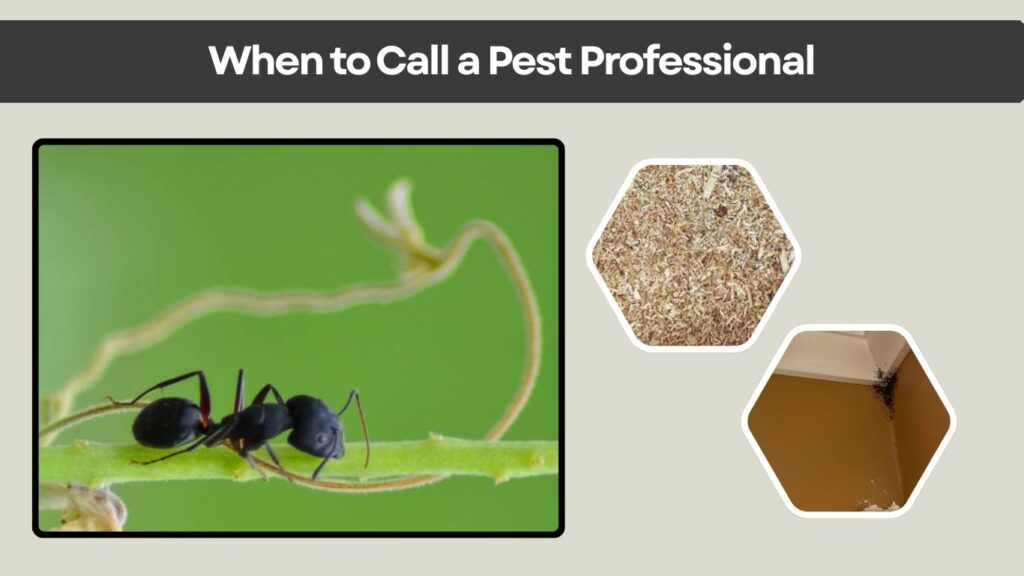
You may be able to manage small black ants yourself. However, professional help is a good idea when the problem is persistent, widespread, or linked to large ants.
Call a professional if:
- You see big black ants repeatedly indoors
- Winged ants appear inside
- Ants return after baiting
- You find sawdust-like debris
- Ants are coming from walls or ceilings
- You suspect carpenter ants
- The problem continues in winter
- You cannot locate the source
A professional can identify the species, find nesting areas, and choose a treatment that targets the colony instead of only killing visible ants.
FAQs
Why do I have black ants in my house?
Black ants usually enter for food, water, warmth, or shelter. Crumbs, sugar, pet food, leaky pipes, damp areas, and small gaps around doors or windows can attract them. If ants keep returning, there may be a colony nearby or a steady food or moisture source inside.
Are big black ants in the house bad?
Big black ants can be more concerning than tiny ants because they may be carpenter ants. Carpenter ants tunnel into damp or damaged wood to nest. A few foragers may not mean serious damage, but repeated sightings, winged ants, or sawdust-like debris should be inspected.
How do I get rid of tiny black ants in the house?
Clean food residue, follow the trail, place ant bait near activity, and seal entry points after the ants slow down. Avoid spraying near bait because it can repel ants and stop them from carrying bait back to the colony. Keep counters, sinks, and pet food areas clean.
Why are black ants in my house in winter?
Winter ants may suggest a colony is nesting indoors or in a warm protected space near the home. This is especially important if the ants are large and black. Check for moisture, wall activity, window areas, and wood damage. Persistent winter ants may need professional inspection.
Do black house ants bite?
Some black ants can bite, but most small household ants are more annoying than harmful. Carpenter ants can bite if handled or threatened, but they do not sting. The bigger concern with carpenter ants is possible nesting in damp or damaged wood, not the bite itself.
