
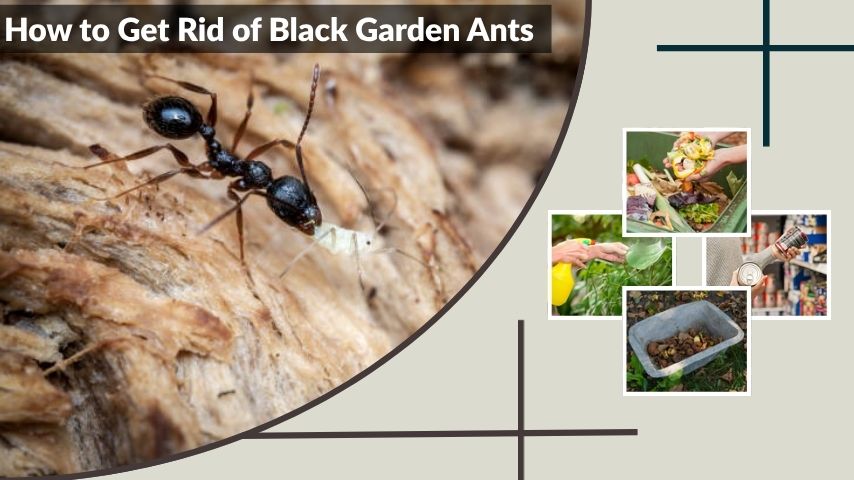
Black garden ants are common in lawns, flower beds, patios, and vegetable gardens. In small numbers, they are usually harmless and may even help aerate soil. However, they can become a nuisance when they build nests near plants, protect aphids, enter the house, or spread across garden beds. This guide explains how to get rid of black garden ants safely and effectively.
What Are Black Garden Ants?
Black garden ants are small dark ants commonly found outdoors in soil, lawns, paving cracks, compost areas, and garden beds. They usually nest underground and send workers out to search for food. You may notice trails of ants moving between the nest and food sources.
These ants are often attracted to sweet foods, fruit, nectar, and honeydew produced by aphids. That is why black ants in the garden are often seen around plants with aphid problems. They are not usually dangerous, but they can become frustrating when colonies grow close to the home or garden plants.
Are Black Garden Ants Bad for the Garden?
Black garden ants are not always bad. They can help break down organic material and improve soil movement. The problem starts when they disturb plant roots, build nests in containers, loosen soil around seedlings, or protect aphids from predators.
If you see only a few ants outdoors, treatment may not be needed. If you see heavy ant trails, soil mounds, aphid-covered plants, or ants entering the house, it is time to take action.
Why Black Garden Ants Keep Coming Back
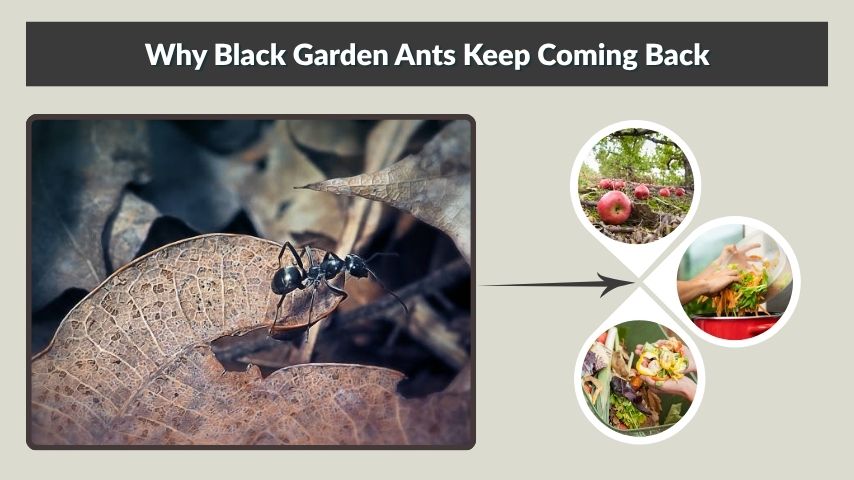
To get rid of black ants in the garden, you need to understand what is attracting them. Killing visible ants may give short-term relief, but the colony can continue producing more workers if the nest and food source remain.
Common Reasons Ants Stay in the Garden
Black garden ants often return because of:
- Aphids producing honeydew on plants
- Fallen fruit or sweet plant sap
- Food scraps near patios or outdoor dining areas
- Compost bins with exposed food waste
- Moist soil or sheltered nesting spots
- Cracks in paving or garden edging
- Potted plants with loose, warm soil
- Easy entry points into the house
If your garden has both ants and aphids, controlling the aphids is one of the most important steps. Otherwise, ants may keep returning to collect honeydew.
How to Get Rid of Black Garden Ants Naturally
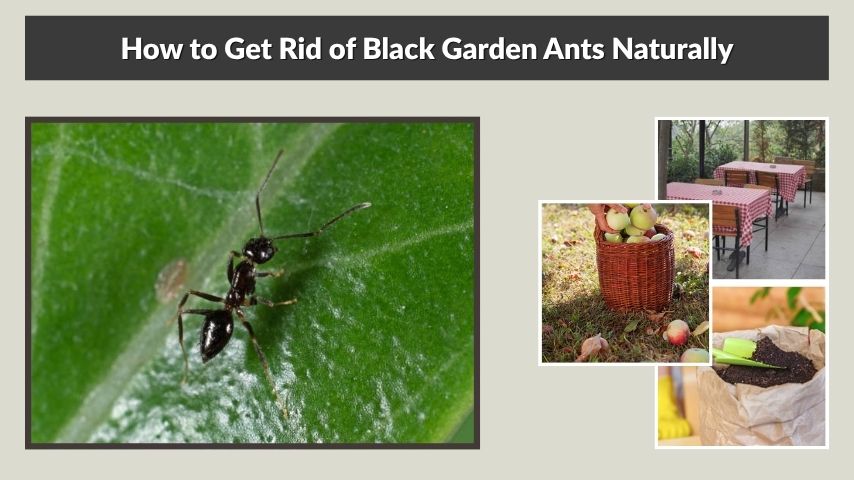
Natural control is the best first step, especially around vegetables, herbs, pets, children, and beneficial insects. The goal is to remove attractants, disturb nesting areas, and make the garden less comfortable for the colony.
Start With Cleaning and Food Control
Ants follow scent trails to food. Removing those trails and food sources can reduce activity quickly.
Try these steps:
- Pick up fallen fruit from the ground.
- Keep outdoor eating areas clean.
- Rinse sticky drink spills from patios.
- Close compost bins tightly.
- Avoid leaving pet food outside.
- Harvest ripe produce before it splits or rots.
- Wash ant trails from hard surfaces with soapy water.
- Store garden fertilizers and organic amendments properly.
This will not always destroy a colony, but it can reduce the number of ants foraging in visible areas.
Disturb Small Outdoor Nests
If you find small ant nests in loose soil, regular disturbance can make the site less attractive. This works best for minor problems in garden beds or near paths.
Lightly rake the soil, water the area, and remove plant debris that creates shelter. Be careful around delicate roots. For potted plants, lift the pot, check the drainage holes, and repot if ants have built a nest inside.
How to Get Rid of Black Ants in Garden Soil
Black ants in garden soil are common. They often build nests in warm, dry, protected spots. In many cases, they do not directly harm mature plants. However, large nests can expose roots, dry out soil pockets, or disturb seedlings.
Soil-Safe Control Methods
Use gentle methods before reaching for chemical products:
- Water dry nesting areas deeply to make them less attractive.
- Add mulch carefully, but avoid piling it against stems.
- Remove loose boards, stones, and debris where ants hide.
- Repot container plants if ants are nesting inside.
- Improve soil health with compost and regular watering.
- Avoid leaving sweet fruit or plant waste on the soil.
- Control aphids on nearby plants.
Deep watering can encourage ants to relocate, especially if the soil has become very dry. However, do not overwater plants that prefer drier conditions.
How to Get Rid of Black Ants in a Vegetable Garden
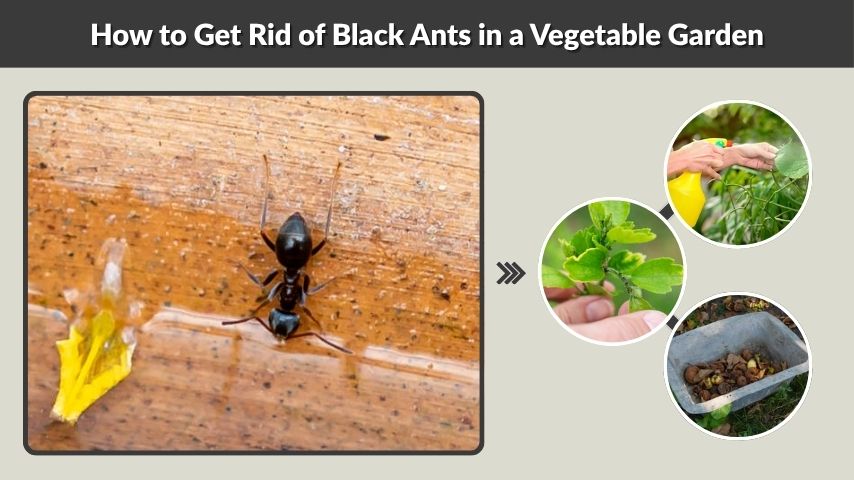
A vegetable garden needs extra care because harsh chemicals can affect edible plants, pollinators, soil organisms, and pets. The safest strategy is to focus on prevention, aphid control, and targeted treatment only where needed.
Vegetable Garden Ant Control
For black ants in a vegetable garden, use these steps:
- Check leaves and stems for aphids.
- Spray aphids off plants with water.
- Prune heavily infested leaves when needed.
- Use insecticidal soap only according to label directions.
- Remove rotting vegetables and fallen fruit.
- Keep garden beds evenly watered.
- Avoid broad pesticide sprays near flowers and pollinators.
- Use ant bait stations outside the growing bed if necessary.
If ants are farming aphids, removing the aphids reduces the ants’ food supply. This often lowers ant activity without needing to treat the entire garden.
Best Ways to Control Black Garden Ants
Different methods work for different levels of infestation. Some gardens only need cleaning and aphid control, while others need bait or professional help.
| Method | Best For | Notes |
|---|---|---|
| Cleaning food sources | Patios, paths, outdoor dining areas | Reduces foraging ants |
| Aphid control | Vegetable gardens and flowers | Removes honeydew source |
| Deep watering | Dry soil nests | Encourages relocation |
| Repotting plants | Ants in containers | Removes hidden nests |
| Ant bait | Persistent trails and colonies | Targets the nest over time |
| Sealing gaps | Ants entering house | Stops indoor access |
| Professional control | Large or recurring infestations | Useful when nests are hard to find |
Using Ant Bait for Black Garden Ants
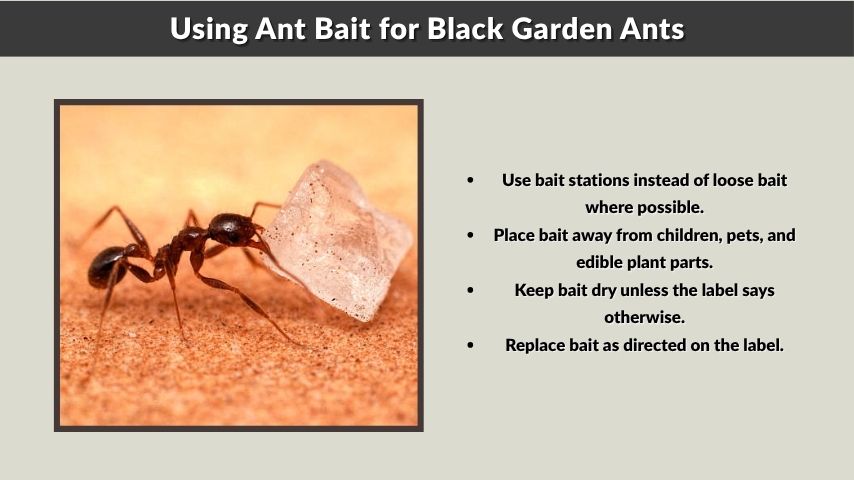
Ant bait is often more effective than sprays because worker ants carry the bait back to the colony. This helps target the queen and developing ants. Sprays usually kill only the ants you see and may not solve the root problem.
How to Use Bait Correctly
Place bait near active ant trails, not randomly across the garden. Do not spray ants near bait, because they need to survive long enough to carry it back.
Follow these tips:
- Use bait stations instead of loose bait where possible.
- Place bait away from children, pets, and edible plant parts.
- Keep bait dry unless the label says otherwise.
- Do not disturb ant trails immediately after placing bait.
- Replace bait as directed on the label.
- Be patient, as bait can take time to work.
Always follow product instructions carefully. Avoid using outdoor bait in ways not listed on the label.
How to Get Rid of Black Garden Ants in the House
Black garden ants in the house are usually foraging for food or water. The nest is often outside, but workers may enter through tiny cracks, gaps around doors, windows, pipes, or foundation openings.
Indoor Ant Control Steps
To stop black garden ants indoors:
- Wipe counters, floors, and pantry shelves.
- Store sugar, cereal, and pet food in sealed containers.
- Clean sticky spills immediately.
- Empty trash regularly.
- Follow trails to find entry points.
- Seal cracks around doors, windows, and pipes.
- Use indoor-safe bait stations near trails.
- Avoid spraying near food preparation areas.
If ants keep coming back, the outdoor nest may be close to the house. Inspect foundation edges, paving cracks, garden beds, and mulch near entry points.
How to Get Rid of Big Black Ants in the Garden
Big black ants may not be black garden ants. They could be carpenter ants or another large ant species. This matters because carpenter ants can nest in damaged wood, while ordinary black garden ants usually nest in soil.
Check Before Treating
Look at where the ants are coming from. If they are nesting in soil, patio cracks, or garden beds, they may be garden ants. If they are coming from wood, a tree cavity, deck, window frame, or wall, inspect more carefully.
Signs that big black ants may be carpenter ants include:
- Large ants indoors
- Sawdust-like debris near wood
- Ants entering damaged timber
- Activity around damp wood
- Rustling sounds inside walls
- Winged ants indoors
If you suspect carpenter ants, consider a professional inspection. Treating them like ordinary garden ants may not solve the problem.
Preventing Black Garden Ants From Returning
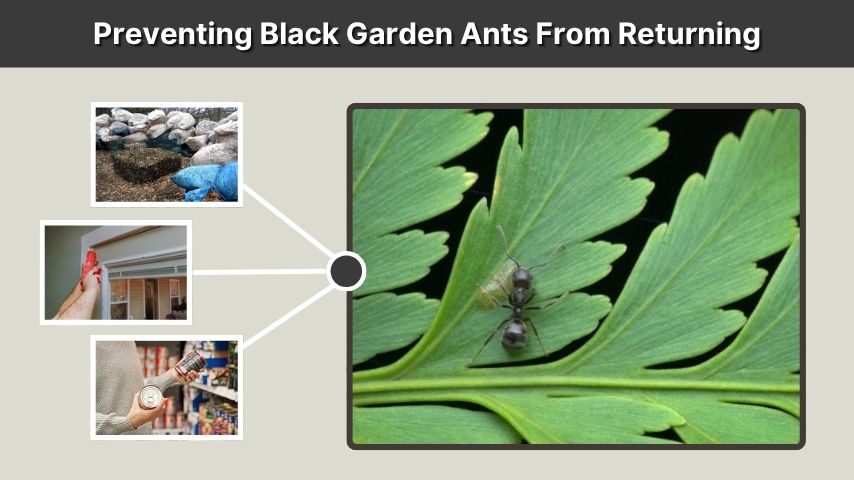
Long-term prevention is easier than repeated treatment. Once activity drops, focus on keeping the garden less attractive.
Prevention Tips
To prevent black garden ants:
- Keep patios and outdoor tables clean.
- Remove fallen fruit and food scraps.
- Control aphids early.
- Keep compost covered.
- Seal gaps around the home.
- Move mulch slightly away from foundations.
- Avoid overwatering or underwatering garden beds.
- Check potted plants for nests.
- Store pet food indoors.
- Keep vegetation trimmed away from walls.
A few ants outdoors are normal. The goal is not to remove every ant from the garden, but to prevent large nuisance colonies and indoor trails.
FAQs
What is the fastest way to get rid of black garden ants?
The fastest short-term method is to clean food sources, wipe ant trails, and place bait near active trails. Sprays may kill visible ants quickly, but bait is usually better for colony control because workers carry it back to the nest.
How do I get rid of black ants in my vegetable garden?
Start by controlling aphids, removing fallen produce, and keeping soil evenly watered. Avoid harsh sprays around edible plants. Use bait stations outside the growing area if ants remain a serious problem, and always follow the product label.
Are black garden ants harmful to plants?
Black garden ants usually do not eat healthy plants. However, they can disturb soil around roots, protect aphids, and become a nuisance in containers or seedlings. Their relationship with aphids is often the biggest garden problem.
Why are black garden ants coming into my house?
They usually enter homes while searching for food or water. Sweet spills, crumbs, pet food, fruit, and open pantry items can attract them. Seal entry points and clean trails so workers cannot easily return.
Should I kill black garden ants in the garden?
Not always. Black garden ants can be part of a healthy garden ecosystem. Control is only needed when they invade the house, protect aphids, disturb plants, build nests in inconvenient places, or become a recurring nuisance.
