
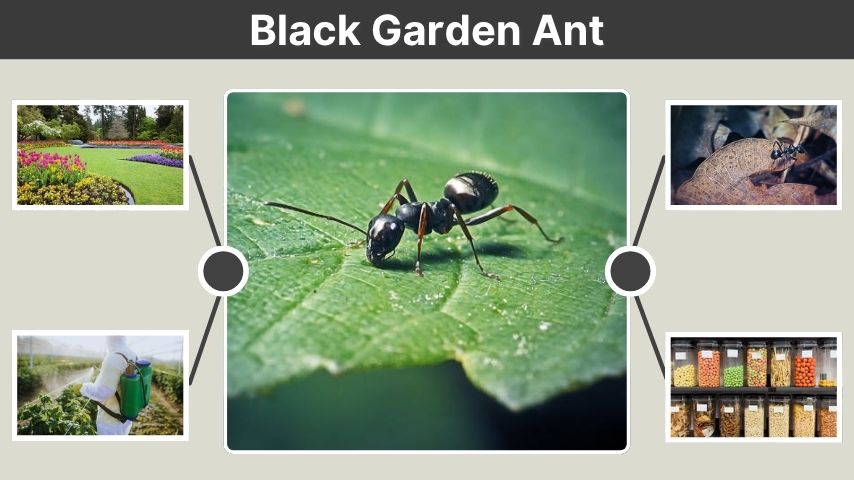
The black garden ant is one of the most common ants found in lawns, gardens, patios, and sometimes homes. Also known by the scientific name Lasius niger, this small black ant is usually more of a nuisance than a danger. This guide explains how to identify black garden ants, what they eat, whether they bite, and how to get rid of them safely.
What Is a Black Garden Ant?
A black garden ant is a small, dark ant species commonly seen in soil, garden beds, paving cracks, lawns, and around outdoor food sources. It is especially common in Europe and is also discussed in many pest and ant-keeping resources because of its recognizable colonies and queens.
Black garden ants live in organized colonies with a queen, workers, males, eggs, larvae, and pupae. The workers are the ants most people see outdoors or indoors. They search for food, protect the nest, care for young ants, and maintain tunnels.
Black Garden Ant Scientific Name
The scientific name of the black garden ant is Lasius niger. It belongs to the family Formicidae. It is also called the common black ant in many regions.
This species is often confused with other small black ants because many ant species look similar at first glance. However, black garden ants are usually smaller than carpenter ants and do not tunnel through structural wood.
Black Garden Ant Species
The black garden ant species is best known for nesting in soil and foraging for sweet foods. Colonies are usually found outdoors, but workers may enter houses when searching for sugar, crumbs, pet food, fruit, or moisture.
Black garden ants are social insects. A mature colony may contain thousands of workers, though colony size depends on age, food supply, nest conditions, and climate.
What Do Black Garden Ants Look Like?
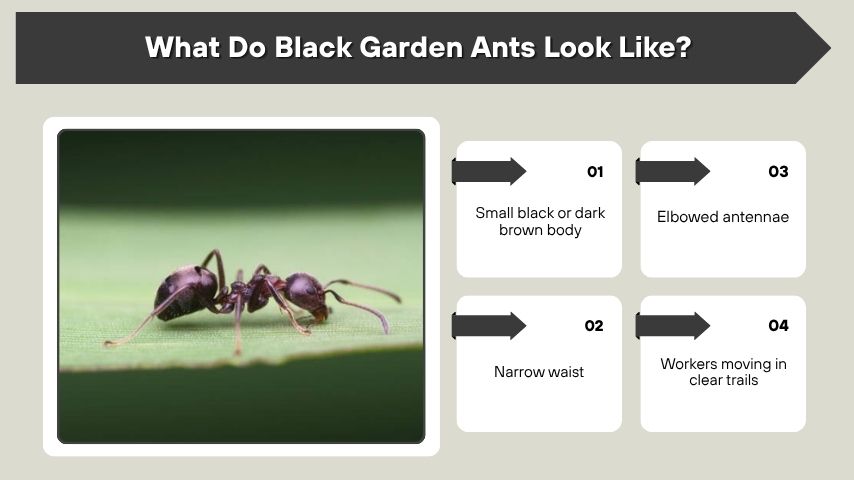
Black garden ants are usually dark brown to black. Workers are small and active, often moving in trails between the nest and food. Their bodies have three main sections: head, thorax, and abdomen. Like other ants, they have elbowed antennae and a narrow waist.
Black Garden Ant Size
Black garden ant workers are small compared with carpenter ants. Workers are often only a few millimeters long, while queens are much larger. A black garden ant queen may be around 6 to 9 mm long, depending on maturity and condition.
You may notice size differences within a colony, especially between workers, males, and queens. Winged ants are usually reproductive males or young queens preparing for mating flights.
Black Garden Ant Characteristics
Common identification features include:
- Small black or dark brown body
- Elbowed antennae
- Narrow waist
- Workers moving in clear trails
- Soil nests in lawns, garden beds, or paving cracks
- Attraction to sugary foods and honeydew
- Winged ants during mating season
- Larger queen hidden inside the nest
Because many ants are small and dark, exact identification may require close inspection. Still, location, size, nesting behavior, and lack of wood damage can help separate black garden ants from carpenter ants.
Black Garden Ant Queen
The black garden ant queen is the reproductive center of the colony. She is larger than the workers and usually stays hidden inside the nest. Her main role is to lay eggs and maintain the colony’s growth.
A queen may be seen during or after a nuptial flight, especially when winged ants emerge in warm weather. After mating, a young queen sheds her wings and looks for a suitable place to start a new colony.
Queen Black Garden Ant Size
A queen black garden ant is much larger than a worker. She has a fuller body, especially around the abdomen, because she is built for reproduction. If she still has wings, she may be a newly emerged reproductive ant. If her wings are gone, she may be a mated queen looking for a nesting site.
Black Garden Ant Queen for Sale
Some people search for black garden ant queens for ant farms. However, buying or moving ant queens can be regulated depending on region. It can also risk spreading non-native insects. Anyone interested in ant keeping should check local rules and avoid releasing captive ants outdoors.
Black Garden Ant Life Cycle
The black garden ant life cycle includes egg, larva, pupa, and adult stages. The queen lays eggs, which hatch into larvae. Workers feed and care for the larvae until they pupate and become adults.
Eggs, Larvae, and Workers
Black garden ant eggs are tiny and usually hidden inside the nest. Larvae look pale and grub-like. Workers move eggs and larvae to safer or warmer areas within the nest as conditions change.
The colony grows gradually. A young colony may start small, but over time it can produce many workers. Mature colonies may produce winged males and queens for reproduction.
Black Garden Ant Lifespan
Lifespan depends on caste. Workers live much shorter lives than queens. Queens can live for many years under good conditions, while workers have shorter working lives. This is one reason colonies can persist for a long time if the queen survives.
Black Garden Ant Diet
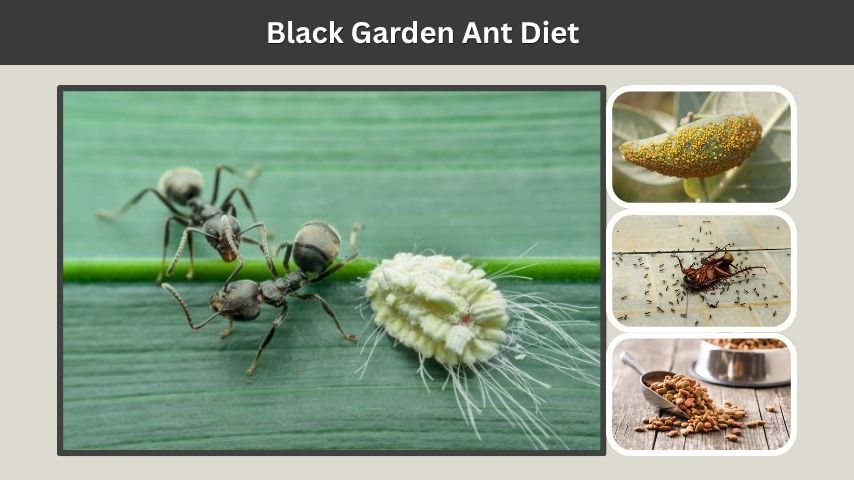
Black garden ants eat a mix of sweet and protein-rich foods. Outdoors, they commonly feed on honeydew from aphids and other sap-feeding insects. They may also collect small dead insects, nectar, fruit, and food scraps.
What Do Black Garden Ants Eat?
Their diet may include:
- Aphid honeydew
- Nectar
- Fruit sugars
- Small dead insects
- Crumbs
- Syrup, jam, or sweet spills
- Pet food
- Grease or protein scraps
- Seeds or organic matter
In gardens, black garden ants may protect aphids because aphids produce honeydew. This relationship can be a problem for plants if aphid numbers increase.
Black Garden Ant Habitat
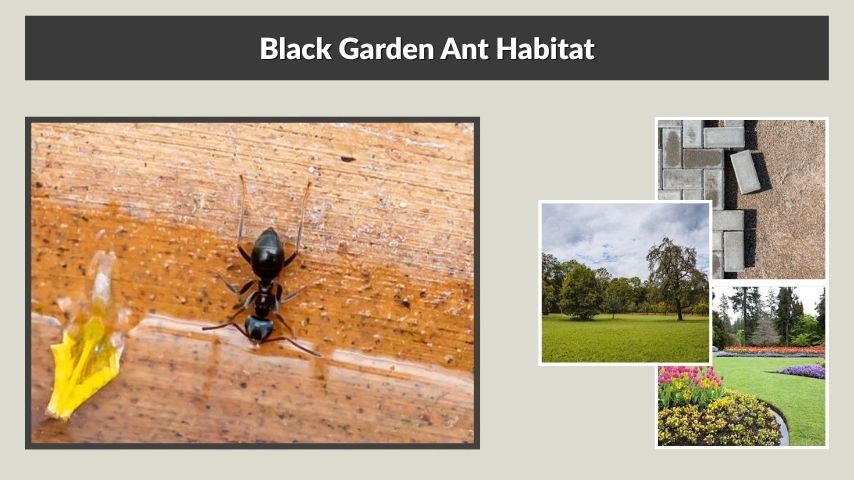
Black garden ants usually nest in soil. You may find their nests under lawns, paving slabs, stones, logs, garden edging, flower beds, or near foundations. Small soil piles around cracks or lawn areas may mark nest entrances.
They prefer outdoor nesting but may enter homes to forage. An indoor trail does not always mean the nest is inside. Often, the colony remains outdoors while workers enter through cracks, windows, doors, or utility gaps.
Black Garden Ant Nest
A black garden ant nest may be hidden underground. The visible signs are usually small openings, loose soil, and trails of workers. In paving or patios, ants may push soil or sand up through cracks.
Nests in lawns and garden beds are not always harmful. However, large nests can disturb soil around plant roots, create uneven lawn patches, or become annoying around outdoor seating areas.
Black Garden Ant With Wings
A black garden ant with wings is usually a reproductive ant. Winged ants appear during nuptial flight season, when males and young queens leave the nest to mate. This can happen in large numbers and may look like a sudden infestation.
Do Black Garden Ants Have Wings?
Workers do not usually have wings. Winged black garden ants are reproductive males or queens. After mating, males die, and fertilized queens shed their wings and look for a nesting place.
Winged ants indoors can be confusing. If you see only a few near windows, they may have flown in from outside. If many are emerging from inside walls, floors, or structural spaces, further inspection is needed.
Black Garden Ant Bite
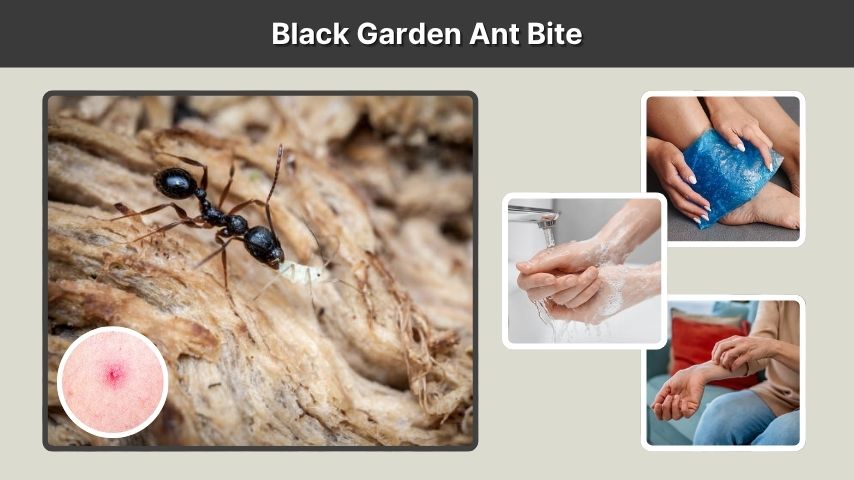
Black garden ants can bite, but their bite is usually mild. They do not have the same reputation for painful stings as fire ants. Most people experience little or no reaction from brief contact.
Do Black Garden Ants Bite?
Yes, black garden ants can bite if disturbed or handled. However, they are not considered dangerous to most people. A bite may cause a tiny pinch, mild redness, or short-term irritation.
Black Garden Ant Bite Treatment
If a bite causes irritation, basic care is usually enough:
- Wash the area with soap and water.
- Avoid scratching.
- Apply a cold compress if itchy or red.
- Use a suitable over-the-counter anti-itch product if needed.
- Seek medical advice if swelling spreads or signs of allergy appear.
Serious reactions are uncommon, but anyone with severe swelling, breathing trouble, dizziness, or widespread rash should seek urgent medical help.
Are Black Garden Ants Good or Bad for the Garden?
Black garden ants can be both helpful and annoying. In many gardens, they help aerate soil, clean up organic matter, and feed on small insects. They are part of the natural garden ecosystem.
However, they can become a problem when they protect aphids, invade homes, disturb soil around young plants, or build nests in patios and paving cracks.
| Situation | Good or Bad? | What It Means |
|---|---|---|
| Ants in lawn soil | Usually neutral | They may aerate soil but can create small mounds |
| Ants near aphids | Often bad | They may protect aphids for honeydew |
| Ants in vegetable garden | Mixed | Usually harmless, but check for aphids |
| Ants in house | Nuisance | Workers are likely foraging for food |
| Ants in paving cracks | Annoying | Nesting may loosen sand or soil |
| Ants near compost | Usually normal | They feed on organic matter and insects |
Black Garden Ant vs Carpenter Ant
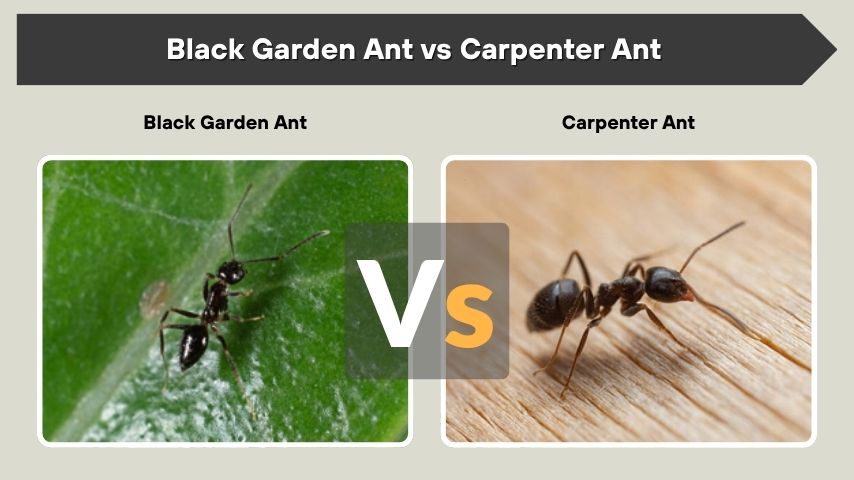
The difference between a black garden ant and a carpenter ant is important. Carpenter ants can tunnel through wood, while black garden ants usually nest in soil and do not damage structural wood.
Carpenter ants are usually larger than black garden ants. They may appear around damp wood, wall voids, window frames, or areas with moisture damage. Carpenter ants can leave sawdust-like frass near nesting areas. Black garden ants usually do not create wood shavings.
Difference Between Black Garden Ant and Carpenter Ant
A black garden ant is usually small, soil-nesting, and attracted to sugar. A carpenter ant is larger, often black or dark, and may indicate a moisture or wood-damage issue.
Look for these clues:
- Carpenter ants are much larger.
- Carpenter ants may appear near damaged wood.
- Carpenter ants can leave frass.
- Black garden ants usually trail to sweet foods.
- Black garden ants often nest outdoors in soil.
- Carpenter ant activity indoors deserves quicker inspection.
If you see big black ants in your garden, they may be carpenter ants or another large ant species. Size, nesting site, and wood damage signs matter.
Black Garden Ant in House
Black garden ants in the house usually enter while searching for food. Kitchens, pantries, pet bowls, fruit bowls, sinks, and sticky spills are common targets. They may also enter during dry weather while seeking water.
Why Black Garden Ants Come Indoors
Common causes include:
- Sweet spills or crumbs
- Open food containers
- Pet food left out
- Gaps around doors or windows
- Outdoor nests near the foundation
- Moisture sources indoors
- Warm weather foraging
- Potted plants with soil nests
An indoor trail is often connected to an outdoor nest. Follow the trail if possible to find the entry point.
How to Get Rid of Black Garden Ants
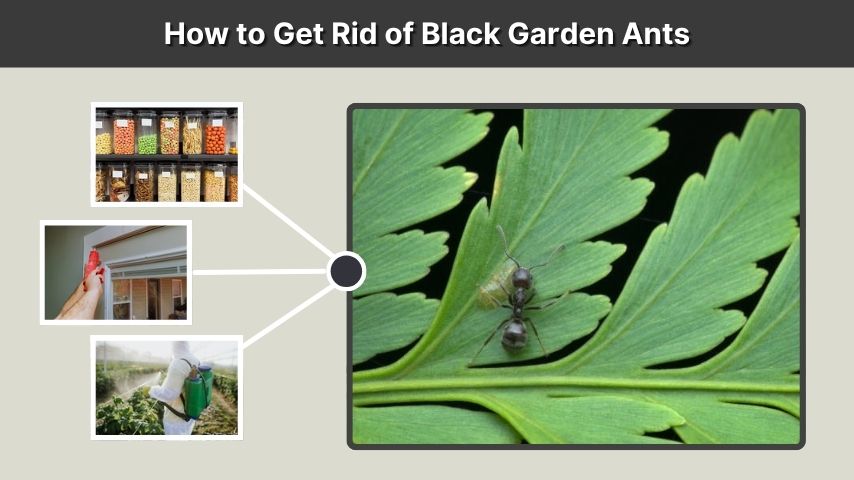
The best way to get rid of black garden ants is to remove food sources, block entry points, and use bait when needed. Spraying visible ants may kill workers but often fails to reach the queen.
Black Garden Ant Control Steps
Use these practical steps:
- Wipe up spills and crumbs quickly.
- Store sugar, cereal, and pet food in sealed containers.
- Clean ant trails with soapy water.
- Seal gaps around doors, windows, and pipes.
- Trim plants away from the house.
- Reduce aphids on garden plants.
- Use ant bait near active trails.
- Avoid placing bait where children or pets can reach it.
- Treat outdoor nests only when they cause problems.
- Call pest control if ants keep returning indoors.
Bait is often more effective than contact spray because workers carry it back to the colony. Always follow the product label carefully.
How to Get Rid of Black Ants in the Garden
In the garden, control should be selective. Black garden ants are not always harmful, so treatment is only needed when they are causing problems.
Try these garden-safe steps:
- Control aphids on plants.
- Remove fallen fruit and sugary debris.
- Avoid overwatering soil near nests.
- Disturb small nuisance nests with regular cultivation.
- Use barriers around outdoor eating areas.
- Move potted plants if ants are nesting inside.
- Use ant bait only where needed.
Avoid pouring harsh chemicals into garden soil. This can harm plants, beneficial insects, pets, and soil life.
Black Garden Ant Repellent and Killer
Repellents may temporarily push ants away, but they usually do not solve the colony problem. Ant killer sprays can reduce visible ants quickly, but they may not affect the queen. For lasting control, bait and sanitation are usually more effective.
FAQs
Are black garden ants dangerous?
Black garden ants are not considered dangerous to most people. They can bite, but the bite is usually mild and short-lived. Their main problem is nuisance activity indoors, nesting in lawns or paving cracks, and protecting aphids on garden plants.
How do I identify a black garden ant?
A black garden ant is small, dark brown to black, and often found in soil nests, lawns, garden beds, or paving cracks. Workers move in trails and are attracted to sugary foods. Queens and winged reproductive ants are larger than ordinary workers.
Are black ants bad for your garden?
Black ants are not always bad for the garden. They can aerate soil and clean up organic matter. However, they may protect aphids, disturb soil around plant roots, or become a nuisance in garden beds, lawns, patios, and vegetable gardens.
Why do black garden ants come into the house?
Black garden ants usually enter homes while searching for food or water. Sweet spills, crumbs, pet food, fruit, and open containers can attract them. They may also enter through gaps around doors, windows, pipes, or cracks near an outdoor nest.
How do you get rid of black garden ants naturally?
Start with cleaning, sealing entry points, and removing food sources. Wipe trails with soapy water, store food tightly, reduce aphids outdoors, and block cracks where ants enter. For persistent colonies, bait is usually more effective than sprays because it targets the nest.
