
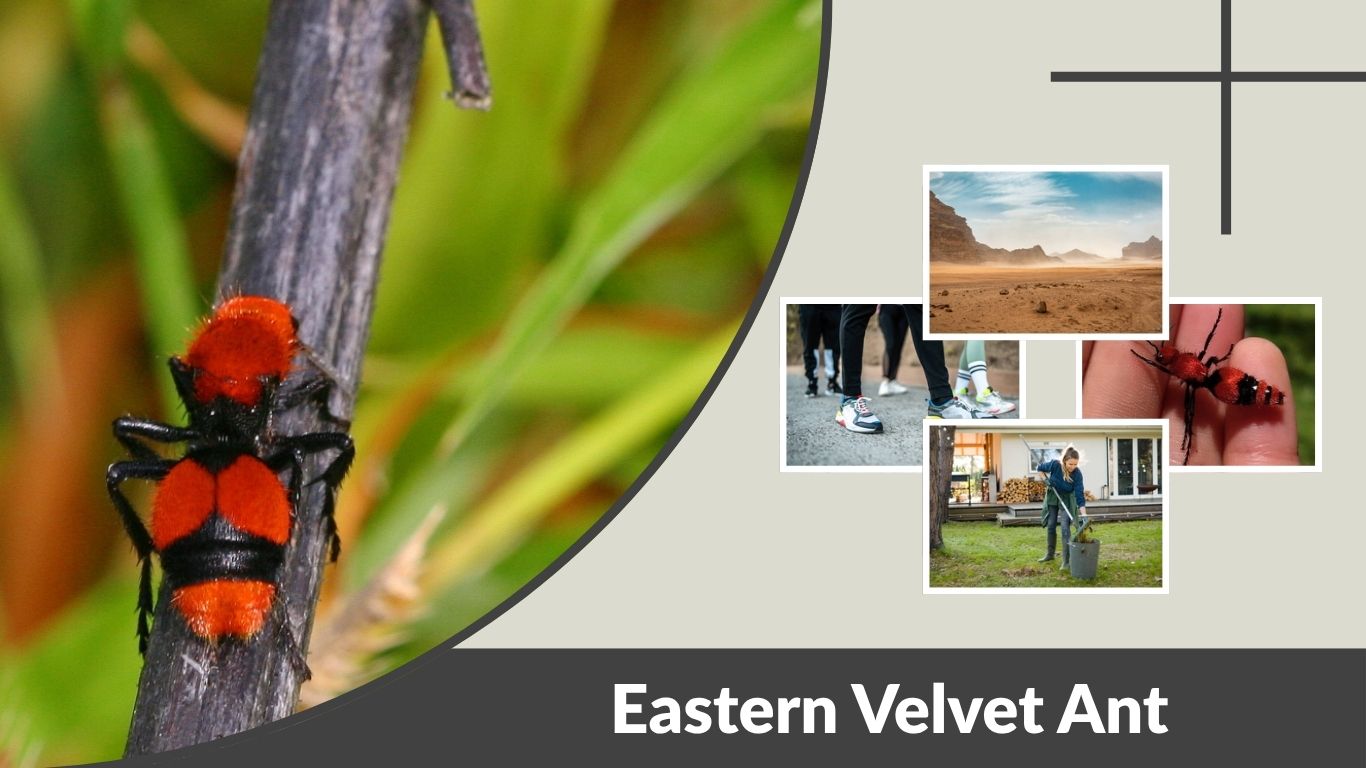
The eastern velvet ant is a striking insect known for its bright red, fuzzy appearance and extremely painful sting. Despite its name, it is not actually an ant but a type of wasp. Often called the “cow killer,” this insect has gained attention due to its intense sting and unusual look. Many people encounter it in yards, fields, or sandy areas and wonder whether it is dangerous. In this guide, you’ll learn how to identify the eastern velvet ant, understand its behavior, and know what to expect if you come across one.
What Is an Eastern Velvet Ant?
The eastern velvet ant is a species of wasp known for its ant-like appearance and dense, velvety hair. Its scientific name is Dasymutilla occidentalis, and it belongs to the Mutillidae family. This insect is well known for its bright coloration and powerful defense mechanisms.
Scientific Name and Classification
The eastern velvet ant is classified as Dasymutilla occidentalis. It is part of the Mutillidae family, which includes many similar species commonly referred to as velvet ants.
Although they resemble ants, they are actually solitary wasps. This classification is important because it explains their behavior, including their ability to sting and their reproductive habits.
Velvet ants are not social insects like true ants. They do not live in large colonies but instead operate independently.
Why It Looks Like an Ant
The name “velvet ant” comes from the insect’s appearance rather than its biological classification. Female eastern velvet ants are wingless, which gives them a strong resemblance to ants.
Their bodies are covered in dense, velvety hair, which is usually bright red or orange. This fuzzy texture is another feature that makes them stand out.
They also move quickly along the ground, much like ants, which adds to the confusion. However, their behavior and structure clearly identify them as wasps rather than ants.
Eastern Velvet Ant Identification
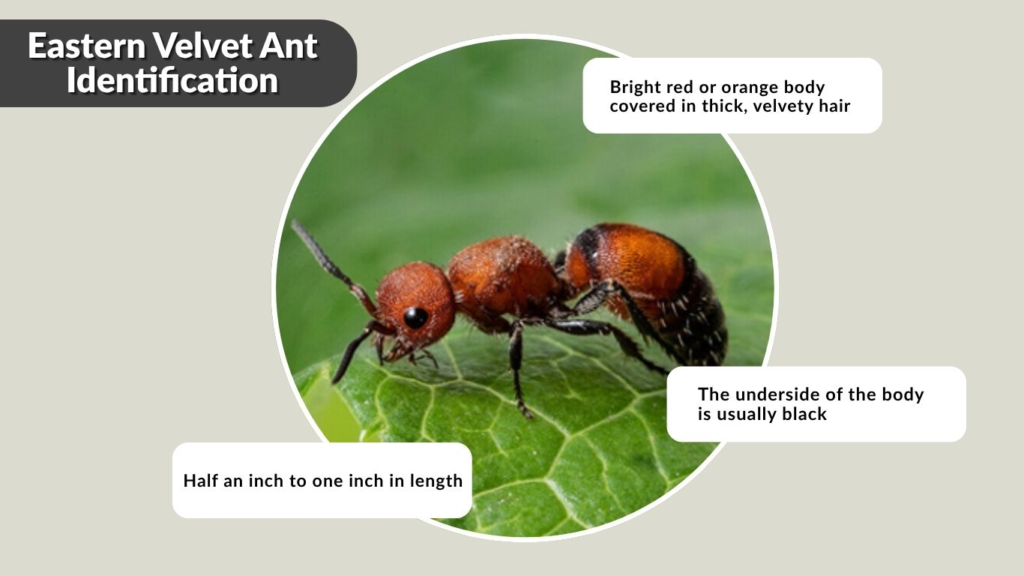
The eastern velvet ant is one of the easiest insects to recognize due to its bold color and unique texture. However, it is still sometimes mistaken for other insects.
Key Physical Features
The most noticeable feature is its bright red or orange body covered in thick, velvety hair. This coloration serves as a warning to predators that the insect is not safe to attack.
The underside of the body is usually black, creating a strong contrast with the upper body. This combination of colors makes it highly visible in natural environments.
Unlike many other insects, the eastern velvet ant has a very tough outer shell. This hard exoskeleton provides additional protection against predators.
Size and Appearance
Eastern velvet ants typically range from about half an inch to one inch in length. Their size, combined with their bold coloration, makes them easy to spot.
They have a thick, compact body that appears stronger than that of typical ants. The hair covering their body gives them a soft appearance, even though they are quite tough.
Because of their bright color and size, they are often noticed quickly when moving across open ground.
Eastern Velvet Ant Male vs Female
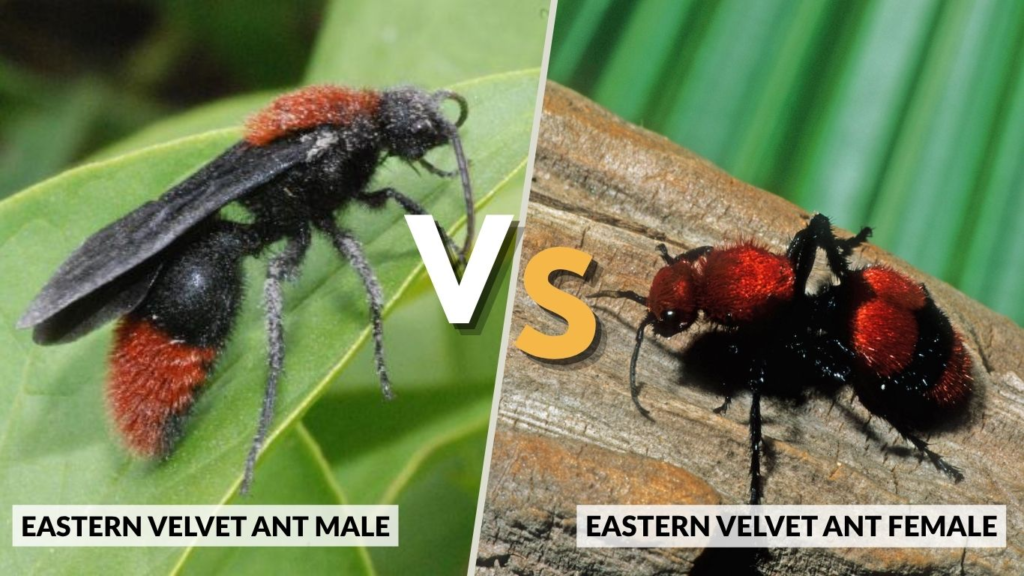
Male and female eastern velvet ants differ significantly in both appearance and behavior. Understanding these differences is important for identification and safety.
Female Velvet Ant
Female eastern velvet ants are wingless and resemble large ants. They are the ones most commonly seen walking on the ground.
They have a powerful stinger, which is used for defense. This is the feature that gives them their reputation for having a painful sting.
Their bright coloration serves as a warning signal to potential predators, indicating that they should be avoided.
Male Velvet Ant
Male eastern velvet ants look very different from females. They have wings and resemble more typical wasps.
Unlike females, males do not have a stinger and cannot sting. This makes them harmless to humans.
Males are less commonly noticed because they spend more time flying rather than moving along the ground.
Eastern Velvet Ant Sting
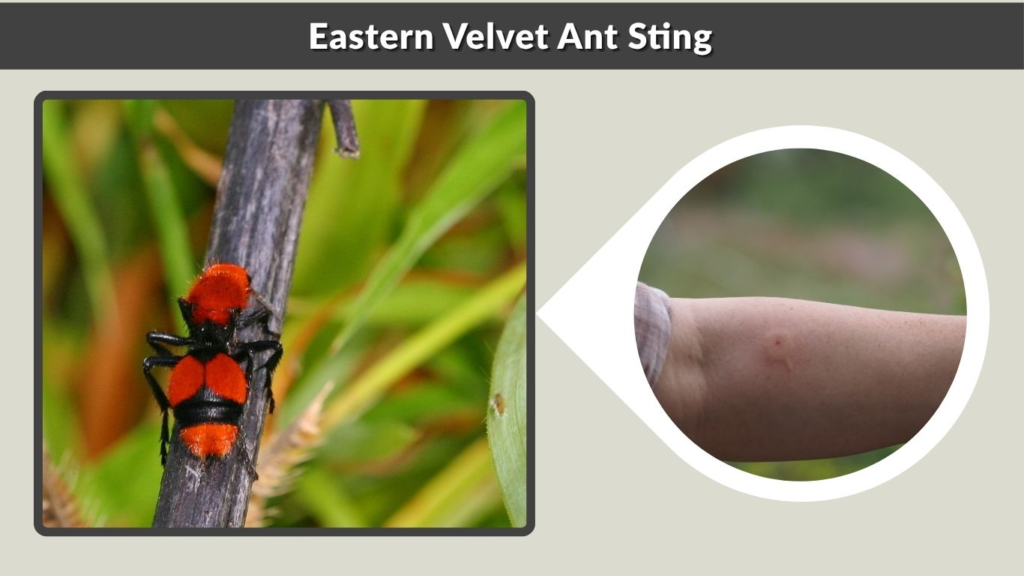
The sting of the eastern velvet ant is one of the main reasons it is widely known. It is considered one of the most painful insect stings.
How Painful Is the Sting?
The sting is extremely painful and is often described as sharp and intense. It ranks very high on pain scales used to compare insect stings.
The nickname “cow killer” comes from the belief that the sting is powerful enough to harm large animals. While this is exaggerated, it reflects how painful the sting can be.
The pain is usually short-lived but can be very intense at the moment of the sting.
What Happens When Stung
When stung, a person may feel immediate, sharp pain followed by swelling and redness. The affected area may remain sensitive for a short time.
In most cases, the symptoms are temporary and do not lead to serious medical problems. However, individuals who are allergic to insect stings may experience stronger reactions.
Because of the intensity of the sting, it is best to avoid handling or disturbing these insects.
Eastern Velvet Ant Bite vs Sting
Many people confuse bites with stings when it comes to the eastern velvet ant. Understanding the difference helps clarify how this insect defends itself.
Do They Bite?
Eastern velvet ants can bite, but this is not their primary defense. Biting is rare and usually not a concern for humans.
Their main method of defense is their sting, which is far more effective.
Stinger Function
Only female eastern velvet ants have a stinger. This stinger is used strictly for defense and is not used unless the insect feels threatened.
The stinger delivers venom that causes the intense pain associated with this species. Despite the pain, it is not considered highly dangerous for most people.
Eastern Velvet Ant Range and Location
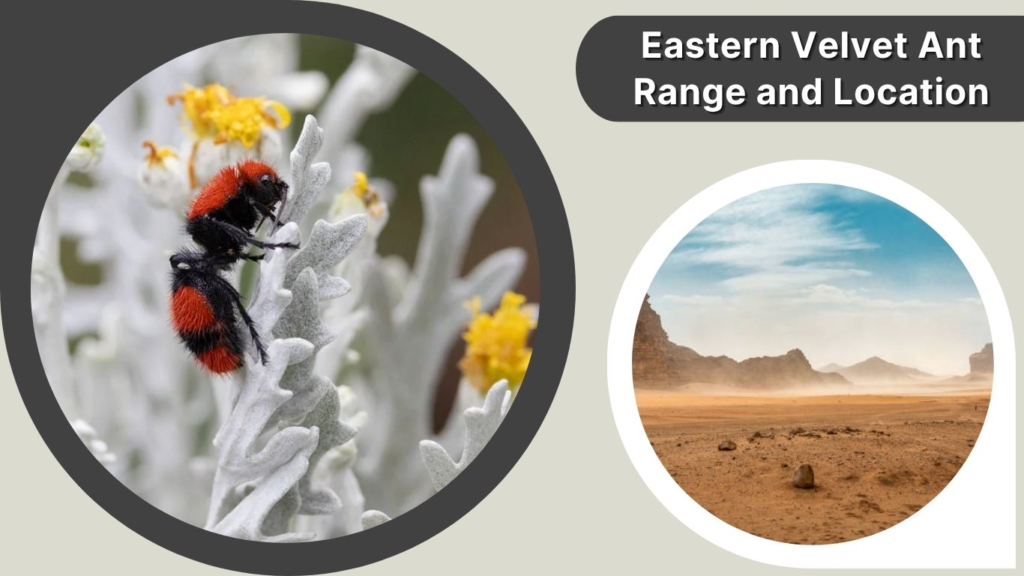
The eastern velvet ant is widely distributed across the United States, especially in warmer regions. Understanding its range helps you know where you are most likely to encounter it.
- Found throughout the eastern and southern United States
- Common in states like Texas, Florida, and Georgia
- Prefers warm climates
- Often seen in open fields and sandy areas
- Active mainly during summer months
These insects thrive in environments where the ground is dry and easy to navigate. They are frequently spotted walking across lawns, trails, and sandy soil.
Their presence is more noticeable during warm weather when they are actively searching for food or host nests.
Eastern Velvet Ant Habitat
The habitat of the eastern velvet ant plays a key role in its survival. It prefers environments that support its unique lifestyle and reproduction process.
Common Environments
Eastern velvet ants are commonly found in dry grasslands, forest edges, and open areas. These locations provide the right conditions for movement and access to host insects.
They are also often seen in gardens and yards, especially those with sandy or loose soil. These areas make it easier for them to find suitable nesting sites.
Where They Hide
Despite being visible, eastern velvet ants often use hidden spaces for protection. They may stay close to underground nests or areas where other insects live.
They rely on the nests of other insects, such as ground-nesting bees or wasps, to reproduce. This makes soil and underground spaces important parts of their habitat.
Behavior and Defense Mechanisms
Eastern velvet ants have several powerful defense strategies that help them survive in the wild. These adaptations make them less vulnerable to predators.
- Bright warning coloration to signal danger
- Extremely painful sting for defense
- Hard exoskeleton that resists attacks
- Ability to produce a squeaking sound
- Fast movement to escape threats
Their bright red color acts as a warning signal, letting predators know they are not safe to attack. This type of coloration is common among insects with strong defenses.
Another unique behavior is their ability to produce a squeaking sound when threatened. This sound adds another layer of defense by surprising predators.
Their tough outer shell also makes it difficult for predators to injure them, increasing their chances of survival.
Is the Eastern Velvet Ant Dangerous?
Although the eastern velvet ant has a very painful sting, it is not considered highly dangerous to humans in most cases.
Risk Overview
| Factor | Risk Level |
| Pain | Very high |
| Aggression | Low |
| Toxicity | Low |
| Medical risk | Minimal |
Eastern velvet ants are not aggressive and will only sting if they feel threatened or are handled. This means most encounters do not result in stings.
When to Be Concerned
There are certain situations where extra caution is needed:
- If you have allergies to insect stings
- If multiple stings occur
- If the sting is in a sensitive area
- If symptoms go beyond normal pain and swelling
For most people, the sting is painful but not dangerous. However, allergic reactions can require medical attention.
Life Cycle and Reproduction
The life cycle of the eastern velvet ant is unique compared to many other insects. It involves a parasitic stage that relies on other species.
Reproduction Behavior
Female velvet ants lay their eggs inside the nests of other insects, such as bees or wasps. This behavior allows their larvae to develop in a protected environment.
Once the eggs hatch, the larvae feed on the host insect’s larvae or stored food. This ensures they have enough resources to grow.
Development Stages
The eastern velvet ant goes through a complete life cycle:
- Egg stage
- Larva stage
- Pupa stage
- Adult stage
This process allows the insect to develop fully before emerging as an adult. The lifecycle is closely tied to the availability of host nests.
How to Avoid Eastern Velvet Ant Stings
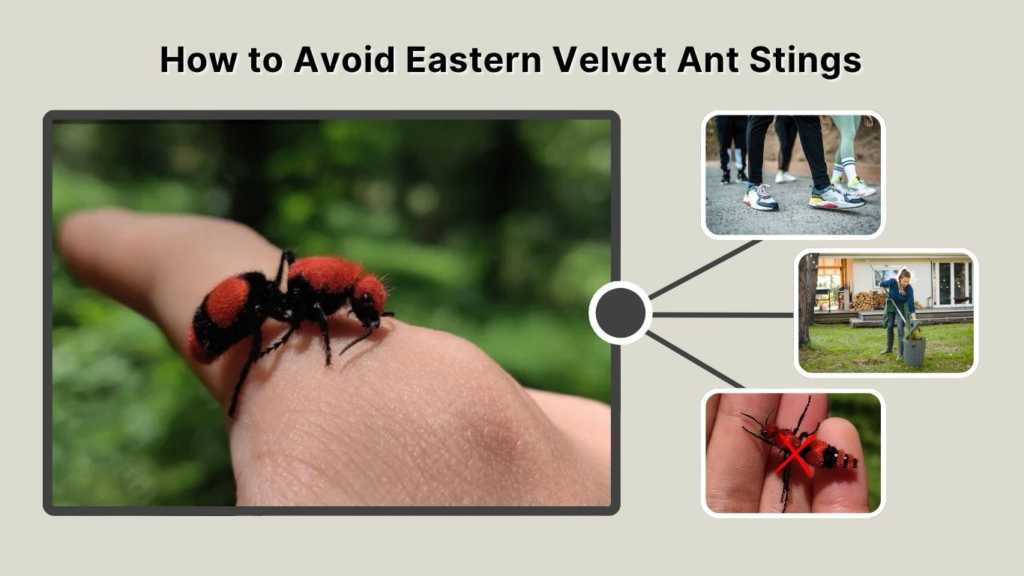
Avoiding contact with eastern velvet ants is the best way to prevent being stung. Simple precautions can greatly reduce the risk.
- Do not touch or handle them
- Wear shoes when walking outdoors
- Be cautious in sandy or dry areas
- Avoid disturbing them
- Keep outdoor spaces clean
Since these insects are not aggressive, most stings happen when they are accidentally stepped on or handled.
Wearing protective footwear and staying aware of your surroundings can help prevent accidental contact.
Interesting Facts About Eastern Velvet Ants
Eastern velvet ants have several fascinating traits that make them unique among insects.
- Nicknamed “cow killer” due to painful sting
- Females are wingless, males have wings
- One of the most painful insect stings
- Can produce a squeaking sound
- Extremely tough outer shell
Despite their nickname, they do not actually kill cows. The name simply reflects the intensity of their sting.
Their combination of bright coloration, strong defenses, and unique behaviors makes them one of the most interesting insects to study.
FAQs
What is an eastern velvet ant?
It is a type of wingless wasp with a fuzzy red body that resembles an ant. Its scientific name is Dasymutilla occidentalis.
How painful is the eastern velvet ant sting?
The sting is extremely painful and ranks among the most intense insect stings, though it is usually not dangerous.
Can eastern velvet ants bite?
They can bite, but it is rare. Their primary defense is their sting, which is much more effective.
Where are eastern velvet ants found?
They are commonly found in the eastern and southern United States, especially in warm, dry environments.
Are eastern velvet ants dangerous?
They are not dangerous to most people, but their sting is very painful. Allergic individuals should take extra caution.
