
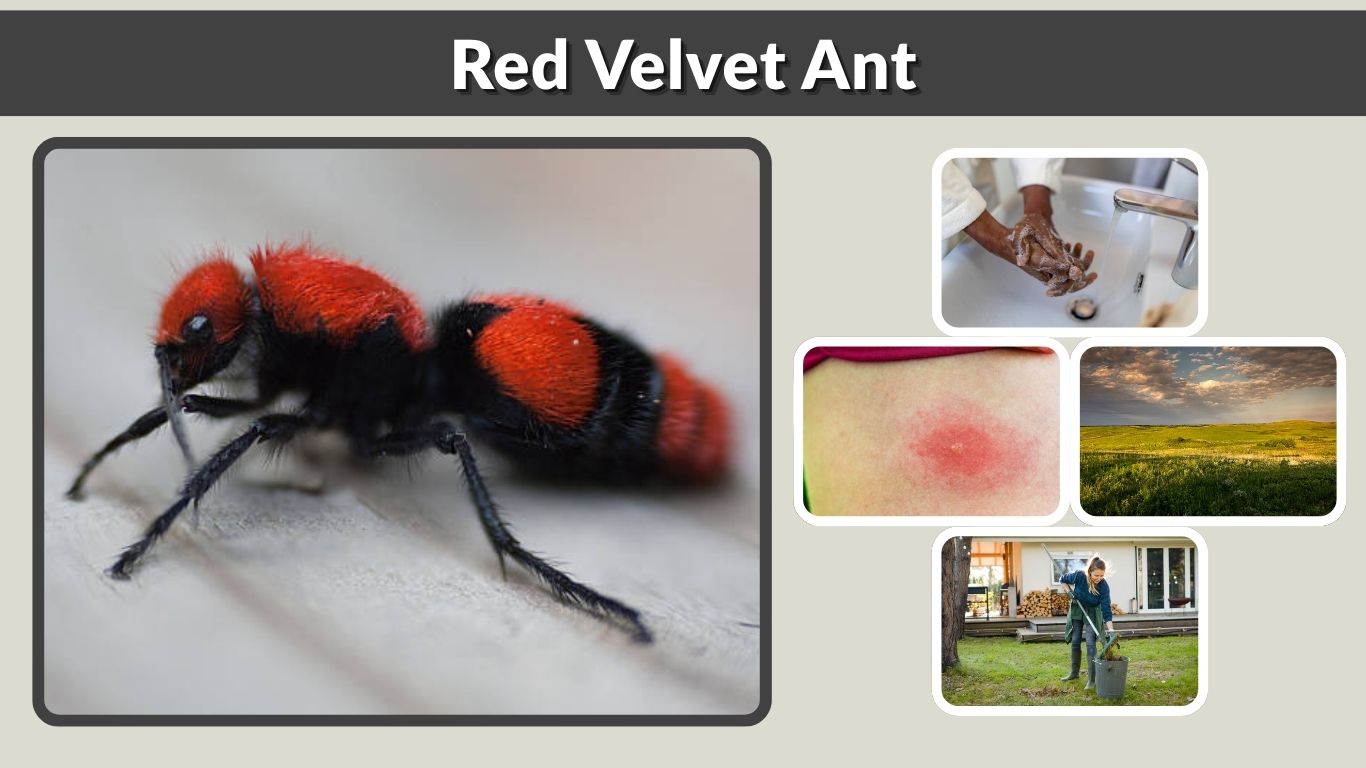
The red velvet ant is one of the most striking and misunderstood insects found in warm regions. With its bright red, fuzzy body and ant-like appearance, it often catches people’s attention. Despite its name, it is not actually an ant but a type of wasp. It is best known for its extremely painful sting, which has earned it the nickname “cow killer.” In this guide, you’ll learn how to identify red velvet ants, understand their behavior, and determine whether they are truly dangerous.
What Is a Red Velvet Ant?
The red velvet ant is a type of wasp known for its bright coloration and powerful sting. It belongs to a group of insects called velvet ants, which are actually parasitoid wasps rather than true ants.
Is It an Ant or a Wasp?
Although it is called an ant, the red velvet ant is actually a wasp. The confusion comes from the female, which has no wings and resembles a large ant.
Male velvet ants do have wings and look more like typical wasps. However, they are less commonly seen because they spend more time flying rather than walking on the ground.
This difference between males and females is one of the key reasons people mistake these insects for ants.
Why Is It Called a Cow Killer?
The nickname “cow killer” comes from the intensity of the sting rather than any real danger to cows. There is no scientific evidence that red velvet ants can kill large animals.
The sting is extremely painful, which likely led to exaggerated stories over time. These stories turned into myths, giving the insect its dramatic reputation.
In reality, the sting is defensive and used only when the insect feels threatened.
Red Velvet Ant Identification
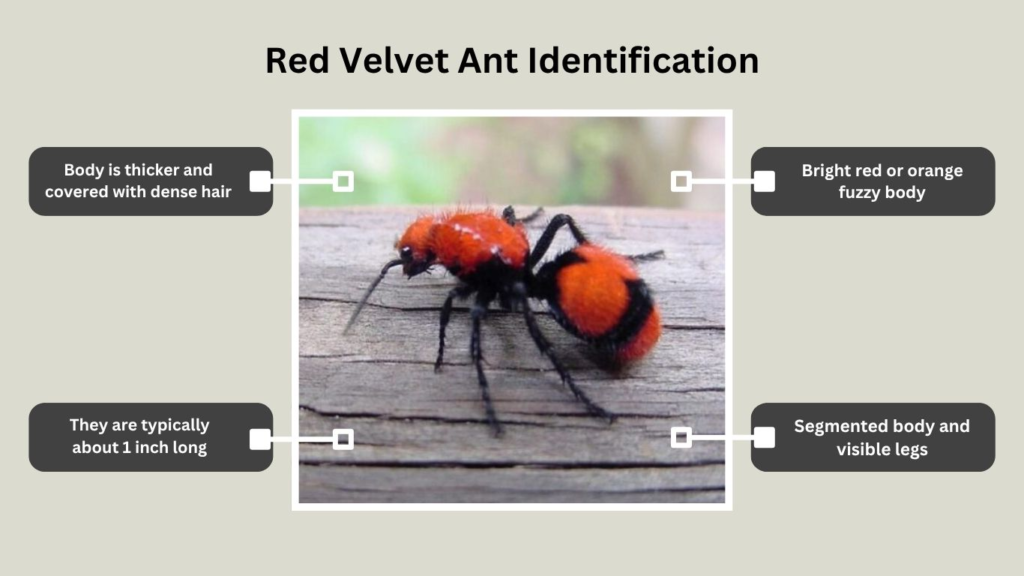
Red velvet ants are easy to recognize once you know their key features. Their appearance is quite different from most insects commonly found outdoors.
Key Physical Features
The most noticeable feature of a red velvet ant is its bright red or orange fuzzy body. This coloration acts as a warning to predators that the insect can defend itself.
They have an ant-like shape, with a segmented body and visible legs. However, their body is thicker and covered with dense hair, giving them a velvety appearance.
Another important feature is their hard outer shell. This tough exoskeleton helps protect them from predators and makes them difficult to crush.
They are typically about 1 inch long, making them larger than most ants.
Color Variations
While the red velvet ant is the most common type, there are other variations within the velvet ant group.
Some species may appear darker, with black or deep blue coloring. There are also related species with unique patterns, such as black-and-white markings.
Despite these variations, most velvet ants share the same fuzzy texture and general body structure, which helps in identification.
Male vs Female Red Velvet Ant
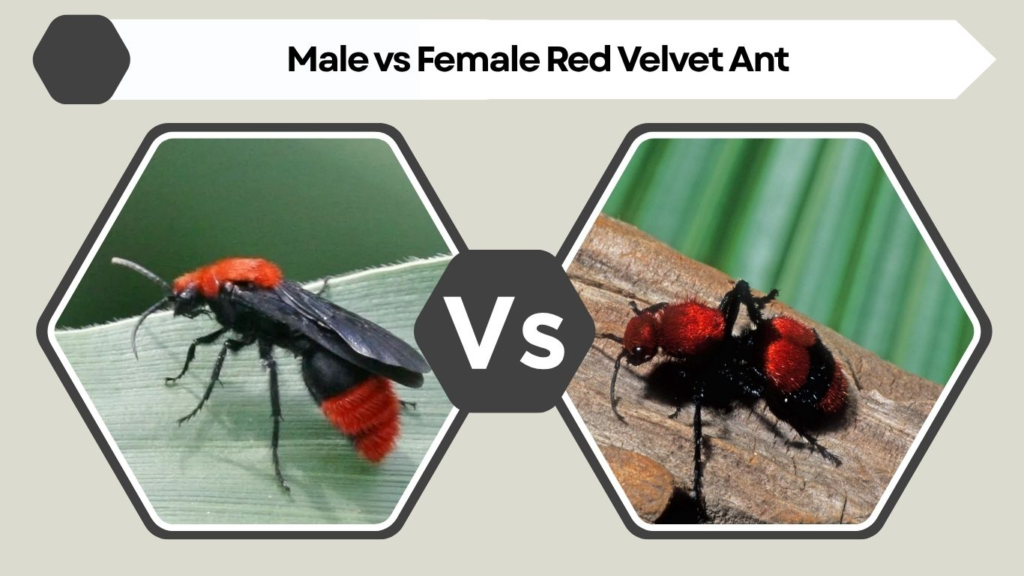
Male and female red velvet ants differ significantly in both appearance and behavior. Understanding these differences is important for recognizing the insect and assessing risk.
Female Velvet Ant
The female red velvet ant is wingless and moves along the ground. This is the form most people encounter.
She has a powerful stinger, which is used for defense. This is the reason for the insect’s reputation for painful stings.
Her bright red coloration serves as a warning signal to predators, indicating that she is not an easy target.
Male Velvet Ant
Male velvet ants have wings and can fly. Unlike females, they do not have a stinger and cannot sting at all.
Because they spend more time in the air, they are less likely to be seen by people. This difference means that only the female poses any risk of a sting.
Red Velvet Ant Sting (Pain & Effects)
The sting of a red velvet ant is the most well-known feature of this insect. It is often described as one of the most painful insect stings.
Sting Overview
| Factor | Details |
| Pain level | Very high |
| Duration | Short but intense |
| Venom | Not deadly |
| Risk | Low for most people |
The sting is used purely for defense. When threatened, the female can deliver a powerful sting that causes immediate pain.
How Painful Is the Sting?
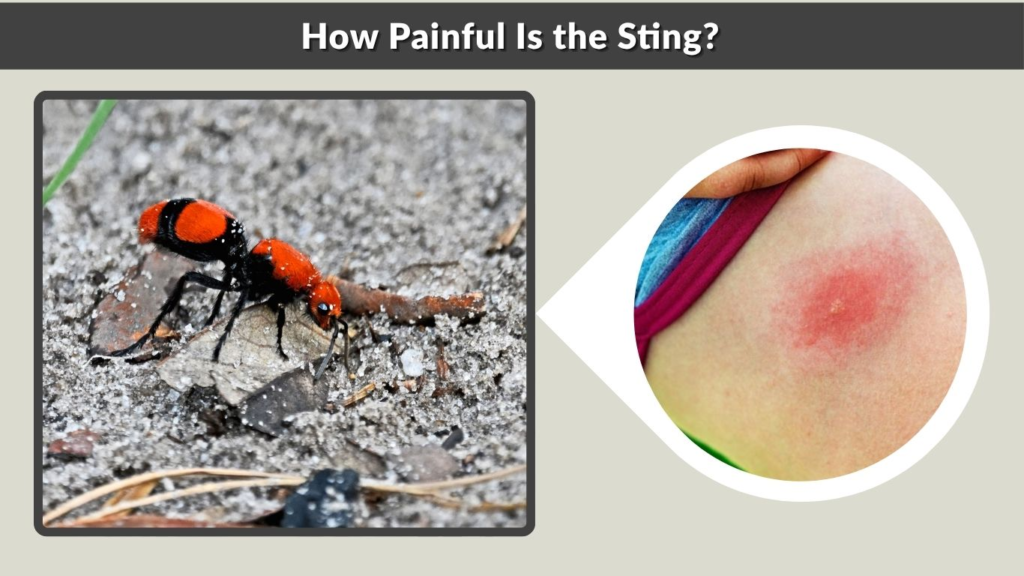
The pain from a red velvet ant sting is often described as sharp, burning, and intense. Some people compare it to a sudden electric shock.
Although the pain is severe, it usually does not last long. The intensity may decrease after a short period, leaving mild discomfort behind.
Because of this, the red velvet ant is often ranked among insects with the most painful stings.
Sting Symptoms
After being stung, you may notice redness, swelling, and irritation at the site. These symptoms are usually temporary and fade over time.
In most cases, the reaction is limited to the immediate area of the sting. However, individuals who are allergic to insect stings may experience more serious symptoms.
If symptoms such as difficulty breathing or severe swelling occur, medical attention should be sought immediately.
Are Red Velvet Ants Dangerous?
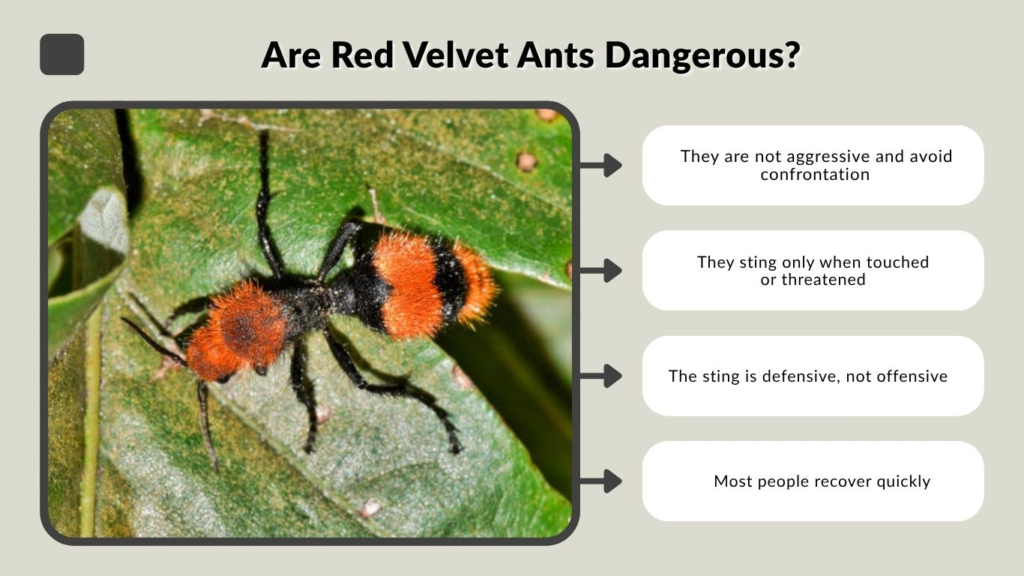
Despite their painful sting, red velvet ants are not considered highly dangerous to humans.
- They are not aggressive and avoid confrontation
- They sting only when touched or threatened
- The sting is defensive, not offensive
- Most people recover quickly
- Risk is higher only for allergic individuals
Red velvet ants are solitary insects, meaning they do not live in colonies or attack in groups. This reduces the overall risk compared to other stinging insects.
Most stings happen when someone accidentally steps on or handles the insect. Avoiding contact is the best way to prevent being stung.
Can a Red Velvet Ant Kill You or Animals? (Myth Explained)
There are many myths surrounding red velvet ants, mainly because of their nickname “cow killer.” These myths often exaggerate the danger of this insect.
Can They Kill a Cow?
No, red velvet ants cannot kill cows. The name is purely based on the intense pain of the sting, not on any real ability to harm large animals.
There is no scientific evidence that their venom is strong enough to kill livestock. The sting is defensive and designed to deter predators, not to cause serious harm.
Can They Kill Humans or Pets?
Red velvet ants are not deadly to humans or pets under normal circumstances. The main effect of their sting is intense but temporary pain.
However, like other stinging insects, they can pose a risk to individuals who are allergic. In such cases, a severe reaction may require medical attention. For most people, the sting results in discomfort rather than danger.
Where Do Red Velvet Ants Live?
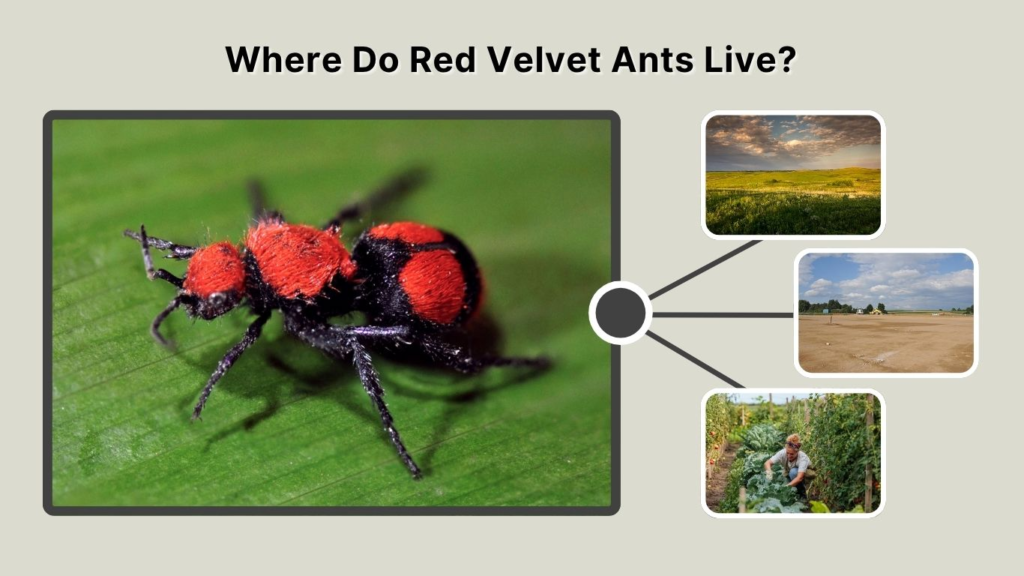
Red velvet ants are commonly found in warm regions and prefer environments that suit their lifestyle.
Geographic Distribution
These insects are most often found in the southern United States, including areas like Texas, Florida, Georgia, and the Carolinas.
They thrive in warm climates and are less common in colder regions. Their activity increases during warmer months when they are more active on the ground.
Habitat Preferences
Red velvet ants prefer dry, sandy soils where they can move easily. They are often seen in open fields, gardens, and grassy areas.
They may also appear in yards, especially in sunny spots with loose soil. Because they travel on the ground, they are often encountered accidentally.
Their preference for dry conditions means they are less likely to be found in wet or heavily shaded environments.
Red Velvet Ant Behavior
Red velvet ants have several unique behaviors that help them survive in the wild and avoid predators.
- Solitary insects (do not form colonies)
- Move slowly across the ground
- Bright coloration warns predators
- Avoid human interaction
- Sting only when threatened
Unlike true ants, they do not live in large groups. Each individual operates independently, which is why you usually see them alone.
Their bright red color is a form of warning called aposematic coloration. It signals to predators that the insect can defend itself.
They are generally not aggressive and prefer to avoid confrontation whenever possible.
Red Velvet Ant Nest and Life Cycle
Red velvet ants do not build traditional nests like ants. Instead, they have a unique parasitic life cycle.
Nesting Behavior
Female velvet ants lay their eggs inside the nests of other insects, such as bees or wasps. This behavior allows their offspring to develop using the host’s resources.
The larvae feed on the host’s developing young or stored food, which provides the nutrients needed for growth.
Life Cycle
The life cycle of a red velvet ant includes four stages:
- Egg
- Larva
- Pupa
- Adult
After developing inside the host nest, the adult emerges and continues the cycle. This process explains why velvet ants are rarely found in large numbers.
Red Velvet Ant Sting Treatment
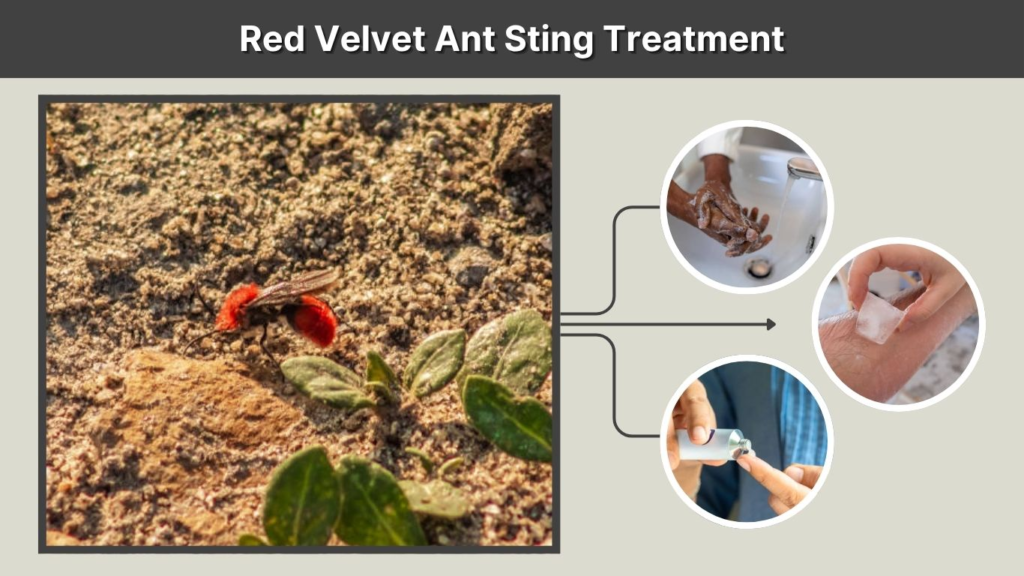
Although the sting is very painful, it can usually be treated with simple first aid.
- Wash the area with soap and water
- Apply ice to reduce swelling
- Use over-the-counter pain relief creams
- Avoid scratching the area
- Seek medical help if severe symptoms occur
Applying ice can help reduce both pain and inflammation. Pain relief creams or antihistamines may also help ease discomfort.
If you experience symptoms such as difficulty breathing, dizziness, or swelling beyond the sting area, seek medical attention immediately, as these may indicate an allergic reaction.
How to Get Rid of Red Velvet Ants
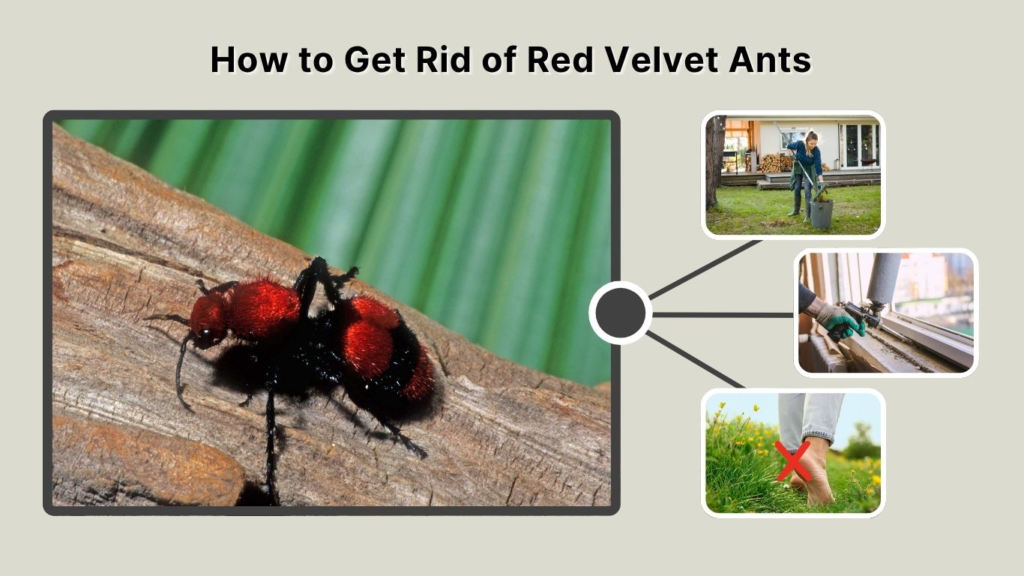
Preventing encounters with red velvet ants is the most effective way to manage them, as they are not easily controlled.
- Keep outdoor areas clean and free of debris
- Remove potential hiding spots
- Seal cracks and entry points around the home
- Avoid walking barefoot outdoors
- Use professional pest control if needed
Since these insects are solitary, infestations are uncommon. However, reducing their habitat can lower the chances of encountering them.
Wearing protective footwear outdoors is one of the simplest ways to avoid accidental stings.
Interesting Facts About Red Velvet Ants
Red velvet ants have several fascinating traits that make them unique among insects.
- They are actually wasps, not ants
- Their exoskeleton is extremely tough
- They can produce a squeaking sound when handled
- Their sting is among the most painful of any insect
- Their bright color warns predators
The squeaking sound they produce is known as stridulation. It acts as a warning when the insect feels threatened.
Their tough outer shell makes them resistant to predators, adding another layer of defense beyond their sting.
FAQs
Do red velvet ants bite or sting?
Red velvet ants do not bite in a harmful way. The female delivers a sting using her stinger, which causes intense pain. Males cannot sting at all, so only females pose any risk.
Can red velvet ants fly?
Only male red velvet ants can fly because they have wings. Female velvet ants are wingless and move along the ground, which is why they are more commonly seen.
What does a red velvet ant sting look like?
A red velvet ant sting usually causes redness, swelling, and irritation at the site. The affected area may feel warm and painful, but symptoms typically fade within a short time.
Are red velvet ants aggressive?
No, red velvet ants are not aggressive. They sting only when provoked, such as when touched or stepped on. They prefer to avoid humans and move away rather than attack.
Why are red velvet ants brightly colored?
Their bright red color serves as a warning to predators. This is known as aposematic coloration and signals that the insect can defend itself with a painful sting.
