
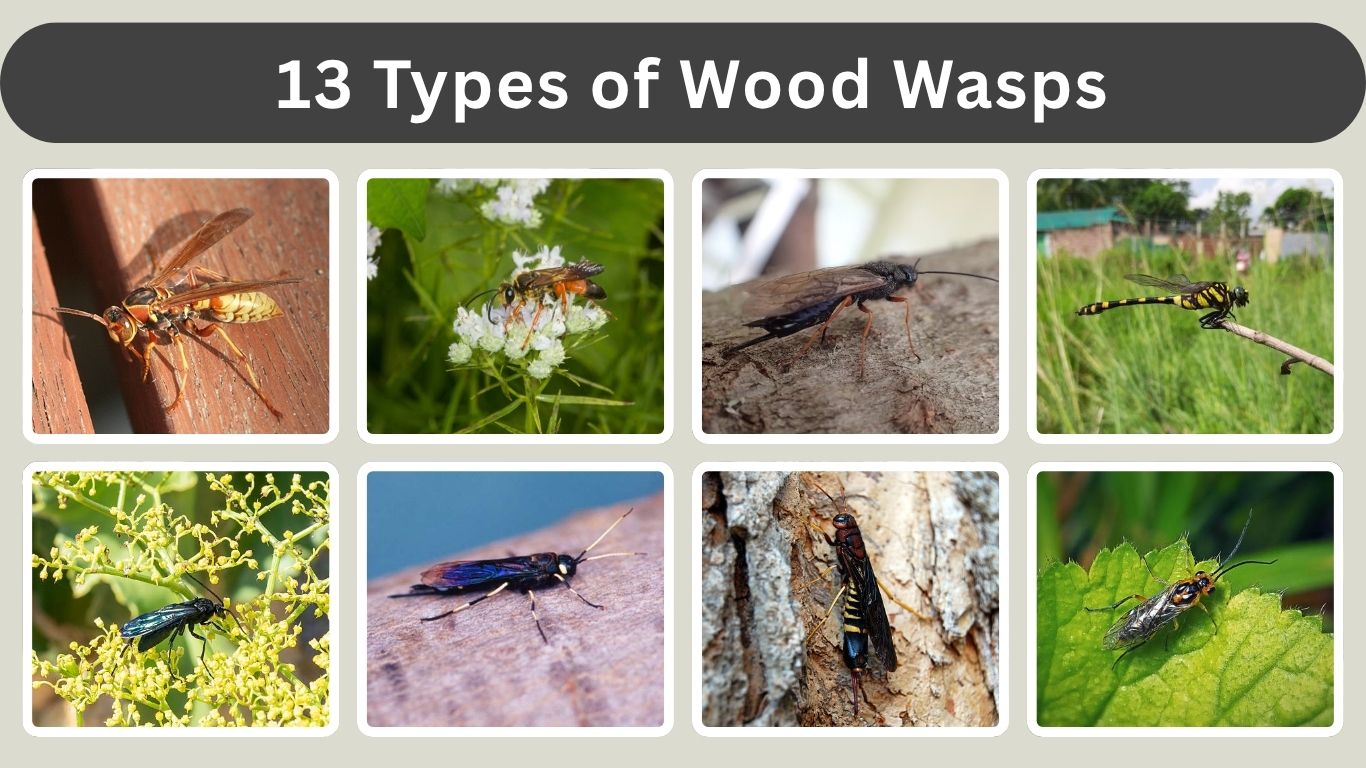
Wood wasps are fascinating insects often mistaken for stinging wasps because of their size and appearance. In reality, they are harmless and play a crucial role in forest ecosystems by helping break down dead and decaying wood. These insects belong to a unique group known for their wood-boring larvae and symbiotic relationship with fungi. Found in forests and wooded areas worldwide, wood wasps contribute to nutrient recycling and tree health. In this guide, you will discover 13 different types of wood wasps along with their key characteristics and behaviors.
1. Pigeon Horntail
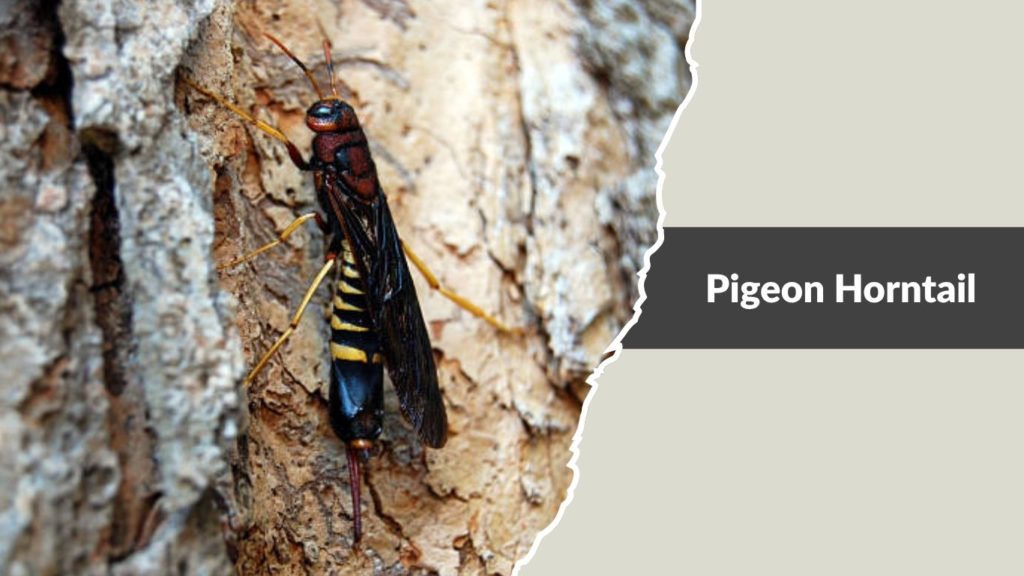
The Pigeon Horntail is one of the largest and most noticeable wood wasps, often mistaken for a stinging insect due to its size and pointed tail. However, it is completely harmless to humans. This species is important in forest ecosystems because it helps break down dead and decaying wood, contributing to nutrient recycling.
Identification
- Body length up to about 5 cm
- Black body with bold yellow markings
- Reddish or brownish legs
- Distinct horn-like spike at the tip of the abdomen
- Females possess a long, needle-like ovipositor
- Thick, cylindrical body shape
Habitat and Distribution
The Pigeon Horntail is commonly found in deciduous forests, wooded areas, and places where dead or weakened trees are present. It prefers hardwood trees such as maple, oak, and elm. This species is widely distributed across North America, especially in the United States and Canada. It is most often seen during late summer when adults emerge. They are usually spotted resting on tree trunks or fallen logs where suitable egg-laying sites exist.
Behavior and Diet
Adult Pigeon Horntails do not feed on solid food and may consume only small amounts of sap or moisture. Their primary focus is reproduction. The larvae feed on wood that has been softened by a fungus introduced by the female during egg-laying. This symbiotic relationship helps the larvae digest tough wood fibers. Despite their intimidating look, they are non-aggressive and do not sting, making them harmless to humans and pets.
Lifecycle
The lifecycle begins when the female drills deep into dead or dying wood using her ovipositor. She deposits eggs along with a special fungus that aids larval development. Once hatched, larvae tunnel through the wood, feeding and growing over a period that can last one to several years. After reaching maturity, they pupate inside the wood. Eventually, the adult emerges by chewing a round exit hole and starts the cycle again.
2. Elm Sawfly
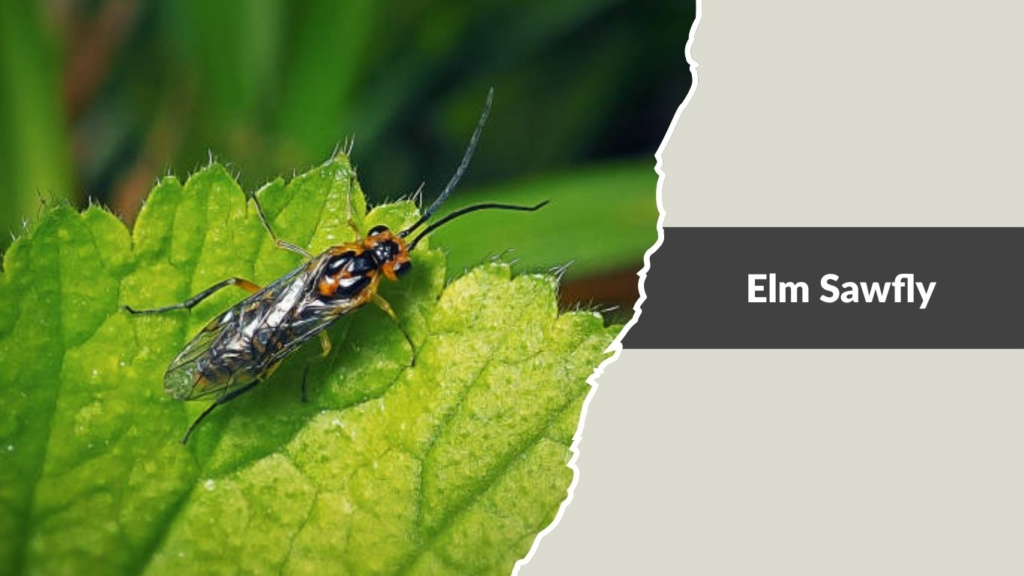
The Elm Sawfly is a distinctive wood wasp known for its large size and striking appearance. Although it resembles a typical wasp, it belongs to a different group and is harmless to humans. It is often noticed because of its bold coloration and slow, deliberate movements around trees.
Identification
- Large body, typically 3–5 cm long
- Dark bluish-black body coloration
- Smoky or dark-tinted wings
- Broad waist (no narrow “wasp waist”)
- Orange or yellowish legs in some individuals
- Thick, cylindrical body shape
Habitat and Distribution
The Elm Sawfly is commonly found in deciduous forests, parks, and suburban areas where elm and other hardwood trees grow. It is widely distributed across North America. This species prefers environments with mature or stressed trees, as these provide suitable conditions for egg-laying. Adults are most often seen during mid to late summer, resting on tree trunks, branches, or nearby vegetation.
Behavior and Diet
Adult Elm Sawflies do not sting and are not aggressive. They may feed lightly on nectar, sap, or may not feed at all. The larvae play a more active role in feeding, consuming wood that has been softened by natural processes. Like other wood wasps, they rely on microorganisms to help break down tough plant material. Their presence is generally beneficial for forest ecosystems.
Lifecycle
The female lays eggs in weakened or dying wood using her ovipositor. After hatching, larvae bore into the wood and begin feeding. This stage can last for one or more years depending on environmental conditions. As they grow, larvae create tunnels inside the wood. Once mature, they pupate within these tunnels and eventually emerge as adults by chewing their way out, continuing the lifecycle.
3. Birch Horntail
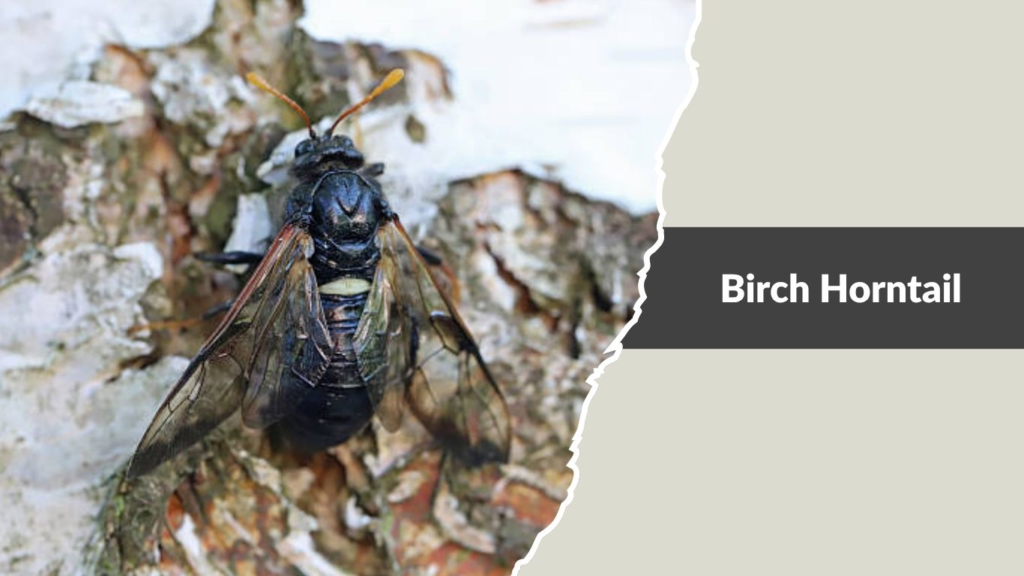
The Birch Horntail is a wood wasp species commonly associated with birch trees. It is known for its elongated body and noticeable tail spike. Like other horntails, it may appear threatening, but it is completely harmless and plays a useful role in decomposing wood.
Identification
- Medium to large size, usually 2.5–4 cm long
- Slender, cylindrical body
- Black or dark brown coloration with pale markings
- Prominent horn-like spike at the end of the abdomen
- Females have a long ovipositor
- Clear to slightly tinted wings
Habitat and Distribution
The Birch Horntail is typically found in forests and woodland areas where birch trees are present. It prefers cool, temperate regions and is commonly seen in parts of North America and Europe. This species is often associated with dead, dying, or weakened birch trees, which provide ideal conditions for reproduction. Adults are usually active during late spring through summer.
Behavior and Diet
Adult Birch Horntails are non-aggressive and do not sting. They may feed minimally on sap or not feed at all. The larvae feed inside wood, relying on fungi introduced by the female to help digest the tough plant fibers. This feeding behavior helps break down dead wood, contributing to natural decomposition and nutrient cycling within forest ecosystems.
Lifecycle
The lifecycle begins when the female deposits eggs deep into birch wood along with a symbiotic fungus. After hatching, larvae tunnel through the wood and feed for an extended period, sometimes taking one to two years to develop. Once fully grown, they pupate within the wood. Adults eventually emerge by chewing exit holes, ready to reproduce and continue the cycle.
4. Blue Wood Wasp
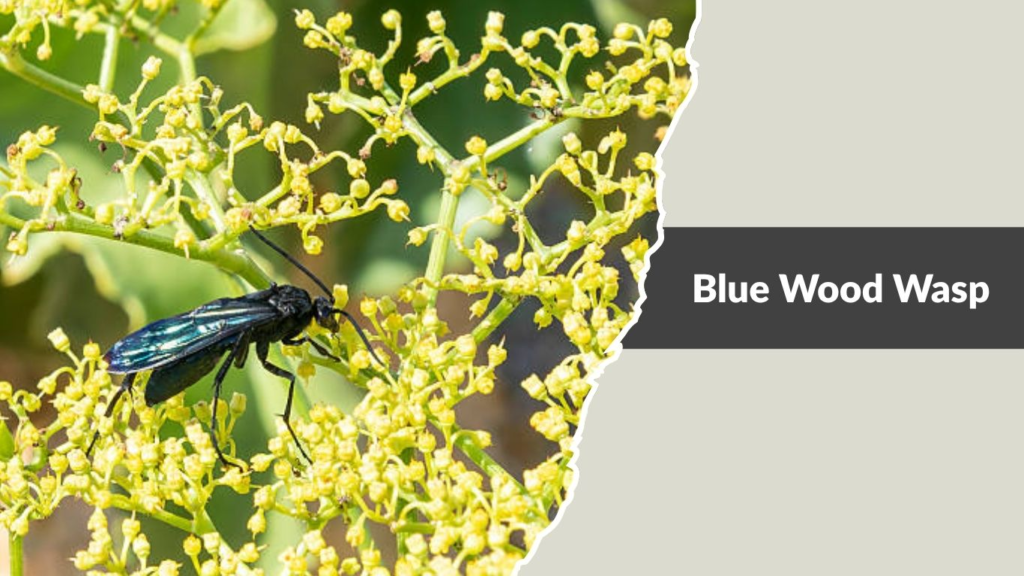
The Blue Wood Wasp is a striking species known for its metallic blue sheen and slender body. It is less bulky than some other wood wasps but still easily noticeable due to its glossy coloration. Despite its wasp-like appearance, it is harmless and contributes to the natural breakdown of wood.
Identification
- Medium-sized body, around 2–3.5 cm long
- Metallic blue or steel-blue coloration
- Slender, elongated body shape
- Transparent or slightly smoky wings
- No narrow waist like true wasps
- Females have a visible ovipositor
Habitat and Distribution
The Blue Wood Wasp is typically found in forests, wooded areas, and sometimes gardens with nearby trees. It prefers regions with dead or decaying wood, especially softwoods. This species is found in parts of North America and Europe, depending on the exact species. Adults are usually active during the warmer months, especially in summer, when they can be seen resting on logs or tree trunks.
Behavior and Diet
Adult Blue Wood Wasps are non-aggressive and do not sting. They may feed on nectar, sap, or may not feed much at all. The larvae are wood-borers and depend on fungi introduced during egg-laying to break down wood fibers. This symbiotic relationship allows them to digest the wood efficiently, helping recycle nutrients back into the ecosystem.
Lifecycle
The female uses her ovipositor to lay eggs deep within dead or weakened wood, along with fungal spores. The larvae hatch and begin tunneling through the wood, feeding and growing over a period that may last one or more years. After completing development, they pupate within the wood. Adults emerge by creating exit holes and continue the reproductive cycle.
5. Giant Wood Wasp
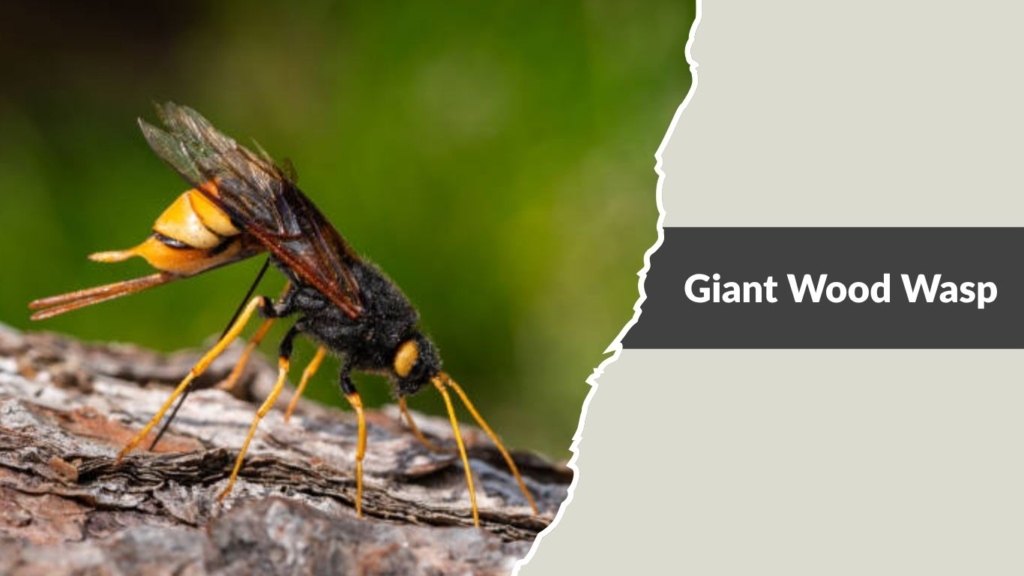
The Giant Wood Wasp is one of the largest wood wasp species, easily recognized by its impressive size and bold coloring. Its intimidating look often causes concern, but it is harmless to humans. This species plays an important ecological role by helping decompose dead and dying trees.
Identification
- Very large size, often 3–5 cm long or more
- Black or dark body with yellow or orange markings
- Thick, cylindrical body shape
- Clear to slightly tinted wings
- Prominent horn-like projection at the abdomen tip
- Females have a long, strong ovipositor
Habitat and Distribution
The Giant Wood Wasp is commonly found in forests, especially where large dead or weakened trees are present. It prefers both hardwood and softwood environments, depending on the species. This wood wasp is widely distributed across parts of North America, Europe, and Asia. Adults are typically seen during summer, often resting on tree trunks, logs, or flying slowly around wooded areas.
Behavior and Diet
Adult Giant Wood Wasps are non-aggressive and do not sting, even though they may appear dangerous. They may feed lightly on sap or may not feed at all. The larvae live inside wood, feeding on material that has been softened by symbiotic fungi. This feeding behavior helps break down wood and supports nutrient recycling in forest ecosystems.
Lifecycle
The female drills into dead or dying wood using her ovipositor to lay eggs, along with fungal spores. Larvae hatch and begin tunneling through the wood, feeding and developing over one to several years. Once mature, they pupate inside the wood. Adults eventually emerge by chewing exit holes and then begin the process of reproduction again.
6. Black-and-Yellow Horntail
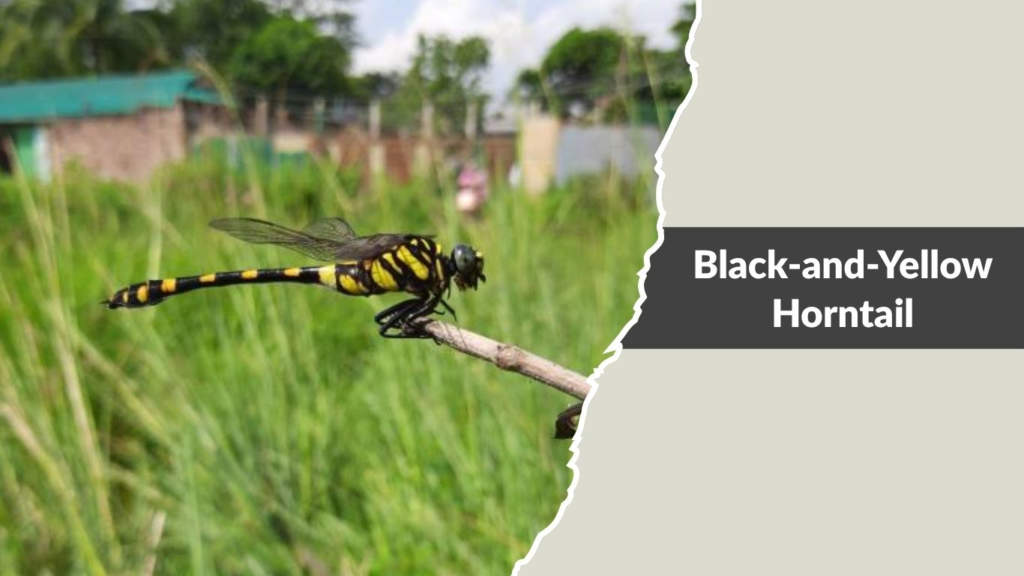
The Black-and-Yellow Horntail is a visually striking wood wasp, recognized for its bold coloration that resembles stinging wasps. Despite this warning-like appearance, it is harmless and does not sting. It plays an essential role in breaking down wood and maintaining forest health.
Identification
- Medium to large size, about 2.5–4 cm long
- Bright yellow and black banded body
- Cylindrical shape without a narrow waist
- Clear or lightly tinted wings
- Distinct horn-like projection at the abdomen tip
- Females have a long ovipositor
Habitat and Distribution
The Black-and-Yellow Horntail is commonly found in forests, woodlands, and areas with abundant dead or dying trees. It prefers hardwood forests but may also occur in mixed woodlands. This species is distributed across parts of North America and Europe. Adults are most active during summer and are often seen on tree trunks, fallen logs, or wooden structures where they lay eggs.
Behavior and Diet
Adult Black-and-Yellow Horntails are non-aggressive and do not sting. They may feed lightly on nectar or sap, though some adults do not feed at all. The larvae feed inside wood, relying on fungi introduced by the female to break down tough fibers. This process helps decompose wood and recycle nutrients, benefiting the ecosystem.
Lifecycle
The lifecycle begins when the female drills into weakened wood to deposit eggs along with fungal spores. The larvae hatch and tunnel through the wood, feeding and growing over one or more years. After reaching maturity, they pupate inside the wood. Adults emerge by chewing exit holes and continue the cycle by seeking new sites for egg-laying.
7. Golden Wood Wasp
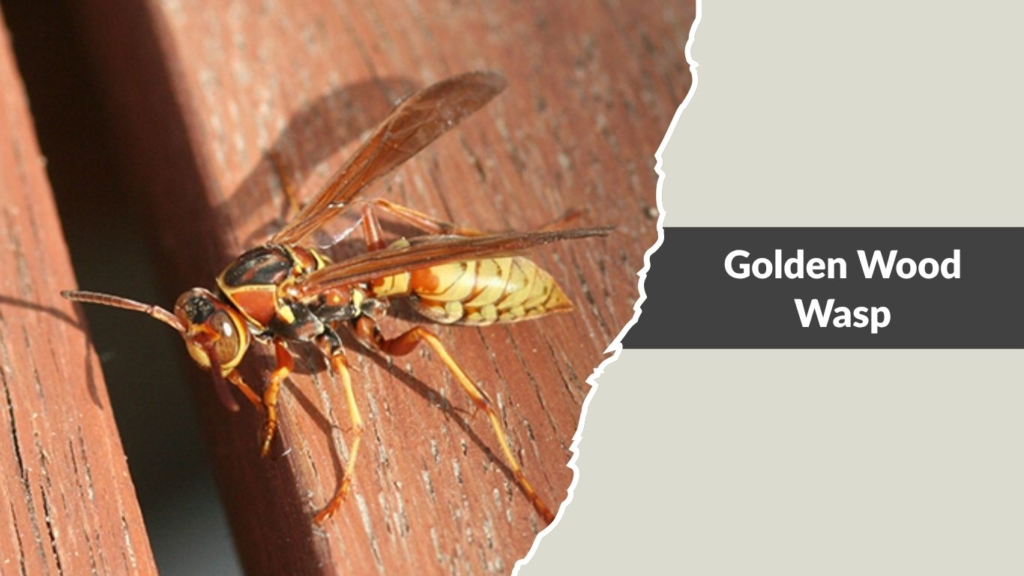
The Golden Wood Wasp is known for its warm yellow to golden coloration, making it stand out among other wood wasps. It is often seen around trees during the warmer months and, like others in its group, is harmless to humans while contributing to wood decomposition.
Identification
- Medium size, around 2–3.5 cm long
- Yellow to golden body coloration
- Slender, cylindrical shape
- Clear or slightly tinted wings
- No narrow waist
- Females have a visible ovipositor
Habitat and Distribution
The Golden Wood Wasp is typically found in forests, woodland edges, and areas with abundant dead or decaying wood. It prefers both hardwood and softwood environments depending on availability. This species is distributed across parts of North America and Europe. Adults are most active during late spring and summer, often seen resting on tree trunks or flying slowly near suitable egg-laying sites.
Behavior and Diet
Adult Golden Wood Wasps are non-aggressive and do not sting. They may feed lightly on nectar, sap, or not feed at all. The larvae live inside wood, feeding on material that has been softened by symbiotic fungi introduced by the female. This relationship allows them to digest wood effectively and helps speed up natural decomposition processes.
Lifecycle
The female lays eggs deep inside dead or weakened wood using her ovipositor, along with fungal spores. After hatching, larvae tunnel through the wood and feed for an extended period, sometimes lasting one to two years. Once fully developed, they pupate within the wood. Adults eventually emerge by chewing exit holes and begin the next reproductive cycle.
8. Striped Wood Wasp
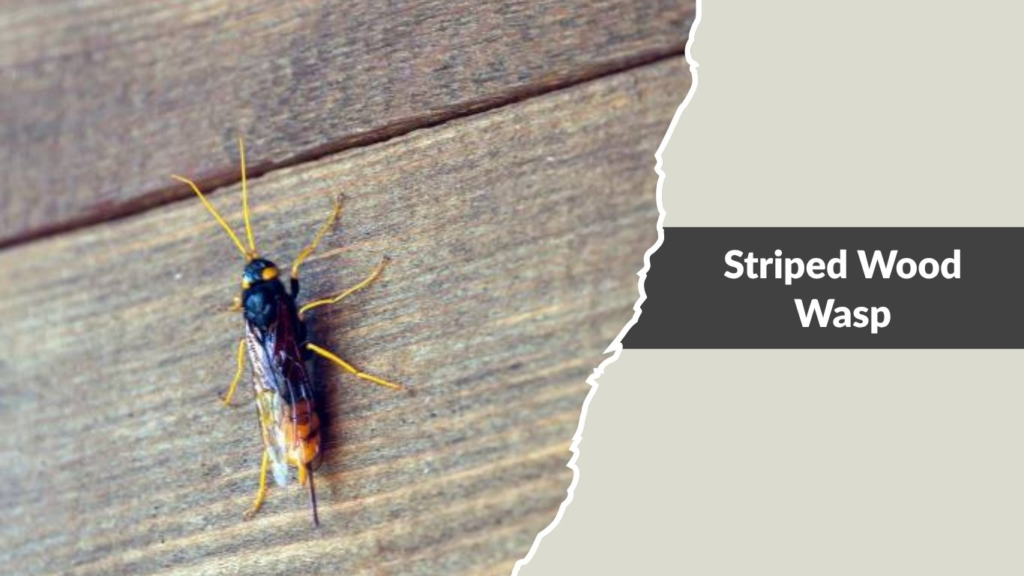
The Striped Wood Wasp is recognized for its banded body pattern, which often resembles that of stinging wasps. This mimicry helps deter predators, even though the insect itself is harmless. It is commonly seen around trees and wooden areas during warm seasons.
Identification
- Medium-sized body, about 2–4 cm long
- Distinct striped pattern of black and yellow or brown
- Cylindrical body without a narrow waist
- Clear or slightly smoky wings
- Small horn-like projection at the abdomen tip
- Females have a noticeable ovipositor
Habitat and Distribution
The Striped Wood Wasp is found in forests, woodlands, and sometimes in parks or gardens with mature trees. It prefers areas with dead, dying, or weakened wood suitable for egg-laying. This species is distributed across parts of North America and Europe. Adults are most active in summer and are often seen on tree bark, logs, or wooden structures.
Behavior and Diet
Adult Striped Wood Wasps are non-aggressive and do not sting. They may feed lightly on sap or nectar, though feeding is minimal. The larvae develop inside wood, feeding on material softened by symbiotic fungi. This process helps break down wood fibers, playing a key role in decomposition and nutrient recycling in forest ecosystems.
Lifecycle
The female deposits eggs deep into wood along with fungal spores using her ovipositor. Larvae hatch and begin tunneling through the wood, feeding and growing over one or more years. After reaching maturity, they pupate within the wood. Adults emerge by chewing round exit holes and then continue the cycle by reproducing.
9. Brown Wood Wasp
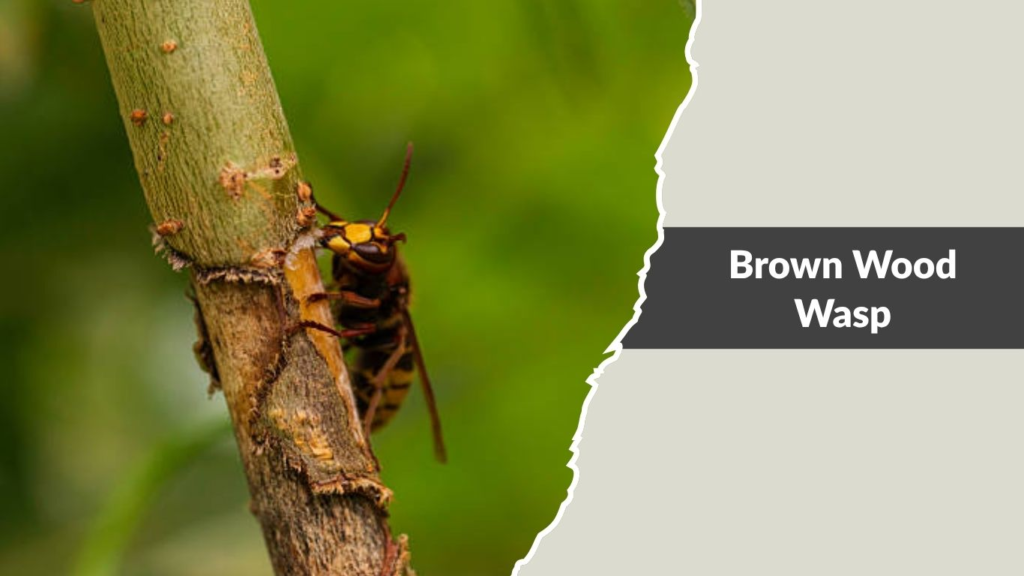
The Brown Wood Wasp is a more subtly colored species compared to others, with earthy tones that help it blend into tree bark. It is often overlooked due to its less vivid appearance, but it plays an important role in decomposing wood and maintaining forest health.
Identification
- Medium size, about 2–3.5 cm long
- Uniform brown or reddish-brown coloration
- Cylindrical body without a narrow waist
- Clear or slightly tinted wings
- Small horn-like projection at the abdomen tip
- Females have a slender ovipositor
Habitat and Distribution
The Brown Wood Wasp is commonly found in forests, wooded areas, and regions with abundant dead or decaying trees. It prefers both hardwood and softwood environments. This species is distributed across parts of North America, Europe, and Asia. Adults are most active during summer and are often seen resting on tree trunks, fallen logs, or wooden debris.
Behavior and Diet
Adult Brown Wood Wasps are non-aggressive and do not sting. They may feed lightly on sap or may not feed at all. The larvae live inside wood, feeding on fibers that have been softened by fungi introduced by the female. This symbiotic process allows them to digest wood efficiently and contributes to natural decomposition.
Lifecycle
The female lays eggs deep inside weakened or dead wood using her ovipositor, along with fungal spores. After hatching, larvae tunnel through the wood and develop over a period that may last one to several years. Once mature, they pupate inside the wood. Adults eventually emerge by chewing exit holes and continue the reproductive cycle.
10. European Wood Wasp
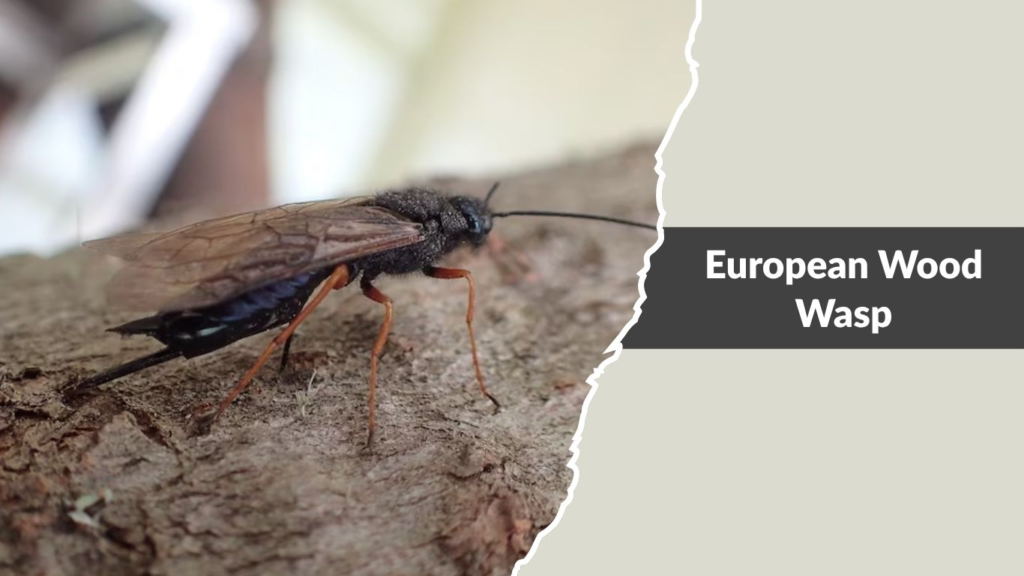
The European Wood Wasp is a well-known species, especially due to its impact on forestry. It has a strong, elongated body and is often associated with conifer trees. While it looks intimidating, it is harmless to humans and is mainly important for its ecological and economic effects.
Identification
- Medium to large size, about 2.5–4 cm long
- Dark body with yellow or orange markings
- Cylindrical shape without a narrow waist
- Clear to slightly smoky wings
- Pointed abdomen with a horn-like tip
- Females have a long ovipositor
Habitat and Distribution
The European Wood Wasp is commonly found in forests, particularly those dominated by coniferous trees like pine. It is native to Europe but has spread to other regions, including North America, South America, and parts of Africa and Oceania. It prefers stressed, weakened, or recently cut trees for egg-laying. Adults are most active during summer and are often seen on tree trunks.
Behavior and Diet
Adult European Wood Wasps are non-aggressive and do not sting. They may feed minimally on sap or not feed at all. The larvae feed inside wood, relying on symbiotic fungi introduced during egg-laying to break down wood fibers. This species can sometimes damage timber, as larval tunneling weakens the wood structure.
Lifecycle
The female drills into tree trunks using her ovipositor, laying eggs along with a fungus that helps larvae digest wood. After hatching, larvae tunnel through the wood and develop over one to two years. Once mature, they pupate inside the tree. Adults emerge by chewing exit holes and continue the lifecycle by seeking new host trees.
11. Steel-blue Horntail
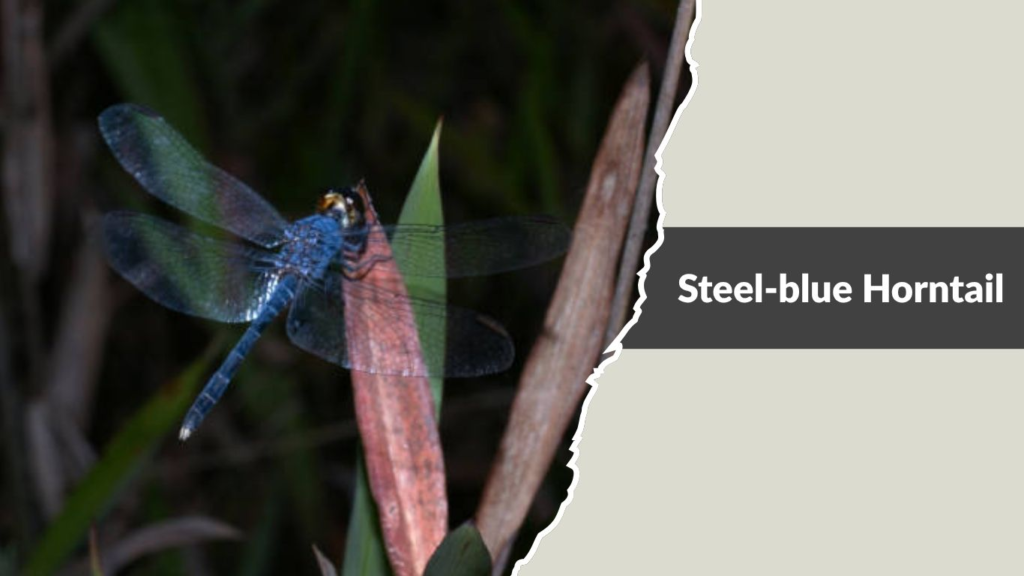
The Steel-blue Horntail is a distinctive wood wasp known for its metallic blue coloration and sleek appearance. It is less bulky than some other horntails but still noticeable due to its shiny body. Like other wood wasps, it is harmless and contributes to the breakdown of wood.
Identification
- Medium size, around 2–3.5 cm long
- Metallic steel-blue body coloration
- Slender, cylindrical shape
- Clear or slightly tinted wings
- Small horn-like projection at the abdomen tip
- Females have a visible ovipositor
Habitat and Distribution
The Steel-blue Horntail is typically found in forests, wooded areas, and places with dead or decaying trees. It is often associated with both hardwood and softwood environments. This species is distributed across parts of North America and Europe. Adults are most active during summer and are usually seen resting on tree bark or flying slowly near suitable egg-laying sites.
Behavior and Diet
Adult Steel-blue Horntails are non-aggressive and do not sting. They may feed lightly on sap or nectar, though some may not feed at all. The larvae develop inside wood, feeding on material softened by symbiotic fungi. This relationship allows them to digest wood fibers efficiently and plays a role in natural decomposition.
Lifecycle
The female lays eggs deep inside dead or weakened wood using her ovipositor, along with fungal spores. After hatching, larvae tunnel through the wood and grow over a period that may last one or more years. Once fully developed, they pupate within the wood. Adults emerge by chewing exit holes and continue the cycle.
12. Red-belted Wood Wasp
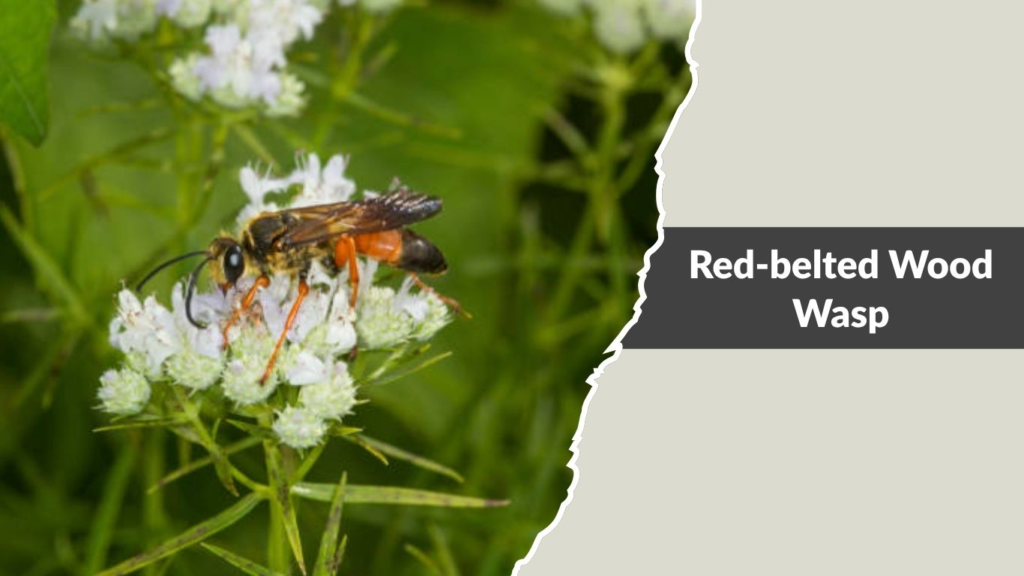
The Red-belted Wood Wasp is named for the reddish band across its abdomen, which makes it relatively easy to distinguish from other wood wasps. It has a sturdy build and is commonly seen around trees during warmer months. Like others in its group, it is harmless and aids in wood decomposition.
Identification
- Medium size, about 2–3.5 cm long
- Dark body with a noticeable red or reddish-orange band
- Cylindrical shape without a narrow waist
- Clear or lightly tinted wings
- Small horn-like projection at the abdomen tip
- Females have a slender ovipositor
Habitat and Distribution
The Red-belted Wood Wasp is found in forests, woodlands, and areas with abundant dead or weakened trees. It is commonly associated with both hardwood and softwood habitats. This species is distributed across parts of North America and Europe. Adults are most active during summer and are often seen resting on tree trunks or flying near suitable egg-laying sites.
Behavior and Diet
Adult Red-belted Wood Wasps are non-aggressive and do not sting. They may feed lightly on sap or nectar, though some individuals may not feed at all. The larvae live inside wood, feeding on fibers softened by symbiotic fungi introduced by the female. This process helps break down wood and contributes to nutrient recycling.
Lifecycle
The female lays eggs deep into dead or dying wood using her ovipositor, along with fungal spores. Larvae hatch and tunnel through the wood, feeding and developing over one or more years. After reaching maturity, they pupate inside the wood. Adults emerge by chewing exit holes and continue the reproductive cycle.
13. White-horned Horntail
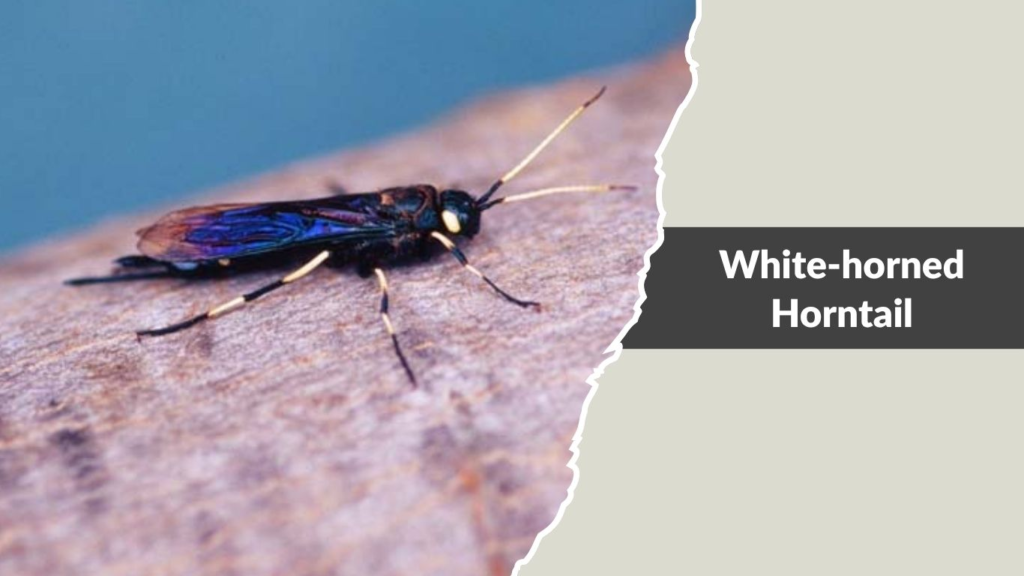
The White-horned Horntail is a notable wood wasp recognized by the pale or white tip on its horn-like projection. Its contrasting body colors make it relatively easy to identify in wooded environments. Like other horntails, it is harmless to humans and plays a beneficial role in breaking down dead wood.
Identification
- Medium to large size, about 2.5–4 cm long
- Dark body with lighter or pale markings
- Distinct white or pale horn-like tip at the abdomen
- Cylindrical body without a narrow waist
- Clear or slightly smoky wings
- Females have a long ovipositor
Habitat and Distribution
The White-horned Horntail is commonly found in forests and wooded areas with plenty of dead or dying trees. It prefers both hardwood and softwood habitats depending on availability. This species is distributed across parts of North America and possibly other temperate regions. Adults are most active during summer and are often seen on tree trunks, logs, or near decaying wood.
Behavior and Diet
Adult White-horned Horntails are non-aggressive and do not sting. They may feed lightly on sap or may not feed at all. The larvae live within wood, feeding on fibers that have been softened by symbiotic fungi introduced by the female. This feeding process helps break down wood and supports natural nutrient cycling in forest ecosystems.
Lifecycle
The female uses her ovipositor to lay eggs deep inside weakened or dead wood, along with fungal spores. After hatching, larvae tunnel through the wood and develop over one to several years. Once mature, they pupate within the wood. Adults emerge by chewing exit holes and continue the lifecycle by reproducing.
FAQs
Are wood wasps dangerous to humans?
Wood wasps may look intimidating due to their size and pointed tails, but they are generally harmless. Most species cannot sting, and even females that have an ovipositor use it only for laying eggs in wood, not for defense. They rarely interact with people and pose no real threat.
What do wood wasp larvae eat?
Wood wasp larvae feed on wood that has been softened by symbiotic fungi introduced by the female during egg-laying. This fungus breaks down tough plant fibers, making it easier for larvae to digest. This process helps in the natural decomposition of dead and decaying trees.
Where are wood wasps commonly found?
Wood wasps are commonly found in forests, woodlands, and areas with plenty of dead or dying trees. They prefer environments rich in suitable host wood for egg-laying. Some species may also appear in parks, gardens, or near wooden structures during their active seasons.
How long do wood wasps live?
The lifespan of wood wasps varies by stage. Larvae can live inside wood for one to several years while developing. However, adult wood wasps typically live for only a few weeks. Their main purpose during the adult stage is reproduction rather than feeding or long-term survival.
Why are wood wasps important to ecosystems?
Wood wasps play a vital role in forest ecosystems by helping break down dead and decaying wood. Their larvae, along with symbiotic fungi, accelerate decomposition and nutrient recycling. This process enriches the soil and supports plant growth, making wood wasps beneficial insects overall.
