
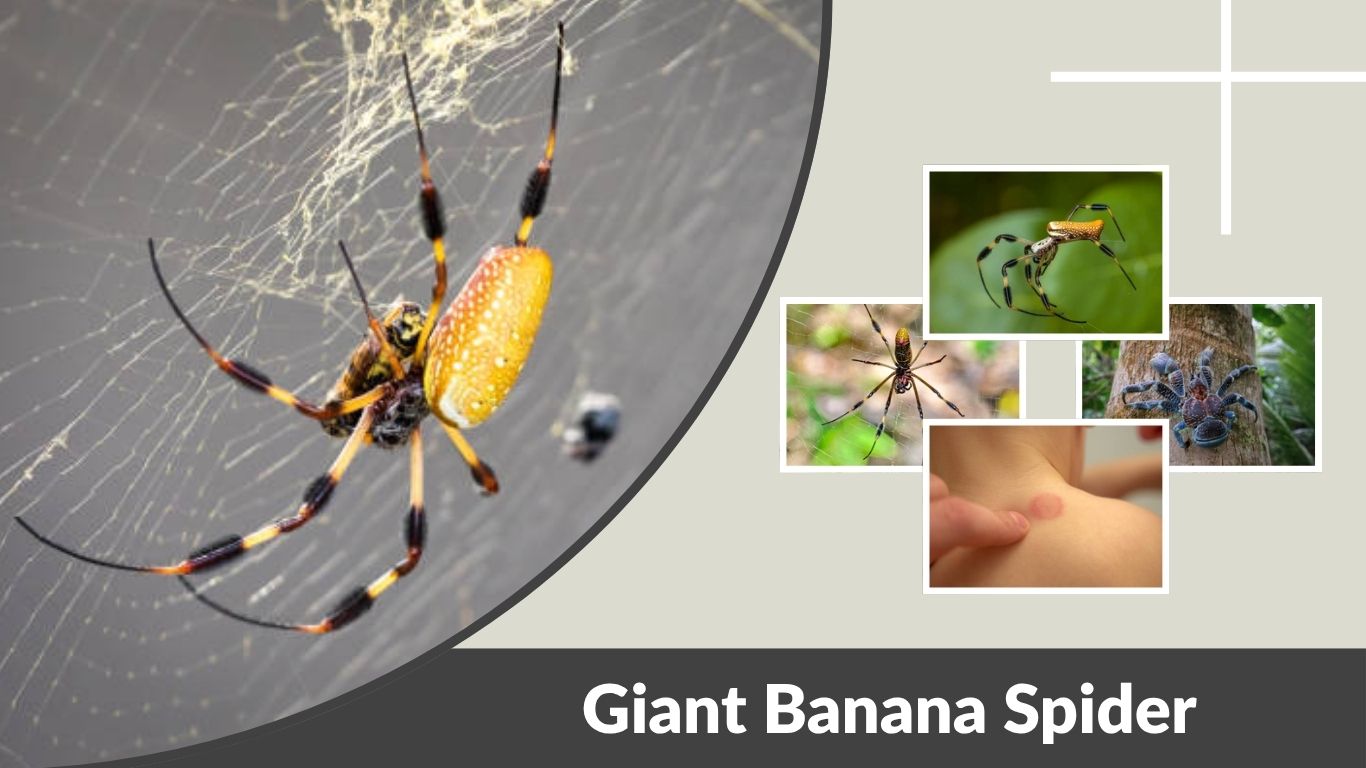
The term “giant banana spider” often sparks fear, especially when people imagine huge spiders hiding in gardens or even inside fruit. In reality, this name is used loosely for several large spider species, most of which are harmless. Their long legs and large webs can make them appear much bigger than they actually are. This guide explains what a giant banana spider really is, how big it can get, where it is found, and whether it poses any danger to humans.
What Is a Giant Banana Spider?
The phrase “giant banana spider” does not refer to a single species. Instead, it is commonly used to describe large orb-weaving spiders, especially golden silk orb-weavers. These spiders are known for their impressive webs and long legs, which make them appear much larger than they actually are.
Key Facts
- Not a scientific name but a general nickname
- Often refers to golden silk orb-weavers
- Sometimes confused with wandering spiders
- Known for building large, visible webs
Why Do Banana Spiders Look So Big?
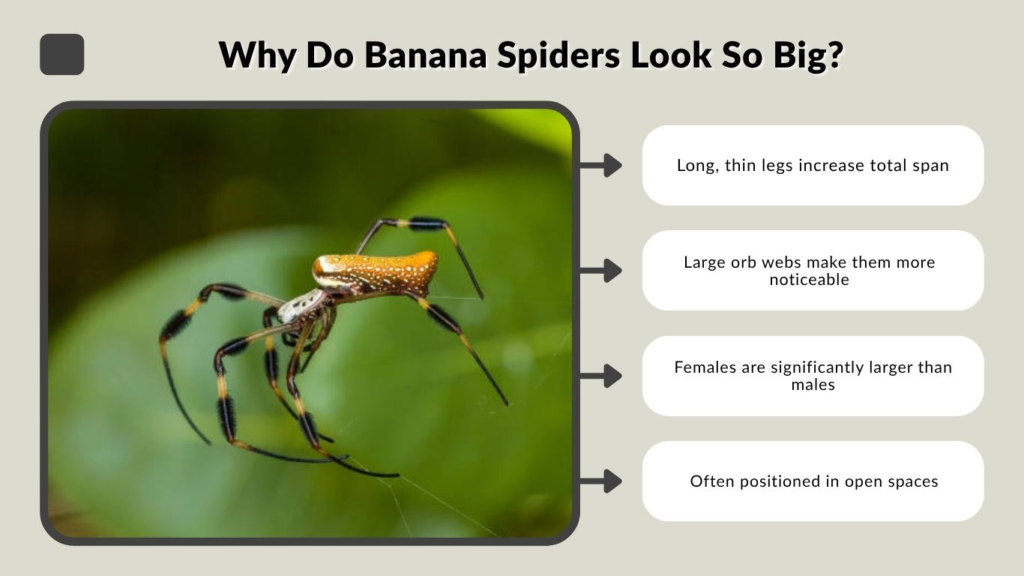
Banana spiders often appear larger than they really are, which is why they are frequently described as “giant.” Their body size is moderate, but their long legs and web structures create an exaggerated visual effect. This can make them look intimidating, especially when seen up close.
Reasons for Their Giant Appearance
- Long, thin legs increase total span
- Large orb webs make them more noticeable
- Females are significantly larger than males
- Often positioned in open spaces
Giant Banana Spider Size
Understanding the size of a giant banana spider helps reduce fear and confusion. While they may look huge, their body is usually not as large as people expect. Most of their size comes from their leg span rather than their core body.
Size Comparison Table
| Feature | Giant Banana Spider | Typical Garden Spider |
| Body Size | Medium | Small to medium |
| Leg Span | Several inches | Smaller |
| Visibility | Very noticeable | Less noticeable |
Key Insight
- Leg span creates the “giant” appearance
- Body size is relatively moderate
- Females appear much larger than males
Giant Banana Spider in Florida
Florida is one of the most common places where people report seeing giant banana spiders. The warm climate and abundant vegetation provide ideal conditions for these spiders to thrive. Their large golden webs are often found stretched between trees, fences, or garden structures.
Common Signs in Florida
- Large golden webs in yards
- Yellow or brown spiders in vegetation
- Frequently seen in gardens and wooded areas
Giant Banana Spider in Other Regions
Giant banana spiders are not limited to Florida. Similar spiders can be found in other warm regions around the world, though they may vary slightly in appearance and behavior depending on the environment.
In Texas, sightings are common in warm and humid areas where vegetation is dense. In parts of Asia, similar species are sometimes confused with Joro spiders due to their color and web structure. In Australia, reports of giant spiders in bananas occasionally surface, but these are often exaggerated or involve different species altogether. Overall, these spiders adapt well to warm climates and are commonly found in outdoor environments.
Giant Spider in Bananas: Myth vs Reality
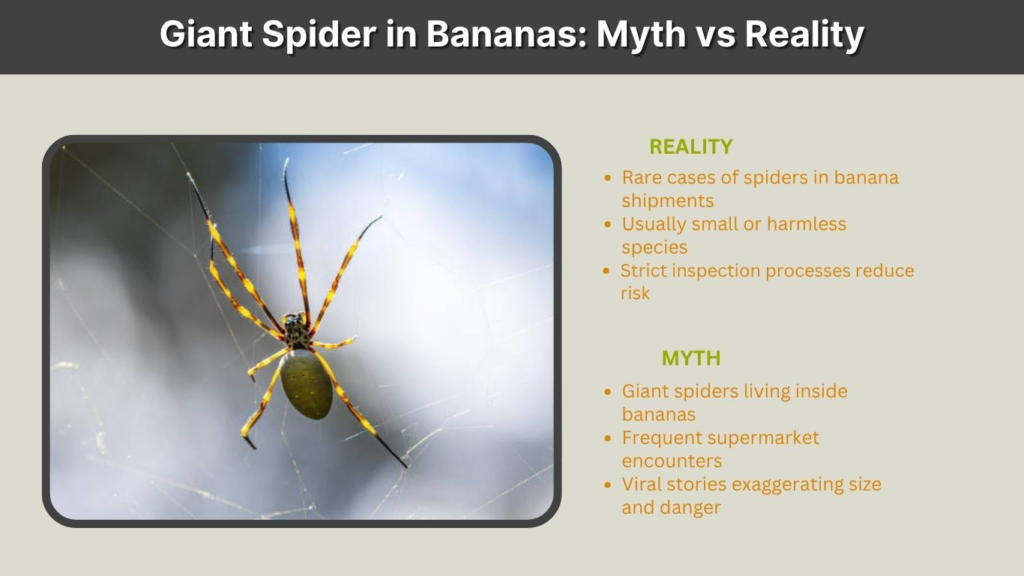
Stories about giant spiders hiding in bananas often circulate online, creating fear and curiosity. While it is technically possible for small spiders to be transported with fruit, the idea of large spiders commonly hiding inside bananas is mostly a myth.
Reality
- Rare cases of spiders in banana shipments
- Usually small or harmless species
- Strict inspection processes reduce risk
Myth
- Giant spiders living inside bananas
- Frequent supermarket encounters
- Viral stories exaggerating size and danger
Giant Banana Spider Bite
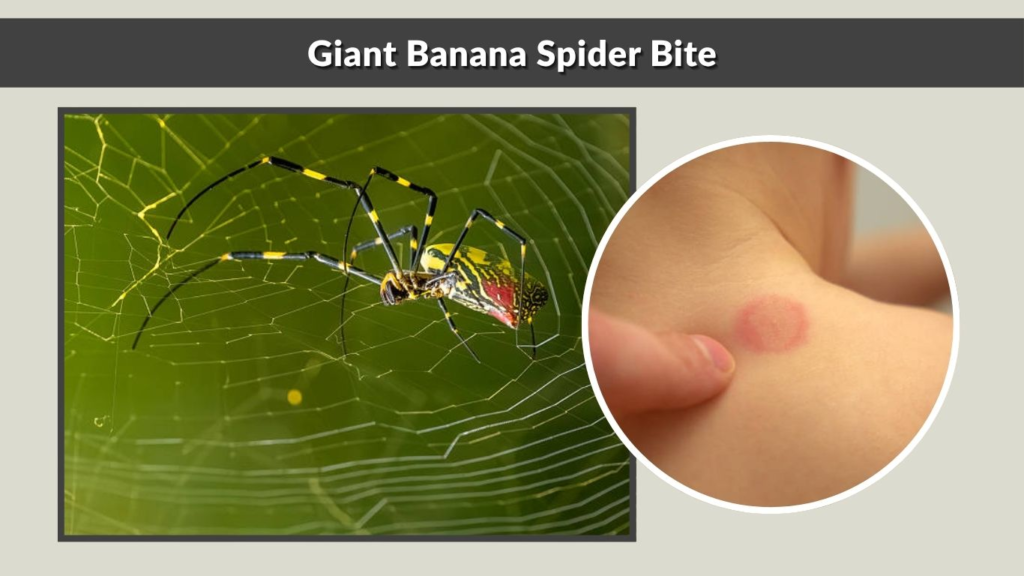
The bite of a giant banana spider is often a concern for people who encounter one. However, most species referred to by this name are not dangerous to humans. Their venom is used to catch insects, not to harm large animals.
Bite Effects
- Mild pain or irritation
- Rare swelling in sensitive individuals
- Symptoms usually short-lived
Safety Note
- Bites occur only if the spider is disturbed
- Most spiders avoid human contact
- Serious reactions are extremely rare
Are Giant Banana Spiders Poisonous?
Many people assume that anything called a “giant spider” must be dangerous, but this is not usually the case. Most banana spiders are venomous in the technical sense, meaning they use venom to catch prey, but their venom is not harmful to humans. This distinction is important because “venomous” does not always mean dangerous.
Key Points
- Venom is used to catch insects
- Not strong enough to harm humans seriously
- Most species are considered harmless
- Defensive bites are rare
Giant Banana Spider vs Other Large Creatures
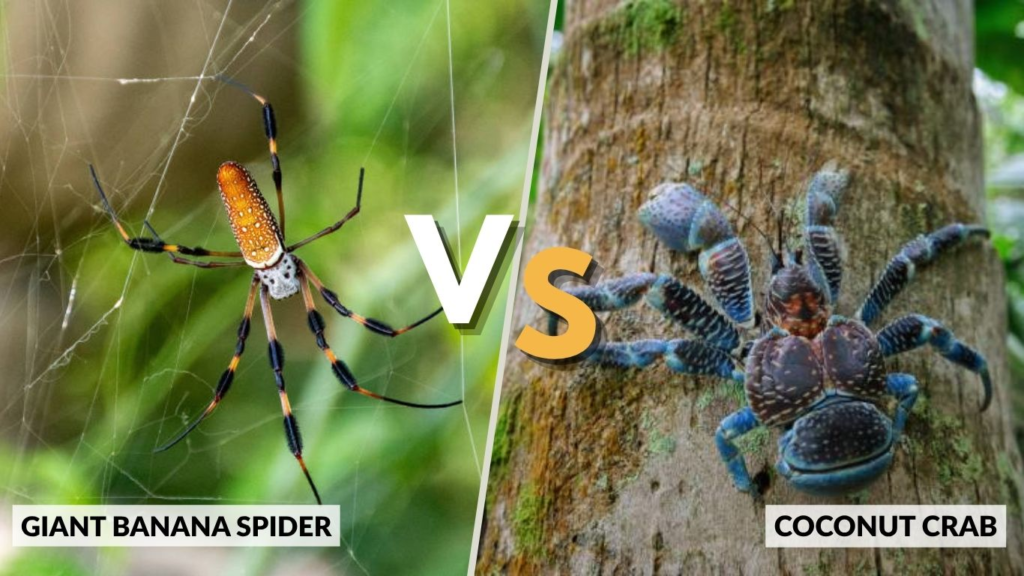
People often compare giant banana spiders with other large animals due to their size and appearance. However, these comparisons are usually misleading because they belong to completely different groups and have very different behaviors.
Coconut Crab vs Banana Spider
- Coconut crab is much larger in body size
- Banana spider appears bigger due to leg span
- Crab is physically stronger
- No real comparison in threat level
Giant Banana Spider vs Wolf Spider
Giant banana spiders and wolf spiders are often confused because both can appear large and intimidating. However, they are very different in behavior, habitat, and how they interact with humans. Banana spiders are web-builders that stay in one place, while wolf spiders are active hunters that roam on the ground. Understanding these differences makes identification much easier and helps reduce unnecessary fear when encountering either spider.
Comparison Table
| Feature | Giant Banana Spider | Wolf Spider |
| Type | Orb-weaver | Ground-hunting spider |
| Web | Builds large orb webs | Does not build webs |
| Behavior | Passive, stays in web | Active hunter, moves frequently |
| Appearance | Long legs, yellow/brown tones | Hairy body, brown/gray colors |
| Habitat | Trees, gardens, open spaces | Ground, grass, indoors sometimes |
| Speed | Slow movement | Fast and agile |
| Danger Level | Harmless to mild | Harmless, mild bite if provoked |
| Human Interaction | Rare | More common due to roaming |
Behavior and Web Structure
Giant banana spiders are known for their impressive web-building skills. They create large, strong orb webs that can span several feet, making them highly visible in gardens and forests. These webs are designed to catch flying insects, which form the main part of their diet.
Unlike hunting spiders, banana spiders usually remain in or near their webs, waiting for prey to become trapped. They are passive and avoid unnecessary movement unless disturbed. This behavior reduces their interaction with humans and makes them less likely to bite. Their webs can sometimes appear suddenly in walkways, which is why people often notice them unexpectedly.
Are Giant Banana Spiders Dangerous?
Despite their intimidating size and appearance, giant banana spiders are not considered dangerous to humans. They are generally shy and avoid contact whenever possible. Most bites occur only when the spider is accidentally touched or threatened.
Their role in the ecosystem is beneficial, as they help control insect populations. Rather than being pests, they are useful creatures that contribute to a balanced environment. Understanding this can help reduce fear and encourage safer, more respectful interactions with wildlife.
What to Do If You See a Giant Banana Spider
If you encounter a giant banana spider, there is no need to panic. These spiders are not aggressive and will usually stay in their web. The best approach is to leave them undisturbed and give them space.
Safety Tips
- Avoid touching the spider or its web
- Walk around the web carefully
- Do not attempt to handle the spider
- Contact pest control if removal is necessary
FAQs
How big can a giant banana spider get?
A giant banana spider can have a leg span of several inches, which makes it appear very large. However, its body size is usually moderate compared to its overall appearance.
Are giant banana spiders dangerous to humans?
No, they are not considered dangerous. Most species are harmless and only bite if they feel threatened or are accidentally touched.
Do giant spiders really hide in bananas?
This is mostly a myth. While small spiders can occasionally travel with fruit, it is extremely rare for large spiders to be found inside bananas.
Where are giant banana spiders commonly found?
They are most common in warm climates such as Florida, Texas, and other tropical or subtropical regions where vegetation is abundant.
What is the difference between a banana spider and a wolf spider?
Banana spiders build webs and stay in one place, while wolf spiders actively hunt on the ground and do not rely on webs to catch prey.
