
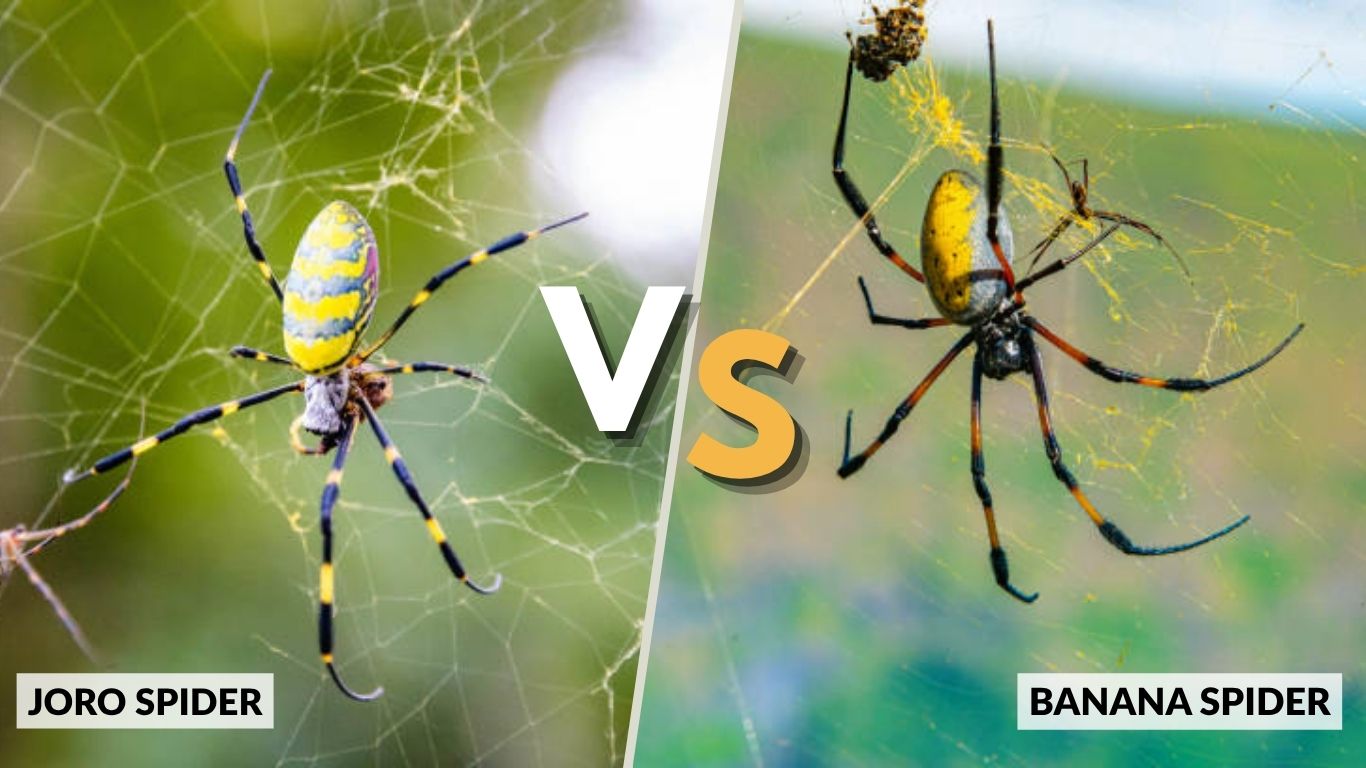
Many people confuse the Joro spider with the banana spider because of their similar size and striking colors. However, they are not the same and belong to different groups of spiders. This confusion often leads to unnecessary fear, especially when people assume both are dangerous. In reality, their behavior, habitat, and risk level can vary widely. This guide explains the key differences between Joro spiders and banana spiders, helping you identify them correctly and understand whether they pose any real threat.
What Is a Joro Spider?
The Joro spider is a large orb-weaving spider known for its bright yellow and black coloration and impressive web structures. Originally from East Asia, it has recently spread to parts of the United States. Despite its size, it is generally harmless to humans and plays an important role in controlling insect populations in its environment.
Key Characteristics
- Scientific name: Trichonephila clavata
- Native to Japan, Korea, and China
- Builds large golden orb webs
- Bright yellow and black patterned body
What Is a Banana Spider?
The term “banana spider” is not specific to one species. It is a general name used for several types of spiders, which is why confusion often occurs. Some banana spiders are harmless orb-weavers, while others, like the Brazilian wandering spider, are more venomous. Understanding this distinction is important for accurate identification.
Types Commonly Called Banana Spiders
- Golden silk orb-weaver (Nephila)
- Brazilian wandering spider (Phoneutria)
- Garden spiders (often misidentified)
Joro Spider vs Banana Spider: Quick Comparison
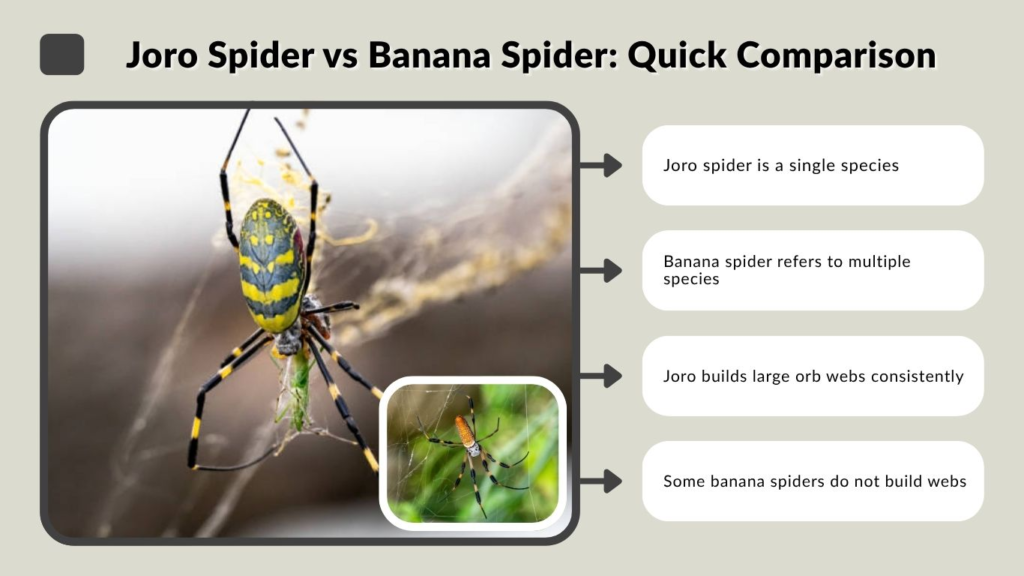
This section provides a simple overview of how these spiders differ in classification, behavior, and safety. While they may look similar at first glance, their biology and habits are quite different, making it easier to distinguish them when you know what to look for.
Key Differences
- Joro spider is a single species
- Banana spider refers to multiple species
- Joro builds large orb webs consistently
- Some banana spiders do not build webs
Size Comparison: Joro Spider vs Banana Spider
Both spiders can appear large, which is one reason they are often mistaken for each other. However, size can vary depending on the species and whether you are looking at a male or female. Understanding size differences helps improve identification accuracy.
Size Comparison Table
| Feature | Joro Spider | Banana Spider (Typical) |
| Body Size | Medium | Small to large (varies) |
| Leg Span | Up to 3–4 inches | Can be similar or larger |
| Female Size | Larger than males | Females usually larger |
Appearance Differences (Identification Guide)
Visual features are one of the easiest ways to tell these spiders apart. While both can look intimidating, their patterns, colors, and body shapes provide clear clues. Paying attention to these details can help you quickly identify which spider you are seeing.
Joro Spider Appearance
- Bright yellow with bold black markings
- Long legs with striped patterns
- Symmetrical and vibrant body
Banana Spider Appearance
- Color varies by species
- Often brown, golden, or dull yellow
- Less consistent patterns
Joro Spider vs Banana Spider vs Garden Spider
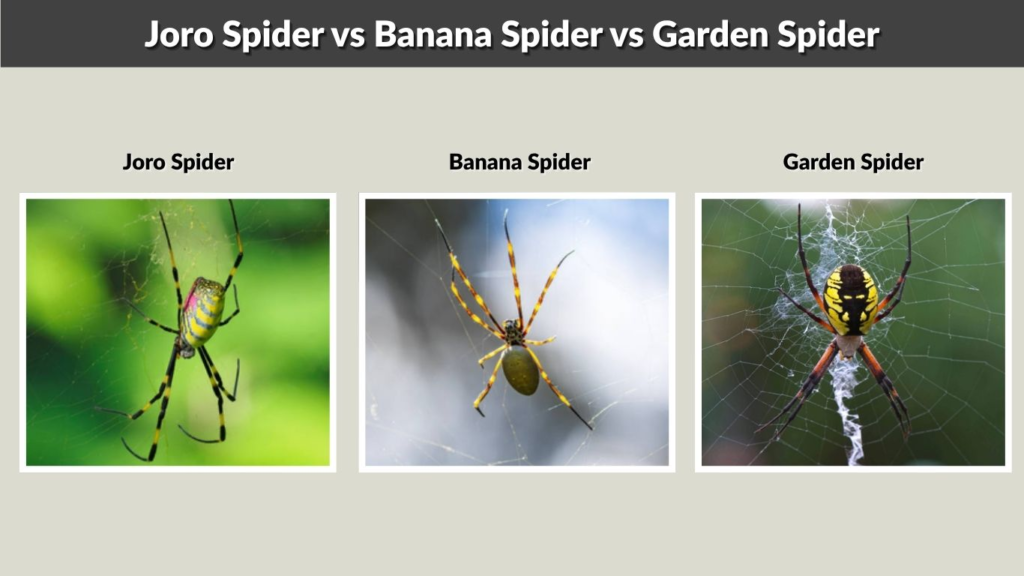
Garden spiders are another group that people often confuse with both Joro and banana spiders. They share similar colors and web-building habits, which adds to the confusion. However, they are generally smaller and less visually striking than Joro spiders.
Garden Spider Differences
- Usually black and yellow
- Smaller body size
- Builds smaller orb webs
Key Takeaway
- Garden spiders are harmless
- Often mistaken for larger species
Habitat and Distribution
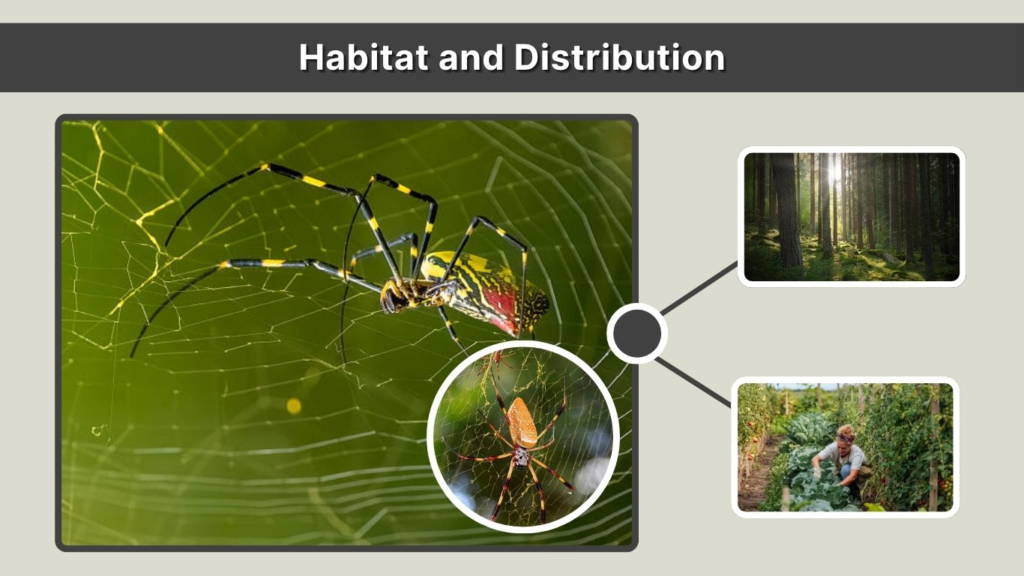
Habitat plays a major role in identifying spiders. Knowing where a spider is commonly found can help narrow down the possibilities. Joro spiders and banana spiders prefer different environments, although there can be some overlap depending on the species and region.
Joro Spider Habitat
- Found in forests and suburban areas
- Common in southeastern United States
- Prefers warm, humid climates
Banana Spider Habitat
- Found in tropical and subtropical regions
- Common in Florida and South America
- Lives in forests, gardens, and near vegetation
Behavior and Web Differences
Behavior is another key factor that separates these spiders. Some rely on webs to catch prey, while others actively hunt. Understanding these differences can help you identify a spider even if you cannot clearly see its markings.
Joro spiders are orb-weavers that build large, strong webs and wait for insects to become trapped. They are passive and rarely move far from their web unless disturbed. In contrast, some banana spiders, especially wandering types, do not rely on webs and instead actively hunt prey. This behavioral difference is one of the clearest ways to distinguish between them in real-world situations.
Are Joro Spiders or Banana Spiders Dangerous?
Understanding the danger level of these spiders is important because many people assume they are highly dangerous based on their size and appearance. In reality, most encounters with these spiders are harmless. Their behavior is usually defensive rather than aggressive, and bites are rare unless the spider is provoked or handled.
Joro Spider Risk
- Mild venom with little effect on humans
- Rarely bites unless threatened
- Not considered dangerous
Banana Spider Risk
- Most species are harmless orb-weavers
- Brazilian wandering spider is venomous
- Bites are uncommon but possible
Florida Banana Spider vs Joro Spider
Florida is one of the most common places where people report banana spiders, which makes comparisons with Joro spiders more relevant. While both may appear similar, they differ in origin, behavior, and spread. Understanding regional differences helps identify which spider you are more likely to encounter.
Key Differences
- Florida banana spiders are usually orb-weavers
- Joro spiders are newer and spreading in the U.S.
- Both are generally harmless in everyday situations
How to Identify Which Spider You Saw
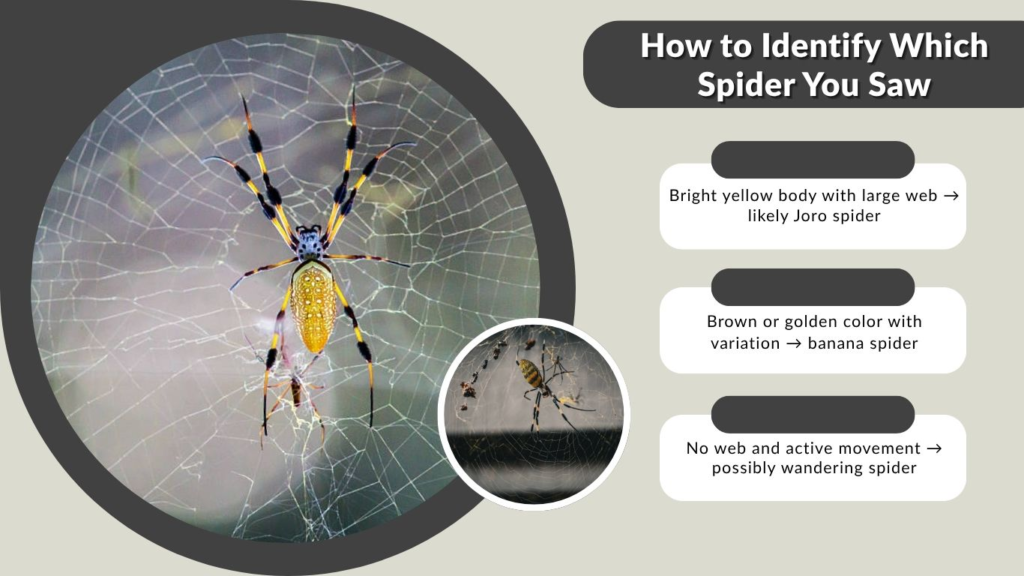
Correct identification is important to avoid unnecessary fear. By observing a few simple features such as color, web type, and behavior, you can usually determine whether you are looking at a Joro spider or a type of banana spider. These quick checks can help you stay calm and make informed decisions.
Quick Identification Tips
- Bright yellow body with large web → likely Joro spider
- Brown or golden color with variation → banana spider
- No web and active movement → possibly wandering spider
Joro Spider vs Banana Spider: Summary Table
This table provides a clear and simple comparison of the main differences between Joro spiders and banana spiders. It helps readers quickly understand how they differ in terms of appearance, behavior, and safety without needing detailed explanations.
Comparison Table
| Feature | Joro Spider | Banana Spider |
| Type | Single species | Multiple species |
| Color | Bright yellow and black | Varies (brown, yellow, gold) |
| Web | Large orb web | Some build webs, some don’t |
| Behavior | Passive | Varies by species |
| Danger Level | Low | Usually low, sometimes moderate |
Which Spider Is More Common?
The likelihood of seeing one of these spiders depends largely on your location. Joro spiders are becoming more common in parts of the United States due to their recent spread, while banana spiders are already well-established in tropical and subtropical regions. This means your environment plays a major role in determining which spider you might encounter.
In many areas, especially in the southeastern U.S., both types may appear, but banana spiders are still more widely recognized. Joro spiders, however, are gaining attention due to their rapid spread and noticeable appearance. Despite this, neither spider is considered a major threat to humans in everyday situations.
FAQs
Is a Joro spider the same as a banana spider?
No, they are not the same. A Joro spider is a specific species, while “banana spider” is a general term used for several different spiders, which causes confusion.
Which is bigger, Joro spider or banana spider?
It depends on the species. Some banana spiders can be larger, while others are similar in size to Joro spiders. Size alone is not a reliable way to identify them.
Are Joro spiders dangerous to humans?
No, Joro spiders are not dangerous. Their venom is mild, and bites are very rare. They are generally considered harmless.
Are banana spiders poisonous?
Most banana spiders are harmless. However, the Brazilian wandering spider, sometimes called a banana spider, is venomous and should be avoided.
How can I tell the difference quickly?
Look at color and behavior. Joro spiders have bright yellow patterns and build large webs, while banana spiders vary in color and may behave differently depending on the species.
