
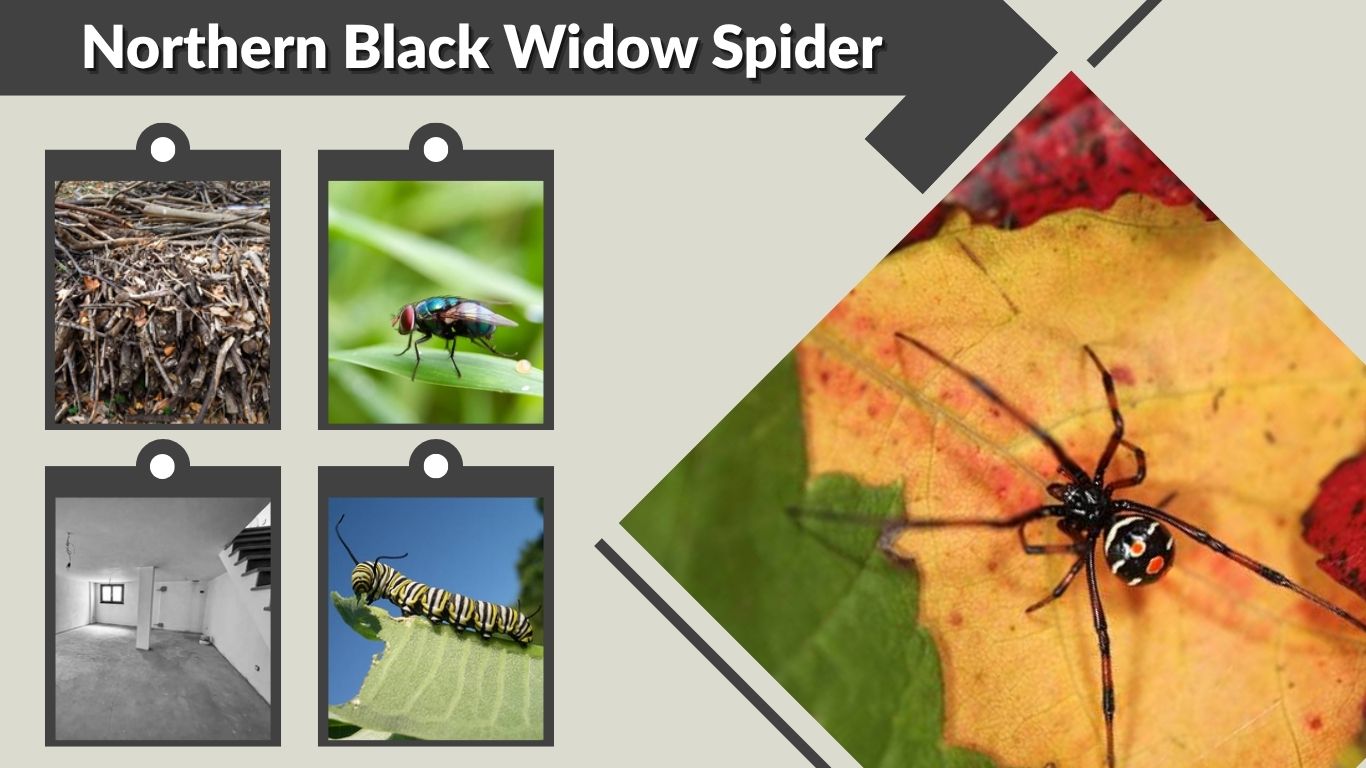
The northern black widow spider is a well-known venomous species found across parts of North America. Recognized for its glossy black body and distinctive red markings, it often raises concern due to its reputation. However, it is not aggressive and typically avoids human interaction. Learning how to identify this spider, understand its behavior, and recognize bite symptoms can help reduce fear. This guide covers essential facts, appearance, habitat, and safety information to better understand this misunderstood arachnid.
What Is a Northern Black Widow Spider?
The northern black widow spider, scientifically known as Latrodectus variolus, is part of the widow spider group known for their potent venom. It is commonly found in cooler regions compared to its southern relative. This species plays a valuable role in controlling insect populations and is typically found in quiet, undisturbed environments.
Scientific Name and Classification
- Scientific name: Latrodectus variolus
- Family: Theridiidae
- Common name: Northern black widow
Key Identification Features
- Shiny black body
- Red marking on underside (often broken)
- Long, slender legs
Northern Black Widow Appearance and Identification
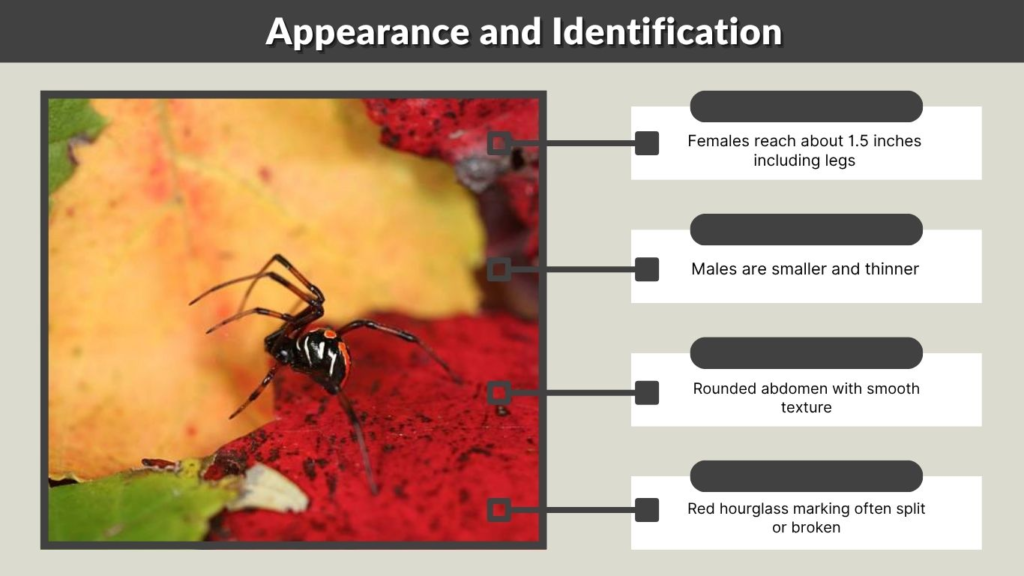
The northern black widow spider has a distinctive look that makes it easier to identify with some knowledge. Its glossy body and unique markings help distinguish it from other spiders. While females are more noticeable, males are smaller and often overlooked due to their lighter appearance.
Size and Physical Features
- Females reach about 1.5 inches including legs
- Males are smaller and thinner
- Rounded abdomen with smooth texture
Color Markings
- Red hourglass marking often split or broken
- Sometimes appears as separate spots
- Juveniles may show lighter patterns
Male vs Female Northern Black Widow
Male and female northern black widows differ in several ways, including size, color, and behavior. These differences are important when identifying the spider and understanding its potential risk. Females are more commonly encountered and are responsible for most bites.
Key Differences Between Male and Female
- Females are larger and darker
- Males are smaller with lighter markings
- Females have stronger venom
Behavior Differences
- Females stay in webs
- Males wander to find mates
- Males rarely bite
Northern Black Widow Habitat and Range
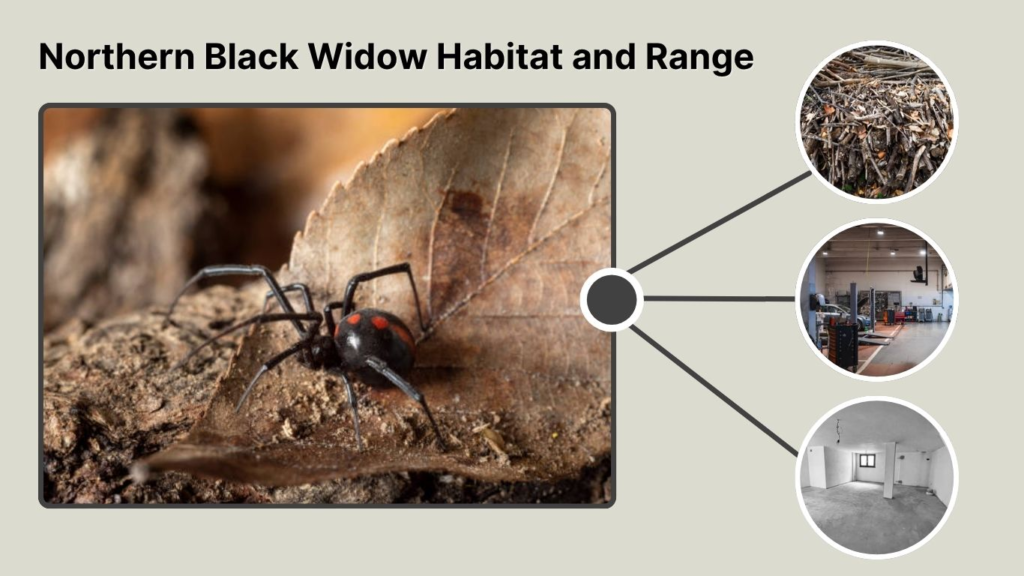
The northern black widow spider is found in cooler regions of North America. It prefers environments that offer protection and access to prey. While commonly associated with rural areas, it can also live near human structures if suitable hiding spots are available.
Where Do They Live?
They are found in parts of the northeastern and midwestern United States, including states like Michigan, Ohio, and New York, as well as areas in Canada such as Ontario.
Preferred Environment
They prefer dark, sheltered spaces such as woodpiles, sheds, basements, and garages. These areas provide safety and allow them to build webs undisturbed.
Northern Black Widow Behavior and Lifestyle
The northern black widow spider is a nocturnal species that remains hidden during the day. It relies on its web to capture prey and rarely leaves it unless necessary. This spider is not aggressive and usually avoids humans unless disturbed.
Web and Hunting Behavior
- Builds irregular, tangled webs
- Uses sticky silk to trap insects
- Detects prey through vibrations
Daily Activity
- Active mainly at night
- Stays hidden during daylight
- Avoids confrontation
Northern Black Widow Spider Bite
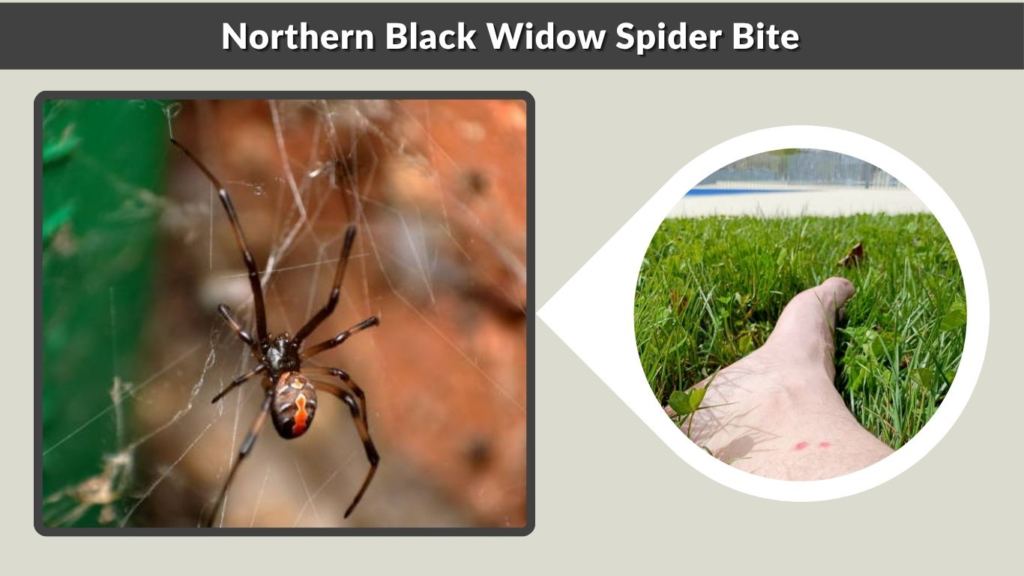
The bite of a northern black widow spider is often feared, but it is rarely life-threatening with proper care. The venom affects the nervous system and can cause noticeable symptoms. Most bites occur when the spider is accidentally disturbed. Understanding the effects and response steps can help manage the situation calmly and safely.
How Dangerous Is the Bite?
- Venom is potent but rarely fatal
- Serious cases are uncommon in healthy adults
- Medical treatment is effective
Bite Symptoms
- Pain at the bite site
- Muscle cramps and stiffness
- Sweating, nausea, and fatigue
Are Northern Black Widow Spiders Poisonous or Venomous?
The northern black widow is frequently misunderstood in terms of toxicity. It is venomous, meaning it delivers venom through a bite rather than being harmful to touch. While its venom is strong, the spider is not aggressive and typically avoids humans unless threatened or handled.
Venom vs Poison Explained
- Venom is injected through fangs
- Poison is harmful through contact or ingestion
- Black widows are venomous, not poisonous
Northern Black Widow Diet and Feeding
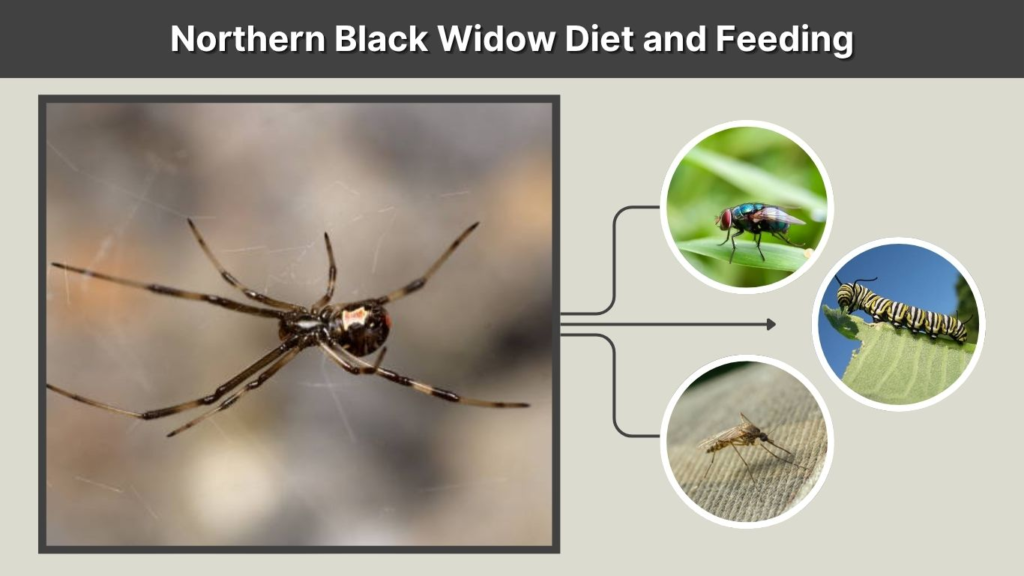
The northern black widow spider feeds primarily on insects and small arthropods. Its role as a predator helps control pest populations in both natural and human environments. It uses its web to trap prey and relies on venom to subdue it before feeding.
Common Prey
- Flies and mosquitoes
- Beetles and caterpillars
- Other small spiders
Feeding Behavior
- Waits for prey in its web
- Injects venom to immobilize prey
- Consumes liquefied tissues
Northern vs Southern Black Widow Spider
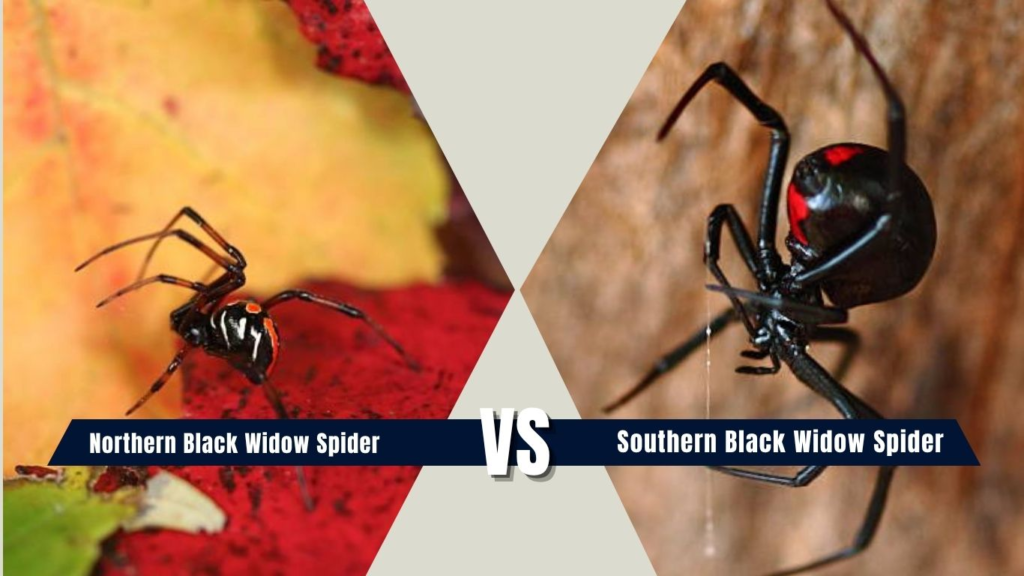
The northern black widow and southern black widow are closely related but have noticeable differences. These differences are important for identification and understanding their distribution. While both share similar behaviors and venom, their markings and geographic ranges set them apart.
Key Differences
- Northern species has a broken or split hourglass marking
- Southern species has a solid hourglass shape
- Northern widows are found in cooler regions
Similarities
- Both are venomous
- Both build irregular webs
- Both avoid human interaction
How to Identify a Northern Black Widow Safely
Correct identification is essential for avoiding unnecessary fear and ensuring safety. The northern black widow has several distinct characteristics that make it recognizable. Observing from a safe distance is always recommended when identifying any spider in the wild.
Key Identification Tips
- Shiny black, rounded body
- Red marking often split into two parts
- Messy, irregular web
FAQs
Is the northern black widow spider poisonous?
The northern black widow spider is venomous, not poisonous. It delivers venom through its bite, but it is not harmful to touch. Most encounters do not result in bites.
How dangerous is a northern black widow bite?
The bite can cause pain, muscle cramps, and discomfort, but it is rarely life-threatening. Most people recover fully with proper care and, if needed, medical treatment.
Where are northern black widow spiders found?
They are found in the northeastern and midwestern United States and parts of Canada. They prefer cooler climates compared to southern black widows.
How can you identify a northern black widow spider?
You can identify it by its shiny black body and a red marking that is often broken or split instead of forming a solid hourglass.
What should you do if a northern black widow spider bites you?
Clean the bite area, apply a cold compress, and monitor symptoms. Seek medical attention if symptoms become severe or if the person bitten is at higher risk.
