
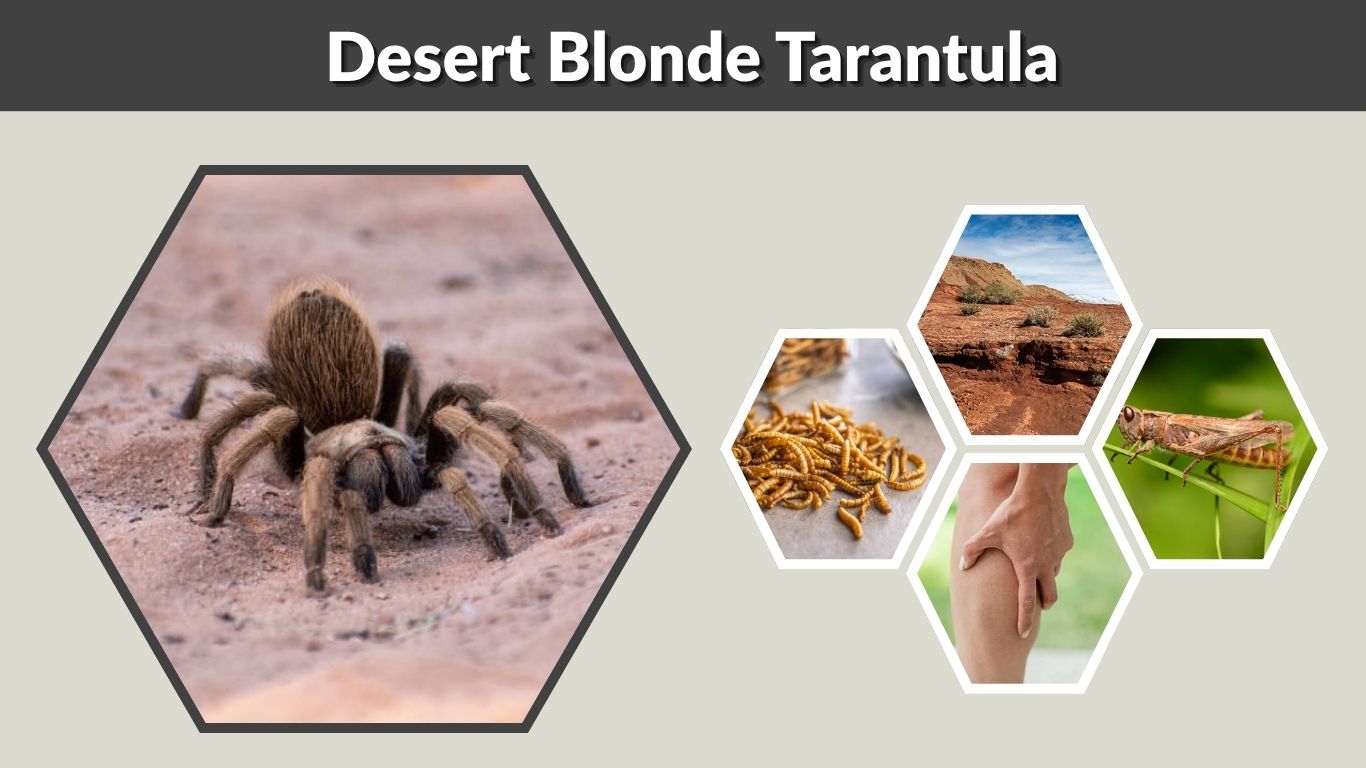
The desert blonde tarantula (Aphonopelma chalcodes) is one of the most popular beginner tarantulas thanks to its calm temperament and simple care needs. Native to the deserts of the southwestern United States, especially Arizona, this species is known for its light tan coloration and slow, predictable behavior. Unlike more aggressive tarantulas, it is generally docile and easy to manage. In this guide, you’ll learn about its characteristics, natural habitat, temperament, and essential care requirements.
What Is a Desert Blonde Tarantula?
The desert blonde tarantula is a New World terrestrial species commonly found in arid desert regions. It spends most of its life in burrows, which help it escape extreme temperatures and predators. This species is highly adapted to dry environments and requires different care compared to tropical tarantulas.
It is often referred to as the Arizona desert blonde tarantula due to its primary habitat. Its hardy nature and tolerance to environmental variations make it one of the easiest tarantulas to keep in captivity.
Key Identification Features
- Light tan or blonde coloration
- Medium to large size (4–6 inch leg span)
- Thick, sturdy legs
- Slow and calm movement
Desert Blonde Tarantula Characteristics
This species is valued not only for its appearance but also for its gentle behavior. Its body is covered in fine hairs, which it can flick as a defense mechanism. Compared to more colorful tarantulas, its appearance is subtle but still attractive in its own way.
The desert blonde tarantula is known for being slow-growing, which contributes to its long lifespan. It is not very active and often spends long periods resting or staying inside its burrow.
Male vs Female Differences
- Females are larger and heavier-bodied
- Males are slimmer and mature faster
- Females live significantly longer
- Males often roam more when mature
Desert Blonde Tarantula Natural Habitat and Behavior
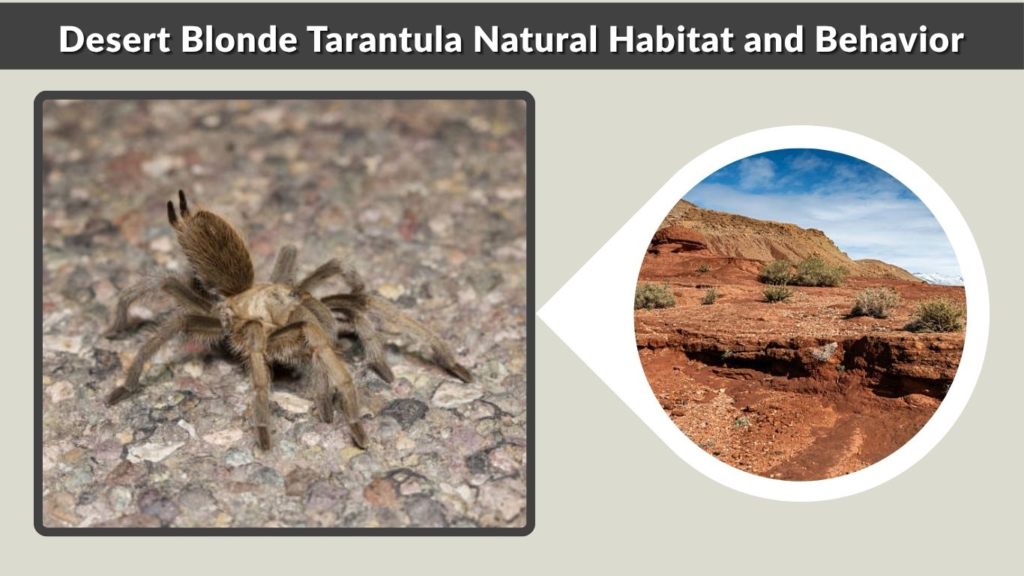
The desert blonde tarantula lives in dry desert environments where temperatures can vary widely between day and night. To survive these conditions, it creates burrows that provide stable temperature and humidity levels.
In captivity, it tends to behave similarly, often staying in one spot and showing limited movement. This makes it less of a display species but ideal for those who prefer a low-maintenance pet.
Where Do Desert Blonde Tarantulas Live?
- Southwestern United States (especially Arizona)
- Dry deserts and scrublands
- Underground burrows for shelter
Behavior and Temperament
- Extremely docile and calm
- Slow-moving and predictable
- Rarely aggressive
- Uses hair flicking as defense
Are Desert Blonde Tarantulas Dangerous?
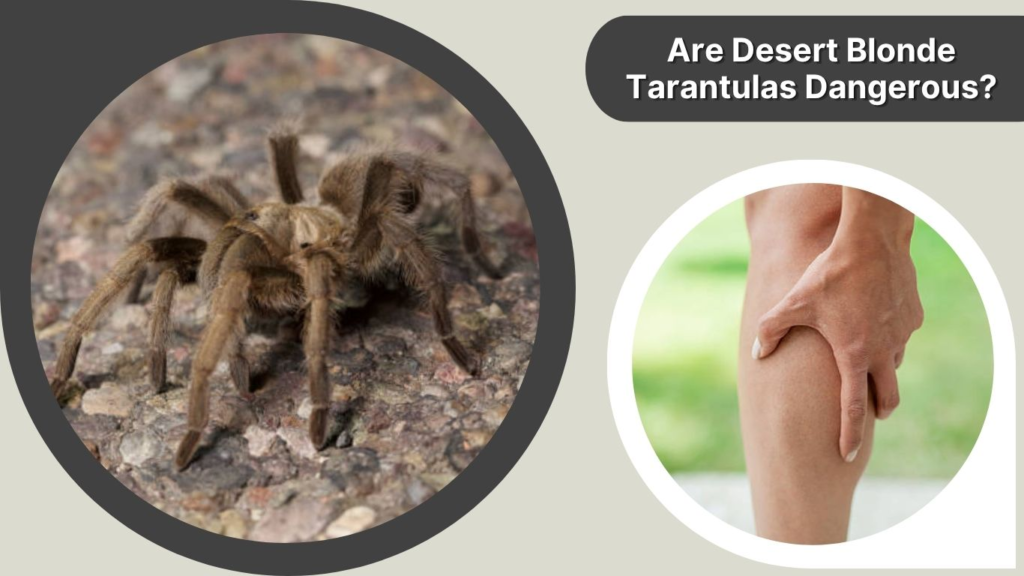
The desert blonde tarantula is considered one of the safest tarantula species for humans. Its venom is mild, and it rarely bites. Most defensive behavior involves flicking urticating hairs, which can cause mild skin irritation.
Because of its calm nature, it is less likely to react aggressively even when disturbed. However, like all tarantulas, it should still be handled carefully and respectfully.
Bite and Venom
- Mild venom comparable to a bee sting
- Rarely bites unless provoked
- Causes minor pain and swelling
Are They Poisonous or Venomous?
- Venomous: injects venom through a bite
- Not poisonous: safe to touch externally
Desert Blonde Tarantula Care Guide
Caring for a desert blonde tarantula is relatively simple, making it an excellent choice for beginners. Its needs are minimal, but consistency is important to ensure long-term health and comfort.
Enclosure Setup
The enclosure should reflect its natural desert environment. A simple terrestrial setup with dry substrate works best, allowing the tarantula to rest comfortably or dig shallow burrows.
Essential Setup Elements
- 5–10 gallon tank depending on size
- 2–4 inches of dry substrate
- Secure lid with ventilation
- Simple hide such as bark or a cave
Temperature and Humidity
Maintaining the correct environmental conditions is key. Unlike tropical species, this tarantula prefers drier conditions and does not require high humidity.
Environmental Requirements
- Temperature between 70–85°F
- Low humidity levels
- Mostly dry substrate
- Stable environment with minimal disturbance
Desert Blonde Tarantula Feeding and Diet
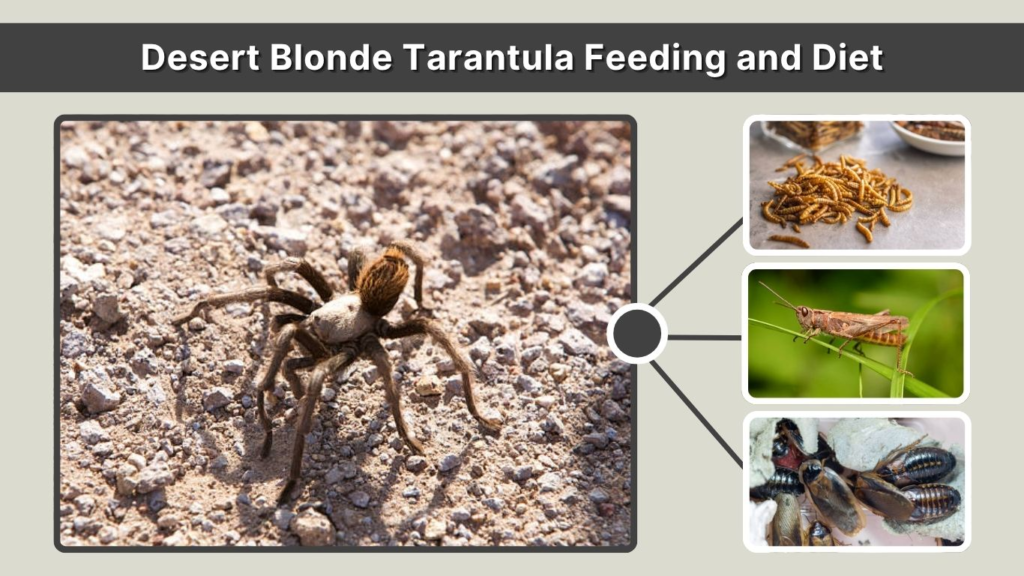
Feeding a desert blonde tarantula is simple and requires minimal effort. This species has a slow metabolism and does not need frequent feeding compared to more active tarantulas. It typically waits patiently for prey rather than actively hunting.
A proper diet ensures healthy growth and successful molting. Overfeeding should be avoided, as it can lead to an oversized abdomen and potential health issues.
What Do Desert Blonde Tarantulas Eat?
- Crickets as the primary food source
- Dubia roaches and similar insects
- Mealworms and superworms occasionally
- Small grasshoppers for larger individuals
Feeding Schedule
- Spiderlings: 2–3 times per week
- Juveniles: every 5–7 days
- Adults: once every 7–10 days
Desert Blonde Tarantula Lifespan, Size, and Growth
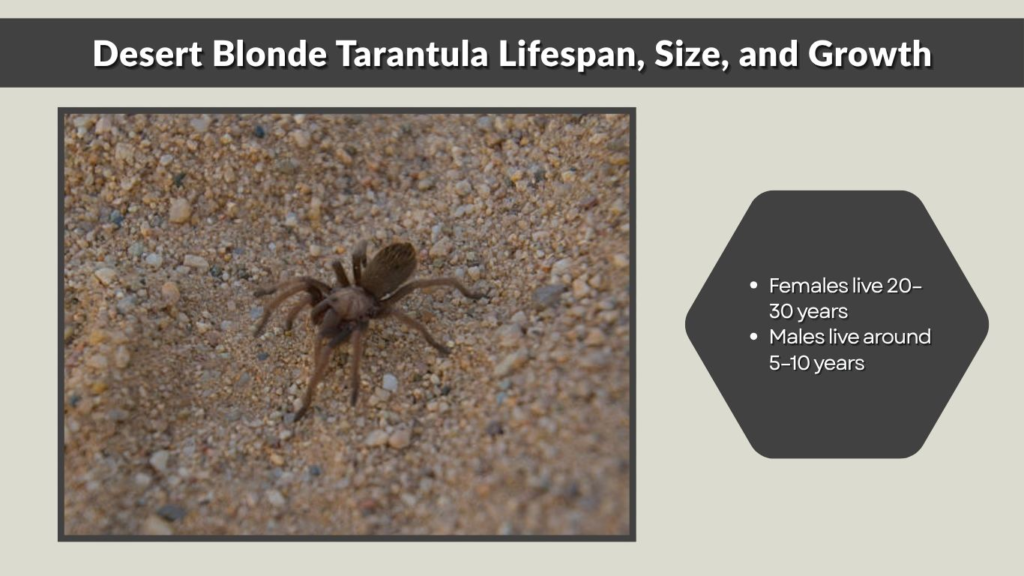
The desert blonde tarantula is known for its impressive lifespan, especially in females. Growth is slow, but this contributes to its long life and hardy nature. Environmental stability and proper feeding play a major role in its development.
Molting is a critical part of growth. During this period, the tarantula becomes inactive and should not be disturbed. After molting, it may take several days before it resumes normal activity and feeding.
Key Life Facts
- Females live 20–30 years
- Males live around 5–10 years
- Adult size reaches 4–6 inches
- Younger tarantulas molt more frequently
Desert Blonde Tarantula Price and Buying Guide
The price of a desert blonde tarantula varies depending on age, sex, and availability. Spiderlings are generally affordable, while adult females are more expensive due to their long lifespan.
When buying, it is important to choose captive-bred tarantulas from reliable sources. This ensures better health and supports ethical practices within the pet trade.
Price Range
- Spiderlings: $20–$50
- Juveniles: $50–$100
- Adults: $100–$200+
Where to Buy
- Reputable tarantula breeders
- Exotic pet stores
- Online arachnid marketplaces
Desert Blonde Tarantula Molting and Life Cycle
The life cycle of the desert blonde tarantula includes several stages, from spiderling to adult. Growth occurs through molting, where the tarantula sheds its old exoskeleton to increase in size. This process is essential but also a vulnerable time for the spider.
Before molting, the tarantula may stop eating and appear less active. After molting, it will need time for its new exoskeleton to harden. During this period, feeding should be avoided to prevent injury.
FAQs
Are desert blonde tarantulas poisonous?
They are not poisonous but are venomous. This means they deliver venom through a bite rather than being harmful to touch. Their venom is mild and not dangerous to humans in most cases.
How long do desert blonde tarantulas live?
Females can live between 20 and 30 years, making them a long-term commitment. Males have shorter lifespans, usually around 5 to 10 years after reaching maturity.
Can desert blonde tarantulas be aggressive?
They are known for being very calm and rarely aggressive. Most defensive behavior involves flicking hairs rather than biting, making them one of the safest tarantula species to keep.
What do desert blonde tarantulas eat?
They primarily eat live insects such as crickets, roaches, and worms. Feeding frequency depends on age, with younger tarantulas requiring more frequent meals than adults.
Are desert blonde tarantulas good pets?
Yes, they are excellent pets for beginners due to their docile nature, simple care requirements, and long lifespan. They are low-maintenance and easy to manage compared to many other tarantulas.
