
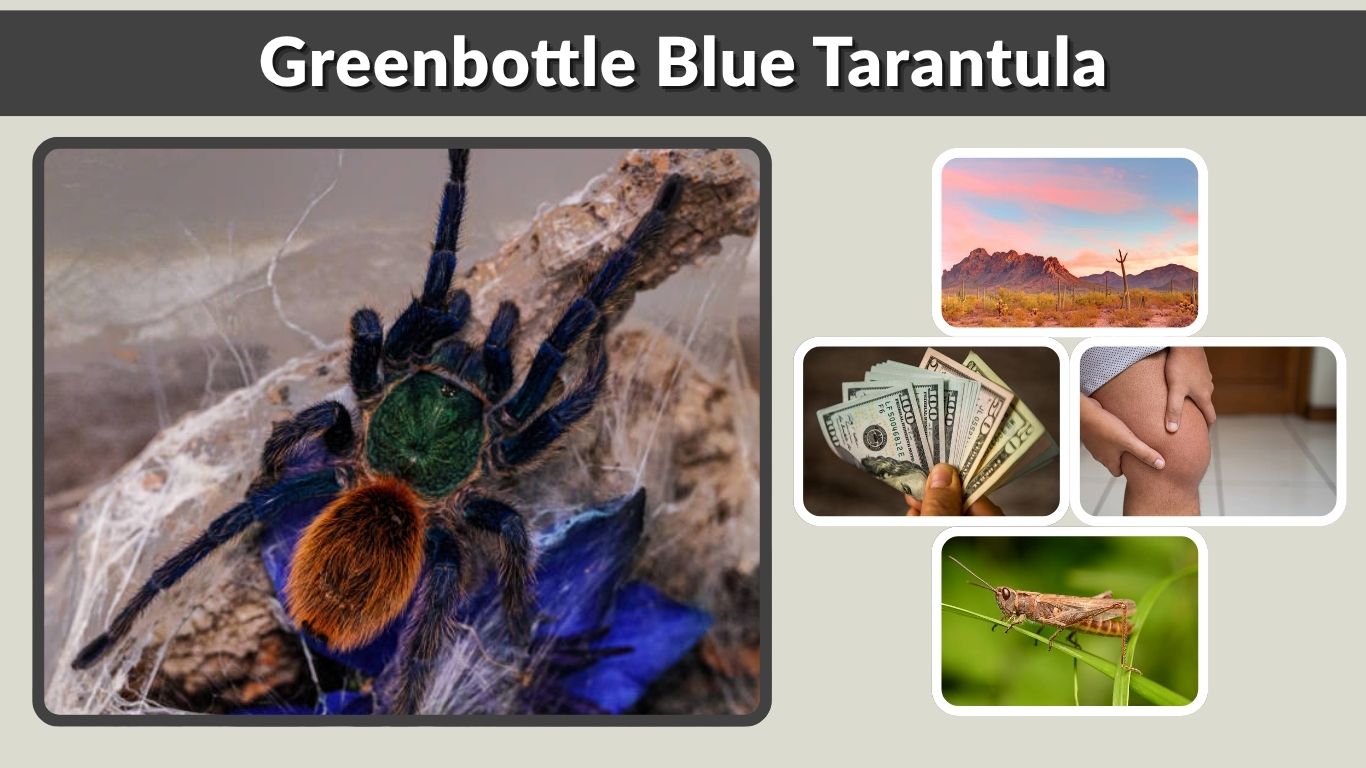
The greenbottle blue tarantula (Chromatopelma cyaneopubescens) is one of the most colorful and visually striking tarantulas in the hobby. Native to Venezuela, it features bright blue legs, a vibrant orange abdomen, and a greenish carapace. This species is especially popular because it is active, visible, and produces extensive webbing. Unlike many tarantulas that hide, it often stays out in the open. In this guide, you’ll learn about its characteristics, behavior, safety, and essential care requirements.
What Is a Greenbottle Blue Tarantula?
The greenbottle blue tarantula is a New World species known for its unique combination of terrestrial and semi-arboreal behavior. It thrives in dry, scrubland environments rather than humid forests, which makes its care slightly different from many other tarantulas.
It is often called the Venezuelan greenbottle blue tarantula due to its native range. Its popularity comes from its manageable temperament, fast growth, and stunning coloration that develops as it matures.
Key Identification Features
- Bright blue legs with metallic shine
- Orange to reddish abdomen
- Greenish carapace (head area)
- Medium size with 4–6 inch leg span
Greenbottle Blue Tarantula Characteristics
This species stands out not just for its colors but also for its behavior. It is highly active and spends more time visible than many other tarantulas. Its body structure supports both ground movement and web-building in elevated areas.
Color changes are also a fascinating aspect. Spiderlings often look very different from adults, gradually developing their vibrant adult coloration over time.
Male vs Female Differences
- Females are larger and live longer
- Males are slimmer and mature faster
- Females retain color longer
- Males have shorter lifespans
Greenbottle Blue Tarantula Natural Habitat and Behavior
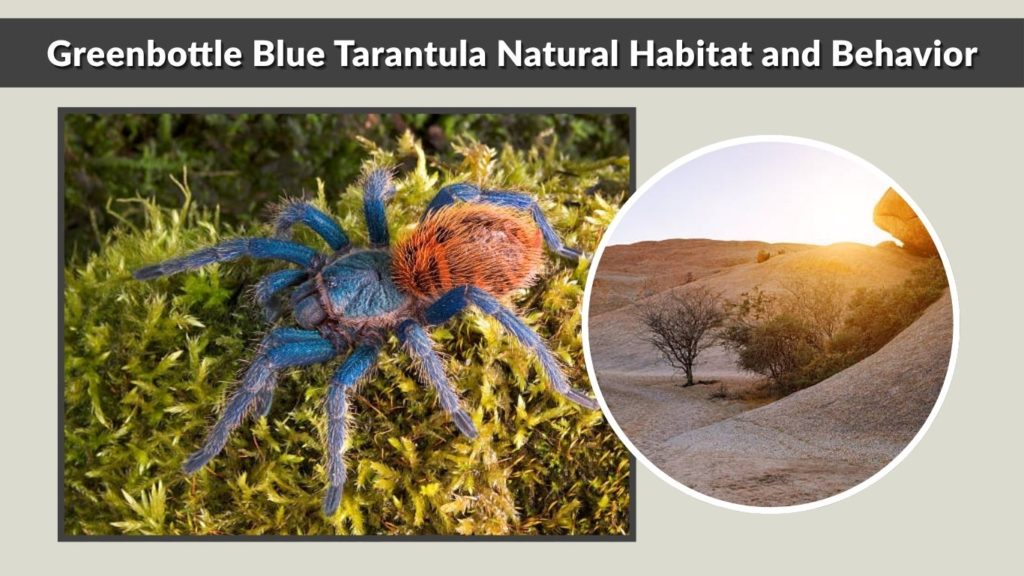
The greenbottle blue tarantula naturally lives in dry, arid regions with plenty of shrubs and low vegetation. Instead of burrowing deeply like some species, it creates webbed shelters among plants and debris. This behavior is important to replicate in captivity.
Unlike shy tarantulas, this species is often out in the open, making it a great display pet. It is quick and alert but not typically aggressive.
Where Do Greenbottle Blue Tarantulas Live?
- Northern Venezuela
- Dry scrublands and semi-arid regions
- Areas with shrubs and open ground
Behavior and Temperament
- Active and frequently visible
- Fast-moving but not highly aggressive
- Builds extensive webbing
- Prefers web shelters over burrows
Is the Greenbottle Blue Tarantula Dangerous?
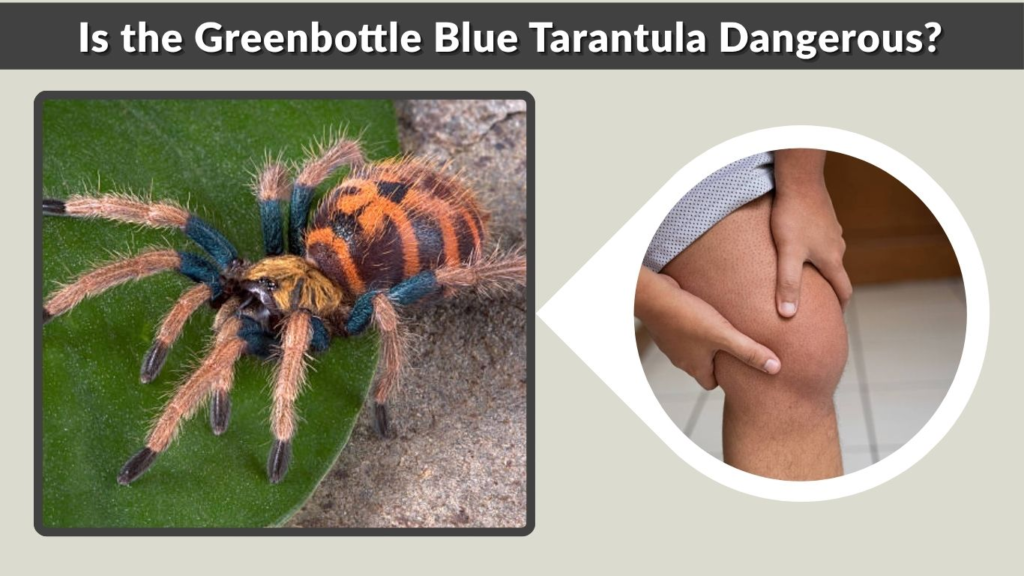
This tarantula is considered relatively safe compared to more defensive species. As a New World tarantula, it has mild venom and is less likely to bite unless provoked.
Most defensive behavior involves retreating or flicking hairs rather than attacking. While caution is still necessary, it is generally regarded as beginner-friendly.
Bite and Venom
- Mild venom similar to a bee sting
- Rarely bites humans
- Localized pain and swelling possible
Are They Venomous or Poisonous?
- Venomous: delivers venom through a bite
- Not poisonous: safe to touch externally
Greenbottle Blue Tarantula Care Guide
Proper care is essential to keep this species healthy and stress-free. One of the biggest differences compared to other tarantulas is its preference for dry conditions and heavy webbing structures. Creating the right environment will encourage natural behavior and improve its quality of life.
Enclosure Setup
The enclosure should provide both ground space and vertical elements for webbing. Good airflow is critical because this species does not tolerate high humidity.
Essential Setup Elements
- Well-ventilated enclosure (5–10 gallons)
- Dry substrate such as coco fiber
- Cork bark or branches for web anchoring
- Open space for webbing structures
Temperature and Humidity
Environmental conditions should mimic the dry climate of its natural habitat. Excess moisture can lead to health issues, so it is important to maintain proper balance.
Environmental Requirements
- Temperature between 75–82°F
- Low humidity levels (around 50–60%)
- Dry substrate with minimal moisture
- Strong ventilation to prevent dampness
Greenbottle Blue Tarantula Feeding and Diet
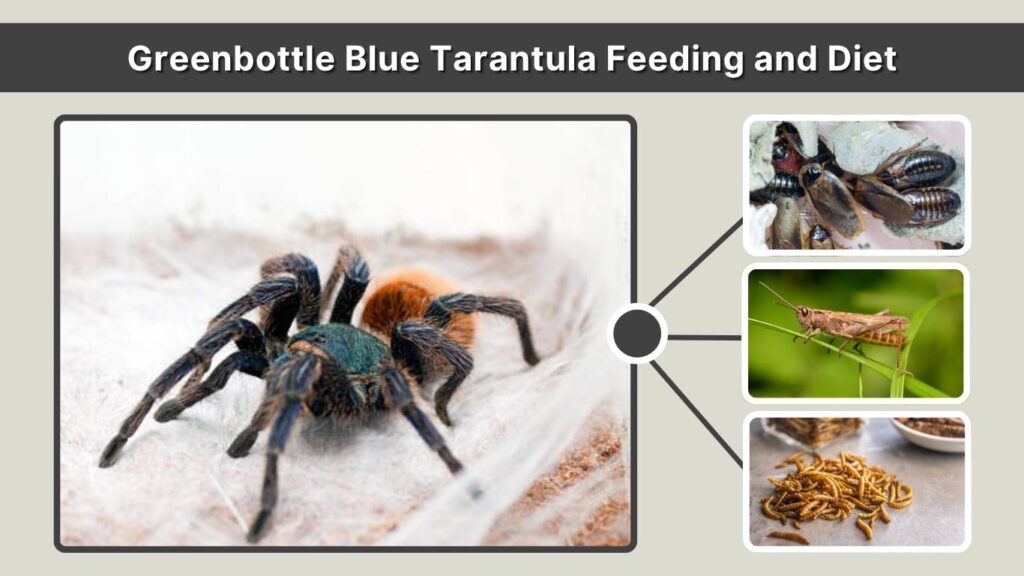
Feeding the greenbottle blue tarantula is straightforward, as it is an active hunter with a strong feeding response. This species relies on movement to detect prey and often captures food directly from its webbing. A consistent feeding routine helps maintain healthy growth and energy levels.
Unlike some tarantulas, it may remain visible during feeding, making it interesting to observe. Prey size should always be appropriate to avoid stress or injury.
What Do Greenbottle Blue Tarantulas Eat?
- Crickets as a staple food
- Dubia roaches and similar insects
- Mealworms and superworms occasionally
- Small locusts for larger individuals
Feeding Schedule
- Spiderlings: 2–3 times per week
- Juveniles: every 5–7 days
- Adults: once every 7–10 days
Greenbottle Blue Tarantula Lifespan, Size, and Growth
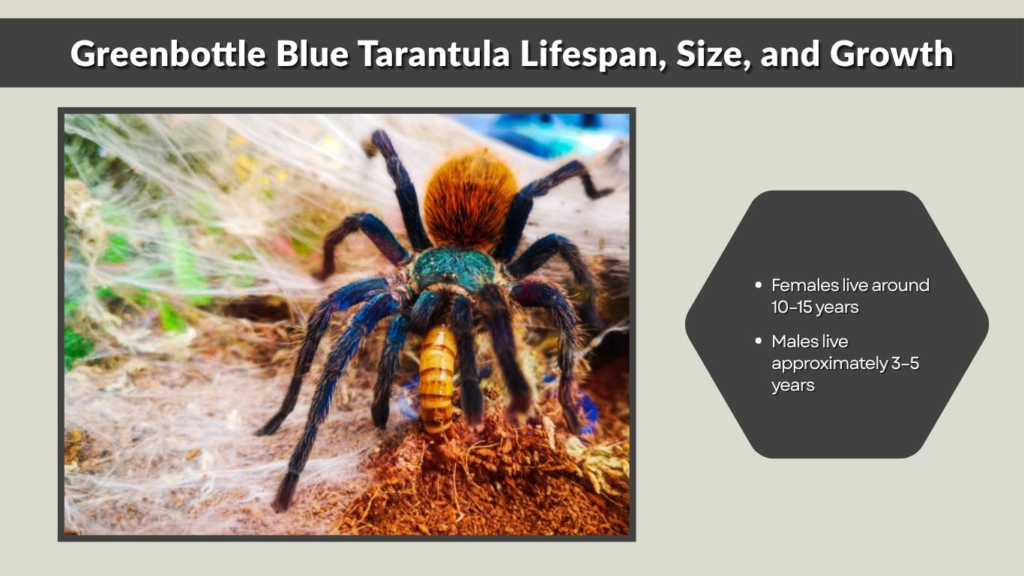
The greenbottle blue tarantula is known for its relatively fast growth compared to many other species. Females live significantly longer than males, making them a better choice for long-term keepers. Growth is influenced by feeding frequency, temperature, and overall care.
Molting is an essential part of development. During this process, the tarantula sheds its old exoskeleton. It may refuse food and remain still before molting, and it should not be disturbed at this time to avoid injury.
Key Life Facts
- Females live around 10–15 years
- Males live approximately 3–5 years
- Adult size reaches 4–6 inches
- Younger tarantulas molt more frequently
Greenbottle Blue Tarantula Price and Buying Guide
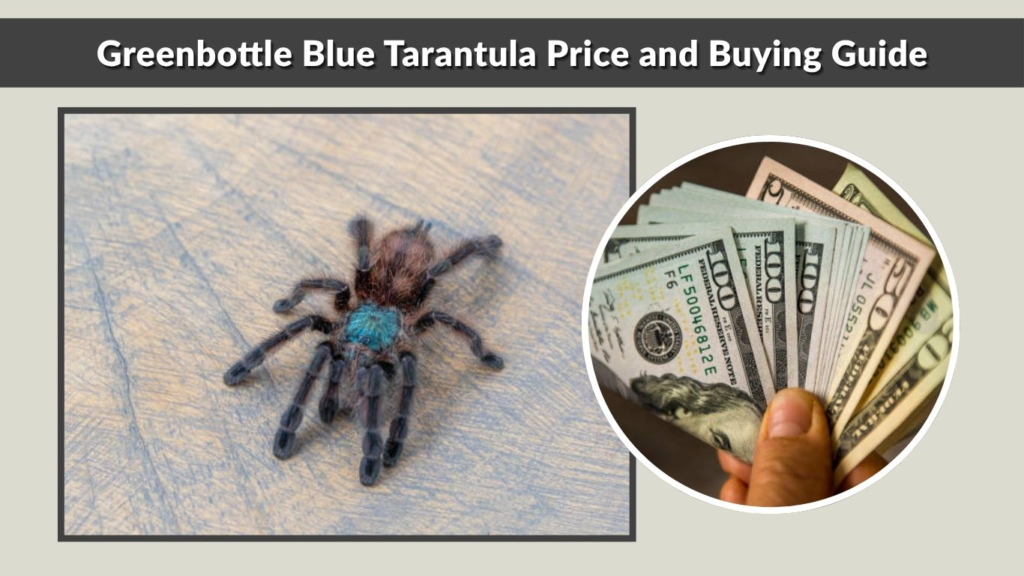
The cost of a greenbottle blue tarantula varies depending on age, sex, and availability. Spiderlings are usually more affordable, while adult females are priced higher due to their longer lifespan and breeding value.
When purchasing, it is important to choose reputable breeders who provide captive-bred specimens. This ensures better health and reduces environmental impact.
Price Range
- Spiderlings: $20–$60
- Juveniles: $60–$120
- Adults: $120–$250+
Where to Buy
- Specialized tarantula breeders
- Exotic pet shops
- Online arachnid marketplaces
Webbing Behavior and Display Value
One of the most fascinating traits of the greenbottle blue tarantula is its heavy webbing. It creates thick, sheet-like webs that can cover large portions of its enclosure. These webs serve multiple purposes, including shelter, hunting, and protection.
Because of this behavior, the tarantula is often visible and active, making it one of the best display species in the hobby. Its web structures also add visual interest to the enclosure, creating a natural and dynamic look over time.
FAQs
What does a greenbottle blue tarantula eat?
They primarily eat live insects such as crickets, roaches, and worms. The size of the prey should match the tarantula’s size, and feeding frequency depends on its age and growth stage.
How long do greenbottle blue tarantulas live?
Females can live between 10 and 15 years, while males typically live only 3 to 5 years. Proper care and stable conditions can help maximize their lifespan.
Are greenbottle blue tarantulas good pets?
Yes, they are considered beginner-friendly due to their manageable temperament and simple care requirements. They are especially popular as display pets because they are active and visible.
Is the greenbottle blue tarantula dangerous?
No, it is not considered dangerous to humans. Its venom is mild, and bites are rare. Most defensive behavior involves retreating or flicking hairs rather than attacking.
How much is a greenbottle blue tarantula?
Prices vary based on age and sex. Spiderlings are affordable, while adult females can be more expensive due to their longevity and breeding potential.
