
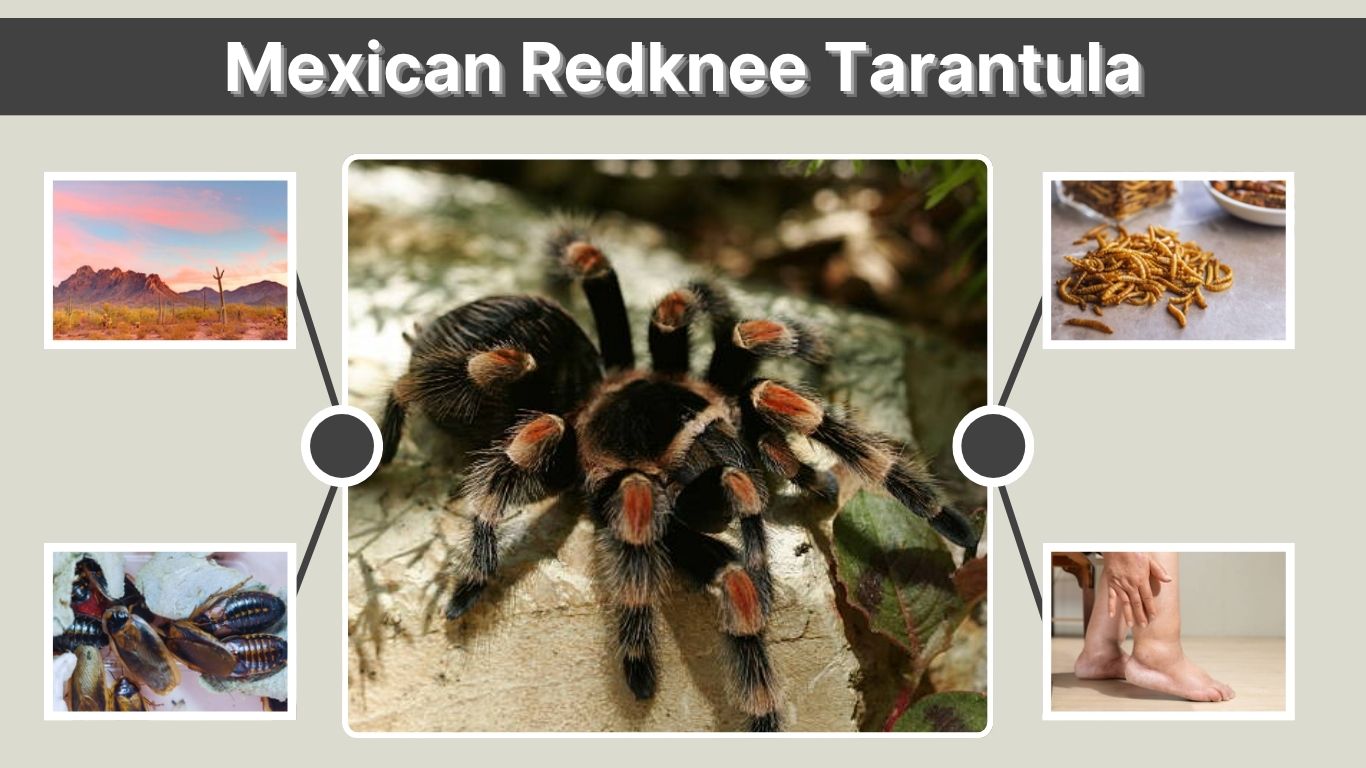
The Mexican redknee tarantula is one of the most popular pet spiders in the world, known for its striking black body and bright orange-red leg joints. Scientifically classified as Brachypelma hamorii (often confused with Brachypelma smithi), this species is native to Mexico and is widely favored for its calm temperament. Unlike more defensive tarantulas, it is slow-moving and easier to manage, making it ideal for beginners. This guide explores its characteristics, behavior, safety, and essential care requirements.
What Is a Mexican Redknee Tarantula?
The Mexican redknee tarantula is a New World species found along the Pacific coast of Mexico. It belongs to a group of tarantulas known for their docile nature and unique defense mechanisms, such as flicking urticating hairs. These spiders spend much of their time near burrows or sheltered areas and are mostly active during the night.
Unlike Old World tarantulas, this species relies less on venom and more on defensive displays to deter threats. Its popularity in the pet trade comes from its manageable temperament and visually appealing coloration.
Key Identification Features
- Black body with bright orange-red knees
- Medium to large size (5–6 inch leg span)
- Slow and deliberate movement
- Thick, hairy legs and body
Mexican Redknee Tarantula Characteristics
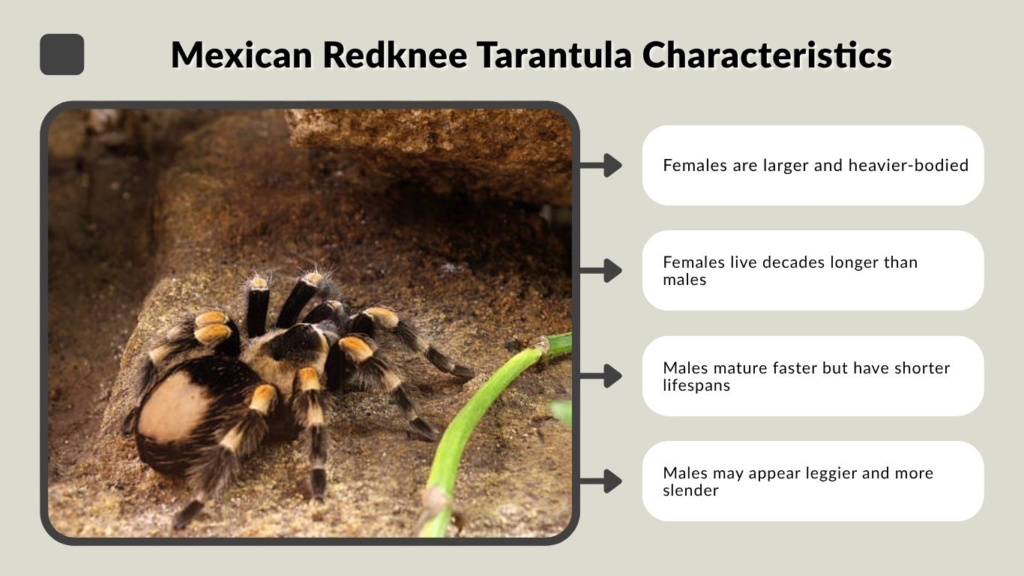
This species is admired for both its appearance and gentle behavior. Its bold color contrast makes it easy to recognize, while its slow movements make it less intimidating compared to faster tarantulas. These physical and behavioral traits are why it is often recommended as a first tarantula.
Females tend to be more robust and live significantly longer than males. Males, on the other hand, are slimmer and mature faster, often developing longer legs as they reach adulthood.
Male vs Female Differences
- Females are larger and heavier-bodied
- Males mature faster but have shorter lifespans
- Females live decades longer than males
- Males may appear leggier and more slender
Mexican Redknee Tarantula Natural Habitat and Behavior
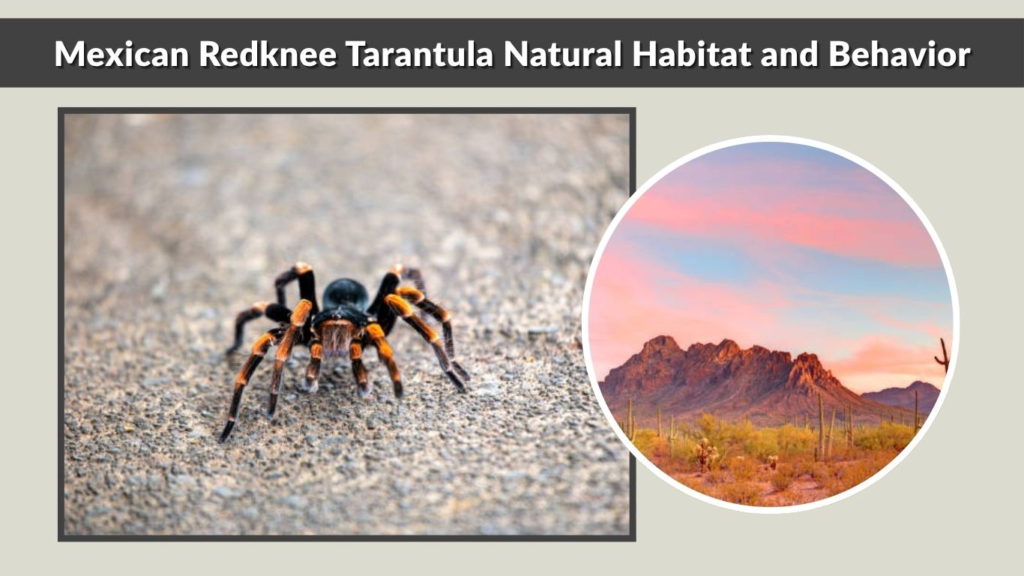
The Mexican redknee tarantula naturally lives in dry environments such as scrublands and semi-desert regions. It creates burrows under rocks or vegetation where it can hide from predators and regulate temperature. These burrows also provide safety during molting periods.
In captivity, its behavior remains similar. It spends a lot of time resting or slowly exploring its enclosure. Unlike more aggressive species, it rarely reacts quickly unless disturbed.
Where Does the Mexican Redknee Tarantula Live?
- Western Mexico’s Pacific regions
- Dry forests and desert-like habitats
- Burrows under rocks or roots
Behavior and Temperament
- Calm and docile nature
- Slow-moving and predictable
- Uses hair flicking as defense
- Rarely bites unless provoked
Is the Mexican Redknee Tarantula Dangerous?

The Mexican redknee tarantula is considered one of the safest tarantulas to keep. Its venom is mild compared to many other species, and it prefers to avoid confrontation. Most defensive responses involve flicking irritating hairs rather than biting.
While it can bite if severely threatened, this is uncommon. The bite is usually described as similar to a bee sting and does not pose serious danger to healthy individuals.
Bite and Venom
- Mild venom with low medical risk
- Bite causes localized pain and swelling
- Rarely escalates beyond minor symptoms
Are They Poisonous or Venomous?
- Venomous: delivers venom through a bite
- Not poisonous: harmless to touch
Mexican Redknee Tarantula Care Guide
Providing proper care is essential for keeping this species healthy and stress-free. Fortunately, the Mexican redknee tarantula is relatively low-maintenance compared to other exotic pets. Its needs are simple but must be consistent, especially when it comes to enclosure setup and environmental conditions.
Enclosure (Terrarium Setup)
A well-designed enclosure should mimic the tarantula’s natural environment. This includes providing enough space for movement and a suitable substrate for digging or resting.
Essential Setup Elements
- 5–10 gallon tank depending on size
- 2–4 inches of dry substrate
- Secure lid with proper ventilation
- Simple hide such as bark or a cave
Temperature and Humidity
Maintaining stable environmental conditions helps prevent stress and health issues. This species prefers warmer temperatures but does not require high humidity like tropical tarantulas.
Environmental Requirements
- Temperature between 70–80°F
- Low to moderate humidity levels
- Dry substrate with occasional moisture
- Consistent, stable environment
Mexican Redknee Tarantula Feeding and Diet
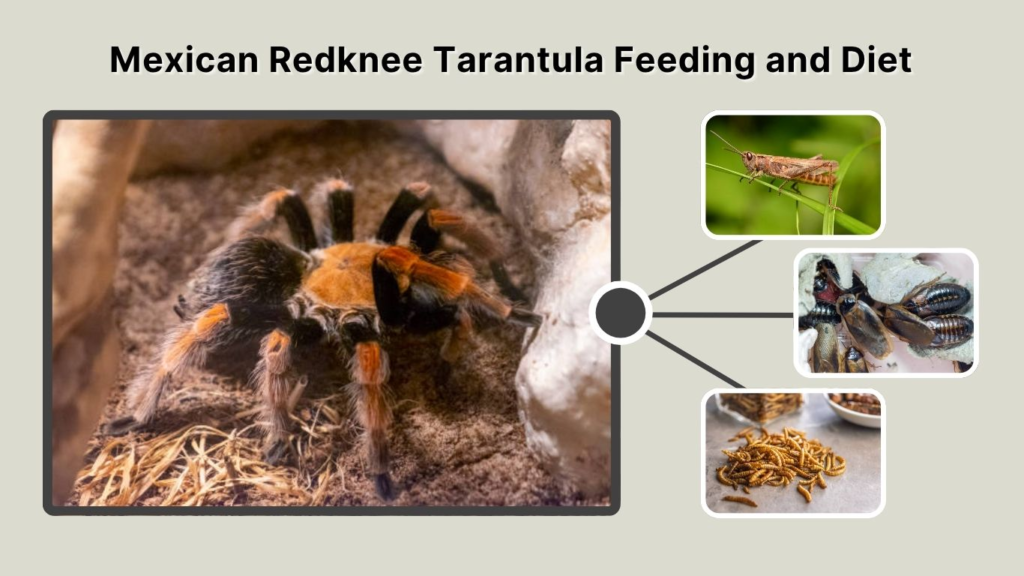
The Mexican redknee tarantula is an easy species to feed, making it ideal for beginners. It is an opportunistic predator that relies on movement to detect prey. In captivity, feeding should be consistent but not excessive, as overfeeding can lead to obesity and health issues.
This tarantula usually hunts slowly and deliberately, unlike faster species. Prey should be appropriately sized—generally no larger than the tarantula’s abdomen—to ensure safe feeding.
What Do Mexican Redknee Tarantulas Eat?
- Crickets (most common staple)
- Dubia roaches and other roach species
- Mealworms and superworms (occasional treats)
- Locusts for larger individuals
Feeding Schedule
- Spiderlings: 2–3 times per week
- Juveniles: every 5–7 days
- Adults: once every 7–10 days
Mexican Redknee Tarantula Lifespan, Size, and Growth
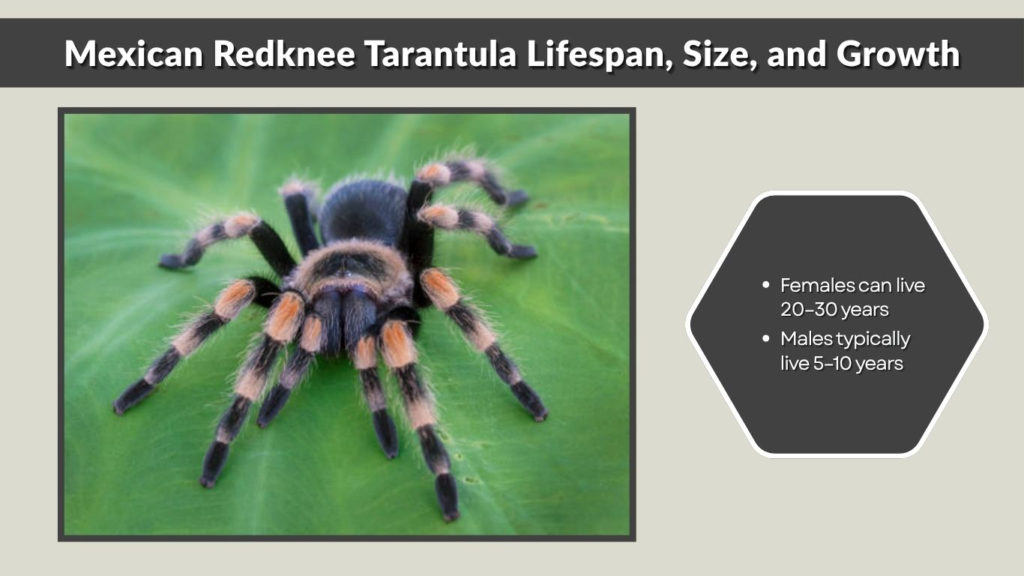
The Mexican redknee tarantula is famous for its long lifespan, especially females. Growth is relatively slow, which is common among tarantulas, but this also contributes to their longevity.
Molting plays a key role in development. During this process, the tarantula sheds its exoskeleton to grow. It is important not to disturb the spider during molting, as it is highly vulnerable at this stage.
Key Life Facts
- Females can live 20–30 years
- Males typically live 5–10 years
- Adult size reaches around 5–6 inches
- Younger tarantulas molt more frequently
Mexican Redknee Tarantula Price and Buying Guide
The cost of a Mexican redknee tarantula varies based on age, sex, and availability. Spiderlings are usually more affordable, while adult females are significantly more expensive due to their long lifespan and breeding potential.
When purchasing, it is important to choose reputable breeders to ensure the spider is healthy and ethically sourced. Captive-bred individuals are always preferable over wild-caught specimens.
Price Range
- Spiderlings: $20–$60
- Juveniles: $60–$120
- Adult females: $150–$300+
Where to Buy
- Specialized tarantula breeders
- Exotic pet stores
- Online arachnid marketplaces
Mexican Redknee vs Rose Hair Tarantula
Both the Mexican redknee and the Chilean rose hair tarantula are popular beginner species, but they have noticeable differences. The Mexican redknee is generally more visually striking, with its bright orange markings, while the rose hair has a more subdued coloration.
In terms of temperament, both are calm, but the Mexican redknee is often considered more predictable. Care requirements are similar, though the redknee may be slightly more sensitive to environmental changes. Overall, both make excellent pets, but the Mexican redknee stands out for its appearance and long lifespan.
FAQs
Do Mexican redknee tarantulas bite?
Yes, they can bite, but it is very rare. They usually prefer to flick urticating hairs as a defense. Bites typically occur only when the tarantula feels seriously threatened or mishandled.
How long do Mexican redknee tarantulas live?
Females can live between 20 and 30 years, making them a long-term commitment. Males have much shorter lifespans, usually around 5 to 10 years after reaching maturity.
Is the Mexican redknee tarantula dangerous?
No, it is not considered dangerous to humans. Its venom is mild, and most defensive behavior involves hair flicking rather than biting. It is one of the safest tarantulas to keep.
What do Mexican redknee tarantulas eat?
They eat live insects such as crickets, roaches, and worms. Feeding frequency depends on age, with younger tarantulas eating more often than adults.
Where does the Mexican redknee tarantula live?
This species is native to western Mexico, where it inhabits dry scrublands and desert-like environments. It typically lives in burrows that provide protection and stable conditions.
