
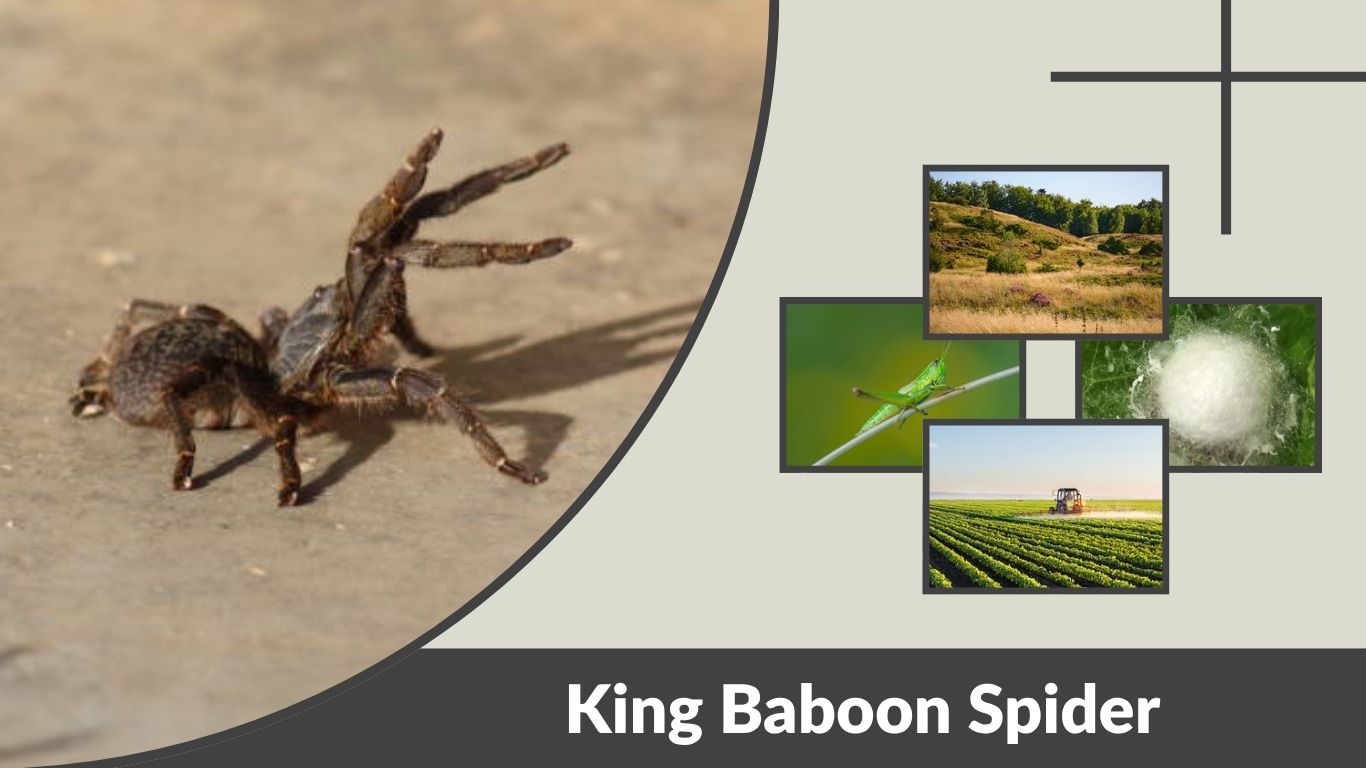
The King Baboon Spider (Pelinobius muticus) is one of the largest and most impressive tarantulas found in Africa. Known for its striking orange coloration and powerful build, this species has gained attention among wildlife enthusiasts and arachnid keepers alike. Despite its intimidating appearance and defensive nature, it plays an important role in its ecosystem. Found mainly in East Africa, this spider is best known for its deep burrows, nocturnal behavior, and unique ability to produce a hissing sound when threatened.
Physical Identification
The King Baboon Spider is easily recognizable due to its size, coloration, and robust structure. It stands out among other tarantulas because of its bold appearance and strong legs.
Key Identification Features
- Bright orange to rusty-brown body coloration
- Large, hairy body typical of tarantulas
- Thick legs covered with fine hairs and spines
- Heavy, solid body built for digging and hunting
Size and Appearance
This species is considered one of the largest tarantulas in Africa. Its body is thick and muscular, giving it a powerful look. The legs are long and sturdy, allowing it to move efficiently and dig deep burrows. Its coloration can vary slightly depending on age and environment, but it generally maintains a vivid orange or reddish tone that makes it easy to identify.
Male vs Female Differences
Females are typically larger and bulkier than males. They also live much longer, often surviving for many years in the wild. Males, on the other hand, are slimmer and shorter-lived. After reaching maturity, males usually focus on finding a mate and may not live long afterward.
Size and Measurements
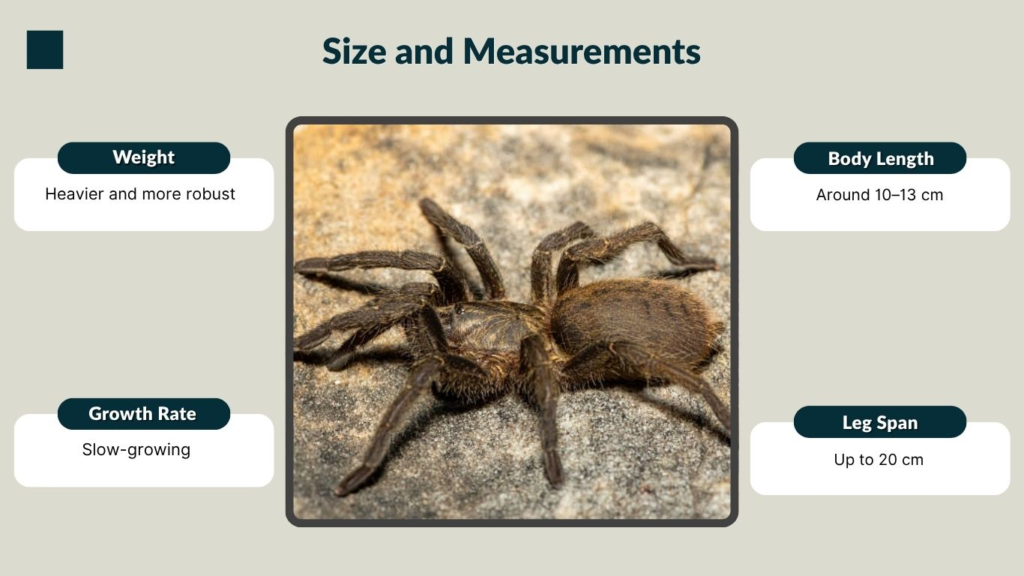
The King Baboon Spider is notable for its impressive size, making it one of the largest tarantulas in its region.
- Body Length: Around 10–13 cm
- Leg Span: Can reach up to 20 cm or more
- Weight: Heavier and more robust than many other tarantulas
- Growth Rate: Slow-growing, taking several years to reach full size
Habitat and Distribution
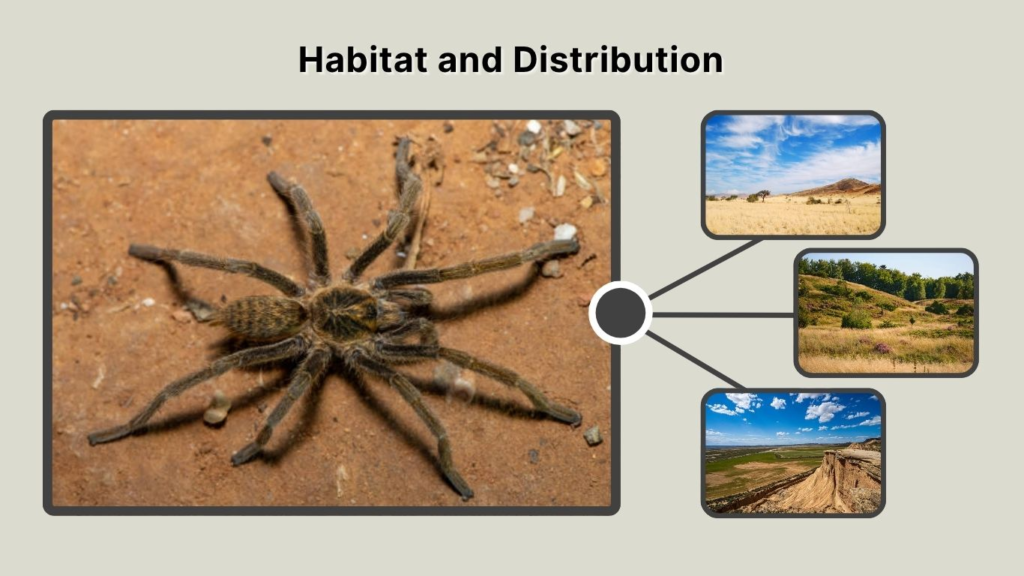
The King Baboon Spider is native to specific regions of Africa, where it has adapted to dry and semi-arid environments.
Geographic Range
This species is mainly found in East Africa, particularly in countries such as Kenya and Tanzania. Its distribution is limited to regions that provide suitable soil conditions for burrowing.
Preferred Habitat
It thrives in dry grasslands, scrublands, and semi-arid areas. These environments offer the loose soil needed for digging as well as a steady supply of prey. Unlike rainforest tarantulas, this species prefers drier climates.
Burrowing Behavior
One of the most defining traits of the King Baboon Spider is its burrowing ability. It constructs deep tunnels in the ground, which serve as both shelter and hunting grounds. These burrows can be quite extensive and help protect the spider from predators and extreme temperatures. The spider spends most of its life inside or near its burrow, emerging mainly at night to hunt.
Behavior and Lifestyle
The King Baboon Spider is known for its defensive nature and unique behaviors, which make it both fascinating and intimidating.
General Behavior
This species is often described as aggressive or highly defensive. When threatened, it may raise its front legs and display its fangs as a warning. It prefers to stay hidden in its burrow but will defend itself if disturbed.
Nocturnal Activity
The King Baboon Spider is primarily nocturnal. It remains inside its burrow during the day to avoid heat and predators, becoming active at night when it searches for food. This behavior helps it conserve energy and stay safe.
Sound Production
One of its most unusual traits is its ability to produce a hissing sound. This sound is created through a process called stridulation, where the spider rubs certain body parts together. The noise acts as a warning signal to potential threats, helping the spider avoid confrontation.
Diet and Hunting Habits
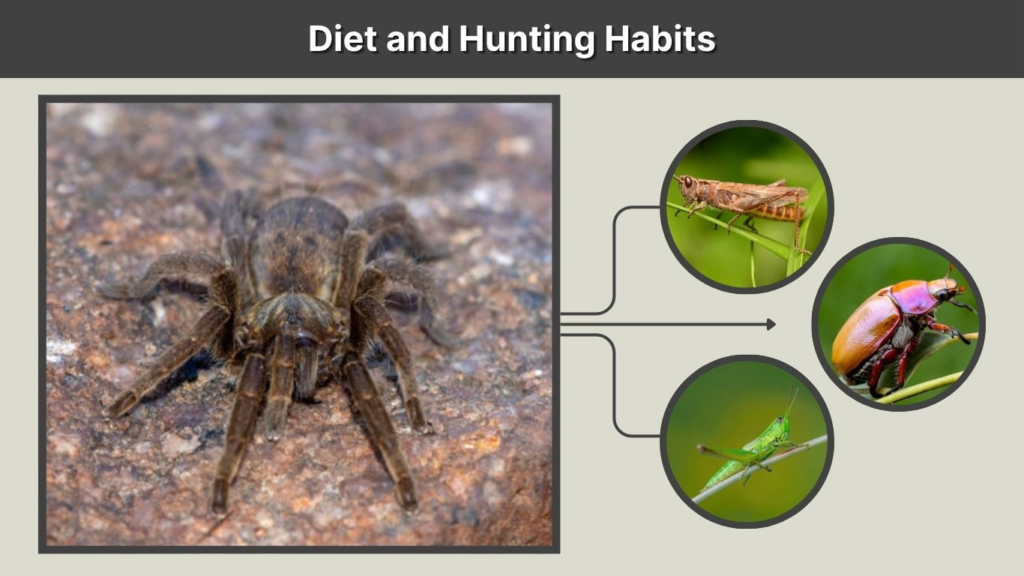
The King Baboon Spider is a skilled predator that relies on stealth and speed to capture its prey.
- Primary Diet: Insects such as crickets, beetles, and grasshoppers
- Larger Prey: Small reptiles, amphibians, or even tiny rodents
- Hunting Method: Ambush predator that waits near its burrow entrance
- Feeding Behavior: Uses venom to immobilize prey before consuming it
Bite and Venom
The bite of the King Baboon Spider is often a topic of concern due to its size and reputation.
Is the King Baboon Spider Poisonous?
This spider is venomous, as are most tarantulas. However, its venom is not considered life-threatening to humans. It uses venom mainly to subdue prey rather than for defense.
Bite Effects
A bite from this species can be painful and may cause swelling, redness, and discomfort. While the symptoms are usually not severe, they can be unpleasant and may last for some time. Medical attention is rarely required but may be necessary in sensitive individuals.
Defensive Behavior
The King Baboon Spider is more likely to display warning behaviors than to bite immediately. It may hiss, raise its legs, or attempt to retreat. Bites typically occur only when the spider feels cornered or provoked.
Breeding and Lifecycle
The reproductive cycle of the King Baboon Spider is slow and carefully adapted to its environment. Like many tarantulas, its lifecycle involves several stages and can span many years.
Mating Behavior
During the breeding season, mature males leave their burrows in search of females. This is a risky period, as males are vulnerable to predators and may even be attacked by the female. Courtship involves cautious movements and vibrations to signal intent.
Egg Sac and Spiderlings
After successful mating, the female produces an egg sac, which she protects inside her burrow. The eggs develop over several weeks before hatching into spiderlings. These young spiders may stay with the mother for a short time before dispersing.
Lifespan
Females have a significantly longer lifespan than males. While males may live only a few years after reaching maturity, females can live over a decade under suitable conditions.
Lifecycle and Development
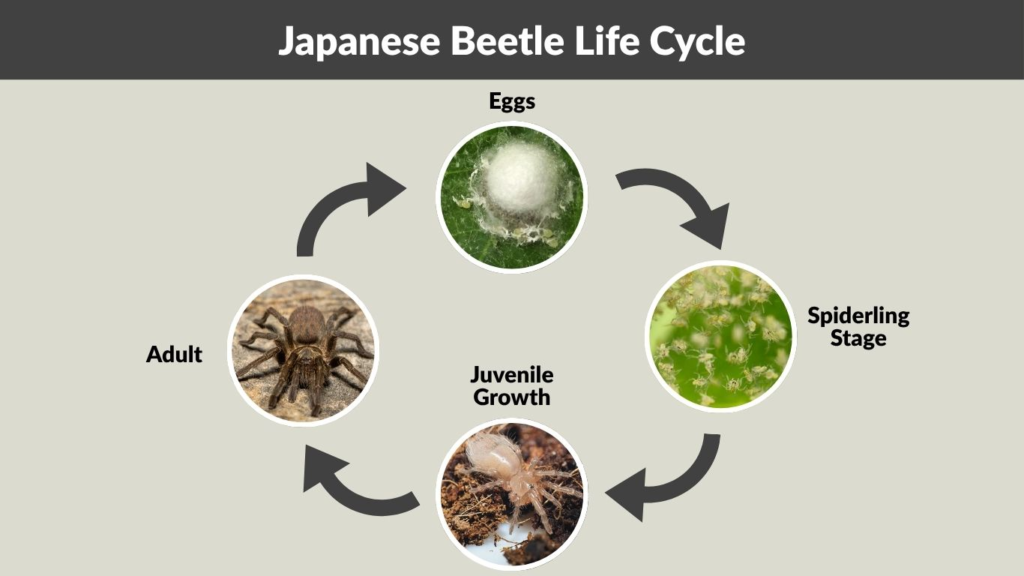
The development of the King Baboon Spider occurs gradually through multiple growth stages.
- Egg Stage: Eggs develop safely inside a silk sac within the burrow
- Spiderling Stage: Young spiders emerge and remain protected early on
- Juvenile Growth: Undergo several molts to increase in size
- Adult Stage: Reach maturity after several years
- Lifespan: Females can live 10–15 years or more
King Baboon Spider vs Other Tarantulas
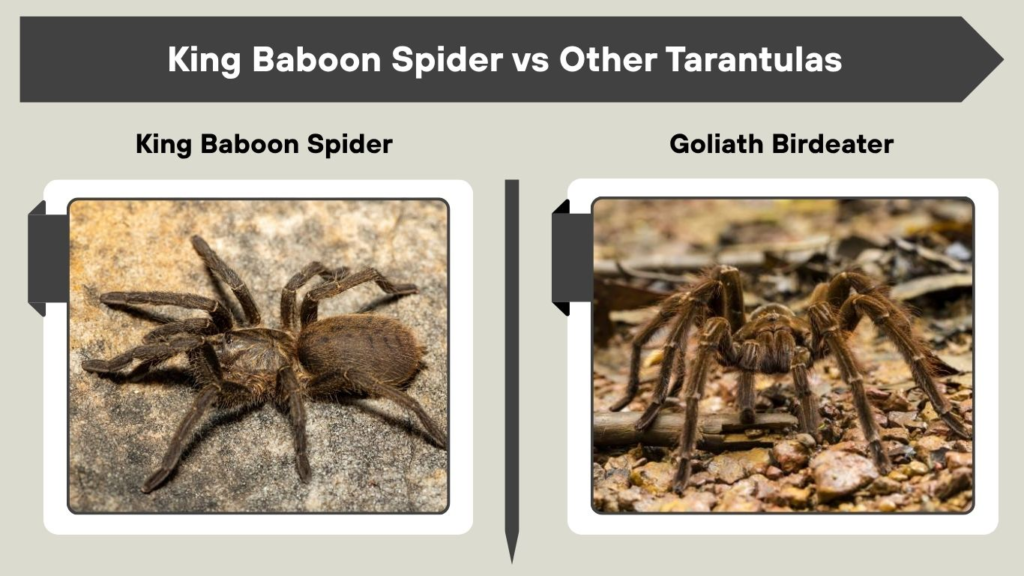
This comparison helps highlight how the King Baboon Spider differs from other well-known tarantulas.
| Feature | King Baboon Spider | Goliath Birdeater | Desert Blonde Tarantula |
| Size | Large | Very large | Medium |
| Color | Orange/rust | Brown | Light tan |
| Temperament | Aggressive | Defensive | Calm |
| Habitat | Burrowing | Rainforest floor | Desert |
| Sound | Hissing (stridulation) | Minimal | Rare |
Role in the Ecosystem
The King Baboon Spider plays an important role in maintaining balance within its habitat. As a predator, it helps control populations of insects and small animals, preventing overpopulation that could disrupt the ecosystem.
Its burrowing behavior also contributes to soil aeration, which can improve soil quality over time. Additionally, it serves as prey for larger animals, making it an important part of the food chain in its environment.
Threats and Conservation
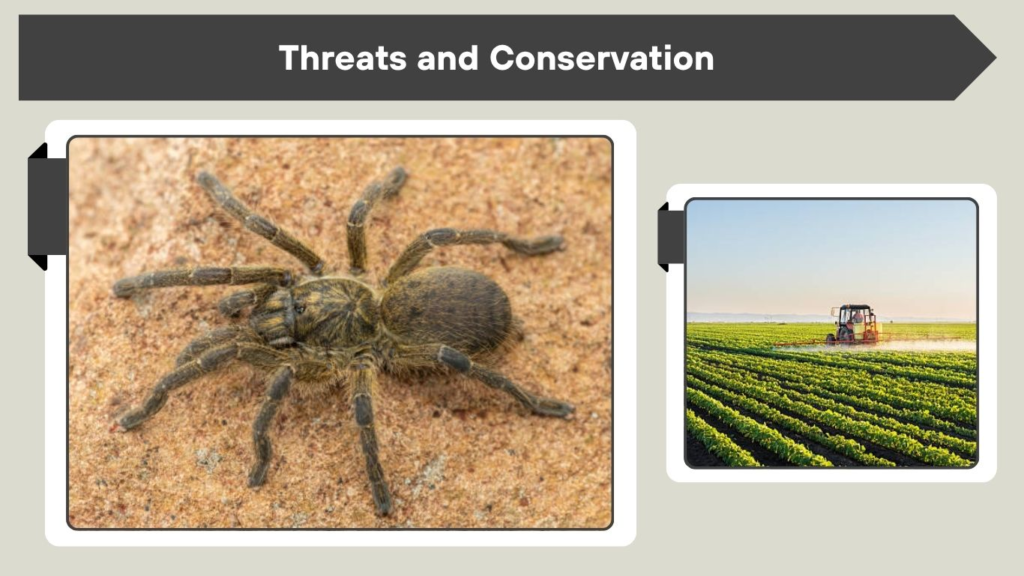
Although the King Baboon Spider is not currently considered endangered, it faces several threats that could impact its population.
- Habitat Loss: Expansion of agriculture and human settlements reduces suitable environments
- Pet Trade: Collected for the exotic pet market
- Environmental Changes: Climate shifts affecting dry habitats
- Conservation Efforts: Protection of natural habitats and responsible trade practices
Interesting Facts
The King Baboon Spider has several unique traits that make it one of the most fascinating tarantulas.
- One of the largest tarantulas found in Africa
- Produces a loud hissing sound when threatened
- Spends most of its life inside deep underground burrows
- Known for its strong defensive posture and behavior
FAQs
Is the King Baboon Spider dangerous to humans?
The King Baboon Spider is venomous, but its bite is not considered deadly to humans. It can cause pain, swelling, and discomfort, but serious complications are rare.
Where does the King Baboon Spider live?
It is mainly found in East Africa, particularly in Kenya and Tanzania, where it inhabits dry grasslands and burrows underground.
What does the King Baboon Spider eat?
It primarily feeds on insects but can also capture small animals such as lizards or rodents using its venom.
Why does the King Baboon Spider make a hissing sound?
It produces a hissing sound through stridulation as a warning signal. This helps deter predators and avoid direct confrontation.
